
“Bob Andy,” from Maxfield Park, made it into the UK Top 5 in 1970

Portrait of Bob Andy, Jamaican singer and songwriter, in front of a green wall

Bob Andy, born Keith Anderson in Kingston in 1944, is one of Jamaica’s greatest songwriters. He wrote “I’ve Got to Go Back Home” in 1967, reached number five on the British charts in 1970 with Marcia Griffiths, and was awarded the Order of Distinction in 2006. His career, however, began on the streets.

Bob Andy, a homeless child from Kingston

As a child, Bob Andy had neither a stable home nor a real school. He would later describe himself as a runaway who was practically homeless, sleeping rough in Rockfort, Kingston. Placed in the Maxfield Park children’s home, he taught himself to play the piano and sang in the choir at Kingston Parish Church. 

This education, though he never earned a diploma, would remain a source of pride for him. It was in the choir that the young Keith Anderson befriended Tyrone Evans. Together, they formed a vocal group, the Binders, which later became the Paragons. He wrote songs for the group, but a disagreement with lead singer John Holt led him to leave. The group continued without him, and he set out on his own.

Young Bob Andy laughing, in an archive portrait
Bob Andy, archive portrait © Bob Andy – Facebook

Studio One, or How a Runaway Became a Lyricist

In Kingston, Coxsone Dodd’s studio on Brentford Road became his school. Bob Andy delivered records there, held auditions for young singers, and wrote songs. He even lived there for a while. In 1967, “I’ve Got to Go Back Home,” a song about the longing to return home, became his first solo hit. This was followed by “Too Experienced” and “My Time” in 1968, then “Desperate Lover” and “Unchained” in 1969.

He also wrote songs for other artists. “I Don’t Want to See You Cry” for Ken Boothe, “It’s Impossible” for Delroy Wilson, and several of Marcia Griffiths’ early hits, including “Feel Like Jumping” and “Truly.” These songs helped launch the singer’s career and established the lyricist as a central figure in Jamaican music.

1970: Bob and Marcia Take on the United Kingdom

In 1970, producer Harry “Harry J” Johnson suggested that the duo Bob and Marcia cover “Young, Gifted and Black,” a song by Nina Simone. The song reached number five on the UK charts, followed by “Pied Piper,” which peaked at number eleven in 1971. The duo appeared on “Top of the Pops” and went on tour with Elton John and Gilbert O’Sullivan. A singer from Kingston found his way into British homes.

Smiling Bob Andy in a yellow shirt, holding a microphone
Bob Andy, microphone in hand © Bob Andy – Facebook

"Fire Burning," the song Jamaica House can't forget

Back in Jamaica, Bob Andy wrote about what the country was going through. In 1974, “Fire Burning” reached number one on the island amid a tense political climate. Prime Minister Michael Manley reportedly summoned him to Jamaica House to explain himself. The singer stood by his message, that a fire was smoldering within the people because of their living conditions. Around the same time, “Check It Out” took aim at multinational corporations.

What This Lyricist Has Brought to Jamaica

Bob Andy demonstrated that a Jamaican song could be considered popular literature. He writes about poverty, about newly won independence, and about returning to one’s ancestral homeland, and Rastafarianism fuels his vision. He also maintains control over his work, founded the publishing house Andisongs, and is said to have turned down contracts from foreign record labels to remain independent.

Black and white portrait of Bob Andy, Jamaican songwriter
Bob Andy, black and white portrait © Bob Andy – Facebook

The lyricist’s life extended beyond the recording studio. In the late 1970s, tired of the music industry, he turned to dance with the National Dance Theatre Company, and then to film, notably in *The Mighty Quinn* in 1989. In 1987, he became a talent scout for Tuff Gong, the Marley family’s record label. In 2005, he performed before a crowd in Addis Ababa during the concert celebrating Bob Marley’s 60th birthday.

In October 2006, the Jamaican government awarded the lyricistthe Order of Distinction, at the rank of Commander, for his contribution to the country’s music. His songs have since been covered by Marcia Griffiths, Barrington Levy, and Tarrus Riley. Thus, a Jamaican songwriter’s influence continues to reach far beyond the island.

A tribute and a book to preserve her memory

Bob Andy died on March 27, 2020, at the age of 75, from cancer. In 2023, the album *We Remember Bob Andy*, produced by Dean Fraser and released by VP Records, featured Beres Hammond, Romain Virgo, and Richie Spice on its tracks. On October 27, 2026, a tribute was held at the Night Market on Hillcrest Avenue in Saint Andrew, the day before what would have been his 82nd birthday. His son, Godfrey “Bobby” Anderson, is also preparing a biography for Reggae Month 2027, driven by a single fear: that his father might be forgotten. Who still writes about Jamaica the way this lyricist did?

Smiling Bob Andy in front of a green wall, with the quote “Love this life with all the madness gladness and strife”
Bob Andy: “Love this life with all the madness gladness and strife” © Bob Andy – Facebook

Frequently Asked Questions About Bob Andy

Bob Andy, born Keith Anderson on October 28, 1944, in Kingston, was a Jamaican singer and songwriter who died on March 27, 2020, at the age of 75. He wrote hits such as “I’ve Got to Go Back Home” and “Fire Burning.”

“I’ve Got to Go Back Home,” released in 1967, was Bob Andy’s first major solo hit. “Fire Burning,” which reached number one in Jamaica in 1974, was covered by Marcia Griffiths.

Bob and Marcia is the duo formed by Marcia Griffiths and Bob Andy. They reached number five on the UK charts in 1970 with “Young, Gifted and Black,” and then number eleven in 1971 with “Pied Piper.”

Leave a Reply

Your email address will not be published. Required fields are marked *

More articles from RK

Caribbean Cinema
FILM & VIDEO
Tolotra

S8/10 – Stories from Caribbean Cinema: Youth, Women, and New Pathways. Texts by Guillaume Robillard. Ciclic, 2026.

The history of Caribbean cinema now moves into the 2000s and 2010s. After seven installments and several decades of filmmaking, this eighth installment brings together three films from Guadeloupe and the Dominican Republic, each exploring individual journeys that serve as gateways to broader social realities. *Nèg Maron* explores the lives of urban youth in Guadeloupe. *La Hija Natural* follows a young woman who sets out to find her father in the Dominican Republic. *Le Bonheur d’Elza* also tells the story of a family quest that takes its main character all the way to Guadeloupe. You are now on the eighth episode out of ten. The first seven are already available on Richès Karayib. After this one, there will be two more episodes to explore the most contemporary Caribbean cinema. 2005: GUADELOUPE – *NÈG MARON*, BY JEAN-CLAUDE BARNY Nèg Maron is the film of a generation. Starring two Guadeloupean dancehall stars,

Read More »
Portrait of Bob Andy, Jamaican singer and songwriter, in front of a green wall
MUSIC
Tolotra

“Bob Andy,” from Maxfield Park, made it into the UK Top 5 in 1970

Bob Andy, born Keith Anderson in Kingston in 1944, is one of Jamaica’s greatest songwriters. He wrote “I’ve Got to Go Back Home” in 1967, reached number five on the British charts in 1970 with Marcia Griffiths, and was awarded the Order of Distinction in 2006. His career, however, began on the streets. Bob Andy, a homeless child from Kingston As a child, Bob Andy had neither a stable home nor a real school. He would later describe himself as a runaway who was practically homeless, sleeping rough in Rockfort, Kingston. Placed in the Maxfield Park children’s home, he taught himself to play the piano and sang in the choir at Kingston Parish Church.  This education, though he never earned a diploma, would remain a source of pride for him. It was in the choir that the young Keith Anderson befriended Tyrone Evans. Together, they formed a vocal group, the
Read More »
code noir
HISTORY & HERITAGE
Tolotra

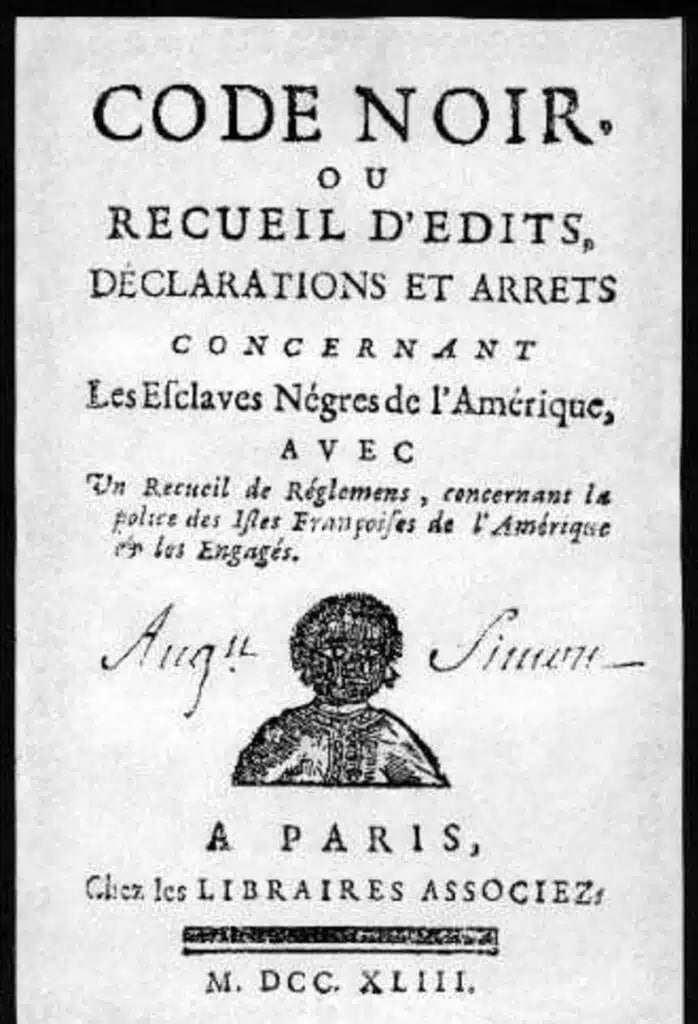
Code Noir: 341 Years After 1685, Parliament Officially Repeals It

On October 20, 2026, the Senate passed the bill to repeal the Code Noir without amendment, by a vote of 320 in favor and none against. Parliament has thus completed its review of a bill sponsored by Guadeloupe Representative Max Mathiasin, 341 years after the edict of March 1685. All that remains is for the law to be enacted. “Code Noir”: A Vote with No Opposing Votes in the Senate On Tuesday, October 20, 2026, senators voted on the bill as adopted by the National Assembly on May 28. The vote resulted in 320 votes in favor, none against, and 18 abstentions, all from the Kanaky Communist, Republican, Citizen, and Ecologist Group. With no amendments, the bill is definitively adopted. Five amendments put to a public vote, introduced by the Socialist and Communist caucuses, were rejected. The text therefore remains identical to that of the Chamber of Deputies. The Senate

Read More »

conTACT RK

we'd love to have your feedback on your experience so far

Join The List

Join our Richès Karayib community!  Sign up for our newsletter.

Want To Maximize Your Business Presence On Riches Karayib?

Complete the form to start the application