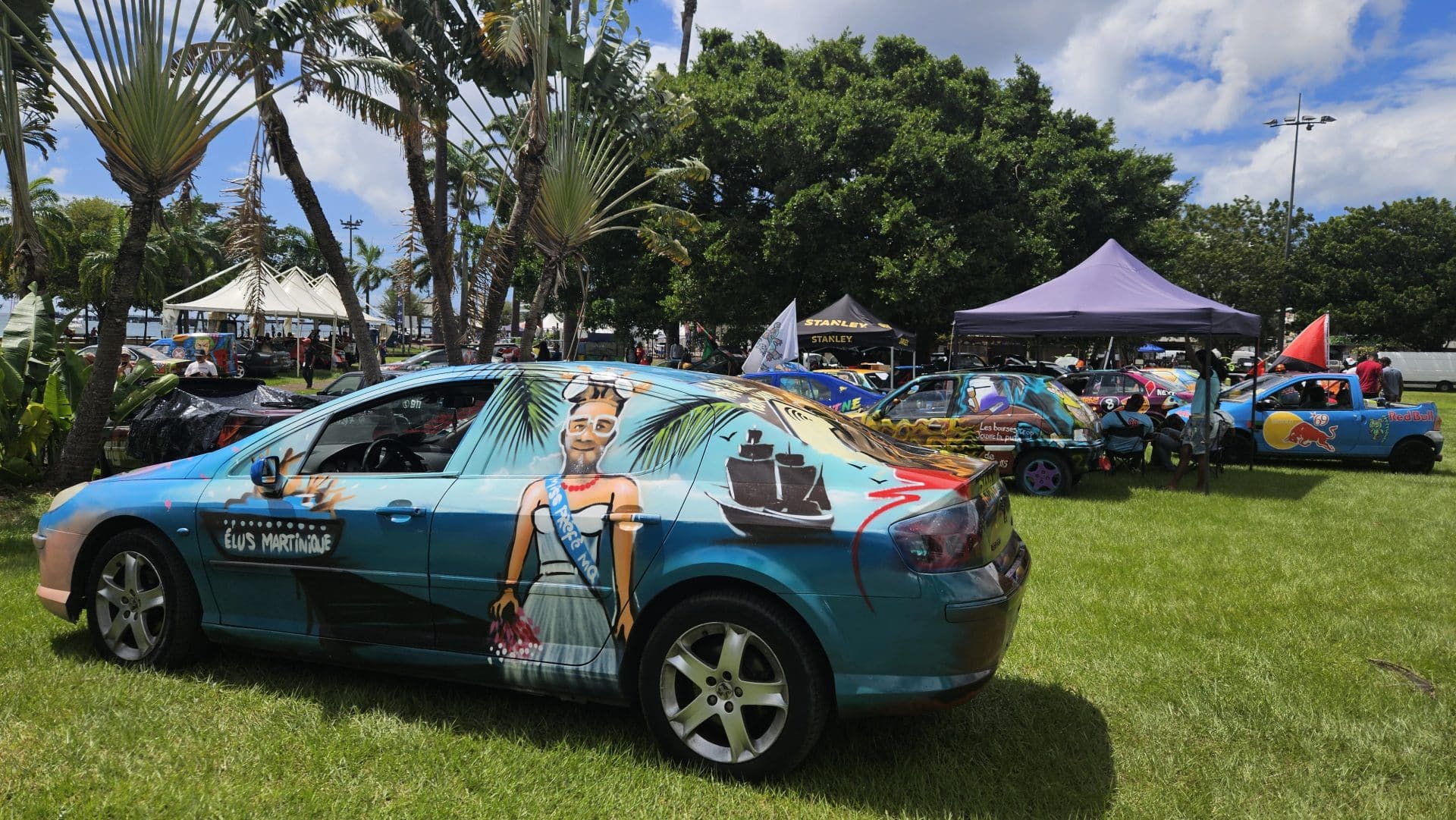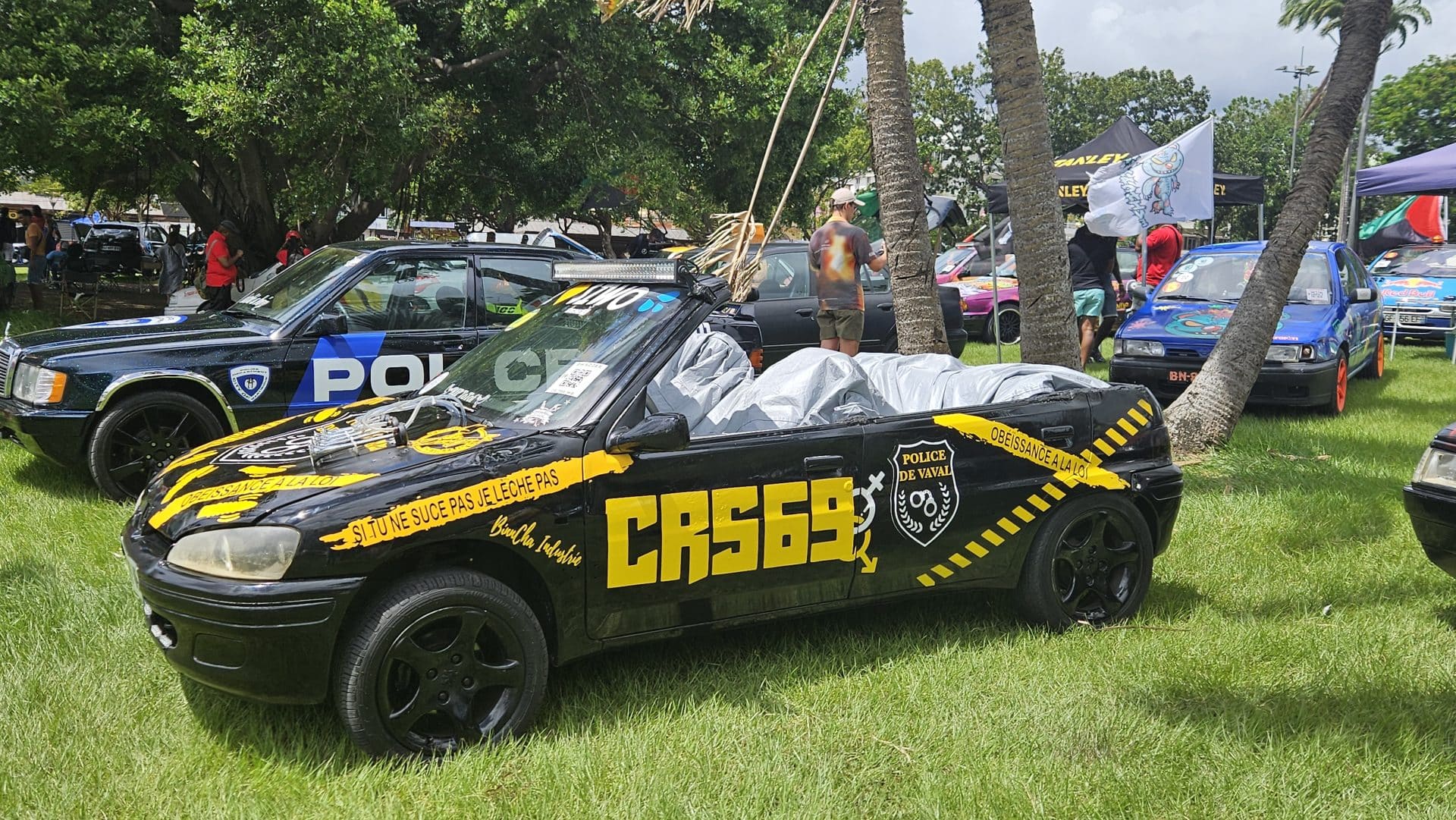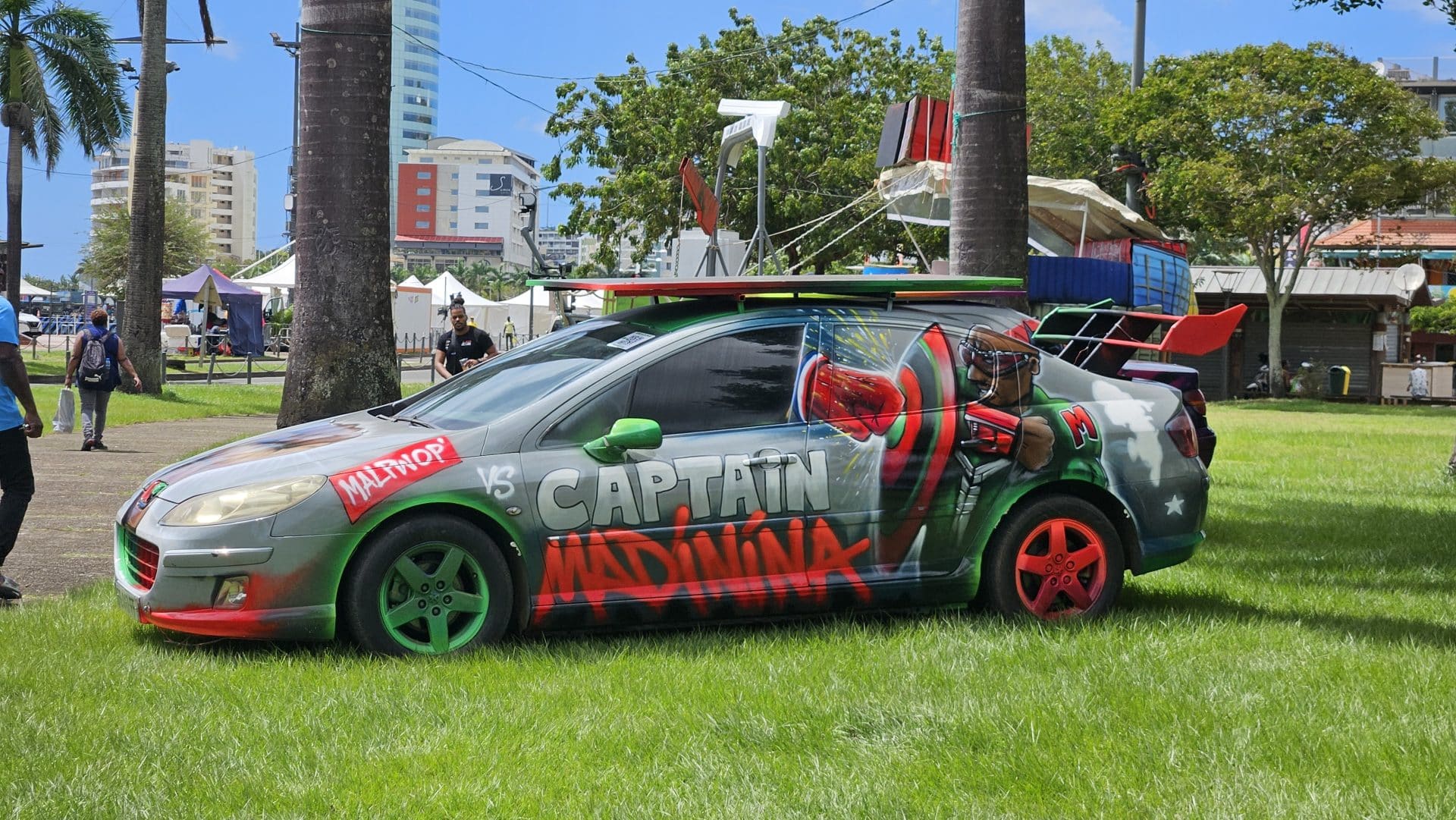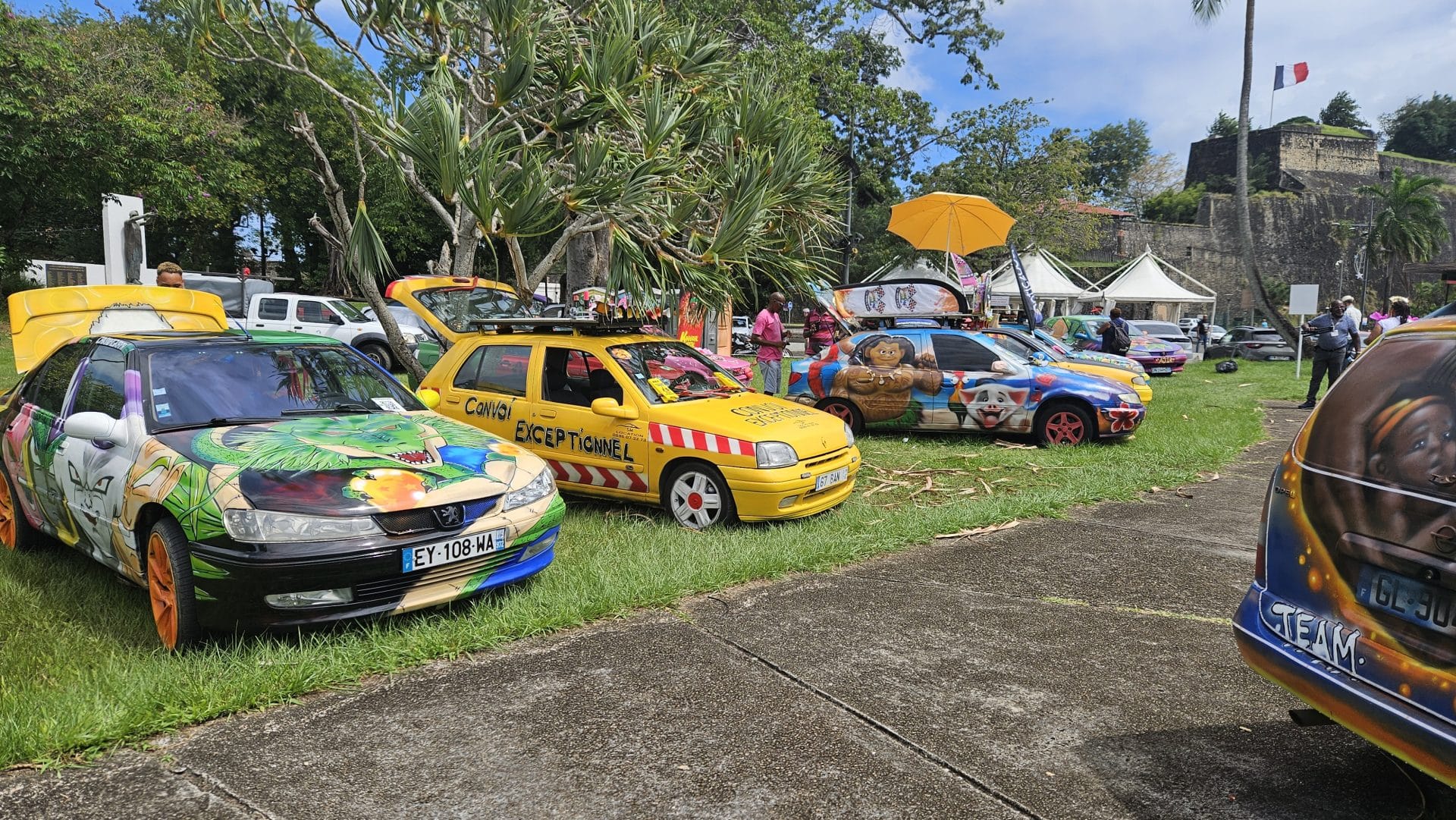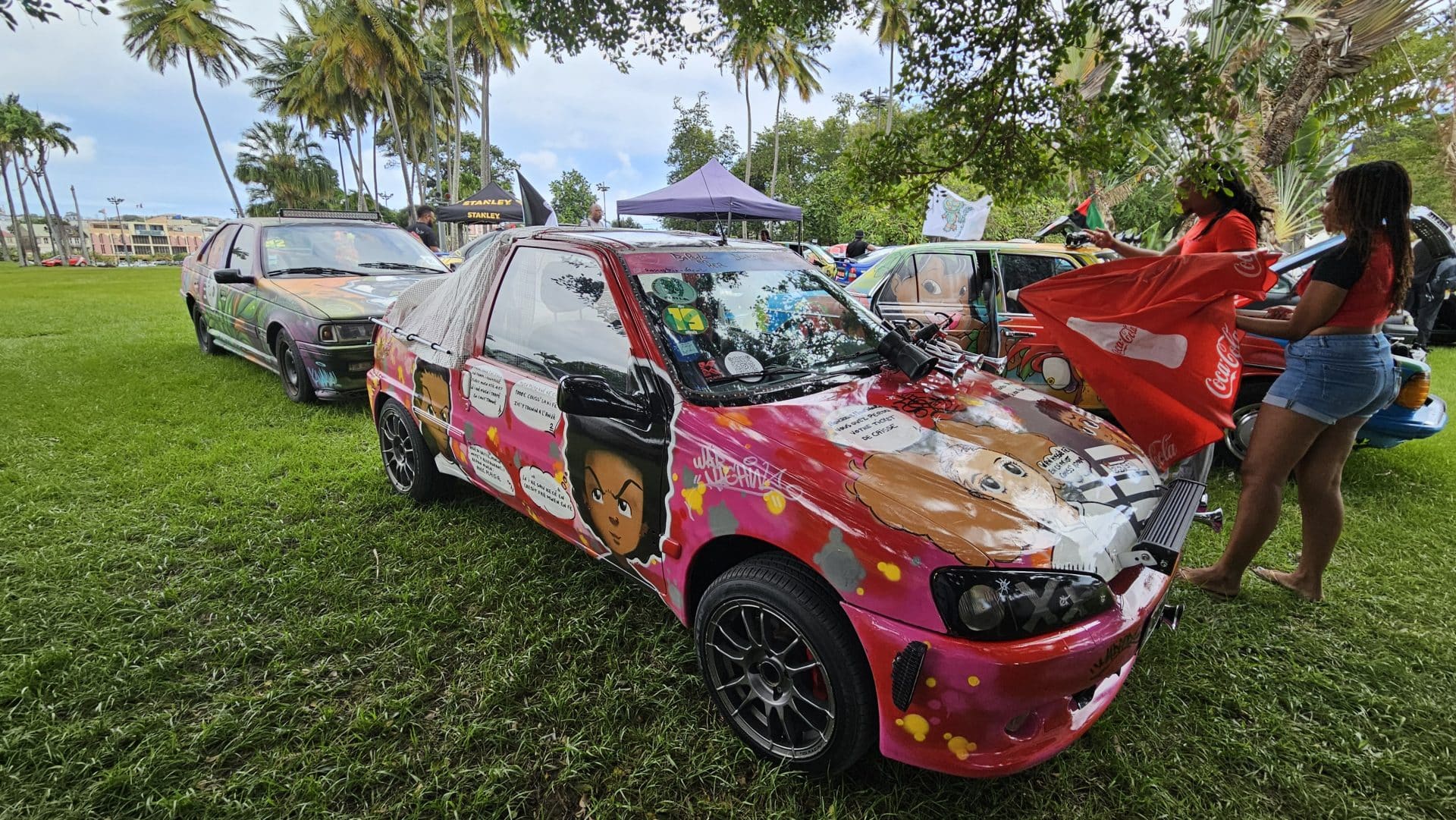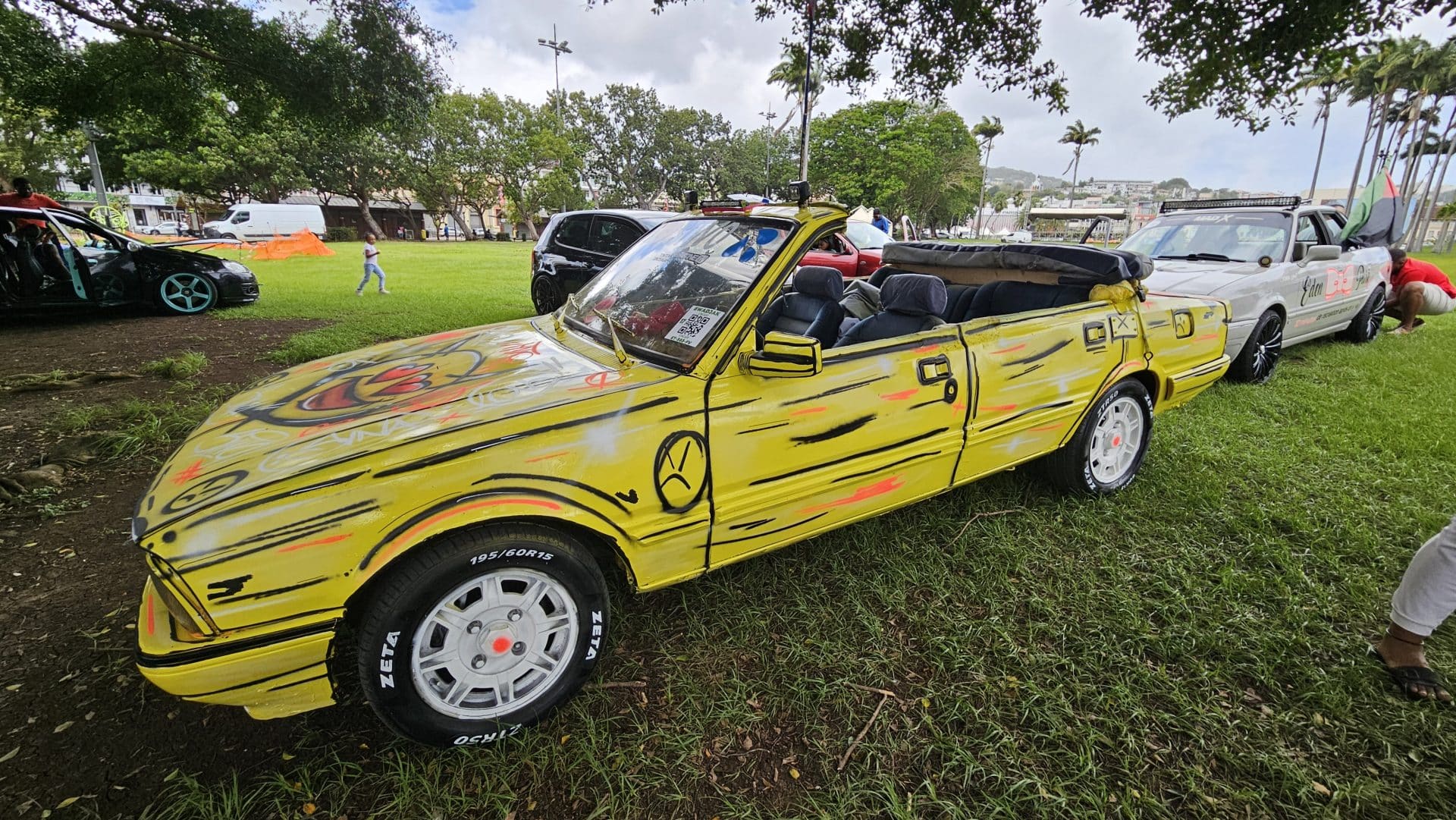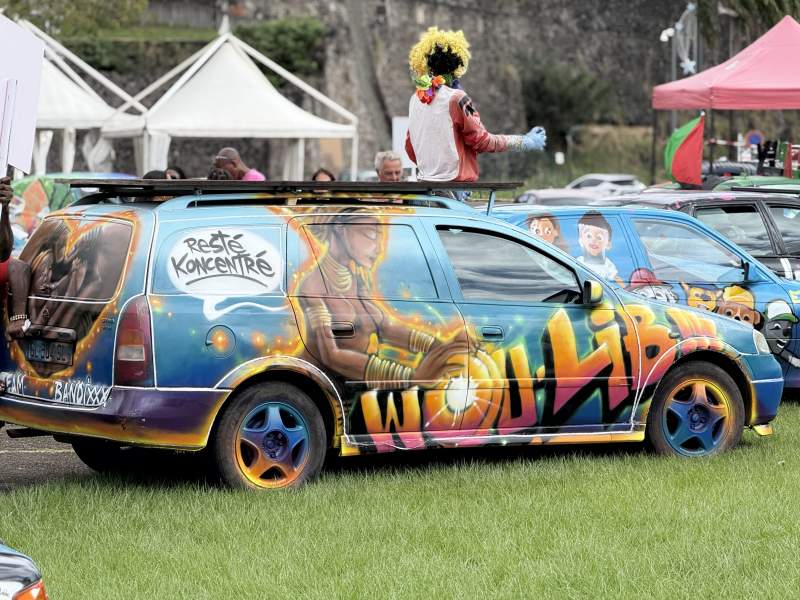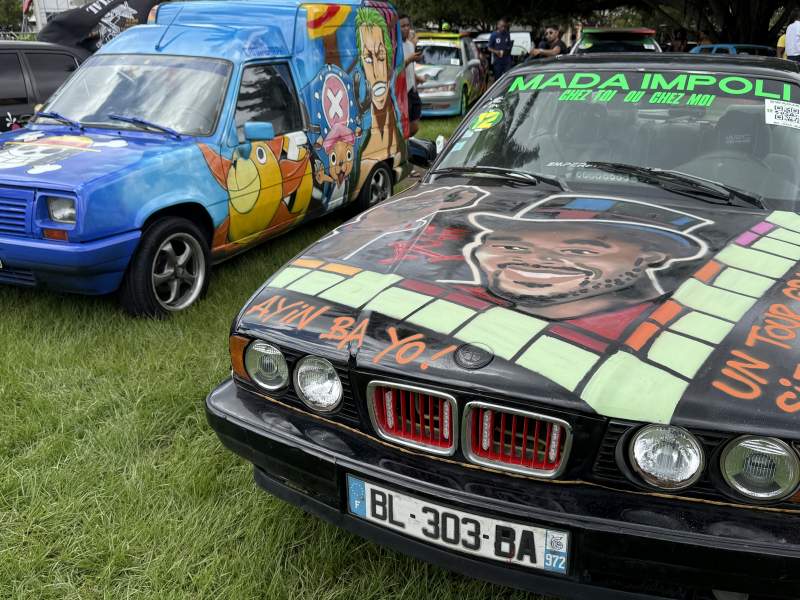
Bwadjaks are a fixture of carnival in Martinique. Decorated and equipped with sound systems, they criss-cross the streets during parades, attracting attention with their elaborate aesthetics and festive atmosphere. Long a symbol of free popular creativity, they are now at the heart of a reflection on their evolution and their place in an increasingly structured carnival.
Every year, Fort-de-France vibrates to the rhythm of the drums, the flamboyant costumes and the processions that enliven the city. Among them, the Bwadjaks occupy a unique place, embodying both the ingenuity of the participants and the transformations of the carnival. But as they modernize, questions emerge: how can we preserve their identity while keeping pace with their evolution?
Through the eyes of Christophe Fagon, an enthusiast who conceives and brings to life his Bwadjak, and Miguel René-Corail, in charge of organizing the carnival in Fort-de-France, this article explores the future of this fast-changing tradition.

A passion shaped since childhood
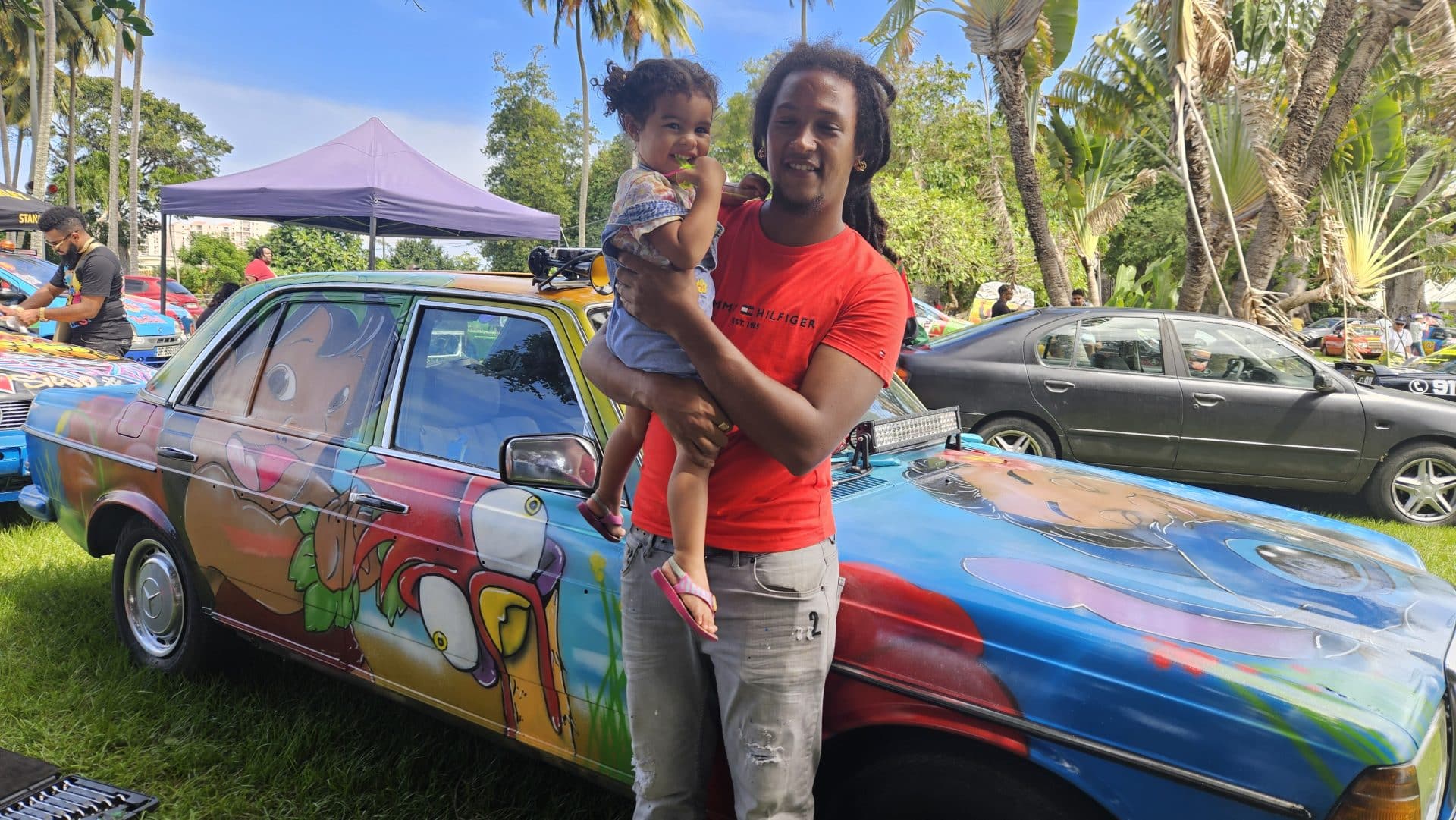
Christophe Fagour, 27, has never known a carnival without Bwadjak.
He recalls his childhood spent with his mother, who was involved in a parade troupe, and his fascination with the decorated vehicles that paraded under the spotlights.
“Ever since I was a little boy, I’ve always been attracted to Bwadjaks. When I was 18, I wanted to have my own Bwadjak.”
But customizing a Bwadjak requires a real commitment, both in terms of time and financial investment.
Each vehicle is the fruit of months of preparation, from model design and painting to the installation of lights and sound equipment.
Owning a Bwadjak is an investment: around 1,500 euros for a well-equipped Bwadjak (paintwork, lights, horn, costume…).
Unlike some people, Christophe has chosen a specific universe: that of cartoons.
“Carnival isn’t just for adults,” he explains.
For him, children should also be able to marvel at seeing characters they recognize.
The father of a young daughter, he sees this art as a way of passing on carnival culture to future generations.
Striking a balance between spontaneity and organization

While Bwadjaks have become an integral part of Carnival in Martinique, their place within the festivities is becoming increasingly regulated. Faced with their growing popularity and evolving practices, local authorities have introduced rules designed to ensure the safety of participants and the public alike.
In the past, Bwadjaks circulated freely in parades, without any strict regulations being imposed on them, particularly in terms of safety. Today, they are required to pass a technical inspection to ensure that they comply with traffic regulations and guarantee the safety of participants and the public.
One of the major issues at stake concerns traffic standards during parades. These vehicles, often modified, must comply with precise requirements in terms of road safety and movement in public spaces. Noise levels, vehicle layout and conditions of participation in parades are also monitored.
Miguel René-Corail, who is in charge of organizing the carnival in Fort-de-France, underlines this desire to structure the event to ensure greater harmony between the different carnival expressions. With this in mind, a system has been put in place to reduce noise pollution, as well as to supervise the integration of Bwadjaks into the official parades.
“This year, we have put in place a device that has considerably reduced noise.”
The aim of this framework is not to limit the creativity of participants, but to ensure that Carnival remains a structured festive space, where each element finds its place without encroaching on other forms of expression. A necessary adaptation that reflects the evolution of an increasingly organized Carnival in Martinique, while preserving its authenticity and popular roots.
BWADJAKS in pictures

Heritage on the move
Carnival in Martinique is a place where culture expresses itself freely, where traditions are perpetuated while integrating elements of modernity. The Bwadjaks, like the carnival itself, are constantly evolving, driven by the passion of enthusiasts like Christophe Fagon and framed by an organization like Miguel René-Corail that is keen to structure this heritage without distorting it.
Between overflowing creativity and a desire for harmonization, these vehicles remain strong symbols of Martinique’s carnival identity. Their future will depend on the ability to combine this popular richness with the new expectations of carnival. One thing is certain: as long as there are enthusiasts to design them and spectators to admire them, Bwadjaks will continue to enliven the streets and write the history of Martinique’s carnival.