A technological shift to better serve regional and international logistics

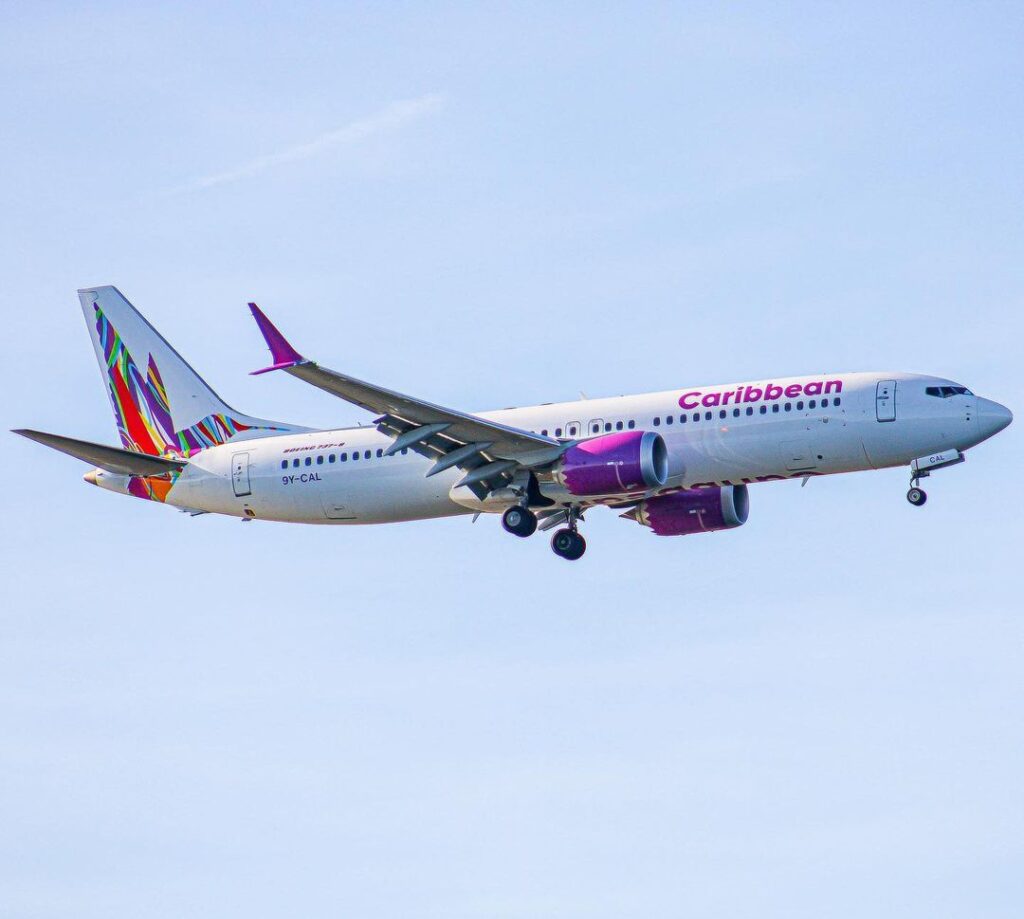
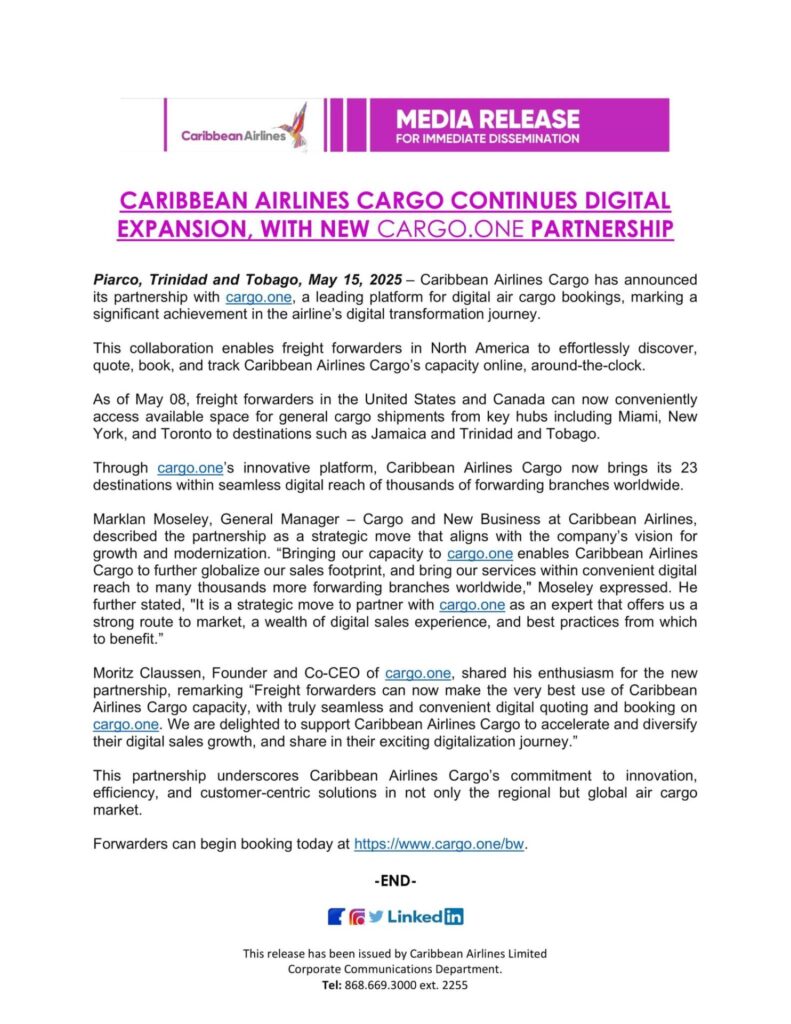
Caribbean Airlines Cargo has formalized a strategic partnership with digital booking platform cargo.one, marking a new stage in its modernization. This initiative places the company at the heart of a structural change in air freight transport, relying on digital tools to improve access, speed and transparency of operations.

A concrete response to freight forwarders' requirements

The collaboration between Caribbean Airlines Cargo and cargo.one are based on a shared observation: freight forwarding professionals need simple, reliable and accessible tools. Thanks to the cargo.one interface, freight forwarders can now consult available capacities, generate instant quotes, book shipments and track shipments in real time, without cumbersome administrative formalities.

This new way of working encourages more fluid customer relations. It also responds to a strong demand from the sector, where speed of execution has become as important as quality of service.

Caribbean Airlines Cargo

A strategy rooted in North American hubs

The choice of access points is not insignificant. Miami, New York and Toronto, three major hubs for Caribbean Airlines Cargo. The cargo.one network facilitates connections to markets in Jamaica and Trinidad & Tobago. Integration with cargo.one optimizes freight management between these logistics centers and Caribbean destinations, while boosting supply chain efficiency.

For North American forwarders, this configuration represents a significant time-saver, with better anticipation of flows and reduced shipping times.

A platform designed for market realities

The technical solution provided by cargo.one is more than just a digital showcase. It adapts to the particularities of regional air freight, with functionalities designed for flexibility and clarity. This choice enables Caribbean Airlines Cargo to offer a quality service, even in complex or constrained logistical contexts.

This pragmatic approach, focused on concrete user needs, consolidates the company’s reputation in an environment where standards are rapidly evolving.

Caribbean Airlines Cargo

A global growth driver

For Marklan Moseley, the airline’s General Manager Cargo, this partnership is part of a clear ambition: to make Caribbean Airlines Cargo a key player not only in the Caribbean, but also on the world stage. By digitizing its offer, the company is opening up to a wider market, while optimizing its internal processes.

On the cargo.one side, co-founder Moritz Claussen believes that this integration will enable freight forwarders to take full advantage of the capacity of the Caribbean network, while reducing operational friction.

Modernization for competitiveness

The entry of Caribbean Airlines Cargo into the world of digital booking represents a strategic step forward. It strengthens our competitiveness, particularly in the face of global operators already committed to digitalization. But it also reflects a determination to remain faithful to a regional mission: to efficiently link Caribbean territories, without sacrificing technical excellence.

Outlook: between regional consolidation and global openness

This partnership opens up concrete prospects: continuous improvement of the offer, expansion into new markets and development of even more efficient tools for forwarders. By focusing on digital efficiency, Caribbean Airlines Cargo anticipates the future needs of a changing industry, while consolidating its role as a logistics gateway between the North and the Caribbean.

The alliance between Caribbean Airlines Cargo and cargo.one embodies much more than just a technical partnership: it is a structural evolution in the way air freight can be thought of, managed and improved. By combining regional expertise and digital solutions, the company is asserting its willingness to adapt without abandoning its fundamentals. A strong signal, in a sector where technological agility is becoming a criterion of sustainability.

Caribbean Airlines Cargo

Saint Barth Commuter was set up in 1995 in response to an urgent need: to provide Saint-Barthélemy with a reliable air transport service, following the disappearance of Air Saint-Barth. At the time, the island had no aircraft dedicated to medical evacuations, nor any means of rapidly linking up with neighboring territories. Under the impetus of aviation enthusiast Bruno Magras, the company began with on-demand flights, before launching regular routes in 1998 to Grand-Case, Juliana and Antigua.

More than just a company, Saint Barth Commuter is rapidly establishing itself as an essential infrastructure for island cohesion. Aviation has become a public service in its own right, enabling the population to stay connected, receive medical care and support the local economy.

A family tradition at the service of the region

The history of Saint Barth Commuter is inseparable from that of the Magras family. Although Bruno Magras was the initiator, it is his son Bertrand who today steers the company with the same rigor and a strong attachment to the local identity. The company remains on a human scale, with 32 employees, all committed to a service mission rooted in the day-to-day reality of Saint-Barthélemy.

This family continuity guarantees the company’s strategic stability and adaptability to the island’s needs. Every decision we take is based on a territorial rationale: to improve mobility, enhance safety and anticipate the needs of the population.


Saint Barth Commuter
©Saint Barth Commuter
Saint Barth Commuter
©Saint Barth Commuter
Saint Barth Commuter
©Saint Barth Commuter

Missions that go far beyond scheduled transport

Saint Barth Commuter fulfils several essential functions, which distinguish it in the regional aerial landscape:

  • Passenger transport: with regular services to Saint-Martin (Grand-Case and Juliana) and Guadeloupe, the company facilitates business, personal and tourist travel. On-demand flights enable us to adapt to specific situations, even outside normal business hours.
  • Airfreight: this service ensures the transport of goods that are crucial to the island’s supply, particularly in the event of maritime disruptions or urgent needs.
  • Medical evacuations: thanks to a fleet available on site, urgent medical interventions can be carried out as quickly as possible – a vital issue for an isolated island.

A fleet designed for local realities

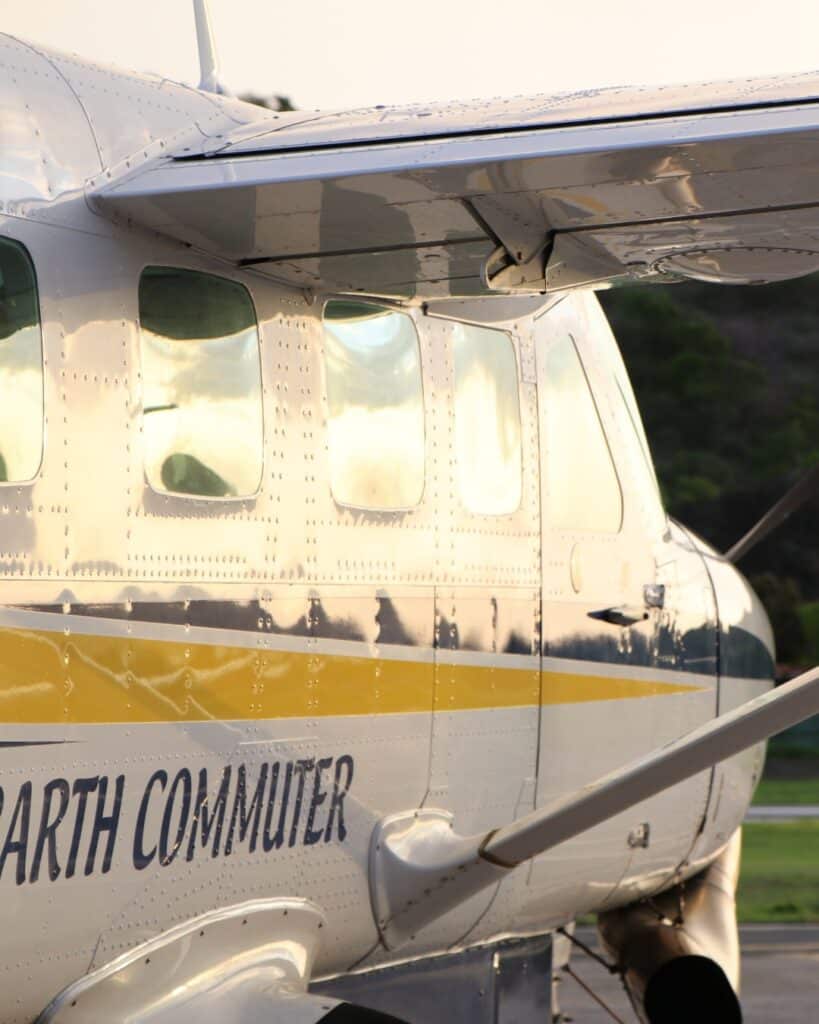
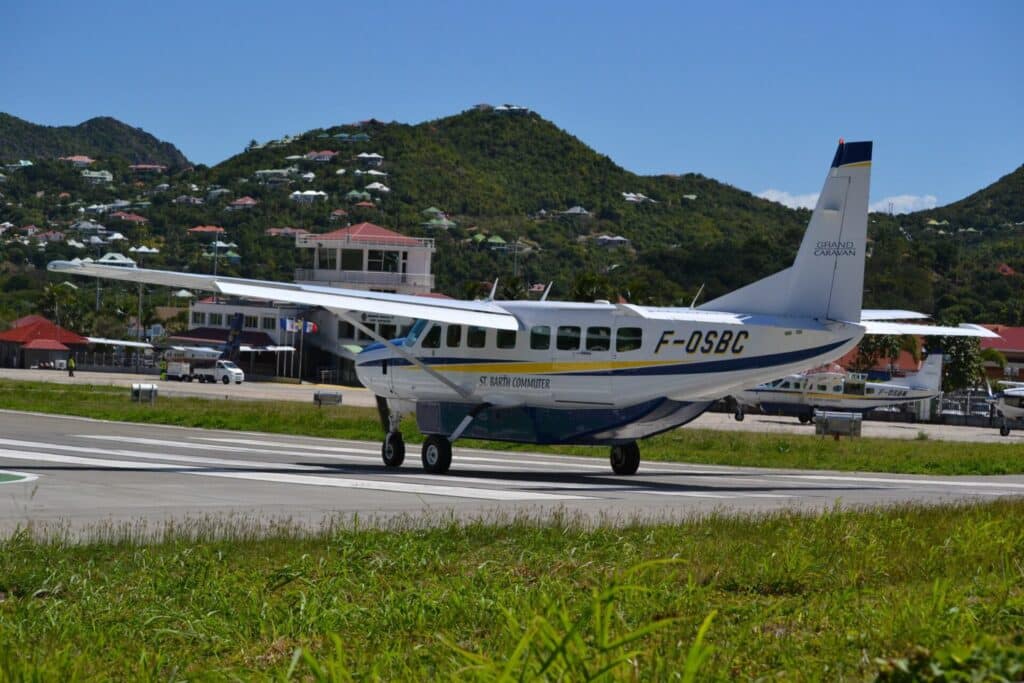
With five Cessna Grand Caravans and a sixth on order, Saint Barth Commuter is banking on reliability and performance. These aircraft are perfectly suited to the demanding topography of Saint-Barthélemy airport, where landing conditions require both technical precision and knowledge of the terrain.

The company is continually investing in fleet maintenance and modernization. The increase in capacity comes against a backdrop of rising traffic: +27% passengers carried in the first quarter, proof of public confidence.

St Barth Commuter
St Barth Commuter
Saint Barth Commuter
©Saint Barth Commuter

In the face of competition, a service-centred approach

In a regional context marked by competition from airlines such as Winair, Saint Barth Commuter has established itself as the island’s second largest air operator, thanks to a strategy based on quality, regularity and proximity. This position is not the result of a price war, but of a relationship of trust established with customers.

The constant attractiveness of Saint-Barthélemy, combined with the island’s logistical and health needs, means that the company is constantly on the lookout for ways to improve, adapt to regulatory changes and anticipate climatic or economic challenges.

A sustainable, structuring vision

Saint Barth Commuter’s future lies in the continuity of its historical commitment. The company is positioning itself not just as a carrier, but as a strategic player in local development. Its objective remains clear: to guarantee equitable access to mobility services, without ever compromising on safety, customer care and responsiveness.

Maintaining the island’s sovereignty in terms of transport also depends on its ability to control a suitable air mobility tool, locally controlled and managed in the general interest.

For thirty years, Saint Barth Commuter has embodied much more than a means of transport. It symbolizes a vital link between the island and its regional partners, an unwavering commitment to its inhabitants and a rare ability to combine entrepreneurial vision, operational excellence and territorial roots. In a Caribbean region whose equilibrium is often fragile, this airline plays a discreet but fundamental stabilizing role.

Martinique takes a major step forward in its tourism diversification strategy with the announcement of a direct service between Quebec City and Fort-de-France, operated by Air Canada from December 7, 2025. This new service joins existing routes from Montreal and Toronto, consolidating links between the French Caribbean and Canada’s French-speaking province.

A strategic step towards market diversification

For Bénédicte Di Géronimo, President of the Comité Martiniquais du Tourisme (CMT), this new direct link represents a major step forward in the CMT’s vision: “Our ambition is clear: to reduce our dependence on the French market and open up new outbound markets on a long-term basis. Canada, and in particular the province of Quebec, is a natural partner with which we share a language, cultural affinities and a strong sense of complementarity.

She stresses the structural importance of this strategy: “It’s not about one-off operations, but about building lasting relationships with airlines, agencies, the media and travellers. This line with Quebec City is the fruit of a dialogue that began several years ago, and the start of a new cycle. “to convince the airlines. It’s also about seizing opportunities,” emphasizes Bénédicte Di Géronimo – the driving force behind this initiative with SAMAC, the operator of Aimé Césaire airport.

Québec
Bénédicte Di Géronimo

“This line opening is an excellent signal. It shows that the development of tourism in Martinique is on the right track, with clear market diversification choices. She reminds us that the challenge is also to make these services sustainable: “We have to keep working, so that our various projects eventually come to fruition and become part of the long term.”

This new route has a clear objective: to diversify tourist flows beyond the French market, which still accounts for 68% of stayover tourists. Canada, which is growing strongly (+44% between 2019 and 2023), has demonstrated its potential, thanks in particular to an active, French-speaking clientele interested in long stays.

Means to ensure continuity

From December 2025 to April 2026, the weekly Sunday flight between Quebec City and Fort-de-France will be operated by a 169-seat Boeing 737, with a top-of-the-range business class. In all, more than 7,000 seats will be offered.

To support the launch, SAMAC provided logistical and financial assistance, including reduced airport charges for 24 months, local marketing campaigns, and easier passenger handling.

Québec
Nathalie Sébastien

Nathalie Sébastien, Chairman of SAMAC’s Management Board, comments: “Aimé Césaire airport is designed to handle up to 3 million passengers. Everything has been thought out to ensure that this new line fits in perfectly, optimizing logistical, human and technological resources.” She adds: “We’re going to support the line’s long-term viability through two levers: marketing support to develop the flow out of Martinique, and financial support to encourage Air Canada.”

Real teamwork

According to Valérie Césarine, SAMAC’s Sales and Marketing Director: “This hard work has brought us good news in terms of connectivity. It’s a collective success that reflects the commitment of an entire region.

Québec
Valérie Césarine

This success is based on a joint mobilization. ” All SAMAC departments were called upon to welcome this flight in the best possible conditions: from the Aeronautical Development department, which piloted the project with Air Canada, to the operations teams preparing the facilities for the new time slots, or the IT department for the integration of passenger processing systems, the legal and accounting departments for adjusting the contracts and terms and conditions of charges, not forgetting airport compliance, essential for guaranteeing the safety and fluidity of operations,” insists Valérie Césarine.

A clear focus on gastronomy and nature

CMT has chosen two pillars to build a strong identity with the Canadian public: gastronomy and biodiversity. “It’s important to be visible in a territory that’s sending out messages.

Legibility creates almost indestructible links,” defends Bruno Brival, General Manager of the CMT. This strategy is reflected in the Martinique Gourmande festival, as well as in targeted campaigns and trade shows.

Québec
Bruno Brival

An ambitious marketing strategy supported by CMT

Gaëtan Paderna, CMT Marketing Director, adds: “We’ve already mobilized hoteliers, rental companies and activity providers to build a competitive, easy-to-understand offer.

Québec
Gaëtan Paderna

He explains: “Our strategy is based on two complementary levers. On the one hand, targeted campaigns for the general public in the province of Quebec, using billboards, digital media, media partnerships and events such as the Martinique Gourmande festival. We also work closely with travel professionals: agents, tour operators and distributors, whom we train, accompany and bring to Martinique for familiarization trips. This helps anchor Martinique in the travel options of Canadians.

Air Canada believes in Martinique's potential

Air Canada asserts itself as a key partner in Martinique’s air development. Alexandre Lefèvre, Vice President, North American Network Planning, underlines the importance of this opening: “Opening this route is a real gamble, but the Quebec market has a natural affinity with Martinique. We want to offer a warm, authentic French-speaking destination.

He points out that this new route is part of a wider dynamic of traffic growth to Martinique: “With routes departing from Montreal, Toronto and now Quebec, our commitment is growing. We’ve recorded high load factors, and we’re seeing a real craze for the destination.

Québec

This direct flight from Quebec City is also a response to strong logistical demand: “Many travellers from the Quebec City region used to have to travel several hours to Montreal. From now on, they’ll benefit from a non-stop flight on Sundays, under optimum conditions, with our Boeing 737 equipped with a top-level business class.”

Air Canada also plans to support the route through commercial partnerships with tour operators, hoteliers and Air Canada Vacances. “There’s no guarantee that a route will endure, which is why we need to mobilize the entire chain. But we believe in Martinique’s potential, and we’re ready to work hand in hand with its stakeholders.”

A high-contribution customer base

The figures speak for themselves: 35,325 Canadian tourists in 2023.

Their profile?

– 64% are aged between 25 and 54,

– 56% are managers or employees,

– 17% retired.

On average, they spend 11 days in the area, sometimes more when teleworking, and spend around €1,110 per person.

Towards sustainable, shared success

This new service marks a significant step forward for Martinique. It consolidates its position in the Canadian market, enhances the value of its identity, and illustrates the strength of strategic cooperation between institutions, airline operators and socio-professionals. All that remains now is to make this route a lasting success.

Québec
Québec
Martinique
Québec
Québec

Three world leaders meet at ACI Airport Day to rethink the future of the passenger journey at Caribbean airports

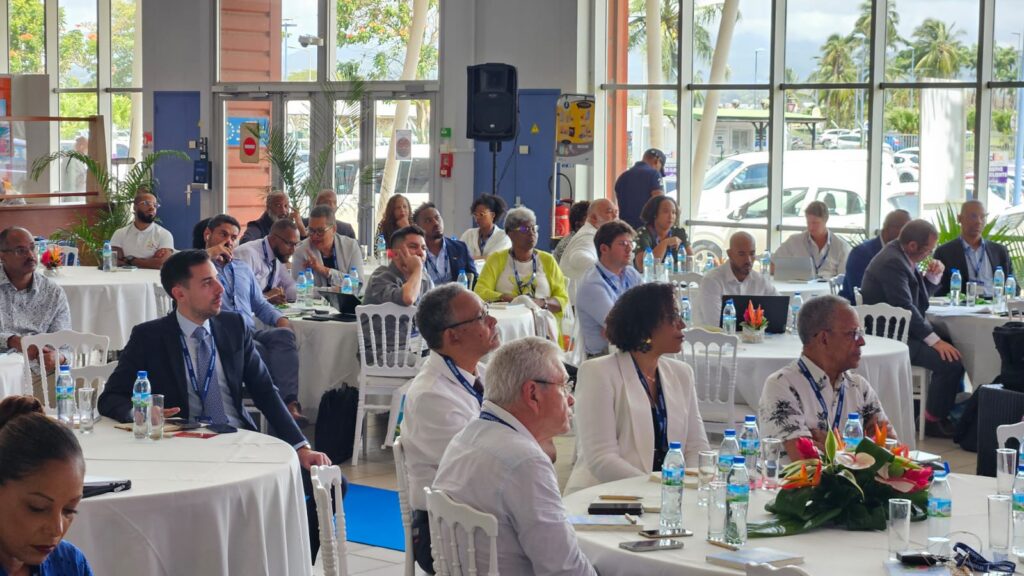
How can we rethink the passenger experience in an increasingly digitalized airport world? This was the question at the heart of the “Technology & Customer Experience” panel organized during ACI Airport Day, which brought together three experts from leading international companies: Embross, SITA and Collins Aerospace.
Hosted by Valérie Vanderhacgen, ACI Airport Day highlighted key issues for airport decision-makers in the Caribbean region.

ACI Airport Day

A shared vision: technology + people = a winning experience

“You don’t go home and say: ‘Today I had a smooth passenger ride’. And yet, that’s exactly what we expect from a good passenger journey.” – Uriel Torres, SITA

Beyond the key words – efficiency, satisfaction, fluidity – the speakers insisted on a strong idea: technology doesn’t replace human contact, it reinforces it.

ACI Airport Day
Stéphane H. Marcoux
  • Stéphane H. Marcoux (Collins Aerospace) spoke at ACI Airport Day of an approach centered on the “seamless journey”, where technologies enable airport staff to get closer to passengers rather than further away.

ACI Airport Day
Alex Gerdts
  • Alex Gerdts (Embross) advocates “ambassador” airports, where the man-machine interface becomes intuitive, reassuring, and complemented by valued human assistance.

ACI Airport Day
Uriel Torres
  • For Uriel Torres (SITA), each airport has to deal with its own identity and passenger profiles: there’ s no one-size-fits-all model, just a tailor-made strategy.

Inspiring examples: from Bogotá to Aruba

The speakers shared several concrete cases that could inspire Caribbean airports:

Automated Passport Control (APC), born in Vancouver, has transformed the arrival experience of cruise flights in the United States, streamlining entry without the need for infrastructure expansion.

The “Happy Flow” project in Aruba, deployed in partnership with the local government, has made it possible to integrate biometrics throughout the passenger journey – from check-in to boarding – offering a seamless, highly secure experience.

– In Colombia, innovations around pre-check security have also considerably reduced friction points.

ACI Airport Day

What about biometrics? Opportunity... or regulatory challenge

While biometrics fascinates with its promise of fluidity, the speakers remind us of the many challenges linked to data protection and government regulations, particularly in Europe (RGPD).

Some Caribbean territories can take advantage of their institutional agility to experiment with adapted models, as long as usage is secure and genuine passenger confidence is built up.

ACI Airport Day

Why it's essential for the Caribbean

In a region where tourism, air transport and cruises are economic mainstays, optimizing the passenger journey is much more than a technical challenge. It’s a strategic opportunity to modernize the image, improve profitability and enhance the appeal of an entire region.

In his editorial work, Richès Karayib sets out to track the transformations that are reshaping the Caribbean‘s tourism and economic trajectories.

ACI Airport Day

Meet the experts