
Christmas in the Caribbean: 4 tasty recipes to try out

Noël

Christmas in the Caribbean is a unique time of celebration, filled with colorful traditions and tasty dishes. The Caribbean islands are known for their festive atmosphere, and cuisine is at the heart of these festivities. The magic of Christmas in this region is palpable, with bright decorations, joyful carols and, above all, dishes that awaken the senses. In this article, we’ll explore four iconic recipes that make Christmas unforgettable: lambi or grilled fish with sosé, Great cake, Christmas ham tuiles and nwel ham.

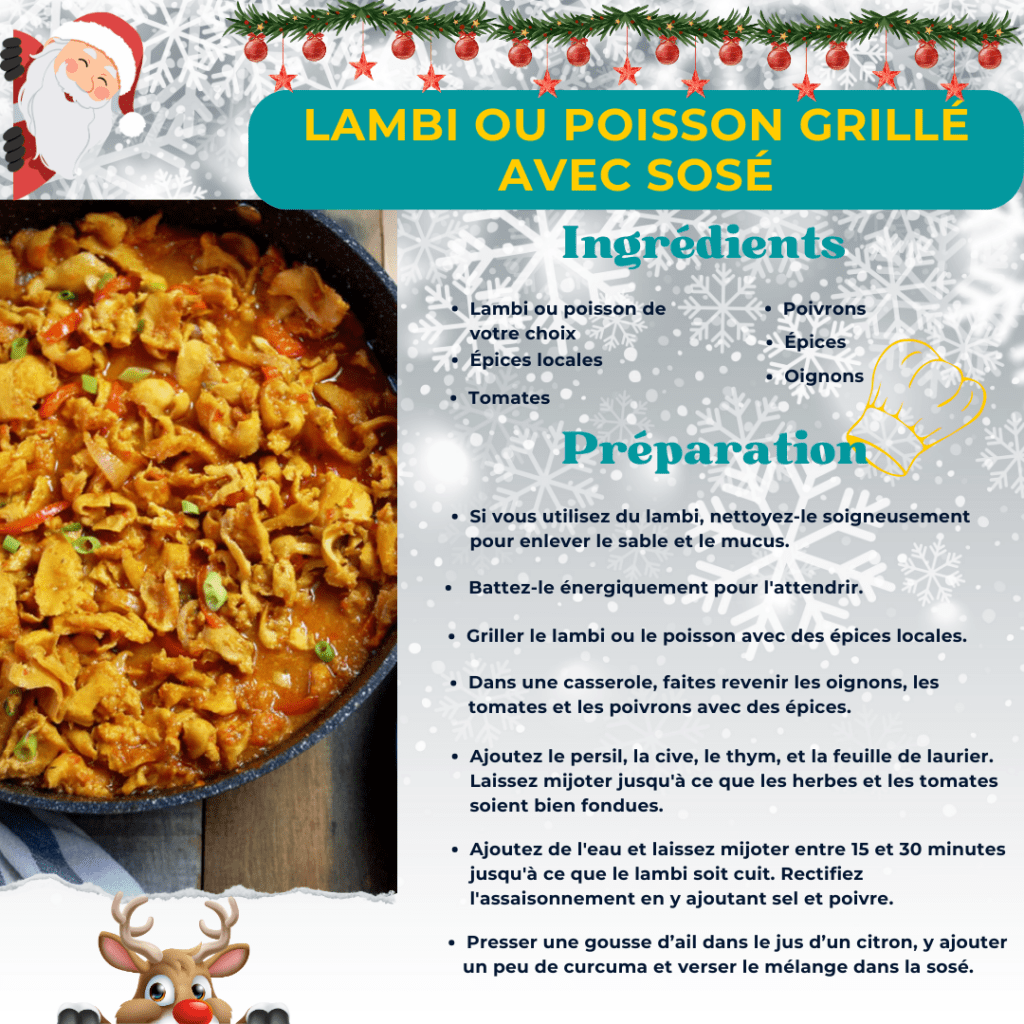
1. Lambi or grilled fish with sosé

Ingredients

  • Lambi or fish of your choice
  • Local spices
  • Tomatoes
  • Peppers
  • Onions

Preparation

  1. Cleaning the lambi: If you use lambi, clean it thoroughly to remove all sand and impurities.
  2. Marinade: Marinate lambi or fish with local spices to enhance flavours.
  3. Grilling: Grill on the barbecue or in a frying pan, taking care to cook thoroughly.
  4. To prepare the sauce: In a saucepan, sauté the onions, tomatoes and peppers with the spices, then add water and simmer until cooked through.

This tasty dish, often served with rice or vegetables, is a staple of Christmas tables in the Caribbean, symbolizing the richness of local maritime resources.

Noël
Lambi ou poisson Grillé avec Sosé

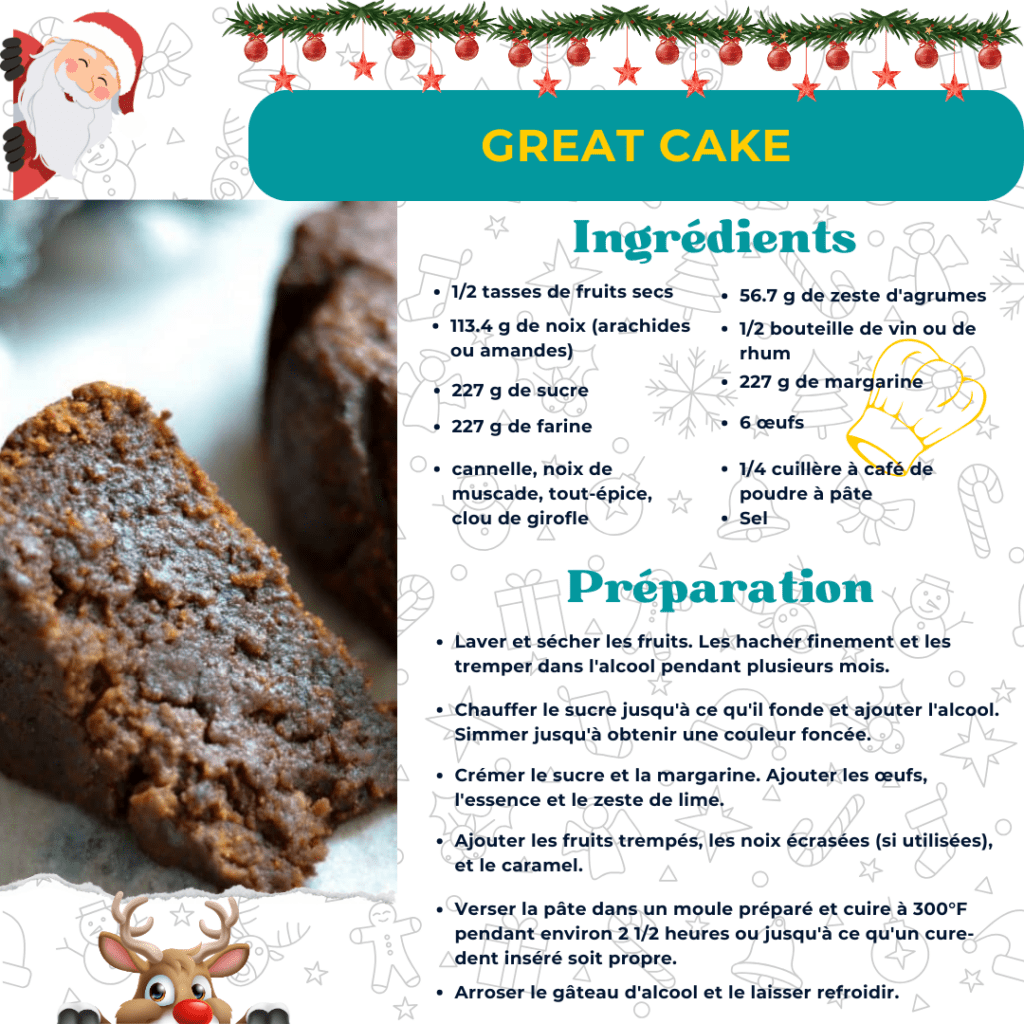
2. Great cake

Ingredients

  • 1/2 cup dried fruit
  • 113.4 g nuts (almonds or peanuts)
  • 227 g sugar
  • 227 g flour
  • 6 eggs
  • Spices (cinnamon, nutmeg, cloves)

Preparation

  1. Fruit preparation: Wash and dry the fruit, then soak it in alcohol for several months for a rich taste.
  2. Caramel: Melt the sugar to a caramel-like consistency. Add it to the mixture.
  3. Mixing the ingredients: In a large bowl, mix the sugar and margarine, then add the eggs one by one.
  4. Adding fruit and nuts: Add fruit and nuts to the dough.
  5. Baking: Pour into a baking tin and bake at 300°F for about 2 hours 30 minutes.

The large cake, often rich in flavor and alcohol, is a tradition that brings warmth and conviviality to festivities. It is often served at family gatherings and is a symbol of Caribbean hospitality.

Noël
Great cake

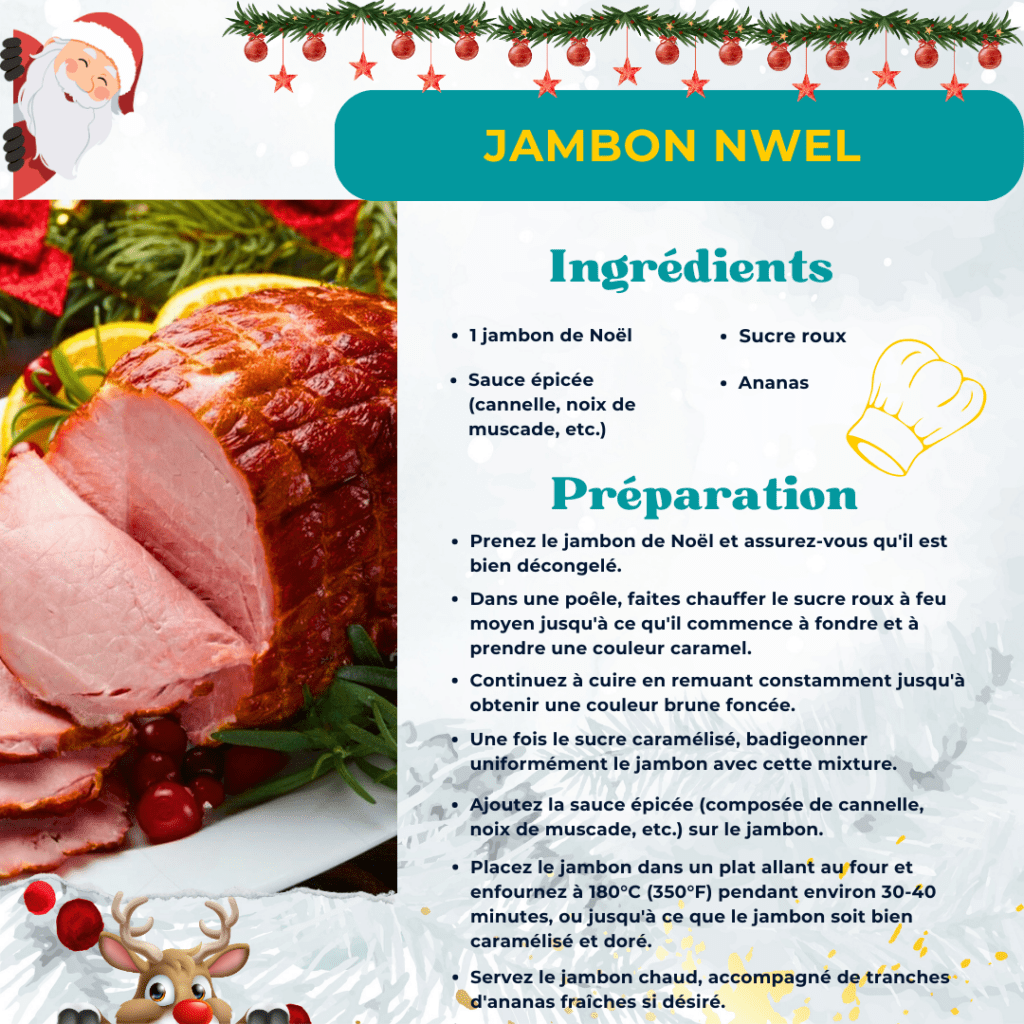
3. Nwel ham

Ingredients

  • 1 Christmas ham
  • Red sugar
  • Spicy sauce (cinnamon, nutmeg, etc.)
  • Pineapple

Preparation

  1. Defrosting: Make sure the ham is completely defrosted before starting to prepare it.
  2. Caramel: Melt the sugar in a pan until you obtain a golden caramel.
  3. Brushing: Brush the ham with the caramel and add the spicy sauce.
  4. Baking: Bake at 180°C for 30 to 40 minutes, basting regularly to keep the ham juicy.

Jamon nwel is usually the main course at Christmas meals, representing celebration and family unity. It is usually served with side dishes such as mashed potatoes or roasted vegetables.

Noël
Jambon Nwel

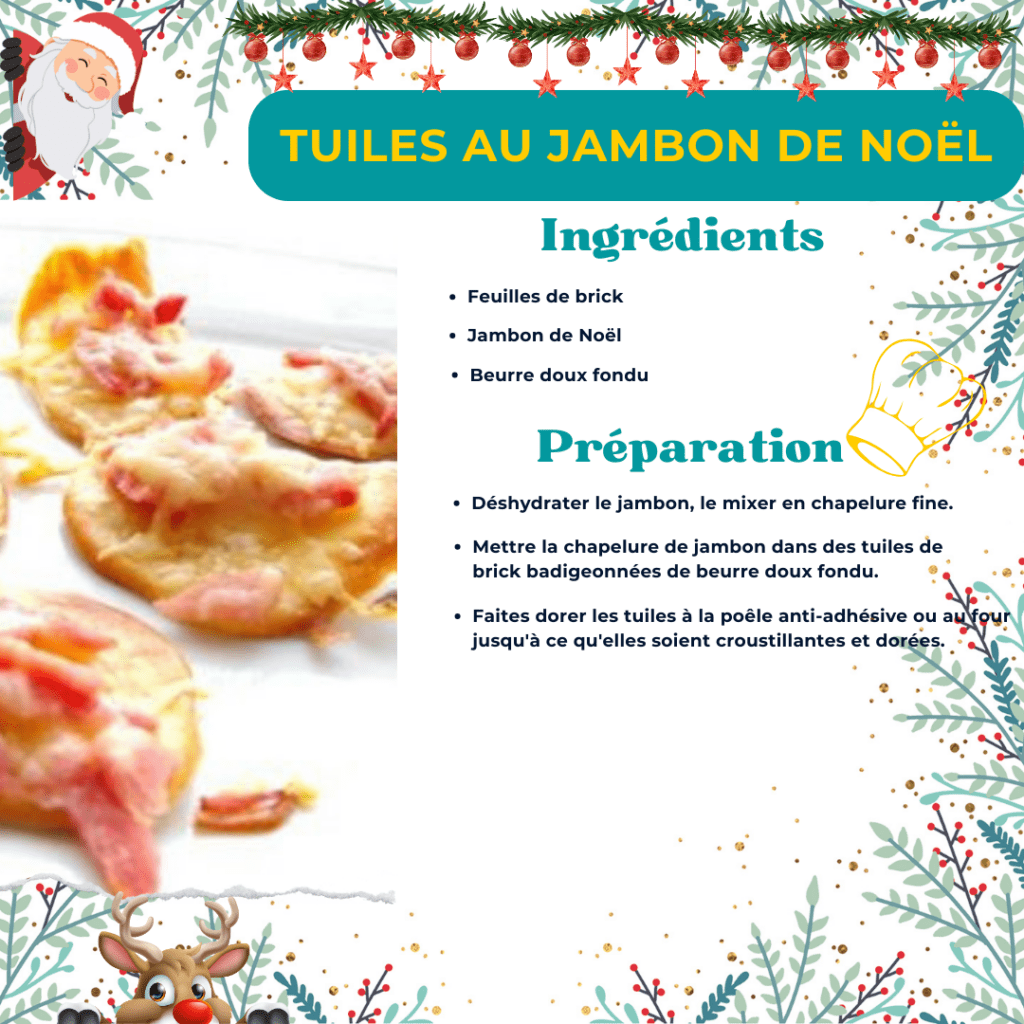
4. Christmas ham tiles

Ingredients

  • Brick pastry
  • Christmas ham
  • Unsalted butter, melted

Preparation

  1. Dehydrating ham: Dehydrate the ham and crumble it into fine crumbs to obtain the perfect texture.
  2. To prepare the brick pastry sheets: Place the ham crumbs in brick pastry sheets, previously brushed with melted butter.
  3. Cooking: Brown the tiles in a non-stick frying pan or in the oven until crisp and golden.

These crunchy tuiles are the perfect start to a festive meal, adding a crunchy touch to any celebration. Served with a spicy sauce or fruit jam, they’re sure to delight your guests.

Noël
Tuiles au jambon de Noel

The flavors of Christmas in the Caribbean are a sensory experience that delights the taste buds. Whether it’s crispy ham tuiles, savory lambi, rich grand gâteau or fragrant nwel ham, each dish tells a story of tradition and conviviality. Not only are these recipes delicious, they also bring invaluable warmth to family Christmas gatherings. Each of these culinary creations evokes memories and shared moments, making every Christmas even more memorable.

Leave a Reply

Your email address will not be published. Required fields are marked *

More articles from RK

Journée mondiale du steelpan
EVENT MANAGEMENT
Tolotra

World Steelpan Day: In Trinidad, Young People March Alongside the Pioneers

This Tuesday, August 11, Trinidad and Tobago celebrates World Steelpan Day with a program built around a powerful idea: connecting those who shaped the movement with the generation that must now carry it forward. In Port of Spain, performances by youth orchestras, the Ancestral Walk, and a closing concert come together to create a day where memory does not stand still. It flows, is played out, and is passed on. In Port of Spain, a day designed to symbolize a passing of the torch Pan Trinbago has chosen “Rhythm and Rise: Youth. Discipline. Culture. Community.” as the theme for the 2026 edition. This choice is no coincidence. For this World Steelpan Day, the organization is clearly placing youth at the center of the program, while paying tribute to the movement’s pioneers. The celebration begins at the Massy Trinidad All Stars Steel Orchestra’s panyard, featuring youth ensembles from various regions of

Read More »
Well mudda sick
HISTORY & HERITAGE
Tolotra

“Well mudda sick!”: But what do these three words really mean?

In the Bahamas, three words are enough to express surprise even before you realize what just happened. Good news breaks, a plan falls through, something exceeds expectations: “Well mudda sick!” might pop up in conversation. Taken literally, the meaning is confusing. In Bahamian usage, however, the expression is much simpler than it seems. Three words that don’t really translate word for word “Well mudda sick!” literally translates to “Well, my mother is sick.” But that’s not what a Bahamian means when they use it. Instead, the expression functions more like an exclamation: “Wow!”, “Oh my!”, “Unbelievable!”, or even “My God!”, depending on the situation and tone. It is precisely this discrepancy that makes it interesting. Someone who knows every single English word can understand the sentence on paper and yet completely miss its meaning in conversation. Here, it’s not just the words that matter. Context, speed, and intonation play a

Read More »
Chattel house
HISTORY & HERITAGE
Tolotra

Chattel House: The Hidden Social History Behind Barbados’ Houses

At first glance, they catch the eye with their wooden facades, their colors, and their simple proportions. Yet Barbados’ chattel houses are not merely an architectural signature. Their form reflects a specific social reality: for a long time, some residents could own their homes without owning the land on which they stood. A chattel house therefore had to be movable. Chattel House: A Home Designed for Traveling To understand this unique aspect, we must look back to the post-emancipation period. In Barbados, the emancipation of enslaved people was completed in 1838. However, the island’s land structure remained deeply shaped by the sugar economy. As early as the 17th century, the expansion of sugarcane cultivation had led to the concentration of land in the hands of large plantations. After emancipation, many workers still lived on land belonging to the plantations. They could build a home and own it, without owning the

Read More »

conTACT RK

we'd love to have your feedback on your experience so far

Join The List

Join our Richès Karayib community!  Sign up for our newsletter.

Want To Maximize Your Business Presence On Riches Karayib?

Complete the form to start the application