A challenge shared by the entire region
In response to the recurring Sargassum strandings affecting many Caribbean territories, the SARSEA project (Sargassum Regional Strategies for Ecosystem-based Actions) has been bringing together regional institutions, experts, and local governments for several years around a common goal: to strengthen these territories’ capacity to anticipate, manage, and make the most of this phenomenon. Led by Expertise France and the Commission of the Organization of Eastern Caribbean States (OECS), with support from the French Development Agency (AFD), the European Union, and local partners such as the Guadeloupe Region, the program promotes the sharing of experiences and the development of solutions tailored to Caribbean realities.
Dominica, a hub for regional trade
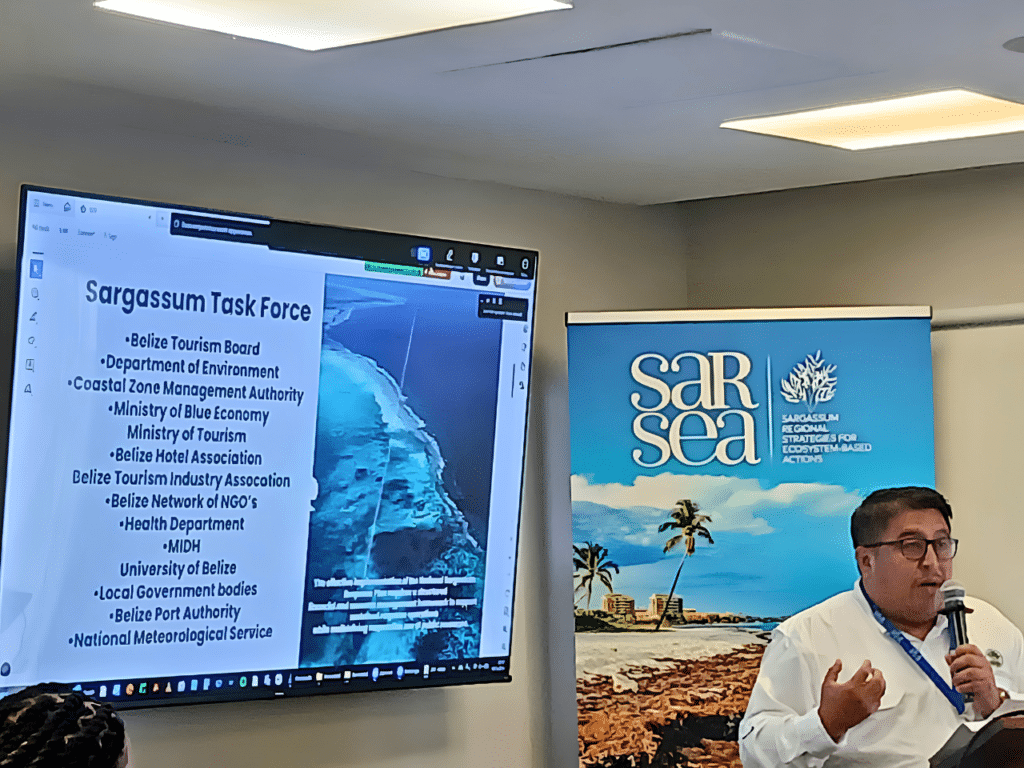
Faced with a common challenge, an increasing number of territories in the region are coming to see cooperation as one of the most effective ways to make progress. With this in mind, a series of regional meetings was recently held in Dominica, bringing together government representatives, technical experts, regional organizations, civil society actors, and professionals from several Caribbean islands.
These discussions provided an opportunity to share on-the-ground experiences, identify best practices already in place, and explore new courses of action to improve the management of Sargassum strandings throughout the region
Martinique and Guadeloupe Share Their Expertise
This spirit of cooperation continued through a study mission organized in Martinique and Guadeloupe. A delegation composed of representatives from nine Caribbean states and territories was invited to learn about the locally developed systems for monitoring, collecting, and managing Sargassum strandings.
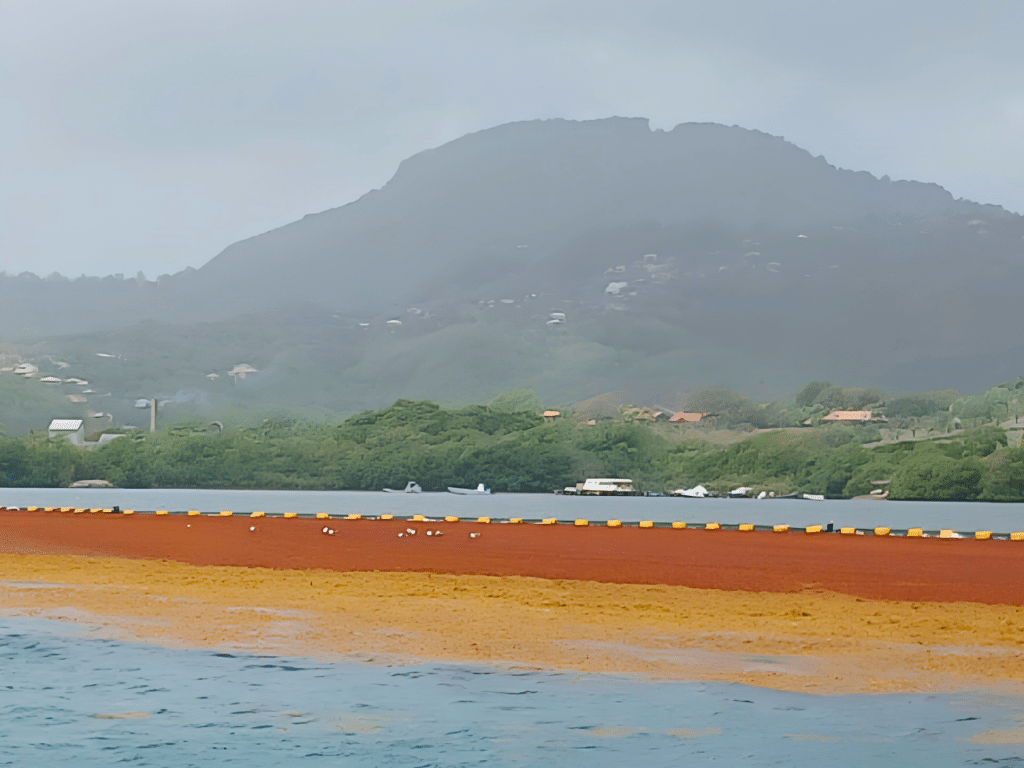
In particular, participants were able to observe environmental monitoring systems, offshore containment systems, early-warning tools, and several initiatives aimed at utilizing these algae. This field trip highlighted the expertise developed over the years by stakeholders in Martinique and Guadeloupe who face this phenomenon on a recurring basis.


Toward a More Resilient Caribbean
Beyond the technical aspects, these meetings reflect a broader goal: to strengthen the resilience of Caribbean regions in the face of contemporary environmental challenges.
Against a backdrop marked by the effects of climate change, the preservation of ecosystems, and the need to protect coastal economies, regional stakeholders are seeking to develop responses tailored to the realities of island life. Sharing experiences, pooling knowledge, and developing joint projects are now seen as essential tools.

A Strengthened Partnership for Coordinated Action
This commitment to working together was also demonstrated by the recent signing of a memorandum of understanding between Expertise France and the Guadeloupe Region. Through this partnership, the two institutions aim to strengthen the coordination of their efforts, promote the sharing of expertise, and support the development of innovative solutions that will benefit the entire Caribbean region.
The goal is clear: to avoid duplication of effort, improve the flow of knowledge, and encourage a more coherent approach to a phenomenon that extends far beyond administrative boundaries.
Building Tomorrow's Solutions Together
Sargassum is one of the many challenges facing the Caribbean today. Yet, beyond the difficulties it causes, it also highlights the ability of these regions to collaborate, innovate, and learn from one another.
Through these meetings, field missions, and regional partnerships, a vision of the Caribbean based on solidarity, the sharing of expertise, and collective action is gradually taking shape. Faced with a common challenge, the answer now seems clear: a stronger Caribbean is built together.
Sargassum poses a major challenge for the Caribbean because its strandings affect multiple territories at once. It impacts coastlines, tourism, fishing, coastal ecosystems, and the quality of life for affected communities. Since the phenomenon transcends administrative boundaries, local responses are not always sufficient. Regional cooperation makes it possible to better anticipate arrivals, share management methods, and develop solutions tailored to island realities.
The SARSEA project supports Caribbean regions in implementing joint strategies to address the sargassum problem. It promotes the sharing of experiences among institutions, experts, local governments, and on-the-ground stakeholders. Its goal is to strengthen these regions’ capacity to monitor Sargassum strandings, organize collection efforts, test containment methods, and explore ways to repurpose the seaweed. The project takes a regional approach, allowing each island to learn from the solutions developed by others.
Martinique and Guadeloupe regularly face sargassum strandings. This experience has enabled them to develop monitoring tools, early-warning systems, collection mechanisms, and initiatives to put the sargassum to good use. In the article, these two territories are presented as sources of expertise for other Caribbean states and territories. Their role is therefore significant, as they demonstrate how local experience can inform a collective response across the Caribbean.