
Haiti – DeeDee Casimir, Last Hoorah at G-Baby’s and Haitian heritage at the American Black Film Festival (ABFF)

DeeDee Casimir

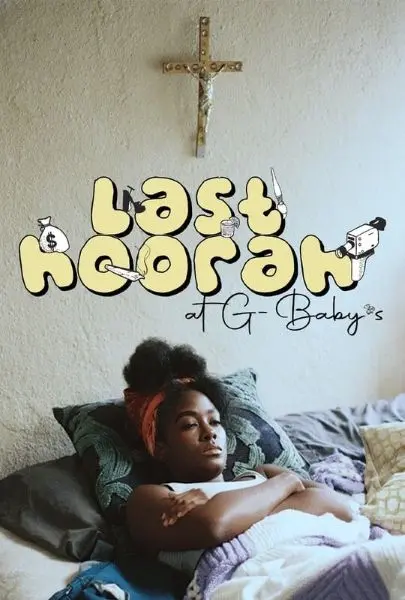
DeeDee Casimir, a young Haitian-American director, is making a name for herself at this year’s American Black Film Festival (ABFF) with her short film Last Hoorah at G-Baby’s, a finalist in the ABFF HBO Short Film Competition. In a work that is both funny and poignant, she pays homage to her Haitian roots while shaking up the codes of African-American cinema. Her journey, marked by resilience and creativity, embodies the vitality of Caribbean voices asserting themselves on the international scene. Portrait of an artist who makes Haitian heritage shine at the heart of Caribbean Heritage Month.

An inspiring story of Haitian heritage and the American dream

Born in New York to Haitian parents, DeeDee Casimir grew up in a large family where solidarity and the memory of ancestors were central. The youngest of seven children, she was soon confronted with loss and the need to reinvent herself. Today, this dual background – Haiti and the United States – feeds her imagination and artistic sensibility. The ABFF, a major event for Afro-descendant creators, offers her an ideal platform to share her singular view of American society and her own roots.

DeeDee Casimir
DeeDee Casimir

Last Hoorah at G-Baby's: A short film combining humor, grief and resilience

ABFF HBO Short Film Competition honors Last Hoorah at G-Baby’s, a film that delicately captures the complexities of coming of age. Naja, the heroine, must cope with the death of her grandmother, precariousness and the threat of eviction in gentrifying Brooklyn. With the help of her best friend, she pulls out all the stops: organize the party of the year to save the family apartment.

Fueled by DeeDee Casimir’s personal anecdotes, this story explores the notion of transmission, community and survival. Here, humor serves as a shield against pain, and celebration becomes an act of resistance in the face of marginalization. Selected for the ABFF HBO Short Film Competition, the film stands out for its emotional accuracy and aesthetic, inherited from the director’s career in fashion and publishing.

DeeDee Casimir
ยฉfilmfreeway.com
DeeDee Casimir
ยฉfilmfreeway.com
DeeDee Casimir
ยฉfilmfreeway.com
DeeDee Casimir
ยฉfilmfreeway.com

The impact of Caribbean Heritage Month on talent visibility

Caribbean Heritage Month, celebrated every June, highlights the contributions of the Caribbean diasporas to American culture. Through the ABFF HBO Short Film Competition, DeeDee Casimir is part of this dynamic of recognition and valorization. Her film, inspired by the story of her Haitian family, is a reminder of the extent to which the Caribbean shapes the imagination and identity of black artists in the United States.

Casimir’s presence at ABFF is a tribute to the resilience of Haitian communities, often faced with exile, precariousness and the need to reinvent home. His work engages with the realities of the diaspora, while opening up new perspectives on the representation of black women.

DeeDee Casimir
ยฉfilmfreeway.com
DeeDee Casimir
ยฉfilmfreeway.com

ABFF HBO Short Film Competition: A springboard for emerging filmmakers

DeeDee Casimir

The ABFF HBO Short Film Competition, one of the most respected African-American short film competitions, offers five finalists exceptional visibility each year. Selected films benefit from a prestigious screening in Miami Beach, professional support and a financial prize ($10,000 for the winner, $5,000 for the other finalists). This competition, recognized by the Academy of the Oscars, is a real career gas pedal for young talents like DeeDee Casimir.

Taking part in the ABFF HBO Short Film Competition means joining an international network of creators, producers and broadcasters, and helping to renew the language of contemporary film noir. The 2025 edition, which takes place from June 11 to 15 in Miami Beach, then online on ABFF PLAY, promises an eclectic and committed program.

DeeDee Casimir: An artistic and social commitment

A graduate of Howard University and Loyola Marymount University, DeeDee Casimir has been honored by such programs of excellence as Academy Gold Rising, Ghetto Film School and the Group Effort Initiative. Her commitment goes beyond the artistic sphere: she campaigns for the authentic representation of black women and the valorization of Caribbean heritages.

Her style, both audacious and accessible, captivates with its ability to blend humor, emotion and social criticism. In telling Naja’s story, she questions the notion of respectability, the pressure of social norms and the quest for emancipation. Her work, hailed by the ABFF HBO Short Film Competition, is part of a tradition of committed cinema, conveying meaning and hope.

DeeDee Casimir
DeeDee Casimir

By selecting Last Hoorah at G-Baby’s for the ABFF HBO Short Film Competition, the festival has established DeeDee Casimir as one of the most promising voices in Afro-Caribbean cinema. Her path, marked by her faithfulness to her Haitian roots and the audacity of her vision, is inspiring a new generation of creators eager to tell true, complex and universal stories. Through his film, a whole section of Caribbean history is invited onto the international stage, reminding us of the strength of storytelling and the power of transmission.

Leave a Reply

Your email address will not be published. Required fields are marked *

More articles from RK

Well mudda sick
HISTORY & HERITAGE
Tolotra

“Well mudda sick!”: But what do these three words really mean?

In the Bahamas, three words are enough to express surprise even before you realize what just happened. Good news breaks, a plan falls through, something exceeds expectations: โ€œWell mudda sick!โ€ might pop up in conversation. Taken literally, the meaning is confusing. In Bahamian usage, however, the expression is much simpler than it seems. Three words that don’t really translate word for word โ€œWell mudda sick!โ€ literally translates to โ€œWell, my mother is sick.โ€ But thatโ€™s not what a Bahamian means when they use it. Instead, the expression functions more like an exclamation: โ€œWow!โ€, โ€œOh my!โ€, โ€œUnbelievable!โ€, or even โ€œMy God!โ€, depending on the situation and tone. It is precisely this discrepancy that makes it interesting. Someone who knows every single English word can understand the sentence on paper and yet completely miss its meaning in conversation. Here, itโ€™s not just the words that matter. Context, speed, and intonation play a

Read More ยป
Chattel house
HISTORY & HERITAGE
Tolotra

Chattel House: The Hidden Social History Behind Barbadosโ€™ Houses

At first glance, they catch the eye with their wooden facades, their colors, and their simple proportions. Yet Barbadosโ€™ chattel houses are not merely an architectural signature. Their form reflects a specific social reality: for a long time, some residents could own their homes without owning the land on which they stood. A chattel house therefore had to be movable. Chattel House: A Home Designed for Traveling To understand this unique aspect, we must look back to the post-emancipation period. In Barbados, the emancipation of enslaved people was completed in 1838. However, the islandโ€™s land structure remained deeply shaped by the sugar economy. As early as the 17th century, the expansion of sugarcane cultivation had led to the concentration of land in the hands of large plantations. After emancipation, many workers still lived on land belonging to the plantations. They could build a home and own it, without owning the

Read More ยป
Bรฉlya Matinik : 10 titres pour faire du bรจlรจ un rรฉcit du prรฉsent.
MUSIC
Tolotra

Bรฉlya Matinik: 10 tracks that make bรจlรจ a story of the present.

On August 9, 2026, Bรฉlya will officially release *Adoumanman*, a ten-track album conceived as a balance between the bรจlรจ heritage and contemporary creativity. In this album, the Martinican band sets to music themes of migration, memory, transmission, violence, resistance, and hope, without turning a blind eye to the present. Bรฉlya: Heritage as a Starting Point With Adoumanman, Bรฉlya pursues an idea that runs through his artistic approach: remaining deeply rooted in bรจlรจ while allowing this art form to evolve with the times. The group refers to its style as โ€œBรจlรจ Fusionโ€ and performs kโ€™bel, or kadans bรจlรจ, drawing notably on the rhythms of Samaritan and Arlesian bรจlรจ, as well as the musiciansโ€™ experiences with carnival, gospel, zouk, and jazz. The vision behind this new album can be summed up in a few words: โ€œRoots, and openness to the winds of the worldโ€. Adoumanman also uses the phrase โ€œMi Plรฉzi dann.โ€

Read More ยป

conTACT RK

we'd love to have your feedback on your experience so far

Join The List

Join our Richรจs Karayib community! ย Sign up for our newsletter.

Want To Maximize Your Business Presence On Riches Karayib?

Complete the form to start the application