Dominica geothermal power plant . Imagine a Christmas where the light that illuminates your Christmas tree comes not from a polluting energy source, but directly from the heart of the Earth. That’s the promise of Dominica geothermal power plant project, currently under construction at Laudat in the Roseau Valley. Scheduled to be operational on December 25, 2025, this 10-megawatt facility aims to become the first of its kind in the Caribbean Community (CARICOM ) and the second in the Organization of Eastern Caribbean States (OECS). But beyond the technical prowess, it’s a real energy revolution that’s in store for Dominica.
Why is geothermal energy the future of Dominica?
The advantages of geothermal energy: clean, stable energy
Geothermal energy is a bit like having a giant radiator under your feet. By harnessing the Earth’s natural heat, we can generate electricity continuously, 24 hours a day, 7 days a week, without depending on the whims of the sun or the wind. For an island like Dominica, often exposed to the vagaries of the weather, this stability is a major asset. The Dominica geothermal power plant promises to provide clean, reliable energy to around 23,000 homes, while significantly reducing greenhouse gas emissions.
Reducing dependence on fossil fuels: an economic and environmental imperative
Today, Dominica, like many other Caribbean islands, is heavily dependent on imported fossil fuels to generate electricity. Not only is this expensive, it also contributes to air and water pollution. The Dominica geothermal power plant therefore represents a unique opportunity to free ourselves from this dependence, control energy costs and protect the environment. It’s an investment in the future, for a more sustainable and self-sufficient Dominica.
Milestones in the Laudat project: a construction site in full swing
Installing the infrastructure
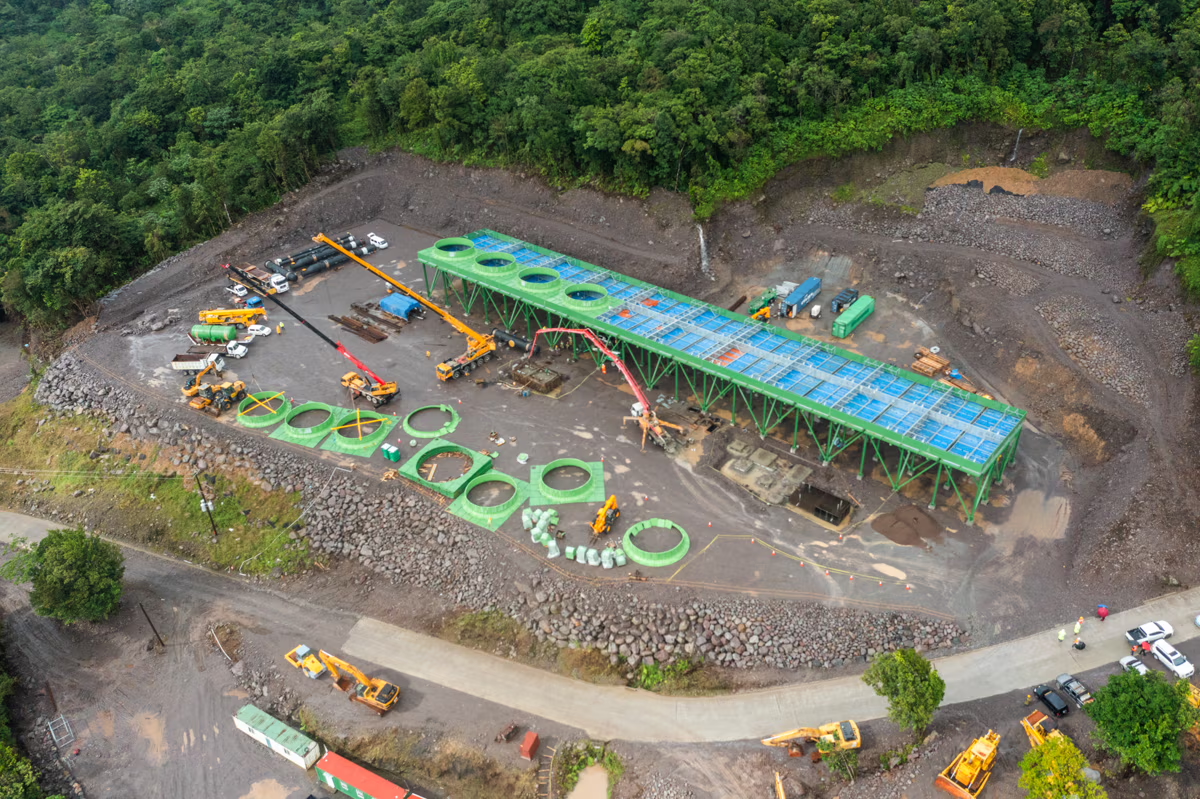
If you visit Laudat today, you’ll be impressed by the sheer scale of the construction site. From the cooling towers to the turbine foundations, everything is being done to ensure that Dominica’s geothermal power plant can deliver on its promise. According to the Honourable Dr Vince Henderson, Minister of Foreign Affairs, International Trade and Energy, the majority of the equipment is already on site. “We are really building our 10-megawatt geothermal power plant,” he declared enthusiastically.
Technical and logistical challenges: how are they overcome?
Of course, a project of this scale is not without its difficulties. Heavy equipment has to be transported, work has to be carried out in sometimes difficult weather conditions, and the efforts of numerous players have to be coordinated. But thanks to rigorous planning and close collaboration between the various stakeholders, these challenges are successfully met. As Amir Junger, Project Manager at Ormat Technologies Inc, the company in charge of construction, points out, “we monitor progress every week and anticipate the next steps”.


Players and partners: who are the architects of this energy transition?
The central role of the Dominica Geothermal Development Company (DGDC)
At the heart of this ambitious project is the Dominica Geothermal Development Company (DGDC), a public-private partnership created specifically to develop geothermal energy in Dominica. The DGDC, the project’s prime contractor, is responsible for coordinating the preliminary studies, supervising the construction work and guaranteeing the proper management and operation of the Dominica Geothermal Power Plant once it is up and running.
DGDC’s team of geothermal, engineering and project management experts is working closely with construction companies, equipment suppliers and local authorities to bring this complex project to fruition. Their expertise and commitment are essential to making the Dominica geothermal power plant a reality.
Ormat Technologies Inc: Technological expertise for Dominica
For the construction and future operation of the plant, DGDC has partnered with Ormat Technologies Inc, a world-renowned American company specializing in geothermal technologies. Ormat is contributing its technical expertise and know-how to the design, construction and operation of the Laudat power plant.
Amir Junger, Project Manager at Ormat, is the face of this collaboration in the field. He supervises the work, coordinates the teams and ensures that the project meets the highest quality and safety standards. His experience and leadership are essential to the success of the Dominica geothermal power plant.

Unwavering support from the Dominican government
The government of Dominica is playing a key role in this project. The Minister of Foreign Affairs, International Trade and Energy, the Honourable Dr Vince Henderson, is a strong advocate of geothermal energy and a major player in the country’s energy transition.
His political commitment and financial support are essential to mobilizing the resources needed to bring this ambitious project to fruition. He is working closely with the DGDC and international partners to ensure that Dominica’s geothermal power plant is a success for the country and the region.

The crucial role of Dominica Electricity Services Limited (Domlec)
And let’s not forget Dominica Electricity Services Limited (Domlec), the national utility, which is playing a crucial role in integrating geothermal energy into the Dominican power grid. Domlec is working closely with DGDC and Ormat to ensure a smooth transition to cleaner, more sustainable energy.
Finally, an Indian company, Kalpataru Projects International Development Company, is in charge of building the transmission network. The project comprises 10 kilometers of power lines and transformer stations, linking Laudat to Fond Cole, where the geothermal energy will be fed into the national grid.
International support: World Bank, CBD and OECS
A project of this scale would not be possible without the support of international partners. The World Bank, the Caribbean Development Bank (CDB) and the Organization of Eastern Caribbean States (OECS) are all contributing their expertise and financial resources to make the Dominica geothermal power plant a reality. This support testifies to the importance of this project for the region and for the world.
Socio-economic impact of the geothermal power plant
Job creation and local development
In addition to producing clean energy, the Dominica geothermal power plant will have a positive impact on the local economy. The construction and operation of the plant will create jobs, stimulate economic activity and foster skills development. It’s an opportunity for Dominica to diversify its economy and create a more prosperous future for its people.
Improving economic competitiveness
By reducing energy costs and improving supply reliability, Dominica’s geothermal power plant will boost the country’s economic competitiveness. Local businesses will benefit from cheaper, more stable energy, enabling them to grow and create jobs. It’s a virtuous circle in which clean energy becomes an engine for economic growth.
Dominica, a geothermal pioneer in the Caribbean
Dominica is not the only Caribbean country interested in geothermal energy. Guadeloupe, with its Bouillante power plant, is a success story in this field. Other islands, such as Saint Kitts and Nevis, Saint Lucia and Saint Vincent and the Grenadines, are also exploring their geothermal potential. But with its Laudat project, Dominica’s geothermal power plant is positioning itself as a leader in the region, showing the way for a successful energy transition.
The Dominica geothermal power plant is much more than just an energy project. It is a symbol of hope, a promise of a more sustainable and prosperous future. By harnessing the Earth’s heat, Dominica is giving itself the means to free itself from its dependence on fossil fuels, protect its environment and create jobs. See you on December 25, 2025 to celebrate this energy revolution!