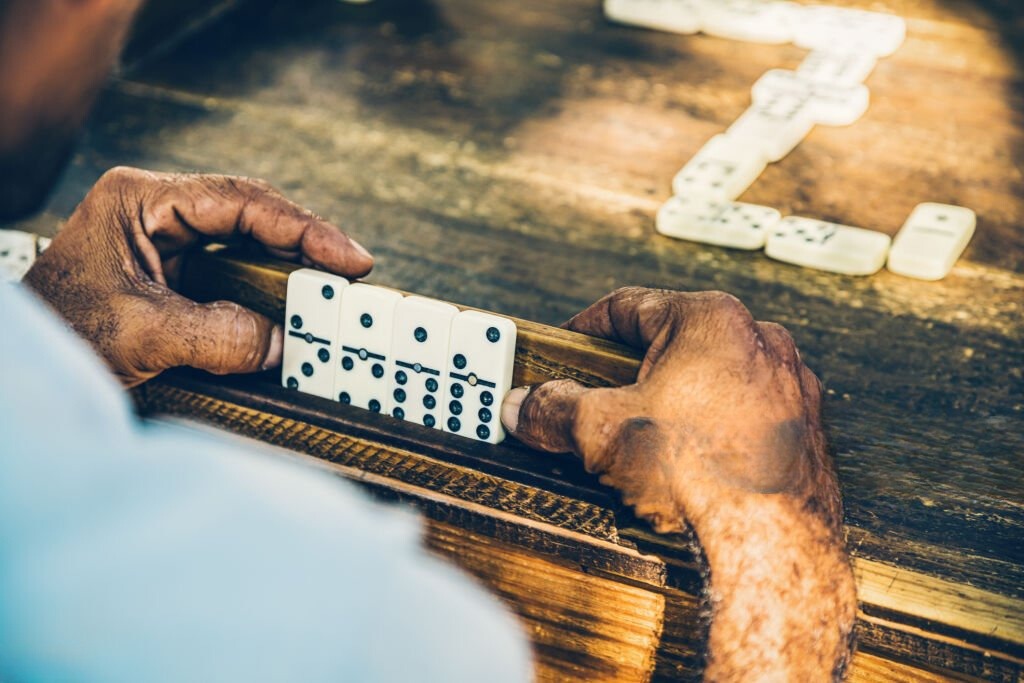
Dominos are more than just a simple game in the Caribbean; they are a vital part of local culture that brings people together during family gatherings and social events. This article will discuss the history of the game of dominos, its variations across the Caribbean islands, its rules, and its cultural importance.
Origin of Dominos : A Fascinating Journey
The captivating game finds its roots in ancient China, where intricately crafted pieces made from bone or ivory were utilized in similar games. It later made its grand entrance into Europe in the 18th century, evolving and adapting into various forms.
Over time, this beloved pastime journeyed to the New World, including the Caribbean, where it was embraced and transformed by diverse cultures. The simplicity and sociable nature of the game have made it an enduring favorite.
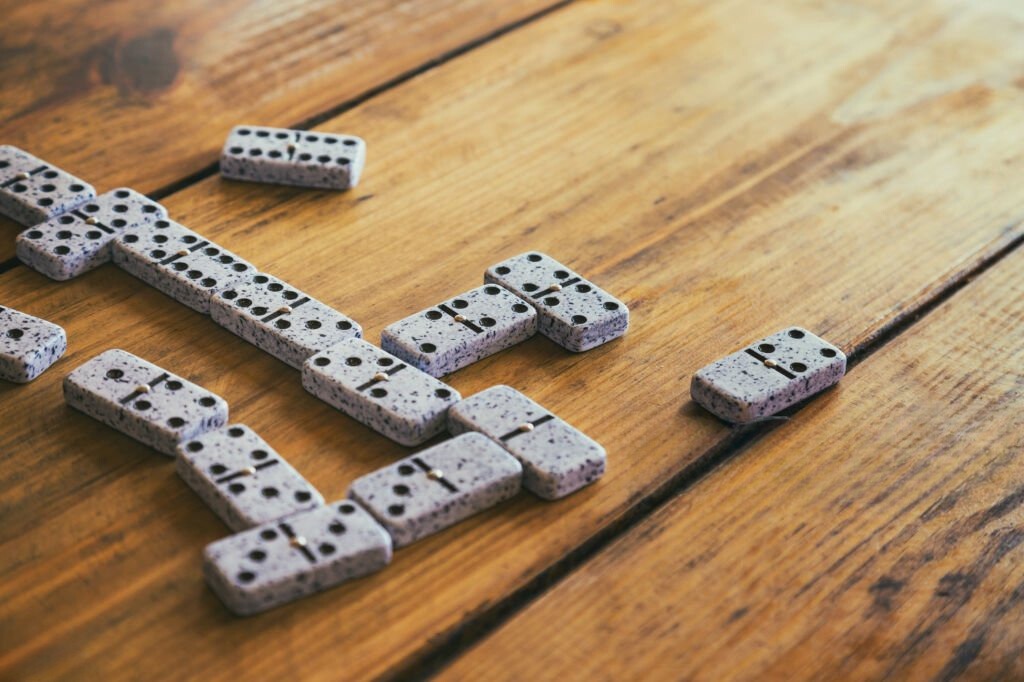
Dominos in the Caribbean: A Deeply Rooted Tradition
In the Caribbean, this exhilarating game serves as more than just a pastime. It is a cherished activity during family feasts, spirited celebrations, and even in casual cafes. The experience offers an incredible opportunity to connect, converse, and create cherished memories.
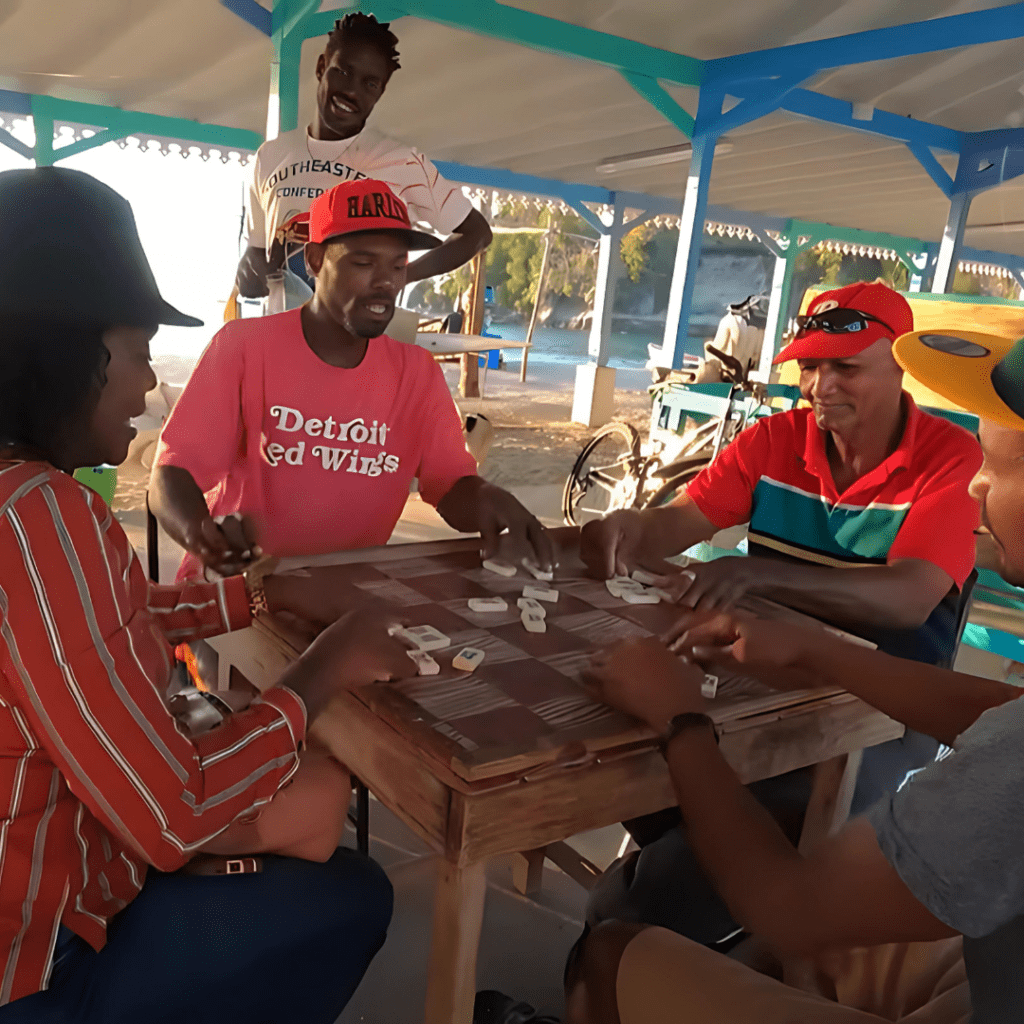
Players typically gather around a table outdoors, enveloped in a friendly atmosphere. Laughter, infectious music, and vibrant discussions are integral to the experience. This game fosters meaningful connections, allowing players to share joyous moments.
Why is it So Widespread in the Caribbean?
The popularity of this beloved game in the Caribbean can be attributed to several compelling factors. First and foremost, it is accessible and can be enjoyed by people of all ages. Additionally, it requires minimal equipment, making it incredibly easy to organize. Finally, the activity is often entwined with festive social events, which amplifies its appeal in Caribbean culture. People enthusiastically engage in this game at parties, family reunions, and even in parks, making it a delightful community activity.
The Rules of the Game Across the Islands : Diverse Variations
The rules of the game can vary from island to island, enriching the overall experience.
Here are some thrilling examples:
Trinidad and Tobago
In Trinidad and Tobago, the game is also immensely popular, often played with four or six players. Here are the electrifying rules:
- Distribution of Pieces: Each player receives seven.
- Start of the Game: The player with the highest double starts the action. If there is no double, the player with the highest piece initiates play.
- Objective and Teams: Players can form dynamic teams of two. The aim is to score the most points by skillfully playing pieces.
- Points: Points are scored based on the values of the pieces laid on the table.
- Bets: Players can also place bets on the outcome, adding an exhilarating competitive dimension.
Cuba
In Cuba, this thrilling game is a central element of social gatherings. The rules include:
- Players: Often played in teams of two against two.
- Distribution of Pieces: Each player receives seven.
- Start of the Game: The player with the highest double ignites the game. If no player has a double, the one with the highest piece starts.
- Objective: The goal is to get rid of all your pieces. Points are counted at the end of each round.
- Bonus Points: Additional points can be assigned for specific combinations (for example, a double placed at the end of a chain).
- Festive Atmosphere: Games are often accompanied by lively music and singing, enhancing the joyful experience.
Dominican Republic
In the Dominican Republic, the game is also incredibly popular. Here are the riveting rules:
- Players: It can be played with four players in teams of two.
- Distribution of Pieces: Each player draws seven.
- Start of the Game: The player with the highest double starts. If there is no double, the player with the highest piece kicks things off.
- Objective: The goal is to score a predetermined number of points (for example, 100 points) to claim victory.
- Upside Down Piece: A variant where players must play pieces upside down to score extra points.
- Score: Points are counted at the end of each round, and players can earn additional points by playing certain doubles.
Saint Lucia
In Saint Lucia, the game is often played during festive celebrations. Here are the rules:
- Players: Games can involve up to six participants.
- Distribution of Pieces: Each player receives six.
- Start of the Game: The player with the highest double starts the fun.
- Objective: The goal is to get rid of all your pieces. Points are counted at the end of each round.
- Variations: There are different regional variations, including specific scoring rules.
Martinique and Guadeloupe
In the islands of Martinique and Guadeloupe, the game is typically played with three players. Here are the exciting rules:
- Players: Often played with three participants.
- Distribution of Pieces: Each player draws seven, with the seven remaining forming the “pioche.”
- Start of the Game: The player with the highest double (for example, the double six) kicks off the game.
- Objective: The goal is to lay down all your pieces before the others. If a player finishes, they “met les autres joueurs cochons,” resulting in point penalties.
- Passing Your Turn: If a player cannot lay down a piece, they must pass their turn by saying “Boudé.”
- Dead Game: If no player can play, the game is considered “dead.” Players then count the points remaining in their hands, with the one holding the least points winning the round.
- Restarting the Game: The winner restarts with a piece of their choice.
- Winner: A player who wins three consecutive games is declared the ultimate champion.
Saint Vincent and the Grenadines
In Saint Vincent, this game is also a beloved social activity. Here are the rules:
- Players: Often played with four participants.
- Distribution of Pieces: Each player receives seven.
- Start of the Game: The player with the highest double initiates the game.
- Objective: Players aim to get rid of all their pieces. Points are counted at the end of each round.
- Varied Scoring: Different scoring rules may apply for doubles or specific combinations, making each game unique and exciting.
The Cultural Importance of Dominos in the Caribbean : A Significant Element
This captivating activity across the Caribbean is immensely significant for local culture. It fosters vibrant social interactions and strengthens the bonds between friends and family. Games are often accompanied by animated discussions, lively music, and laughter, creating a warm and welcoming atmosphere.
A Symbol of Togetherness
Dominos symbolize togetherness throughout the Caribbean. People gather around a table to play, share stories, and spend time together. This game is a way to relax and enjoy the company of others.
By playing dominos, Caribbeans perpetuate a tradition that unites generations. Youngsters learn to play from an early age, and the rules are passed down from generation to generation.
The game of dominos in the Caribbean is more than just simple entertainment. It is a fundamental element of Caribbean culture that brings people together and creates moments of joy. Through its varied rules and festive atmosphere, dominos play an essential role in the social interactions of Caribbeans.
Whether during a night out with friends or a family reunion, dominos remain a symbol of conviviality and strategy, deeply rooted in the heart of Caribbean cultures. By celebrating this game, we also celebrate our heritage and collective history.