
French Guiana – 167,036 tourists by 2025, growth that will reposition the territory

Guyane

French Guiana reaches a milestone in 2025. With 167,036 registered tourists 142,000 in 2024, the region’s tourism dynamic is now structural. Behind this growth, the figures unveiled by the French Guiana Tourist Board and the Tourism Observatory reflect much more than a rise in visitor numbers: they point to economic consolidation, diversification of the customer base and the destination’s growing importance in its regional environment.

This development deserves a closer look. Because beyond the statistics, it reveals what Guyana is really becoming in the Caribbean and South American tourism ecosystem.

Measurable growth confirms the region's appeal

The year 2025 ended with 167,036 tourists, a significant increase over 2024. This growth is based on three complementary segments:

  • – 92,229 external visitors an increase of 7.5
  • – 8,307 cruise passengers
  • – 66,500 endogenous tourists i.e. Guyanese who have made at least one tourist trip to the region.

This structure confirms an essential development: tourism in French Guiana no longer relies solely on international visitors. Domestic tourism is now a mainstay of the sector, contributing to economic resilience and year-round visitor numbers.

Guyane
©Comité du Tourisme de la Guyane
Guyane
©Comité du Tourisme de la Guyane
Guyane
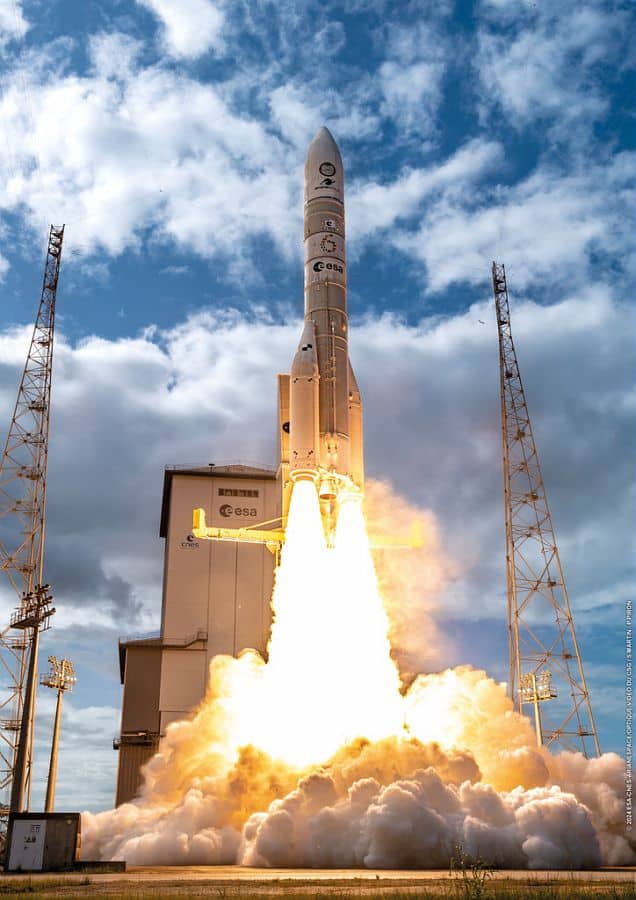
Decollage du lanceur Ariane 6 pour son premier vol VA262, le 09 juillet 2024 au port spatial de l'Europe a Kourou.
Guyane
©Comité du Tourisme de la Guyane

A tourism economy that generates tangible benefits

Economic benefits will reach 160.6 million euros in 2025 an increase of 7.1%. This figure reflects the direct impact of tourism on the local economy: accommodation, catering, transport, cultural activities and services. Total overnight stays amounted to 1.63 million an increase of 9.3%. This increase shows that the destination is not only attracting more visitors, but is also managing to keep them for longer. The average length of stay remained stable at 17.6 days a particularly high figure for the Caribbean.

For the local economy, this stability means spending spread over time and a better redistribution of income throughout the region.

Consolidating air connectivity

Traffic at Cayenne Félix-Éboué airport reaches 242,055 outbound passengers. This represents a 4% increase on 2024 and a 64% increase on 2021. This increase confirms the return to a high level of mobility after the years marked by health restrictions. Overall air traffic is up by 8,5%. This is a sign of a real intensification of traffic flows. This development reinforces the region’s accessibility and directly supports growth in tourism. It also confirms the airport’s strategic role as the main point of entry.

For tourism professionals, this connectivity is a major lever: it determines the region’s ability to attract new markets and retain existing visitors.

Guyane
©Comité du Tourisme de la Guyane

Mainly French customers, but diversifying

Data for 2025 indicate that 60.1% of external visitors come from mainland France. This is still the mainstay of Guyanese tourism, which has historically been linked to travel between French Guiana and mainland France. However, one trend has been confirmed: Caribbean customers are on the rise. The Martinique market, in particular, is experiencing significant growth, driven by an increase in leisure tourism. This dynamic opens up important regional prospects, particularly in terms of tourism cooperation and intra-Caribbean mobility.

The challenge now is to raise its profile in the Caribbean region while consolidating its traditional customer base.

Reasons for staying in French Guiana reflect the region's positioning

The dominant reasons for staying are still :

  • – Professionals: 36.3
  • – Affinity: 35.7

This structure distinguishes French Guiana from many other Caribbean destinations, which are mainly oriented towards beach tourism. The territory retains a strong professional and institutional dimension, linked in particular to the Guiana Space Center and administrative activities.

However, leisure tourism is on the increase, supported by rising consumer spending and greater appreciation of the region’s natural and cultural assets. This trend reflects a gradual repositioning towards a destination of discovery, complementary to other Caribbean territories.

Guyane
©Comité du Tourisme de la Guyane
Guyane
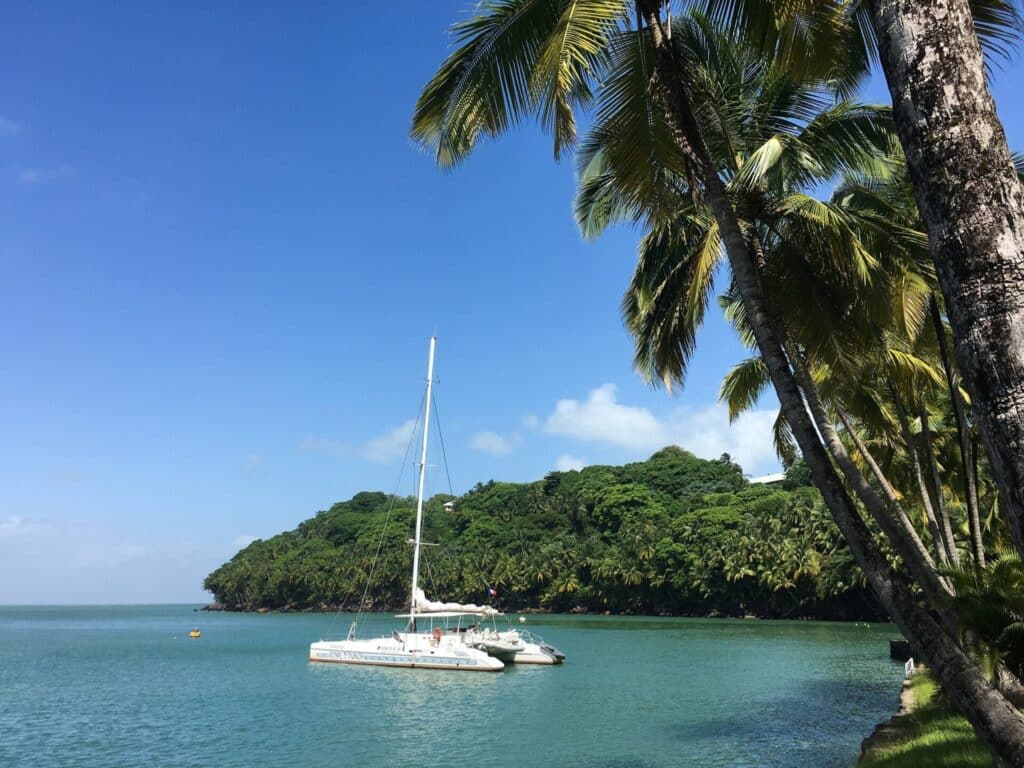
Guyane Française - Bateaux de croisière visitant les îles du Salut French Guyana -
Guyane
©Comité du Tourisme de la Guyane

Exceptional levels of satisfaction

Visitor satisfaction rate reaches 98,7% confirming the quality of the experience on offer. This very high level of satisfaction is a strategic indicator: it promotes word-of-mouth, feedback and the destination’s international reputation. For industry players, this satisfaction is based on several elements: the welcome, the cultural richness, the diversity of landscapes and the authenticity of the Guyanese experience. It also represents a competitive advantage in a regional context where destinations are seeking to differentiate themselves.

What these results mean for French Guiana and the Caribbean

Progress in tourism is not limited to internal improvements. It is gradually redefining the area’s place in the region.

For French Guiana, these results confirm the relevance of the strategies undertaken: developing the offer, strengthening partnerships, targeted promotion and improving customer knowledge. They also provide a solid foundation to guide future investments. On a Caribbean scale, the rise of French Guiana is helping to diversify the regional offer. It offers a complementary alternative to traditional seaside destinations, focusing on nature, culture and immersive experiences.

Guyane
©Comité du Tourisme de la Guyane

2025, a pivotal year for Guyanese tourism

The year 2025 marks a phase of consolidation. Indicators confirm real growth, underpinned by rising visitor numbers, increased economic spin-offs and a high level of satisfaction. In 2026, the Guiana Tourism Board intends to continue its promotional activities and its support for industry players. The objective is clear: to transform this growth into a sustainable dynamic, capable of boosting the region’s appeal over the long term.

With its now solid foundations, French Guiana is asserting itself as a destination in the process of structuring itself, whose development deserves particular attention in the years to come, both for the territory itself and for the Caribbean as a whole.

French Guiana recorded 167,035 tourists in 2025, compared with 142,000 in 2024. This increase confirms solid, sustainable growth in the region’s tourist numbers.

The economic impact of tourism in French Guiana reached 160.6 million euros in 2025, an increase of over 7%. The sector has a direct impact on accommodation, catering, transport and cultural activities.

By 2025, 60.1% of outbound visitors will be from mainland France. Caribbean customers are also on the rise, particularly from Martinique, a sign of growing regional interest in Guiana as a destination.

Leave a Reply

Your email address will not be published. Required fields are marked *

More articles from RK

Andros
TOURISM
Tolotra

Andros: 178 blue holes, 162 km² of protected area, an island with a hole through it

In Andros, the water doesn’t just surround the island—it opens it up. With 178 documented blue holes on land, at least 50 at sea, and 162 km² protected by the Blue Holes National Park, this Bahamian island tells its story through its depths as much as through its shores. An island cut through by water On Andros, the landscape may seem simple at first glance. Pine trees, mangroves, quiet roads, scattered villages, and the clear waters of the Bahamas. But beneath this tranquil surface, the island hides something else: a network of blue holes—deep water openings that lead to caves and underground passages. So when visitors arrive near Captain Bill’s Blue Hole, they aren’t just looking at a round pool surrounded by trees. They’re looking at a gateway. Beneath it, the water tells a story older than the beaches—a story of limestone, rain, rising seas, and caves that filled up

Read More »
MiBelBoat
MARITIME
Tolotra

MiBelBoat Wins Award at VivaTech 2026 for Connecting the Caribbean Boating Industry

In Paris, amid startups and major tech events, an idea that originated in Martinique has just received national recognition. MiBelBoat was honored on June 17 at VivaTech 2026 as part of France Travail’s first “Challenge Innov’ Outre-Mer.” The startup aims to use artificial intelligence to better connect travelers, water sports operators, and maritime professionals in the Caribbean. An award for a startup from Martinique VivaTech 2026 is taking place June 17–20 at Paris Expo Porte de Versailles. For MiBelBoat, its participation in this trade show took on special significance right from the first day. The Martinique-based platform received the “Technology Passport” award during the awards ceremony for the Challenge Innov’ Outre-Mer, organized by France Travail. The project is led by Alexis Mompert and Aurélien Filin. Their goal is simple to state but more complex to achieve: to provide the Caribbean boating industry with a digital tool capable of connecting offerings,

Read More »
Izaline Calister
MUSIC
Tolotra

Izaline Calister: The Voice of Curaçao Who Sings in Papiamentu

For Izaline Calister, a performance often begins with a language. Even before jazz, before the arrangements, before European recognition, there is this simple yet powerful choice: to sing in Papiamentu, the language of Curaçao. Her voice is a memory, a rhythm, a way of inhabiting the world. Born in Curaçao in 1969, Izaline Calister has forged a unique path between the Dutch-speaking Caribbean and the Netherlands. As a singer, composer, and lyricist, she has established Papiamentu as a musical genre in its own right. Her story also raises a broader question: how can a minority language spread without losing its roots? A Childhood Between Voices and an Island Before the big stages, there’s Curaçao. An island where languages intersect every day. Papiamentu coexists there with Dutch, English, and Spanish. But on the street, within families, and in certain aspects of cultural life, Papiamentu remains a language of intimacy—a language of

Read More »

conTACT RK

we'd love to have your feedback on your experience so far

Join The List

Join our Richès Karayib community!  Sign up for our newsletter.

Want To Maximize Your Business Presence On Riches Karayib?

Complete the form to start the application