

Guadeloupe – Fée Karaïb: hair care rooted in Caribbean traditions

Fée Karaïb

Three sisters, one conviction: making hair a cultural link

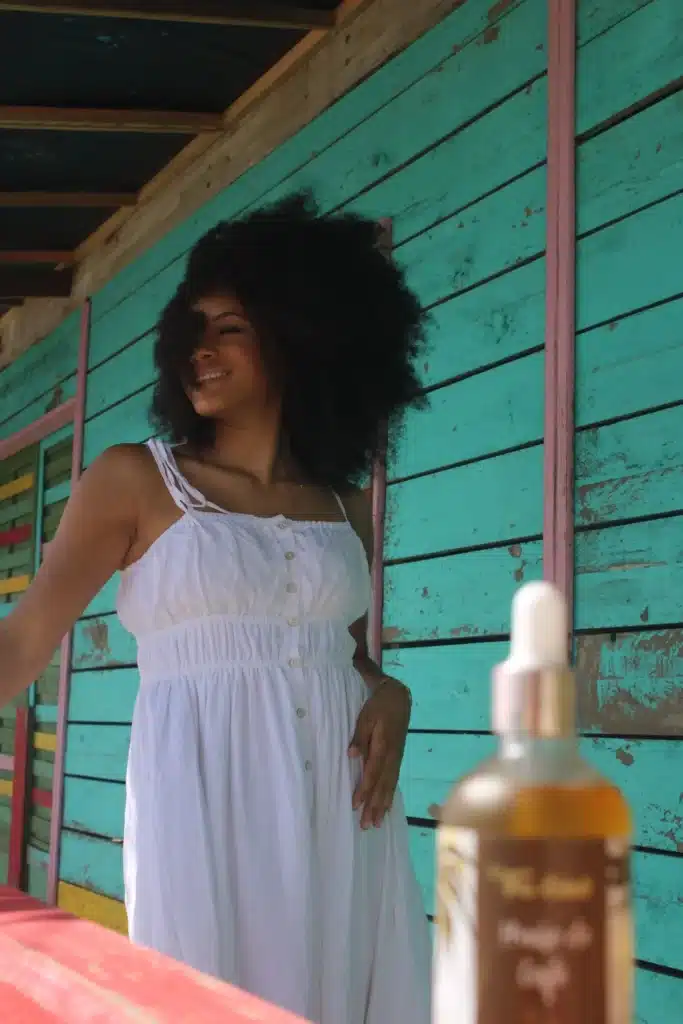
Fée Karaïb was born of the commitment of three sisters united by the same desire: to restore the honor of hair remedies derived from West Indies knowledge. Far from industrial standards, they have chosen an artisanal, local approach that respects all textures. Fée Karaïb is not just a brand.

It’s the story of a heritage handed down by elders, adapted to meet contemporary needs. Their project responds to a twofold requirement: to reconcile modernity and tradition, with a genuine concern for transparency regarding the origin and quality of ingredients. They assert that rediscovering the meaning of beauty means rediscovering simple gestures, handed down through generations, that reconnect us to ourselves as much as to the land.

Fée Karaïb : adding value to Caribbean resources

Anchored in the region, Fée Karaïb relies on ingredients that are emblematic of West Indies agriculture: coffee, mango, shea, beeswax and olive oil. These raw materials are selected not only for their natural properties, but also for their origin, with a view to promoting short supply chains and supporting local producers.

Each hair care product embodies this alliance between efficacy, ethics and collective memory. By promoting the circular economy and sustainable agriculture, Fée Karaïb reinforces a truly committed value chain, which directly benefits women farmers and artisans on the islands. The limited packaging and the quantities produced remain faithful to this desire for authenticity.

Fée Karaïb
©Fée Karaïb
Fée Karaïb
©Fée Karaïb

Products designed to nourish, stimulate and protect

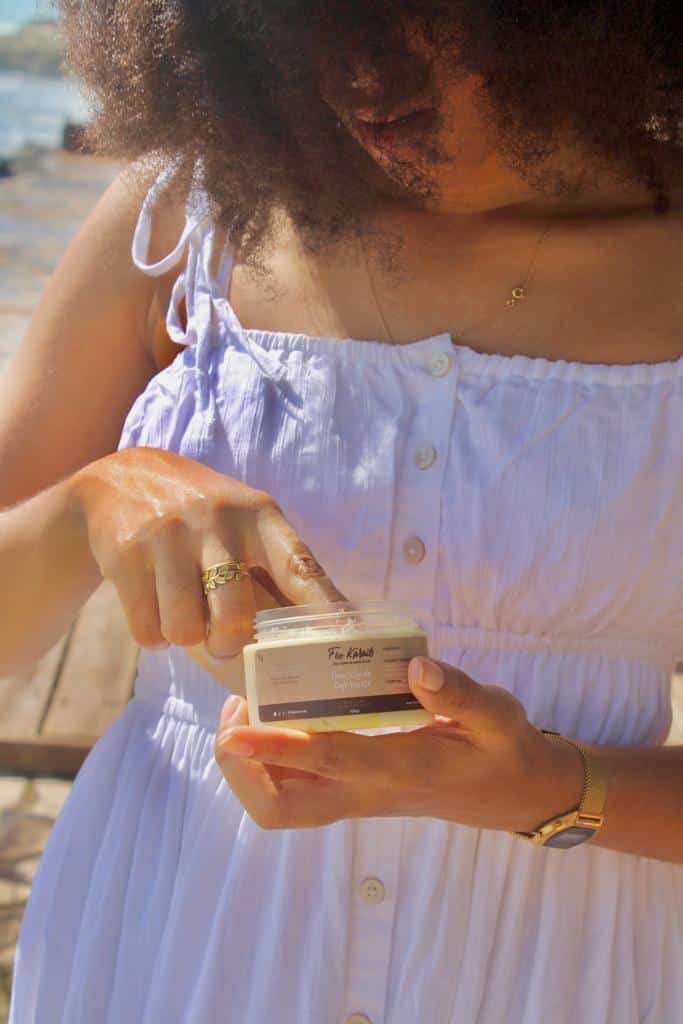
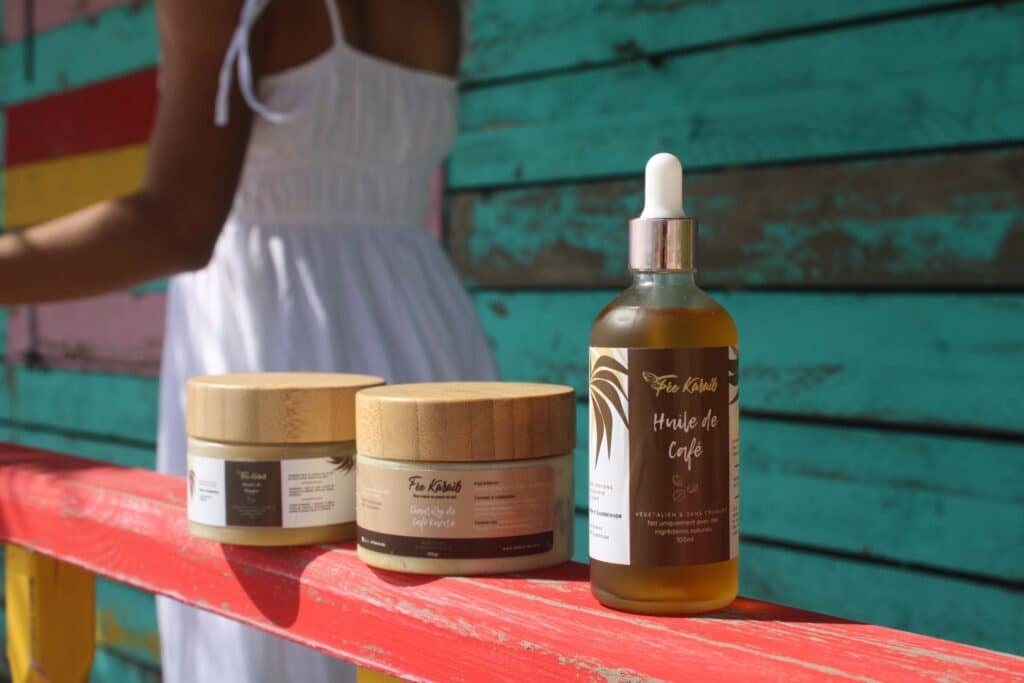
Coffee Mango Butter: nutrition and growth

Rich in vitamins A, C and E, Coffee Mango Butter intensely moisturizes, while coffee-infused oil promotes hair growth. It can be used as a daily care product, an oil bath or a natural detangler. Its gentle texture enhances all hair types, from the smoothest to the most textured. As a complement, it also serves to protect split ends, which are often neglected, offering a natural, multifunctional solution to complex routines.

Fée Karaïb
©Fée Karaïb

Chantilly de Café: strength and shine

Chantilly de Café combines shea butter and coffee oil to strengthen the hair fiber. It stimulates growth while adding shine and suppleness. Ideal as a leave-in or pre-shampoo treatment, it reveals the natural structure of curls and preserves hair moisture. Thanks to its rich formulation, it can also be used as a mask before coloring, helping to fix and protect pigmentation.

Fée Karaïb
©Fée Karaïb

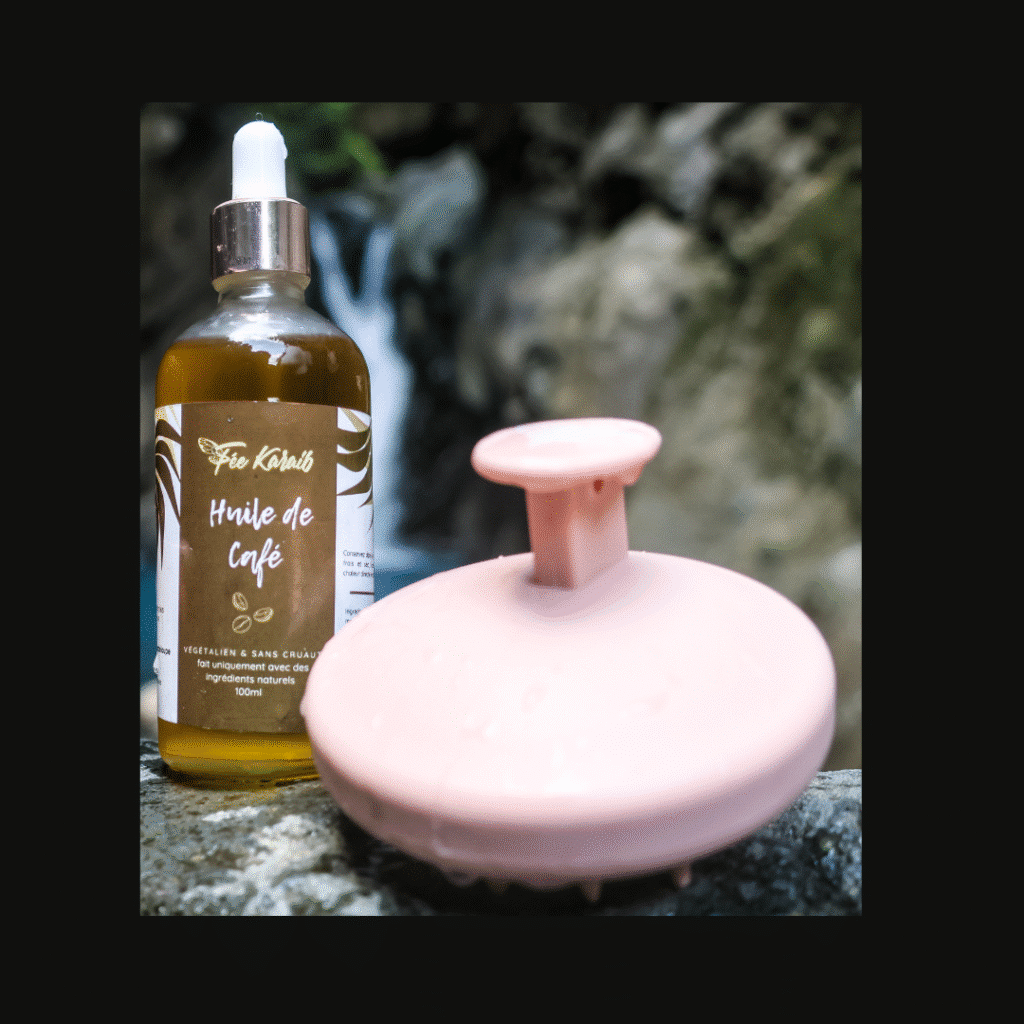
Coffee Elixir and Coffee Oil: a multi-purpose growth ritual

Coffee Elixir and Coffee Oil are concentrates of natural active ingredients that combat hair loss and promote healthy hair growth. Coffee grounds stimulate blood circulation, olive oil strengthens the fiber, and vitamin E protects the scalp. These treatments can be used as a serum, an oil bath, on the lengths, beard or even the skin. They are particularly appreciated by those seeking to limit the use of aggressive chemical products, while retaining their effectiveness and versatility.

Fée Karaïb
©Fée Karaïb

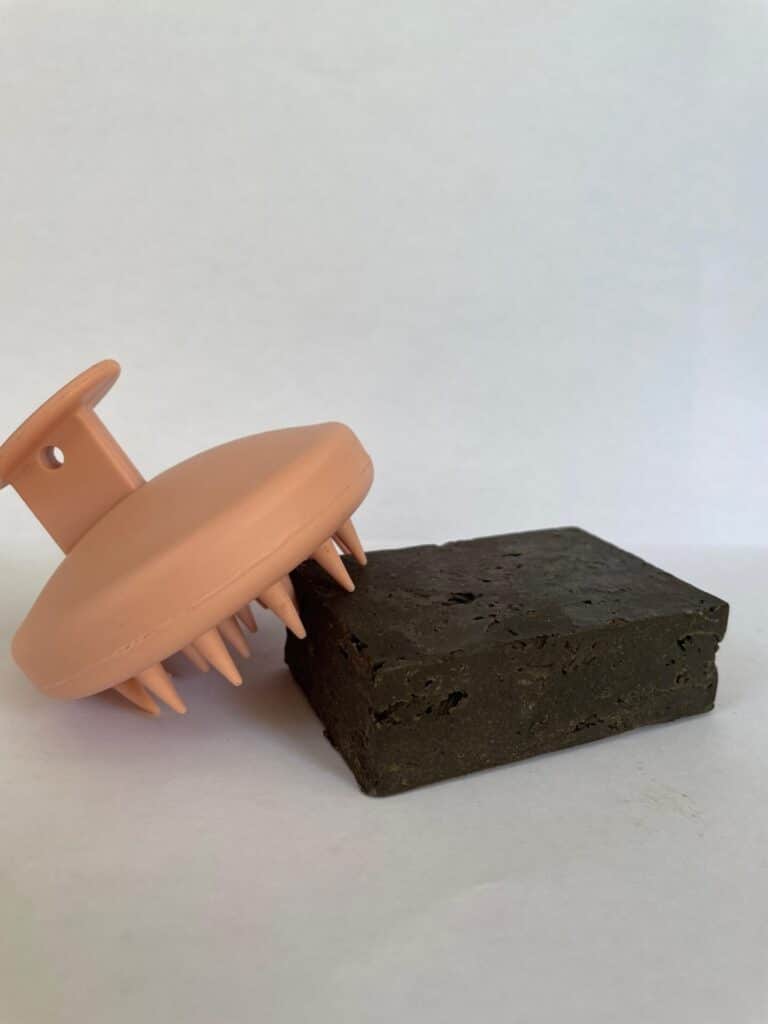
Stimulating Massaging Brush: a tool to activate microcirculation

The Stimulating Massaging Brush is designed for all hair types. Its supple silicone pimples activate scalp microcirculation, promote care absorption and strengthen roots. It also helps eliminate impurities and rebalance the scalp. Used regularly, it visibly improves hair texture and density and supports scalp health, especially after hair stress or a period of medical treatment.

Fée Karaïb
©Fée Karaïb
Fée Karaïb
©Fée Karaïb

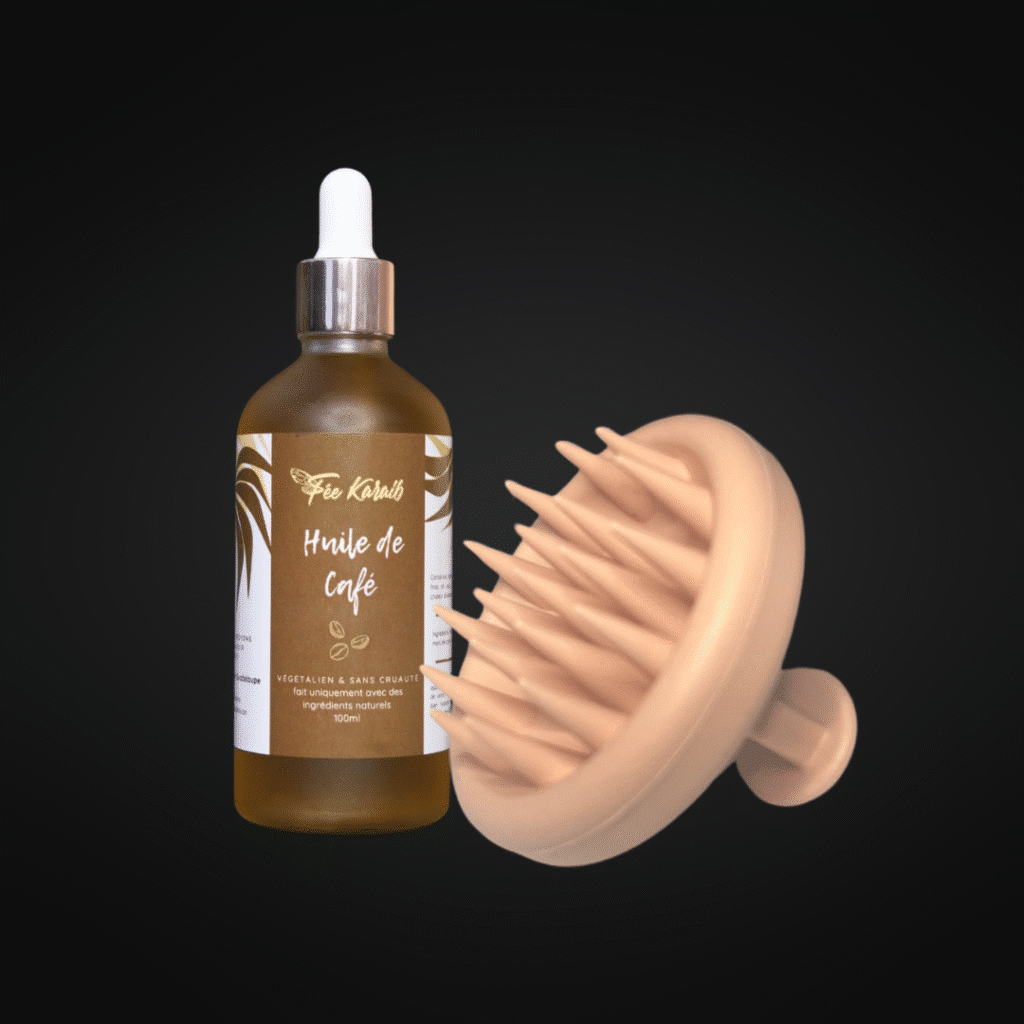
Sprouting set : strengthening and deeply nourishing

Combining Coffee Oil and Massaging Brush, this set offers a complete approach to stimulating hair growth and strengthening hair. It is part of a simple, effective routine: oil application, circular massage, leave-in time and appropriate care. This is one of Fée Karaïb’s flagship products, particularly recommended for people undergoing a hair transition or facing loss of density.

Fée Karaïb
©Fée Karaïb
Fée Karaïb
©Fée Karaïb

Detox and Relax set: purifying the scalp

The Détox et Relax Set combines a solid coffee shampoo, a Brosse Massante and a practical guide. The shampoo purifies the scalp without damaging it, while the brush stimulates the hair follicles. The “Caffeine Hair Awakening” guide helps users identify their hair needs. This complete ritual restores shine, volume and health to the hair, while offering a moment of relaxation. It is particularly suited to sensitive scalps or those exposed to urban pollutants, combining physical care and education with a respectful routine.

Fée Karaïb
©Fée Karaïb

Caribbean coffee, a central ingredient of identity

Fée Karaïb honors coffee not only for its cosmetic virtues, but also for its symbolism. Used in the form of coffee grounds or infused oil, it stimulates circulation, strengthens the fiber, blocks DHT (the hormone responsible for hair loss) and provides a natural antioxidant barrier. This choice of ingredient reflects the company’s commitment to its local roots and its respect for local resources. Combined with respect for the soil, sustainable agricultural practices and short supply chains, coffee becomes a vector of meaning as much as of cosmetic effectiveness.

Fée Karaïb

Végé Kréyol : a space for meeting and anchoring

A strong presence from Fée Karaïb

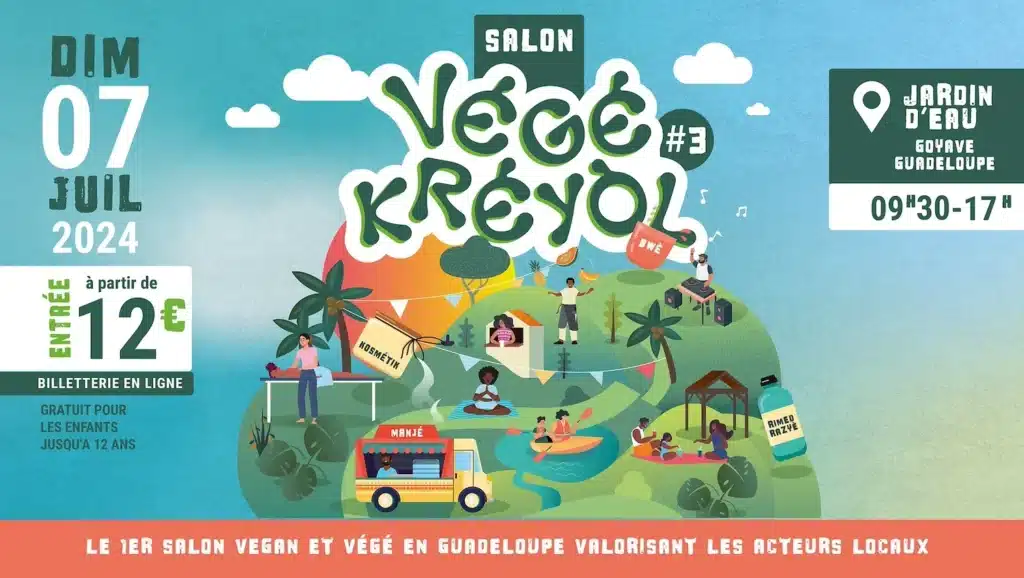
Fée Karaïb plays an active role in the Végé Kréyol event, which brings together players in the fields of plants, well-being and West Indies know-how. The show highlights initiatives based on sustainability, local ties and artisan innovation. For the brand, it’s an opportunity to share its vision and test its products live, while creating a genuine moment of transmission.

Fée Karaïb acts on several fronts: economic empowerment of women, empowerment of farmers, promotion of eco-responsible practices, education in hair health. Every purchase supports a local network, reinforces a short production chain and encourages a different way of consuming cosmetics. Customer feedback often highlights the positive impact on their personal confidence, the rediscovery of their natural hair texture and the quality of human interaction with the founders.

Végé Kréyol: event details

📅 Sunday, July 6, 2025
🕘 From 9:30 am to 5:00 pm
📍 Water Garden – Goyave
🎟️ Admission: €12 (Free for children under 12)
🎯 Objective: to promote plant-based food, Caribbean well-being, local know-how and ecology in a friendly, family atmosphere.

Fée Karaïb

Fée Karaïb embodies a complete approach, at once rooted, artisanal and innovative. Its hair care products are more than just cosmetics: they tell a story, support a territory and help people reclaim their hair identity. Present in the field, notably at Végé Kréyol, the brand traces a singular path in the heart of the Antilles. Fée Karaïb is more than just a name: it’s a promise kept.

Fée Karaïb
Fée Karaïb
Fée Karaïb

Leave a Reply

Your email address will not be published. Required fields are marked *

More articles from RK

Aerial view of the former Arecibo radio telescope dish in Puerto Rico, surrounded by forest
TOURISM
Tolotra

Arecibo, Puerto Rico: A 305-meter telescope collapsed on December 1, 2020

For 53 years, Arecibo, in Puerto Rico, was home to the world’s largest single-dish telescope, with a mirror 305 meters in diameter. Its platform collapsed on December 1, 2020, without causing any injuries. The Arecibo site now houses an educational center open to the public by ticket. On December 1, 2020, at approximately 7:55 a.m. (Puerto Rico time), the Arecibo telescope platform collapsed into the crater above it, where it had stood since 1963. No one was injured. The director of the National Science Foundation (NSF), Sethuraman Panchanathan, expressed sadness over the situation but was grateful that no one had been harmed. In Arecibo, in northern Puerto Rico, this collapse brings to a close a story that began in 1960. That year, teams entered a natural depression in the karst region to install a giant mirror there. A single number sums it all up: 305 meters. The Arecibo Observatory, a
Read More »
Caribbean Cinema
FILM & VIDEO
Tolotra

S7/10 – Stories of Caribbean Cinema: Creating from Small Islands. Texts by Guillaume Robillard. Ciclic, 2026.

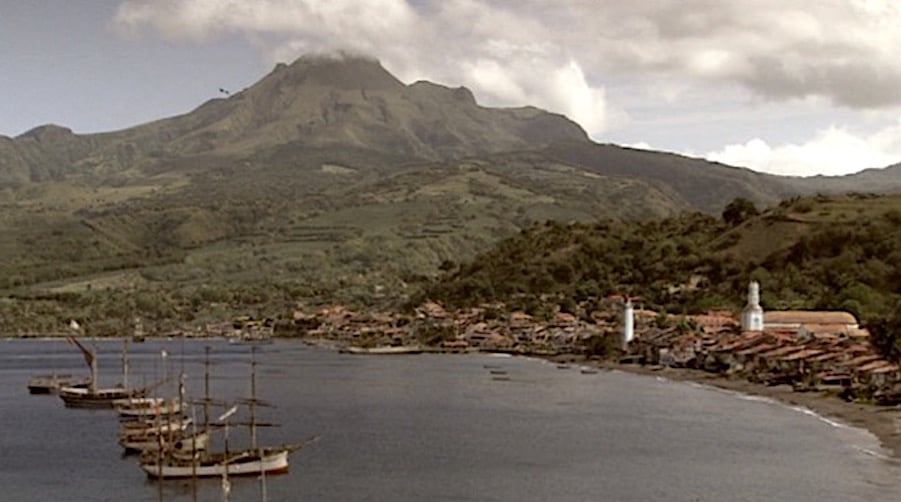
After Cuba, Jamaica, Trinidad and Tobago, Haiti, Guadeloupe, and Martinique, our serieson the history of Caribbean cinema continues its exploration of Caribbean cinema in the early 21st century. This seventh episode takes us from Antigua and Barbuda to Martinique. On one hand, Howard and Mitzi Allen are helping to build a local movie theater in a small island nation. On the other, Guy Deslauriers and Patrick Chamoiseau are depicting the origins of the biguine in 19th-century Saint-Pierre. You are watching the seventh episode of ten. Six episodes are already available on Richès Karayib, and three more will follow. 2001: ANTIGUA AND BARBUDA – “THE SWEETEST MANGO, THE SKIN” BY HOWARD ALLEN The Skin is the second feature film by the Allen couple—Howard directing and Mitzi producing. In 2001, they directed *The Sweetest Mango* (2001) so that their country would have its first “local” feature film to mark the dawn of
Read More »
Vintage black-and-white portrait of Anton de Kom in a light suit and felt hat
HISTORY & HERITAGE
Tolotra

Anton de Kom and Wij slaven van Suriname, a Book Against Colonialism

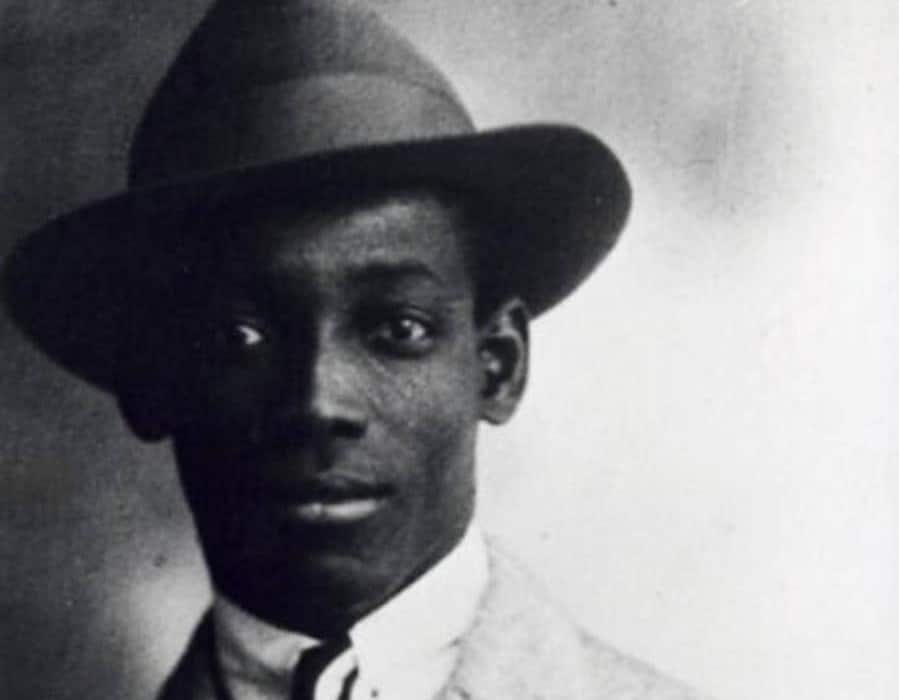
Anton de Kom, born in Paramaribo (Suriname) on February 22, 1898, and died at the Sandbostel camp (Germany) on April 24, 1945, is the author of We, the Slaves of Suriname, published in 1934. This book is described as the first history of Suriname written by a Surinamese author. He wrote it in the Netherlands after his expulsion from Paramaribo in 1933. On February 7, 1933, a crowd gathered in front of the prison in Paramaribo, Suriname—then a Dutch colony—to demand the release of Anton de Kom. Shots were fired. Two protesters were killed and many others were wounded, according to the Canon Netherlands. Arrested six days earlier, the man would never stand trial. The colonial authorities deported him to the Netherlands, and he would never see his country again. Anton de Kom, the son of a slave born in Paramaribo Anton de Kom was born in Paramaribo on February

Read More »

conTACT RK

we'd love to have your feedback on your experience so far

Join The List

Join our Richès Karayib community!  Sign up for our newsletter.

Want To Maximize Your Business Presence On Riches Karayib?

Complete the form to start the application