Heritage Days 2024 in Martinique: A Unique Exploration of Maritime Heritage and Historic Itineraries

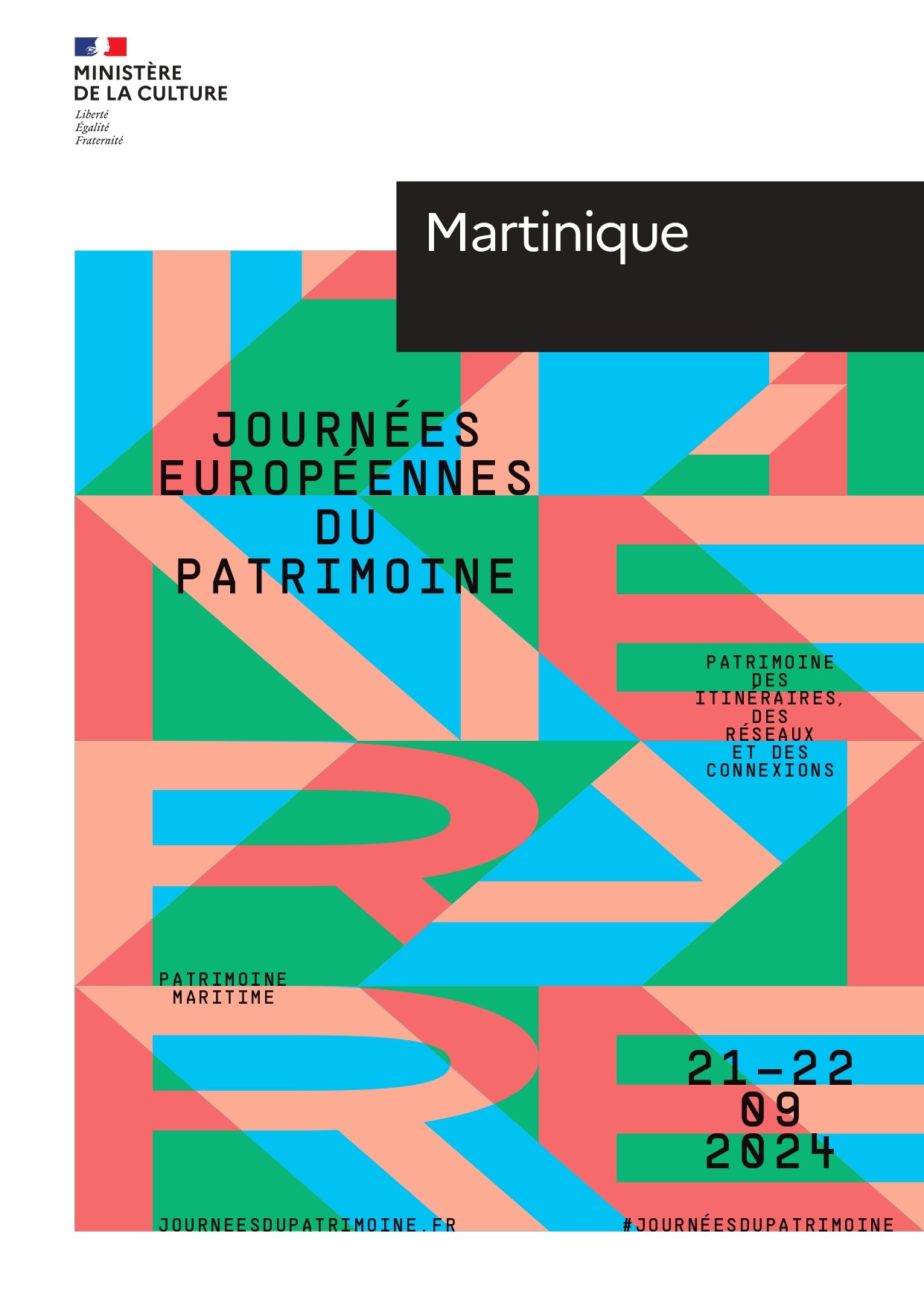
September 21 and 22, 2024 will mark the 41st edition of the European Heritage Days, a not-to-be-missed event for history, culture and discovery enthusiasts.
In Martinique, this celebration takes place in an exceptional setting, highlighting two central themes: maritime heritage and that of routes, networks and connections.

Exceptional opening of historic sites

As every year, Martinique will be opening the doors of over 130 emblematic sites, offering the public a rare opportunity to discover sites that are often inaccessible. These sites, selected for their historical and cultural value, range from civil and religious monuments to industrial infrastructures, exceptional residences and remarkable natural sites.

Registration for these tours is mainly via the dedicated open agenda, which opened at the beginning of September. Residents and visitors are invited to explore these hidden treasures, which tell the story of the island’s rich and varied history.

Maritime Heritage in the spotlight

France, thanks to its overseas territories such as Martinique, has the second largest maritime domain in the world, extending over more than 10 million square kilometers.
Martinique, with its coastline rich in history and maritime traditions, occupies an important place in this ensemble.

During Heritage Days 2024, visitors will be able to discover the richness of Martinique’s maritime heritage through visits to emblematic port sites, historic lighthouses and legendary boats.
Local maritime know-how, such as traditional shipbuilding and sailing aboard round skiffs, will also be showcased.
These elements embody the island’s maritime history, testifying to the importance of this living heritage to Martinique’s cultural identity.

On Heritage Trails, Routes and Connections

Alongside the maritime theme, the 2024 edition explores the heritage of routes, networks and connections. This theme invites us to take a journey through time, tracing the communication routes that have linked peoples and cultures. From the ancient Roman road network to pilgrimage routes, railroads and waterways, these routes bear witness to human genius in the art of connecting territories.

In Martinique, this theme takes on a particular resonance with the ancient roads that criss-cross the island, the mountain trails and sea passages that have shaped its history. Visitors can follow these historic paths and discover how they have helped shape economic, cultural and social exchanges over the centuries.

An Event for All Audiences

The Heritage Days are above all a time for sharing and exchange.
Once again this year, heritage professionals will be on hand to offer the public guided tours, lectures and workshops, enabling everyone to immerse themselves in the history and traditions of Martinique.

Friday September 20 will be specially dedicated to schoolchildren as part of the “Raise your eyes!” operation, a partnership between the French Ministry of Culture and the Ministry of Education.
The aim of this initiative is to raise awareness among the younger generation of the importance of protecting and promoting our heritage.

The Journées du patrimoine 2024 in Martinique promises to be an exceptional event for all those wishing to discover or rediscover the immense wealth of the island’s heritage.
Between sea and mountains, history and modernity, this edition invites you on a unique journey through Martinique’s cultural and natural treasures.
Don’t miss this opportunity to be amazed by the diversity and beauty of Martinique’s heritage.

Leave a Reply

Your email address will not be published. Required fields are marked *

More articles from RK

Well mudda sick
HISTORY & HERITAGE
Tolotra

“Well mudda sick!”: But what do these three words really mean?

In the Bahamas, three words are enough to express surprise even before you realize what just happened. Good news breaks, a plan falls through, something exceeds expectations: “Well mudda sick!” might pop up in conversation. Taken literally, the meaning is confusing. In Bahamian usage, however, the expression is much simpler than it seems. Three words that don’t really translate word for word “Well mudda sick!” literally translates to “Well, my mother is sick.” But that’s not what a Bahamian means when they use it. Instead, the expression functions more like an exclamation: “Wow!”, “Oh my!”, “Unbelievable!”, or even “My God!”, depending on the situation and tone. It is precisely this discrepancy that makes it interesting. Someone who knows every single English word can understand the sentence on paper and yet completely miss its meaning in conversation. Here, it’s not just the words that matter. Context, speed, and intonation play a

Read More »
Chattel house
HISTORY & HERITAGE
Tolotra

Chattel House: The Hidden Social History Behind Barbados’ Houses

At first glance, they catch the eye with their wooden facades, their colors, and their simple proportions. Yet Barbados’ chattel houses are not merely an architectural signature. Their form reflects a specific social reality: for a long time, some residents could own their homes without owning the land on which they stood. A chattel house therefore had to be movable. Chattel House: A Home Designed for Traveling To understand this unique aspect, we must look back to the post-emancipation period. In Barbados, the emancipation of enslaved people was completed in 1838. However, the island’s land structure remained deeply shaped by the sugar economy. As early as the 17th century, the expansion of sugarcane cultivation had led to the concentration of land in the hands of large plantations. After emancipation, many workers still lived on land belonging to the plantations. They could build a home and own it, without owning the

Read More »
Bélya Matinik : 10 titres pour faire du bèlè un récit du présent.
MUSIC
Tolotra

Bélya Matinik: 10 tracks that make bèlè a story of the present.

On August 9, 2026, Bélya will officially release *Adoumanman*, a ten-track album conceived as a balance between the bèlè heritage and contemporary creativity. In this album, the Martinican band sets to music themes of migration, memory, transmission, violence, resistance, and hope, without turning a blind eye to the present. Bélya: Heritage as a Starting Point With Adoumanman, Bélya pursues an idea that runs through his artistic approach: remaining deeply rooted in bèlè while allowing this art form to evolve with the times. The group refers to its style as “Bèlè Fusion” and performs k’bel, or kadans bèlè, drawing notably on the rhythms of Samaritan and Arlesian bèlè, as well as the musicians’ experiences with carnival, gospel, zouk, and jazz. The vision behind this new album can be summed up in a few words: “Roots, and openness to the winds of the world”. Adoumanman also uses the phrase “Mi Plézi dann.”

Read More »

conTACT RK

we'd love to have your feedback on your experience so far

Join The List

Join our Richès Karayib community!  Sign up for our newsletter.

Want To Maximize Your Business Presence On Riches Karayib?

Complete the form to start the application