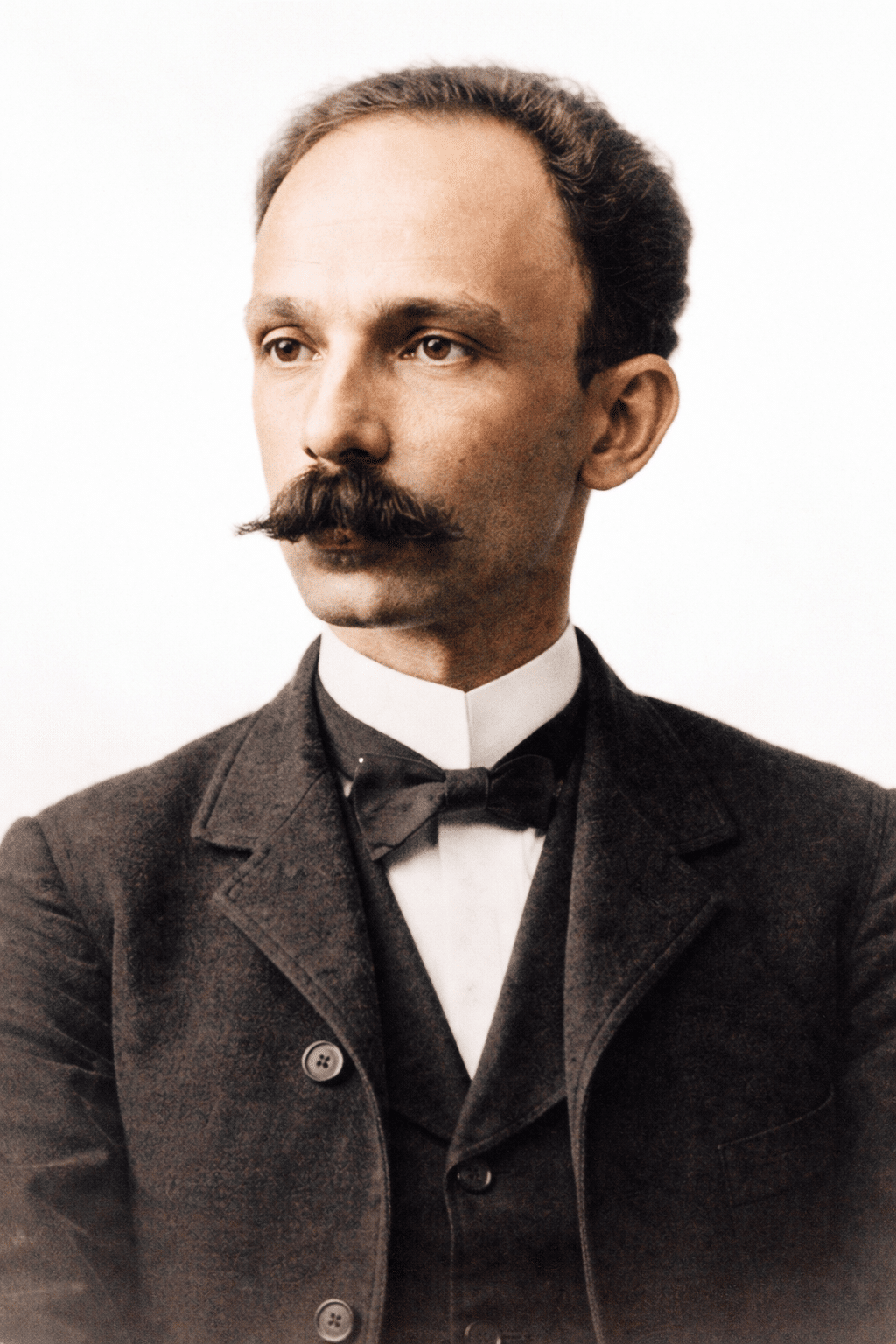
José Martí is not only a great figure in Cuban history. He is one of the most important intellectuals in the Caribbean world, because he was able to combine writing, political thought, journalism and revolutionary action in a single career. Born in Havana on January 28, 1853, and killed in action at Dos Ríos on May 19, 1895, he became the symbol of Cuba’s struggle for independence from Spain. His influence soon extended beyond Cuba’s borders, however, to the whole of Latin America and the Caribbean.
Why is José Martí still such a major figure?
What distinguishes José Martí from many political figures of the 19th century is the breadth of his legacy. He was a poet, essayist, journalist, political organizer and thinker of sovereignty. His name remains associated with the idea of dignity, emancipation and historical responsibility.

A youth marked by repression and exile
José Martí’s life changed at a very early age. As a teenager, he took a stand in favor of Cuban independence in the context of the war that began in 1868. As a result, he was sentenced to hard labor and deported to Spain. There, he continued his studies and obtained a university degree in Saragossa. This period was decisive in shaping a man convinced that political freedom could not be dissociated from education, culture and historical lucidity.
Exile did not take him away from Cuba. On the contrary, it broadened his horizons. José Martí went on to visit several countries, including Mexico, Guatemala, Venezuela and above all the United States. From New York, he observed the geopolitical tensions of his time and developed a central idea: Cuba must free itself from Spanish domination without falling into another form of dependence.
José Martí, leading writer and journalist
It would be a mistake to reduce José Martí to a revolutionary figure. His literary importance is immense. His writing combines political density, moral force and stylistic rigor. His essays are often considered his most enduring contribution to Spanish-American letters. His poetry, on the other hand, is never cut off from reality. For José Martí, writing is not a matter of distancing oneself from the world, but of looking at it with greater precision. This link between literature and commitment explains why his work continues to be studied well beyond Cuba.


"Nuestra América", a fundamental text
Among his writings, “Nuestra América” published in 1891, remains central. In it, José Martí defends a simple but profound idea: the peoples of the region must not mechanically copy models from elsewhere. They must build their institutions, their culture and their future on the basis of their own historical reality. These ideas remain highly topical in the contemporary Caribbean. It sheds light on debates about identity, cultural sovereignty, education and how Caribbean societies can assert their voice in a world dominated by large centers of power.


The strategist of Cuban independence
He didn’t just write. He played a concrete role in organizing the last phase of the Cuban independence struggle. He helped form the Cuban Revolutionary Party and made New York the center of preparations for the uprising. His aim was to unify the independence forces and give political coherence to the Cuban cause. In 1895, he joined the expedition to Cuba with Máximo Gómez. Shortly after his return to Cuba, he was killed in action at Dos Ríos on May 19. This premature death freezes his image in the collective memory: that of a man who matched his thoughts with his deeds.

A legacy still alive in the Caribbean
José Martí ‘s influence did not stop in the 19th century. His legacy lives on in contemporary debates. In fact, he remains essential because he embodies a rare idea: that of a Caribbean intellectual capable of transforming literature into a historical force. His life is a reminder that the Caribbean has not only produced resistance, but also major thoughts capable of illuminating the present. José Martí remains an essential reference not only for understanding Cuba, but also the political and cultural depth of the region.
José Martí was a Cuban writer, journalist, poet and politician born in Havana in 1853. He is best known for his central role in the struggle for Cuban independence from Spain. His career combined intellectual commitment and political action, making him a major figure not only in Cuban history, but also in Caribbean and Latin American thought.
José Martí is considered one of the great symbols of the Cuban nation, because he defended the idea of a free, sovereign and politically conscious Cuba. Not only did he support independence through his speeches and writings, he also played an active role in organizing the independence struggle. His name remains associated with dignity, patriotism and coherence between thought and action.
No, and that’s precisely what makes his legacy so strong. José Martí was also a leading author, with a wealth of literary and journalistic work. His texts deal with freedom, identity, education, justice and the future of the region’s peoples. He thus occupies a special place, at the crossroads of literature, journalism and political history.
“Nuestra América” is one of José Martí’s most influential texts. In this essay, he defends the idea that the peoples of Latin America and the Caribbean must build their future from their own historical, social and cultural reality. This text remains highly topical, as it raises essential questions about identity, cultural sovereignty and how to think about development without mechanically reproducing external models.
José Martí continues to interest contemporary readers because his reflections transcend his era. He speaks of freedom, political responsibility, education and collective dignity, subjects that remain at the heart of today’s debates. For readers in the Caribbean, he also represents proof that a thought born in the region can have a universal scope and continue to enlighten the present.