Today, la bomba is an essential part of Puerto Rican cultural life. A practice born of resistance and carried on by Afro-descendant communities, it has become a pillar of Afro-Caribbean tradition.
In neighborhoods, folk festivals and community gatherings, it links history, pride and transmission. And above all, it tells the story of another way of living on the island: through rhythm, words and sharing.
African roots shaped by centuries of history

La Bomba took shape in the XVIIᵉ century, in communities descended from enslaved Africans who had arrived as early as the XVIᵉ century. On the plantations, these men and women recreated musical practices inspired by West Africa.
These rhythms become a space of cohesion, a means of preserving fragments of identity in a context where everything was done to erase them.
Over time, the practice evolved, blending with other influences and adapting to local realities. This gave rise to distinct styles: those of Loíza, Ponce, Mayagüez and Santurce. Each region brings its own way of singing, dancing and playing, revealing the richness of a deeply-rooted Afro-Caribbean tradition.
Music guided by the drums and the dancer's gesture
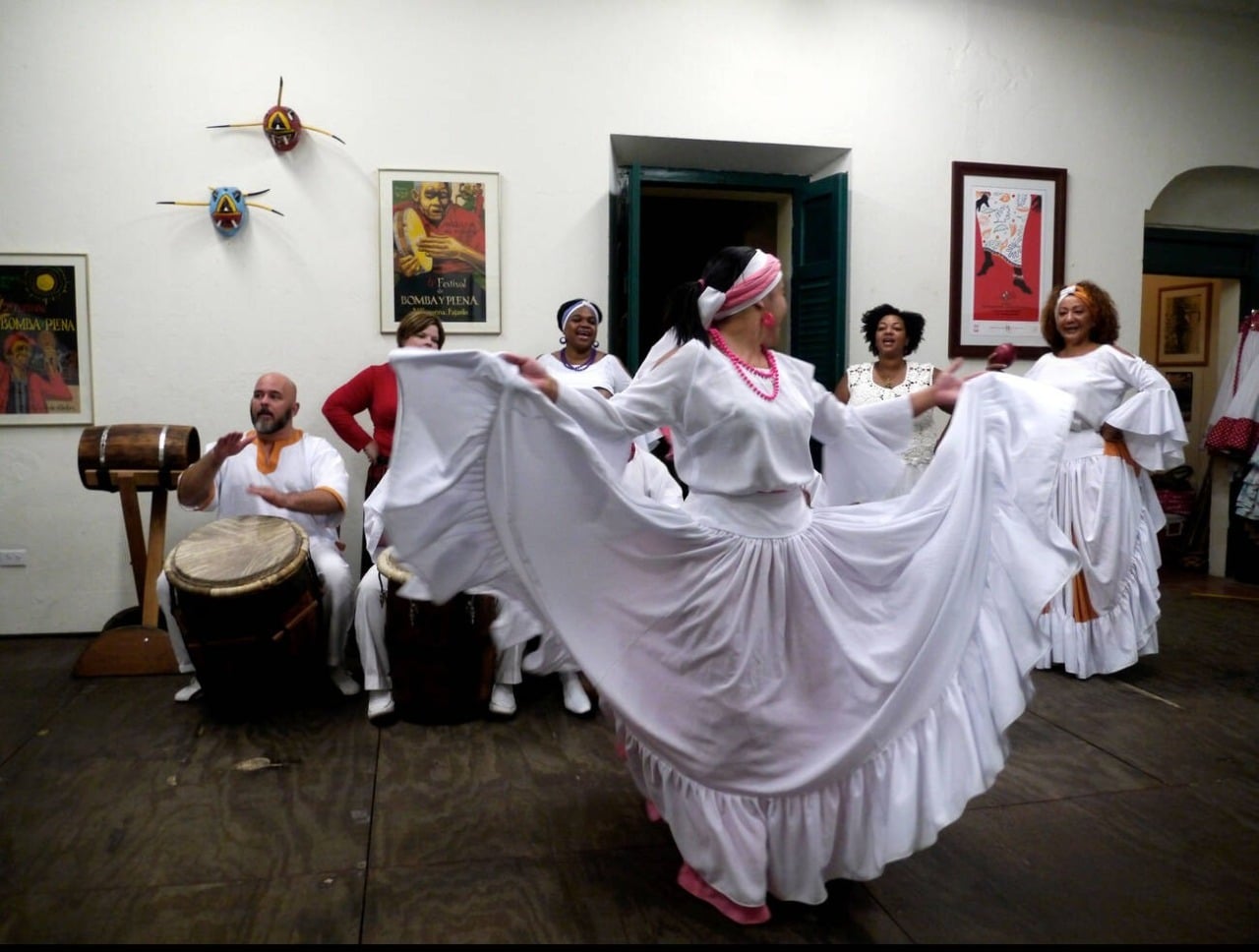
The heart of la bomba lies in the barriles, drums made from old rum barrels. The buleador sets the pulse, while the primo (or subidor) improvises.
Around them, the maraca and the cuá: two sticks struck on a piece of wood structure the sound base. A güiro can sometimes be added, but is not essential.
The uniqueness of la bomba lies in its dynamics: the dancer guides the drum.
Every movement – stop, pivot, acceleration – becomes an intention to which the primo responds instantly. This conversation between percussionist and dancer makes bomba an art in which listening, precision and spontaneity are central.
The voice, between improvised solos and chorus choruses, completes this sensitive and powerful musical architecture.
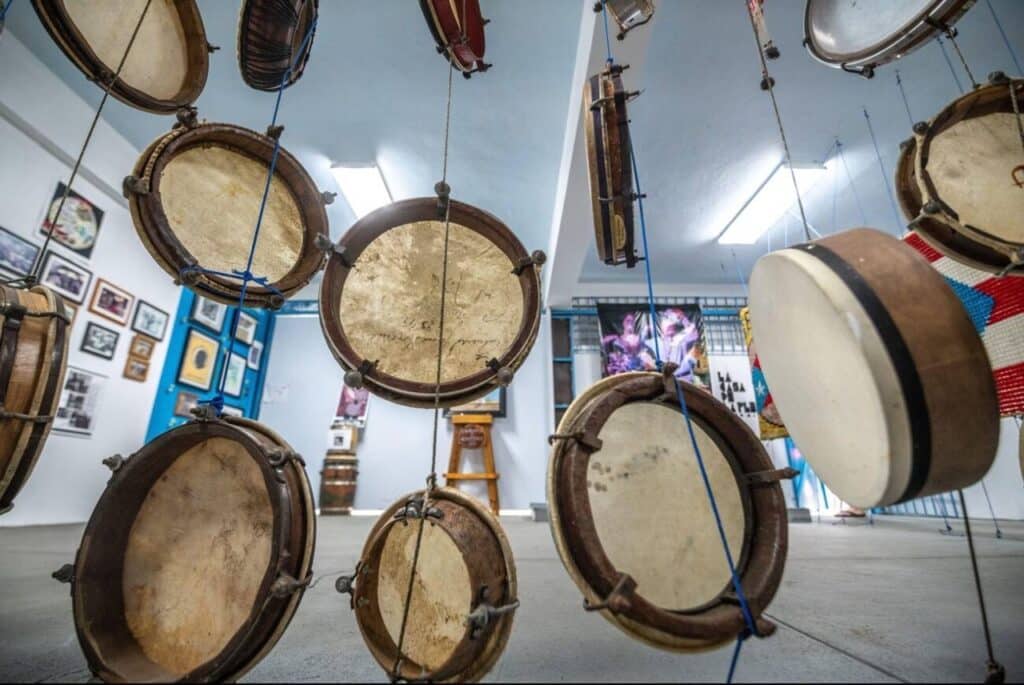

A space for resistance and community expression
For decades, la bomba was relegated to the background of cultural life. In spite of this, it has established itself as a place for speaking out, making claims and recalling what official history has long swept under the carpet. For Afro-descendant communities, it has served as a refuge, but also as a means of asserting a presence, a memory and a dignity in the face of injustice.
Family and community transmission remains at the heart of this continuity. The Cepeda family, an essential reference, is one of the historical guardians of the practice. Ensembles such as Plena Libre have also helped to spread this repertoire, while respecting its roots.
Through them, la bomba continues to carry the Afro-Puerto Rican voice and assert the legitimacy of this Afro-Caribbean tradition.

Between renewal, education and urban creativity


For several decades now, la bomba has been undergoing a profound renaissance. Community schools, specialized workshops, university programs and local collectives ensure the transmission of knowledge.
Festivals, notably in Loíza and Ponce, bring together dancers, percussionists and teachers for workshops, tributes and performances open to the public.
This momentum is accompanied by a new sense of ownership among young people.
In urban neighborhoods, many groups mix tradition with jazz, salsa, hip-hop or electro.
These creations show just how much this Afro-Caribbean tradition remains alive, capable of adapting without losing its deeper meaning.


An international outlook that strengthens the practice... and its challenges
Thanks to exchanges with the diaspora and collaborations with artists from Cuba, the Dominican Republic and the United States, la bomba now resonates far beyond the island. On New York stages, in universities, cultural festivals and community centers, it is recognized as a major expression of Afro-Caribbean heritage.
But this visibility also brings risks: folklorization, commercialization or dilution of the sense of community. In response, the tradition-bearers are defending rigorous apprenticeship, highlighting the value of the masters and transmitting the art faithfully to its roots, so that la bomba retains what makes it strong: its precision, depth and human connection.
A tradition that continues to beat to the country's rhythm
La Bomba is much more than a musical heritage. It is a space where memory, dignity and creation meet. Through its drumming, dancing and singing, it tells the story of Afro-Puerto Rican history with accuracy and intensity. Lively, committed and rooted in the community, this Afro-Caribbean tradition remains one of the island’s most powerful cultural landmarks.
An ancient art form, still in motion, supported by those who refuse to let this rhythm, which crosses generations, die out.
FAQ
La Bomba was born in the XVIIᵉ century among Afro-descendant communities, the heirs of enslaved Africans who had arrived as early as the XVIᵉ century. It drew on West African musical traditions and developed on plantations.
La bomba is based on barrile drums (buleador and primo), accompanied by a maraca and the cuá, played with two sticks on a wooden surface. A güiro can sometimes complete the ensemble.
Because it links memory, resistance, and transmission. It expresses the Afro-Puerto Rican experience, highlights the communities that have shaped it, and continues to nurture a strong, plural cultural identity.