On Saturday, November 7, 2026, the seafront of Le Vauclin, in Martinique, hosted the fourth edition of Limiè Kréyol. From morning until 11 p.m., round tables, stand-up comedy, slam, music, painting and bèlè made one thing clear: Creole is a language, and it is also a whole culture.
A day to pass it on
Limiè Kréyol is organised by Marlène Jougon, founder of Vèsion Kréyol, together with the Town of Le Vauclin. This edition’s theme, “Kréyolité ka brennen: bokanté, mofwazé, kréyé”, translates as “Creoleness in motion: pass on, transform, create”.
For the organiser, a proud native of Le Vauclin, the event is meant to “showcase our language, bring it back to the fore and bring everyone together”, so that young people speak it more often and also learn to write it. Young people come first: “I want them to know their culture and speak their language. Because if you don’t know who you are, you don’t know where you’re going.”
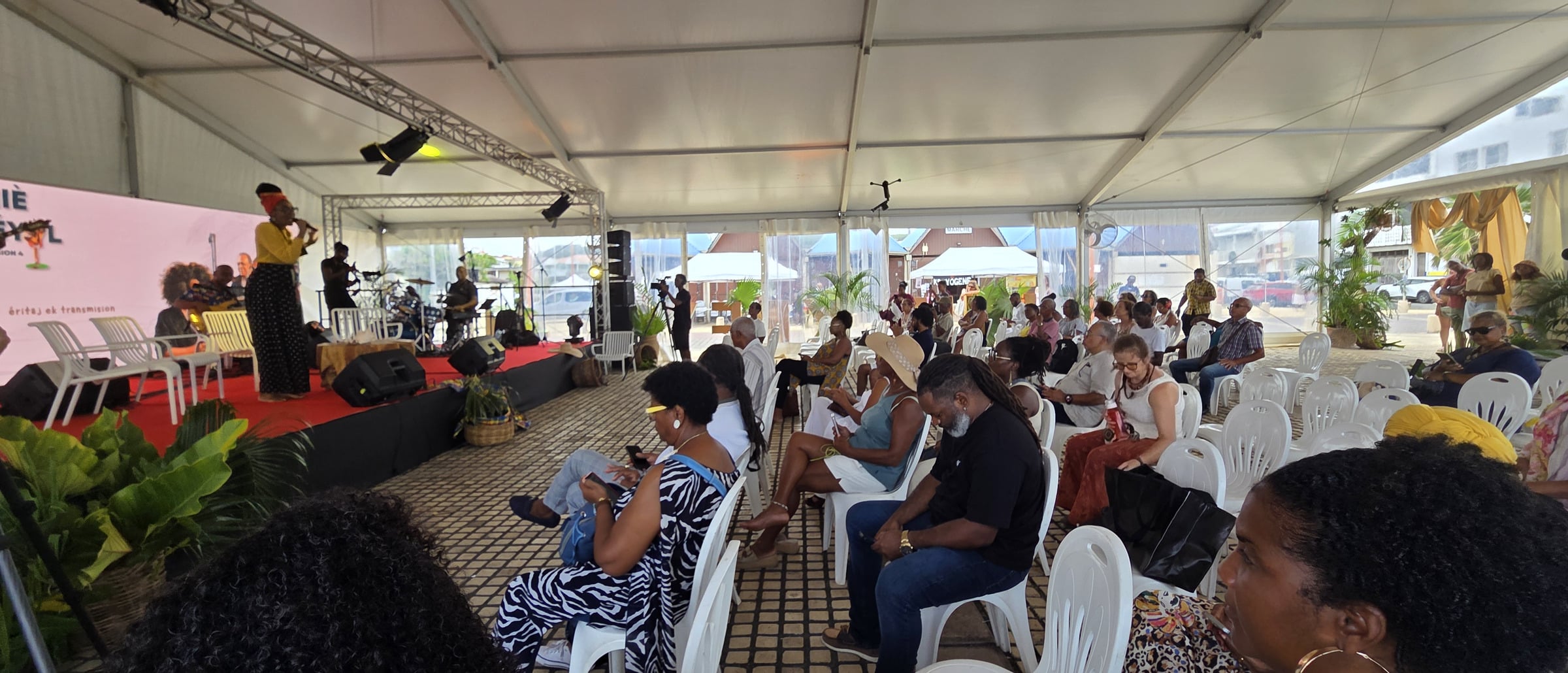
First round table: is Creole culture changing course?
The morning opened with a question, “Es kilti kréyol nou ka chanjé chimen?”: are our traditions being lost, or is it the way we look at our culture that is changing?
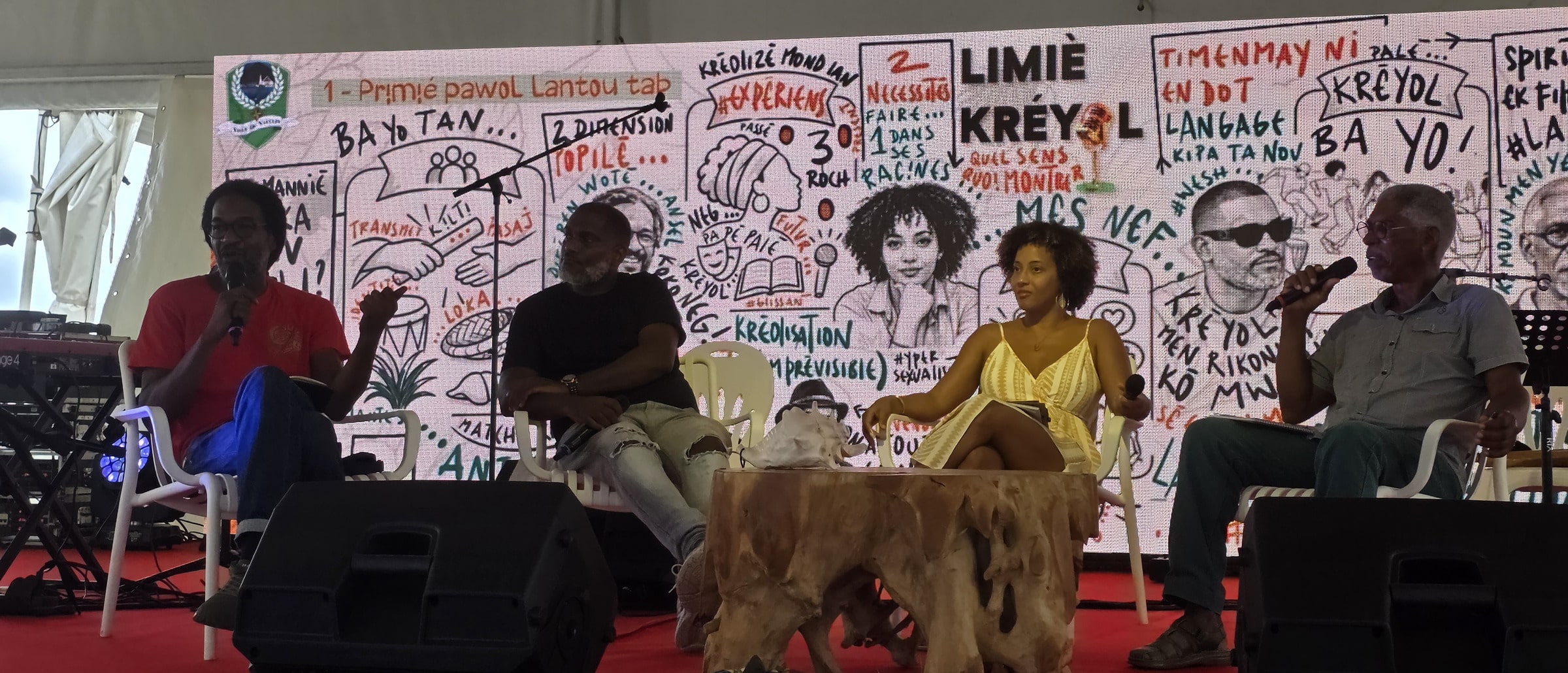
Around the table: anthropologist Maguy Moravie, cultural activist Yvon Lamorandière, sociologist Malik Duranty and singer Mali.
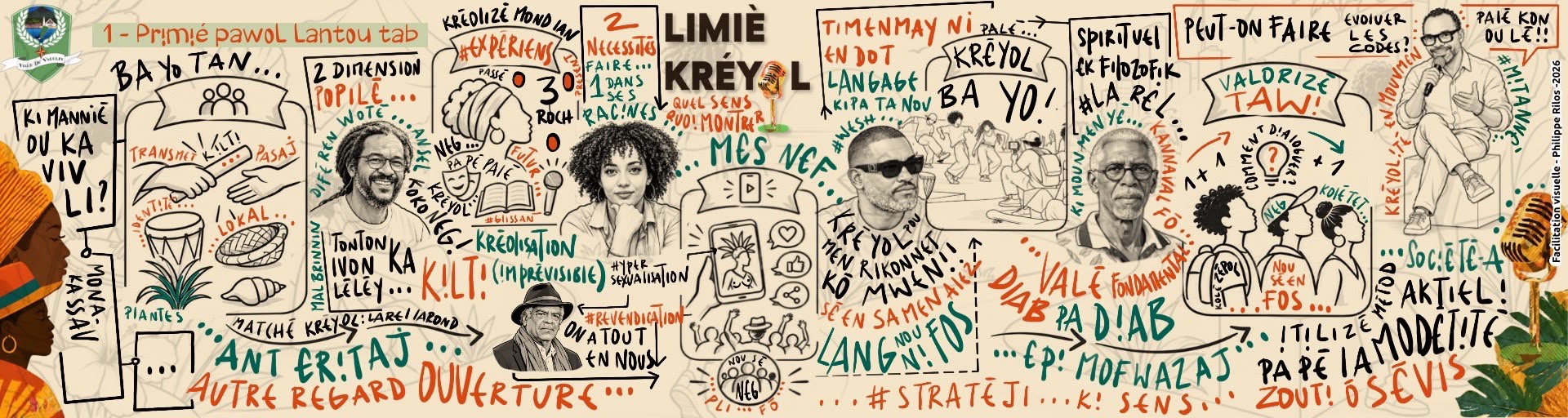
Anthropologist Maguy Moravie, who wrote her thesis on the yole ronde, Martinique’s traditional sailing boat, questioned the link between language and identity: does speaking French make you any less Creole?
Cultural activist Yvon Lamorandière, a carnival veteran and bèlè activist, reminded the audience that carnival is not there just to look pretty: it is there to help us understand Martinique.
Sociologist Malik Duranty described creolisation as a process of mixing whose outcome cannot be predicted: “It’s not a cooking recipe.”
Singer Mali started from the music listened to by 15- to 18-year-olds: they pick up words such as “wesh”. In his view, that is not necessarily a bad thing, but we need artists who put the language and our own words back at the centre of how we express ourselves.
Second round table: what place for Creole in the Caribbean?
In the afternoon, “Kréyol adan Lakarayib: ki plas-li adan sosiété-nou jòdi?” widened the view to the Caribbean. Around the table: sociologist Serge Domi, poet and playwright Faubert Bolivar, Max Bélaise of the University of the French West Indies, editor-in-chief of the journal Kréolistika, and Sabrina Ajax, founder of Richès Karayib.
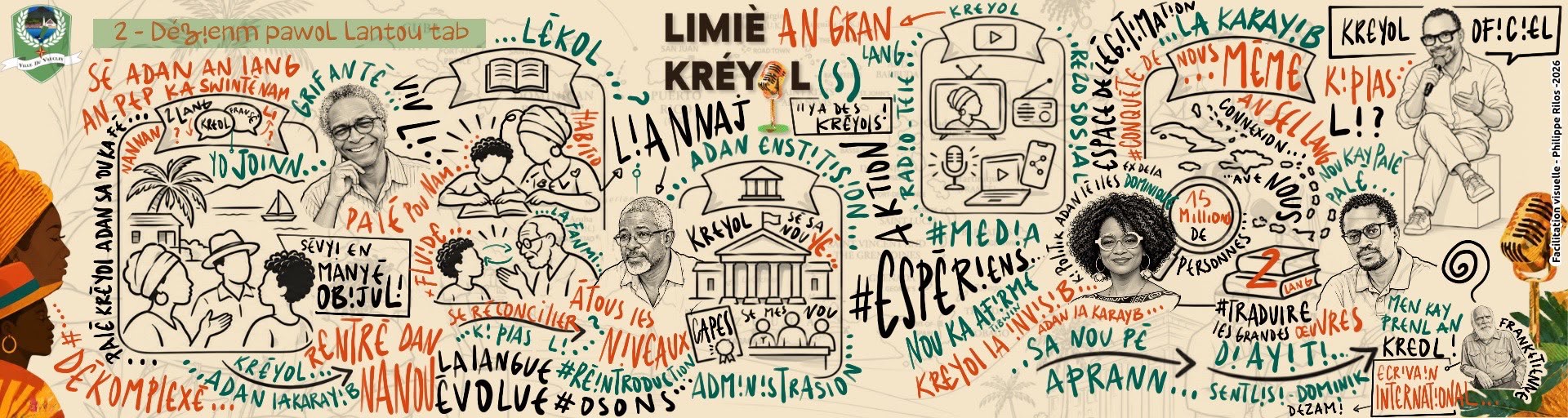
For Faubert Bolivar, “in Martinique, until proven otherwise, there are two languages, French and Creole”. “It is not about replacing one with the other, but about understanding that each has its own genius, its own spirit.”
Max Bélaise challenged a stubborn prejudice: that Creole is the language of emotion rather than the language of equations. For him, Creole is much more than that: it is, fundamentally, who we are.
Serge Domi recalled that the alienation born of the plantation system and slavery still shapes society, but that it was also at the heart of this history that a culture and a civilisation developed. In closing, he paid tribute to linguist Jean Bernabé, who brought the study of Creole into the university: “He was the one who took the initiative to turn the tide and allowed us to move beyond that complex.”
Asked what action should be taken starting tomorrow, Sabrina Ajax pointed out that language is also part of a quest for identity, and argued for learning from a very early age: “Just as we learn French, we can learn Creole, we can learn English.” For her, one thing is certain: we must start as early as possible.
The discussion ended on a simple idea: there is not one Creole, there are many Creoles.
Third round table: keeping Creole alive
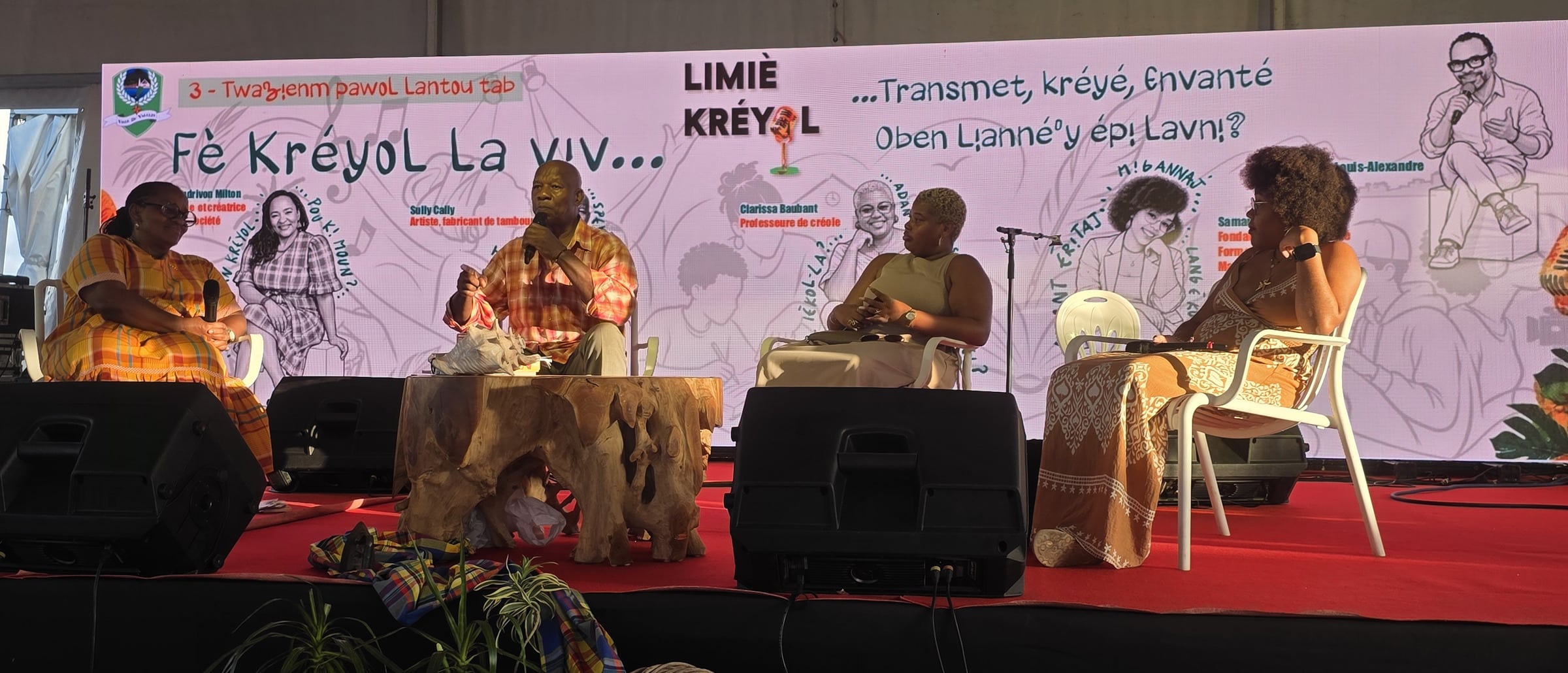
“Fè kréyol-la viv: transmet, kréyé, envanté oben lianné’y épi lavni?” Keeping Creole alive: passing it on, creating, inventing, linking it to the future. Four speakers answered, each from their own practice.
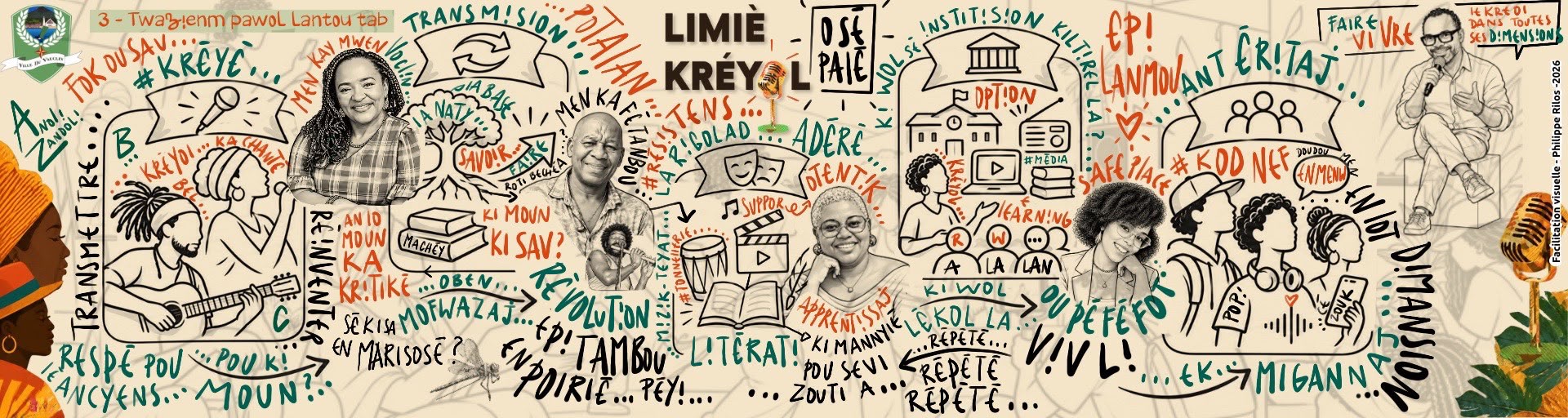
Historian Sabine Andrivon-Milton, who creates board games about Martinique, urged the audience not to judge our elders by today’s standards without knowing their context, and to respect our history. When it comes to passing things on, she draws no hierarchy between media, whether books, films, theatre, broadcasts or games: “Everything is good for learning.”
Drum maker Sully Cally sees the drum’s revolution in its woods: poirier, mahogany and blue mahoe, Jamaica’s national tree.
Clarissa Baubant, who teaches Creole in secondary schools, was asked whether you first need to speak well before daring to express yourself: “No. We are here to learn together.”
Samantha Louis-Alexandre, who runs workshops where adults learn to speak Creole, agreed: “You have to learn to make mistakes; it’s not a bad thing.”
Every facet of a culture
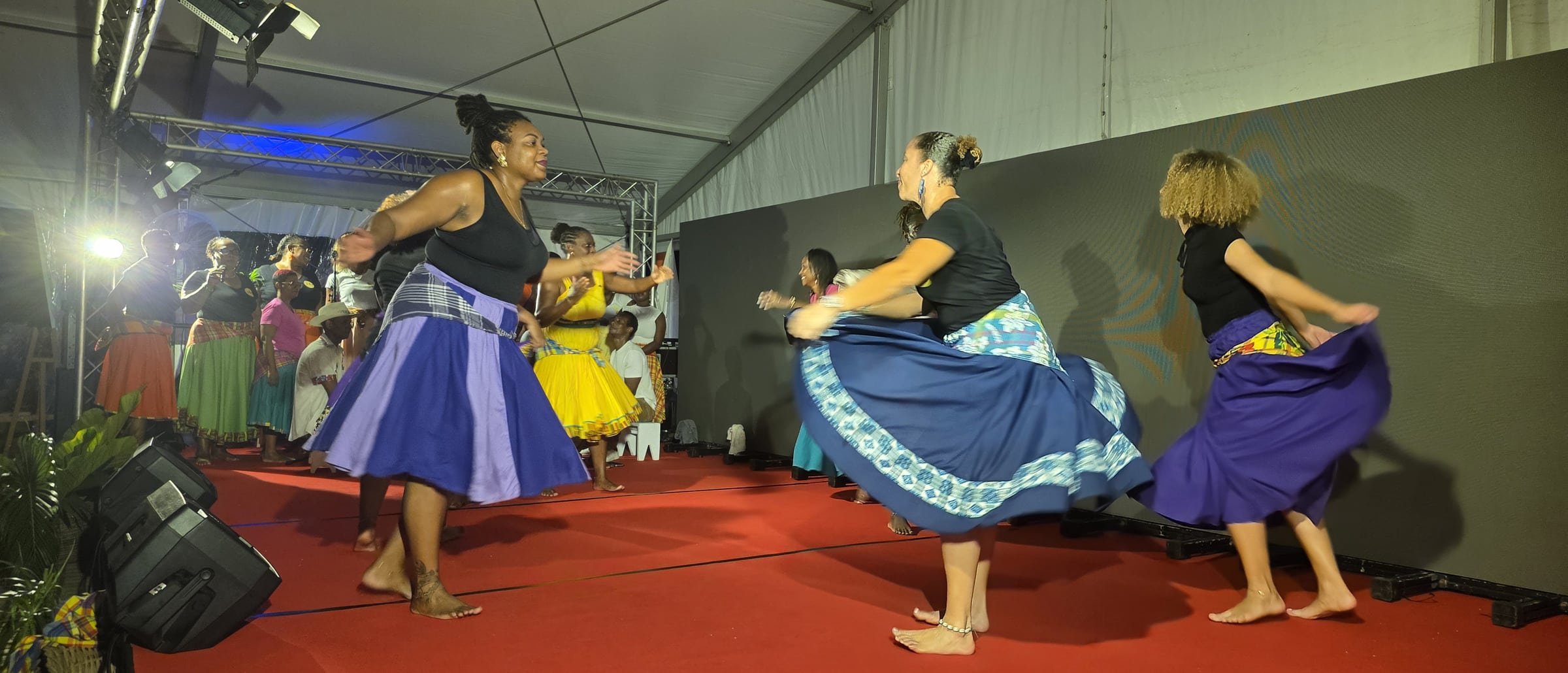
The day opened with music, with the jazz péyi of Art Power. Between the discussions, the stage showed the diversity of Creole culture: stand-up with Youtii, Géniio and Mèl, music with Ivy Jalta and her musicians, around heritage and transmission, and slam with Mapie.


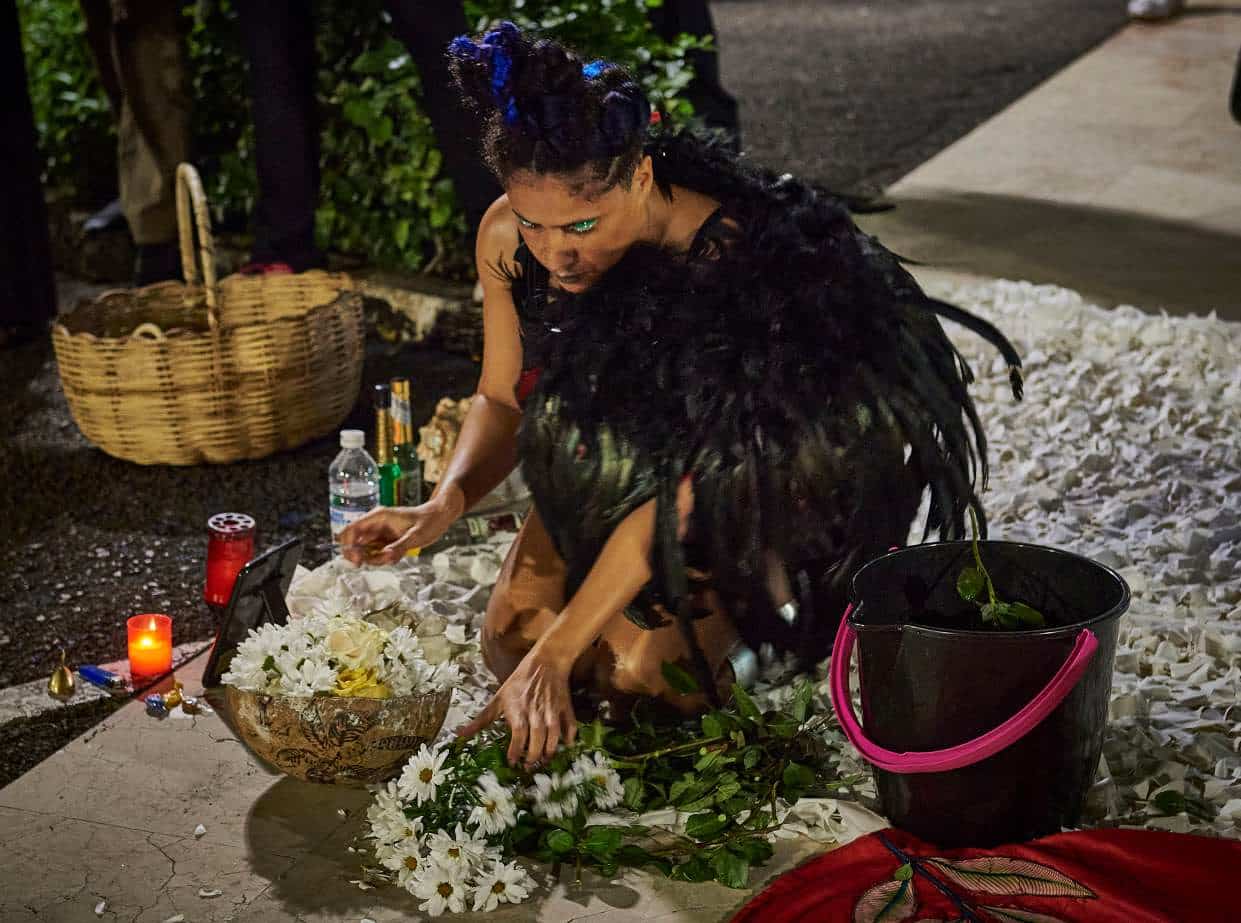
Throughout the day, Le Vauclin artist T.O.M. (Tanya Octavius Martial), who paints on canvas and has been making identity-themed T-shirts for years, painted a picture live. She began with Nicolas Lossen’s guitar, then “as the speakers talked and exchanged, I drew according to the emotions they gave me and certain words they used”. The canvas features a bèlè drum, speech bubbles and an eye turned towards Creole.
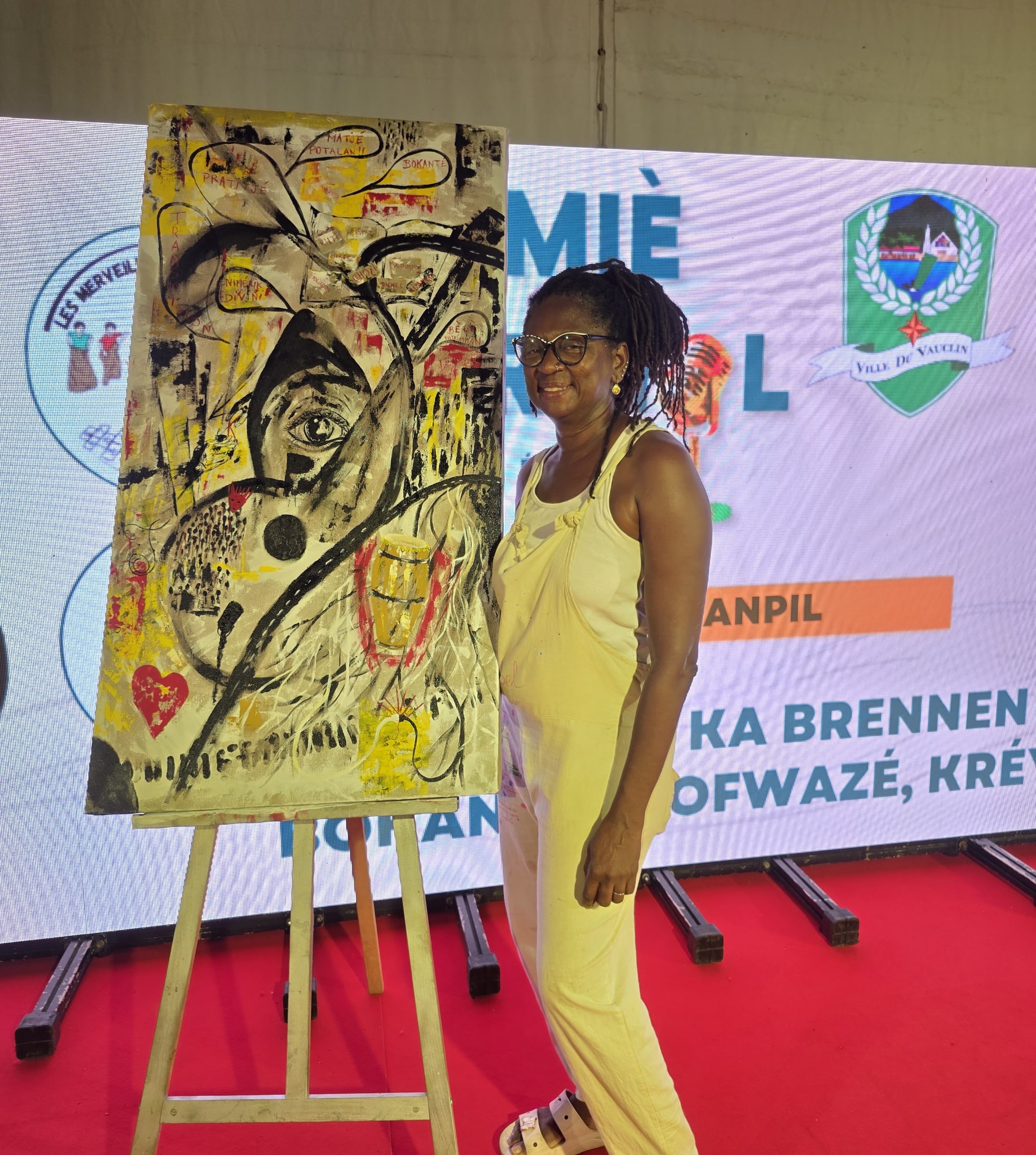
For her, Creole is part of our identity. She realised this while travelling: “I went to Saint Lucia and Dominica. Over there, young people don’t know Creole. We couldn’t communicate. That must not happen to us in Martinique.” Without closing the door to change: “We must not lose what is ours, but I accept that things evolve: our traditions change with each new generation.”
Children had their own workshops: bèlè steps and movements, bamboo flute, a question-and-answer game with Kréyogène and Creole tales. Across the site, stands of local produce, crafts and home-style cooking followed the same line. The day ended with a bèlè evening led by APAMIA, from 6 p.m. to 11 p.m.
“Freeing Creole from its complexes”
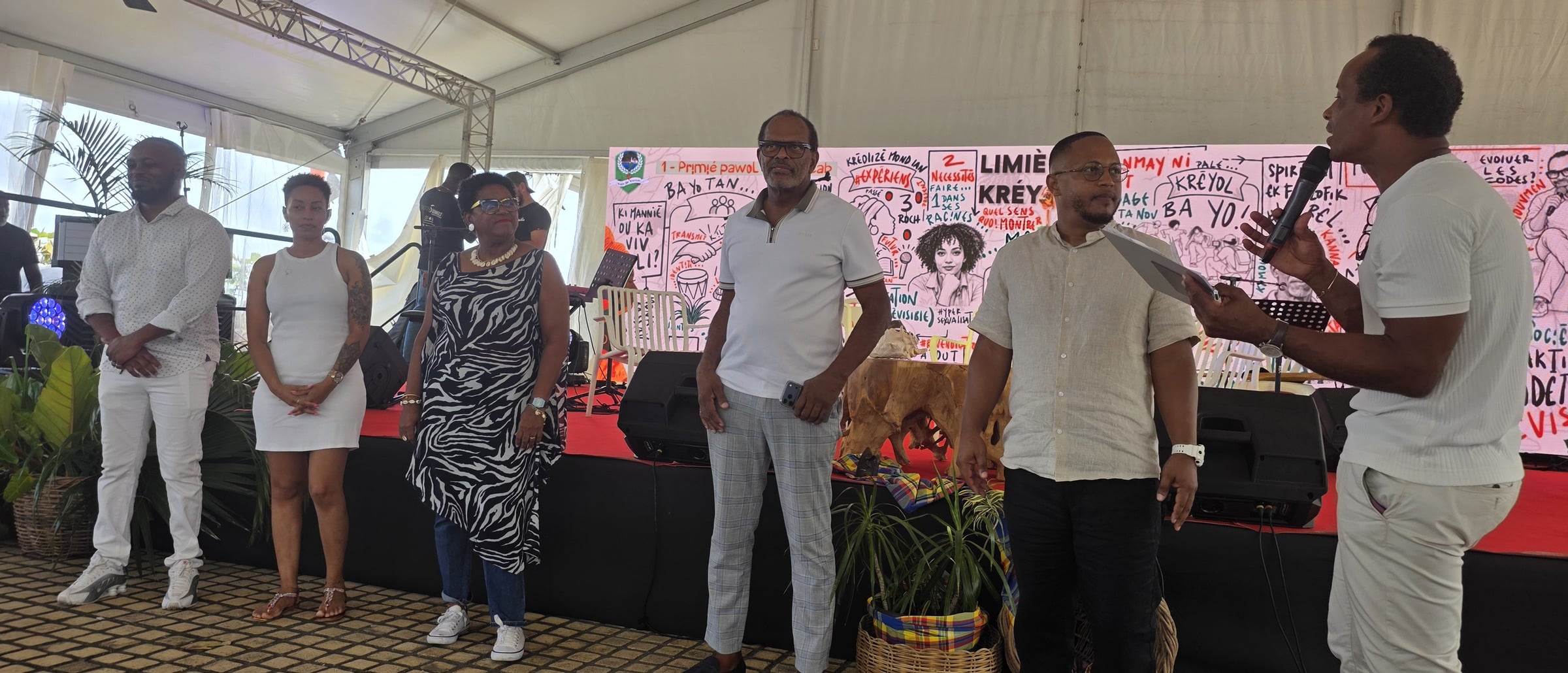
For Jimmy Farreaux, Mayor of Le Vauclin and the driving force behind Limiè Kréyol, the event responds to history: “In the history of Martinique, at one point, people started banning Creole, saying it was a language we were not allowed to speak.” He calls for freeing the language from its complexes so that it can be lived freely, at school, in public administration, at work and in culture. “Creole is not just the language: it’s the culture, the food, the music, it’s everything.”
Elected officials from Le Carbet, La Trinité, Sainte-Anne and Le Morne-Rouge had made the trip. “We invited our fellow mayors and elected colleagues so that they could see what can be done, reflect on culture and on Creole, and so that other towns can draw inspiration from it,” the mayor explains. He also said that the town is working on the first peoples of the Caribbean, including the Kalinago.
Our view
Richès Karayib covered the event and took part in the second round table. We come away from a rich day, thanks to the relevance of the talks and the variety of artists, in a friendly setting by the sea. Keeping Creole alive depends on initiatives like this one. Le Vauclin’s deserves to grow, and the presence of elected officials from other towns paves the way for real momentum among Martinique’s municipalities. See you at the fifth edition.