Living conditions in the Caribbean: hope, precariousness and a fragile balance

Living conditions in the Caribbean

Living conditions in the Caribbean are evolving under the impact of profound urban, demographic and social transformations. In 2025, several key indicators paint a contrasting picture of the region: between notable advances in public health and persistent structural vulnerabilities. At RichèsKarayib, we have selected six recent figures, sourced from international organizations such as the UN, ILO and FAO, to highlight the complex realities of Caribbean populations.

76.3% - Growing urbanization of the region

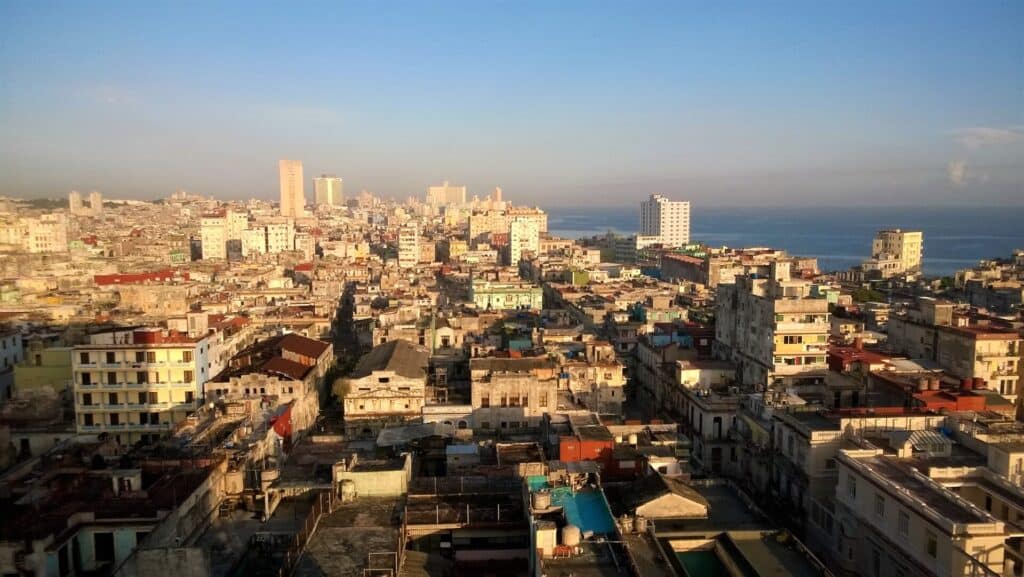
By 2025, 76,3 % of the Caribbean population lives in urban areas. This rate, slightly below the Latin American average (82.5%), reflects the growing concentration of inhabitants in cities and peri-urban areas. This dynamic is transforming living conditions in the Caribbean, with major issues surrounding access to housing, water, transport and security. Rapid urbanization often remains poorly controlled in many areas, generating growing inequalities between urban centers and rural areas.

Living conditions in the Caribbean
©journals.openedition

6.1% - Overall unemployment rate in 2024

According to the ILO, the projected unemployment rate for Latin America and the Caribbean in 2024 is 6,1 % down on 2023 (6.5%). While this improvement reflects a degree of economic recovery, it remains fragile and masks significant local disparities. In small island economies, the labor market remains tight, highly seasonal and heavily dependent on tourism. This fact directly calls into question living conditions in the Caribbean, where a significant proportion of the working population remains underemployed or confined to precarious jobs.

Living conditions in the Caribbean

58.8% - Food insecurity in the Caribbean (2023-2025)

Between 2023 and 2025, 58,8 % of the Caribbean population is moderately or severely food insecure, i.e. nearly 26.3 million people. This alarming figure, based on the latest reports from the FAO and the Global Report on Food Criseshighlights the structural vulnerability of island food systems. In Haiti, almost half the population is in a food crisis or worse. This reality has a profound effect on living conditions in the Caribbean, especially for rural households, single-parent families and children.

Living conditions in the Caribbean

32.4 years - Median age; 1.95 children/woman; 44.6 million inhabitants

The Caribbean population has a median age of 32.4 with a fertility rate of 1.95 children per woman. These figures point to demographic stabilization after several decades of rapid growth. With around 44.6 million inhabitants. By 2025, the Caribbean will be experiencing a gradual aging of its population, although youth will remain dominant in certain regions such as Haiti, the Dominican Republic and French Guiana. These demographic trends have a direct impact on public policies and influence living conditions in the Caribbean, particularly in terms of health, education and retirement.

Living conditions in the Caribbean

47.2% - Informal employment rate

Nearly 47,2 % of jobs in the region are considered informal, according to the latest ILO figures. Although this rate is slightly lower than the Latin American average (57%), it remains a cause for concern. The informal economy encompasses millions of workers with no contracts, no social security coverage and no income stability. It reflects both the resilience of populations and the fragility of economic structures. On the islands, informality is particularly prevalent in tourism, fishing and street trading. It contributes to accentuating inequalities in living conditions in the Caribbean.

74.1 years - Average life expectancy in 2025

Good news: life expectancy in the Caribbean reaches 74.1 years in 2025, compared with 69.6 years in 1990. This increase of +4.5 years in three decades is due to better health services, lower infant mortality and better access to drinking water. But major disparities remain: women live on average 76.6 years versus 71.7 years for men. This gap is linked, among other things, to the prevalence of cardiovascular disease and differential access to healthcare. This relative progress also demonstrates the extent to which public health is a central pillar of living conditions in the Caribbean.

Living conditions in the Caribbean

A plural Caribbean between social emergencies and measured progress

Living conditions in the Caribbean in 2025 reflect a dual reality. On the one hand, notable progress in terms of longevity, education and demographic stabilization; on the other, persistent fragilities linked to food insecurity, economic informality and urban concentration. These figures must inform public policy and regional cooperation projects. Because behind each percentage lie concrete lives, families and human trajectories. And it is on the basis of these precise indicators that a more equitable and resilient Caribbean can be built.

Leave a Reply

Your email address will not be published. Required fields are marked *

More articles from RK

Eric Williams
MUSIC
Tolotra

Shenseea and Daddy Yankee bring the Caribbean to FIFA World Cup 2026

Shenseea and Daddy Yankee at FIFA 2026: the announcement goes beyond a simple musical release. With “Echo”, Jamaica and Puerto Rico enter the sound universe of the next World Cup together. Behind this track, a part of the urban Caribbean finds a new place in one of the planet’s most popular events. One FIFA title, two Caribbean voices On April 28, 2026, FIFA announced the release of “Echo”, the third single from the official FIFA World Cup 2026 album. The track brings together Shenseea, a Jamaican artist associated with contemporary dancehall, and Daddy Yankee, a major Puerto Rican reggaeton figure. FIFA points out that the track is one of a series of musical releases designed to accompany the build-up to the tournament. This announcement goes beyond the framework of a collaboration between two well-known artists. It brings two Caribbean territories, Jamaica and Puerto Rico, face to face, united in a

Read More »
Eric Williams
HISTORY & HERITAGE
Tolotra

Trinidad & Tobago – Eric Williams, the historian who led Trinidad and Tobago to independence

In Port of Spain, history was never just a matter of archives. It was also told in public squares, in schools, in family conversations, where a colonial society was looking for the words to think differently about itself. Eric Williams understood the power of storytelling very early on. Before becoming head of government, he made history an instrument of collective lucidity. A historian before the head of government Born in Port of Spain on September 25, 1911, Eric Williams grew up in a Trinidad still part of the British colonial order. His schooling took him to Queen’s Royal College, then to Oxford University, where he obtained his doctorate in 1938. This passage through one of the great institutions of the imperial world gives his work a special significance: he knows the codes of British academia, but uses them to interrogate the history of empire from the perspective of the Caribbean.

Read More »
Sa sa pé foutew
HISTORY & HERITAGE
Tolotra

Martinique – “Sa sa pé foutew”: the Creole formula powered by Netflix carried by Bandi

With Bandi, a 2026 Netflix series set in Martinique, eight episodes have taken a Martinican Creole expression far beyond its native territory. “Sa sa pé foutew” means much more than “What’s it to you? It’s a way of setting a limit, sometimes with humor, sometimes with firmness, but always with an element of identity. Three words, one border Three Creole words, one question, and one attitude. When the Bandi series arrived on Netflix in 2026, it brought with it a phrase that many Martiniquais recognize: “sa sa pé foutew”. For some, it’s pride. For others, it’s a silent victory. For all those who know what these words mean in a conversation, it’s a moment that counts. Literally, the phrase can be translated as “what’s it to you?” or “what’s it got to do with you?”. But the translation always gives us away. In reality, “sa sa pé foutew” functions like

Read More »

conTACT RK

we'd love to have your feedback on your experience so far

Join The List

Join our Richès Karayib community!  Sign up for our newsletter.

Want To Maximize Your Business Presence On Riches Karayib?

Complete the form to start the application