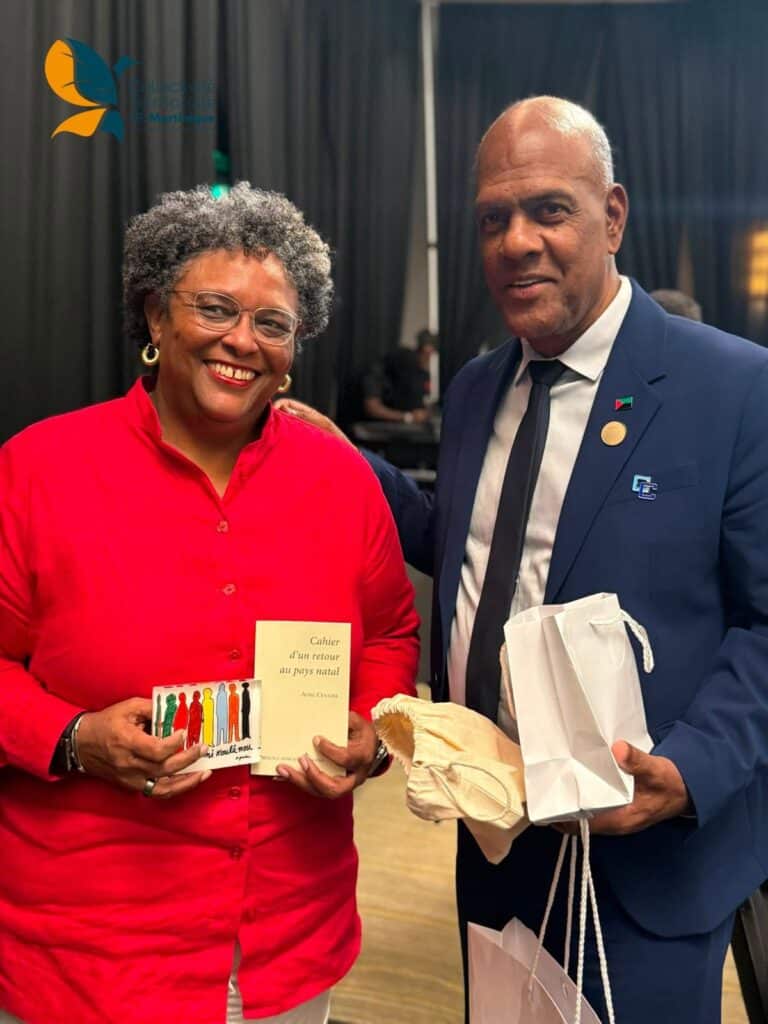
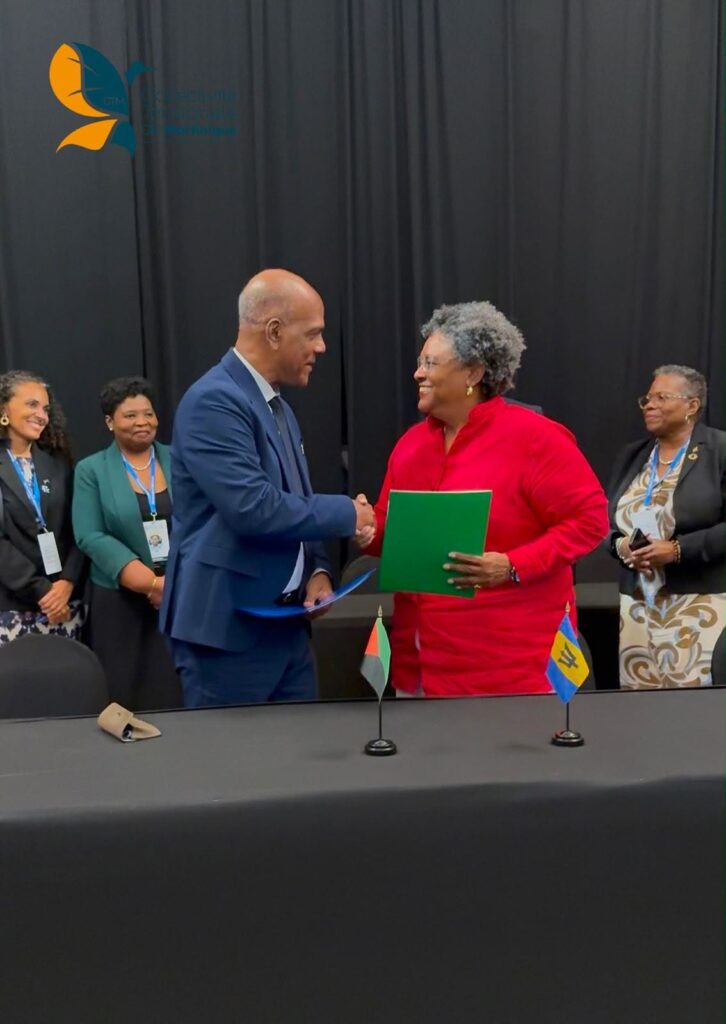
At the CARICOM summit, Martinique did more than just take a new seat. On July 7, 2026, on the sidelines of the meeting held in Saint Lucia, Serge Letchimy and Mia Amor Mottley signed a cooperation agreement between Martinique and Barbados. A concrete goal is taking shape: to transform the Caribbean’s geographical proximity into projects that are monitored, funded, and evaluated.
A first-time participation already focused on action
This signing comes at a special time for Martinique. Having officially become the seventh associate member of CARICOM on June 16, 2026, it was participating for the first time in a Conference of Heads of Government of the regional organization. The agreement with Barbados immediately gives this new phase an operational dimension. It is no longer simply a matter of affirming that Martinique belongs to the Caribbean region. The agreement establishes a bilateral framework for cooperation with a regional neighbor capable of sharing expertise, experiences, and common priorities.
Serge Letchimy sums up this ambition with a clear statement: Martinique is not merely “taking a seat at the table” of CARICOM. It wants to build, propose, and take action. This commitment elevates cooperation beyond a mere diplomatic symbol.
Nine sectors to bring the two regions closer together
The agreement covers nine major areas: cultural and creative industries, sports, education, vocational training, risk management, health, tourism, fisheries, and trade facilitation.
This diversity shows that the relationship we are seeking is not limited to institutions. It directly involves students, artists, athletes, tourism professionals, fishermen, businesses, and healthcare providers.
For young people, this could involve new training programs, skills exchanges, or joint programs. For the cultural sectors, this agreement can build bridges between two neighboring territories that share a regional space but whose languages, administrative systems, and economic networks often remain separate.
Culture as a Tool for Development
The inclusion of the cultural and creative industries among the priorities is by no means secondary. It recognizes culture as an economic sector, a means of regional exchange, and a space for identity-building. Between French-speaking Martinique and English-speaking Barbados, artistic collaborations can also serve as a very concrete way to bridge the gap. Music, film, cultural heritage, visual arts, and digital creation can circulate more easily when institutions organize exchanges, mobilize resources, and oversee projects.
This is where the agreement can take on a truly Caribbean character: not by erasing the differences between the two territories, but by drawing on their unique characteristics to foster new collaborations.
A system designed to deliver results
The agreement provides for a Joint Cooperation Committee, co-chaired by Barbados and the Territorial Collectivity of Martinique. This body will be responsible for defining priorities, approving programs, monitoring their implementation, and reviewing their results. A Technical Secretariat will be responsible for operational oversight. An annual report must detail the actions taken, the resources mobilized, performance indicators, challenges encountered, and the planned program for the following year.
These mechanisms are one of the most important elements of the agreement. Regional cooperation initiatives are often announced with great ambition, but their impact ultimately depends on the timeline, funding, and administrative continuity. By providing for regular evaluations, Martinique and Barbados are demonstrating their commitment to making the relationship measurable—and, above all, to making its effects visible to the populations concerned.
Five years to build a lasting partnership
Signed for five years and renewable, the agreement gives both territories time to develop projects beyond one-off meetings. It also provides a stable framework for their relationship, as Martinique seeks to strengthen its position between the Caribbean, Europe, the Americas, and Africa.
The real test will now begin with the first selected programs. Which projects will be launched first? Which groups will benefit directly? The answer will reveal whether this agreement marks merely a new institutional milestone or the beginning of a partnership capable of bringing about tangible changes in exchanges between Martinique and Barbados.
The agreement establishes a framework for cooperation in nine sectors: cultural and creative industries, sports, education, vocational training, risk management, health, tourism, fisheries, and trade facilitation. It is intended to enable the two territories to develop joint programs and concrete projects.
The cooperation agreement between Martinique and Barbados is valid for a renewable term of five years. This period is intended to allow both partners to launch initiatives, assess their results, and build a lasting relationship that extends beyond one-off institutional meetings.
A Joint Cooperation Committee will set priorities, approve programs, and evaluate results. A Technical Secretariat will provide operational oversight. Each year, a joint report will outline the actions taken, the resources mobilized, the challenges encountered, and the planned program for the following year.