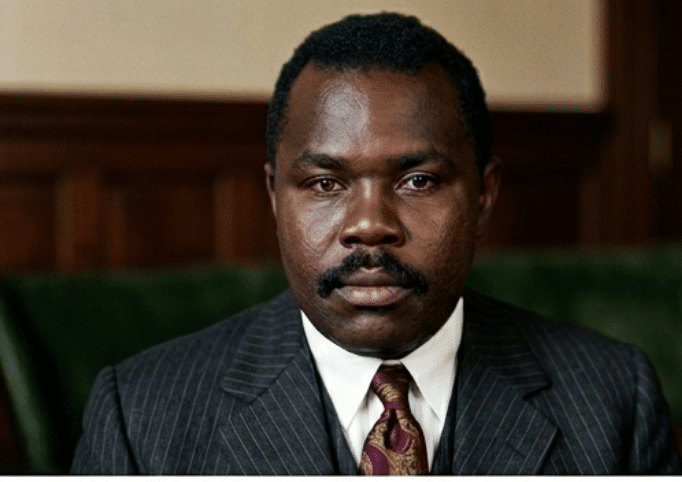
Stephen Cat Coore died at the age of 69, leaving the Caribbean bereft of one of its most consistent and demanding artisans. Guitarist, singer, composer and co-founder of the group Third World, he embodies a singular trajectory in the history of Jamaican music: that of a creator who chose continuity, rigor and thoughtful openness rather than rupture or effect.
His death is not just that of a renowned musician. It marks the loss of a cultural landmark, of a man who knew how to think of reggae as a space for dialogue between Caribbean heritage and the global circulation of sounds.
A musical heritage steeped in Jamaican history
Stephen Cat Coore was born in a Jamaica where music was already structuring the collective narrative. Son of Bunny Ruggs, a member of the Maytals, he grew up in the shadow of a heritage shaped by ska, rocksteady and the first expressions of reggae. This filiation is never claimed as a privilege, but assumed as a responsibility: that of prolonging a history without freezing it.
Stephen Cat Coore understood early on that reggae was not just a musical category. Reggae is a cultural language, a system of meanings capable of conveying Caribbean social narratives, political tensions, spiritualities and hopes. This awareness permeates his entire artistic career.

Third World, or the art of expanding reggae without weakening it
When Third World was born in 1973, the Jamaican musical landscape was already highly structured. Roots reggae was imposing its aesthetic and ideological codes, while the international music industry was beginning to appropriate some of its symbols. Against this backdrop, Stephen Cat Coore and his partners made a delicate choice: to open reggae up to other influences while refusing to dilute its identity.
Third World develops a hybrid musical language, where the Jamaican pulse dialogues with soul, funk, jazz and pop. This approach is neither opportunistic nor decorative. It’s based on a keen understanding of balance: preserving the rhythmic backbone of reggae while expanding its harmonic horizons.
Stephen Cat Coore plays a central role in this sonic architecture. His guitar acts as a hyphen, capable of linking universes without ever breaking the overall coherence. As a result, Third World has become one of the rare Jamaican groups to make a lasting impact on international stages without abandoning its cultural depth.


A musical style based on restraint and precision
Stephen Cat Coore’s playing is distinguished by a kind of discretion that is in no way secondary. He refuses useless demonstration, preferring clarity, breath and the enhancement of the collective. His guitar structures rather than imposes, supports rather than dominates, creating a space where voices, texts and arrangements can fully exist.
This approach reveals a demanding conception of the musician’s role: serving a vision rather than serving himself. It explains why his influence is often subterranean but enduring, perceptible in many Caribbean artists and beyond, who have seen in him a model of balance between technicality and meaning.

A profound contribution to the Caribbean and its cultural circulations
Stephen Cat Coore’s impact extends far beyond Third World’s discography. Through his work, he has helped redefine the place of reggae in the Caribbean and diasporic space. He has shown that a music originating in a specific territory can circulate worldwide without losing its symbolic density.
In many Caribbean islands, but also in North America, Europe and Africa, Third World has been a gateway to a complex Jamaica, far removed from simplistic clichés. Stephen Cat Coore has thus contributed to a form of cultural pedagogy in which music becomes a vehicle for mutual understanding and recognition.

An artistic ethic based on the long term
What deeply distinguishes Stephen Cat Coore is his loyalty to a long-term ethic. Where others have multiplied stylistic ruptures or strategic repositionings, he has chosen coherence, patience and progressive construction. This stance gives his work a rare solidity that resists fashion and superficial rereading.
He has never sought to embody a spectacular figure or monopolize media attention. His place has been built on consistency, on the daily demands of his musical work and on a deep understanding of what it means to represent the Caribbean on international stages.

A disappearance that questions Caribbean memory
Stephen Cat Coore’s death at the age of 69 raises an essential question: how does the Caribbean preserve the memory of those who shaped its cultural influence without excessive noise? His story is a reminder that Caribbean musical history is not just about a few iconic figures, but also about patient builders whose influence is measured over time.
His work remains, not as a fixed monument, but as a living corpus, capable of continuing to nourish reflections on identity, transmission and Caribbean cultural openness. Stephen Cat Coore is leaving us, but he leaves behind him a precious lesson: that of a reggae conceived, constructed and assumed as a cultural language fully inscribed in the world, without ever losing its source.
Stephen “Cat” Coore was a Jamaican musician, guitarist, singer and songwriter, known as one of the co-founders of the group Third World. He played a central role in the evolution of a reggae style that was open to international influences while remaining deeply rooted in Caribbean culture.
Within Third World, Stephen “Cat” Coore has shaped the group’s musical identity with his structuring guitar playing and sense of collective balance. He helped create a musical language capable of linking reggae, soul, funk and jazz without weakening the project’s Jamaican base.
Stephen “Cat” Coore has left his mark on the Caribbean, helping to spread reggae as a cultural language capable of representing Caribbean realities on international stages. His career embodies a demanding vision of musical creation, based on transmission, coherence and duration.