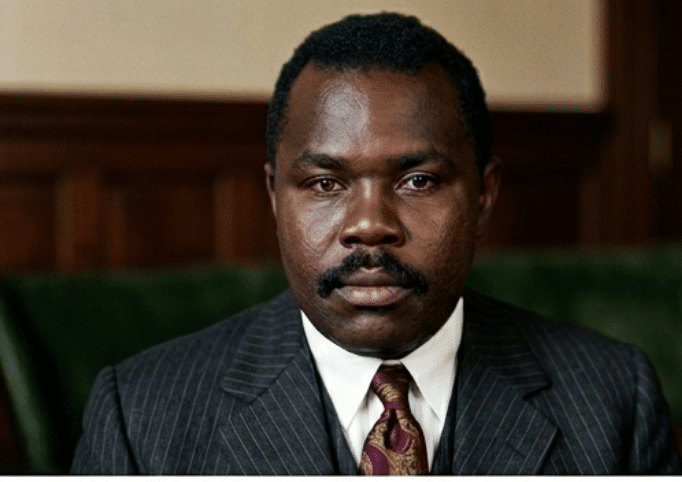
Marcus Garvey remains one of the most influential figures to emerge from the Caribbean. Born in Jamaica at the end of the 19th century, he transformed a local experience into a political and cultural project of international scope. At a time when black populations faced deeply rooted systems of exclusion, Marcus Garvey proposed a structured vision based on dignity, organization and autonomy.
Recognized today as a national hero in Jamaica, he is much more than a historical symbol. His story helps us understand how the Caribbean helped shape major intellectual and political movements on a global scale. His name continues to circulate in contemporary debates on identity, memory and the development of societies born out of colonial history.
From Jamaican origins to the formation of a committed conscience
He was born on August 17, 1887 in St. Ann’s Bay, Jamaica, into a modest family. Very early on, he developed a special relationship with the written word and information by working in the printing industry. This point is essential to understanding his subsequent career: Marcus Garvey was not only an orator, but also a strategist for the dissemination of ideas. His travels in various parts of the world, notably Central America and Europe, played a decisive role in shaping his thinking. He observed first-hand racial inequalities and the living conditions of black populations. These experiences nurtured a conviction that was to become central: the need for these populations to organize on an international scale.
In this context, he does not construct an abstract thought. Instead, he develops a vision rooted in concrete realities, marked by colonialism, migration and relations of domination. The Caribbean, far from being peripheral, already appears as a key space in the understanding of global dynamics.

UNIA: a structured project to transform the black condition
In 1914, Marcus Garvey founded the Universal Negro Improvement Association (UNIA) in Jamaica. This organization quickly became the heart of his project. His ambition was clear: to create a movement capable of supporting the social, economic and political upliftment of black populations worldwide. When he moved to the United States, UNIA took on an unprecedented dimension. The movement gathered millions of members and established itself as one of the first international mass organizations supported by black populations. This ability to organize is one of the most remarkable aspects of his career.
It’s more than just talk. It structures networks, develops concrete initiatives and mobilizes entire communities. Through UNIA, it proposes a global vision based on solidarity, discipline and collective ambition.
Pride, autonomy and strategy: the foundations of Marcus Garvey's thinking
Marcus Garvey’s thinking rests on several pillars that explain his enduring influence. The first is black pride. Marcus Garvey insisted on the need to rehabilitate a positive image of black populations, at a time when they were systematically devalued. This symbolic dimension plays an essential role in mobilizing individuals and communities.
The second pillar is economic autonomy. For him, political freedom cannot exist without economic independence. He encouraged the creation of businesses, the development of commercial networks and the control of resources. Finally, Marcus Garvey placed great importance on communication. Thanks to his newspaper Negro WorldHe spread his ideas far and wide. His talent for oratory and his ability to structure a rallying speech helped make him a central figure of his time.

Black Star Line and Negro World: economic ambition and the spread of ideas
Among Marcus Garvey’s most emblematic initiatives was the Black Star Line, founded in 1919. This shipping line aimed to establish economic connections between black populations around the world, particularly between the Americas and Africa. The Black Star Line represented a strong ambition: to build economic autonomy on an international scale. However, the project is encountering numerous difficulties, notably financial and organizational. These obstacles illustrate the challenges it faces in implementing its vision.
At the same time, the newspaper Negro World plays a fundamental role in disseminating its ideas. It enabled him to reach a wide audience and create a space for reflection and exchange. He understood early on that control of the narrative was central to any dynamic of social transformation.
A much-admired and much-debated figure
He arouses both admiration and criticism. His project, ambitious and structured, is not unanimously supported. Some of his positions, notably on racial separation and the return to Africa, have been the subject of considerable debate. In addition, the difficulties encountered by the Black Star Line and the legal charges brought against him have weakened his image at certain points in his life. These factors should not be ignored. On the contrary, they help us to understand the complexity of his career. He remains a historical figure who transcends simplistic interpretations. His influence took place against a backdrop of profound political, economic and social tensions.
Marcus Garvey and the Caribbean: a legacy beyond borders
His impact extends far beyond Jamaica. His influence is particularly visible in the development of Rastafarianism, which adopts certain aspects of his vision, notably the symbolic link with Africa. But beyond this movement, Marcus Garvey helped shape a collective consciousness that permeates Caribbean societies. For Richès Karayib, this legacy is essential. It shows that the Caribbean is not just a cultural space, but also a territory producing ideas and projects capable of influencing the world.
A legacy still relevant in the 21st century
Today, he continues to fuel reflection on identity, sovereignty and development. His ideas on economic autonomy, resource control and the valorization of local cultures are particularly relevant to contemporary debates. The official recognition he has received, particularly in Jamaica, testifies to the importance of his legacy. Recent discussions about his memory and political decisions concerning him show that Marcus Garvey remains a living figure in the public arena. His story invites us to rethink the role of Caribbean territories in world history. It is a reminder that major ideas can emerge from these spaces and transform societies over the long term.
Marcus Garvey is not just a Jamaican hero. He is a central figure in Caribbean and world history, whose influence extends far beyond his own era. Through his commitment, initiatives and vision, he helped redefine the contours of dignity, organization and collective ambition. His legacy, both inspiring and complex, continues to question and nourish contemporary thinking. For the Caribbean, Marcus Garvey represents much more than a memory: he embodies a capacity to think the world, to act and to leave a lasting imprint on history.
Marcus Garvey was a Jamaican political leader and activist born in 1887, considered one of the major figures of Pan-Africanism. He was the founder of the Universal Negro Improvement Association (UNIA) and is recognized as a national hero in Jamaica.
Marcus Garvey is important because he developed a global vision based on black pride, economic autonomy and the organization of black populations on an international scale. His influence had a lasting impact on the Caribbean and black movements worldwide.
UNIA (Universal Negro Improvement Association) was founded in 1914 by Marcus Garvey to promote the economic, social and cultural development of black populations worldwide.