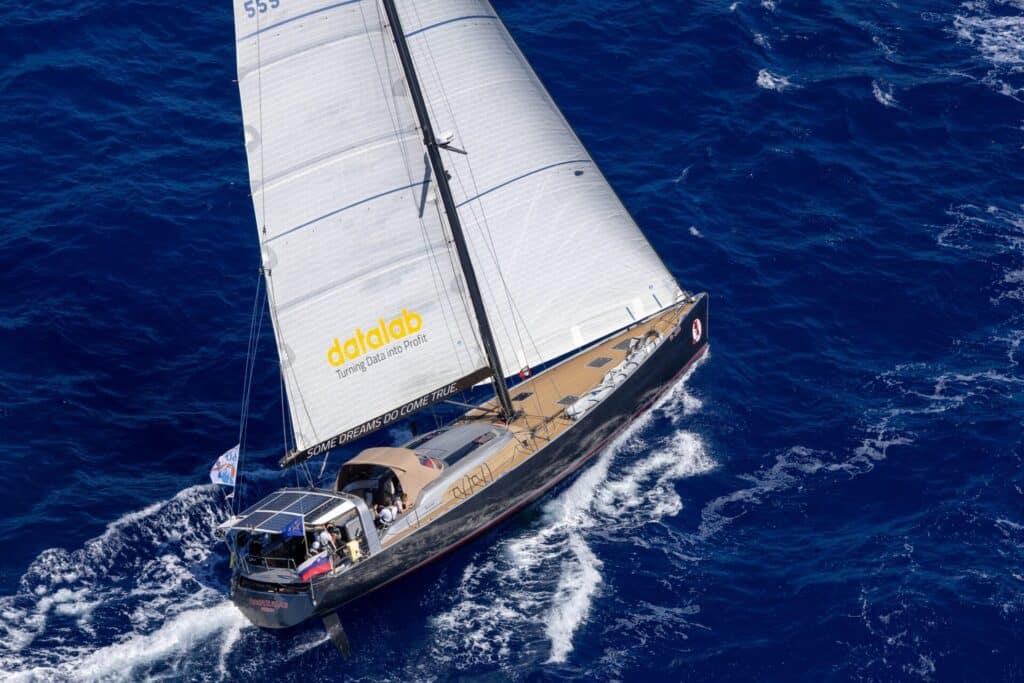
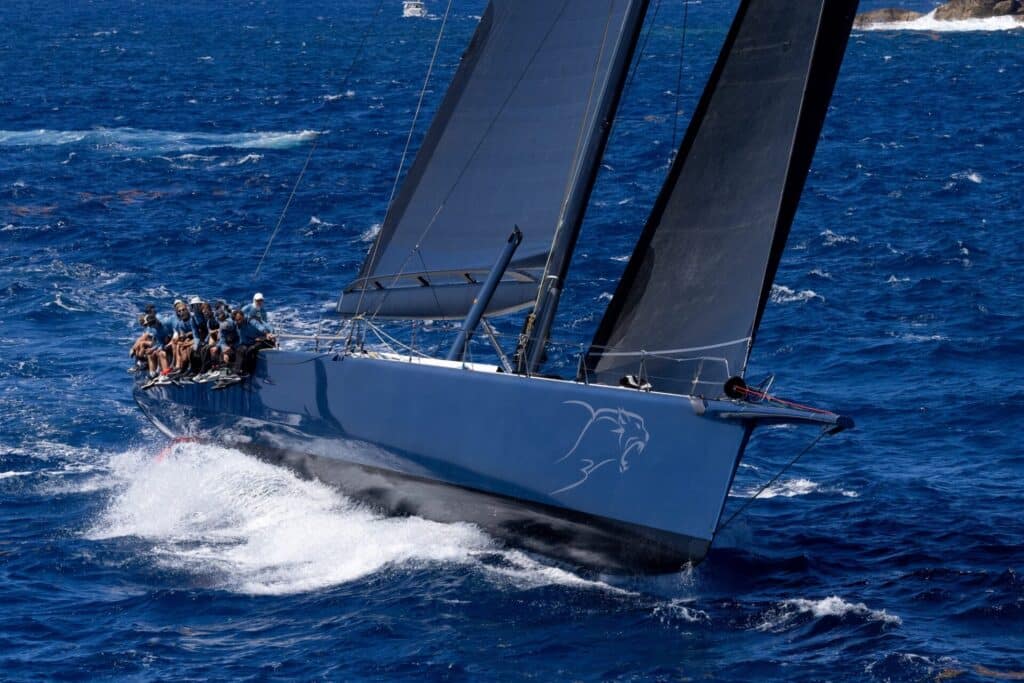
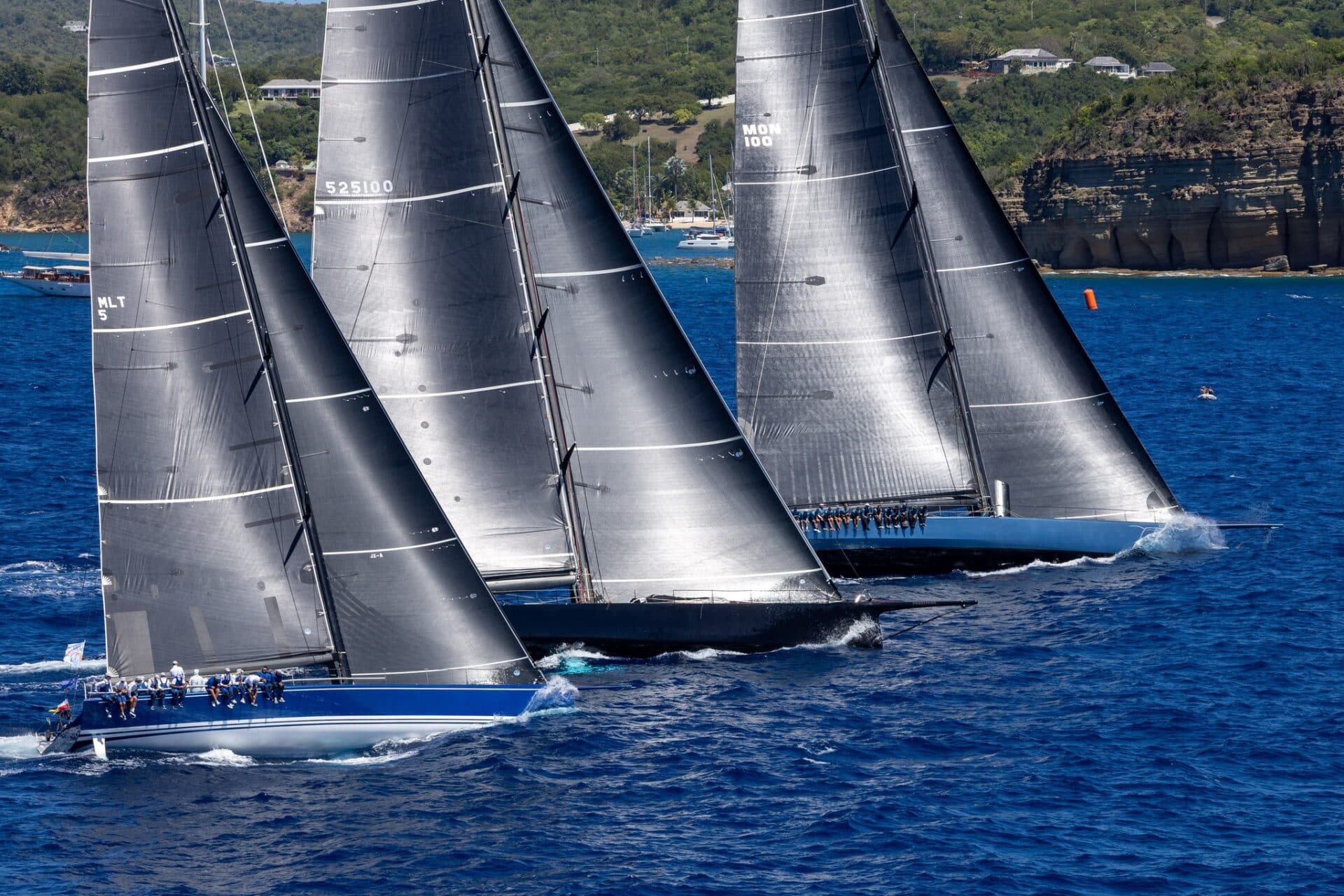
Antigua – RORC Caribbean 600: Antigua has launched a strategic and eagerly awaited 17th edition of the Caribbean RORC.

RORC Caribbean 600

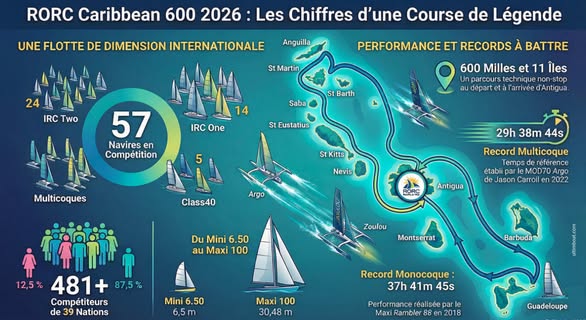
The RORC Caribbean 600 returned this Monday, February 23, 2026 for its 17th edition, starting from English Harbour, Antigua. Organized by the Royal Ocean Racing Club, this 600-nautical-mile non-stop offshore race has established itself as one of the major events on the international sailing calendar. In less than two decades, it has established itself as a benchmark event in the Caribbean, attracting a prestigious fleet and crews from all over the world every year.

For this 2026 edition, 57 boats have been entered, bringing together nearly 500 sailors from over thirty countries. From Mini 6.50s to 100-foot maxi yachts, the diversity of the boats entered testifies to the appeal of the race and its unique positioning, both accessible to experienced crews and feared by the biggest names in offshore sailing.

A spectacular and demanding Caribbean course

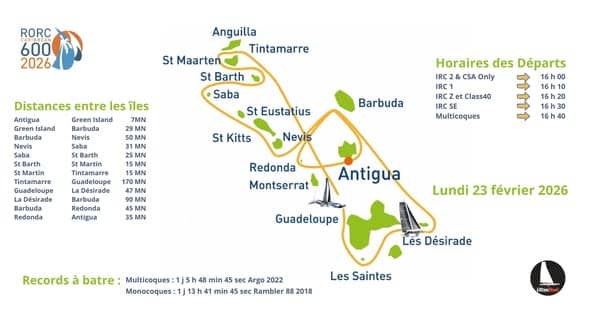
The principle of the RORC Caribbean 600 has remained unchanged since its creation: start and finish in Antigua, for a 600-nautical-mile non-stop course around eleven Caribbean islands. On the map, the route looks crystal-clear. At sea, it proves particularly complex.

RORC Caribbean 600
RORC Caribbean 600

After the start from English Harbour, the fleet headed north to the Anguilla Channel, before beginning a gradual descent south to Les Saintes in Guadeloupe, before heading back up to Antigua. Along the way, the crews passed Barbuda, Nevis, Saint-Kitts, Saba, Saint-Barthélemy, Montserrat and Redonda. This route offers a condensed view of the realities of Caribbean sailing, where the beauty of the scenery goes hand in hand with constant technical challenges.

The difficulty of the RORC Caribbean 600 lies mainly in the effects of relief and local weather phenomena. Winds can accelerate sharply as you pass certain capes, then drop in intensity in areas sheltered by mountainous islands. Inter-island currents, venturi effects in the canals and long night-time sailing require constant vigilance. In this race, detailed knowledge of the terrain and strategic anticipation can prove decisive.

A top-class international fleet

As every year, the race brought together a fleet of seasoned professionals and highly experienced amateur sailors. The fast maxi-yachts and multihulls attract a great deal of media attention, especially when it comes to winning in real time. Their power and speed make them major players in the show, capable of completing the course in just a few days when conditions are favorable.

But the sporting interest of the RORC Caribbean 600 also lies in the intermediate classes, notably the Class40s and IRC boats. In these categories, the differences are often determined by regularity, precision of maneuvers and management of weather transitions. Every mile sailed can have a direct impact on the final rankings on corrected time. The presence of smaller boats, such as the Mini, is a reminder that this race is first and foremost a human challenge. Sailing such a non-stop course demands considerable physical and mental endurance.

RORC Caribbean 600
RORC Caribbean 600
RORC Caribbean 600
RORC Caribbean 600

Caribbean participation reinforces race identity

The presence of sailors from the French West Indies lent a particularly strong regional dimension to this edition. Sailors from Martinique and Guadeloupe took part in the race, notably aboard the Class40. Martinique Horizon. Their participation underlines the growing strength of offshore sailing in the Caribbean and the willingness of local talent to compete against the best international teams.

For these skippers, the RORC Caribbean 600 represents much more than a competition. It’s an opportunity to measure themselves against the highest standards, to gain experience on a technical course, and to raise the profile of the Caribbean nautical industry. In a region where the sea is at the heart of people’s identities, their commitment helps to promote local maritime know-how.

RORC Caribbean 600
RORC Caribbean 600
RORC Caribbean 600
RORC Caribbean 600

Antigua, a strategic hub for international sailing

The choice of Antigua as the starting and finishing point for the RORC Caribbean 600 is a logical one. Over the years, the island has established itself as one of the Caribbean’s sailing capitals. Its port infrastructure, favorable February weather conditions and maritime culture make it an ideal venue for a race of this scale.

Beyond the sporting aspect, the event generates significant economic spin-offs for the region. Crews, technical teams and accompanying staff often stay for several weeks, contributing to the activity of marinas, hotels, restaurants and nautical services. In this way, the RORC Caribbean 600 contributes to Antigua’s international reputation and, more broadly, to the promotion of the Caribbean as a leading offshore sailing destination.

A race revealing Caribbean excellence

Over the years, the RORC Caribbean 600 has become a veritable barometer of the region’s nautical excellence. It highlights the capacity of Caribbean territories to host top-level international sporting events, while at the same time promoting their unique maritime features.

This race also illustrates how the sea links islands together. By circumnavigating eleven territories in the space of a few days, crews cross a common maritime space that transcends administrative boundaries. In this way, the RORC Caribbean 600 embodies a form of Caribbean continuity, where navigation becomes a vector of regional connection.

RORC Caribbean 600
RORC Caribbean 600
RORC Caribbean 600
RORC Caribbean 600

The 2026 edition now under way

The start of the 17th edition was given on Monday February 23rd at 11am local time from English Harbour. From the very first hours of the race, strategic choices began to influence the hierarchy. The passages to the north of Antigua and in the inter-island channels are among the most closely scrutinized zones, as they can create significant gaps.

In the days to come, the race should offer a constant spectacle of high speeds, tactical repositioning and crew endurance management. This 2026 edition promises to be one of the most open in recent years, with a dense international fleet and weather conditions likely to throw up some surprises. For observers of the Caribbean sailing scene, the RORC Caribbean 600 remains a structuring event. Over and above its sporting performance, it embodies the region’s maritime vitality and its place in major international competitions.

RORC Caribbean 600
RORC Caribbean 600

The 17th edition kicked off on Monday, February 23, 2026 from English Harbour in Antigua.

The race covers 600 nautical miles non-stop around eleven Caribbean islands, from the north of Anguilla to Guadeloupe before returning to Antigua.

It raises the region’s international profile in offshore sailing, promotes Caribbean sailors and generates economic spin-offs for Antigua and the territories it crosses.

Leave a Reply

Your email address will not be published. Required fields are marked *

More articles from RK

Roots and Future
COOPERATION
Tolotra

Roots and Future 2026: in Ouagadougou, Africa and the Caribbean build a new cultural and entrepreneurial dialogue

Culture in Ouagadougou recently took on a special international dimension. From February 28 to March 3, 2026, the capital of Burkina Faso hosted Roots and Future 2026a meeting dedicated to the development of cultural and creative industries and cooperation between Africa and its diaspora. Conceived as a forum for dialogue and structuring of the cultural sector, the event brought together artists, entrepreneurs, institutions and players in the creative economy around a single ambition: to strengthen bridges between African territories and diasporic communities, particularly in the Caribbean. For many observers, Roots and Future 2026 marks a milestone in the construction of an international cultural network where artistic and entrepreneurial exchanges become a lever for development. A vision: linking Africa and its cultural diasporas Under the theme “Authentic Africa and the Africa of the Diasporas”, the first edition of Roots and Future 2026 is part of a global movement to promote black

Read More »
Exuma
TOURISM
Tolotra

Bahamas – Exuma, a Bahamian archipelago shaped by sea and islets

In the Bahamas archipelago, Exuma occupies a special place. This territory is not a single island, but a long chain of islets and cays stretching over 200 kilometers into the Caribbean Sea. For travelers, it represents a strong image of the Caribbean: shallow waters, sandbanks, small scattered islands and a constant relationship with the ocean. The Exuma archipelago is made up of more than 360 islands and caysThe largest is Great Exuma, home to the main town of George Town. Great Exuma is linked by a bridge to Little Exuma, the second largest island in the district. This territorial configuration gives the whole area a clear organization: a few inhabited areas, surrounded by a multitude of largely unspoilt islets. An area built around the sea In Exuma, the sea isn’t just a landscape: it structures the whole of local life. The locals have historically made their living from fishing, sailing

Read More »
Riské
HISTORY & HERITAGE
Tolotra

Riské: the 100% all-female Haitian konpa band that made history in Haiti

In January 1991, a new group appeared on the Haitian konpa scene. Fourteen musicians decided to form Riskéan all-female orchestra in a male-dominated field. At a time when women are rarely present behind the instruments in konpa bands, this initiative represents a major breakthrough in the organization of the Haitian music scene. The project is the brainchild of two singers, Sandra Jean and Sabrina Kolbjornsensoon joined by Gina Rouzeau and Maguy Limage. Around them, ten instrumentalists complete the ensemble: bassists, keyboardists, drummers and percussionists. From the outset, the objective was clear: to demonstrate that female musicians can perform all the functions of an orchestra, from writing to interpretation, and not be confined to the role of singer or chorister. Sandra Jean sums up this ambition in an interview with the newspaper La Presse in 1992: Riské was created to encourage Haitian women to break out of the traditional roles often

Read More »

conTACT RK

we'd love to have your feedback on your experience so far

Join The List

Join our Richès Karayib community!  Sign up for our newsletter.

Want To Maximize Your Business Presence On Riches Karayib?

Complete the form to start the application