

The Steelpan, often considered the musical symbol of Trinidad and Tobago, represents much more than just a musical instrument. It is a vector of culture, identity, and national pride transcending borders to establish itself internationally. In this article, we will explore the origin, evolution, and significance of the Steelpan, while also highlighting the flagship event of the musical season: the Panorama.
Origins of the Steelpan
It emerged in the 1930s in the popular neighborhoods of Port-of-Spain, the capital of Trinidad and Tobago. During this period, locals used oil drums and other metal objects to create sounds. This creative process evolved, and artisans began shaping steel drums, allowing for a richer and more harmonious range of notes. By 1940, the Steelpan was recognized as a bona fide musical instrument, and its use spread throughout the Caribbean region.
Panorama: The Steelband Competition
Panorama is an unmissable event celebrating the Steelpan in Trinidad and Tobago every year. In 2025, Panorama will mark an important milestone in the history of this instrument, being the first to take place under the official designation of it as the national musical instrument of Trinidad and Tobago. According to Pan Trinbago, the governing body of Steelbands, the number of registered groups for Panorama 2025 has significantly increased, rising from 49 to 54 for Single Pan bands and from 97 to 101 for Conventional bands.
This competition attracts groups from diverse backgrounds, and the performances are often spectacular. Participants vie for impressive prizes, with over $16 million allocated for various categories, including Large Conventional, Medium Conventional, Small Conventional, Single Pan, and Junior bands under 21.
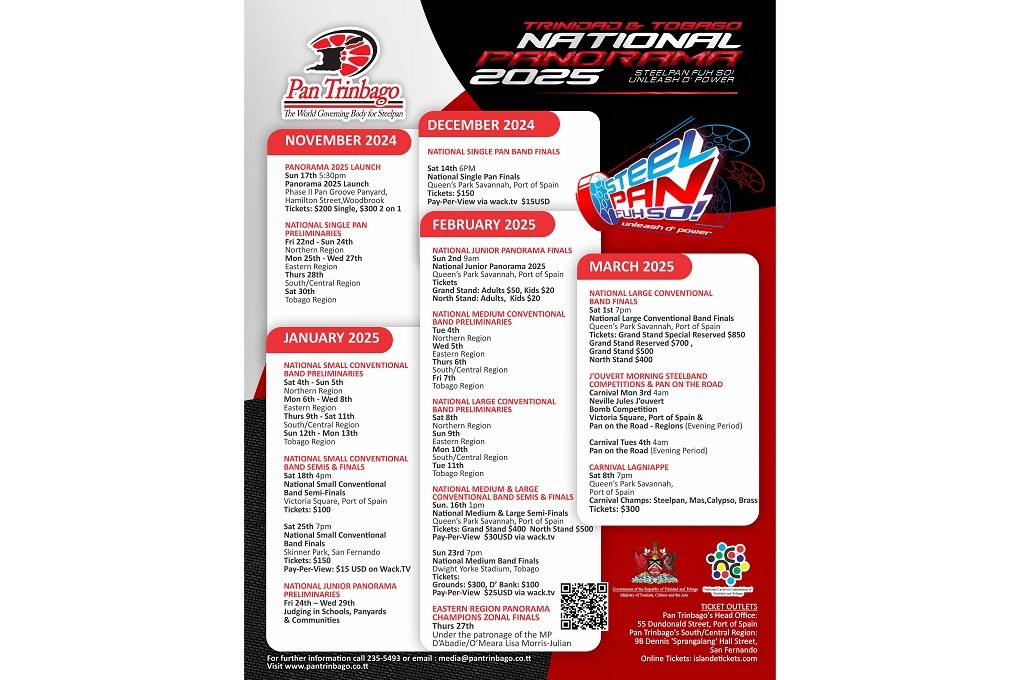
The Theme of Panorama 2025: "Steelpan Fuh So! Unleash D’ Power!"
The theme for Panorama 2025, “Steelpan Fuh So! Unleash D’ Power!”, promises to be a dynamic event that showcases the innovation and creativity of Steelbands. Pan Trinbago has announced the highly anticipated preliminary round for Panorama 2025, where the nation’s best Steelbands will compete for a place in the grand finals. Spectators can expect electrifying performances that highlight the talent and passion of the musicians.
The Cultural Impact of the Steelpan
The Steelpan plays an essential role in the culture of Trinidad and Tobago. Beyond being a musical instrument, it has become a symbol of unity and resilience. Steelbands are not only performers; they are also engaged in community initiatives aimed at strengthening social ties and promoting local culture. Educational programs are often implemented to teach young people how to create and play the Steelpan, ensuring the preservation of this musical heritage.
Community Engagement
Panorama 2025 also introduces initiatives aimed at enhancing community engagement and celebrating the cultural legacy of the Steelpan. These initiatives are designed to enrich the Panorama experience and foster deeper connections among youth, communities, and fans. By emphasizing the culture of it, these programs aim to amplify the cultural impact of the festival.
The Steelpan is much more than a musical instrument; it is at the heart of Trinidad and Tobago’s cultural identity. Through events such as Panorama, the richness of this musical tradition is celebrated and preserved. The official recognition of the Steelpan as a national instrument is a significant step toward valuing this unique heritage. As the country prepares for Panorama 2025, excitement and anticipation are palpable, promising a memorable competition that will showcase the creativity and talents.
The culture of the Steelpan continues to thrive, and with it, the indomitable spirit of Trinidad and Tobago. Whether on the Panorama stage or in community streets, the Steelpan is a true reflection of the joy, unity, and passion that characterize the Trinidadian people. We eagerly await to see how this iconic instrument will continue to evolve and inspire future generations.




2 Responses