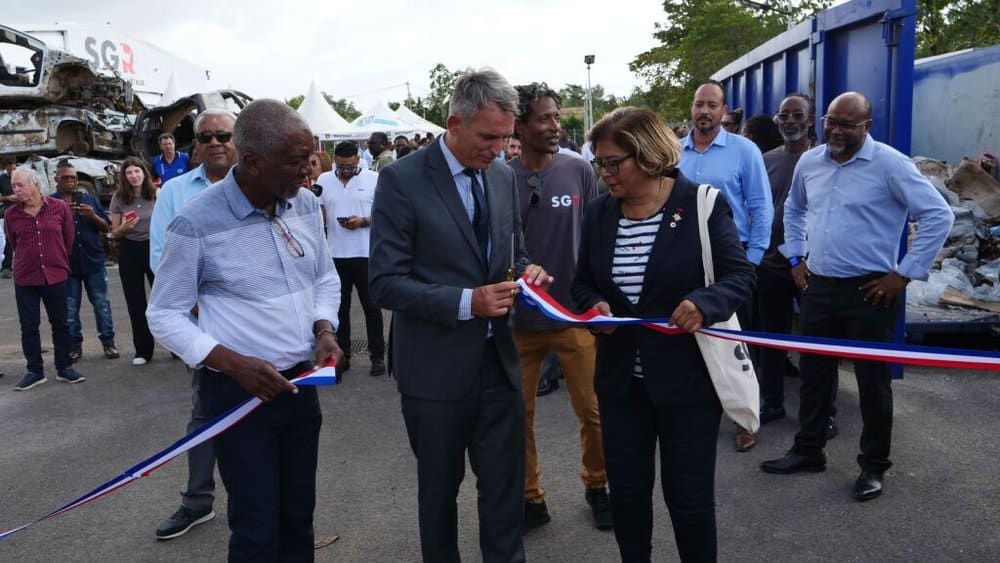
Société Guyanaise de Recyclage: In French Guiana, the problem of end-of-life vehicles (ELVs) represents a major challenge for the environment and public health. According to Ademe, between 20,000 and 30,000 ELVs litter the territory, with a significant concentration on the island of Cayenne. To remedy this situation, Société Guyanaise de Recyclage (SGR) has inaugurated a recycling center in Matoury, capable of processing some 15 vehicles a day and 12,000 tonnes of scrap metal a year. This article explores the impact of this project on the preservation of our territories through optimized waste management.
The problem of end-of-life vehicles in French Guiana
ELVs are more than just an eyesore; they also entail health and environmental risks. These abandoned vehicles encourage the proliferation of mosquitoes, contributing to the spread of diseases such as dengue fever. What’s more, some are used to conceal illegal substances, posing security problems. Société Guyanaise de Recyclage therefore operates in a context where waste management is essential for public health and safety. According to Ademe, the number of ELVs in French Guyana is estimated at between 20,000 and 30,000, with annual growth of 2,000 to 3,000 units. Without intervention, this figure could rise to 50,000, 80% of which would be on the island of Cayenne.
The Matoury Recycling Center: a concrete response to environmental challenges
The recycling center inaugurated by Société Guyanaise de Recyclage in Matoury is a major project, financed to the tune of 6.4 million euros, a large part of which comes from European funds, notably the FEDER French Guiana 2021-2027 program. The center stands out for its use of electric shredding technology, reducing its carbon footprint. Thanks to this innovation, only 10 kg of final waste is produced per tonne of ELV treated, compared with 260 kg for traditional methods. Designed to process around fifteen vehicles a day, it contributes to the significant reduction of ELVs in French Guiana.
Health and environmental issues
Abandoned ELVs represent a major ecological hazard. As well as causing visual pollution, they degrade the environment and compromise public health. By recovering and treating these vehicles, Société Guyanaise de Recyclage helps to limit these impacts. During the dengue epidemic in 2024, the authorities have identified ELVs as potential breeding grounds for mosquitoes, prompting them to step up their clean-up efforts. In addition, by reducing the quantity of non-recyclable waste, the center helps to preserve natural resources and protect the local ecosystem.
Socio-economic impact of the project
The Société Guyanaise de Recyclage project is not limited to its ecological impact: it also plays a key role in the local economy. The creation of 20 technical and administrative jobs boosts the job market in French Guiana. What’s more, by recovering waste, the center contributes to the environment. What’s more, by recycling waste, the center contributes to the circular economy, a model that encourages the reuse and recycling of materials. This concept is all the more relevant in a context where waste management is becoming a major issue for sustainable development.
Technology and innovation
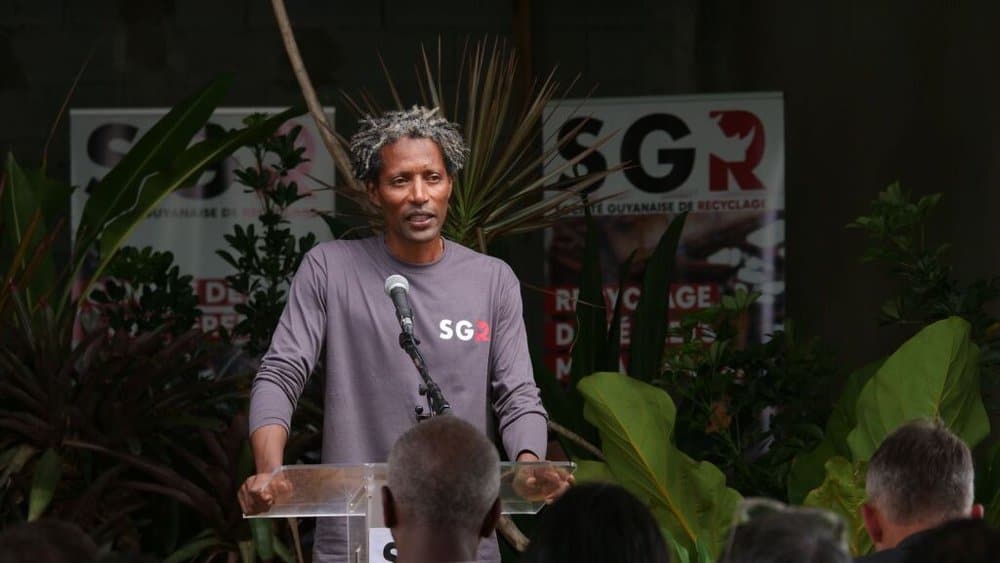
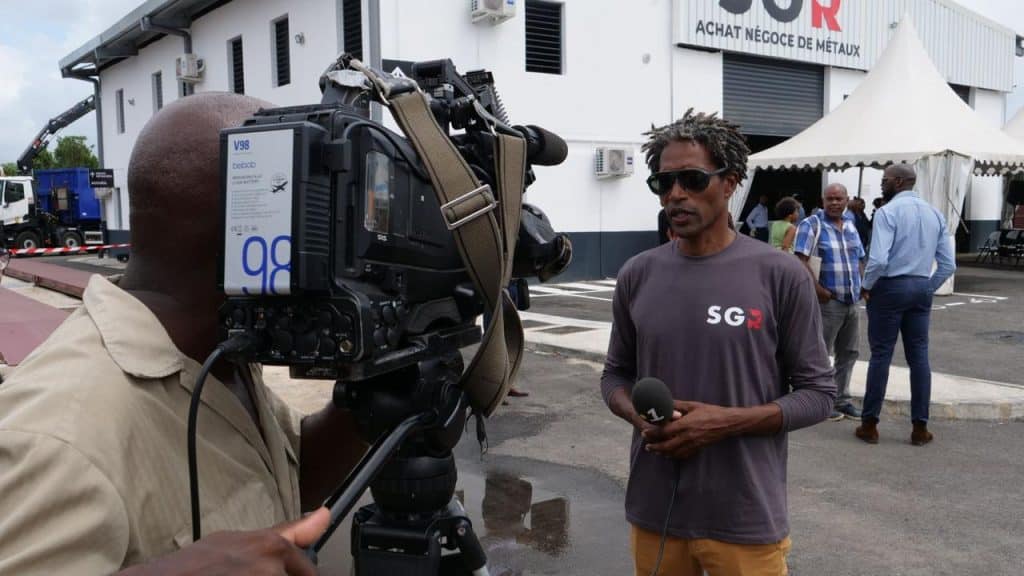
Technological innovation is at the heart of Société Guyanaise de Recyclage‘s strategy. According to Alain Montjean, president and founder of SGR : “We have set up a dismantling line, which dismantles the vehicle so that it can be shredded”. The electric shredding process efficiently treats waste while reducing CO₂ emissions. Recycling begins with the careful dismantling of vehicles, enabling materials recovery to be optimized and ultimate waste to be minimized. This approach illustrates how technology can reconcile efficiency and respect for the environment.
Partnerships and financing
The SGR project has received public and European funding, underlining the importance of collaboration between private players and public institutions. Ademe, a key player in environmental management, also supports this initiative, demonstrating that the success of such projects depends on a collective, coordinated approach.
Société Guyanaise de Recyclage plays an essential role in sustainable waste management in French Guiana. By adopting an innovative and efficient approach to ELV treatment, it contributes to environmental protection, improved public health and local economic dynamism. This project demonstrates that responsible waste management can be both ecologically and socio-economically beneficial. The SGR embodies a sustainable development model where environmental progress and economic growth go hand in hand.
FEMI 2025, a film festival organized by Images et Culture du Monde Association (AICM) returns for its 29th edition, offering a selection of films from Guadeloupe, Martinique and French Guiana, as well as from the Caribbean, Latin America, Africa and the Indian Ocean. This year’s festival highlights strong themes and bold works, consolidating its role as an essential platform for regional and international cinema.
A rich and varied selection
Films in competition: shorts and features
FEMI 2025 offers a competition featuring some fifty films, divided into several categories:
-
8 short documentaries :
-
“Marginal Skin (Guadeloupe)
-
“Ô Mes Aïeux !” (Martinique)
-
“Un Nòt Kankan (Louisiana/Canada)
-
“Haraka Haraka (Mayotte)
-
“I Ké Volé (Martinique/France)
-
“Vert Bergevin (Guadeloupe)
-
“Manuela Pioche, a forgotten figure in Guadeloupean music” (Guadeloupe)
-
“Tè An Nou (Guadeloupe)
-
-
25 short fiction films :
- FAN (Guadeloupe/France)
- Myriam en Noir (French Guiana)
- Ma Détresse (Ivory Coast)
- Interrogation (Togo)
- I’m not her, I’m the other (Guadeloupe)
- Tord Balle (Reunion)
- Fierce Creature (Madagascar)
- Sara (Peru)
- Un Ballon (Brazil)
- Mon Vélo (Benin)
- Les Bouts Cassés (Guadeloupe)
- Solitude (Martinique)
- Hattayana (Guadeloupe)
- Chaîne d’Argent (Brazil)
- Tan Lontan (Reunion Island)
- Le Faisan (Argentina)
- Des Rêves en Bateaux Papiers (Haiti)
- Beyond (Martinique)
- Kabri I Manz Salad (Reunion)
- Forget (Guadeloupe)
- L’Étoile de Régina (French Guiana)
- An Sav Ka Ki Ké Rivé (Guadeloupe)
- Juliette (Guadeloupe/France)
- Tan Lontan (Reunion Island)
- L’Étoile de Régina (French Guiana)
-
11 documentaries :
-
“Le Temps des Surettes est Fini” (Guadeloupe)
-
“Garanti 100% Kréol” (Reunion Island)
-
“The Fourth Estate in Guadeloupe (Guadeloupe)
-
“Lisette Malidor, a universal artist” (Martinique)
-
“Cyrille Régis, Itinerary of a Legend” (French Guiana)
-
“Haiti-Chile: Shock and Encounter” (Haiti)
-
“Ecological Transition in Martinique (Martinique)
-
“King Daddy Yod, the living legend” (Guadeloupe/France)
-
“Tè An Nou (Guadeloupe)
-
“Kimboto, Journey to the Heart of the Guiana Forest” (French Guiana)
-
“Massacres en Outremer” (Martinique)
-
-
6 feature films :
-
“Le Dernier Repas (Haiti/Québec)
-
“Choke Hold (Saint-Martin)
-
“Débrouya (French Guiana)
-
“Dream On (Guadeloupe)
-
“Marmaille” (Reunion)
-
“La Machette et le Marteau (Guadeloupe/Martinique)
-

FEMI 2025 guests and juries
Guests of honor
- Ernest PÉPIN : godfather of the 29th edition. Poet and novelist from Guadeloupe, Ernest PÉPIN is the author of several collections of poetry, including Buzz of free wordswinner of the Casa de las Americas Prize in 1991. He is also an important member of the Créolité movement, alongside Jean BERNABÉ and Patrick CHAMOISEAU. His major novels include The Stick Man and Tambour-Babel. This year, FEMI honors Ernest PÉPIN with the screening of The Man with the Sticka film adapted from his novel of the same name. He will be on hand for a book signing to mark the release of his new poetry collection, To any dedicated country.
- Mariette Monpierre : Born in Guadeloupe, Mariette Monpierre grew up in Paris and lives between New York and Le Gosier. She began her career at the BBDO NY agency, producing ads for major brands. Her first short film “Rendez-Vous” was nominated for the Djibril Diop Mambety prize at Cannes in 2002. Her film “Le Bonheur d’Elza” won acclaim in the USA and an award at FESPACO 2013. She has also directed several documentaries, including “Entre 2 Rives” and “Les Soldats de la Terre”. Her latest series, “Manmzèl New York”, has been selected for the 29th edition of FESPACO in February 2025.


- Alix Véronèze : Director from Guadeloupe, Alix Véronèze made a name for himself with his first feature film “Sentiment Inconnu” in 2011. He continued his career with “Culture en Danger” and “King Daddy Yod, la légende vivante”. His commitment to independent cinema and his desire to highlight the social realities of Guadeloupe make him a key figure at the festival.
- King Daddy Yod : King Daddy Yod, a pioneer of raggamuffin in France, has left his mark on the history of French reggae since the 80s. His album “Redoutable” (1991) and his hit “Faut pas taper la doudou” propelled the movement in France. A documentary on his career will be screened at FEMI 2025.


The FEMI 2025 juries
Feature Film Jury
- Martine Sornay: A teacher with a passion for cinema, she set up an audiovisual workshop in Guadeloupe and chaired the TERRA Festival until 2024.
- Marc Delmarre: A former school principal and soccer manager, he has a passion for choral singing and cinema.
- Étienne Lamoulie: Professor of Lettres Modernes and Cinema-Audiovisuel, he has taken part in several film festivals.
Jury Short Documentaries – MMI
- Naelly Créantor: Communication and design student.
- Cassandra Bores: Film criticism specialist.
- Arnaud Hunt: Beatmaker, graphic designer and video editor.
Short Film Jury
- Fanny Coco-Viloin: Lawyer with a passion for art, member of international juries.
- Louise Jannin: Young up-and-coming director.
- James Désiris: Haitian multidisciplinary artist.
Documentary Jury
- Laura Édouard: Self-taught painter, photographer and video artist.
- Célia Dejoux: Journalist and documentary filmmaker.
- Régis Marton: Film critic and host of podcasts on Caribbean cinema.
The FEMI 2025 program
FEMI 2025 will take place over several days and in different locations in Guadeloupe, with screenings, ceremonies and meetings:
- Saturday March 22: Opening ceremony at the Lamentin Ciné-Théâtre with speeches, presentation and screening of “Manmzèl New-York”.
- Sunday March 23: Screenings of international shorts and documentaries.
- Monday March 24: Thematic screenings on Creole societies and ecology.
- Tuesday March 25: Masterclass with Alix Véronèze and screenings of Martinican films.
- Wednesday March 26: Closing ceremony with awards ceremony and screening of “Le Bonheur d’Elza”.
- Thursday March 27 and Friday March 28: Special screenings and retrospective on Caribbean cinema.


FEMI 2025 promises to be an exceptional edition, offering a plunge into the diversity of Caribbean and international cinema. Featuring original screenings, encounters with artists and a focus on regional culture, this festival confirms its role as a must-attend event for lovers of the seventh art.
Photographic residency in Miami – Station Culturelle, in partnership with the prestigious Women Photographers International Archive (WOPHA), invites applications for a photographic residency in Miami. Aimed at women and non-binary people, artists and photographers from Martinique, Guadeloupe and Guyana, this exceptional initiative offers a month-long immersion in Miami’s thriving art scene in September 2025. Here are all the details on this unique opportunity for this Photographic residency.
La Station Culturelle and WOPHA: A visionary partnership
La Station Culturelle, based in Martinique, is an organization dedicated to promoting contemporary artists from Caribbean territories. By collaborating with WOPHA, an international organization founded in 2020 to support non-binary women and artists in the field of photography, it gives talents from the French Caribbean access to world-class platforms.
The WOPHA Artist-in-Residence program is recognized as a springboard for emerging and mid-career artists. This photographic residency provides a dedicated space for research, experimentation and community engagement, while connecting participants with Miami’s vibrant cultural landscape.
The advantages of a photographic residency
This month-long photographic residency is designed to provide artists with an environment conducive to creation and professional development. Benefits include:
- Private accommodation: accommodation in the El Espacio 23 art center, an emblematic space in the Allapattah district.
- 2,500 bursary: to cover expenses related to the stay (local transportation, meals, equipment).
- S3,000 production support: to finance the final exhibition.
- Round-trip plane ticket: to facilitate international travel.
- Group show: presentation of works in the contemporary space Green Space Miami.
- Access to professional equipment: shared studios, photo labs, specialized scanners and printers.
- Exclusive networking: Meetings with local curators, collectors and artists.


Eligibility criteria
To apply for this prestigious residence, candidates must meet the following criteria:
- Identify as a woman or non-binary person working primarily in photography or visual culture.
- Be at least 25 years old before March 31, 2025.
- At least five years’ professional artistic experience.
- Be able to devote a minimum of 30 hours a week to studio work.
- Be available to take part in the entire program in September 2025.
- Not currently enrolled in a university degree program.
- Working knowledge of English (Spanish is an asset).
- Ability to travel to the United States (visa required for international applicants).
Artists who have already participated in the WOPHA Artist-in-Residence program are not eligible.
How to apply?
The program values interdisciplinary practices and encourages innovative proposals combining traditional photography, automated or augmented processes, image collection and archiving. Candidates can propose an existing project or develop a new series during their photographic residency.
Available resources
El Espacio 23 offers an exceptional setting with :
- Three fully-equipped private apartments (kitchen, bathroom, laundry).
- A shared studio space to encourage collaboration between residents.
- Access to local partner institutions providing specialized equipment (darkrooms, high-definition scanners).
Selection process
Selection is based on a rigorous process led by an international jury of renowned curators, academics and artists. Entries will be evaluated according to the following criteria:
- Conceptual strength (25%): Clarity and originality of the proposed project.
- Quality of previous work (20%): Artistic excellence and technical mastery.
- Innovative approach (15%): New perspectives in contemporary photography.
- Feasibility (15%): Ability to carry out the project with available resources.
- Potential impact (15%): Relevance to WOPHA’s mission and contribution to artistic career.
- General interest (10%): The jury’s enthusiasm for the work presented.
The finalists will be invited to an interview with the WOPHA management team before the final announcement scheduled for April 30, 2025.
Commitments of selected residents
Selected artists must :
- Actively participate in the residency throughout September 2025.
- Collaborate with a curator to organize the group exhibition between May and August 2025.
- Contribute to at least one public activity (conference, workshop or studio tour).
- Get involved in Miami’s local arts community.
- Provide a final report on their experience.
An invaluable opportunity for Caribbean artists
This collaboration between La Station Culturelle and WOPHA marks an important step in the international recognition of Caribbean photographic talent. By offering a unique platform combining material resources, professional mentoring and global visibility, this photographic residency promises to open up unprecedented perspectives for the selected artists.
If you’re a committed artist ready to take on this exceptional challenge, don’t miss this chance to make your art shine on the international stage! Submit your application before March 31, 2025.


Magma, a film directed by Cyprien Vial, is a tribute to Guadeloupe and its complex history. Currently playing in Guadeloupe, French Guiana and Martinique ahead of its national release on March 19, this feature-length film takes its inspiration from the eruption of La Soufrière in 1976 to address universal, contemporary themes. Between social tensions, crisis management and the quest for identity, Magma is a work that resonates deeply with the realities of the island.
Magma's main themes
Managing natural and man-made crises:
The 1976 Soufrière eruption is used as a backdrop to explore the challenges of managing natural disasters. The film highlights the ethical and logistical dilemmas faced by scientists and local authorities when it comes to ensuring the safety of populations while avoiding panic.
Social and cultural tensions :
Beyond the volcano, Magma echoes the social fractures running through Guadeloupe. The mass evacuation of 1976, dubbed “Magma”, upset the balance between the inhabitants of Basse-Terre and Grande-Terre. This past resonates with current tensions, which the film explores with subtlety.
Identity and belonging:
Through the main character, Katia Reiter (Marina Foïs), a scientist who has lived on the island for ten years but is still perceived as an outsider, the film questions what it means to “belong” to a community or territory.
La Soufrière: a central figure
In Magma, La Soufrière is more than just a backdrop; it’s a character in its own right. Cyprien Vial describes the volcano as a living being, complex and unpredictable. Its role in the plot goes far beyond that of a natural threat: it symbolizes the latent tensions in Guadeloupean society. Aimé (Théo Christine), the young local scientist, has an almost intimate relationship with the volcano, which he has considered his playground since childhood. This relationship contrasts with Katia’s more distant and analytical one, reinforcing the themes of identity and belonging.

The choice of actors
Cyprien Vial paid particular attention to the casting to ensure that the film’s characters were authentically portrayed:
- Marina Foïs (Katia Reiter): the director was looking for a credible actress to play the role of an experienced vulcanologist. Marina Foïs came up trumps thanks to her nuanced acting and ability to embody a humble yet determined character. She plays a woman confronted with her own limits in the face of a crisis that goes beyond her technical skills.
- Théo Christine (Aimé): to play Aimé, a young doctoral student from Guadeloupe with a passion for volcanism, Vial wanted an actor capable of embodying both the youthful enthusiasm and maturity needed to stand up to Katia’s character. Théo Christine brought this duality to the role, thanks to his natural charisma.
- Mathieu Demy (the prefect): as a representative of the local authorities, Demy plays a key role in managing tensions between scientists and the local population.


The challenges of shooting
The filming of Magma, which took place entirely in Guadeloupe, presented a number of logistical and artistic challenges:
- Unpredictable weather conditions: filming near the active volcano of La Soufrière required constant adaptation to the vagaries of the weather. Crews had to deal with sudden downpours and strong winds while capturing the raw essence of the landscape.
- Historical accuracy: although the film is contemporary, it draws heavily on the real events of 1976. Cyprien Vial conducted extensive research to faithfully convey the emotions and social impact of the period.
- Cultural integration: making a film on an island as culturally rich as Guadeloupe called for special sensitivity to avoid clichés or misunderstandings. The involvement of local actors like Théo Christine brought a precious authenticity to the project.


A universal message
With Magma, Cyprien Vial not only tells a story inspired by real events, but also reflects on our relationship with natural and human crises. The pairing of Katia and Aimé embodies the hope of harmonious collaboration between different generations, cultures and perspectives.
The film's reception
The recently-unveiled trailer has aroused great interest among audiences in the French West Indies as well as in mainland France. Combining human drama and geological tension, the film promises to be as much entertainment as an educational tool to better understand the complex realities of Guadeloupe.
Blending local history, contemporary issues and captivating performances, Magma is a must-see film for anyone interested in the Caribbean or universal social dynamics. Cyprien Vial delivers an ambitious work that honors both the past and future of Guadeloupe, while offering viewers an intense and thoughtful cinematic experience.
Scheduled for national release on March 19, Magma is much more than just a dramatic story; it’s a window into the vibrant soul of a unique island.
Zion
is a film that stands out in the French cinematic landscape, offering a gripping insight into the tumultuous daily life of a young man in Guadeloupe. Chris, the protagonist, juggles the world of deals, short-lived adventures and motorcycle rodeos. Spotted by Odell, a local kingpin, he is entrusted with a risky mission that will turn his life upside down. Just as he’s about to make his delivery, something unexpected happens: an abandoned baby is left on his doorstep. The moment triggers a race against time in which Chris is faced with agonizing moral choices.
The birth of the project
The movie Zion has its origins in the short film Timoun Aw (“Ton gamin” in Guadeloupean Creole), directed by Nelson Foix. This short film already tackled the theme of child abandonment, a poignant reality that runs through modern societies. Nelson Foix had the opportunity to present the short to Mohamed Hamidi, who was impressed and facilitated a meeting with Jamel Debbouze. The latter then offered to produce the feature film, enabling a team to come together around this ambitious project.
Autobiographical inspiration
The inspiration behind Zion is deeply rooted in the director’s personal experience. Nelson Foix talks about the bond he has with his eldest son, who is not his biological son but whom he has raised since he was 8 months old. This underlines a central theme of the film: the notion of fatherhood and responsibility, which transcends blood ties. This narrative choice reinforces the authenticity of the story and allows the audience to identify with Chris’ struggles.
A wild casting
To bring this story to life, the production opted for wild casting, favoring raw talent met in Guadeloupe. Sloan Decombes, the lead actor, was discovered by chance while accompanying a friend to a casting session. His natural interpretation won over the director, who saw in him the potential to play Chris. Zebrist, who plays Odell, also has a fascinating story, having recently been released from prison. His presence brings an authentic dimension to the film, illustrating the sometimes difficult realities of life in the red light district.

Realistic, intense action scenes
The action scenes in Zion required meticulous preparation to ensure the safety of the actors. The director learned to adapt filming techniques to avoid danger, even when shooting blanks. This attention to safety and the authenticity of action scenes helps to immerse viewers in the film’s world. The adaptation of scenes to the local topography visually enriches the story and reinforces its anchorage in Guadeloupean reality.
A film in Creole for greater authenticity
One of Nelson Foix’s most memorable decisions was to film Zion mainly in Creole. This approach aims to faithfully reflect Guadeloupean culture and give the characters an authentic voice. The director expresses his aversion to French in this context, stressing that directing actors in their mother tongue enhances the credibility of the story. This bold decision, supported by producers and broadcasters alike, illustrates the film’s commitment to representing local culture.
A soundtrack between tradition and modernity
The soundtrack of Zioncomposed by Brice Davoli, moves away from the usual clichés associated with Caribbean films. It plays on contrasts and aims to evoke deep emotions. By integrating artists from the Caribbean music scene, such as Kalash, Don Snoop and Keros-N, the music adds an extra dimension to the cinematic experience. The title track, sung by Kalash, reinforces the link between the film and local musical culture.
A touch of mysticism and fantasy
Nelson Foix also chose to add a spiritual dimension to Zioninspired by West Indian beliefs. This mystical approach enriches the narrative and allows us to explore universal themes such as resilience and hope. The iguana, present throughout the film, symbolizes this vision of a world where reality and spirituality coexist, reminding viewers of the importance of Caribbean culture.
A Guadeloupe far from postcards
The film depicts a Guadeloupe far removed from tourist clichés. Nelson Foix shares his personal experience, evoking the striking contrasts between the paradisiacal landscapes and the often difficult urban realities. This discrepancy is illustrated in a memorable scene where a cruise ship, a symbol of tourist wealth, appears in the background while Chris is going through a period of distress. This opposition between two worlds underlines the social and economic issues facing young people in the region.
Zion
promises to be a breathtaking thriller, offering an authentic and poignant vision of Guadeloupean youth. With powerful performances, polished art direction and a captivating soundtrack, the film promises to be an unforgettable cinematic experience. Get ready to discover this feature-length film that blends action, emotion and profound reflections on life in Guadeloupe’s red-light districts.
Zion
will open in cinemas on April 9, 2025, with an early release in Guadeloupe, Martinique and French Guiana on March 14. Don’t miss this work which, through the character of Chris, questions the realities of contemporary society and the difficult choices facing young people in the French West Indies.