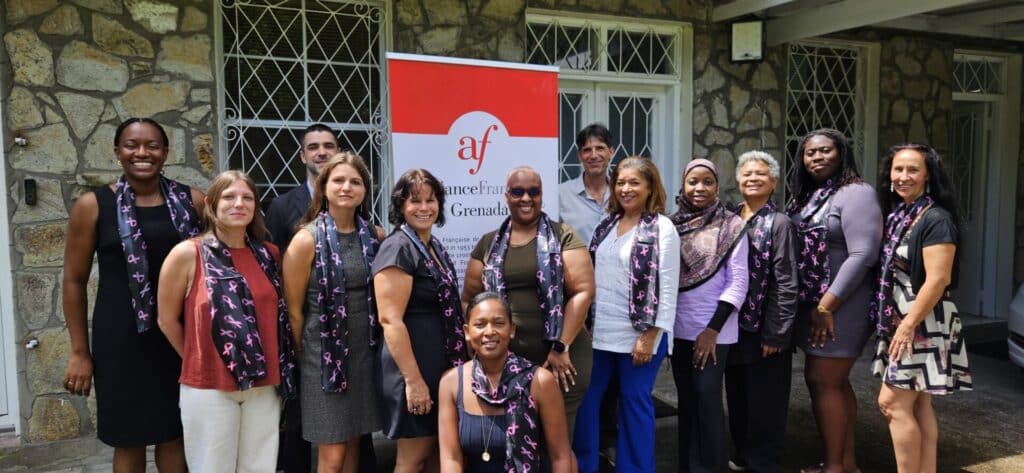
The Rézo 2025 seminar, held in Grenada, brought together the directors of the Alliances Françaises of the English-speaking Caribbean, with the same ambition: to consolidate the links between the territories and reinforce the vitality of the French-speaking world in the region.
Having explored the institutional and strategic vision of this regional cooperation in the previous article, “The Alliances Françaises network at the heart of the Caribbean: cooperating, innovating, sharing”, Richès Karayib now turns the spotlight on those who are at its beating heart.
For several days, the participants shared their experiences, challenges and successes, revealing a common conviction: to bring culture and the French-speaking world closer to the people of the Caribbean via the Alliances Françaises.
An essential meeting for a fragmented network
Each Alliance Française operates on an island, often geographically isolated. This seminar, organized with the support of the Service de Coopération et d’Action Culturelle (SCAC) of the French Embassy in Saint Lucia, was a breath of fresh air for the Alliance Française network. The directors emphasized that these meetings are an essential step: they enable them to exchange tools, compare local realities and together find concrete solutions to shared challenges. They all emphasized the strength of the collective, the richness of exchanges in an English-speaking environment and the complementarity of approaches between territories.
These moments offer both a human and a formative dimension: they re-energize, reinforce solidarity and remind us that, despite the diversity of contexts, the Alliances Françaises move forward with the same ambition – to make the French-speaking world live and shine in the Caribbean. From an institutional point of view, Christiane Bourgeois, Cooperation and Cultural Action Advisor, reminded us that this annual seminar is the only time when all the directors can get together to discuss successes, difficulties and common perspectives.
Nine territories, nine realities, but the same conviction: these times of exchange are essential to maintain the network’s momentum and strengthen cooperation in the Caribbean. Beyond these collective exchanges, it is in the field that the vitality of the Alliances Françaises network takes on its full meaning. Each Alliance Française acts in its own way, in line with the realities of its environment and the languages and cultures of its territory.
A deep-rooted network: ten Alliances, one commitment
Although their contexts differ, the Alliances Françaises of the English-speaking Caribbean share the same vocation: to teach, connect and bring the French-speaking world to life on a daily basis. They adapt to local realities with the same conviction: culture and language are levers for social cohesion, openness and the future.
Grenade – Ilona Forte-Gilbert: teaching differently, connecting differently
The Alliance Française de Grenade operates without permanent premises, a situation that Ilona Forte-Gilbert has turned into an asset.
Courses are now offered online, helping to maintain the French language’s presence and reach new audiences. The Alliance is also involved in schools through educational and cultural activities carried out in partnership with teachers. Out-of-home screenings and workshops keep us in touch with the community.
“Our priority is to remain present and useful, even without a building. Digital technology and partnerships enable us to keep the Alliance going.”
Saint Lucia – Aurélie Gbeffa: coordinating and federating
In Saint Lucia, Aurélie Gbeffa runs the local Alliance and is responsible for regional coordination of the ten Alliances Françaises in the Eastern Caribbean. She assists managers with communication, pooling, associative governance, digital transition and cultural revitalization.
It also pilots the Rézo project, an annual seminar supported by the SCAC, which has become a key event for cohesion and collective reflection. In Castries, the Alliance Française de Sainte-Lucie combines language courses, cultural activities and Creole language promotion through exhibitions and workshops.
“Our strength lies in moving forward together while valuing the cultural diversity of our islands.”
Barbados – Océane Gaillard: promoting French in an English-speaking environment
In Barbados, the Alliance Française acts as a linguistic and cultural bridge. Under the leadership of Océane Gaillard, it has consolidated its foothold in a predominantly English-speaking environment. Educational programs have been set up for schools and adults, and the Alliance has trained members of the Regional Security System in French and Haitian Creole.
On the cultural front, it has welcomed the Guianese troupe Ôtepé, and is developing a program open to different French-speaking expressions.
“We represent a plural Francophonie: France, Africa, Canada and the Caribbean. Culture is our best lever for inspiring the desire to learn.”
Trinidad & Tobago – Anyka Batista: an open and inclusive francophonie
In Trinidad & Tobago, Anyka Batista defends an inclusive and creative Francophonie, which values local languages as much as French. Every October, Creole Heritage Month brings together screenings, conferences and concerts, reflecting a strong commitment to cultural diversity.
The Alliance Française also offers courses for children, teenagers and adults, as well as cultural evenings that encourage encounters between communities. Challenges related to visibility and funding persist, but are offset by a collaborative approach with local schools and institutions.
“We want the Francophonie to be seen as part of our culture, not something external.”
Jamaïque – Clovis Lemée: creating living spaces
In Jamaica, Clovis Lemée is revitalizing a historic Alliance Française, transforming it into a place for living and creating. The Language Exchanges, monthly multilingual evenings, bring together a varied public around cultural themes, while the French Library Sessions – mini-concerts filmed in the media library – turn language into a tool for encounters and artistic expression.
“Learning a language is about creating links. That’s what the Alliances Françaises are all about.”
This cultural dynamic is attracting a younger audience and helping to restore the French language to its rightful place in the English-speaking Caribbean.
Saint-Kitts & Nevis – Lucille Caulliez : education and ecology
The Alliance Française de Saint-Kitts & Nevis combines language learning with civic engagement. Her Naturally Learn French project, supported by a grant from the French Embassy to the Eastern Caribbean, Barbados and the OECS, offered six months of free tuition to twelve teenagers from disadvantaged backgrounds, combining French language discovery, ecological workshops and cultural activities. Each month, participants explored local ecosystems, cultivated a garden, created with recycled materials or exchanged online with students from Guadeloupe – a concrete and lively way to learn the language while forging links in the Caribbean.
This project, which earned the Alliance the Green Alliance Award from the Global Environment Facility, illustrates the vitality of an open, sustainable and youth-oriented French-speaking community. She is also developing Francoscop, an audiovisual series produced by young people, dedicated to the French-speaking world.
Director Lucille Caulliez sums up the spirit of the program:
“We want to show that French is a tool for openness and creativity.”
Dominique – Cévinne M’Voula-Henderson: connecting languages and cultures
Established in 1965, the Alliance Française de la Dominique is active in the educational and cultural fields. The Creole & French Spelling Bees, bilingual spelling contests, encourage students to play with the two languages, understand their complementarity and take pride in them. Training workshops and cultural activities support the enhancement of Creole heritage while promoting the French language.
“The aim is to make French and Creole languages of pride and transmission.”
Guyana – Déborah First-Quao: rebuilding and training
In Georgetown, Déborah First-Quao, recently appointed to Guyana, is re-launching a long-standing but low-profile Alliance Française by focusing on training and educational partnerships. She has created a network of French teachers, developed bilingual workshops at the National Library and renewed ties with local institutions. Cultural and educational initiatives aim to put French back into everyday life, despite major logistical constraints.
“We want to restore French to its rightful place in schools, showing that it can be useful, lively and accessible.”
Suriname – Virginie Lemay: building institutional bridges
In Suriname, Virginie Lemay is strengthening links between the Alliance Française and local institutions. Language training is offered to the security forces, the Ministry of Education, businesses and the hotel industry. La Journée Française, organized with the Collectivité Territoriale de Guyane, is a five-day event featuring exhibitions, professional meetings and concerts.
“French becomes a concrete tool for regional cooperation.
This cross-sectoral approach positions the Alliance Française as a key player in the dialogue between Suriname, Guyana and the rest of the Caribbean.
A shared vision: support, connect, promote
For Christiane Bourgeois, Regional Advisor for Cooperation and Cultural Action at the French Embassy in Saint Lucia, this seminar is an essential moment for consolidating the network’s ties. She points out that it’s “the only occasion of the year when we have the opportunity to meet the directors of the Alliances Françaises”, a privileged time to take stock, exchange practices and difficulties, and set up joint projects.
“The Alliances Françaises are an essential tool for embassies, especially in areas like the Caribbean, where there is no Institut Français. They are local organizations, rooted in the territory, with their own board of directors and their own strategy”. She also recalled the key role played by the Alliances in disseminating the French language and promoting dialogue between peoples, stressing that they promote the language, ensure its teaching and maintain the link between the cultural and the educational, between France and the countries of the region.
Aware of the economic fragility of the associative model, Christiane Bourgeois stresses the importance of the support provided by the Service de Coopération et d’Action Culturelle (SCAC) and the French Ministry of Europe and Foreign Affairs.
Last but not least, it pays tribute to Granada, the seminar’s host, and its people:
“It’s an absolutely authentic island, with extremely friendly people. I encourage all French and Caribbean people to come to Grenada, a country that deserves to be known and appreciated.”
Where the French language comes alive
Over and above balance sheets and figures, these meetings are a reminder that the French-speaking world lives and breathes through the people who make it happen. On every island, the Alliances Françaises gather, transmit and inspire. Anchored in their reality, they build bridges between languages, cultures and generations – a living, inclusive and deeply Caribbean Francophonie.
The Alliances Françaises play a central role in French language teaching, cultural dissemination and dialogue between Caribbean territories. Anchored locally, they adapt their actions to the social, linguistic and cultural realities of each island.
The Rézo seminar is the only annual gathering of all the directors of the Alliances Françaises in the Caribbean. It enables them to share practices, strengthen regional cooperation and maintain a collective dynamic in a geographically dispersed network.
The Alliances Françaises develop tailor-made projects: online or face-to-face courses, actions in schools, ecological projects, cultural events, professional training or institutional cooperation. This adaptability is their strength in a predominantly English-speaking environment.
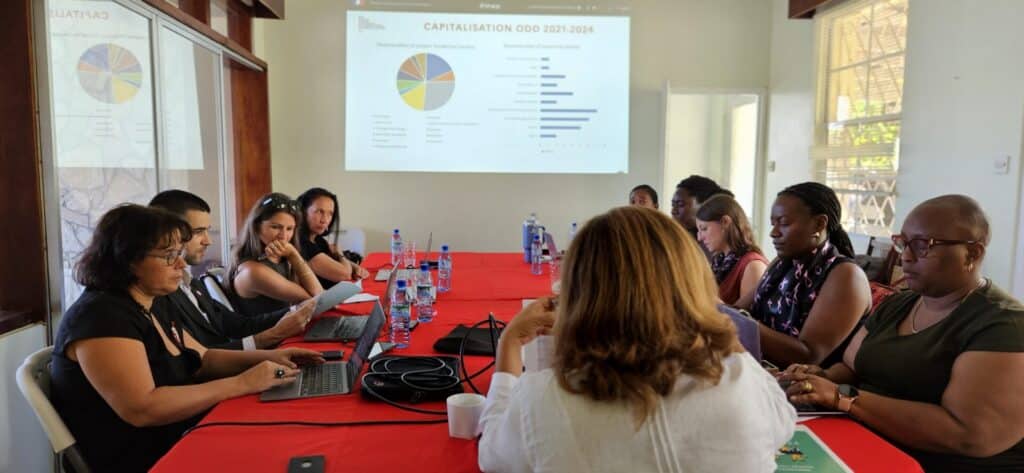
Together for a radiant Caribbean, the Alliances Françaises become bridges between cultures, languages and territories.
At the RÉZO seminar in Grenada, the directors and presidents of the Alliances Françaises of the English-speaking Caribbean met to strengthen cultural and linguistic cooperation in the region and define new common directions.
Supported by the French Embassy’s Service de Coopération et d’Action Culturelle (SCAC), which also took part in some of the discussions, the seminar was an opportunity to strengthen synergies between the Alliances Françaises network and consolidate dialogue with the SCAC, in a spirit of listening and collaboration.
Between exchanges, common strategies and innovative projects, this meeting outlined the contours of a more open, inclusive and modern French-speaking and multilingual Caribbean.
A key moment for an evolving network, serving a Caribbean that learns, shares and shines.
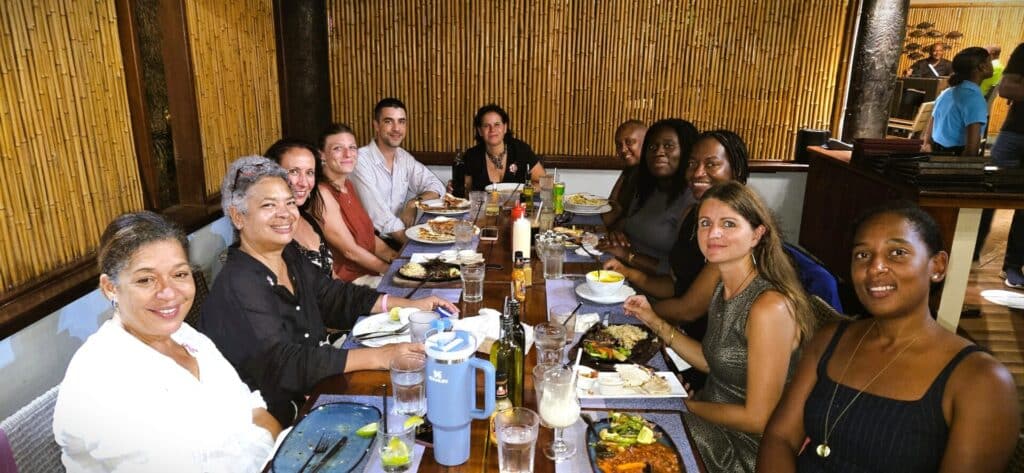
A meeting with a family flavour
Sometimes they’ve known each other for years, sometimes only through a screen. But from the very first minutes, the laughter, hugs and warmth of the reunion remind us that, in the Caribbean, the Alliances Françaises network is above all a human adventure.
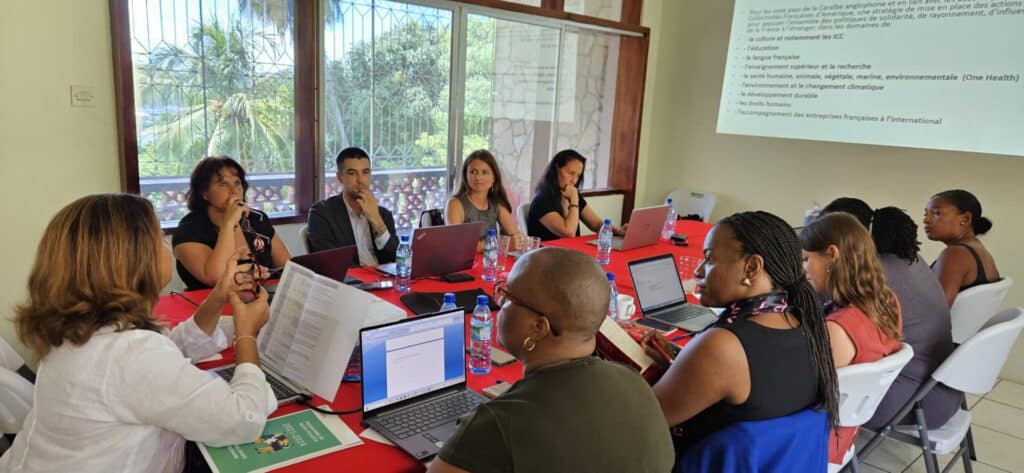
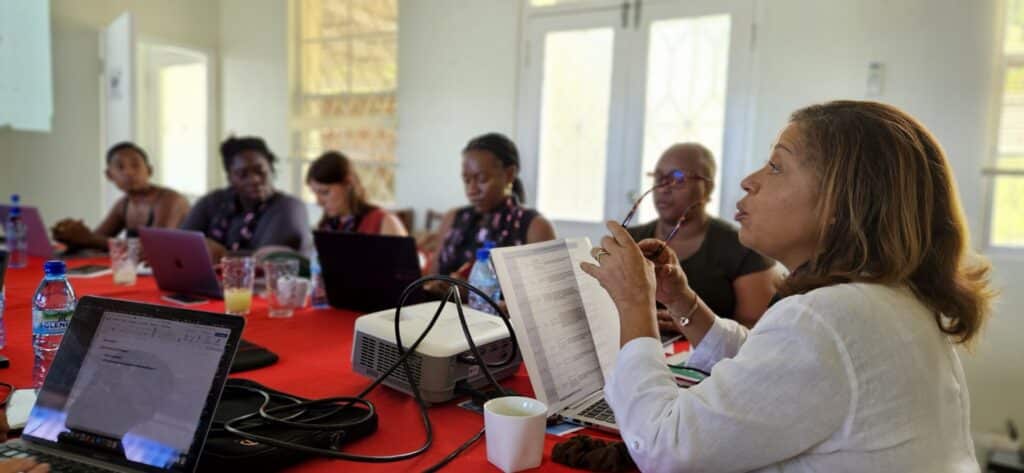
Over the course of three days, directors and presidents shared their experiences from country to country – from day-to-day challenges to local pride and a shared determination to build a stronger, more united and more visible network. In the room, diversity was evident in the accents, the backgrounds and the ideas. From Jamaica to Trinidad and Tobago, each voice brought its own nuance, its own experience, its own way of bringing culture and the French-speaking world to the heart of the territories.
Welcomed by Ilona Fort-Gilbert, Director, and Suelin Low Chew Tung, President of the Alliance Française of Grenada, participants spent several days exchanging ideas and reflections in an atmosphere that was both productive and warm.
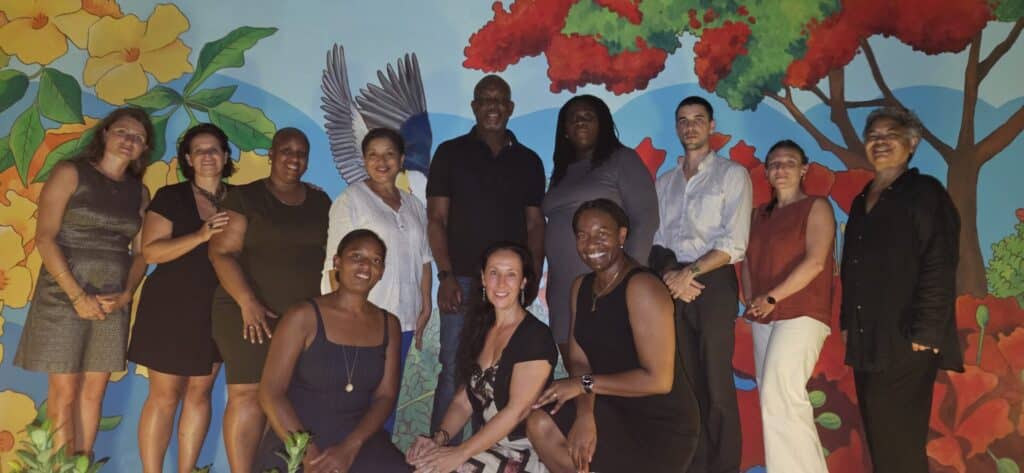
Around the table, the directors: Aurélie Gbeffa (Saint Lucia and regional coordinator of the Alliances Françaises of the Eastern Caribbean), Océane Gaillard (Barbados), Virginie Lemay (Suriname), Lucille Caulliez (Saint Christophe-et-Niévès), Cévinne M’Voula (Dominique), Anyka Batista (Trinidad and Tobago), Ilona Forte-Gilbert (Grenada), Déborah First-Quao (Guyana) and Clovis Lemée ( Jamaica), as well as Christiane Bourgeois (CORCAC – Saint Lucia) and Suelin Low Chew Tung (President – Grenada).
Joining them by videoconference were the presidents: Charlene White-Christian (Dominica), Ruben Del Prado (Suriname), Danielle Parkinson (Trinidad and Tobago), Kara Daly (Saint Kitts and Nevis), Delphine Hadley and her successor Denvil Douglas (Saint Vincent and the Grenadines), and Stuart Defreitas, vice-president (Guyana).
During the discussions, Christiane Bourgeois, Regional Counsellor for Cooperation and Cultural Action (Conseiller Régionale de Coopération et d’Action Culturelle – CORCAC), Head of the Cultural and Cooperation Department (Service de Coopération et d’Action Culturelle – SCAC) of the French Embassy to the Eastern Caribbean, Barbados and the OECS, underlined the essential role of the Alliances Françaises in promoting French and Caribbean culture.
The Regional Counsellor for Cooperation and Cultural Action – CORCAC structures its action around cultural, educational, scientific and economic cooperation, seeking to link French priorities – culture, the French-speaking world, sustainability and human rights – to the specific needs of the countries of the English-speaking Caribbean. We believe that it’s not just the structures, but also the committed men and women on the ground who bring this open, supportive and creative French-speaking community to life.
“The Alliances Françaises are essential partners.”
The presence of Jean-François Hans, Geographical Delegate for Zone C at the Fondation des Alliances Françaises, reminded us from Paris of the importance of the network’s global cohesion.
Charter of values, governance tools, visual identity and support for local teams: the Foundation ensures that quality and ethics are shared across all five continents.
“A large Alliance must always reach out to a smaller one. That’s our collective DNA.”
This solidarity, the driving force behind the movement, takes on its full meaning in the Caribbean, where logistical and human challenges combine with cultural and linguistic richness.
A global Francophonie rooted in local realities
Founded in 1883, the Alliances Françaises network is now the world’s largest cultural network, with over 820 establishments in 135 countries.
In the English-speaking Caribbean, ten Alliances promote the French language and culture: Barbados, Saint Lucia, Dominica, Grenada, Jamaica, Saint Kitts and Nevis, Guyana, Saint Vincent and the Grenadines, Trinidad and Tobago and Suriname.
In 2024, they welcomed over 1,000 learners, delivered 9,000 hours of courses and organized 160 cultural events, bringing together over 7,000 participants.
These figures reflect a living, dynamic reality: the Caribbean Francophonie is not just an idea, it’s a daily presence in classrooms, galleries, festivals and the streets of island capitals. Francophonie thrives on exchanges, local initiatives, and the passion of those who keep the French language alive.
A network in motion: between vision and action
Projet Rézo
Driven by a shared desire to see the network evolve, the RÉZO project is a real driving force for the Alliances Françaises of the English-speaking Caribbean, and a way of thinking about the network differently: more collaborative, more agile, more visible.
Supported by the French Embassy’s Service de Coopération et d’Action Culturelle (SCAC), it aims to strengthen regional coordination, pool tools and professionalize teams. Over the course of the sessions, discussions highlighted a shared ambition: to harmonize practices, encourage pedagogical innovation and strengthen skills, while consolidating the place of the French-speaking world in plural linguistic environments.
Under the coordination of Aurélie Gbeffa, six areas of work were addressed:
- – Associative governance and transparency: strengthening internal management and communication with members.
- – Team training: consolidating skills and promoting regional mobility.
- – Certifications and educational quality: aligning training and evaluation standards across the network.
- – Digital transition: developing collaborative tools and shared digital resources.
- – Setting up RÉZO projects: creating and leading joint projects between Alliances.
- – Revitalizing media libraries: modernizing cultural spaces to better reflect today’s audiences and practices.
Each Alliance leaves with a personalized roadmap, proof of a shared commitment and a strong regional dynamic.
Micro-projects
In the same vein, the SCAC has reiterated its key role in supporting and facilitating micro-projects. These subsidies, allocated each year to local project leaders, are a concrete lever for the implementation of cultural, educational and civic initiatives throughout the region.
A virtuous mechanism that supports local creativity, while promoting training and autonomy for local players. Beyond the financial aspect, this initiative, a signature of the French Ambassy of Saint Lucia, reflects a form of close, human-centered diplomacy that fosters exchange and cooperation between Francophone and Anglophone territories.
From Saint Lucia to Dominica, from Trinidad and Tobago to Grenada, the micro-projects supported reflect the diversity of shared challenges: culture, education, the environment, inclusion and innovation. These are just some of the areas in which the Alliances Françaises, supported by the SCAC, are building bridges between societies and driving sustainable cooperation in the Caribbean.
CARIFRAN
This strategy is also part of the regional dynamic of the CARIFRAN program, dedicated to the training and mobility of teachers of French in the Caribbean.
Implemented by the Organization of American States and funded by the French Embassy to the Eastern Caribbean, Barbados and the OECS to the tune of 453,000 euros, CARIFRAN is helping to strengthen a French-speaking educational community open to inter-island exchanges and linguistic cooperation. It embodies the complementary nature of the network’s educational, cultural and diplomatic activities.
The strength of a fragile network
Over and above the discussions, workshops and decisions, the RÉZO seminar confirmed the vitality of a network in the throes of transformation. But it also served as a reminder of the fragility of an associative model that relies on commitment, passion and solidarity more than on substantial resources.
In the English-speaking Caribbean, as elsewhere, the Alliances Françaises carry out their activities with modest means but remarkable efficiency, and with a real desire to move forward together, thanks to the strength of their teams, their volunteer presidents and the constant support of the SCAC and the Fondation des Alliances Françaises.
It’s this collective humanity, built on resilience and conviction, that makes the network unique: the ability to forge links, invent and reinvent ourselves, even in the face of uncertainty. And while cultural and linguistic cooperation can sometimes be a challenge, it is also a promise: that of a plural Caribbean, connected, proud of its diversity and capable of writing its future through dialogue between cultures.
A 100% women's tournament in the heart of Guyana
The Women’s Caribbean Premier League 2025 returns for a fourth edition, from September 6 to 17, with a concentrated format and increased visibility. The host country, Guyana, will be hosting all the matches at Providence Stadium, a symbol of the region’s cricketing passion. For the Caribbean public, this is a unique opportunity to see the best players of the moment face off in a competition designed to give women’s sport its rightful place.
A tight schedule from September 6 to 17
The competition adopts a clear format: six group-phase matches in a double round-robin followed by a final between the top two teams. The schedule ensures uninterrupted sporting intensity, with matches taking place every week right up to the grand final on September 17.
Beyond the sport itself, this choice of programming also aims to attract local and regional spectators. Guyana takes advantage of the event to strengthen its appeal, as each match becomes an international showcase, broadcast to cricket fans around the world.
Three franchises in search of glory
Three women’s teams are vying for the Women’s Caribbean Premier League 2025 trophy:
- Guyana Amazon Warriors Women : the team had the advantage of playing at home.
- Barbados Royals Women : who will defend their supremacy after victories in 2023 and 2024.
Trinbago Knight Riders Women : still determined to shine in this short format.
This competitive triangle reflects the diversity of Caribbean talent. Each franchise brings together players from neighboring islands, confirming the tournament’s integrative role.
Caribbean women's cricket: a lever for international visibility
While cricket occupies a central place in Caribbean sporting culture, the Women’s Caribbean Premier League 2025 is helping to give women a platform equivalent to that of men’s competitions. The event attracts regional and international media, reinforcing the image of a sporting Caribbean that is ambitious and open to the world.
For the younger generation, seeing Caribbean players treading the turf of Providence Stadium in the first half of the season is a strong signal. It illustrates our determination to promote equal opportunities and provide young women with models of sporting excellence.
Guyana, the Caribbean's tourism and sports showcase
Guyana’s bid to host the Women’s Caribbean Premier League 2025 goes beyond the sporting dimension. The country sees it as an opportunity to showcase its natural and cultural heritage. Between matches, visitors can discover Georgetown, its markets, colonial architecture and culinary specialties.
Guyana is also banking on the direct economic spin-offs: hotels, restaurants and transport all benefit from the influx of fans, journalists and sports delegations. By positioning itself as a host to major sporting events, the country strengthens its image on the Caribbean and international scenes.
A highly anticipated final
The Women’s Caribbean Premier League 2025 Grand Final on September 17 at Providence Stadium promises to be a key event. It will determine which team will succeed – or not – the Barbados Royals Women. The 2025 edition could mark a turning point, either through the confirmation of regional dominance or the emergence of a new force.
Beyond the trophy, the stakes are symbolic: to give women’s cricket the place it deserves in the Caribbean sporting imagination. The Women’s Caribbean Premier League 2025 is not just a tournament, it’s a message to the world: the Caribbean is investing fully in the development of its sportswomen and in the modernity of its competitions.
By hosting the Women’s Caribbean Premier League 2025, Guyana confirms its position as the crossroads of Caribbean sport. The tournament combines high-level competition, tourism benefits and the promotion of women’s cricket. In a context where the visibility of women in sport remains a global issue, the Caribbean is positioning itself as a forerunner. The 2025 edition, tight-knit but ambitious, promises to be a major milestone in the history of regional women’s cricket.
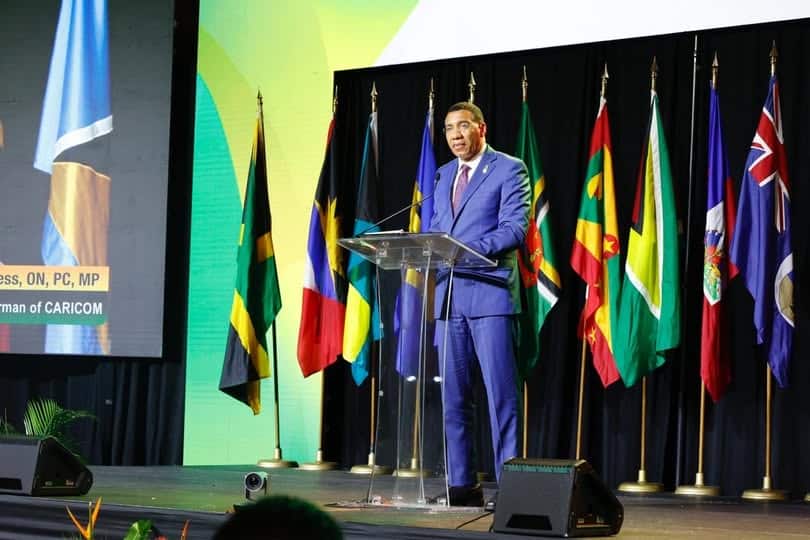
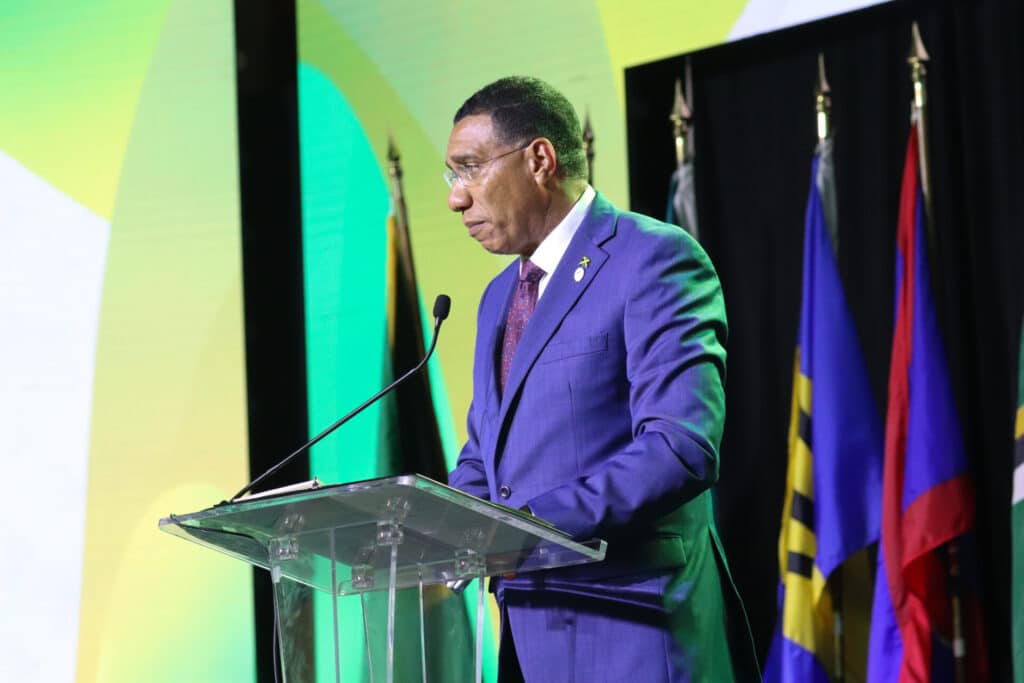
From July 6 to July 08, 2025, Montego Bay will vibrate to the rhythm of the 49th CARICOM Summit, where the Heads of State and Government of member countries will meet to discuss the major challenges facing the region. Chaired by Andrew Holness, Prime Minister of Jamaica, the atmosphere at this year’s summit is both solemn and charged with urgency, as each delegation has come with high expectations in terms of food security, economic resilience, the Haitian crisis and, above all, the overhaul of regional logistics.
The corridors of the Montego Bay Convention Centre are buzzing with strategic conversations, while plenary sessions alternate with thematic workshops, giving each territory the chance to make its voice heard.
A demanding regional context
Right from the opening of the 49th CARICOM Summit, the tone was set: the Caribbean is going through a pivotal period. Successive speeches by representatives from Barbados, Trinidad & Tobago, Saint Lucia and Dominica highlighted the reality of logistical disruption, dependence on costly air transport and the fragility of supply chains. The debates were lively, with each head of delegation insisting on the need for concrete and immediate solutions. Behind-the-scenes exchanges testify to a shared determination to make this summit a decisive moment for the region.
The priorities of the Jamaican presidency
In his inaugural address, Andrew Holness reiterated the importance of strengthening cooperation and diversifying trade, while stressing the need for rapid responses to security and climate issues. His call for collective mobilization did not go unheeded: the 49th CARICOM Summit featured a series of round-table discussions on regional peace, the pooling of resources and the role of young people in building shared prosperity.
Mia Mottley: a plea for logistics transformation
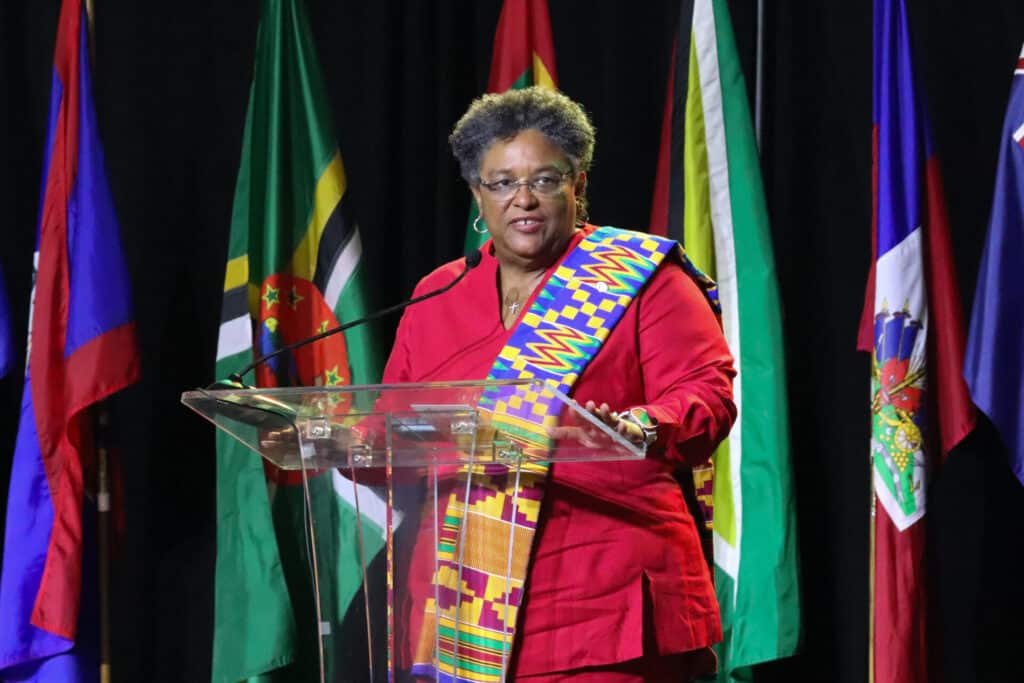
One of the highlights of the 49th CARICOM Summit was the address by Mia Mottley, Prime Minister of Barbados. With eloquence applauded by all participants, she painted a lucid picture of the logistical shortcomings holding back Caribbean development. Her voice, firm and poised, resonated in the auditorium as she spoke of the need for a “regional freight revolution”, stressing the urgent need to democratize transport and restore the sea to its historic role as a link between islands.
Concrete proposals for regional freight
Mia Mottley was not one to rest on her laurels. She announced that two CARICOM member states are in advanced negotiations to acquire cargo aircraft, an initiative she believes will help to fluidify trade and guarantee the supply of essential goods. She also mentioned the expected presentation of a private-sector-led regional ferry project, which could revolutionize connectivity between the islands. These announcements, made at the heart of the 49th CARICOM Summit, were greeted with thunderous applause, a sign that the logistics issue is at the heart of our collective concerns.
Political will at the heart of change
Mia Mottley took advantage of her platform to point out that the success of these projects depends above all on the political will of leaders. She fondly evoked memories of the Federal Maple and Federal Palm, symbols of a time when the sea united the peoples of the Caribbean. Her plea, echoed in several sessions of the 49th CARICOM Summit, found particular resonance with the delegations, who recognized the need to overcome institutional inertia to build a modern, resilient regional logistics system.
The concrete contributions of the 49th CARICOM Summit for member territories
Food security and trade fluidity
Food security was one of the key topics discussed at the 49th CARICOM Summit. Participants emphasized that the establishment of new sea and air links, such as those mentioned by Mia Mottley, will ensure a steady supply of agricultural produce and essential goods. The exchange of best practices between the Ministers of Agriculture and the Economy testifies to a shared desire to optimize logistics circuits and strengthen the food sovereignty of each territory.
Strengthening economic integration and resilience
Discussions on economic integration have highlighted the importance of pooling resources and diversifying trading partners. The 49th CARICOM Summit’s announcements of public and private investment in regional freight pave the way for enhanced cooperation, enabling member territories to better withstand external shocks, whether economic, health-related or climatic. The participants agree that this edition represents a crucial milestone on the road to shared prosperity.
Outlook for youth and innovation
Throughout the workshops, Caribbean youth and technological innovation took center stage. The initiatives presented, whether in training programs, student mobility or support for entrepreneurship, illustrate the determination of leaders to prepare the next generation and give young people the means to become part of the regional dynamic. These perspectives, discussed in depth at the 49th CARICOM Summit, point to new, concrete opportunities for young people.
The 49th CARICOM Summit, catalyst for a new regional era
In Montego Bay, the 49th CARICOM Summit continues in a studious and determined atmosphere. Led by the likes of Mia Mottley and Andrew Holness, the region is taking a decisive step towards modernizing its infrastructure and deepening its integration. The discussions, rich and sometimes passionate, bear witness to a collective determination to transform challenges into opportunities and build a sustainable future for all the people of the Caribbean.
📸 Photo gallery: relive the highlights of the opening ceremony ©CARICOM
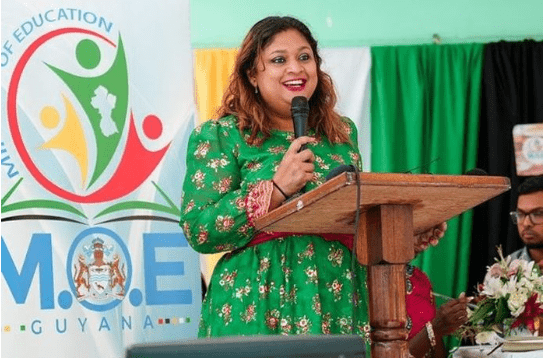
The Caribbean’s educational landscape is set to undergo a profound transformation with the announcement of the establishment of the first digital school in the Caribbean, set to launch in Guyana in 2024. This initiative, championed by President Dr. Mohamed Irfaan Ali and Education Minister Priya Manickchand, aims to create a modern and technologically advanced learning environment, essential for training future leaders of the nation and the region.
A Vision for a Digital Economy
The decision to create a digital school aligns with the Guyanese government’s vision of developing a modern digital economy. As the world increasingly embraces technological solutions, it is imperative for the educational system to adapt in order to prepare students for the challenges and opportunities of the digital age.
Minister Manickchand emphasized during an appearance on “The Guyana Dialogue” that the COVID-19 pandemic highlighted the necessity of integrating technology into education. While the physical presence of a teacher remains vital, it is equally crucial to explore hybrid teaching methods that combine in-person learning with technological tools to enhance the experience in the digital school setting.
The Integration of Artificial Intelligence
One of the most innovative aspects of this digital school will be the integration of artificial intelligence (AI) into the educational process. This approach will not only enhance students’ learning experiences but also tailor educational content to individual needs. AI-based technologies can provide real-time feedback to students, which is essential for maintaining optimal engagement and fostering a deeper understanding of the subjects studied within the digital school framework.
A Legal Framework for Digital Education
For this ambitious project to take shape, it will be necessary to establish legislation that allows students to choose between in-person and digital learning. This represents a significant shift in the way education is currently delivered in Guyana, and it could also serve as a model for other Caribbean countries. By offering this flexibility, the Guyanese government ensures that every student, regardless of their background, can access quality education through the digital school.
An International Partnership
The development of this digital school will be in collaboration with a company based in India, specializing in the creation of educational platforms. This international partnership demonstrates Guyana’s commitment to integrating into the global digital education market. In addition to access to educational resources, this school will focus on developing entrepreneurial skills, promoting cultural education, and offering programs in electronic nursing and accounting, all within the digital school curriculum.
An Opportunity for CARICOM
The initiative is not limited to Guyana; it will be accessible to students from other CARICOM member states. This represents a significant advancement for regional education, providing Caribbean youth with the opportunity to access high-quality education, regardless of their geographical location. In this sense, the digital school could become a model of inclusive education for the region.
Existing Digital Initiatives
The Guyanese government is not new to digital education. The recently launched One Guyana Digital Initiative aims to train over 2,000 Guyanese for promising careers in the technology sector. This program demonstrates that digital education is already a national priority, and the digital school will further strengthen these efforts.
Additionally, the 150k Coders Initiative aims to prepare Guyanese to seize opportunities in the ever-evolving technological world. Through these initiatives, Guyana strives to create an environment conducive to innovation and entrepreneurship, equipping its citizens with the skills necessary to succeed in an increasingly digital world and contributing to the success of the digital school.
Access to Online Courses
Another important aspect of Guyana’s educational project is the Guyana-Coursera platform, which provides 400,000 Guyanese with free access to over 6,000 courses. This initiative, costing $1.4 million annually, demonstrates the government’s commitment to making education accessible to all, especially in a context where continuous training is essential for competitiveness in the job market. The digital school will also leverage such platforms to enhance learning opportunities.
The establishment of the first digital school in the Caribbean in Guyana marks the beginning of a new era for education in the region. With the integration of artificial intelligence, flexible learning options, and expanded access to educational resources, this initiative has the potential to transform how Caribbean youth acquire knowledge and skills. By leveraging international partnerships and existing local initiatives, Guyana positions itself as a leader in the field of digital education, paving the way for a generation of future leaders ready to tackle the challenges of the 21st century.
Dominos are more than just a simple game in the Caribbean; they are a vital part of local culture that brings people together during family gatherings and social events. This article will discuss the history of the game of dominos, its variations across the Caribbean islands, its rules, and its cultural importance.
Origin of Dominos : A Fascinating Journey
The captivating game finds its roots in ancient China, where intricately crafted pieces made from bone or ivory were utilized in similar games. It later made its grand entrance into Europe in the 18th century, evolving and adapting into various forms.
Over time, this beloved pastime journeyed to the New World, including the Caribbean, where it was embraced and transformed by diverse cultures. The simplicity and sociable nature of the game have made it an enduring favorite.
Dominos in the Caribbean: A Deeply Rooted Tradition
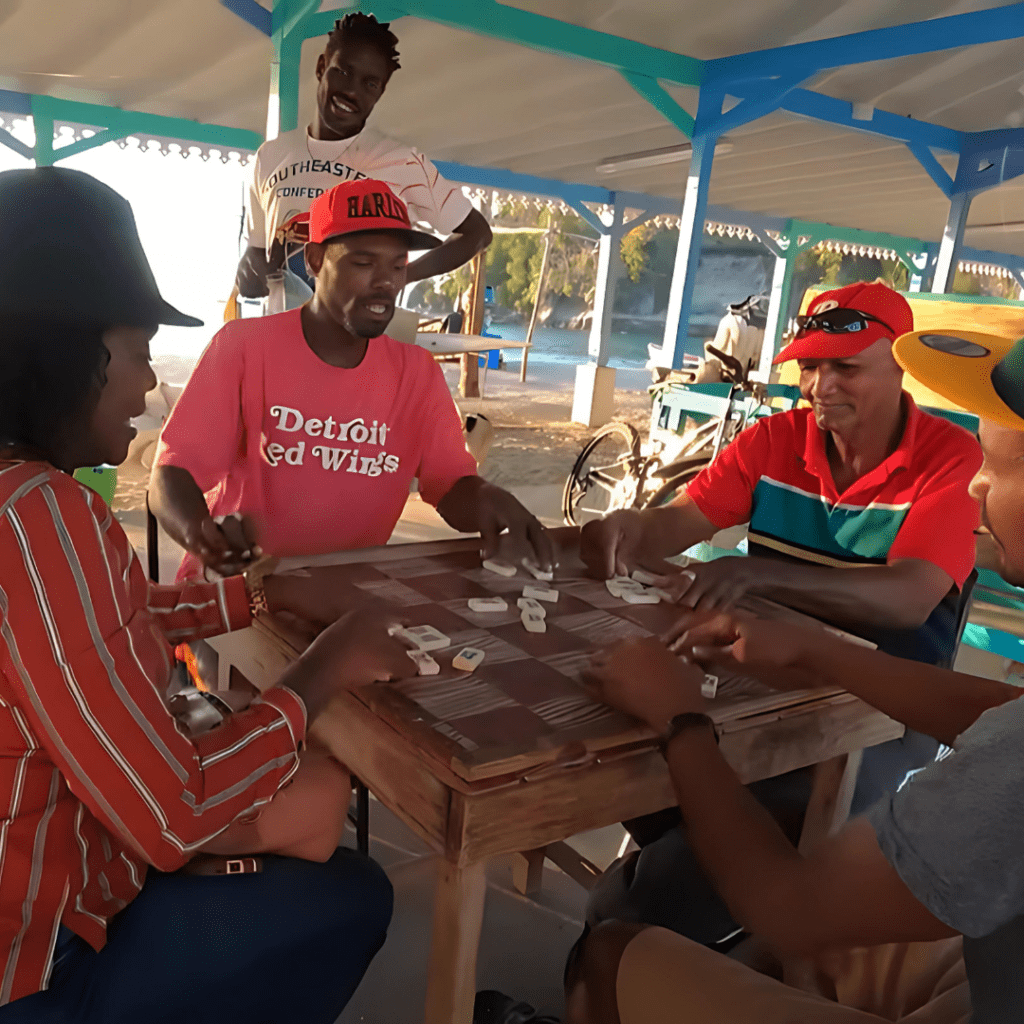
In the Caribbean, this exhilarating game serves as more than just a pastime. It is a cherished activity during family feasts, spirited celebrations, and even in casual cafes. The experience offers an incredible opportunity to connect, converse, and create cherished memories.
Players typically gather around a table outdoors, enveloped in a friendly atmosphere. Laughter, infectious music, and vibrant discussions are integral to the experience. This game fosters meaningful connections, allowing players to share joyous moments.
Why is it So Widespread in the Caribbean?
The popularity of this beloved game in the Caribbean can be attributed to several compelling factors. First and foremost, it is accessible and can be enjoyed by people of all ages. Additionally, it requires minimal equipment, making it incredibly easy to organize. Finally, the activity is often entwined with festive social events, which amplifies its appeal in Caribbean culture. People enthusiastically engage in this game at parties, family reunions, and even in parks, making it a delightful community activity.
The Rules of the Game Across the Islands : Diverse Variations
The rules of the game can vary from island to island, enriching the overall experience.
Here are some thrilling examples:
Trinidad and Tobago
In Trinidad and Tobago, the game is also immensely popular, often played with four or six players. Here are the electrifying rules:
- Distribution of Pieces: Each player receives seven.
- Start of the Game: The player with the highest double starts the action. If there is no double, the player with the highest piece initiates play.
- Objective and Teams: Players can form dynamic teams of two. The aim is to score the most points by skillfully playing pieces.
- Points: Points are scored based on the values of the pieces laid on the table.
- Bets: Players can also place bets on the outcome, adding an exhilarating competitive dimension.
Cuba
In Cuba, this thrilling game is a central element of social gatherings. The rules include:
- Players: Often played in teams of two against two.
- Distribution of Pieces: Each player receives seven.
- Start of the Game: The player with the highest double ignites the game. If no player has a double, the one with the highest piece starts.
- Objective: The goal is to get rid of all your pieces. Points are counted at the end of each round.
- Bonus Points: Additional points can be assigned for specific combinations (for example, a double placed at the end of a chain).
- Festive Atmosphere: Games are often accompanied by lively music and singing, enhancing the joyful experience.
Dominican Republic
In the Dominican Republic, the game is also incredibly popular. Here are the riveting rules:
- Players: It can be played with four players in teams of two.
- Distribution of Pieces: Each player draws seven.
- Start of the Game: The player with the highest double starts. If there is no double, the player with the highest piece kicks things off.
- Objective: The goal is to score a predetermined number of points (for example, 100 points) to claim victory.
- Upside Down Piece: A variant where players must play pieces upside down to score extra points.
- Score: Points are counted at the end of each round, and players can earn additional points by playing certain doubles.
Saint Lucia
In Saint Lucia, the game is often played during festive celebrations. Here are the rules:
- Players: Games can involve up to six participants.
- Distribution of Pieces: Each player receives six.
- Start of the Game: The player with the highest double starts the fun.
- Objective: The goal is to get rid of all your pieces. Points are counted at the end of each round.
- Variations: There are different regional variations, including specific scoring rules.
Martinique and Guadeloupe
In the islands of Martinique and Guadeloupe, the game is typically played with three players. Here are the exciting rules:
- Players: Often played with three participants.
- Distribution of Pieces: Each player draws seven, with the seven remaining forming the “pioche.”
- Start of the Game: The player with the highest double (for example, the double six) kicks off the game.
- Objective: The goal is to lay down all your pieces before the others. If a player finishes, they “met les autres joueurs cochons,” resulting in point penalties.
- Passing Your Turn: If a player cannot lay down a piece, they must pass their turn by saying “Boudé.”
- Dead Game: If no player can play, the game is considered “dead.” Players then count the points remaining in their hands, with the one holding the least points winning the round.
- Restarting the Game: The winner restarts with a piece of their choice.
- Winner: A player who wins three consecutive games is declared the ultimate champion.
Saint Vincent and the Grenadines
In Saint Vincent, this game is also a beloved social activity. Here are the rules:
- Players: Often played with four participants.
- Distribution of Pieces: Each player receives seven.
- Start of the Game: The player with the highest double initiates the game.
- Objective: Players aim to get rid of all their pieces. Points are counted at the end of each round.
- Varied Scoring: Different scoring rules may apply for doubles or specific combinations, making each game unique and exciting.
The Cultural Importance of Dominos in the Caribbean : A Significant Element
This captivating activity across the Caribbean is immensely significant for local culture. It fosters vibrant social interactions and strengthens the bonds between friends and family. Games are often accompanied by animated discussions, lively music, and laughter, creating a warm and welcoming atmosphere.
A Symbol of Togetherness
Dominos symbolize togetherness throughout the Caribbean. People gather around a table to play, share stories, and spend time together. This game is a way to relax and enjoy the company of others.
By playing dominos, Caribbeans perpetuate a tradition that unites generations. Youngsters learn to play from an early age, and the rules are passed down from generation to generation.
The game of dominos in the Caribbean is more than just simple entertainment. It is a fundamental element of Caribbean culture that brings people together and creates moments of joy. Through its varied rules and festive atmosphere, dominos play an essential role in the social interactions of Caribbeans.
Whether during a night out with friends or a family reunion, dominos remain a symbol of conviviality and strategy, deeply rooted in the heart of Caribbean cultures. By celebrating this game, we also celebrate our heritage and collective history.