There is currently no direct flight between Guyana and French Guiana. However, following the air services agreement signed on September 30, 2026, which replaces the 1976 agreement, Trans Guyana Airways is planning at least two flights per week between Georgetown and Cayenne, though no dates have been announced.

In Georgetown, Guyana, the journey to Cayenne begins with a three- to four-hour drive to Moleson Creek. Next comes a ferry that departs only once a day, a crossing into Suriname, and then a second border crossing. That’s still what it takes in 2026 to reach French Guiana from English-speaking Guyana. The direct flight between Guyana and French Guiana being planned by Trans Guyana Airways would cut this journey from nearly 24 hours to about 1 hour and 15 minutes, according to the airline.

Direct Flight Between Guyana and French Guiana: What the September 30, 2026 Agreement Unlocks

On September 30, 2026, in Georgetown, Guyana’s Minister of Public Utilities and Aviation, Deodat Indar, and the French Ambassador, Olivier Plançon, signed a new air services agreement. The agreement replaces the one from 1976. For fifty years, air service between Guyana and France had therefore rested on the same framework.

The new agreement covers traffic rights, safety, fares, and code-sharing between airlines. Guyana has designated Trans Guyana Airways, which is preparing two weekly flights between Georgetown and Cayenne, subject to authorization. As of October 13, 2026, neither the aircraft, nor the fares, nor the date of the first takeoff is known.

The issue goes beyond a single airplane. As of November 2025, no direct air link connected France and Guyana, and plans for a Cayenne-Paramaribo-Georgetown route had been scrapped. A direct flight between Guyana and French Guiana would therefore be a concrete answer to this gap, if the project comes to fruition.

Two Trans Guyana Airways planes, the airline of the future direct flight between Guyana and French Guiana, in front of their hangar
Two Trans Guyana Airways aircraft in front of the company's hangar. © @Trans Guyana Airways / Facebook

Georgetown to Cayenne: Why the Trip Takes Almost a Day

There are no bridges across the Corentyne, the river that separates Guyana from Suriname. The MV Canawaima ferry connects Moleson Creek to South Drain in about an hour and a half. You must drive to Paramaribo, then to Albina, cross the Maroni River toward Saint-Laurent-du-Maroni, and continue for about three hours to Cayenne. Each leg of the journey depends on the previous one, and missing the ferry at Moleson Creek means losing a day.

Trans Guyana Airways aircraft and its reflection on the wet runway
A Trans Guyana Airways aircraft parked on a wet runway, with its reflection in a puddle. © @Trans Guyana Airways / Facebook

This route is vulnerable. In August 2026, the MV Canawaima was grounded for nearly a week following a decision by Suriname’s maritime authority, and passengers were stranded on both sides of the river. The ferry resumed service on August 29, 2026, but it is expected to be retired in 2027. On July 1, 2026, Suriname announced that it would single-handedly finance the 3.1-kilometer-long future bridge, a decision that Guyanese President Irfaan Ali said came as a surprise to him.

What a Direct Flight Between Guyana and French Guiana Would Change for French Guiana

In the first half of 2026, French Guiana welcomed 45,465 visitors from outside the territory, 53% more than a year earlier, with estimated spending of 81.4 million euros. Nearly 70% came from mainland France. A connection to Georgetown would add an English-speaking neighbor to this map, and Trans Guyana Airways is already discussing connections in Cayenne with Air France.

One obstacle remains, however. In November 2025, Guyanese citizens who wanted to travel to France had to apply for a visa at the French Embassy in Suriname, at a cost of 90 euros. A 1-hour-and-15-minute flight would shorten the distance, but not this process. French Guiana is also home to residents born in Guyana, 2,403 according to the 1999 census, 1,046 of them in Cayenne. The figure is dated, but these families would be the first to see the distance change.

Trans Guyana Airways aircraft 8R-GAQ in front of the company's hangar
A Trans Guyana Airways aircraft, registration 8R-GAQ, parked in front of the company's hangar. © @Trans Guyana Airways / Facebook

What Guyana Could Gain

Guyana received 453,489 visitors in 2025 and 360,623 in the first nine months of 2026. Its president announced a 33.3% increase in the first half of 2026. A direct flight between Guyana and French Guiana would connect Georgetown to a French territory of the European Union and offer a new route for travelers and businesses. For both Cayenne and Georgetown, the stakes go beyond tourism. Two neighboring capitals, one English-speaking and the other French-speaking, would be an hour’s flight apart instead of a day’s drive. However, no estimate of the economic impact has been announced, in Georgetown or in Cayenne.

An announcement, but not a schedule yet

On October 3, 2026, Trans Guyana Airways confirmed that it had begun the administrative process. Georgetown and Cayenne, the two capitals of the Guiana Shield, are now awaiting a date. It remains to be seen whether the first passengers will be families, businesspeople, or tourists. The next announcement will reveal whether the direct Guyana-French Guiana flight will take off before the Corentyne ferry is phased out, or whether travelers will still have to rely, for the time being, on that single daily departure.

Frequently Asked Questions

No. Trans Guyana Airways is preparing these flights, but as of October 13, 2026, no launch date or schedule has been announced.

By road, up to 24 hours, including a ferry, taxis, and crossing the Maroni River. By plane, Trans Guyana Airways estimates the flight time at about 1 hour and 15 minutes.

It replaces the 1976 agreement between Guyana and France. It governs traffic rights, safety, fares, and code-sharing, and Guyana has designated Trans Guyana Airways under this agreement.

St. George’s Cathedral in Georgetown, Guyana, is approximately 43.5 meters tall and is built of wood. Consecrated on November 8, 1894, it replaced a brick cathedral, completed in 1842, whose tower was deemed too heavy for its foundations. Its history is that of a building made of greenheart, a hardwood native to Guyana, which the diocese must continue to protect.

In January 2015, Dean Paul Andrew Carto, rector of St. George’s Cathedral in Georgetown, Guyana, warned that the building’s problems would not be solved by barbecues and bake sales. That statement sums up the challenge facing this landmark. In Georgetown, St. George’s Anglican Church is a large, 43.5-meter-tall wooden structure, and wood requires constant maintenance.

St. George's Cathedral, a 43.5-meter-tall wooden structure in Georgetown

St. George’s Cathedral in Georgetown, the capital of Guyana, stands on Church Street and is approximately 43.5 meters, or 143 feet, tall. The UNESCO Tentative List lists the height as 43.59 meters and specifies that the building is made of wood, with the exception of the low masonry foundations. The primary wood used is greenheart, a hard and durable local timber. Pitch pine imported from North America was also used for the ceiling.

Guyana has been protecting St. George’s Cathedral in Georgetown since April 2001, when it was designated a national monument. On November 15, 1995, the country also inscribed it on its tentative list for UNESCO World Heritage status, under criterion (i), that of a masterpiece of human creative genius.

St. George's Cathedral in Georgetown seen from the side, with its tower and white wooden walls under a blue sky
Guyanese 100-dollar banknote with St. George's Cathedral in Georgetown engraved on the back

When the brick gave way

Anglican services began in Georgetown in 1796. On the site of the present-day St. George’s Church, the first chapel was built in the early 19th century. It was succeeded by a brick cathedral, completed in 1842, the year the Diocese of Guyana was established. Bishop William Piercy Austin, the diocese’s first bishop, consecrated it. Its west tower was deemed too heavy for its foundations. The brick cathedral in Georgetown was subsequently dismantled following a structural failure. The exact year of this demolition is unknown. In 1877, the parish of St. George’s moved into a temporary church, the pro-cathedral, on the lawns of the Deanery in Georgetown.

St. George's Cathedral in Georgetown seen from the street, behind power lines

Blomfield, the architect who never came

The plans for the new St. George’s Cathedral in Georgetown came from England. Their designer, Sir Arthur Blomfield, never visited British Guiana. His designs proved impractical, and the church, built between 1889 and 1892, took on a Gothic style, with arches, clustered columns and flying buttresses, and was constructed primarily of greenheart wood.

Nave of St. George's Cathedral in Georgetown, with its wooden framework and wooden pews

The cornerstone of St. George’s Cathedral in Georgetown was laid on November 21, 1889. The building opened for worship on August 24, 1892, while still unfinished. Bishop William Proctor Swaby consecrated it on November 8, 1894. Some Guyanese publications cite 1899 as the year of completion, a date not confirmed by official sources. The title of “tallest wooden building” remains disputed. Claims range from “tallest wooden building in the Western Hemisphere” to “tallest in the world” to “largest wooden church in the world.” These claims do not overlap, and the Georgetown building does not need them to remain unique.

Stained-glass window in St. George's Cathedral in Georgetown with Moses holding the tablets of the Law
Painted pipes of the organ of St. George's Cathedral in Georgetown, Guyana

St. George's Cathedral: A Restoration Project and a Roof Still Awaiting Work

In 2015, Dean Paul Andrew Carto determined that St. George’s Church required a complete renovation after 121 years of existence and repairs. That same year, the dean also reported that flooding during the rainy season was threatening the church’s foundations. An architectural firm from Grenada, TVA Consultancy, had assessed the building, and its structure had been deemed sound.

The restoration of St. George’s Cathedral in Georgetown was launched on April 26, 2015, under Bishop Cornell Moss. Work began in 2017. The exterior and interior walls, the basement, and the ceiling were restored, and the electrical system was upgraded. The main phase was completed on October 17, 2020. The replacement greenheart wood came from the Iwokrama Forest in central Guyana. The project cost more than 200 million, of which 177 million came from the Diocese of Guyana and Suriname, according to Bishop Charles Davidson in 2020. The currency is not specified here.

Upon completion of the work, Carlton Joao, an executive at Banks DIH, the company supporting the project, said he was “a proud Guyanese today.” Columnist Ian McDonald, who has known the building for 65 years, wrote that it “shines for God and for man.” The main roof of St. George’s Cathedral, however, was not included. In November 2020, Bishop Davidson estimated the cost at approximately 150 million and was hoping for donations, while the National Trust of Guyana was waiting for the 2021 national budget to determine its contribution.

In Georgetown, the question raised by Dean Carto in 2015 continues to linger. Who will provide the funding, year after year, to keep these 43.5 meters of greenheart standing?

Frequently Asked Questions About St. George's Cathedral

St. George’s Cathedral in Georgetown is approximately 43.5 meters, or 143 feet, tall. The UNESCO Tentative List lists its height as 43.59 meters. It is a wooden structure built on low masonry foundations.

Sir Arthur Blomfield, a British architect, designed St. George’s Cathedral in Georgetown. He never visited British Guiana.

Bishop William Proctor Swaby consecrated St. George’s Cathedral in Georgetown on November 8, 1894. The building had opened for worship on August 24, 1892, while still unfinished.

On July 16, 1941, Peter Minshall was born in Georgetown, British Guyana, and grew up in Port of Spain, Trinidad and Tobago, where he became the greatest carnival costume designer of his time. In 1996, for the Atlanta Olympics, he collaborated with Israeli artist Doron Gazit to create an inflatable figure that sways in the wind—a design now visible in front of thousands of gas stations around the world, though almost no one knows it originated on the streets of Trinidad’s carnival.

This Thursday, September 24, 2026—the day Trinidad and Tobago celebrates Republic Day—we profile an artist who has taken the “mas” far beyond his island.

Peter Minshall, the boy who brings a fabric hummingbird to life in Port of Spain

yIn 1974, in Port of Spain, Peter Minshall made a hummingbird costume for his adoptive sister, Sherry-Ann Guy, to be worn at the Trinidad and Tobago Carnival. Twelve people work for five weeks to assemble this costume, titled From the Land of the Hummingbird, covered with hand-crafted feathers. This costume marked a turning point for him; until then, he had been known for winning—at the age of thirteen—first prize for originality at a children’s carnival with a costume of an African witch made from cardboard, Christmas decorations, and dried herbs. He would later say that his work had always had a single goal: to marry structure with the dancing human body, to make the fabric dance, and, through that dance, to speak.

Carnival costume created by Peter Minshall for Trinidad and Tobago Carnival
He created some of the most iconic costumes in Trinidad and Tobago Carnival history. © Peter Minshall - Instagram

A Guyanese Man Who Became a Legend of the Trinidadian Carnival

Peter Minshall was born on July 16, 1941, in Georgetown, British Guyana, and arrived in Trinidad and Tobago at the age of twelve, when his father took a job there as a draftsman. He attended Queen’s Royal College in Port of Spain before moving to London at the age of twenty-one, where he studied theater set design at the Central School of Art and Design. His dual heritage remains an integral part of his identity.

In an interview published in February 2026 by the Guyanese newspaper *Stabroek News*, Peter Minshall describes himself as a rare hybrid, a multifaceted creature as precious as a pearl. This dual identity—born in Guyana and shaped by a lifetime of creative work in Trinidad and Tobago—explains why some people, even today, call for him to receive official recognition from Guyana. NIHERST, the Trinidadian Institute for Scientific and Cultural Heritage, now counts him among its great national figures.

Peter Minshall Invents the "Total Carnival," from *Paradise Lost* to the *River* trilogy

In 1976, Peter Minshall presented *Paradise Lost* in Trinidad and Tobago, his first large-scale band, featuring five hundred masqueraders divided into four sections. Photographer Roy Boyke would write that no other artist’s work had made such an immediate and powerful impact.

He then went on, in the 1980s, to create a trilogy centered on the river, featuring characters who became famous, such as Mancrab, a half-man, half-mechanical-crab creature that threatens the river. To give these costumes movement, he introduced materials previously unseen in Trinidadian mas—fiberglass rods, fishing rods, acrylic tubes, and reflective polyester film. He would one day sum up his vision of Carnival in a single sentence: “The masman depends on a family and a tribe, and the family and the tribe depend on the masman.”

On the Road to the Olympics: From the Trinidad and Tobago Carnival to the World Stage

Olympic opening ceremony staged by Peter Minshall in a stadium
He served as artistic director for several Olympic opening ceremonies. © Peter Minshall - Instagram

Barcelona 1992: The Mediterranean Takes Center Stage

In 1992, Peter Minshall spent a year in Spain working with the Catalan artist Miralda to design the segment dedicated to the Mediterranean Sea for the opening ceremony of the Barcelona Olympic Games—his first international project of such magnitude as an artistic director.

Sequence from the 1992 Barcelona Olympics opening ceremony designed by Peter Minshall
In 1992, he designed the Mediterranean-themed sequence for the Barcelona opening ceremony. © Peter Minshall - Instagram

Atlanta 1996: The Unexpected Birth of the Tube Man

In 1996, for the opening ceremony of the Atlanta Olympic Games, Peter Minshall collaborated with Israeli artist Doron Gazit to design an inflatable figure initially named “Tall Boy.” This invention, born of decades of research on fabric and movement in Trinidadian mask dance, would become the Tube Man that can be found today in front of stores around the world.

Inflatable Tube Man figure designed by Peter Minshall for the 1996 Atlanta Olympics opening ceremony
The Tube Man, his most famous creation for Atlanta 1996, is now recognized around the world. © Peter Minshall - Instagram
Second view of Peter Minshall's Tube Man at the 1996 Atlanta Olympics opening ceremony
The Tube Man in motion during the 1996 Atlanta Olympics. © Peter Minshall - Instagram

Salt Lake City 2002: An Emmy Award for Peter Minshall

In 2002, Peter Minshall served as artistic director for the opening ceremony of the Salt Lake City Winter Olympics, a role that earned him an Emmy Award. Throughout his career, he also received a Guggenheim Fellowship in 1982, the Silver Chaconia Medal in 1987, an honorary doctorate from the University of the West Indies in 1991, the Trinity Cross in 1996—then the highest national honor in Trinidad and Tobago—the Prince Claus Award from the Netherlands in 2001, and a Republic Day Award in 2005, an honor presented annually on the occasion of the Trinidad and Tobago Republic Day, celebrated on September 24.

Peter Minshall receiving an Emmy Award for the 2002 Salt Lake City Winter Olympics opening ceremony
He received an Emmy Award for the 2002 Salt Lake City Winter Olympics opening ceremony. © Peter Minshall - Instagram

Peter Minshall, Still Out on the Carnival Streets

In 2020, in Trinidad and Tobago, Peter Minshall returned to present Mas Pieta, a band dedicated to what he calls the power of love in the face of the love of power, which was awarded the title of Band of the Year. In an interview with the Trinidadian daily Newsday, he explained that the title borne by his king and queen sums up where humanity stands today.

In that same interview, he warns against the risk of Carnival losing its Caribbean identity in the face of globalization and commercialization. In February 2026, the Guyanese newspaper Stabroek News publicly revived the idea of an official tribute from Guyana to this native of Georgetown who, in Port of Spain, became one of the most imitated and most decorated artists in the history of the Caribbean carnival. Will recognition ever come from the country where it all began?

The Trinidadian carnival continues to keep this legacy alive—from Machel Montano and the Road March to the “doubles,” the street stars of the Trinidadian carnival, whom Richès Karayib is also highlighting this same week.

Peter Minshall is an artist and carnival costume designer who was born on July 16, 1941, in Georgetown, British Guyana, and is considered one of the greatest mas designers in the history of the Trinidad and Tobago carnival.

Peter Minshall was born in Georgetown, Guyana, but moved to Trinidad and Tobago at the age of twelve, where he built his entire career as a mas designer. He describes himself as a rare hybrid of these two cultural backgrounds.

In 1996, Peter Minshall co-designed, with artist Doron Gazit, the inflatable “Tall Boy” figure for the opening ceremony of the Atlanta Olympic Games—a design that has since become the “Tube Man,” now used worldwide for advertising purposes.

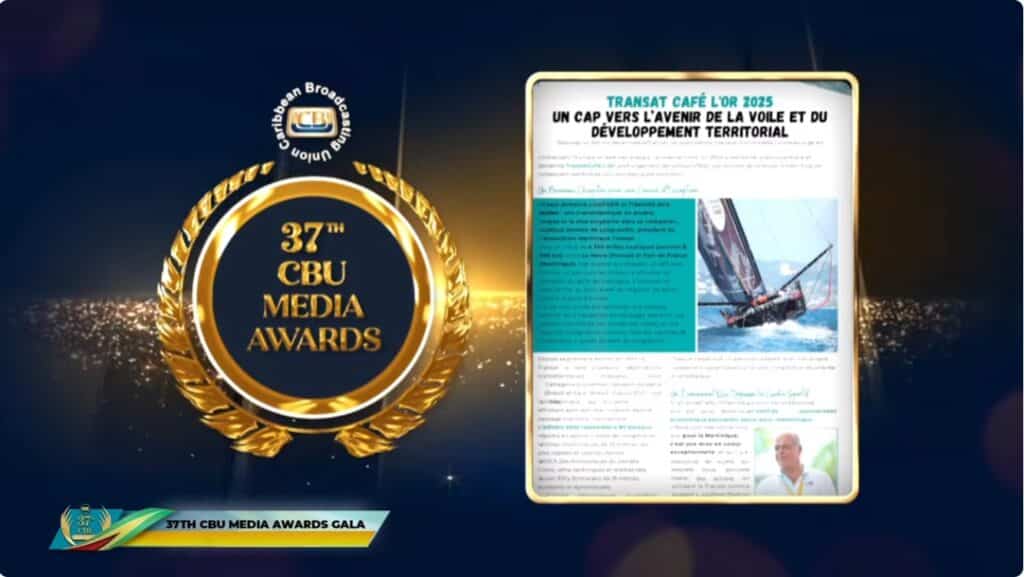
In its first appearance at the 37th CBU Media Awards, Richès Karayib walked away with four honors: two Awards and two Special Mentions. The results were announced on August 19 in Georgetown, Guyana, during a ceremony that was broadcast and streamed throughout the region. This debut immediately established the media outlet as one of the standout newcomers at this 37th edition.

Four awards on his first try

The Caribbean Broadcasting Union has named Richès Karayib among the “first-time entrants” that made a strong impression this year. In total, the media outlet received two awards and two special mentions in the Print and Digital categories.

This recognition comes during a particularly packed edition. The 37th CBU Media Awards honored 92 winners of Awards and Special Mentions across 56 categories. Professionals and media outlets from thirteen countries and territories across the English-, French-, and Spanish-speaking Caribbean had their productions honored. According to Richès Karayib, the award-winning content spans several editorial areas: sports, art, heritage, and Caribbean music.

A Conference on Media, Culture, and Artificial Intelligence

The Media Awards were part of the 57th Annual General Assembly of the Caribbean Broadcasting Union, held in Georgetown. From the opening ceremony onward, the event featured institutional addresses, discussions on the future of the media, and expressions of Caribbean culture. Michella Abraham-Ali hosted the evening, which opened with a parade of flags representing the participating territories. CBU President Anthony Greene then highlighted the challenges facing the region’s media, ranging from economic viability to the arrival of artificial intelligence in newsrooms.

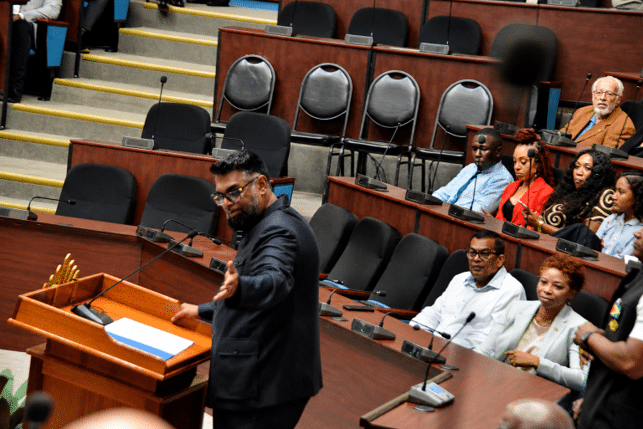
Eric Falt, UNESCO’s regional representative for the Caribbean, placed trust, ethics, and journalistic responsibility at the heart of his remarks. Guyana’s President, Mohamed Irfaan Ali, also spoke, emphasizing the need for Caribbean media to master new technologies without abandoning their role in conveying the realities and identities of the region.

The atmosphere wasn’t limited to the speeches. Music, drums, a saxophone performance by Roy Stewart, and segments highlighting Guyanese traditions set the tone for the ceremony. It was a way of reminding everyone that this professional gathering was also a meeting of territories, cultures, and media professionals from the Caribbean.

37th CBU Media Awards

Two print awards: the Transat Café L’Or and Cécile Vernant

The two awards received by Richès Karayib recognize editorial pieces resulting from interviews conducted by the media outlet’s team. The first award, in the Best Sports Story – Print category, honors the piece dedicated to “La Transat Cafe L’or,” , which was based on an interview with Damien de Longueville, president of the Martinique Transat association. The coverage of this sporting event thus received an award at the 37th CBU Media Awards.

37th CBU Media Awards

The second award, in the Best Entertainment Item – Print category, honors the feature on “Cécile Vernant: A Multimedia Artist Who Sculpts the Island’s Memory,” which also stemmed from an encounter with the artist. Through this exchange, Richès Karayib developed content centered on her work, her artistic practice, and the concept of memory that she explores in her creations.

These two awards highlight two very different events. One is in the world of sports, the other in that of artistic creation. Yet they have one thing in common: each tells a story rooted in a specific region and shaped by a Caribbean perspective.

37th CBU Media Awards

Two Special Mentions in the Digital Categories

Richès Karayib also received two Special Mentions for digital productions. “Les Journées du Patrimoine ” received a Special Mention in the Best Entertainment Item – Digital category.

37th CBU Media Awards

A second Special Mention was awarded to “Machel Montano: Summer Fest Anguilla” in the category of Excellence in Media Coverage of Caribbean Arts and Culture – Digital, sponsored by the Caribbean Culture Fund. With these honors, the 37th CBU Media Awards thus honor Richès Karayib for both print and digital content.

The range of awards also highlights the diversity of topics that Richès Karayib can cover, from heritage to culture, including music, art, and sports. It also highlights the team’s expertise and multidimensional approach, which brings these topics to life across various media, from print magazines to web articles, as well as short-form and long-form video productions.

37th CBU Media Awards

Four stories, many ways to tell the story of the Caribbean

Beyond the list of winners, the selection reflects a diverse editorial approach. *La Transat Café L’Or* tells the story of sports. The profile of Cécile Vernant focuses on creativity and memory. Heritage Days explores the concept of cultural transmission. The feature on Machel Montano and the Summer Fest Anguilla is part of the broader movement of Caribbean music scenes.

While these pieces do not tell the same story, they share a common goal: to document events, figures, and expressions that contribute to the region’s cultural and social life. In a competition bringing together established media outlets from several regions, this first-time participation marks an important milestone for Richès Karayib.

The media outlet is listed in the press release among the distinguished newcomers, alongside the St. Lucia Times, API from Saint Vincent and the Grenadines, Compass TV from the Cayman Islands, and The BVI Beacon. This first participation also takes place in an edition that recognized several major players in the Caribbean media landscape, including RJRGLEANER Communications Group in Jamaica, The Nation Publishing Company and Starcom Network in Barbados, TTT Ltd, Guardian Media, and Trinidad Express in Trinidad and Tobago, Greater Belize Media in Belize, and News Room Inc. in Guyana. Being included in this regional list allows Richès Karayib to position its expertise alongside recognized and experienced media organizations from across the Caribbean.

A first participation that marks the beginning of a new phase

The 37th CBU Media Awards mark a first for Richès Karayib, which made a strong impression from the moment it entered the competition, in both the Print and Digital categories. This regional recognition comes in a space where English-, French-, and Spanish-language media converge. It also highlights the role that stories produced in Martinique can play in a broader media conversation across the Caribbean.

Acknowledgments

Richès Karayib would like to thank everyone who makes these productions possible: the public figures and professionals who place their trust in us and share their expertise; the teams working on each piece of content; and our readers and communities, who bring these stories to life beyond their local regions.

We would like to extend our special thanks to the Caribbean Broadcasting Union for this recognition and for the opportunities it creates for stakeholders in the Caribbean media landscape to come together. We also thank the region’s media outlets with which we collaborate and exchange ideas, and which, each from their own territory, help share the stories, perspectives, and expertise of the Caribbean.

Finally, Richès Karayib thanked Guyana for its hospitality, as well as the teams from the local organizing committee and everyone involved in the 57th CBU Annual General Assembly and the 37th CBU Media Awards. Their efforts made it possible to bring together professionals from various regions in Georgetown to share ideas, reflect, and celebrate Caribbean media.

For Richès Karayib, the next chapter will build on this momentum: telling the stories of these regions, following the people who bring them to life, and forging more connections between the different regions of the Caribbean. After this first appearance at the 37th CBU Media Awards, a new question now arises: which Caribbean stories will be the next to cross the borders of their respective regions?

Richès Karayib received four honors at the 37th CBU Media Awards: two awards and two special mentions, in its first year of participation in the competition.

The featured content is La Transat Cafe L’or, Cecile Vernant: A multimedia artist who sculpts the island’s memory, Heritage Days and Machel Montano; Summer Fest Anguilla.

The results of the 37th CBU Media Awards were announced on August 19 at the Atlantic Suites at the Hyatt in Georgetown, Guyana, during a ceremony broadcast throughout the region.

From August 17 to 19, 2026, Georgetown hosted the 57th General Assembly of the Caribbean Broadcasting Union. Gathering under the theme “Caribbean Media and AI,” media executives, journalists, content creators, academics, and experts examined how their practices are being shaped by this transformation. Behind the concept of artificial intelligence, one question emerged: how to strengthen Caribbean media so that they can remain credible, independent, and sustainable in a changing digital environment.

When AI Enters Caribbean Newsrooms

In Georgetown, Guyana’s President, Mohamed Irfaan Ali, summarized a key challenge. Artificial intelligence can help newsrooms transcribe and translate content, analyze data, and improve efficiency. But it must not replace editorial judgment, context, or human experience. His warning was clear: “Never allow the technology to become the journalist.” This message aligns with a priority of the Caribbean Broadcasting Union: to promote responsible uses of AI while strengthening verification mechanisms and transparency regarding generated content.

This commitment is reflected in the CBU Media Awards. The rules now require entrants to disclose any use of large language models or other artificial intelligence tools. AI-generated content may not exceed 20% of a submission’s total content. This framework places editorial responsibility at the heart of innovation.

Caribbean Broadcasting Union
Le président du Guyana, Son Excellence le Dr Mohamed Irfaan Ali, prononce le discours inaugural lors de la cérémonie d'ouverture de la 57e Assemblée générale annuelle de la CBU à Georgetown.

Sustainability is becoming the real issue

AI, however, is only part of the picture. The Caribbean Broadcasting Union has announced the Caribbean Media Viability Initiative, a program dedicated to the sustainability, resilience, competitiveness, and editorial independence of the region’s media. The initiative aims to bring together broadcasters, print and digital media publishers, independent producers, educators, regulators, policymakers, advertisers, technology platforms, and development partners from the Dutch-speaking, English-speaking, French-speaking, and Spanish-speaking Caribbean.

The first online meetings are scheduled for the fourth quarter of 2026. They will focus on sustainable business models, digital transformation, public trust, audience engagement, editorial innovation, skills, and partnerships. The Caribbean Broadcasting Union has also selected “Caribbean Media Viability” as the theme for its 58th General Assembly in 2027.

Gain a Better Understanding of the Industry to Take More Effective Action

The CBU Media Industry Overview, coordinated by former president Dr. Claire Grant, is scheduled for its first release in the first quarter of 2027. This upcoming report will examine the sector’s structure, scope, media ownership, workforce, and working conditions. It will also address freedom of information, the safety of journalists, training, the digital transition, the influence of major technology platforms, and media resilience.

According to the Caribbean Broadcasting Union, this foundation should support advocacy, media business planning, and professional development. A regional strategy first requires a sufficiently accurate picture of the realities faced by the media.

Caribbean Broadcasting Union
Les membres et observateurs de la CBU discutent des priorités régionales lors de la séance plénière de la 57e Assemblée générale annuelle à Georgetown, au Guyana.

Expanding Regional Cooperation

This reflection on the sector’s future is accompanied by an expansion of regional representation. In 2026, four new organizations joined the Caribbean Broadcasting Union, including Richès Karayib, a digital media outlet from Martinique. This expansion comes as the CBU seeks to broaden its presence among commercial, institutional, and digital media outlets, while strengthening ties among regional linguistic communities.

The 37th edition of the CBU Media Awards also marked Richès Karayib’s first participation. The Martinican media outlet won two awards and two Special Mentions. The competition attracted more than 680 entries—an increase of more than 25 percent year-over-year—with 92 awards and special mentions presented across 13 countries and territories.

Caribbean Broadcasting Union: After Georgetown, the work continues

The Georgetown Assembly, therefore, did not merely raise the issue of artificial intelligence. It linked technology, business models, industry knowledge, public trust, and regional cooperation. The work is set to continue through the 58th AGM, with the goal of developing a Caribbean Media Viability Roadmap. For the Caribbean Broadcasting Union, the challenge will be to transform these findings and discussions into concrete solutions tailored to the realities of the region. For Caribbean media outlets, the question remains open: How can they maintain control over their tools, their independence, and, above all, the stories they choose to tell?

The Caribbean Broadcasting Union places particular emphasis on the responsible use of artificial intelligence, the economic viability of the media, a better understanding of the sector, and the strengthening of regional cooperation. These priorities were highlighted at its 57th General Assembly, held in Georgetown in August 2026.

The CBU encourages the use of AI as a tool to support journalism, while emphasizing fact-checking, transparency, and the preservation of human editorial judgment. For the CBU Media Awards, entrants must now disclose the use of AI tools, and AI-generated content may not exceed 20% of an entry.

Richès Karayib is one of four new organizations admitted to the Caribbean Broadcasting Union in 2026. In its first appearance at the CBU Media Awards, the Martinique-based media outlet also won two awards and received two special mentions in a competition that drew more than 680 entries.

“This integration must not be reduced to a mere signature on a piece of paper.” In Saint Lucia, a few hours after French Guiana officially joined CARICOM as its eighth associate member, Gabriel Serville summarized the challenges facing the region following its accession. The president of the Territorial Collectivity of French Guiana describes the resources needed to transform this new status into meaningful and visible cooperation.

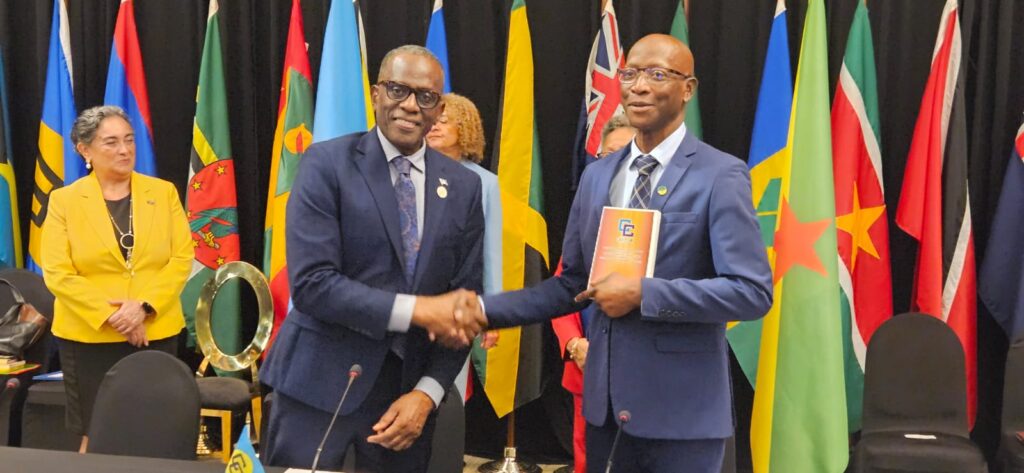
On July 7, 2026, in Gros-Islet, French Guiana signed the agreement setting forth the terms of its association with the Caribbean Community. Richès Karayib has already explained the institutional implications of this decision. The interview conducted on site now allows us to look ahead to the next step: what needs to be done to ensure that this regional presence yields concrete results?

French Guiana

Planning for a visit after the signing

The top priority is administrative. Participating in CARICOM meetings, monitoring the committees, and advocating for French Guiana’s interests will require ongoing organization. Gabriel Serville would like to see the creation of a technical entity capable of serving as a liaison between French Guiana and the various regional bodies. This organization will need to develop the region’s positions and bring together the relevant experts. Without this ongoing effort, there would be a risk of having a headquarters without fully leveraging the opportunities it offers. Membership must therefore be an active, day-to-day commitment.

French Guiana

Making French Guiana a regional hub

French Guiana occupies a unique position. It is part of the French and European spheres, while also being part of the Amazon region, South America, and oriented toward the Caribbean. It already maintains direct relations with Suriname, Guyana, and northern Brazil. For Gabriel Serville, this situation could enable the region to become a hub connecting several catchment areas. This ambition requires bringing together the expertise, infrastructure, and needs of regions that still often cooperate on a sector-by-sector basis.

French Guiana

Health, Climate, Water, and Waste: Sharing Expertise

Several areas are cited as priorities. Research on tropical and Amazonian infectious diseases is among the areas of expertise that French Guiana could contribute to joint projects. Water management, waste treatment, and adaptation to climate change could also be areas for collaboration. The goal is both to share expertise and to learn from other CARICOM members. Each territory has its own experiences, challenges, and solutions. Pooling these resources can accelerate responses to risks that know no borders.

French Guiana

Train and retain more young people

Youth mobility is another area of focus. Many young people leave their home regions to find training or employment elsewhere. Gabriel Serville is calling for the creation of more opportunities in the region. Membership could eventually facilitate academic exchanges, specialized training, and career pathways. No specific measures have been announced yet. But regional integration will gain credibility if it truly improves the prospects for future generations.

French Guiana

MALINK and Digital Sovereignty

The digital sector already provides an example of regional cooperation. French Guiana officially joined the Caribbean Telecommunications Union in May 2026 as an associate member. This membership is intended to promote direct exchanges on telecommunications, cybersecurity, and network resilience.

Gabriel Serville also mentions the MALINK submarine cable and a future agreement between French Guiana, SPLANG, and the Surinamese operator Telesur. He presents this project as a way to diversify connections, secure access to bandwidth, and reduce technical dependencies. In his view, control over data and infrastructure is becoming a matter of sovereignty.

French Guiana

Space as an Area of Cooperation

With the space sector and the anticipated arrival of new operators, the territory intends to strengthen its position in the fields of micro-launchers, microsatellites, and aerospace. Gabriel Serville believes that French Guiana can play a leading role in these sectors. This ambition will need to be realized through partnerships, training programs, and applications that benefit neighboring Caribbean countries—such as climate monitoring, telecommunications, risk management, and maritime surveillance. The space sector could thus become a true regional asset.

French Guiana

Building a Stronger Caribbean Voice

The seventh initiative goes beyond the interests of French Guiana alone. Gabriel Serville calls for cooperation based on respect and sharing among French-speaking, English-speaking, and Spanish-speaking territories. In his view, this coordination could help small Caribbean states and territories have a greater say in international discussions.

Membership Judged by Its Initial Results

French Guiana must now build the teams, projects, and alliances that will give substance to its presence in CARICOM. The first test will not be another declaration, but the ability to develop a common project that residents can identify with. Which of these seven initiatives will yield the first visible result?

Membership allows French Guiana to participate more directly in CARICOM’s discussions and activities as an associate member. The challenge now is to translate this institutional presence into concrete projects in the areas of health, climate, training, telecommunications, and regional cooperation.

Gabriel Serville has identified several priorities: establishing a permanent representative office, strengthening cooperation in the health sector, promoting youth mobility, securing telecommunications, enhancing the MALINK cable, and positioning French Guiana in the space sector. These projects are intended to give concrete substance to the membership.

French Guiana is situated at the crossroads of several regions: France, Europe, the Amazon, the Guiana Shield, and the Caribbean. This location enables it to bring together expertise, infrastructure, and regional partners, particularly in the fields of digital technology, research, the environment, and space.

In Saint Lucia, during the 51st meeting of CARICOM heads of government, Dr. Hyginus “Gene ” Leon, executive director of DBRP/The Nature Bank, presented an ambitious idea during a side event on reparations: using restorative justice to rethink Caribbean development. Here, the term does not refer solely to financial compensation. It aims to acknowledge the consequences of slavery and colonization, to redress the harm caused, and to transform the mechanisms that continue to perpetuate them.

Four Measures of Development

Development is often measured in terms of growth, investment, and infrastructure. This perspective is incomplete. An economy can build roads, ports, or hotels while at the same time undermining its natural resources, its population, or its institutions. This discussion is based on four forms of wealth. Productive capital includes infrastructure, businesses, and financial resources. Natural capital encompasses soil, forests, water, reefs, and the climate. Human capital encompasses health, education, skills, and dignity. Finally, societal capital relates to institutions, social cohesion, and trust.

Restorative Justice

Progress requires that these four forms of wealth advance together. When one form of capital develops at the expense of the others, growth becomes fragile. A region can achieve strong economic performance while simultaneously depleting the very foundations that make that prosperity possible.

Restorative Justice

A Five-Century-Old Economic Error

Restorative justice takes on a broader dimension here. It stems from a historical observation: for centuries, the economic system has assigned a price to produced goods while reducing people and nature to mere resources. The British Emancipation Act of 1833 illustrates this logic. More than 800,000 enslaved people were freed. Yet the 20 million pounds allocated compensated the slaveowners, while the freed people received no compensation. The financial value of property was recognized; the value of human life remained absent from the balance sheet.

Restorative Justice

This extractive model has not entirely disappeared. Cocoa produced in Ghana and Côte d’Ivoire fuels a global industry, while producers and the regions of origin retain only a small share of the value created. Incomes remain low, forests are shrinking, and the bulk of the profits are concentrated elsewhere.

Restorative Justice

Reparations, Climate, and Inequality: A Common Root

Reparations for slavery, climate-related losses and damages, and the fight against inequality are often addressed separately. Yet these issues stem from the same mistake: counting only part of the actual wealth. In the Caribbean, this contradiction is evident. A mangrove forest may be destroyed to make a project profitable in the short term. Its ability to protect coastlines, limit storm damage, or support fisheries is not always factored into the initial calculations. When disaster strikes, the region must finance reconstruction, often through debt. The value of nature is ignored at the outset, and then its absence becomes a collective burden.

Restorative Justice

Restorative justice thus links memory, the economy, and the environment. It raises a concrete question: How can we redress a historical injustice without reproducing the same imbalances in current decisions?

Restorative Justice

Rescue, Rebuild, and Transform

Restorative justice is structured around three stages: relief, reconstruction, and repositioning. The first addresses immediate emergencies. The second restores what has been lost. The third transforms the rules so that the harm is not repeated. This final stage is crucial. Rebuilding a house on the same fault line is tantamount to setting the stage for its next collapse. Similarly, compensation scattered across isolated projects may produce temporary results without addressing the root causes of vulnerability.

Restorative Justice

Restorative justice could therefore fund additional investments: education, health care, ecosystem protection, resilient infrastructure, strong institutions, and economies capable of retaining more value within the Caribbean region. The goal would be to compensate for a loss while making its recurrence less likely.

Restorative Justice

Three Possible Changes for CARICOM

Restorative justice offers three avenues for the region. First, every major public or financial decision could assess what it creates and what it destroys in terms of the four forms of wealth. Second, reparations could be organized as a coherent portfolio of reconstruction and transformation. Finally, human and environmental costs could be incorporated into the evaluation of projects, loans, and investments.

Restorative justice would thus shift the focus of the debate. For the Caribbean, making amends for the past could become a way to protect the future, by finally treating people, nature, institutions, and infrastructure as equally valuable.

In this context, restorative justice refers to an approach aimed at acknowledging and addressing the lasting consequences of slavery and colonization. It is not limited to the payment of financial compensation; it also seeks to invest in communities, institutions, the environment, and the economy to ensure that the same inequalities do not continue to be perpetuated.

The four forms of capital are productive capital, which includes infrastructure and businesses; natural capital, such as forests, reefs, and water; human capital, which encompasses health, education, and skills; and societal capital, based on institutions, trust, and social cohesion. Sustainable development requires advancing these four forms of capital together, without enriching one at the expense of the others.

It could help fund a coherent set of initiatives in education, health, ecosystem protection, climate resilience, and infrastructure. It also involves factoring human and environmental costs into financial decisions and assessing what each project creates or destroys. These guidelines were presented to CARICOM as proposals, not as decisions that have already been adopted.

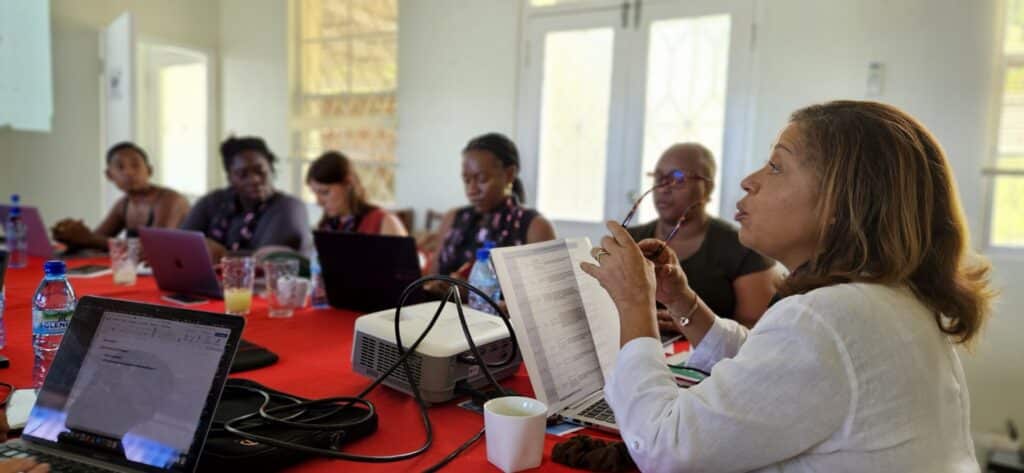
The Rézo 2025 seminar, held in Grenada, brought together the directors of the Alliances Françaises of the English-speaking Caribbean, with the same ambition: to consolidate the links between the territories and reinforce the vitality of the French-speaking world in the region.

Having explored the institutional and strategic vision of this regional cooperation in the previous article, “The Alliances Françaises network at the heart of the Caribbean: cooperating, innovating, sharing”, Richès Karayib now turns the spotlight on those who are at its beating heart.

For several days, the participants shared their experiences, challenges and successes, revealing a common conviction: to bring culture and the French-speaking world closer to the people of the Caribbean via the Alliances Françaises.

Alliances Françaises

An essential meeting for a fragmented network

Each Alliance Française operates on an island, often geographically isolated. This seminar, organized with the support of the Service de Coopération et d’Action Culturelle (SCAC) of the French Embassy in Saint Lucia, was a breath of fresh air for the Alliance Française network. The directors emphasized that these meetings are an essential step: they enable them to exchange tools, compare local realities and together find concrete solutions to shared challenges. They all emphasized the strength of the collective, the richness of exchanges in an English-speaking environment and the complementarity of approaches between territories.

These moments offer both a human and a formative dimension: they re-energize, reinforce solidarity and remind us that, despite the diversity of contexts, the Alliances Françaises move forward with the same ambition – to make the French-speaking world live and shine in the Caribbean. From an institutional point of view, Christiane Bourgeois, Cooperation and Cultural Action Advisor, reminded us that this annual seminar is the only time when all the directors can get together to discuss successes, difficulties and common perspectives.

Alliances Françaises

Nine territories, nine realities, but the same conviction: these times of exchange are essential to maintain the network’s momentum and strengthen cooperation in the Caribbean. Beyond these collective exchanges, it is in the field that the vitality of the Alliances Françaises network takes on its full meaning. Each Alliance Française acts in its own way, in line with the realities of its environment and the languages and cultures of its territory.

Alliances Françaises

A deep-rooted network: ten Alliances, one commitment

Although their contexts differ, the Alliances Françaises of the English-speaking Caribbean share the same vocation: to teach, connect and bring the French-speaking world to life on a daily basis. They adapt to local realities with the same conviction: culture and language are levers for social cohesion, openness and the future.

Grenade – Ilona Forte-Gilbert: teaching differently, connecting differently

The Alliance Française de Grenade operates without permanent premises, a situation that Ilona Forte-Gilbert has turned into an asset.

Courses are now offered online, helping to maintain the French language’s presence and reach new audiences. The Alliance is also involved in schools through educational and cultural activities carried out in partnership with teachers. Out-of-home screenings and workshops keep us in touch with the community.
“Our priority is to remain present and useful, even without a building. Digital technology and partnerships enable us to keep the Alliance going.”

Alliances Françaises

Saint Lucia – Aurélie Gbeffa: coordinating and federating

In Saint Lucia, Aurélie Gbeffa runs the local Alliance and is responsible for regional coordination of the ten Alliances Françaises in the Eastern Caribbean. She assists managers with communication, pooling, associative governance, digital transition and cultural revitalization.

It also pilots the Rézo project, an annual seminar supported by the SCAC, which has become a key event for cohesion and collective reflection. In Castries, the Alliance Française de Sainte-Lucie combines language courses, cultural activities and Creole language promotion through exhibitions and workshops.

“Our strength lies in moving forward together while valuing the cultural diversity of our islands.”

Alliances Françaises

Barbados – Océane Gaillard: promoting French in an English-speaking environment

In Barbados, the Alliance Française acts as a linguistic and cultural bridge. Under the leadership of Océane Gaillard, it has consolidated its foothold in a predominantly English-speaking environment. Educational programs have been set up for schools and adults, and the Alliance has trained members of the Regional Security System in French and Haitian Creole.

On the cultural front, it has welcomed the Guianese troupe Ôtepé, and is developing a program open to different French-speaking expressions.

“We represent a plural Francophonie: France, Africa, Canada and the Caribbean. Culture is our best lever for inspiring the desire to learn.”

Alliances Françaises

Trinidad & Tobago – Anyka Batista: an open and inclusive francophonie

In Trinidad & Tobago, Anyka Batista defends an inclusive and creative Francophonie, which values local languages as much as French. Every October, Creole Heritage Month brings together screenings, conferences and concerts, reflecting a strong commitment to cultural diversity.

The Alliance Française also offers courses for children, teenagers and adults, as well as cultural evenings that encourage encounters between communities. Challenges related to visibility and funding persist, but are offset by a collaborative approach with local schools and institutions.

“We want the Francophonie to be seen as part of our culture, not something external.”

Anyka Batista

Jamaïque – Clovis Lemée: creating living spaces

In Jamaica, Clovis Lemée is revitalizing a historic Alliance Française, transforming it into a place for living and creating. The Language Exchanges, monthly multilingual evenings, bring together a varied public around cultural themes, while the French Library Sessions – mini-concerts filmed in the media library – turn language into a tool for encounters and artistic expression.

“Learning a language is about creating links. That’s what the Alliances Françaises are all about.”

This cultural dynamic is attracting a younger audience and helping to restore the French language to its rightful place in the English-speaking Caribbean.

Clovis Lemée

Saint-Kitts & Nevis – Lucille Caulliez : education and ecology

The Alliance Française de Saint-Kitts & Nevis combines language learning with civic engagement. Her Naturally Learn French project, supported by a grant from the French Embassy to the Eastern Caribbean, Barbados and the OECS, offered six months of free tuition to twelve teenagers from disadvantaged backgrounds, combining French language discovery, ecological workshops and cultural activities. Each month, participants explored local ecosystems, cultivated a garden, created with recycled materials or exchanged online with students from Guadeloupe – a concrete and lively way to learn the language while forging links in the Caribbean.

This project, which earned the Alliance the Green Alliance Award from the Global Environment Facility, illustrates the vitality of an open, sustainable and youth-oriented French-speaking community. She is also developing Francoscop, an audiovisual series produced by young people, dedicated to the French-speaking world.

Director Lucille Caulliez sums up the spirit of the program:

“We want to show that French is a tool for openness and creativity.”

Lucille Caulliez

Dominique – Cévinne M’Voula-Henderson: connecting languages and cultures

Established in 1965, the Alliance Française de la Dominique is active in the educational and cultural fields. The Creole & French Spelling Bees, bilingual spelling contests, encourage students to play with the two languages, understand their complementarity and take pride in them. Training workshops and cultural activities support the enhancement of Creole heritage while promoting the French language.

“The aim is to make French and Creole languages of pride and transmission.”

Alliances Françaises

Guyana – Déborah First-Quao: rebuilding and training

In Georgetown, Déborah First-Quao, recently appointed to Guyana, is re-launching a long-standing but low-profile Alliance Française by focusing on training and educational partnerships. She has created a network of French teachers, developed bilingual workshops at the National Library and renewed ties with local institutions. Cultural and educational initiatives aim to put French back into everyday life, despite major logistical constraints.

“We want to restore French to its rightful place in schools, showing that it can be useful, lively and accessible.”

Alliances Françaises

Suriname – Virginie Lemay: building institutional bridges

In Suriname, Virginie Lemay is strengthening links between the Alliance Française and local institutions. Language training is offered to the security forces, the Ministry of Education, businesses and the hotel industry. La Journée Française, organized with the Collectivité Territoriale de Guyane, is a five-day event featuring exhibitions, professional meetings and concerts.

“French becomes a concrete tool for regional cooperation.

This cross-sectoral approach positions the Alliance Française as a key player in the dialogue between Suriname, Guyana and the rest of the Caribbean.

Alliances Françaises

A shared vision: support, connect, promote

For Christiane Bourgeois, Regional Advisor for Cooperation and Cultural Action at the French Embassy in Saint Lucia, this seminar is an essential moment for consolidating the network’s ties. She points out that it’s “the only occasion of the year when we have the opportunity to meet the directors of the Alliances Françaises”, a privileged time to take stock, exchange practices and difficulties, and set up joint projects.

“The Alliances Françaises are an essential tool for embassies, especially in areas like the Caribbean, where there is no Institut Français. They are local organizations, rooted in the territory, with their own board of directors and their own strategy”. She also recalled the key role played by the Alliances in disseminating the French language and promoting dialogue between peoples, stressing that they promote the language, ensure its teaching and maintain the link between the cultural and the educational, between France and the countries of the region.

Alliances Françaises

Aware of the economic fragility of the associative model, Christiane Bourgeois stresses the importance of the support provided by the Service de Coopération et d’Action Culturelle (SCAC) and the French Ministry of Europe and Foreign Affairs.

Last but not least, it pays tribute to Granada, the seminar’s host, and its people:

“It’s an absolutely authentic island, with extremely friendly people. I encourage all French and Caribbean people to come to Grenada, a country that deserves to be known and appreciated.”

Alliances Françaises

Where the French language comes alive

Over and above balance sheets and figures, these meetings are a reminder that the French-speaking world lives and breathes through the people who make it happen. On every island, the Alliances Françaises gather, transmit and inspire. Anchored in their reality, they build bridges between languages, cultures and generations – a living, inclusive and deeply Caribbean Francophonie.

The Alliances Françaises play a central role in French language teaching, cultural dissemination and dialogue between Caribbean territories. Anchored locally, they adapt their actions to the social, linguistic and cultural realities of each island.

The Rézo seminar is the only annual gathering of all the directors of the Alliances Françaises in the Caribbean. It enables them to share practices, strengthen regional cooperation and maintain a collective dynamic in a geographically dispersed network.

The Alliances Françaises develop tailor-made projects: online or face-to-face courses, actions in schools, ecological projects, cultural events, professional training or institutional cooperation. This adaptability is their strength in a predominantly English-speaking environment.

Together for a radiant Caribbean, the Alliances Françaises become bridges between cultures, languages and territories.

At the RÉZO seminar in Grenada, the directors and presidents of the Alliances Françaises of the English-speaking Caribbean met to strengthen cultural and linguistic cooperation in the region and define new common directions.

Supported by the French Embassy’s Service de Coopération et d’Action Culturelle (SCAC), which also took part in some of the discussions, the seminar was an opportunity to strengthen synergies between the Alliances Françaises network and consolidate dialogue with the SCAC, in a spirit of listening and collaboration.

Alliances Françaises
Suelin Low Chew Tung (President, AF Grenada), Aurélie GBEFFA (Director, AF Saint Lucia and Regional Coordinator), Ilona Fort-Gilbert (Director, AF Grenada) and Christiane Bourgeois (CORCAC)

Between exchanges, common strategies and innovative projects, this meeting outlined the contours of a more open, inclusive and modern French-speaking and multilingual Caribbean.

A key moment for an evolving network, serving a Caribbean that learns, shares and shines.

Alliances Françaises

A meeting with a family flavour

Sometimes they’ve known each other for years, sometimes only through a screen. But from the very first minutes, the laughter, hugs and warmth of the reunion remind us that, in the Caribbean, the Alliances Françaises network is above all a human adventure.

Over the course of three days, directors and presidents shared their experiences from country to country – from day-to-day challenges to local pride and a shared determination to build a stronger, more united and more visible network. In the room, diversity was evident in the accents, the backgrounds and the ideas. From Jamaica to Trinidad and Tobago, each voice brought its own nuance, its own experience, its own way of bringing culture and the French-speaking world to the heart of the territories.

Welcomed by Ilona Fort-Gilbert, Director, and Suelin Low Chew Tung, President of the Alliance Française of Grenada, participants spent several days exchanging ideas and reflections in an atmosphere that was both productive and warm.

Alliances Françaises
Suelin Low Chew Tung (left) and Ilona Fort-Gilbert (right) (Alliance Française de Grenade)
AF Team of Grenada - Dalia Barbour (Support Staff), Mathias Dorel (Honorary Consul of France), Ilona Forte-Gilbert (Director), Nafessah Abdullateef (Secretary of the Executive Committee), Suelin Low Chew Tung (President)

Around the table, the directors: Aurélie Gbeffa (Saint Lucia and regional coordinator of the Alliances Françaises of the Eastern Caribbean), Océane Gaillard (Barbados), Virginie Lemay (Suriname), Lucille Caulliez (Saint Christophe-et-Niévès), Cévinne M’Voula (Dominique), Anyka Batista (Trinidad and Tobago), Ilona Forte-Gilbert (Grenada), Déborah First-Quao (Guyana) and Clovis Lemée ( Jamaica), as well as Christiane Bourgeois (CORCAC – Saint Lucia) and Suelin Low Chew Tung (President – Grenada).

Alliances Françaises

Joining them by videoconference were the presidents: Charlene White-Christian (Dominica), Ruben Del Prado (Suriname), Danielle Parkinson (Trinidad and Tobago), Kara Daly (Saint Kitts and Nevis), Delphine Hadley and her successor Denvil Douglas (Saint Vincent and the Grenadines), and Stuart Defreitas, vice-president (Guyana).

christoane bourgeois
Alliances Françaises

During the discussions, Christiane Bourgeois, Regional Counsellor for Cooperation and Cultural Action (Conseiller Régionale de Coopération et d’Action Culturelle – CORCAC), Head of the Cultural and Cooperation Department (Service de Coopération et d’Action Culturelle – SCAC) of the French Embassy to the Eastern Caribbean, Barbados and the OECS, underlined the essential role of the Alliances Françaises in promoting French and Caribbean culture.

The Regional Counsellor for Cooperation and Cultural Action – CORCAC structures its action around cultural, educational, scientific and economic cooperation, seeking to link French priorities – culture, the French-speaking world, sustainability and human rights – to the specific needs of the countries of the English-speaking Caribbean. We believe that it’s not just the structures, but also the committed men and women on the ground who bring this open, supportive and creative French-speaking community to life.

“The Alliances Françaises are essential partners.”

The presence of Jean-François Hans, Geographical Delegate for Zone C at the Fondation des Alliances Françaises, reminded us from Paris of the importance of the network’s global cohesion.

Charter of values, governance tools, visual identity and support for local teams: the Foundation ensures that quality and ethics are shared across all five continents.

“A large Alliance must always reach out to a smaller one. That’s our collective DNA.”

This solidarity, the driving force behind the movement, takes on its full meaning in the Caribbean, where logistical and human challenges combine with cultural and linguistic richness.

A global Francophonie rooted in local realities

Founded in 1883, the Alliances Françaises network is now the world’s largest cultural network, with over 820 establishments in 135 countries.

In the English-speaking Caribbean, ten Alliances promote the French language and culture: Barbados, Saint Lucia, Dominica, Grenada, Jamaica, Saint Kitts and Nevis, Guyana, Saint Vincent and the Grenadines, Trinidad and Tobago and Suriname.

In 2024, they welcomed over 1,000 learners, delivered 9,000 hours of courses and organized 160 cultural events, bringing together over 7,000 participants.

These figures reflect a living, dynamic reality: the Caribbean Francophonie is not just an idea, it’s a daily presence in classrooms, galleries, festivals and the streets of island capitals. Francophonie thrives on exchanges, local initiatives, and the passion of those who keep the French language alive.

A network in motion: between vision and action

Projet Rézo

Driven by a shared desire to see the network evolve, the RÉZO project is a real driving force for the Alliances Françaises of the English-speaking Caribbean, and a way of thinking about the network differently: more collaborative, more agile, more visible.

Supported by the French Embassy’s Service de Coopération et d’Action Culturelle (SCAC), it aims to strengthen regional coordination, pool tools and professionalize teams. Over the course of the sessions, discussions highlighted a shared ambition: to harmonize practices, encourage pedagogical innovation and strengthen skills, while consolidating the place of the French-speaking world in plural linguistic environments.

Under the coordination of Aurélie Gbeffa, six areas of work were addressed:

  • – Associative governance and transparency: strengthening internal management and communication with members.
  • – Team training: consolidating skills and promoting regional mobility.
  • – Certifications and educational quality: aligning training and evaluation standards across the network.
  • – Digital transition: developing collaborative tools and shared digital resources.
  • – Setting up RÉZO projects: creating and leading joint projects between Alliances.
  • – Revitalizing media libraries: modernizing cultural spaces to better reflect today’s audiences and practices.

Each Alliance leaves with a personalized roadmap, proof of a shared commitment and a strong regional dynamic.

Micro-projects

In the same vein, the SCAC has reiterated its key role in supporting and facilitating micro-projects. These subsidies, allocated each year to local project leaders, are a concrete lever for the implementation of cultural, educational and civic initiatives throughout the region.

A virtuous mechanism that supports local creativity, while promoting training and autonomy for local players. Beyond the financial aspect, this initiative, a signature of the French Ambassy of Saint Lucia, reflects a form of close, human-centered diplomacy that fosters exchange and cooperation between Francophone and Anglophone territories.

From Saint Lucia to Dominica, from Trinidad and Tobago to Grenada, the micro-projects supported reflect the diversity of shared challenges: culture, education, the environment, inclusion and innovation. These are just some of the areas in which the Alliances Françaises, supported by the SCAC, are building bridges between societies and driving sustainable cooperation in the Caribbean.

Alliances Françaises

CARIFRAN

This strategy is also part of the regional dynamic of the CARIFRAN program, dedicated to the training and mobility of teachers of French in the Caribbean.

Implemented by the Organization of American States and funded by the French Embassy to the Eastern Caribbean, Barbados and the OECS to the tune of 453,000 euros, CARIFRAN is helping to strengthen a French-speaking educational community open to inter-island exchanges and linguistic cooperation. It embodies the complementary nature of the network’s educational, cultural and diplomatic activities.

Alliances Françaises

The strength of a fragile network

Over and above the discussions, workshops and decisions, the RÉZO seminar confirmed the vitality of a network in the throes of transformation. But it also served as a reminder of the fragility of an associative model that relies on commitment, passion and solidarity more than on substantial resources.

In the English-speaking Caribbean, as elsewhere, the Alliances Françaises carry out their activities with modest means but remarkable efficiency, and with a real desire to move forward together, thanks to the strength of their teams, their volunteer presidents and the constant support of the SCAC and the Fondation des Alliances Françaises.

Alliances Françaises
The directors of the Alliances Françaises with the Minister of Foreign Affairs, Hon. Joseph Andall

It’s this collective humanity, built on resilience and conviction, that makes the network unique: the ability to forge links, invent and reinvent ourselves, even in the face of uncertainty. And while cultural and linguistic cooperation can sometimes be a challenge, it is also a promise: that of a plural Caribbean, connected, proud of its diversity and capable of writing its future through dialogue between cultures.

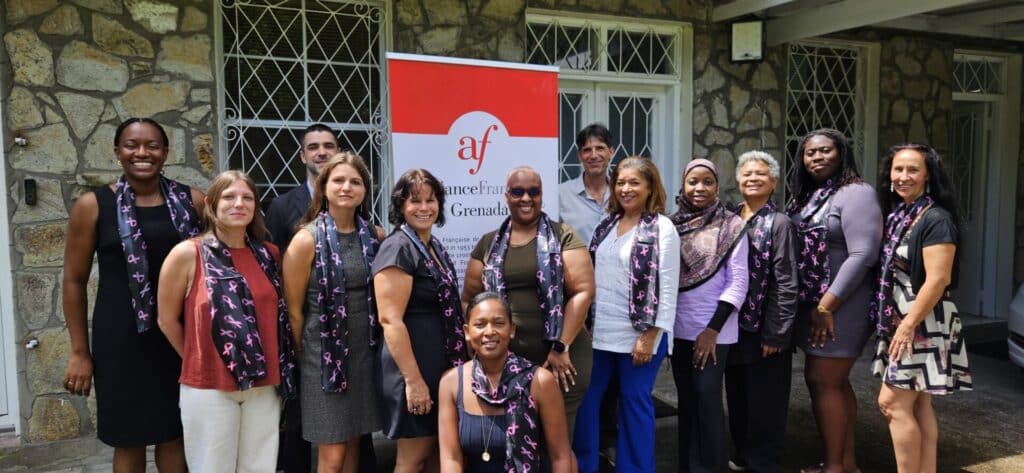
On behalf of the French Embassy, Christiane Bourgeois, advisor for cooperation and cultural action, presented the directors of the Alliances Françaises in the Caribbean with scarves, bracelets, and pins in the colors of Pink October, symbols of commitment and solidarity in the fight against breast cancer.

A 100% women's tournament in the heart of Guyana

The Women’s Caribbean Premier League 2025 returns for a fourth edition, from September 6 to 17, with a concentrated format and increased visibility. The host country, Guyana, will be hosting all the matches at Providence Stadium, a symbol of the region’s cricketing passion. For the Caribbean public, this is a unique opportunity to see the best players of the moment face off in a competition designed to give women’s sport its rightful place.

A tight schedule from September 6 to 17

The competition adopts a clear format: six group-phase matches in a double round-robin followed by a final between the top two teams. The schedule ensures uninterrupted sporting intensity, with matches taking place every week right up to the grand final on September 17.

Beyond the sport itself, this choice of programming also aims to attract local and regional spectators. Guyana takes advantage of the event to strengthen its appeal, as each match becomes an international showcase, broadcast to cricket fans around the world.

Caribbean Premier League 2025
©female Cricket

Three franchises in search of glory

Three women’s teams are vying for the Women’s Caribbean Premier League 2025 trophy:

  • Guyana Amazon Warriors Women : the team had the advantage of playing at home.
  • Barbados Royals Women : who will defend their supremacy after victories in 2023 and 2024.
    Trinbago Knight Riders Women : still determined to shine in this short format.

This competitive triangle reflects the diversity of Caribbean talent. Each franchise brings together players from neighboring islands, confirming the tournament’s integrative role.

Caribbean Premier League 2025
©CPL T20

Caribbean women's cricket: a lever for international visibility

While cricket occupies a central place in Caribbean sporting culture, the Women’s Caribbean Premier League 2025 is helping to give women a platform equivalent to that of men’s competitions. The event attracts regional and international media, reinforcing the image of a sporting Caribbean that is ambitious and open to the world.

For the younger generation, seeing Caribbean players treading the turf of Providence Stadium in the first half of the season is a strong signal. It illustrates our determination to promote equal opportunities and provide young women with models of sporting excellence.

Caribbean Premier League 2025
©CPL T20

Guyana, the Caribbean's tourism and sports showcase

Guyana’s bid to host the Women’s Caribbean Premier League 2025 goes beyond the sporting dimension. The country sees it as an opportunity to showcase its natural and cultural heritage. Between matches, visitors can discover Georgetown, its markets, colonial architecture and culinary specialties.

Guyana is also banking on the direct economic spin-offs: hotels, restaurants and transport all benefit from the influx of fans, journalists and sports delegations. By positioning itself as a host to major sporting events, the country strengthens its image on the Caribbean and international scenes.

A highly anticipated final

The Women’s Caribbean Premier League 2025 Grand Final on September 17 at Providence Stadium promises to be a key event. It will determine which team will succeed – or not – the Barbados Royals Women. The 2025 edition could mark a turning point, either through the confirmation of regional dominance or the emergence of a new force.

Beyond the trophy, the stakes are symbolic: to give women’s cricket the place it deserves in the Caribbean sporting imagination. The Women’s Caribbean Premier League 2025 is not just a tournament, it’s a message to the world: the Caribbean is investing fully in the development of its sportswomen and in the modernity of its competitions.

Caribbean Premier League 2025
©CPL T20

By hosting the Women’s Caribbean Premier League 2025, Guyana confirms its position as the crossroads of Caribbean sport. The tournament combines high-level competition, tourism benefits and the promotion of women’s cricket. In a context where the visibility of women in sport remains a global issue, the Caribbean is positioning itself as a forerunner. The 2025 edition, tight-knit but ambitious, promises to be a major milestone in the history of regional women’s cricket.