
Martinique has just won a 2026 Silver Magellan Award for its culinary heritage. Presented by Travel Weekly, this award honors the Martinique Tourism Board in the category of Caribbean culinary destinations. This international recognition highlights the island’s flavors, its culinary expertise, and a growing ambition: to make Martinican cuisine a true travel experience.
2026 Silver Magellan Award: An Accolade for Martinican Cuisine
The results of the 2026 Travel Weekly Magellan Awards are now available on the competition’s official website. Martinique is among the winners, having received a silver medal in the “Caribbean – Overall Destinations – Culinary Destination” category. The Martinique Tourism Committee’s (CMT) entry, titled “Martinique: Where Culinary Heritage Comes to Life,” highlights a destination where culinary heritage continues to thrive and be passed down through the generations.
Organized by the U.S. trade publication Travel Weekly, the Magellan Awards recognize achievements in various areas of international tourism. Entries are evaluated based on their relevance, creativity, quality, and impact. However, it is important to note that the silver medal does not constitute a ranking that places Martinique in second place among Caribbean culinary destinations. Each entry is evaluated individually according to the contest’s criteria.


A cuisine that tells the story of Martinique
To understand why this cuisine is so highly regarded, one need only look at what makes up a typical Martinican meal. Colombo reflects Indian influences. Accras, fish blaff, and boucané chicken are all testaments to culinary traditions shaped over generations. African, European, Indian, and Caribbean influences come together in a cuisine that has now developed its own distinct identity.

This richness can also be discovered in the markets, among local producers, and in family kitchens. Tropical fruits, locally grown vegetables, spices, and seafood all contribute to a culinary tradition deeply rooted in the region. But this heritage is not based solely on recipes. It thrives thanks to the farmers, fishermen, artisans, restaurateurs, and families who preserve traditional methods while leaving room for new interpretations.
Martinique aims to become a premier gourmet destination
The 2026 Silver Magellan Award comes at a time when Martinique is seeking to take its culinary tourism to new heights. On June 8 and 9, 2026, the Martinique Tourism Committee organized its first Gourmet Tourism Forum in Fort-de-France. Restaurant professionals, training providers, and representatives from various sectors were invited to come together to discuss the future of this industry.

These events are part of the “Martinique Destination Gourmande 2030” strategy, which aims to make local cuisine a key driver of the region’s appeal. One of the highlights of the forum was the signing of a letter of commitment with several partners, including IGCAT, to prepare a bid for the title of World Region of Gastronomy 2030. This is still an aspiration and not a title that has been awarded. Nevertheless, this initiative demonstrates a commitment to better organizing and promoting the island’s culinary resources.


Flavors from Martinique that travel beyond the Caribbean
This desire to expand its reach is also reflected in events organized abroad. From September 8 to 19, 2026, the festival Martinique Gourmande celebrated its 19th edition in Montreal, Quebec, under the theme “The Joy of Sharing.” Cod acras, octopus colombo-style, smoked chicken, and tropical-flavored desserts were among the offerings that allowed the public to discover or rediscover Martinican cuisine.
This type of initiative helps showcase the island in ways other than just its beaches and scenery. Gastronomy becomes a gateway to its history, its traditions, and encounters with the people who bring it to life.

International recognition—what's next?
The 2026 Silver Magellan Award brings new visibility to Martinique’s culinary heritage. It joins other initiatives aimed at better promoting local products, supporting professionals, and developing the gastronomic experiences offered to visitors. The award alone does not guarantee an increase in tourist numbers. However, it does provide a new selling point for promoting the island’s cultural richness. For behind every Martinican specialty lie stories, traditions, and generations of culinary heritage. These treasures continue to breathe life into Martinican cuisine, far beyond the island’s borders.
FAQ: The 2026 Silver Magellan Award and Martinican Cuisine
Martinique has won a 2026 Silver Magellan Award in the “Caribbean – Overall Destinations – Culinary Destination” category. The nomination submitted by the Martinique Tourism Committee highlights the island’s culinary heritage. The specific criteria cited by the jury were not made public.
The Travel Weekly Magellan Awards are international awards dedicated to the tourism industry. They recognize achievements in areas such as destinations, the hotel industry, cruises, and tourism marketing. The awards are presented following evaluation by a jury of industry professionals.
No. Martinique is preparing a bid for the title of World Region of Gastronomy 2030. A letter of commitment was signed in June 2026 by several partners, including the Martinique Tourism Committee and IGCAT.
We’ve reached the halfway point of the series “Stories of Caribbean Cinema.” The first four episodes have spanned nearly three decades of cinema, from Cuba in the 1960s to productions from Martinique and Curaçao in the 1980s. This fifth installment moves into the 1990s with two films set in very different worlds. Euzhan Palcy’s *Siméon* delves into a Caribbean imagination where music, ghosts, and magical realism converge. Raoul Peck’s *The Man on the Quay* revisits François Duvalier’s dictatorship in Haiti through the eyes of a child.
You are now reading the fifth episode in a series of ten. Four episodes have already been published on Richès Karayib, and five more will follow in this series through 2025.
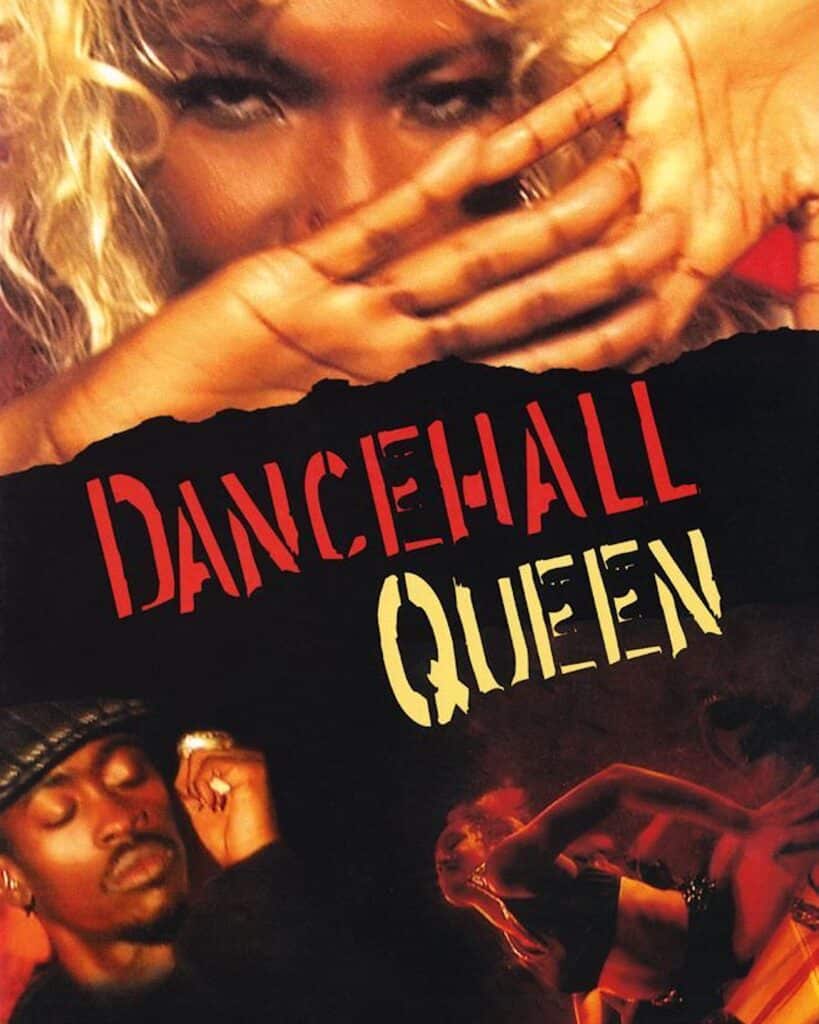
1997: JAMAICA - "DANCEHALL QUEEN" BY RICK ELGOOD & DON LETTS
Dancehall Queen is one of many Jamaican films that follow the formula established by *The Harder They Come* (Perry Henzell, 1972): Jamaican music (reggae or dancehall), known internationally; sexualized dance (as seen in the closing credits of Henzell’s film, with a close-up of a woman’s hips as she dances, like an invitation to what comes next); violence in the ghetto, and sporadic police interventions.
This is true of some major films in this genre, including *Rockers* (1978) by Greek director Theodoros Bafaloukos, considered by some to be the film that best captured the rebellious spirit of reggae and Rastafarian philosophy (a community presence that plays a central role in *Countryman* by Dickie Jobson in 1982), and which sparked a riot during its screening at the Cannes Film Festival in 1979; or, more recently, *Better Mus’Come* by Storm Saulter (2011), which takes on a more overtly political dimension by drawing inspiration from actual riots that occurred during an election period.
So, *Dancehall Queen* opens with a “music video”-style sequence featuring the famous Beenie Man, who plays a supporting role, singing—just as in the film’s final act, several performances take place on stage during a dance competition. However, one major difference stands out: the main character is a woman. Marcia is a street vendor who decides to enter a dance competition as a way to break free.
At the same time, one of his daughters is being hit on by her uncle Larry, who provides financial support to the family. When she tells her mother about this, her mother downplays her own brother’s behavior and points to her financial difficulties. As she gradually realizes the true nature of her brother Larry—who, in the meantime, has slept with his own niece—she manipulates one of his henchmen to turn against him.
The issue of violence against women is a recurring theme in English-language Caribbean cinema, particularly in the semi-professional productions of Mathurine Emmanuel (St. Lucia) and Anderson Quarless (Grenada), whereas this subject remains taboo in Guadeloupean and Martinican cinema, with a few rare exceptions. The directness with which the issue of rape—and, more specifically, incest—is addressed sets *Dancehall Queen*.
2000: MARTINIQUE - "PASSAGE DU MILIEU" BY GUY DESLAURIERS
To mark the turn of the 21st century, director Guy Deslauriers and his screenwriter Patrick Chamoiseau (winner of the 1992 Prix Goncourt for his famous novel Texaco) invite us to relive the Atlantic crossing aboard a slave ship, which during the era of slavery was known as the “ Middle Passage ” (meaning the “Middle Passage”), as a necessary act of remembrance.
Three-quarters of the film takes place in the hold, among the slaves torn from Africa. Several flashbacks “take us back” to that continent—to the villages, rivers, and vast plains—all accompanied by the voice-over of an anonymous slave whose face constantly changes (often looking directly at the camera) throughout the film, as if he were representing each and every one of them.
This lost Africa is, quite clearly, embodied by a woman who stares directly into our eyes—the eyes of the audience—while the voice-over says: “Woman, you are the earth, violated twice. You are the mother from whom her children are snatched. Of all our Africas, you are the most real. ” In the first feature film directed by Deslauriers and Chamoiseau, *The Exile of King Béhanzin* (1996), the film depicted the imprisonment (a historically verified event) of King Ahydjéré of the Kingdom of Dahomey (present-day Benin), in Martinique, following his defeat at the hands of Alfred Dodds’ French troops: a way for Caribbean cinema to reestablish a connection with the “Pays d’avant” (the “Land of Before”), to borrow an expression from the poet and philosopher Édouard Glissant.
A few years after *Amistad* by Steven Spielberg (1997), *Passage du milieu* was widely acclaimed for its meticulous portrayal of this chapter of colonial history. As a result, it won an award at the renowned Sundance Film Festival and was broadcast and later released on DVD by HBO in the United States.

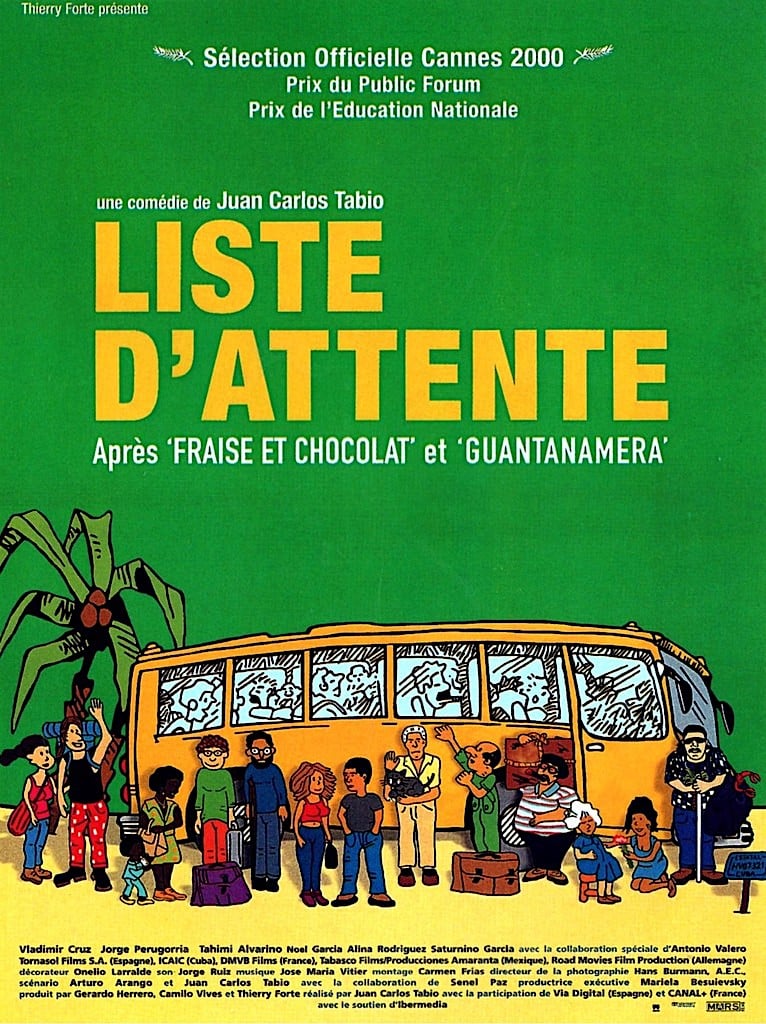
2000: CUBA – WAITING LIST (LISTA DE ESPERA), BY JUAN CARLOS TABÍO
A close friend of Tomás Gutiérrez Alea, Juan Carlos Tabío co-directed with him the last two films by the famous director, known in Cuba as “El Titón” (“The Titan”), namely Strawberry and Chocolate / Fresa y Chocolate (1993) and Guantanamera (1995). The first is a comedy about the lives of gay people and the state’s control over them in Cuba, based on a screenplay co–written by Senel Paz, an author who has frequently addressed the place of homosexuality in Cuban society in his various writings, and who was honored with an Oscar nomination for Best Foreign Language Film—a first for a Cuban film.
The second is a fast-paced, offbeat road movie that, like *Strawberry and Chocolate*, does not shy away from casting a critical eye on the Cuban regime and stands as Alea’s true cinematic testament. As for Juan Carlos Tabío, this is by no means his first attempt, since his debut feature film, *Se permuta*, dates back to 1985. In the satirical vein of Alea’s films, Waiting List follows the journey of a group of characters waiting for a bus—sometimes bound for Havana, sometimes for Santiago—at an isolated bus stop.
Between the buses that never show up and those that are so worn out they break down, the station manager repairs a battered bus himself in the absence of spare parts—parts that cannot come from either the communist regime of the former USSR, which has collapsed, nor from the United States, which has imposed an economic embargo on the island—waiting passengers will have to learn to live together and overcome all the current difficulties, including finding food…
In addition to being a film that offers a critical view of Cuba, this bittersweet comedy with multiple plot twists, carried by an exceptional cast that highlights the immense professionalism of Cuban cinema, is a subtle reflection on the difficulty of overcoming individualism and coming together as one—that is, of functioning in a communist manner. The final section, blurring the lines between dream and reality, establishes a beautiful political utopia with infectious cheerfulness. A pinnacle of Cuban cultural refinement.
About the Author
Guillaume Robillard holds a Ph.D. in film studies; he is a professor and researcher, a documentary filmmaker, and a specialist in Caribbean cinema and artistic production. He is the author of two books: *Conquest of Space and Time: Caribbean Cinema (Éditions Jannink, “Hypothèses d’Art,” 2023) and Decolonial Cinema: Characters in Caribbean Cinema (Presses Universitaires des Antilles, “Arts et Esthétique,” 2024).
The release of *Magma*, a film by French director Cyprien Vial heavily inspired by the 1976 eruption of La Soufrière, which raised fears that the capital city of Basse-Terre (Guadeloupe) would be destroyed, followed by two films directed by Guadeloupeans: *Fanon* (Jean-Claude Barny), about the famous anti-colonialist intellectual during his time in Algeria, and *Zion*, in less than a month, succeeded in drawing the attention of the French media (Le Monde, Libération, etc.) to the potential of Caribbean cinema and, more broadly, of films dealing with the French overseas territories.
"Stories of Caribbean Cinema" series. Episode 5/10 is already available on Richès Karayib. Stay tuned for Episode 7/10 coming soon.
We’ve reached the halfway point of the “Stories of Caribbean Cinema” series. The first four episodes have covered nearly three decades of cinema, from Cuba in the 1960s to productions from Martinique and Curaçao in the 1980s. This fifth installment moves into the 1990s with two films set in very different worlds. Euzhan Palcy’s “Siméon” delves into a Caribbean imagination where music, ghosts, and magical realism converge. Raoul Peck’s “The Man on the Quay” looks back at François Duvalier’s dictatorship in Haiti through the eyes of a child.
You are now reading the fifth episode in a series of ten. Four episodes have already been published on Richès Karayib, and five more will follow through 2025.
1992: MARTINIQUE/GUADELOUPE - SIMÉON, BY EUZHAN PALCY
Following his early work in Hollywood, Euzhan Palcy returned to the Caribbean with a film rooted in Caribbean magical-religious folklore, told in the style of a fairy tale and shot in Guadeloupe. In the first twenty minutes, music teacher Siméon, majestically portrayed by Jean-Claude Duverger, passes away. Unable to ascend to heaven, Siméon’s ghost (known as “the spirit of music”) remains with his friends, who have formed a band called “Jacaranda”, whose members are played by the real-life band Kassav’ (led by Jacob Desvarieux and Jocelyne Béroard), who invented zouk.
He’ll help them promote their music to producers in Paris. Partly narrated by the young Orélie (Lucinda Messager), the film’s plot presents the French capital (recreated in studios) as imagined by a young woman from Guadeloupe, in the style of an Épinal print, as a “shift” in perspective: it is now the French mainland (and no longer the overseas territories) that is to be seen as a “postcard.”
Above all, this film cinematographically develops a marvelous realism, a sort of Caribbean fantasy in which supernatural events are experienced without surprise and in which the characters interact quite naturally with a ghost they cannot see (unlike in most ghost movies) but can hear (in a clear celebration of oral tradition). A few years later, *Nord-Plage* (2004), the only film to date directed by a Béké from the French Antilles (a descendant of a slave-owning family), based on a screenplay by Patrick Chamoiseau (1992 Goncourt Prize winner), would brilliantly continue this tradition, which has been tentatively emerging since the earliest films of Caribbean cinema. Siméon, a blend of joy and originality!

1993: HAITI – "The Man on the Quay", by Raoul Peck
Defining Haitian cinema is no easy task. Indeed, unlike other Caribbean film industries that are more “structured,” such as in Cuba or Jamaica, for example, or those with limited production, like Antigua and Barbuda, in Haiti, many films are made, sometimes under precarious technical conditions, and are highly popular with the public despite their semi-professional nature.
One might think, in particular, of films such as Does the President Have AIDS? (2006), starring the famous Jimmy Jean-Louis, who played “the Haitian” in the American series Heroes (2006–2010), and A Zombie’s Love (2010) by Arnold Antonin, starring the future director of Freda (2021), Gessica Généus, a must-see filmmaker best known for his documentaries and his relentless commitment to chronicling everyday life in Haiti.
One date is often mentioned: the release of the medium-length film Anita by Rassoul Labuchin in 1980. As for feature-length fiction films, “L’Homme sur les quais” is a must-see, if only for its international cast and Raoul Peck’s career: among other works, the fictional film “Lumumba” (2000), and the documentaries “I Am Not Your Negro” (2016) about the intellectual James Baldwin, and Orwell: 2+2 = 5 (2025) or the documentary series Exterminate All These Brutes (2021), not to mention his tenure as director of the prestigious FÉMIS film school (2010–2019).
Selected for the official competition at the Cannes Film Festival, “The Man on the Docks” is a rare film in Caribbean cinema due to its reliance on numerous slow-motion effects, achieved through the actors’ performances and frequent camera movements (starting with the very first sequence), which capture the constant tension that existed during the dictatorship of François Duvalier (1957–1971), a tension that, at times, erupts without warning within a consistently understated visual style.
Seen through the eyes of a young girl whose father opposes the regime, and who is staunchly defended by her grandmother, played with dignity by the famous singer Toto Bissainthe (who passed away shortly after the film was released), the film’s plot concludes with the child’s voice-over: “even as my story ceases to be just my own and becomes everyone’s…” A major film about dictatorship.

About the Author
Guillaume Robillard holds a Ph.D. in film studies; he is a professor and researcher, a documentary filmmaker, and a specialist in Caribbean cinema and artistic production. He is the author of two books: *Conquest of Space and Time: Caribbean Cinema (Éditions Jannink, “Hypothèses d’Art,” 2023) and Decolonial Cinema: Characters in Caribbean Cinema (Presses Universitaires des Antilles, “Arts et Esthétique,” 2024).
The release of Magma, a film by French director Cyprien Vial heavily inspired by the 1976 eruption of La Soufrière, which raised fears that the capital city of Basse-Terre (Guadeloupe) would be destroyed, followed by two films directed by Guadeloupeans, namely Fanon (Jean-Claude Barny), about the famous anti-colonialist intellectual during his time in Algeria, and *Zion*, in less than a month, succeeded in drawing the attention of the French media (Le Monde, Libération, etc.) to the potential of Caribbean cinema and, more broadly, of films dealing with the French overseas territories.
"Stories of Caribbean Cinema" series. Season 4, Episode 10 is already available on Richès Karayib. Stay tuned for Season 6, Episode 10 coming soon.
The history of Caribbean cinema continues its journey through the 1980s. After three episodes devoted to the early developments of several cinematic movements in the region, this fourth installment brings together two films from Martinique and one from Curaçao.
From the “marronnage” in *Le Sang du flamboyant* to the international trajectory of *Rue Cases-Nègres*, and on to the unique worldof *Almacita di Desolato*, these three works explore different relationships to memory, oral tradition, Africa, and Caribbean imaginaries. This article is the fourth installment in a series of ten. The first three are already available on Richès Karayib, and six more will continue this story through the 2020s.
1981: MARTINIQUE — *The Blood of the Flamingo*, by François Migeat
This film is unique in Caribbean cinema. Indeed, its director is a “Metropolitan” (that is, a white man from mainland France who had no deep-rooted ties to the French West Indies) who married the Martinican actress Émilie Benoît and was invited by the poet and politician Aimé Césaire to lead the first audiovisual training program in the Antilles at the SERMAC (Municipal Cultural Action Service) in the city of Fort-de-France.
Unlike *Dérives* or *The Garden Woman* (1977), *Le Sang du flamboyant*, which received strong support from Césaire, was commercially released in theaters and even had the honor of being screened at the renowned Columbia University in New York. It is based on a historical event, namely the “marronage” (originally, a slave’s escape from the plantation) of Monsieur Beauregard (renamed Alban in the film), who eluded the police in the southern part of the post-slavery colony of Martinique from 1942 to 1949, making him one of the last historical Maroons in the Caribbean.
This feature film is characterized by the central role of the “Nègre marron,” one of the recurring characters in Caribbean cinema as well as in traditional Creole storytelling, who drives most of the plot in a cinematic tradition where oral storytelling continues to thrive. Furthermore, it is one of the first films to incorporate a “magical dimension” into the plot, which poses a challenge for the Béké (a descendant of a slave-owning family), generously portrayed by the famous actor and producer Jacques Perrin.
“Femifocality” is also prominent in the character of Élia (played with gravitas by Émilie Benoît, who was the lead actress in *Dérives* or *La Femme-Jardin*), a “woman who stands tall” who narrates the film’s story alongside her storytelling partner Gélus—a female presence that defies the historical tradition that Creole storytellers are exclusively men.

1983: MARTINIQUE—RUE CASES-NÈGRES, BY EUZHAN PALCY
To date, this is undoubtedly the best-known Caribbean film in the world. It is an adaptation of one of the classics of Caribbean literature, the autobiographical novel *La Rue Cases-Nègres* by Joseph Zobel, a close associate of the “Négritude” poet Aimé Césaire. The film won the Silver Lion and the Volpi Cup for Best Actress, awarded to Darling Légitimus (grandmother of the famous Pascal Légitimus of the comedy trio “Les Inconnus”), marking the culmination of her fifty-year career at the Venice Film Festival in 1983.
In addition, the director won the César Award for Most Promising Newcomer in 1984. Her subsequent career has been exceptional: after moving to Hollywood, she became the first Black woman to direct Hollywood studio films, with works such asA Dry White Season (1989)—a film about apartheid in South Africa that marked Marlon Brando’s return to the big screen—and the Walt Disney production Ruby Bridges’ Struggle (1998), based on the true story of the first Black girl to attend a school for white children in the southern United States.
His career was recently recognized with an Honorary Oscar in 2022. As for *Rue Cases-Nègres*, it brought young Caribbean cinema to international attention, from the United States to Japan. By following the journey of young José (Garry Cadenat) in the post-slavery colony of Martinique in the 1930s, the film actually addresses the harsh conditions faced by sugarcane workers and the lingering legacy of the era of slavery. As in *Coco la Fleur, Candidate* (1979) and *Le Sang du flamboyant* (1981) features the figure of the Creole storyteller—here embodied by old Médouze—as well as the influence of Négritude.
Furthermore, this child’s educational journey reflects both his social emancipation and the process of “cultural assimilation” through the nature of the courses taught, Grandmother Man Tine (Darling Légitimus), a true embodiment of the traditional “female-centered” perspective of Caribbean cinema, tells her grandson: “You’ll go to their school!” A true classic of Caribbean cinema!

1986: Curaçao – Almacita di Desolato, by Felix de Rooy
After her first feature film, shot in Brooklyn, *Désirée* (1984)—based on the true story of a woman who killed her baby because she was convinced it was possessed by the Devil— the gay couple Felix De Rooy and Norman de Palm shot their second film on the island of Curaçao, where they are from, drawing inspiration from a Caribbean folktale. The landscapes of this small Dutch island of 444 km² off the coast of Venezuela—ranging from caves to desert—serve as the setting for a fusion of magical rituals and the dire reality of an isolated village in an unspecified era.
This legend highlights the African component of Caribbean identities (which can be seen in the village’s architecture, the women’s clothing, traditional knowledge passed down orally, etc.) through a plot that recounts—via a remarkable fictional detour—the transatlantic slave trade and slavery, a history “etched into the skin,” as the film’s voice-over explains.
In addition to its more pronounced fictional nature compared to many Caribbean films—which tend to remain rooted in a certain social or historical reality—this feature film stands out for the multidisciplinary nature of its references, drawn from the background of its director, Felix De Rooy, as a poet, theater artist, and visual artist (among other roles), which lends this work a talented stylistic flair that sets it apart within Caribbean cinema.
Shortly thereafter, the De Rooy-De Palm duo would release another surprising film: Ava & Gabriel (1990), one of the first major stories of romantic desire set within an interethnic love triangle during the colonial era (a “taboo” combination, if ever there was one), one of those films tinged with homosexuality (a very rare subject in the region) through secondary characters and accompanied by a generous exploration of Caribbean arts.
As in Almacita di desolato, the entire work is steeped in the musicality of Papiamento (Papiamentu), a creole language born from the fusion of Dutch, Portuguese, Spanish, English, and words of African and Native American (Arawak) origin, as well as by magical-religious beliefs that lend the film an effective sense of magical realism. Shortly thereafter, this duo of effusive talent would burst onto the scene, giving this second film the air of a precious artistic testament.

About the Author
Guillaume Robillard holds a Ph.D. in film studies; he is a professor and researcher, a documentary filmmaker, and a specialist in Caribbean cinema and artistic production. He is the author of two books: *Conquest of Space and Time: Caribbean Cinema (Éditions Jannink, “Hypothèses d’Art,” 2023) and Decolonial Cinema: Characters in Caribbean Cinema (Presses Universitaires des Antilles, “Arts et Esthétique,” 2024).
The release of Magma, a film by French director Cyprien Vial heavily inspired by the 1976 eruption of La Soufrière, which raised fears that the capital city of Basse-Terre (Guadeloupe) would be destroyed, followed by two films directed by Guadeloupeans, namely Fanon (Jean-Claude Barny), about the famous anti-colonialist intellectual during his time in Algeria, and *Zion*, in less than a month, succeeded in drawing the attention of the French media (Le Monde, Libération, etc.) to the potential of Caribbean cinema and, more broadly, of films dealing with the French overseas territories.
"Stories of Caribbean Cinema" series. Episode 3 of 10 is already available on Richès Karayib. Stay tuned for Episode 5 of 10 coming soon.
On September 15, at 5 p.m., the conference room of Martinique’s Cultural Affairs Department is already packed. Journalists, cultural leaders, organizations, artists, and heritage professionals have gathered to find out what the 43rd edition has in store. With just four days to go before the 2026 European Heritage Days , scheduled for September 19 and 20, this press conference already feels like a journey across Martinique—from its Creole huts to its lighthouses, from Saint-Pierre to the monuments we sometimes pass by without really noticing them.
European Heritage Days 2026: A Lively Conference
Johan-Hilel Hamel, Martinique’s director of cultural affairs, opened the meeting without putting on airs. He even warned that the evening would not be a long monologue. The conversation quickly began to flow. A representative from Les Trois-Îlets speaks, followed by Xavier Nicolas from the Directorate of the Sea, Philippe Villard from the Heritage Foundation, Florence Le Gal from the Maison de l’Architecture de la Martinique, photographer Adeline Rapon, and Sabrina Ajax from Richès Karayib. Other partners present in the room will then share their own initiatives.

The tone is set. Here, cultural heritage does not speak with a single voice. Some presentations focus on deteriorating buildings, while others address photography, memory, scuba diving, architecture, or the passing down of traditions. At one point, hats made from woven straw even catch the audience’s attention as participants take the floor to present their projects. The room reacts, the speakers engage in dialogue, and the conference gradually takes on the character of a living inventory of what Martinique seeks to preserve.

As we look at the program for the 2026 European Heritage Days, one question arises almost naturally. What do we choose to pass on when certain places have become so familiar that we no longer really look at them?
Take a look at Creole houses before they disappear
The issue of heritage at risk is addressed in several contributions. Johan-Hilel Hamel focuses in particular on the Creole house. Its presence in the Martinican landscape may seem obvious, almost ordinary. That is precisely what sometimes makes it vulnerable to being overlooked. We grow accustomed to a house, a facade, a style of architecture—until the day it is no longer there.
In Trois-Îlets, a project focused on Creole huts aims to offer a new perspective on them. The buildings have been cataloged and sketched, and the stories of local residents have been recorded. Behind the walls, memories, families, and ways of living in this region come to light.
Philippe Villard, the departmental representative for the Heritage Foundation, also frames this issue in very human terms. When a house disappears, he essentially points out, a part of our collective memory disappears with it. For him, the growing interest in heritage is also a necessary awakening of awareness, both for the sake of Martinique’s collective memory and for the activities related to its restoration.

From the Caravelle Lighthouse to the Maison du Bagnard
A few minutes later, the view shifts from the houses to the sea. Xavier Nicolas, director of maritime affairs, takes the floor to talk about the Caravelle Lighthouse. Built in 1861, the monument will be open to the public on Saturday from 8 a.m. to 3 p.m. and on Sunday from 8 a.m. to 1 p.m. Visitors will be able to explore the building with staff from the Maritime Directorate and learn about its equipment and how it operates.
The lighthouse is then no longer just a silhouette visible in the landscape. During the 2026 European Heritage Days, it becomes a place you can enter, observe up close, and discover its technical aspects.
Other sites are mentioned as the evening progresses. The Maison du Bagnard, the Gros-Morne Church, Fort Saint-Louis, and the Balata Church are discussed in conversations about preservation and restoration efforts. Behind each of these projects are funding, partners, specialists, and time. Heritage preservation, therefore, does not begin on Saturday morning only to end on Sunday evening. It is a year-round effort.


In Saint-Pierre, Looking Beyond the Ruins
Photography then went on to change the way we talk about heritage once again. The lecture is followed by the opening of “Saint-Pierre Is Not a Ruin”, an exhibition by Adeline Rapon presented at the Martinique Department of Cultural Affairs in partnership with the Maison de l’Architecture de la Martinique. The exhibition explores memory, traces, and the ways in which places continue to live on after the upheavals they have endured.
When Adeline Rapon talks about her work, Saint-Pierre ceases to be merely a collection of ruins. The photographer explains that she wanted to go beyond the usual images of the city. As a portrait photographer, she is interested in people, their daily lives, their memories, and their relationship with places. One encounter holds a special place in this story: that with a man nicknamed Café. Adeline Rapon recounts that he guided her through Saint-Pierre, despite the challenges he faced following a stroke. He introduced her to local residents and gave her a glimpse behind certain walls.

Saint-Pierre then appears in a different light. Traces of the past are still present, but they coexist with the people who live today within these walls, these streets, and these landscapes. The photographs ask the visitor not to rush past. They invite you to linger a few seconds longer—just long enough to wonder what lies behind the image.
European Heritage Days 2026: 122 Landmarks at Your Fingertips
A screen finally makes an appearance during this evening dedicated to the transmission of cultural heritage. Sabrina Ajax presents the map developed by Richès Karayib in collaboration with the Department of Cultural Affairs. The tool brings together 122 historic monuments spread across 29 municipalities in Martinique. It allows users to search for these sites, view information about their history and status, and locate them so they can go explore them. These 122 correspond to the historic monuments listed in the Richès Karayib map. They should not be confused with the 127 initiatives and proposals announced as part of the 2026 European Heritage Days.
The anecdote shared during the presentation perhaps sums up the value of this map better than any speech could. While using it, Sabrina Ajax realized that she had lived not far from the Maison Charlery without knowing that it was a protected historic site.
So cultural heritage isn’t always the destination of an excursion planned weeks in advance. It can be found just around the corner. On a road you take every morning. Behind a facade you’ve been passing by for years without wondering what story it tells. During the 2026 European Heritage Days, this mapping exercise can serve as a simple invitation to start with your own surroundings.

A Weekend to See Martinique in a New Light
After nearly an hour of presentations, the final exchanges gradually give way to the opening reception. Participants are invited to view Adeline Rapon’s photographs and enjoy the social gathering planned in the gardens of the Cultural Affairs Department. The conference comes to a close, but the conversations continue.
Above all, one impression remains: Martinique’s cultural heritage cannot be confined to a single definition. It can be monumental, like a lighthouse; fragile, like a Creole hut; intimate, like a photograph; submerged beneath the sea; or nearly invisible simply because it is part of everyday life.
The 2026 European Heritage Days feature 127 events and activities announced for the weekend. But behind that number, the purpose of the 2026 European Heritage Days ultimately seems much simpler. Take a second look. And perhaps ask yourself what, just a few minutes from home, is worth discovering today before it becomes nothing more than a memory.

The 2026 European Heritage Days will take place on September 19 and 20 in Martinique. This 43rd edition features tours, exhibitions, and events celebrating Martinique’s heritage.
Visitors will be able to explore various aspects of Martinique’s heritage, including Creole huts, maritime heritage, photography, architecture, and several of the territory’s landmarks. The program features 127 events and activities.
The map developed by Richès Karayib in collaboration with the Department of Cultural Affairs lists 122 historic monuments spread across 29 municipalities in Martinique. It allows users to explore the monuments and better identify nearby heritage sites.
Heritage Days—Start with Your Local Community
Choose a story rather than a destination
A Heritage to Share
The exploration doesn’t end with the JEP. Available for free year-round in the RK Patrimoine section of richeskarayib.com, the map is offered in French, English, and Spanish so that Martinique’s heritage can also be discovered and understood by visitors to the island as well as by Caribbean and international audiences. The European Heritage Days can therefore serve as a starting point.
Choose a town. Pick a place. Read about its history. Then go see it. And maybe, on the way home, you’ll start to see that building you’ve always walked past in a slightly different light.
The Richès Karayib interactive heritage map brings together 122 historic monuments spread across 29 municipalities in Martinique. It allows users to search for sites by municipality and discover churches, homes, forts, civil buildings, distilleries, and industrial ruins.
For the 2026 European Heritage Days, Richès Karayib’s interactive map lets you search for a town, identify nearby historic landmarks, and create your own itinerary. Six themed routes also let you explore the 1902 eruption, the Rum Route, sacred heritage, forts, city centers, and the legacy of slavery.
The interactive map of Martinique’s historic monuments is available for free year-round in the RK Patrimoine section of Richès Karayib. Available in French, English, and Spanish, it allows both residents and visitors to explore Martinique’s heritage and plan their visits, particularly during the 2026 Heritage Days.
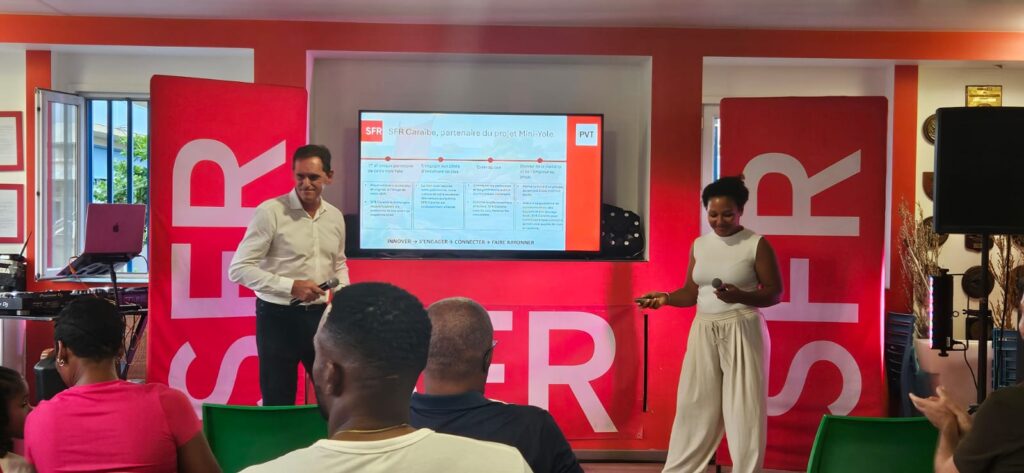
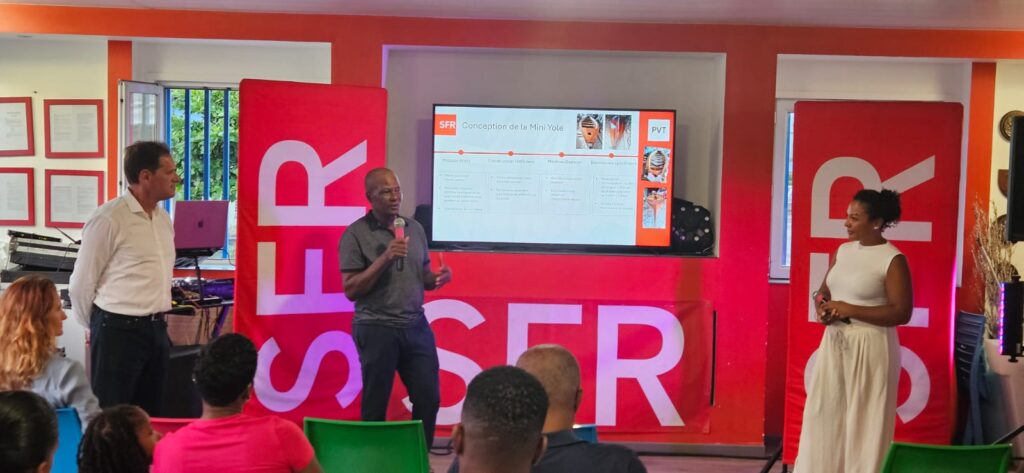
Unveiled on September 10, 2026, at the Fort-de-France Yacht Club in Martinique, “Van Lévé” is a 4.10-meter mini-yole designed to introduce young people and beginners to traditional sailing. Led by Passion Voile Traditionnelle with support from SFR Caraïbe, the project will now move beyond its unveiling to reach out to the public throughout Martinique.
On Thursday, September 10, 2026, at the Fort-de-France Yacht Club in Martinique, the evening began even though the mini-yole didn’t yet have a name. Aude Pitavy, president and founder of Passion Voile Traditionnelle, first presented the project, its origins, and her vision for it. Speeches followed one after another, and then it was time to vote. Six names were proposed to the audience. Small ballots and pens were passed around. The guests made their choice before heading downstairs to see the boat. A few minutes later, the mini-yole had a name: “Van Lévé”.
This vote already captures part of the spirit of the project. Passion Voile Traditionnelle doesn’t just want to showcase a boat to the public. The association wants to get people involved, inspire them to give it a try, and build a connection between those who are already familiar with the yole and those who have never sailed before.
An idea that came to me while listening to former rowers
Aude Pitavy explains that the mini-yole project took shape through interviews with former yole sailors in Martinique. Some of them recounted their sailing experiences in mini-yoles, particularly in Le Marin and Le Robert, in Martinique. One memory keeps coming up in their accounts: with fewer people on board, each person had to learn several roles and gain a better understanding of the boat.
These stories particularly resonate with Aude Pitavy. The mini-yole is no longer seen merely as a small boat. It can also serve as a learning tool, a way to spend more time on the water and improve one’s skills before—for those who wish—moving on to other traditional sailing vessels.
“The idea is to truly inspire young people to give it a try and discover the world of traditional sailing,” explains Aude Pitavy in an interview conducted in connection with the presentation of “Van Lévé.”
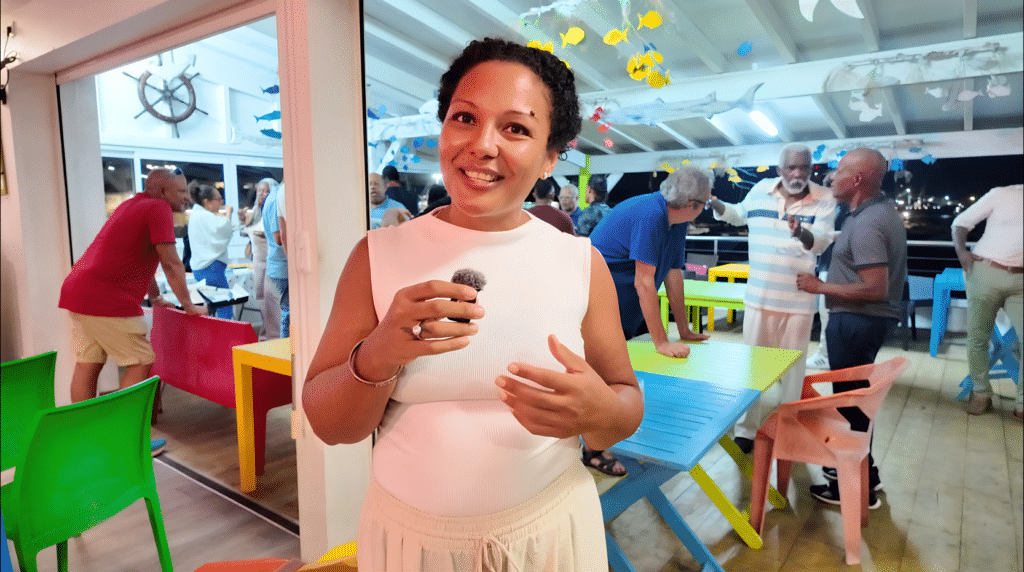
The approach is designed to be simple. A first experience on the water can spark curiosity. That curiosity can then lead to a sailing school, a club, or more regular sailing. Passion Voile Traditionnelle thus envisions the mini-yole as a first step into the world of sailing, especially for young people and those who are new to this world.
"Van Lévé" must go where the young people are
“Van Lévé”, which is 4.10 meters long and 1.20 meters wide, is not meant to remain on display in one place. Passion Voile Traditionnelle hopes to take the mini-yole on a tour of Martinique and create more opportunities for people to discover it.
The program, unveiled on September 10, 2026, in Fort-de-France, Martinique, includes introductory sessions in partnership with sailing schools and organizations. Passion Voile Traditionnelle also hopes to reach elementary, middle, and high schools. A tour of local communities is among the proposed initiatives, as is participating in trade shows, fairs, and other events attended by the general public.


Aude Pitavy envisions children discovering the mini-yole from an early age. During discussions with the public, the president of Passion Voile Traditionnelle mentions an age of around 7, while noting that the sport isn’t just for children. Adults, too, can discover the mini-yole. The project, therefore, aims less at waiting for future participants than at creating opportunities for people to discover the sport. “ Van Lévé” should be able to visit a town, a sailing school, or an event and inspire people to ask questions, take a closer look, and eventually get on board.


Philippe Attely has chosen to let the wood speak for itself
Philippe Attely, the builder of “Van Lévé,” brings another dimension to the project. The mini-yole isn’t just a way to talk about sailing; its construction also showcases craftsmanship. Philippe Attely has been building boats since the 2000s. In an interview about the project, the boatbuilder explains that he works primarily on rubber dinghies, baby yoles, and now mini-yoles. For “Van Lévé,” the choice of a wooden construction goes hand in hand with a decision that’s visible at first glance: not to hide the craftsmanship beneath a coat of paint.

Philippe Attely also explains that he wanted to avoid composite materials and fiberglass. As a result, the planks, the structure, and the joints remain visible. Viewers can look at the mini-yole and understand that before there is sailing, there is first and foremost the material, the craftsmanship, and the builder.
“Since I love working with wood, I’m on board with anything I’m offered that’s meant to sail,” sums up Philippe Attely.

Passion Voile Traditionnelle hopes to expand on this aspect through workshops focused on shipbuilding. “Van Lévé” could therefore serve not only to teach participants about what happens on the water, but also to introduce them to what happens before the boat is launched.
SFR Caraïbe supports a handover—not just a boat
Frédéric Hayot, CEO of SFR Caraïbe, explains that the project presented by Aude Pitavy stood out for its originality. The idea of building a mini-yole, bringing it to Martinique, and, above all, reaching out to young people caught the company’s attention.
“We really liked the idea of building a mini-yole and bringing it to people all around Martinique—and especially reaching out to young people,” explains Frédéric Hayot.

SFR Caraïbe funded the construction of “Van Lévé.” Frédéric Hayot also links the project to values he believes are important to convey, including performance, pushing one’s limits, and “humility in the face of the elements.” SFR Caraïbe’s support is set to continue beyond the construction phase. Frédéric Hayot notes that the company will also make its communication resources available to Passion Voile Traditionnelle to raise awareness of the initiatives surrounding the mini-yole.
"Van Lévé" might not stay single for long
Aude Pitavy does not present “ Van Lévé ” as the culmination of the project. During discussions held on September 10, 2026, in Fort-de-France, Martinique, the president of Passion Voile Traditionnelle already mentioned the possibility of seeing several mini-yoles sailing together. Aude Pitavy also points out that other mini-yoles exist in Martinique and that some could be repaired and returned to the water. The project, therefore, is not solely about building a new boat; it can also help bring existing ones back into use.
The Fort-de-France Yacht Club’s evening thus comes to a close aboard a boat that has just been christened. “Van Lévé” has only a short history so far, but its mission is already clear. The mini-yole is meant to sail, travel, and pioneer new experiences. For a child or teenager who knows the yole only from a distance, learning about its heritage may not begin with a long lecture. It may simply begin with stepping aboard “Van Lévé,” a first time out on the water, and the desire to do it again.

“Van Lévé” is a 4.10-meter mini-yole operated by Passion Voile Traditionnelle in Martinique. It was designed to make it easier for people to learn about and pass on the tradition of sailing.
Passion Voile Traditionnelle created “Van Lévé” to reach out to young people and beginners. The mini-yole is intended for introductory lessons, activities with sailing schools, and events organized in various towns across Martinique.
The “Van Lévé” mini-yole was built by Philippe Attely. The wood and structural elements were left exposed to highlight the craftsmanship involved in building the boat.
At the Senate Orangery, Man Mélé! took on a dimension that Cécile Vernant could not have fully anticipated before the doors opened. As the days went by, the exhibition became a space for encounters, conversations, and exchanges between artists and visitors. Surrounding the artworks, discussions revolved around Martinique and nature, but also memories, cultures, and sensibilities from far beyond the island.
The calm before the crowd arrives
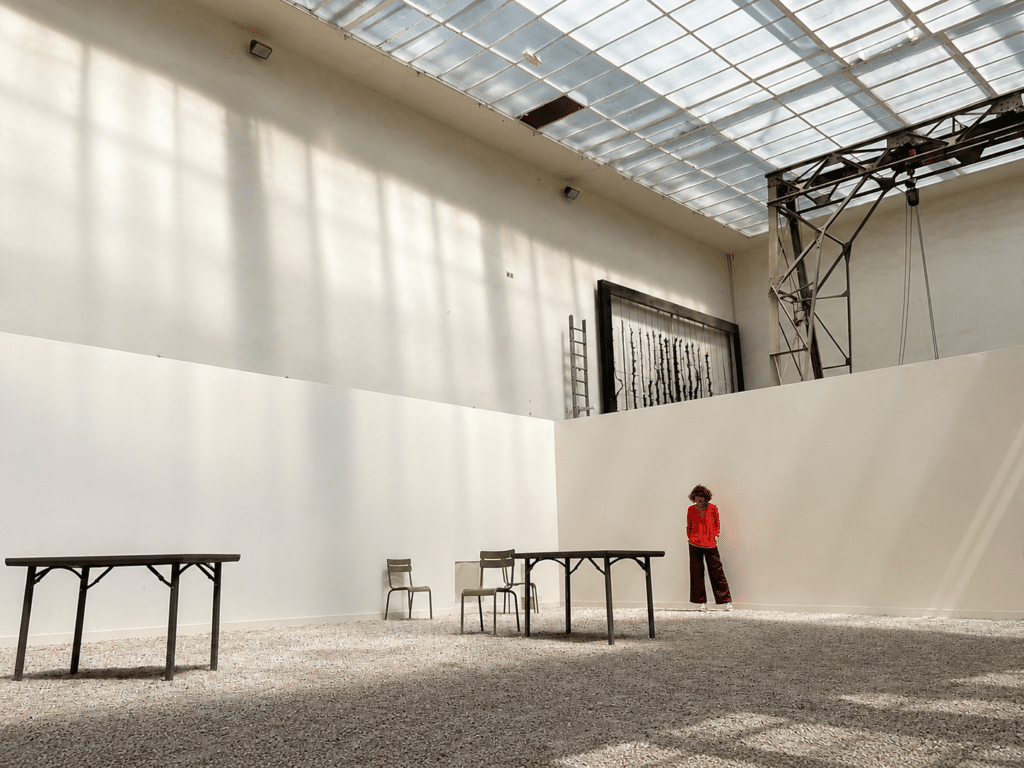
Every morning, Cécile Vernant arrived before the park opened at 11 a.m. The garden was quiet. She would pass joggers, watch the tai chi groups among the chestnut trees, and enjoy the scent of the flowers. She loved this “calm before the storm.” A few hours later, the atmosphere would change. Cécile Vernant estimates that the Orangerie, which is about 600 m², could accommodate up to 400 visitors at its peak over the course of three to four hours. The busiest day reportedly drew 1,000 visitors.
The three rooms were separated by partitions, but their layout naturally encouraged visitors to move from one space to another. She also estimates that about 80 percent of the visitors were foreigners during that period.
Three artists, three worlds, one nature
Cécile Vernant shared the Orangerie with Anne Morgann and Shingiiiiii. Each artist presented a solo exhibition as part of a collective project. Nature was their common thread. With Shingiiiiii, a connection emerged around volcanoes: Mount Pelée for her, Mount Fuji and the volcanoes of Hawaii for him. This connection also resonated with her use of Japanese art paper in her photographs and her “mutant” prints.
With Anne Morgann, the conversation centered more on light and the boundary between figuration and abstraction. Every morning, Cécile Vernant would go to see her works; “L’Heure d’or” had become a ritual. The two artists encouraged and advised one another, and sometimes directed visitors to the other’s gallery.
An exhibition that changes with the light
Under the glass roof, the light changed as the hours passed. At times, rays of light streamed through the windows and brought the artworks to life. Before the exhibition, Cécile Vernant had observed the room at different times of the day. She then adjusted the placement of certain paintings to suit the light. In recent days, she has created an “Atelier” space, featuring several works placed on the floor. The ceramics were arranged in fishing nets, a reference to the seine net and the catch brought ashore. This arrangement also allowed her to evoke the collective and heritage aspects of this practice.

Visitors at the Heart of “Man Mélé!”
Certain encounters left a particularly deep impression on Cécile Vernant. A ninety-year-old visitor, a former painter in Montmartre, approached a painting and sniffed it. He then claimed that it had been varnished a year earlier. His intuition was correct. She repeated the experiment with other works, with the same precision. A little girl, five or six years old, settled down in front of a 10 × 10 cm painting and seemed unwilling to leave it. Touched by her attention, Cécile Vernant decided to give it to her.
Another highlight: a young Brazilian opera singer performed an opera aria a cappella in front of Anne Morgann’s paintings. The scene deeply moved the artists, bringing some of them to tears.
When Martinique Comes Up in Conversation
Among the many discussions sparked by *Man Mélé!*, certain encounters left a particularly deep impression on Cécile Vernant. The Caribbean diaspora, in particular, played a unique role in these conversations. Visitors living in Paris, the Paris region, or even further afield came with their own memories and their own connection to the Caribbean.
A woman from Martinique living in New York came with her daughter, while a Haitian visitor, drawn in by the title he’d spotted on the poster, quickly steered the conversation from the paintings to other Caribbean references: djon djon, Tabou Combo, and Haitian Troubadour. Cécile Vernant also recounts that some visitors who had previously visited Martinique shared their memories of the island with her, while others discovered it through her artwork.
When "Man Mélé!" Takes on Its Full Meaning
Shortly before the exhibition, Cécile Vernant had to deal with several unexpected issues. A large ceramic mural, intended for “Man Mélé!”, broke during the May earthquake while it was drying on the floor.
In Paris, she then created a work on paper based on a one-of-a-kind, ever-changing print. Since she couldn’t find a frame that fit its dimensions, she simply pinned it to the wall, unframed. These setbacks gave rise to the title Man Mélé! a very concrete meaning: “I’m in a pickle,” one of the meanings Cécile Vernant attributes to the expression. It was as if, almost in spite of herself, the reality of the exhibition had ultimately brought the title to life.
What Cécile Vernant Takes Away from *Man Mélé*!
Word of mouth spread naturally. Former clients returned with friends, other visitors spread the word about Man Mélé! to those around them, and some connections continued even after the exhibition ended. From this experience, Cécile Vernant values most of all the connections she made, the support she received, and the trust this selection instilled in her. As a self-taught artist, she is committed to preserving what guides her work: the freedom to create without trying to conform to others’ expectations or giving up on her own desires.
Man Mélé! is the exhibition curated by Cécile Vernant at the Orangerie du Sénat in Paris. There, the artist has created a world inspired by Martinique, nature, light, and her interactions with the public.
According to Cécile Vernant, attendance peaked at around 400 visitors in three to four hours. The busiest day saw up to 1,000 visitors.
Martinique features in several aspects of Cécile Vernant’s work, notably Mount Pelée, the senne fishing net, nature, and interactions with visitors connected to the island and the Caribbean diaspora.
Martinique is taking on a new role within the Association of Caribbean States. For 2026–2027, it will join the Executive Bureau of the Special Committee on Trade Development and External Economic Relations as Rapporteur. Behind this institutional role lies a very concrete challenge: better integrating transportation, logistics, and access to markets in the Greater Caribbean.
Sandra Casanova at the center of this new phase
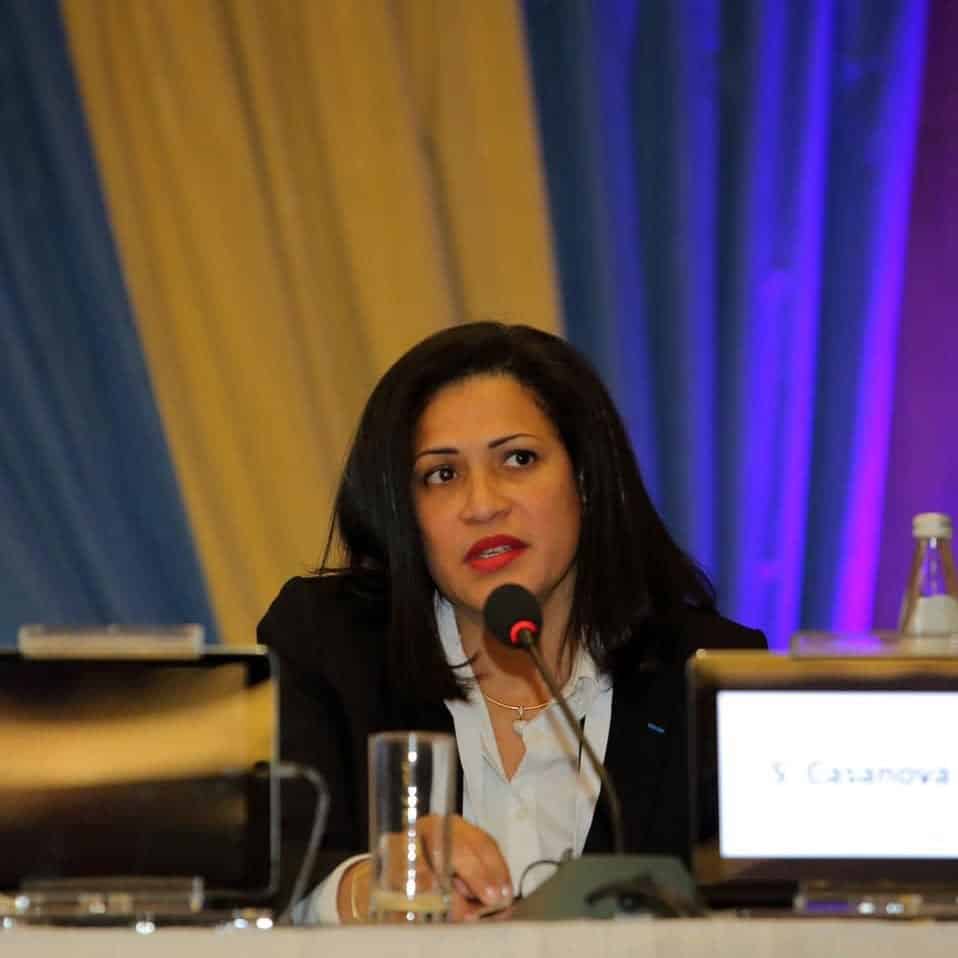
Sandra Casanova, a member of the Martinique Assembly and chair of the territory’s Committee on Logistics Strategy, Research, and Innovation Policy, will assume this responsibility. The Executive Bureau consists of the Dominican Republic as chair, Colombia and Guatemala as vice-chairs, and Martinique as rapporteur. In this role, the territory helps to formalize the Committee’s work and to document the positions and decisions resulting from its discussions.
The Executive Committee held its first meeting on August 13, at the invitation of the ACS’s Directorate of Transportation, Trade, and Sustainable Development. The meeting provided an opportunity to review the work plan and upcoming priorities.
From transportation to commerce: the same approach
This appointment is not a first. Martinique has already served several terms on the Executive Board of the Special Committee on Transport, first as chair and then as vice chair. The most recent term ended in June 2026. Moving from transportation to trade might seem like a shift in focus. On the contrary, it reflects a sense of continuity. After all, before a product reaches a market, it must be transported.
Maritime or air transport, port operations, storage, customs, health inspections, documentation, standards, certification, distribution: each step can either facilitate or hinder access to a market. For an island territory, competitiveness therefore does not depend solely on a product’s price. It also depends on transportation costs, transit times, the reliability of the supply chain, and the efficiency of procedures.

When Geographic Proximity Isn't Enough
In the Caribbean, being neighbors does not automatically mean that trade is easy. Distances may be short, but goods still have to go through several stages before reaching the buyer. The ACS specifically aligns trade, transportation, and sustainable development under a single umbrella within its Secretariat. Its strategic plan, “Greater Caribbean 2035: A Shared Horizon,” also considers trade, external economic relations, transportation, and connectivity as interdependent priorities.
Martinique’s new role thus addresses a very practical question: How can we make regional trade flow more smoothly and facilitate businesses’ access to neighboring markets?
Caribbean in terms of geography, European in terms of status
The topic also touches on a unique aspect of Martinique. Serge Letchimy sums up this position with the following statement: Martinique is “Caribbean by geography and European by status.” This dual identity can create challenges, but the Collectivité also hopes to turn it into an economic asset. The stated goal is to better integrate the territory into the value chains of the Greater Caribbean, while continuing the work already underway in the area of logistics.
The European eFTI4ALL project, mentioned in the press release, is part of this initiative. It focuses on the digitization of regulatory information related to freight transport, a technical issue that is directly linked to the smooth flow of trade.
Association of Caribbean States (ACS): From Institutional Presence to Caribbean Markets
Founded in 1994, the Association of Caribbean States is a forum for consultation, cooperation, and concerted action in the Greater Caribbean. Martinique holds a seat there as an associate member. Its inclusion on the Executive Board for Trade now strengthens its presence in an area directly related to economic exchanges. But a seat alone does not transform trade flows.
The real challenge will therefore begin after the appointment: translating this institutional presence into simpler procedures, more reliable connections, and, above all, opportunities accessible to businesses. This is now the concrete challenge. Will Martinique be able to use its position in the ACS to serve as a true bridge between its Caribbean neighbors and the economic reality?
For 2026–2027, Martinique serves on the Executive Board of the ACS Special Committee on Trade Development and External Economic Relations as Rapporteur. In particular, it helps to formalize and document the positions and decisions resulting from the Committee’s work.
The role of Rapporteur is held by Sandra Casanova, a member of the Martinique Assembly and chair of the Committee on Territorial Logistics Strategy, Research, and Innovation Policy. The Bureau also includes the Dominican Republic as chair, as well as Colombia and Guatemala as vice-chairs.
This section is part of a broader context: transportation and logistics directly determine a country’s ability to trade. Ports, maritime and air transportation, customs, warehousing, standards, and procedures all influence costs, lead times, and businesses’ access to markets in the Greater Caribbean.
On August 9, 2026, Bélya will officially release “Adoumanman”, a ten-track album conceived as a balance between the bèlè heritage and contemporary creativity. In this album, the Martinican band sets to music themes of migration, memory, transmission, violence, resistance, and hope, without turning a blind eye to the present.
Bélya: Heritage as a Starting Point
With Adoumanman, Bélya pursues an idea that runs through his artistic approach: remaining deeply rooted in bèlè while allowing this art form to evolve with the times. The group refers to its style as “Bèlè Fusion” and performs k’bel, or kadans bèlè, drawing notably on the rhythms of Samaritan and Arlesian bèlè, as well as the musicians’ experiences with carnival, gospel, zouk, and jazz.
The vision behind this new album can be summed up in a few words: “Roots, and openness to the winds of the world”. Adoumanman also uses the phrase “Mi Plézi dann.” The goal, therefore, is not to put tradition on display, but to draw on the rich rhythmic and musical heritage passed down by our ancestors and integrate it into a contemporary context.
Ten titles, ten ways of looking at the present
The ten tracks bring this ambition to life.
– Migran follows a mother and her son, Ibrahim, as they flee their country for Europe, crossing the desert, the sea, and facing the dangers of the journey.
– Chape explores a relationship where physical abuse has replaced moments of “kolé lapo” and where loved ones are urging the couple to break the cycle.
– Zayann leads to “Zayonn,” the “great woods,” a source of inspiration and creative energy for Bélya. Kokoye links the drum once played during the danmié—the dance of the same name—to a story of friendship fractured by resentment and revenge, in which drums, songs, and music restore peace.
– Avriyet reimagines a classic from the bèlè tradition with a new orchestration.
– Dekolonial explores cultural clashes, domination, confrontations, and destruction, but also resistance, resilience, and utopian visions to be rebuilt.
– Lyannaj Bele takes the form of a medley of bèlè songs driven by the rhythm section of Bélya.
– Depi Ventan pays tribute to parents and the upbringing they provide for their children, while Limina honors Lumina Sophie, heroine of the 1870 Southern Uprising, and “all the Luminas of the World.”
Finally, Ich Madinina affirms his attachment to the island of Martinique in a hymn to hope, tolerance, and respect.

When bèlè Becomes a Living Material
This storytelling style relies as much on lyrics as on sound. “Traditional” instruments take center stage: the tanboubèlè, tanboupak, doumpak, and bwapitak interact with drums, piano, bass, and guitar. The vocals of Ivy Jalta and Stella Gonis feature on several tracks, while Bèbène and Metjo take the lead on “Kokoye.”
The band features Jimmy Thomasi on drums, Elizé Domergue on piano, and Hervé Martini on bass, with Krys Dachir and Harry Brédas on guitars. Justin Lesalles, Jocelyn Bernadine, Henri Altorn, and Eric Bertrand round out the percussion section.
This fusion does not erase the bèlè. Rather, it makes it the cornerstone. Even the staging of Bélya This says something: the musicians form a semicircle open to the audience, which completes the Wondi. The music is then no longer limited to what is being played; it becomes connection, flow, and transmission.

Adoumanman: A New Chapter for Bélya
Adoumanman continues a career already marked by *Fondok* and *Djenm* in 2010 and the single *Konngo* in 2023. Bélya has also taken his music beyond Martinique, notably to Guadeloupe, Trinidad, France, Japan, and Senegal. This exchange truly brings to life the idea of openness championed by the group. The “breaths of the world” do not distance us Bélya from its base: they become another way to make it resonate.
With Adoumanman, the issue isn’t really about choosing between tradition and contemporary creation. Rather, the ten tracks show how one can enrich the other. With just two days to go before its official release, the album thus raises a question : How will future generations keep the bèlè alive in their own way?
The album *Adoumanman* by Bélya will be officially released on August 9, 2026. It features ten tracks built around the bèlè tradition and contemporary themes.
Adoumanman includes 10 tracks : Migran, Chape, Zayann, Kokoye, Avriyet, Dekolonial, Lyannaj Bele, Depi Ventan, Limina, and Ich Madinina.
The bèlè forms the musical foundation of Bélya. The group has developed a contemporary style, known in particular as “Bèlè Fusion” and “k’bel” or “kadans bèlè,” in which bèlè rhythms and instruments blend with other musical influences.
