Saint Barth Commuter was set up in 1995 in response to an urgent need: to provide Saint-Barthélemy with a reliable air transport service, following the disappearance of Air Saint-Barth. At the time, the island had no aircraft dedicated to medical evacuations, nor any means of rapidly linking up with neighboring territories. Under the impetus of aviation enthusiast Bruno Magras, the company began with on-demand flights, before launching regular routes in 1998 to Grand-Case, Juliana and Antigua.
More than just a company, Saint Barth Commuter is rapidly establishing itself as an essential infrastructure for island cohesion. Aviation has become a public service in its own right, enabling the population to stay connected, receive medical care and support the local economy.
A family tradition at the service of the region
The history of Saint Barth Commuter is inseparable from that of the Magras family. Although Bruno Magras was the initiator, it is his son Bertrand who today steers the company with the same rigor and a strong attachment to the local identity. The company remains on a human scale, with 32 employees, all committed to a service mission rooted in the day-to-day reality of Saint-Barthélemy.
This family continuity guarantees the company’s strategic stability and adaptability to the island’s needs. Every decision we take is based on a territorial rationale: to improve mobility, enhance safety and anticipate the needs of the population.


Missions that go far beyond scheduled transport
Saint Barth Commuter fulfils several essential functions, which distinguish it in the regional aerial landscape:
- Passenger transport: with regular services to Saint-Martin (Grand-Case and Juliana) and Guadeloupe, the company facilitates business, personal and tourist travel. On-demand flights enable us to adapt to specific situations, even outside normal business hours.
- Airfreight: this service ensures the transport of goods that are crucial to the island’s supply, particularly in the event of maritime disruptions or urgent needs.
- Medical evacuations: thanks to a fleet available on site, urgent medical interventions can be carried out as quickly as possible – a vital issue for an isolated island.
A fleet designed for local realities
With five Cessna Grand Caravans and a sixth on order, Saint Barth Commuter is banking on reliability and performance. These aircraft are perfectly suited to the demanding topography of Saint-Barthélemy airport, where landing conditions require both technical precision and knowledge of the terrain.
The company is continually investing in fleet maintenance and modernization. The increase in capacity comes against a backdrop of rising traffic: +27% passengers carried in the first quarter, proof of public confidence.


In the face of competition, a service-centred approach
In a regional context marked by competition from airlines such as Winair, Saint Barth Commuter has established itself as the island’s second largest air operator, thanks to a strategy based on quality, regularity and proximity. This position is not the result of a price war, but of a relationship of trust established with customers.
The constant attractiveness of Saint-Barthélemy, combined with the island’s logistical and health needs, means that the company is constantly on the lookout for ways to improve, adapt to regulatory changes and anticipate climatic or economic challenges.
A sustainable, structuring vision
Saint Barth Commuter’s future lies in the continuity of its historical commitment. The company is positioning itself not just as a carrier, but as a strategic player in local development. Its objective remains clear: to guarantee equitable access to mobility services, without ever compromising on safety, customer care and responsiveness.
Maintaining the island’s sovereignty in terms of transport also depends on its ability to control a suitable air mobility tool, locally controlled and managed in the general interest.
For thirty years, Saint Barth Commuter has embodied much more than a means of transport. It symbolizes a vital link between the island and its regional partners, an unwavering commitment to its inhabitants and a rare ability to combine entrepreneurial vision, operational excellence and territorial roots. In a Caribbean region whose equilibrium is often fragile, this airline plays a discreet but fundamental stabilizing role.
Since its creation in 1996, the St Barth Film Festival has established itself as a significant cultural event on Saint-Barthélemy, offering a unique platform to highlight the richness and diversity of Caribbean cinema. Through its screenings, workshops and exchanges, the festival showcases authentic stories as well as the region’s emerging talents. The 28th edition, scheduled from April 30 to May 3, 2025, promises a complete immersion in the cinematic universe of the Caribbean.
Origins and mission of the St Barth Film Festival
A visionary initiative born in 1996
The St Barth Film Festival also known as “Cinéma Caraïbe”, was born of the ambitious idea of giving the inhabitants of this island in the French West Indies direct access to the region’s cinematic cultures. Founded by Ellen Lampert-Gréaux, Joshua Harrison, Rosemond Gréaux, Bénédicte Maudet and Rachel Kaufman, the project was conceived as a cultural link between Caribbean territories and other parts of the world.
From the very first edition, the public’s support confirmed that cinema was a genuine tool for cultural exchange. This recognition led the founders to make the event a long-term one, making the St Barth Film Festival an unmissable annual event on the local cultural scene.
A tribute to Caribbean cinema
The St Barth Film Festival is not just about showing films. It promotes cinema as a means of cultural expression, enabling the unique realities of Caribbean societies to be told. By showcasing talented filmmakers and works from diverse horizons, it plays an active role in strengthening regional cultural identities, while promoting dialogue with other areas.
A meeting place for filmmakers and audiences
The St Barth Film Festival is distinguished by the originality of its projection locations: the A.J.O.E. in Lorient, the Flamands beach, or the quays of the island. These unusual settings add a sensory dimension to the viewing of the works.
Imagine an open-air screening, your feet in the sand, lulled by the sound of the waves, watching a film that expresses a deep Caribbean experience. This atmosphere, unique to Saint-Barthélemy, is what makes this event so special.
Educational workshops for the younger generation
The St Barth Film Festival also plays a structuring educational role. Every year, it organizes workshops in schools across the island. These exchanges give pupils an introduction to cinematographic creation, and awaken their curiosity about an often little-known discipline.
The filmmakers present share their backgrounds and artistic approaches, offering young people a concrete vision of the filmmaking profession. These encounters are essential for building an enlightened public and, perhaps, sparking vocations.
Detailed program: an immersion in world cinema
The 28th edition of the St Barth Film Festival offers a demanding and varied selection of works from the Caribbean and other continents. Here’s an overview of the program:
Wednesday, April 30
- Discovering Bessie Coleman (Beth Powell) – Portrait of the first African-American woman aviator.
- Mama Sranan (Tessa Leuwsha) – A story about cultural identity in Suriname.


Thursday, May 1st
- Cyrille Régis: itinerary of a legend – Documentary on an iconic player.
- Magma (Cyprien Vial) – An introspective look at human complexity.


Friday, May 2nd
- Destins of Exile (Steve James) – Reflections on Caribbean migration.
- Fanon (Jean-Claude Barny) – A film portrait of the thinker Frantz Fanon.


Saturday, May 3rd
- Lisette Malidor: a universal artist (Pierre-Yves Hampartzmoumian) – Tribute to a great artistic figure.
- End of the Road (Dirk Braun) – Short film on environmental consequences.
- Adios Buenos Aires (German Kral) – Focus on Argentine culture through tango.


The pillars of the festival: Organizers and partners
The St Barth Film Festival is based on the cooperation of committed players. It is run by the Association Ciné St Barth with the support of the Collectivité de Saint-Barthélemy, the Direction des Affaires Culturelles (DAC) de Guadeloupe, and the Comité Territorial de Tourisme.
Local organizations – hotels, restaurants, businesses – have also supported this initiative from the outset. Their involvement confirms the structuring role played by the festival in the island’s socio-cultural fabric.
A lasting impact on Caribbean culture
An international showcase for regional cinema
The St Barth Film Festival is a window on Caribbean cinema on an international scale. It attracts renowned directors, producers and actors, and contributes to the networking of professionals in the sector.
The discussions organized enable enriching confrontations of points of view, reinforcing the reach of Caribbean cinema in the global arena.
A promising future for the St Barth Film Festival
By combining cultural transmission, training, artistic creation and openness to the world, the St Barth Film Festival affirms its long-term vocation. Its 28th edition promises to be rich in emotion and reflection, while reaffirming its commitment to the dissemination of Caribbean cultural heritage.
On December 9, 2024, the airline Corsair and Air Inter Iles announced a strategic partnership, marking a major step forward in access to Saint-Barthélemy from Paris. From December 15, 2024, travelers will have the opportunity to benefit from a simplified connection, while enjoying premium service and a preferential fare. This article explores the details of this collaboration between Corsair and Air Inter Ile sand its impact on travel to this popular destination, as well as the advantages it offers passengers.
A strategic partnership with Corsair and Air Inter Iles
The agreement signed between Corsair and Air Inter Iles is part of a shared desire to improve connectivity between France and the island of Saint-Barthélemy is a wonderful destination that attracts thousands of tourists every year. In particular, the festive season is a busy time of year, with travellers looking for convenient and comfortable ways to reach this popular island.
A simplified connection with Corsair and Air Inter Iles
From December 15, 2024, passengers departing from Paris-Orly will be able to complete their first leg of the journey aboard an A330neo from Corsair to Pointe-à-Pitre. Once they arrive in Pointe-à-Pitre, they will enjoy a fast, personalized transfer to Saint-Barthélemy aboard a Tecnam P2012 aircraft operated byAir Inter Iles.
This aircraft model was chosen by Corsair and Air Inter Iles for its standards of comfort and safety, reinforcing both airlines’ commitment to a quality travel experience.
This integrated approach is designed to offer unrivalled fluidity for passengers. Connection schedules have been carefully established to ensure that passengers have sufficient time to make their transfer, while minimizing waiting times.
Passengers can thus concentrate on their journey, without having to worry about logistical hassles. What’s more, baggage handling will also be simplified, allowing travellers to move around without the worry of having to collect their luggage in Pointe-à-Pitre.
Top-of-the-range service
This partnership between Corsair and Air Inter Iles is more than just a connection between two destinations; it is part of a broader commitment by the airlines to provide a premium travel experience. Corsairs fleet, which will be completely renewed by the end of 2024, will comprise 9 modern A330neo aircraft.
With an average age of two years, these aircraft are designed to offer enhanced comfort, with ergonomic seats, an in-flight entertainment system and attentive service, ensuring that every passenger enjoys their trip.
The Air Inter Iles fleet consists of brand-new Tecnam P2012s, meeting the latest comfort and safety standards.
These light aircraft are ideal for short distances, offering a pleasant flying experience. This shuttle service has been designed to offer a smooth and pleasant experience, allowing passengers to spend as little time as possible in transit.

Special attention to detail
To improve the customer experience, the two airlines, Corsair and Air Inter Iles have introduced a series of additional services. For example, passengers will have access to exclusive waiting lounges at the airport, where they can relax before their flight. Quality catering options will also be available to make the wait more enjoyable.
Furthermore, a personalized assistance service will be on hand to assist travelers, whether they need to manage specific dietary requirements or arrange additional transfers on arrival in Saint-Barthélemy.
A Preferential Fare with Corsair and Air Inter Iles
One of the most attractive aspects of this new offer is the preferential end-to-end rate. Customers will be able to book their entire trip with a single reservation, considerably simplifying the purchasing process. What’s more, they can take advantage of a special rate, making this offer even more attractive. This single-booking approach meets a growing demand from travellers for air transport solutions tailored to their needs.
Martine Haas, Sales Director Corsair underlined the importance of this partnership in the current air travel context: “Thanks to this partnership with Air Inter Iles we are enriching our offer by enabling our customers to easily reach Saint-Barthélemy via Pointe-à-Pitre, a very popular destination, especially at the end of the year. This agreement is a much-awaited addition to our portfolio of partnerships.
Responding to Passenger Needs
This partnership between Corsair and Air Inter Iles also meets the new expectations of travelers, who are looking for flexible solutions tailored to their needs. The ability to book an entire trip with a single reservation is a major advantage for passengers, who no longer have to juggle multiple tickets and timetables. This not only simplifies the booking process, but also reduces the stress associated with travel, especially during busy periods.
A development strategy
This partnership is part of a wider development strategy for both companies. Vincent Beauvarlet, President of St. Barth Executive, added: “This partnership with Corsair is part of our ambition to efficiently connect Saint-Barthélemy to the rest of the world, while offering a seamless, premium travel experience”. This illustrates the desire of both airlines to adapt to the requirements of modern travellers, who are looking for flexibility, comfort and fluidity.
The air transport market is constantly evolving, and airlines have to adapt their offerings to meet growing consumer expectations. By increasing connectivity and improving service quality, Corsair and Air Inter Iles ensure they remain competitive while attracting an increasingly demanding clientele.
Impact on Tourism in Saint-Barthélemy
This new link should also have a significant impact on tourism in Saint-Barthélemy. L’île, connue pour ses plages idylliques et son ambiance chic, attire des visiteurs du monde entier. Avec une accessibilité améliorée, on peut s’attendre à une augmentation du nombre de touristes, ce qui pourrait stimuler l’économie locale. Les hôtels, restaurants et autres entreprises touristiques bénéficieront de l’augmentation du nombre de visiteurs, tout en maintenant les standards de qualité qui font la réputation de l’île.
With the partnership between Corsair and Air Inter Iles travelers can look forward to a unique travel experience to Saint-Barthélemy. Grâce à une connexion simplifiée, un service de haute qualité et un tarif préférentiel, cette nouvelle offre est conçue pour répondre aux attentes des passagers tout en rendant le voyage plus agréable et moins stressant.
As the festive season approaches, this initiative comes at just the right time for those planning to discover the beauties of Saint-Barthélemy. Les voyageurs peuvent dès maintenant se rendre sur le site de Corsair to book their trip to this dream destination with complete peace of mind.
It will be interesting to follow the evolution of this collaboration and see how it will impact tourism in this prized Caribbean region. All in all, this partnership between Corsair and Air Inter Iles is a promise of more comfortable and accessible travel, offering passengers the chance to discover one of the Caribbean’s most beautiful and exclusive islands, while enjoying top-of-the-range service that meets the modern needs of travelers.
Wish
is the first 100% French West Indies series to immerse viewers in the music industry. Ethereal notes resonate. They come from the flute of Dédé Saint-Prix. “Décolaj o coco sizè d’maten soné jou ka ouvè. West Indies”, repeats Slaï. And so begins the 100% French West Indies series,
Wish
. En dix épisodes, la série musicale dépeint une saga familiale à la tête d’une maison de disque aux prises avec des problèmes financiers.
This is a first for the French West Indies. Even “historic”, according to co-director Julien Dalle. A 100% French West Indies series has just hit our screens. Both in front of and behind the camera, the production and technical teams are all West Indians. In recent weeks, the series
Wish
is now available on the Canal + platform. Shot in Guadeloupe,
Wish
is divided into ten 26-minute episodes. The mainstream series tells the story of a family saga in the West Indian music industry.
At the helm are two seasoned directors, Julien Dalle and Dimitry Zandronis.
In the lead role of Edith, a face but above all a voice well known to West Indians and beyond, Methi’s, who makes her first steps in front of a camera. The singer plays the role of a young woman who, on the death of her father, inherits a record company in dire straits. The matriarch is played by Firmine Richard, who has often worked with Julien Dalle.
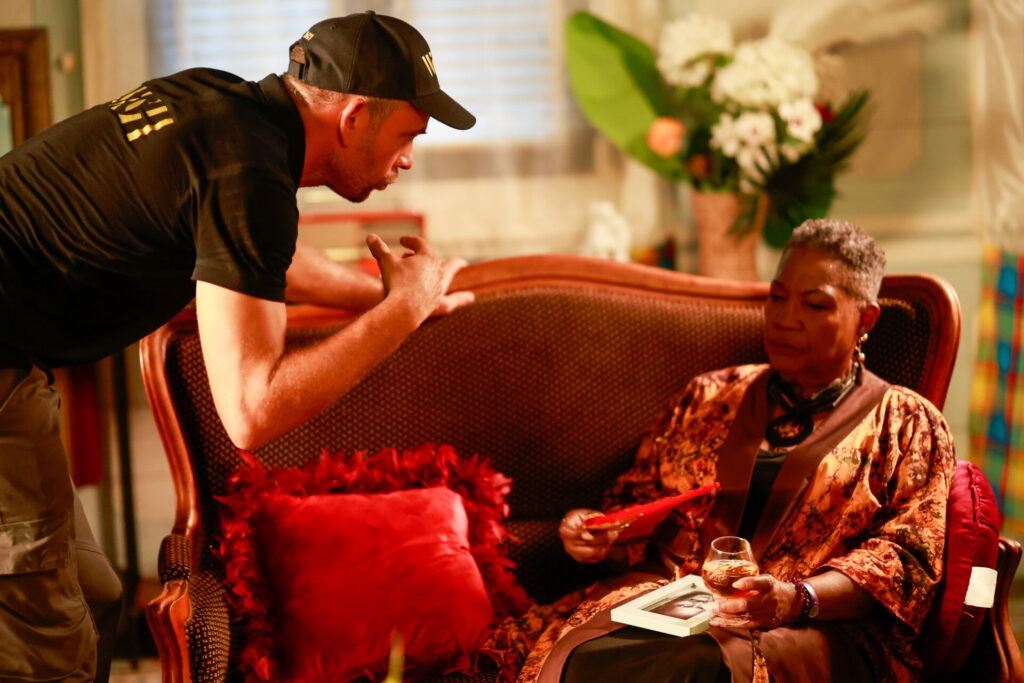
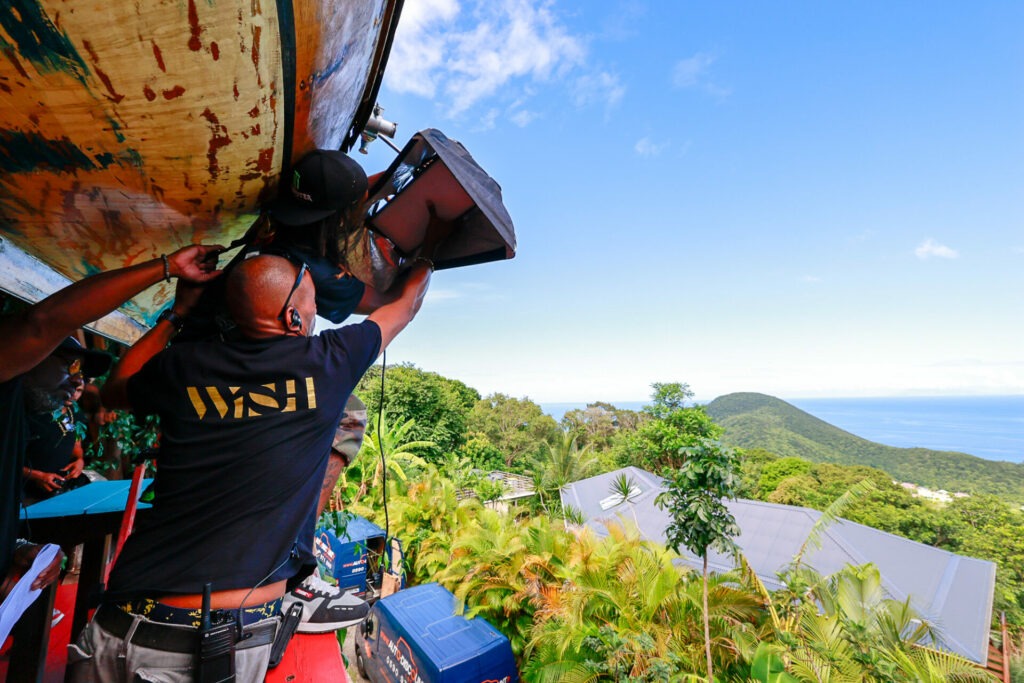


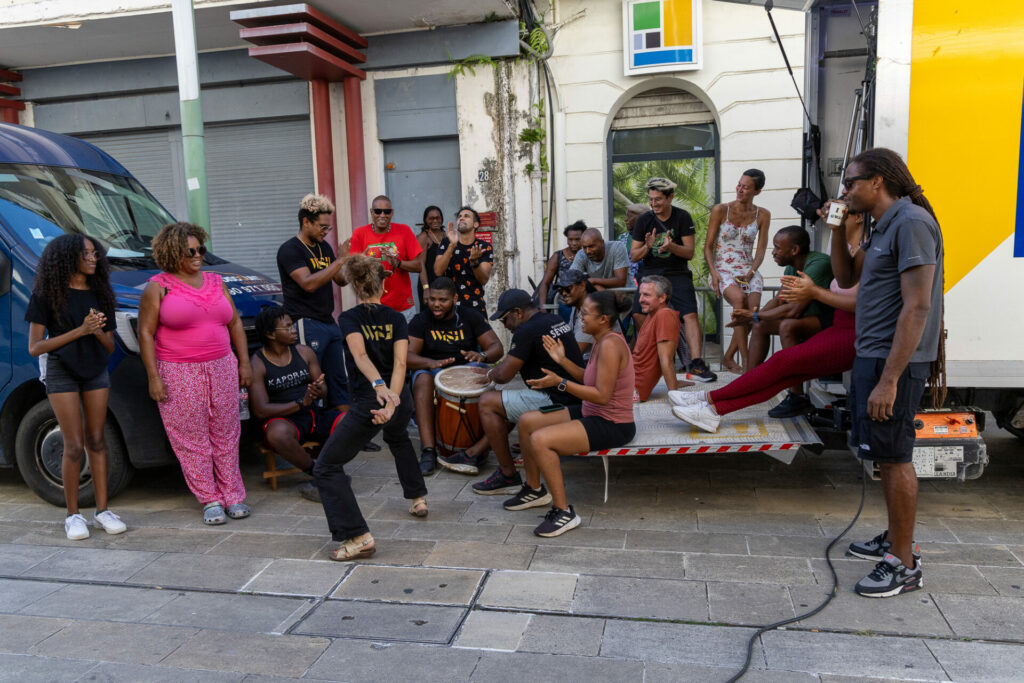
Firmine Richard and Méthi's headline the show
“Gathering”: this word is at the heart of the Wish concept. Wish. « C’est un projet atypique et fédérateur qui a pour objectif de créer du lien entre nous. » Ce « nous » dont parle le réalisateur, Julien Dalle, comprend les artistes musicaux de toutes générations et les Antillo-Guyanais y compris ceux qui vivent dans l’Hexagone. Euzhane Palcy ou Christian Lara entre autres, les pionniers du petit comme du grand écran ont ouvert la voie. « Ce sont des aînés pour lesquels j’ai beaucoup de respect. » Sa passion pour le cinéma débute par le Siméon d’Euzhane Palcy. « Ça a été un choc magnifique pour moi. Je nous ai vus. »
The origins of the birth of the series Wish have their roots in the 2019 release of Julien Dalle’s latest feature film, Secrets de famille. The film meets with great success in both Guadeloupe and Martinique. During screenings, the director sees his musical idols make the trip to see Secrets de famille with the same request: “Ki tan ou ka fè nou joué adan film’aw?” “How am I going to get so many singers I love to play in the same film? That’s when I got the idea of doing a series on the music industry.”
Julien Dalle wants to tell stories, stories from the French West Indies on universal themes. No communitarianism around
Wish
. « La série n’est pas fermée sur elle-même. Elle parle d’histoire de famille comme il y en a dans le monde entier. »
Wish, a unanimously acclaimed project
When Julien Dalle launched his project, he immediately met with approval. “In the spirit of sharing and transmission, some forty young people from Guadeloupe and Martinique were able to share their experiences and learn from each other. In a spirit of sharing and transmission, some forty young people from Guadeloupe and Martinique were able to visit the film sets.
Julien Dalle’s motto is to create links between singers, actors, generations and spectators. Traditional music, zouk and urban music rub shoulders and complement each other in the series. Julien Dalle and his team took the gamble of creating duets between artists who had never collaborated before.
From the very first images, from the very first notes, the series sets the tone. An audience and four artists covering Patrick Saint-Eloi’s West Indies, the director’s favorite song. The scene is intimate. The tone is set. In
Wish
a genuine desire to pay tribute to the artists who made the history of music in the French West Indies. “Right from the start, we showed our ambition.
We also pay tribute to our older artists, to the entire French West Indies discography. For example, we feature Max Severin from Les Vikings. Over sixty songs are revisited in the series.
The director was able to take the pulse of the burgeoning success of Wish. En effet, les deux premiers épisodes ont été projetés en avant-première en Guadeloupe, en Martinique et en Île-de-France.
But Julien Dalle, a director with a contemporary, authentic style, is no first-timer. Nonetheless, the author of three feature-length films was a little nervous about the release of
Wish
. « C’est un produit cinématographique qui est un peu particulier. C’est une série de fiction autour d’une saga familiale mais dans laquelle apparaissent de nombreux artistes et personnages qui jouent leur propre rôle. »
Julien Dalle reveals that it was a complex task to ensure that the presence of so many artists was not perceived as a mere addition to the detriment of the story. The director had to play tightrope walker to avoid falling into the pitfall of musical comedy, but keep the focus of a series about the music industry. “The fictional story is the priority, but the series is peppered with musical parts.”

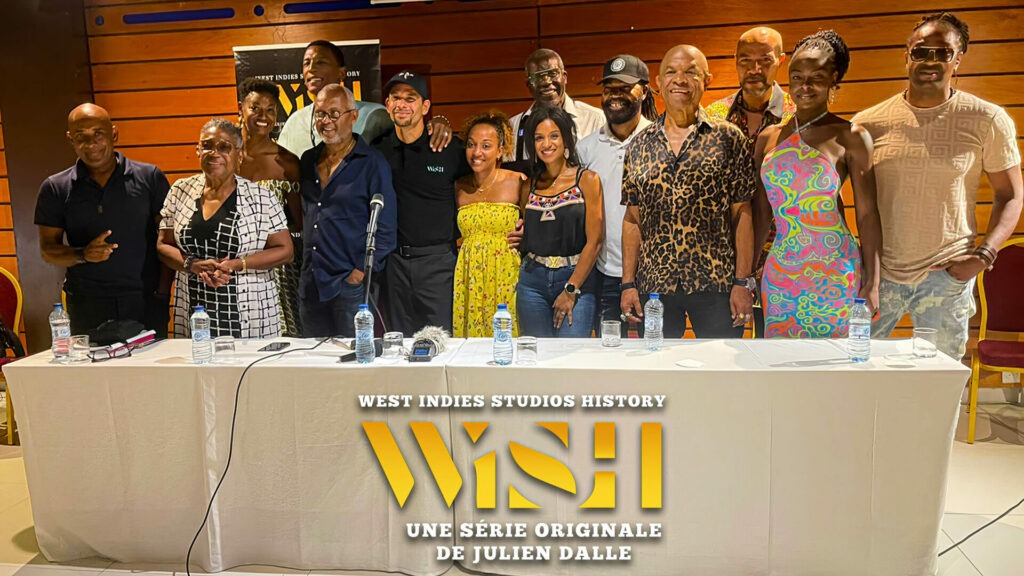
Like tunes from Le Grand Méchant Zouk
The series Wish gained in popularity as soon as it was shot. “The journey we made together, whether it was filming, casting, etc., was as important as the series itself,” adds the director, who has a sense of accomplishment. “Where in Martinique and Guadeloupe, we saw a rise in divisions, we wanted to involve the population so that they could live this adventure with us. In fact, they completely embraced the project.
Like a Proust’s madeleine, the series Wish has a taste of Grand Méchant Zouk. Generations of artists meet, collaborate and unite on stage. As well as taking an interest in the singers’ light, Wish goes behind the scenes and reveals the world of music production. “Between 1985 and 1995, there was a veritable golden era in French West Indies music. Singers could make a living from their music. Then the sector hit a slump, impacting singers and producers alike.
To devote an entire series to the music of the French West Indies, you needed a music lover. Julien Dalle describes himself as a music lover, but not just that. The director is also a composer, a talent he used to write songs especially for
Wish
. Au lycée et même lors de ses études supérieures, il a pu approfondir sa fibre artistique. Pendant dix ans, il a fait partie de différents groupes de musique. « En tant que musicien et chanteur amateur, j’ai connu les coulisses de ce milieu.
Perhaps this allows me to be as authentic as possible in transcribing this world.” Music is omnipresent in his cinematographic works. “I find it exciting to go through the society of the French West Indies with the filter of music because there are many elements that can be explained and highlighted.”