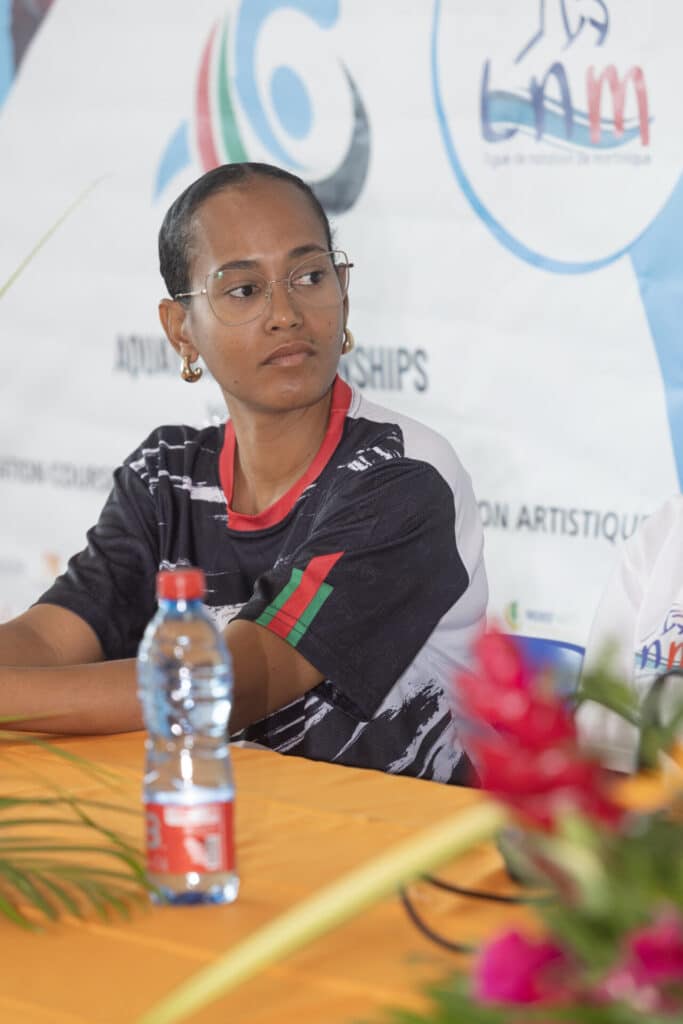
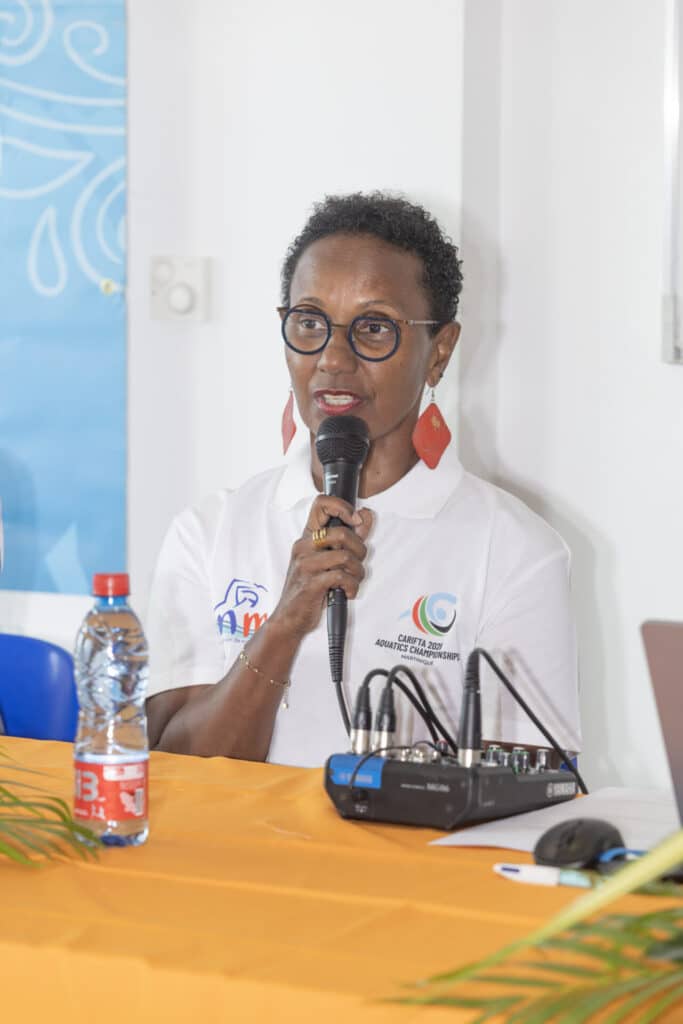
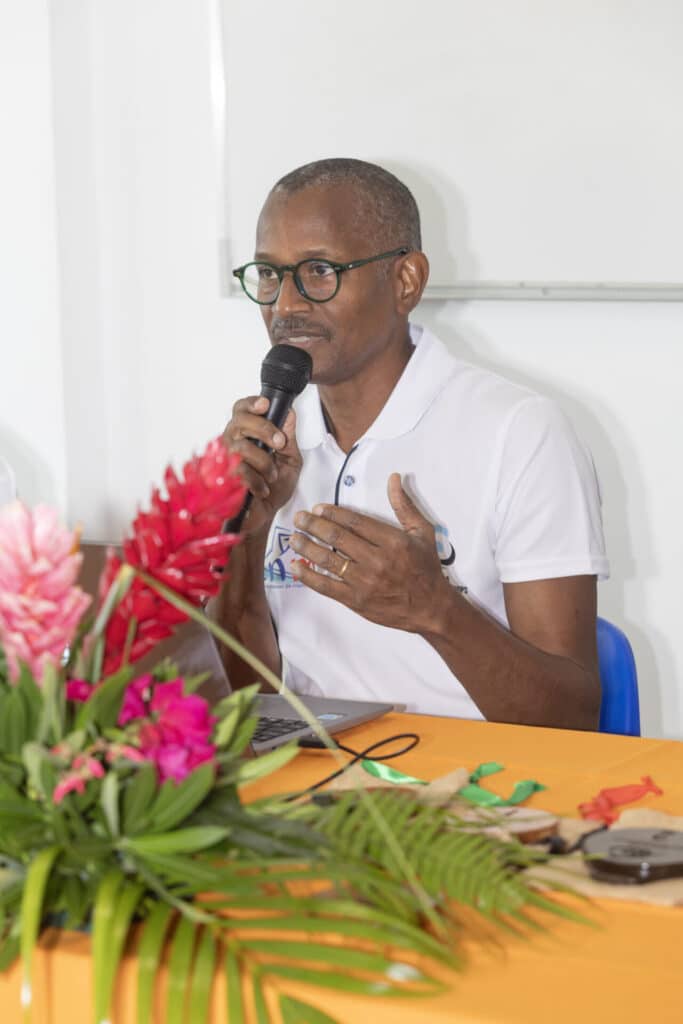
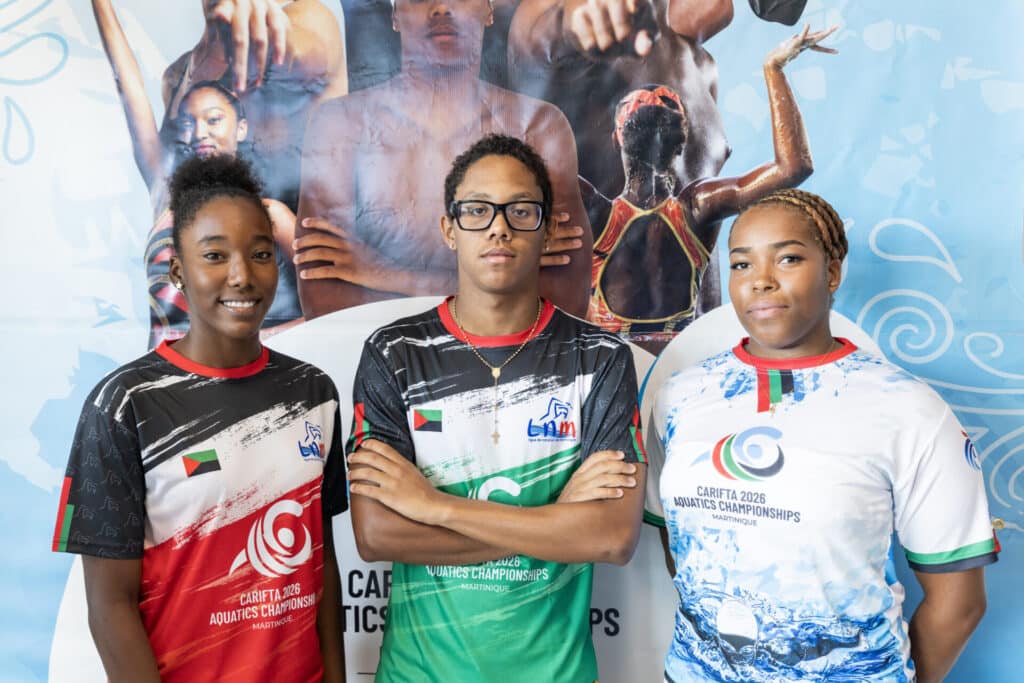
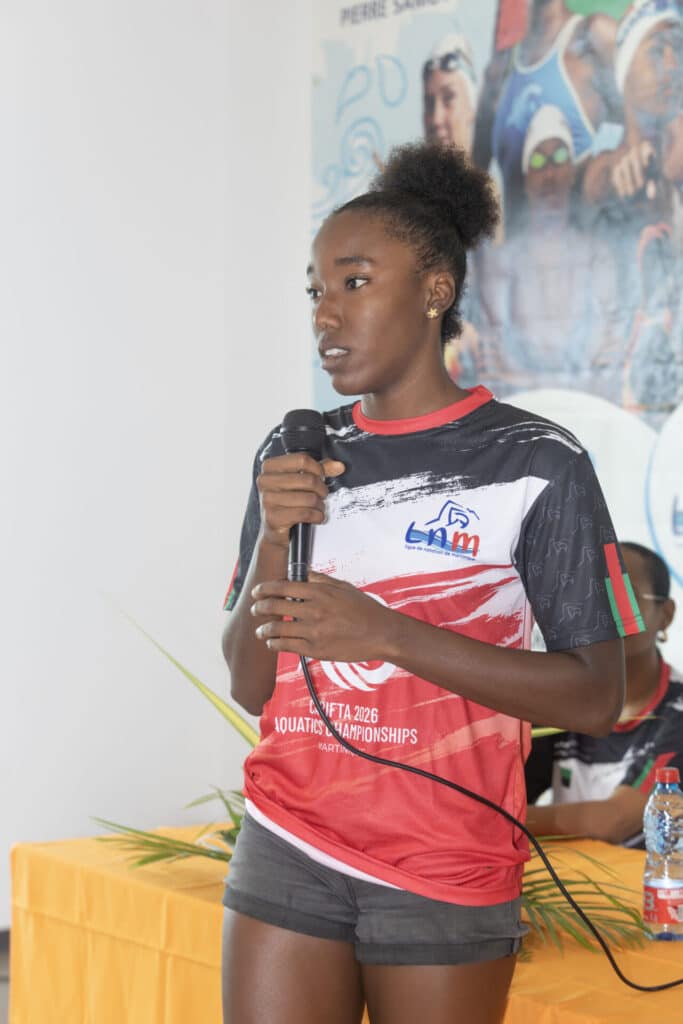
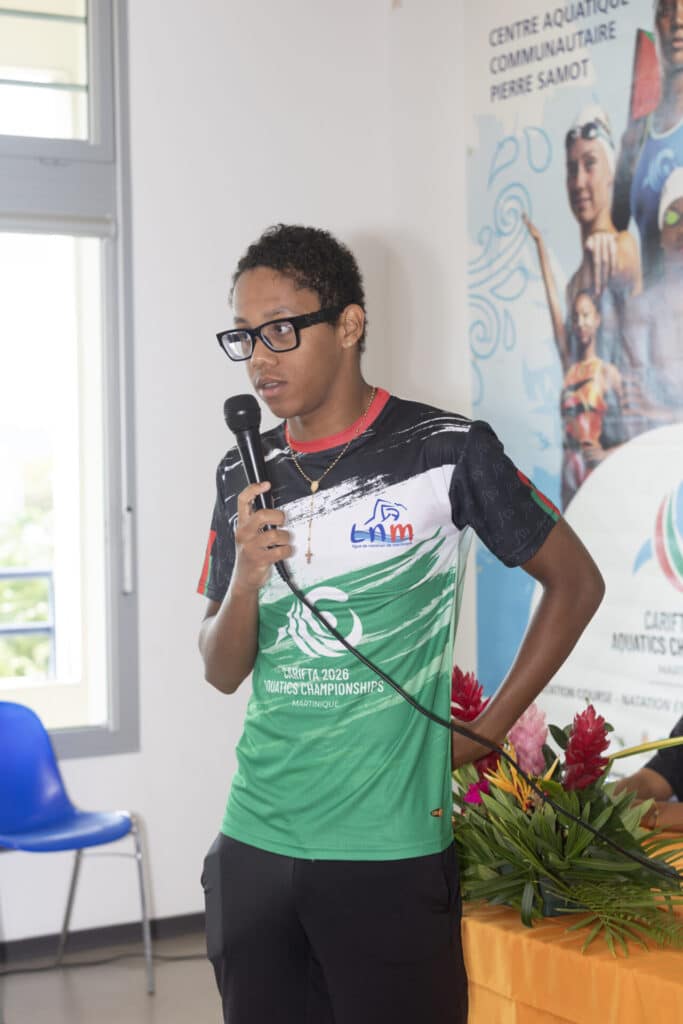
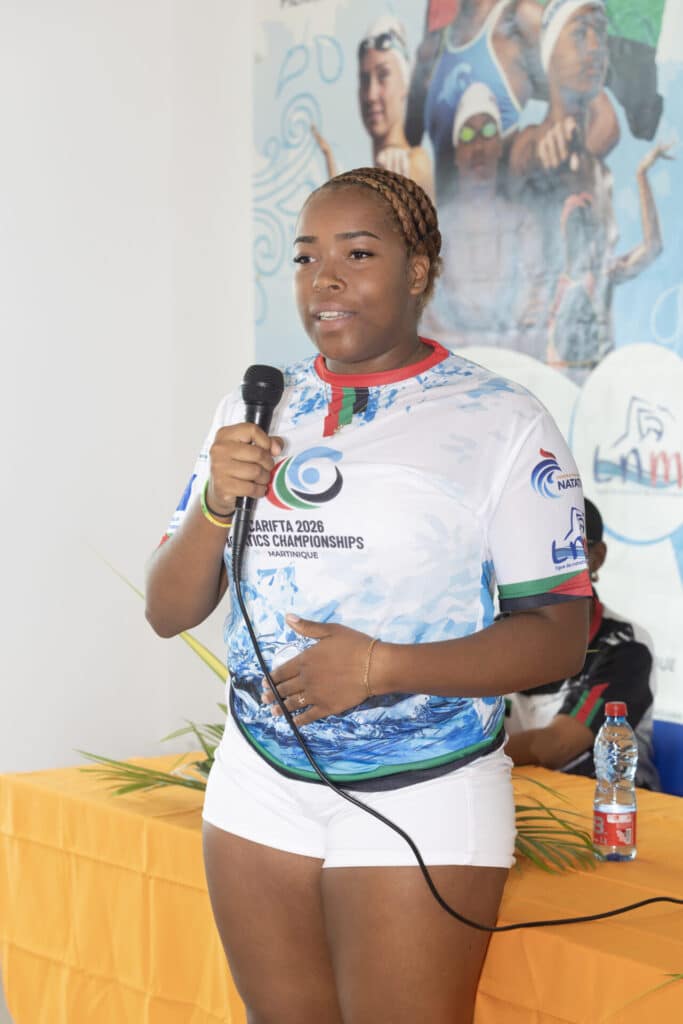
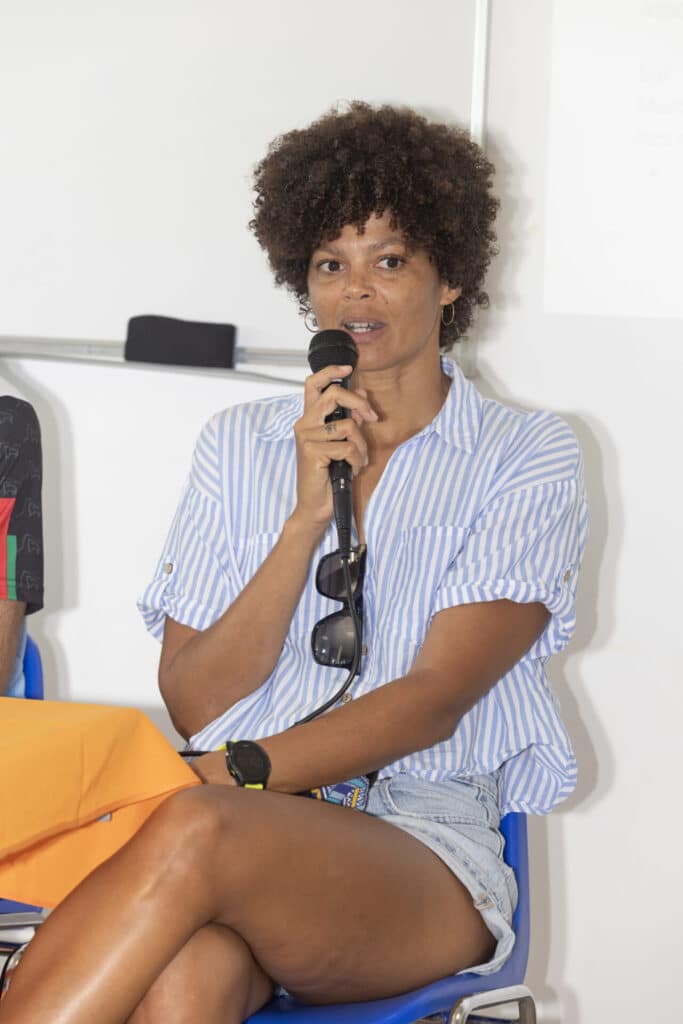
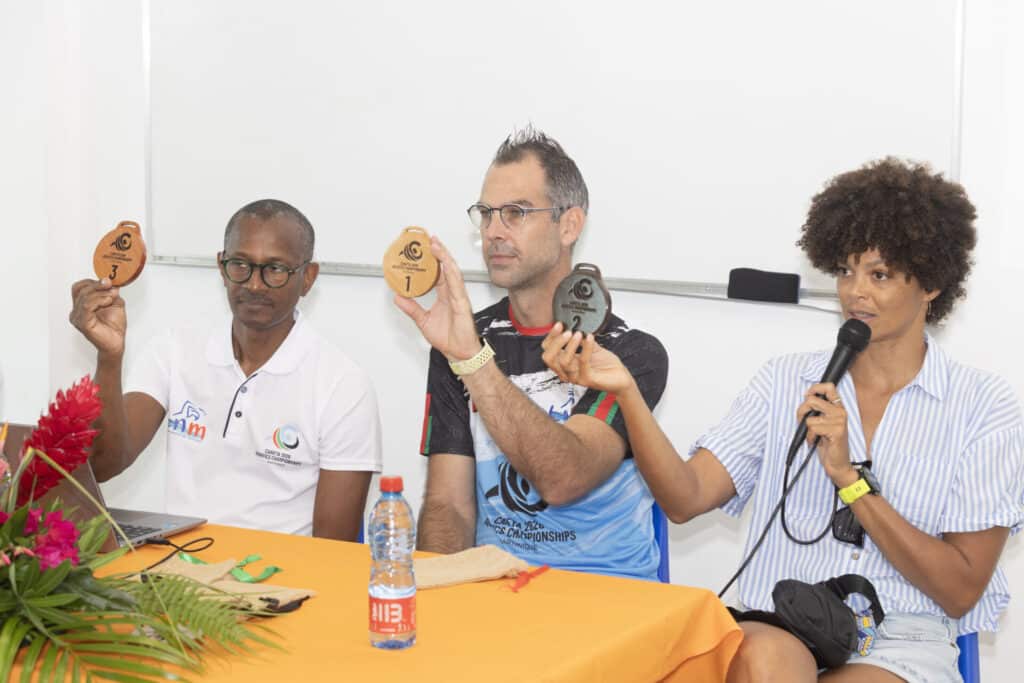
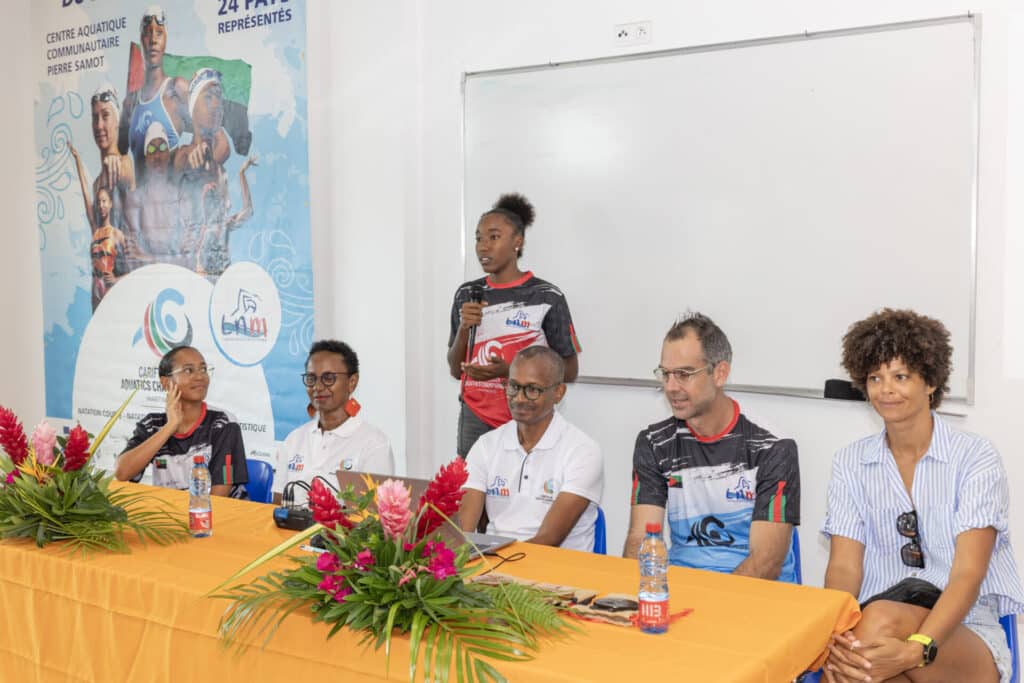
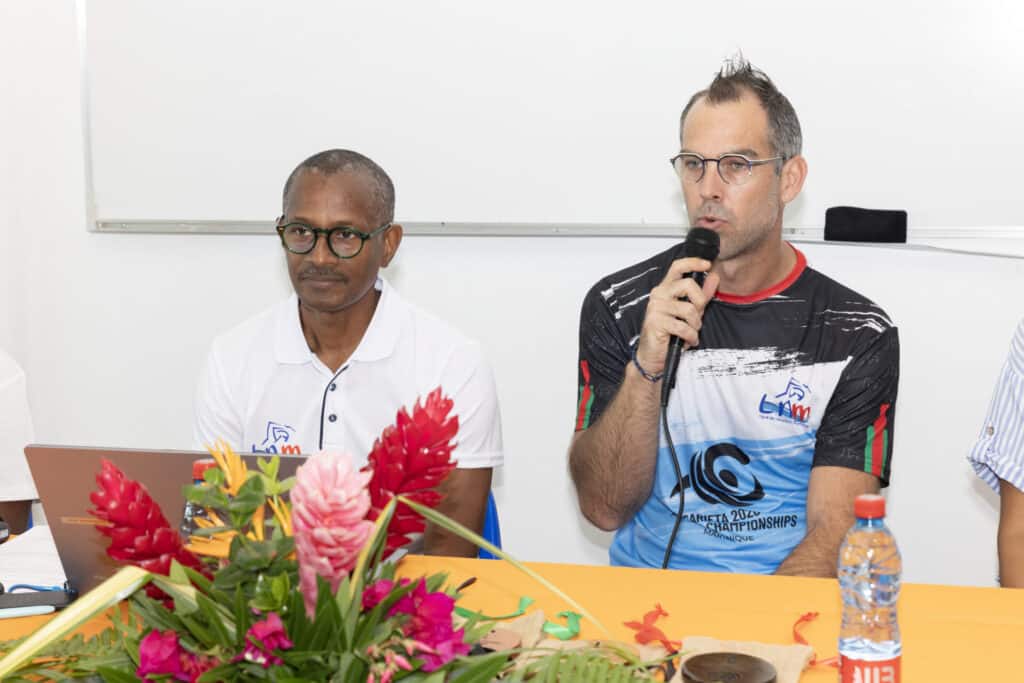
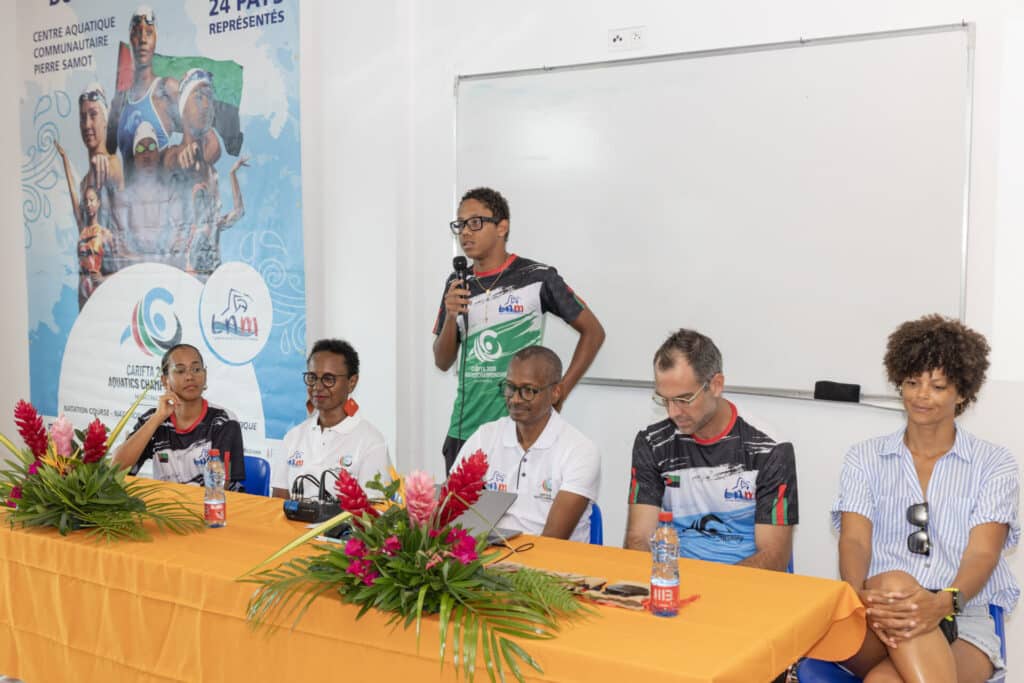
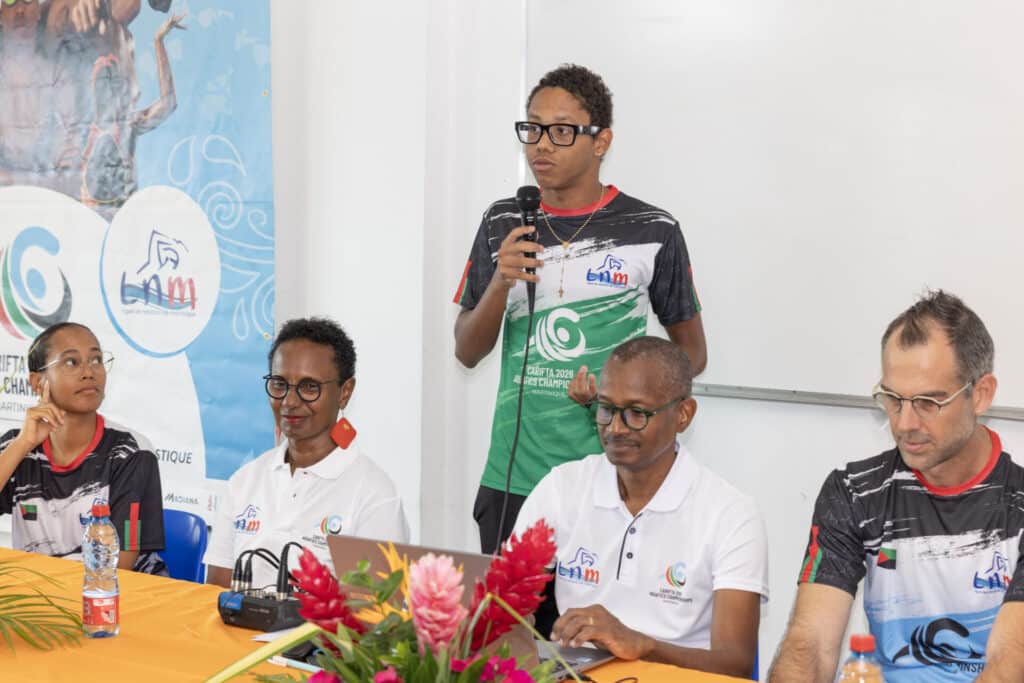
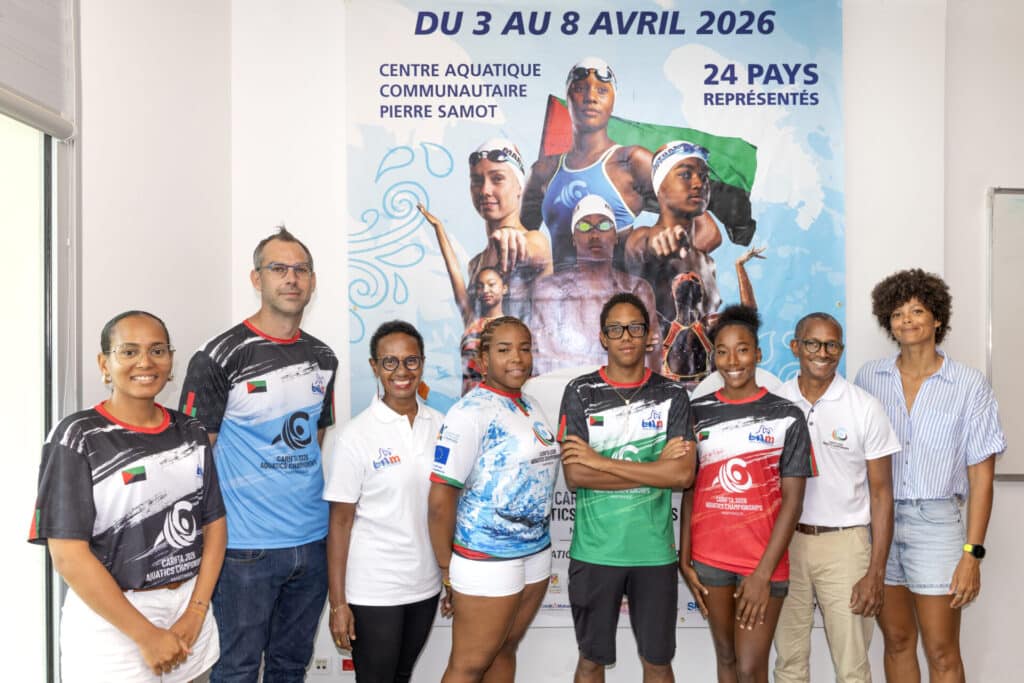
On Saturday March 28, at the Centre Aquatique Pierre Samot in Le Lamentin, the CARIFTA Aquatics Championships 2026 press conference was more than just an information meeting. Over the course of an hour and a half, organizers, athletes and partners presented much more than just the sporting program: from April 3 to 8, Martinique will host the 39th edition of the Caribbean’s leading junior aquatic event, ten years after the first edition was so memorable. Twenty-four nations. Three disciplines. A home territory that knows it.
A bid driven by collective memory
In 2024, at the Caribbean Aquatics Association Congress held in the Bahamas, two bids were put forward to host the 2026 CARIFTA Aquatics Championships: Saint Lucia and Martinique. The vote was clear-cut: some thirty votes for Martinique, ten for Saint Lucia.
Behind this result is a story. The 2016 edition, the first ever to be held on home soil, left its mark on the minds of all those who were there: coaches, delegation leaders, officials. In 2024, when it came time to vote, many still remembered that week.
"It was a beautiful edition, and one that will always be remembered."
The other factor was more concrete: Sainte-Lucie did not yet have its own pool. Martinique, on the other hand, can count on the Centre Aquatique Pierre Samot in Le Lamentin, with its ten-lane Olympic pool, 800-seat grandstand and 25-meter warm-up pool. One of the best facilities in the Caribbean.
The organization also emphasized its capacity to welcome delegations from outside the basin, with several accommodation solutions mobilized in the south of the island, supplemented by other structures if necessary. This logistical aspect, rarely secondary in this type of event, reinforced the credibility of Martinique’s bid.
Three disciplines, 24 nations, a demanding format
The CARIFTA Aquatics Championships 2026 will bring together 24 countries: 21 English-speaking Caribbean nations, plus Martinique, Guadeloupe and Guyana. The swimming races will take place over four days: heats in the morning, finals in the afternoon, from Saturday April 5 to Tuesday April 8. Artistic swimming gets underway on Monday during the lunch break, with solos followed by technical events. The duets and teams round off the program on Wednesday morning. On the same Wednesday, the open water event takes place over five kilometers in the Anses d’Arlets.
Competitors: Benjamins (11-12 years), Minimes (13-14 years), Cadets (15-17 years) do not enter as individuals. They are national selections, with the best swimmers from each territory. To enter the Martinique selection, swimmers must satisfy a time grid established over the previous two seasons, which only selects swimmers capable of reaching the finals.
In the minds of the organizers, selection is based on a simple logic: to score points, you have to enter the final, and to enter the final, you have to be among the top eight times in the morning heats. In other words, the swimmers selected are supposed to have a level that enables them to play a real role in the competition, and not just participate.
The Martinique delegation at the CARIFTA Aquatics Championships 2026 has 61 swimmers: 36 in racing, 12 in open water, five of whom also race, and 18 in artistic swimming. The team is led by five captains: Jean-Naël Zozime and Maxime Auguste-Charlery for boys’ racing (15-17 age group), Cyrielle Manin and Sayanne Guivissa for girls’ racing, and Nohemy Marajo for artistic swimming.
Water as starting point and destination
When asked how he got started, Jean-Naël Zozime, captain of the boys’ selection, answers straightforwardly: “I was introduced to swimming so that I wouldn’t drown. Cyrielle Manin, captain of the girls’ selection, tells much the same story: she almost drowned as a child, and that’s what led her to learn to swim.
These two testimonies, heard just a few minutes apart, say something important about this territory. Two young Martiniquans, initially frightened by the sea, who are now representing their island against twenty-three Caribbean nations. This is more than just a sporting achievement.
"Swimming is a tough sport. You can't expect it to be easy, but with a lot of perseverance, anyone can do it."
— Jean-Naël Zozime
Nohemy Marajo, artistic swimming captain, has been practicing for ten years a discipline that the public still knows little about. She explains it concretely: learning choreographies on dry land, rehearsing them in the water, controlling your breathing under the surface while your legs draw figures above. It’s a sport that’s as technically demanding as it is physically demanding, and has as much to do with ballet as it does with endurance.
"You have to know how to endure, how to save every last breath to finish the choreography."
— Nohemy Marajo
The conference of the CARIFTA Aquatics Championships 2026 also pointed out that artistic swimming is still a confidential discipline in the Caribbean, due to the infrastructure it requires and the level of preparation required. It requires three-dimensional work and very thorough technical preparation, as well as the support of outside professionals, particularly in dance and gymnastic preparation. For the supervisors, the challenge of CARIFTA is twofold: to support those who are already practising and to encourage new vocations.
What the coaching team observes in these youngsters is a constant: they train, take their exams, compete at weekends, and do it all over again. “Generally, swimmers perform well in their studies too, because they’ve worked on this rigor on a daily basis.” What you learn in the pool also applies elsewhere, and the organizers insist on this daily requirement: it’s not enough to qualify, you have to be able to show up on the day, in a sport where regularity and discipline count as much as talent.
Medals from the hands of the island
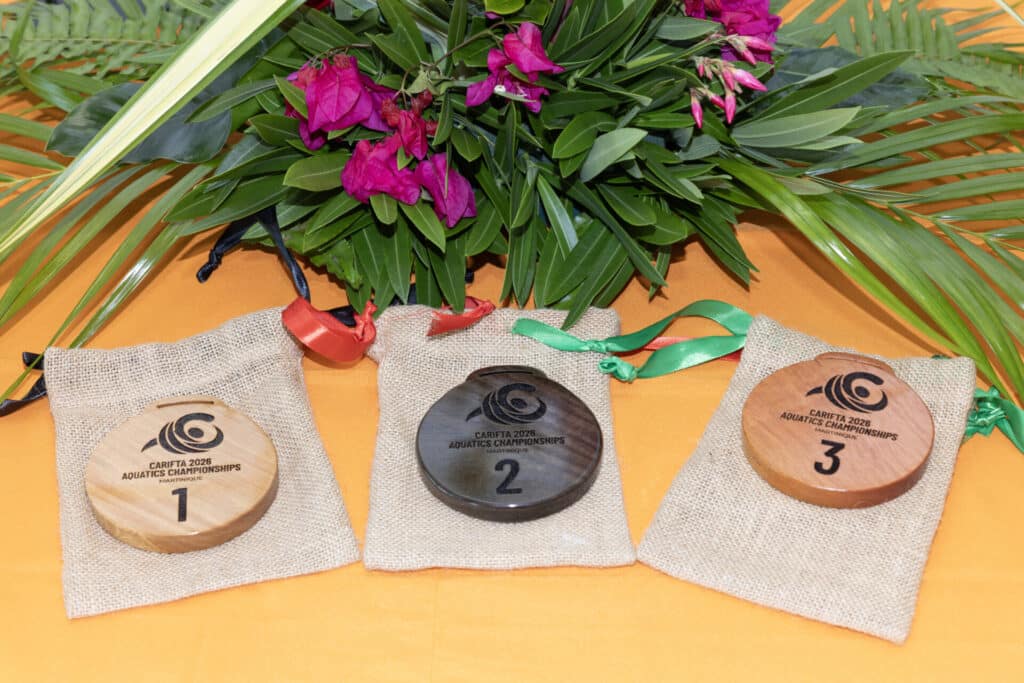
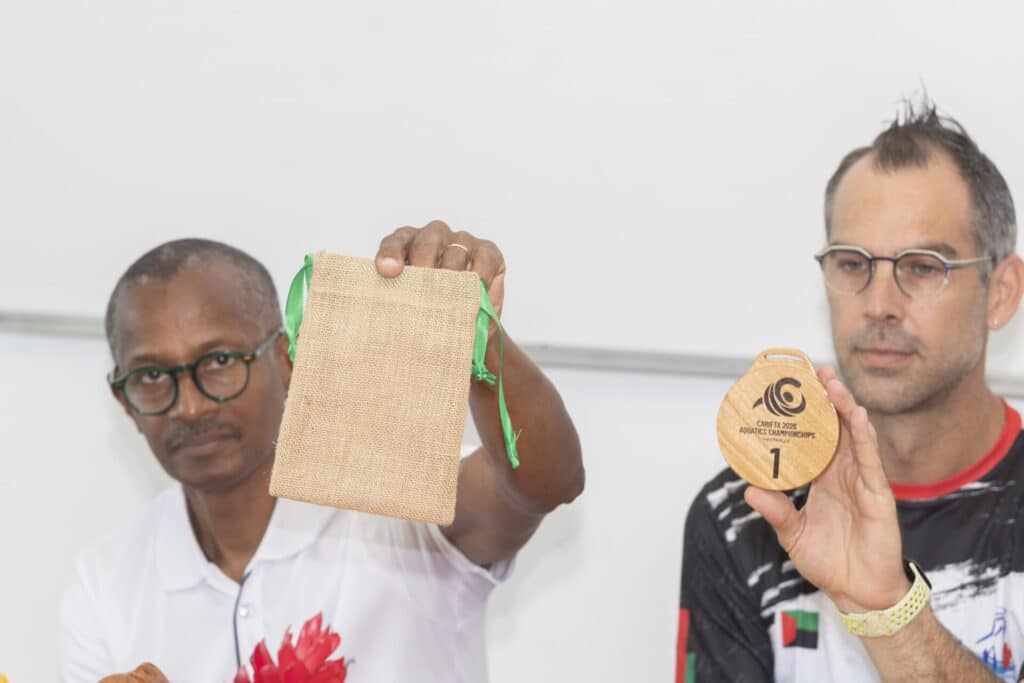
The way an event rewards its champions often says a lot about what it stands for. At the CARIFTA Aquatics Championships 2026, the medals were made in Martinique from noble woods: pearwood for gold, mao bleu for silver, mao ghani for bronze. A craftsman from the Nord-Atlantique region produced them, Joseph Galliard signed the engravings, and a local seamstress made the pouches in the three colors of the Martinican flag.
The initiative was spearheaded by the event’s godmother, Coralie Balmy, a former top-level swimmer who had taken part in the CARIFTA four times in her career. An eco-responsible and identity-affirming initiative, hailed as a first on the Caribbean scale.
Every Caribbean athlete who reaches the podium at the CARIFTA Aquatics Championships 2026 will leave with a piece of Martinique, a unique medal made by local craftsmen, unlike any other.
The conference also specified that trophies would accompany these awards, and that the medals had yet to receive their lanyards before the competition opened. Here too, the aim is clear: to make each award a sporting, local and symbolic object.
A week that mobilizes the whole territory
The CARIFTA Aquatics Championships 2026 won’t just be played out in the pools. Between 1,500 and 1,800 people are arriving in Martinique: swimmers, staff and families spread out over several hotels in the south of the island. Every day, around 150 volunteers ensure the smooth running of the event: former swimmers, parents, locals who sometimes have no direct connection with swimming, but who wanted to get involved.
Among them, the officials play a decisive role: some 26 officials from the Caribbean will reinforce the Martinique officials, bringing the number of people around the pool to around fifty for each morning and afternoon meeting. In addition, there will be first-aid attendants, reception teams, people in charge of awards, delegation escorts and areas open to the public.
Welcoming delegations to the CARIFTA Aquatics Championships 2026 was also thought through in detail. They all had to arrive on April 2, at different times of the day, sometimes very early in the morning, sometimes late at night. In conjunction with the transport company and SAMAC, a precise plan was drawn up at the airport to ensure smooth exits, transfers to buses and settling into accommodation, with particular attention paid to meals depending on the time of arrival.
The opening ceremony of the CARIFTA Aquatics Championships 2026, on Friday April 3 at the Georges Gratiant stadium, is free and open to all: 2,800 seats to fill. The group “Nou Pa Sav” will accompany the parade of delegations. On Saturday, April 4, Les Hommes d’Argile will be on hand as the delegations arrive on site, offering a strong cultural backdrop intended as a symbolic first encounter with Martinican identity. Throughout the week, Martinican cultural groups will be on hand to ensure that visitors leave with a living image of the region, not just competition results.
The CARIFTA Aquatics Championships 2026 ceremony is scheduled to take place from 4 to 6 p.m., and will be broadcast on a giant screen, as well as relayed by media partners and via YouTube for wider distribution in the Caribbean. The ambition is clear: to make Martinique the center of the Caribbean for the duration of the event.
In addition to sport, the organizers of the CARIFTA Aquatics Championships 2026 also have an economic and cultural objective. Bringing in up to 1,800 people means filling accommodation, generating consumption, encouraging car rentals and putting the hotel and restaurant sectors to work. It’s also a way of showcasing Martinique’s culture, notably through the entertainment planned for the opening ceremony and the arrival of the delegations.
The open water event at Anses d’Arlets also serves as a reminder that the sea is a living, fragile environment that deserves protection. The association’s representative at the conference sums up its mission simply: “learn to swim to discover the seas and protect them.”
This educational dimension goes beyond drowning prevention. It also touches on the appropriation of water by the people of Martinique, the discovery of the discipline by the youngest and the broader desire to reinforce the region’s aquatic culture in the long term.
An assertive island
A phrase uttered at the end of the conference sums up the general mood: “We’re ready, and we’ll make the CARIFTA Aquatics Championships 2026 a collective success and a great source of pride for our region.”
What the delegations take away with them on the evening of April 8 is more than just a ranking. It’s an image of Martinique, a territory that knows how to welcome, organize and assert its identity. For six days, the whole Caribbean will be there. It’s up to Martinique to show what it can do.
But the organizers of the CARIFTA Aquatics Championships 2026 also want to leave their mark after the event. The Ligue de Natation de Martinique ended the 2024-2025 season with some 2,540 members, around ten affiliated clubs and, generally speaking, 7 to 8 clubs involved in competition. With this in mind, the CARIFTAs are not intended as a parenthesis, but rather as a possible catalyst to encourage vocations, boost membership and establish swimming as a permanent fixture on the Martinique sports scene.
The organizers of the CARIFTA Aquatics Championships 2026 have also chosen not to reproduce the large village of 2016. In 2026, the activities surrounding the competition are to be more focused, with one day in particular being highlighted, in order to concentrate energy and attendance rather than scattering the highlights.
The CARIFTA Aquatics Championships 2026 is the 39th edition of the Caribbean’s leading junior aquatic event, held in Martinique from April 3 to 8. Twenty-four nations are taking part in racing, artistic and open water swimming, in categories ranging from 11 to 17 years of age.
The swimming race and artistic swimming events take place at the Centre Aquatique Pierre Samot in Le Lamentin. The 5-kilometer open water event takes place in Anses d’Arlets on Wednesday April 8.
Tickets are available on cariftamartinique2026.com and on the Ligue de Natation de Martinique social networks. Prices: €10 in the morning, €20 in the afternoon for adults, 4-day pass at €125. The opening ceremony at the Georges Gratiant stadium is free of charge.
Twenty-four countries are taking part: 21 English-speaking Caribbean nations, plus Martinique, Guadeloupe and Guyana.
The Martinique squad is led by five captains: Jean-Naël Zozime and Maxime Auguste-Charlery for boys’ racing, Cyrielle Manin and Sayanne Guivissa for girls’ racing, and Nohemy Marajo for artistic swimming.
March 23, 1648 occupies a special place in Caribbean history. On that day, the French and Dutch signed the Concordia Treaty an agreement organizing the division of the island of Saint-Martin. More than three centuries later, this particularity remains one of the Caribbean’s most striking historical facts: the same island, two administrations, a land border that has become one of the region’s most singular.
A strategic island at the heart of European rivalries
Before it was divided, Saint-Martin was a coveted island. Its position in the north of the Lesser Antilles made it an important foothold, but it was above all its natural saltworks that attracted Europeans in the 17th century. At the time, salt was an essential resource for preserving foodstuffs, and thus a major economic issue. The Spanish, French and Dutch followed in their footsteps. In 1633, Spain imposed its control over the island to secure its maritime routes in the region. This domination was limited in time, and came to an end on the eve of the partition of 1648.
At this point, both the French and the Dutch were present on the island, but neither could claim total control. The situation imposed a strategic choice: find an agreement rather than engage in confrontation.
March 23, 1648: an agreement to structure the territory
The Concordia Treaty, signed on March 23, 1648, marked a decisive turning point. The French and Dutch decided to divide the island into two distinct administrative zones. The agreement laid the foundations for a lasting organization: each power would administer a part of the territory, while maintaining the possibility of circulation and trade. This choice contrasts with the logic of total conquest prevailing at the time. The division was thus based on a particular balance: a clear political separation, but a territory that continued to be experienced as a common space.
A border born of lasting compromise
From the outset, the Saint-Martin border has been part of a logic of coexistence. It did not result in a total break between the two parts of the island. Over time, the boundary was clarified and framed, particularly in the early 19th century, without calling into question the principle established in 1648. This gradual evolution explains the stability of the division over time. Even today, the border is characterized by a high degree of fluidity in everyday use. It directly reflects the spirit of the Concordia Treaty, based on balance rather than strict separation.
Two systems, one shared island reality
The legacy of the Concordia Treaty is still visible in the island’s current organization. To the north, the French collectivity of Saint-Martin. To the south, Sint Maarten, a constituent country of the Kingdom of the Netherlands. Two political frameworks, two administrative systems, two legal organizations coexist on the same territory. Yet everyday practices go far beyond this division. Travel, economic activities and social relations are organized on an island-wide scale, well beyond the border. This reality makes Saint-Martin a rare case in the Caribbean.
378 years later, a legacy that continues to shape the future
March 23, 2026 marks the 378th anniversary of the Concordia Treaty. This date remains central to understanding how the island is organized today. The partition of 1648 had a lasting influence on the island’s political, economic and social balance. It also shaped a particular way of living in a shared territory. In the Caribbean context, Saint-Martin stands out for this historical construction, the result of a compromise that continues to shape the island’s day-to-day operations.
Understanding Saint-Martin through the Concordia Treaty
The Concordia Treaty was more than just an agreement signed in the 17th century. It was the starting point for a territorial organization that is still in place today. Saint-Martin is neither a division nor a juxtaposition of two territories. The island functions as a shared space, structured by two sovereignties that have coexisted for over three centuries. To understand March 23, 1648 is therefore to understand the origin of this Caribbean singularity, still visible today in every aspect of life on the island.
The island of Saint-Martin has been divided into two territories since March 23, 1648, when the Concordia Treaty was signed between France and the United Provinces. After the departure of the Spanish, both powers were present on the island, but neither was able to take full control. Rather than clash, they decided to share the territory. The result was a French part to the north and a Dutch part to the south, an organization that still exists today.
The border between Saint-Martin (French part) and Sint Maarten (Dutch part) is characterized by its fluidity on a day-to-day basis. It separates two political and administrative systems, but remains easy to cross for everyday purposes. Inhabitants regularly move between the two sides of the island to work, shop or access certain services. This situation directly reflects the legacy of the partition established in 1648.
The Concordia Treaty played a decisive role in the history of Saint-Martin, organizing its official division between the French and the Dutch. Signed in 1648, it laid the foundations for a lasting territorial division, while enabling the two parties to coexist. This agreement structured the island’s political organization over the long term and continues to influence the way it operates today, making Saint-Martin a unique territory in the Caribbean.
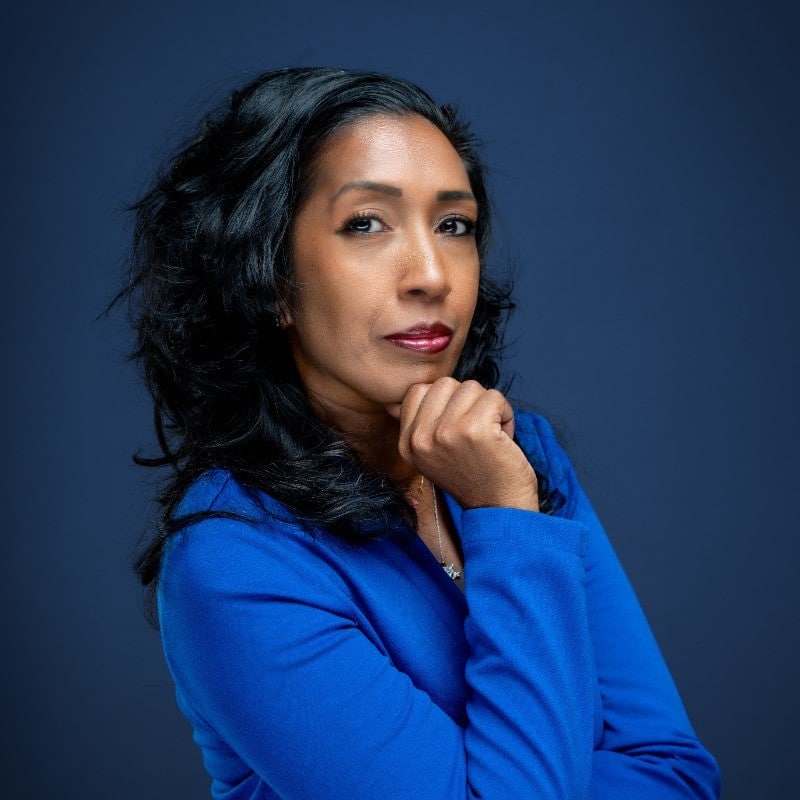
Appointed Deputy CEO in January 2026, Karen Virapin becomes the first woman from the French overseas territories to reach this level of governance within Air Caraïbes. A major development for the airline, but also a strong signal for the Caribbean air transport sector. Beyond the symbolism, this appointment raises a central question: what concrete impact could it have on governance, social dialogue, the regional network and service quality?
An appointment that reflects continuity, but not stasis
Having been with the company for fourteen years, Karen Virapin is no parachute. A former Director of Human Resources, Karen Virapin has been involved in all the company’s structural transformations: organizational changes, workforce growth, adaptation to the economic and social constraints of the airline industry. Her appointment to the position of Managing Director is therefore a logical step in the company’s continuity.
But continuity does not mean standstill. In a sector as exposed as air travel, marked by a fragile balance between costs, social demands, quality of service and local expectations, governance plays a decisive role. And it is precisely at this level that this appointment takes on its full meaning.
First woman from the French overseas territories to reach this level: a signal for Caribbean aviation
Air transport has historically been a very male-dominated sector, particularly in the executive ranks. The arrival of Karen Virapin as Managing Director is therefore a strong marker, both for the representation of women and for that of talent from the French overseas territories.
This signal goes beyond the company’s internal framework. It refers to a broader reality: the ability of companies operating in the Caribbean to recognize locally-built career paths, rooted in a detailed knowledge of the region, and not solely the result of external trajectories. This recognition is not just symbolic; it can influence the way strategic decisions are made, prioritized and implemented.
Social dialogue: a strategic lever, not a slogan
In the airline industry, social dialogue is never a secondary issue. Working conditions, organization of schedules, changes in professions, operational pressures: every decision has a direct impact on the stability of the company and the customer experience.
The fact that the new Managing Director comes from a human resources background is not insignificant. This does not guarantee the absence of tensions or consensual decisions, but it does imply a method. A method based on an understanding of internal balances, the expectations of both flight and ground crews, and the constraints specific to Caribbean services.
In the medium term, the impact will be measured less by rhetoric than by concrete indicators: social climate, ability to anticipate conflicts, continuity of service in sensitive periods.
Caribbean-Guyana regional network: local governance put to the test
Based in Pointe-à-Pitre, Karen Virapin embodies a form of governance rooted in the territories served. This geographic positioning is not neutral. It puts management as close as possible to the realities of the Antilles-Guyane regional network, which is often faced with specific challenges: flight regularity, connections, territorial continuity, and the expectations of residents and tourism professionals alike.
It’s not just a question of maintaining individual lines, but of ensuring their overall coherence. How can we link regional and transatlantic networks? How can we guarantee a clear and reliable offer in a context of increased competition and pressure on costs? Here again, future decisions will enable us to assess the real scope of this so-called “local” governance.
Service quality: maintaining high standards in a context of transformation
One of the major challenges for any airline lies in its ability to transform itself without degrading the quality perceived by passengers. Fleet modernization, internal reorganization, operational adjustments: each change entails a risk for the customer experience.
Against this backdrop, the new Executive Vice President’s career path will be closely scrutinized for consistency between internal transformation and the service promise. Punctuality, regularity, quality of welcome and management of disruptions are all concrete markers for passengers and for the regions that depend on air connectivity.
What territories can expect to see in the coming months
For the French West Indies and Guyana, the stakes go far beyond internal governance. It affects mobility, tourism, economic attractiveness and daily life. The concrete impact of this appointment can be assessed through a number of weak but revealing signals: social stability, legibility of the regional offer, continuity of services, capacity to adapt to unforeseen events. It’s not a question of waiting for spectacular ruptures, but of observing whether the promise of an anchored leadership, attentive to Caribbean realities, is translated into reality.
An appointment observed far beyond the company
Karen Virapin’s appointment to the position of Chief Operating Officer is more than just a new face inAir Caraïbes governance. She also embodies a broader evolution in the relationship between companies, territories and leadership in the French Caribbean. It’s an evolution that’s still fragile, but one that’s full of structural challenges. The next few months will tell whether Karen Virapin’s appointment marks a mere symbolic milestone, or a lasting step forward in the way we think about the governance of Caribbean air transport.
Karen Virapin is a French executive originally from Guadeloupe, appointed Chief Operating Officer of Air Caraïbes in January 2026. She has been with the company for fourteen years, and for over a decade held the position of Director of Human Resources.
Her career has been built up both in France and in the West Indies, with solid experience of organizational management and social dialogue in a demanding air transport sector. Her appointment makes her first woman from the French overseas territories to reach this level of governance within the company.
The Managing Director holds a executive position governance. She works in close coordination with General Management and is directly involved in the company’s strategic, operational and organizational decisions.
- – supervision of internal organization,
- – managing structural transformations,
- – social dialogue with teams,
- – consistency between business strategy, operational constraints and service quality.
Air Caraïbes plays a central role in air connectivity in the French West Indies and French Guiana. The company provides both:
- – essential transatlantic links with France,
- – a structuring regional network for intra-Caribbean mobility.
ALEFPA – Association Laïque pour l’Education, la Formation, la Prévention et l’Autonomie – holds a simple conviction: no one should be reduced to his or her frailty. Behind every story, every silence, every difficulty, there’s a person looking for support, a place to rebuild, a non-judgmental gaze.
Children in care, vulnerable adults, people with disabilities, women victims of violence, isolated seniors: whatever the story, ALEFPA provides what becomes essential when everything falters – a place to rest and professionals who stay by your side.
In the French West Indies – in Martinique, Saint-Martin and Guadeloupe, including Marie-Galante – this mission takes on an even more intimate dimension. Our teams work as close as possible to the realities on the ground, to the rhythm of lives, emergencies, islands and their cultures. They know the social players, the local customs, the shortcomings, the strengths, the invisible solidarity.
The ALEFPA teams are working on this with a strong conviction: support to give back a place, a dignity, a rhythm, a future.
Governance rooted in people
At the head of the association, ALEFPA Chairman Daniel Dubois, Director Olivier Baron and Antilles Manager Michel Cailloux share a common vision: social action is only meaningful if it remains close to the field and the people it serves.
Daniel Dubois embodies this approach.
Trained as a specialized educator, former head of department, director of a facility, general manager and then chairman of this large association, he knows every stage of social work. “When we see the smiles on the faces of the people we help, that’s our salary,” he confides.
This sentence sums up the spirit that guides every ALEFPA decision.
During their last stay in the French West Indies, our managers rediscovered a strong, warm Caribbean identity, where uniqueness is experienced as a source of richness.
Olivier Baron often reminds us that ALEFPA provides support “from 6 months to 101 years”, a way of underlining the diversity of the lives supported by the association.
At the last seminar, he highlighted a Creole expression that was the common thread: “Sé an lanmen ka lave lòt.” One hand washes the other. A simple and powerful way of reminding us that we always move forward better together, in the spirit of “faire ensemble” which guides ALEFPA.
Michel Cailloux based in Guadeloupe, plays an essential role, providing a day-to-day presence, support for teams and a detailed understanding of island realities. It provides feedback not only on what professionals are experiencing, but also on what the regions are saying.
Together, they apply a clear method: listen before acting, adapt each project to the reality of the islands, and build solutions that respect the rhythms, cultures and needs of each community.
In Saint-Martin, creating a space where you can take a breather
In Saint-Martin, ALEFPA supports adults whose lives have often been marked by profound disruptions, years of precariousness or wandering. During his last visit, Daniel Dubois was struck by the state of the premises: despite the remarkable commitment of the teams, the place no longer offered the dignified reception conditions these people should find when they are looking to stabilize.
This led to the decision to transform the facility into a veritable City of Dignity. This project aims to completely rethink the space to offer greater comfort, privacy and respect – three essential elements for allowing someone to catch their breath.
The future Cité will offer a warmer setting, better adapted to day-to-day needs, and structured support to help everyone regain their bearings, reorganize their lives and gradually rebuild their confidence. Here, the aim is not just to provide accommodation, but to create a place where people can finally settle down, breathe and look forward to a more stable tomorrow.
In addition, almost 700 people depend on the ALEFPA grocery store every week. This figure alone underlines the importance of improving reception conditions so that everyone can find a place to rest, catch their breath and rebuild a minimum of stability.
In Martinique, moving towards a new stability
In Martinique, ALEFPA works with men who have come out of long periods of wandering or instability, often after a life on the streets or suffering from psychological fragility.
Many have the same feeling: For some, it had been years since they had slept behind a closing door, found a rhythm again, taken care of themselves.
These modest advances – a hot meal, a bed, a routine – are often the starting point for a profound rebuilding process.
In the near future, a reception center for people leaving prison will open in Fort-de-France, near the courthouse.
This place will offer a secure transition: listening, guidance, reference points, orientation and support in essential steps.
The Kou Rosalie-Soleil (Cour Rosalie-Soleil), located in another part of Fort-de-France, takes in women who are victims of domestic violence.
Support is provided at each person’s own pace, without rushing, by first recreating a protective environment. The teams offer listening, psychological support, material security and work towards autonomy.
Every story is unique, and every step of the way is valued.
In Guadeloupe, including Marie-Galante, integration through local talent
In Guadeloupe and Marie-Galante, ALEFPA makes the most of the region’s resources to help people become more independent.
Here, integration is based on local know-how, ancestral gestures, the land, water and the processing of local products.
In ESATs and integration structures, workshops become places of pride, where everyone finds a purpose, a rhythm, a place.
Here, Creole gardens are cultivated without pesticides, local fruit is processed, traditional flours are produced and local fruit is dried.
Aquaponics, sometimes even installed in schools, enables children to feed the fish and harvest the lettuce: concrete, sustainable learning that reconnects them with the living world and the land.
These activities are not just professional: they restore confidence. They enable us to play a part in something, to feel that we are contributing and making progress. For many of the people we support, regaining a role, however modest, is a huge step towards stability.
Another major challenge facing these establishments is the ageing of the people who work in ESATs (Établissements et Services d’Aide par le Travail). For those who have worked all their lives in these structures, how can they maintain their bearings as they age?
ALEFPA is thinking about small living units, created close to the places where these people have always lived. These familiar, human-scale spaces enable people to grow old without being uprooted. Keeping one’s bearings, one’s ties, one’s environment – means preserving one’s dignity.
Convincing rather than coercing: a founding principle
As Daniel Dubois often says, you can’t help someone by forcing them, but by helping them to rediscover the desire and ability to move forward. At ALEFPA, support is based on a simple yet demanding approach: listening, dialogue, and valuing each small step forward.
Many of the people we welcome arrive battered, distrustful, sometimes tired of no longer believing in themselves. The role of the teams is not to force them, but to show them, step by step, that they still have resources, capacities and possibilities.
“Our job is to help everyone become aware of what they can do,” he often explains. This approach changes everything: it restores confidence, it restores dignity, it breaks down the simplistic view that society sometimes takes of people in vulnerable situations.
At ALEFPA, no individual is a file. Everyone is a story, an identity, a culture, a potential.
Culture and sport as levers of pride and belonging
Culture plays an essential role in ALEFPA: it creates links, awakens memories, brings people together and restores pride. Each year, the association organizes a national cultural project involving all its establishments.
This year, the common theme is “Cuisine, Health & Territories”, a subject that takes on particular resonance in the Caribbean.
In Martinique, Guadeloupe, Marie-Galante and Saint-Martin, the teams gather family recipes, dishes handed down from generation to generation, childhood memories and stories around a fruit, a market or a gesture.
These contributions will be brought together in a collective book, highlighting not only the culinary and cultural diversity of these regions, but also the voices and backgrounds of those involved.
But there’s more to it than that: cooking together, telling stories, sharing, is a way of rebuilding self-esteem, forging links and enhancing the value of what makes us who we are.
Other cultural and sporting initiatives punctuate the year, such as the Aléfpiades solidaires and bicycle raids. These events bring together participants from all the regions where ALEFPA is present, sometimes for their first trip outside their own territory. These are moments when we push ourselves, encourage each other and discover that we can go further than we thought.
Here again, the objective is the same: to open up horizons, to enable the people we support to project themselves, to dare, to become part of a collective dynamic. Here, sport becomes a bridge between territories, an engine of confidence, a way of saying: “We all have a story that deserves recognition.”
Local roots, broad horizons
Olivier Baron likes to quote Édouard Glissant: “Act in your place and think with the world.”
This phrase sums up the spirit of ALEFPA. Established in the Caribbean for over forty years, the association works at the heart of the region, drawing inspiration from practices elsewhere. Each project feeds the others. Each local experience enriches the national vision.
In the course of our guided tours, one simple, essential phrase recurs:
I have my place.
A place in a workshop... at the table... in the community.
This is what ALEFPA is all about: reminding everyone that it's not too much and that it counts.
FAQ
ALEFPA (Association Laïque pour l’Education, la Formation, la Prévention et l’Autonomie) supports people in vulnerable situations at every stage of their lives. Its mission is to provide a framework, professionals and concrete solutions to restore dignity, regain stability and move towards greater autonomy.
In the French West Indies, ALEFPA works as closely as possible to local realities, welcoming and accompanying vulnerable adults, supporting women who have been victims of violence, integrating people via ESATs and workshops rooted in local know-how, and responding to social emergencies such as the solidarity grocery store. The aim remains the same: to give people back their place and bearings, without judgment.
The article highlights several priorities: in Saint-Martin, the transformation of a facility into a “Cité de la dignité” to improve reception; in Martinique, the forthcoming opening of a reception center for people leaving detention in Fort-de-France and the work of Kou Rosalie-Soleil for women victims of violence; in Guadeloupe and Marie-Galante, integration through local talent, as well as reflection on the aging of people in ESAT.
In Martinique, Guadeloupe and Saint-Martin, solidarity remains a quiet force. It is embodied in everyday gestures, in the attention paid to others, and in the shared conviction that no vulnerability is inevitable. It is in this spirit that ALEFPA (Association Laïque pour l’Education, la Formation, la Prévention et l’Autonomie – Lay Association for Education, Training, Prevention and Autonomy) has been pursuing a simple and humane mission for over sixty years: to accompany each person, at every stage of their life, towards greater autonomy and dignity.
An historic presence and solid Caribbean roots
Present throughout France, ALEFPA helps 20,000 people every year, thanks to 250 establishments and over 4,000 employees.
In the Caribbean, ALEFPA is firmly established in the Caribbean:
- – In Guadeloupe as early as 1981, with the Institut Médico-Éducatif Denis Forestier ;
- – In Martinique since 2012, with the Rosannie Soleil Housing and Social Reintegration Center ;
- – Saint-Martin, since 2020, with the CHRS Le Manteau.
A total of 37 ALEFPA welcome and support 2,763 beneficiaries, supported by 311 full-time equivalents. This network of local players embodies a solidarity rooted in the realities on the ground.
Two days of action to strengthen social ties
October 28 and 29, 2025, ALEFPA organized two major days in Martinique, marked by the visit of Chairman Daniel Dubois and Managing Director Olivier Baron.
On October 28, the representatives visited the Legal Representative Service for the Protection of Adults (SMJPM) in Fort-de-France. The meeting provided an opportunity to showcase the work of local teams who support vulnerable adults in their legal, social and human affairs.
The following day, ALEFPA and the Martinique Real Estate Company (SIMAR) have signed an APL Foyer agreement in Schœlcher to develop new social and inclusive housing solutions. This partnership is aimed at the elderly, the disabled and the most disadvantaged, and is part of the national program IDRA supported by the” National Solidarity Fund for Autonomy (CNSA) and the National Old Age Insurance Fund (CNAV).
“These two days symbolize our determination to anchor the work of ALEFPA into the realities of Martinique, alongside the region’s institutions and social players”, declared Daniel Dubois.
“Working with our partners to ensure that every vulnerable person has access to decent housing and appropriate support,” added Olivier Baron.
Lakou Rosannie Soleil, symbol of a shared habitat
In Fort-de-France, the Lakou Rosannie Soleil illustrates this Caribbean philosophy of concrete solidarity.
Owned by SIMAR and managed by ALEFPA, the site, owned by SIMAR and managed by ALEFPA, is home to 57 housing units, including an accommodation and social reintegration center, a halfway house and a hostel.
The word lakou – the shared courtyard of Creole houses – takes on its full meaning here: a collective space where mutual help structures daily life.
Two new ALEFPA independent living residences, also known as autonomous residences, are set to open in Martinique between 2026 and 2027, further extending the inclusive dynamic already underway on La Réunion.
A demanding social context and local responses
In Martinique, almost a third of the population lives below the poverty line, and difficulties in accessing housing particularly affect low-income pensioners, people with disabilities and families in very precarious situations.
Faced with this situation ALEFPA works closely with local authorities, the Regional Health Agency (ARS), the Family Allowance Fund (CAF), the Regional Directorate for Economy, Employment, Labor, and Solidarity (DREETS) and social landlords.
Its governance includes directors from the French overseas territories, ensuring that its actions are in tune with local needs.
Inclusion and creativity in Guadeloupe and Saint-Martin
In Guadeloupe, solidarity is literally cultivated: the Work Assistance Facility and Service (ESAT) La Ravine Bleue de Pointe-Noire has launched an aquaponics food garden in partnership with the Butterfly Effect.
Disabled workers learn to produce differently, in a way that respects nature and the circular economy.
In Saint-Martin, the work of ALEFPA extends to prevention and awareness-raising. Artist Esy Kennenga spoke to young people about violence against women, illustrating the link between culture, education and inclusion.
Marie-Galante: guaranteeing medical and social continuity
Another highlight of 2025: the takeover of the Association of Parents and Friends of Children with Special Needs (APAEI) of Marie-Galante by ALEFPA confirmed by the Pointe-à-Pitre court on August 22, 2025.
This decision made it possible to maintain 73 jobs and ensure the continuity of medico-social support, with the support of the ARS and local authorities.
A responsible and humane approach, true to the vocation of ALEFPA‘s vocation: to never break the link with the most vulnerable.
Sustainable, committed solidarity
Committed to Corporate Social Responsibility (CSR) approach, ALEFPA combines social inclusion, respect for the environment and innovation.
From Guadeloupe to Martinique, its initiatives weave a network of sustainable solidarity where the social, health and educational sectors combine to recreate links.
Through these actions, ALEFPA confirms that in the Caribbean, solidarity is not just a word, but a way of life.
In the lakouresidences, gardens and shelters, the association continues a tradition of proximity and humanity.
A discreet but profound commitment that reminds us that the Caribbean is built above all on human warmth, respect and renewed trust.
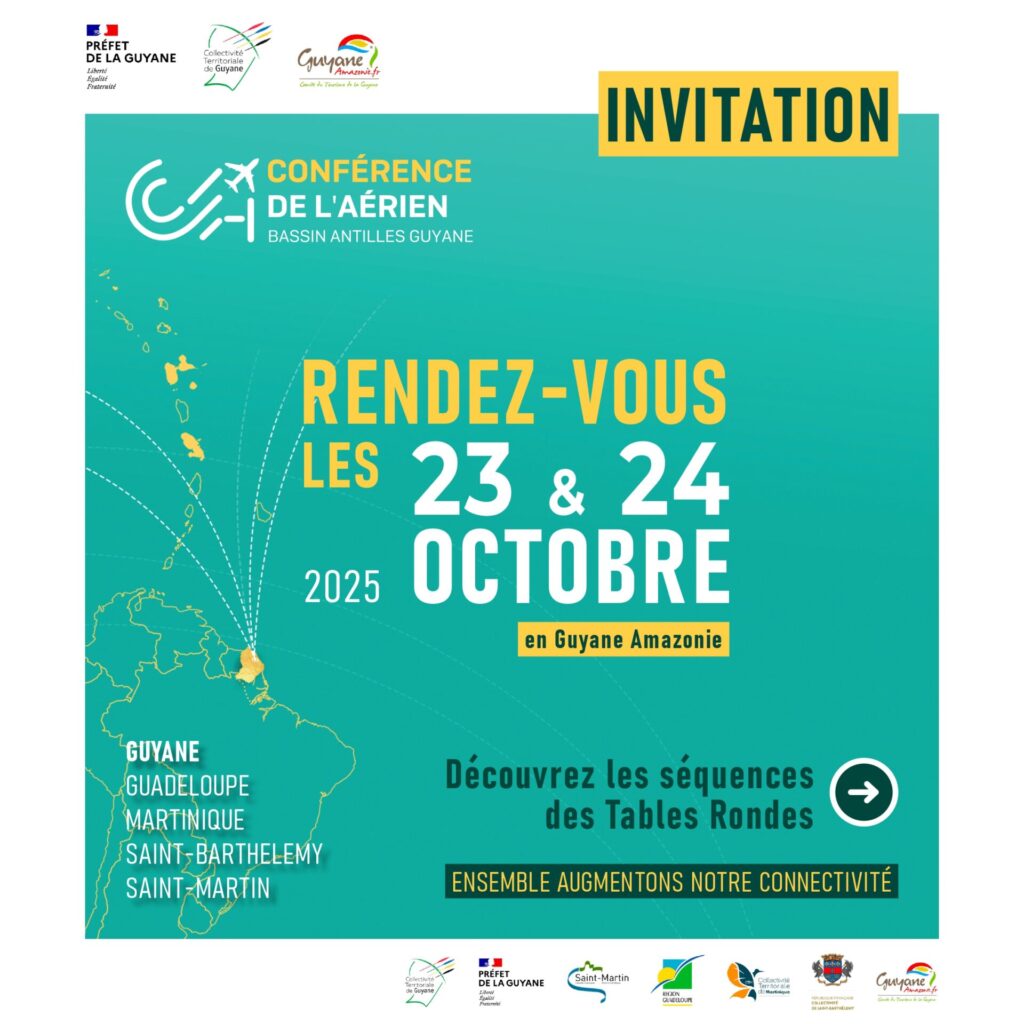
The Airline Conference 2025 will take place in Cayenne, French Guiana, on October 23 and 24. This event confirms the commitment made during the first edition in 2024 in Martinique: to give French Guiana the responsibility of hosting the sequel.
This second edition takes place against a backdrop marked by the need to strengthen regional connectivity, accelerate the ecological transition and prepare for the future of space. The Airline Conference 2025 promises to be a strategic event for the entire Antilles-Guyane region.
Six preparatory workshops to lay the foundations for the conference
In September, six preparatory workshops brought together airports, airlines, aviation authorities, local authorities, space experts and economic players. These working sessions enabled us to draw up a diagnosis and outline the main lines that will structure the Airline Conference 2025.
1. Multiscale connectivity and emerging companies
The arrival of new operators such as Caribbean Airlines, the growth of St-Barth Executive and the opening of specific routes (to Cap-Haïtien, by Sunrise) were among the highlights of the discussions. However, participants emphasized the weight of the European regulatory framework, which is stricter than that of other Caribbean countries, and recalled that airlines are now demanding risk-sharing with the territories.
2. Airport governance and performance
A comparative overview highlighted the diversity of management models: concessions in Martinique, Guadeloupe and French Guiana, local authority management in Saint-Barthélemy and Saint-Martin, and a state-owned company model in Barbados with a PPP project. Discussions converged on the need to create a regional body that would be more technical than political, in order to strengthen cooperation between platforms.
3. Aerospace skills and synergies
Preparations for the Antilles-Guyane Air Transport Conference also highlighted the urgent need to structure a common frame of reference for aerospace professions. Maintenance, remote piloting of drones, space engineering: the needs are numerous and strategic. The creation of a Caribbean aerospace cluster was chosen as a priority tool for federating rectorats, universities, CNES and ENAC.
4. Ecological transition and sustainable air travel
The prospect of COP30 in Brazil set the tone for the discussions, with the reduction of carbon footprints taking center stage. Air France-KLM detailed its strategy (fleet modernization, 10% sustainable fuels by 2030), while SARA presented its plans for local biofuel production. The region’s airports emphasized their climate resilience and renewable energy initiatives.
The creation of an SAF group purchasing platform and joint lobbying of the European Union to adapt the ETS system have been identified as priorities.
5. Freight, logistics and regional integration
The findings are clear: freight is structurally lagging behind, particularly in Cayenne. The EFTI4All project was highlighted as a lever for digitizing and simplifying customs procedures. Participants stressed the importance of supporting SMEs to avoid a digital divide, and of exploiting the potential of free trade zones to boost exports.
6. Financing and innovation
The workshop highlighted the difficulties of financing strategic projects such as Flying Whales in French Guiana, and proposed the creation of a regional investment fund. Financial institutions (AFD, BPI, SEM patrimoniale, Caribbean banks) were identified as essential partners. All players agreed on the priority of formalizing the air and space cluster at the Airline Conference 2025.
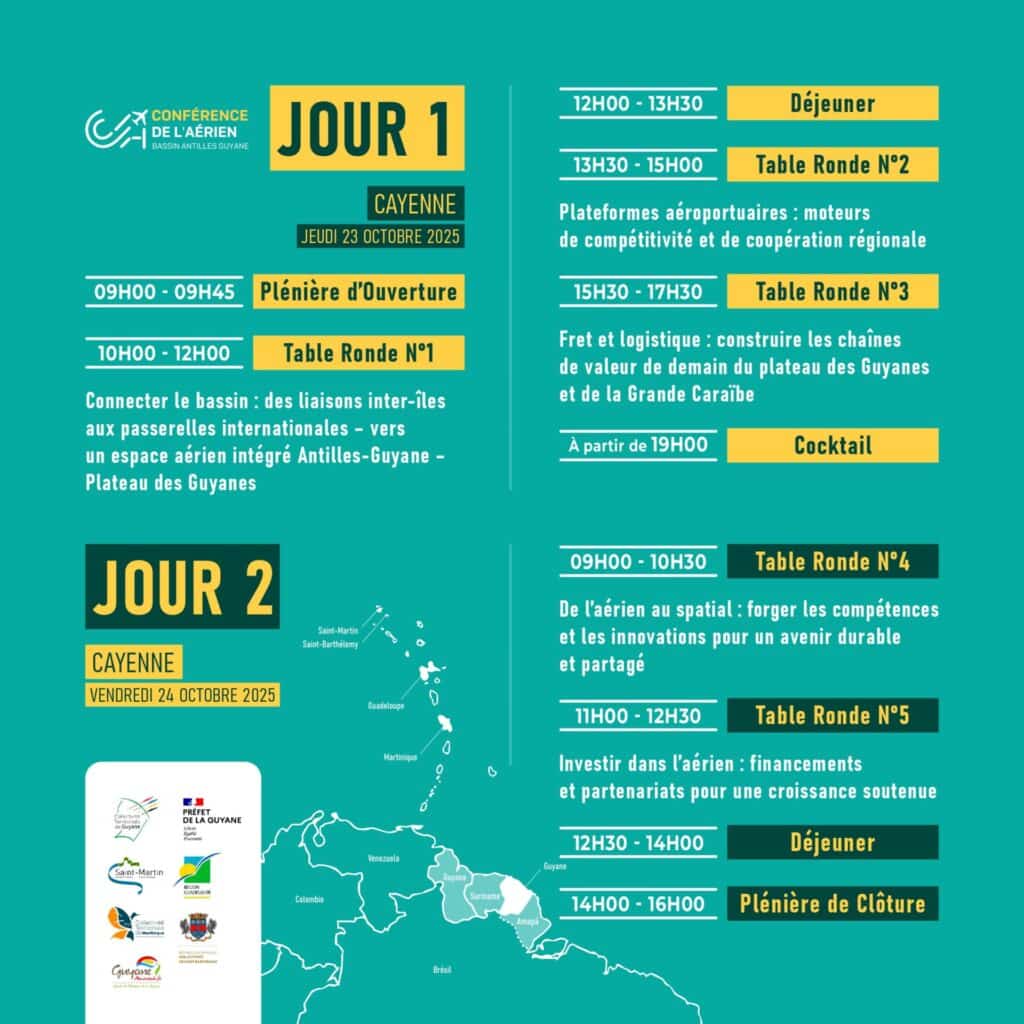
The official program for October 23 and 24, 2025
The round tables and plenary sessions announced will provide a concrete framework for the priorities emerging from the preparatory workshops. The two-day format will enable the Airline 2025 Conference to move from strategic reflection to operational commitments.
Day 1 – Thursday, October 23, 2025, Cayenne
- 🕐 12:30 pm – 2:00 pm : Inaugural lunch.
- 🕐 2:00 pm – 4:00 pm : Opening plenary – Connecting the basin: from inter-island links to international gateways – towards an integrated Antilles-Guyane airspace – Plateau des Guyanes.
- 🕐 16h00 – 18h00 : Round Table 1 – From air to space: forging skills and innovations for a sustainable, shared future.
- 🕐 7:00 pm: Welcome cocktail.
Day 2 – Friday, October 24, 2025
- 🕐 09h00 – 09h45 : Opening plenary.
- 🕐 10h00 – 12h00 : Round Table 2 – Airport hubs: drivers of competitiveness and regional cooperation..
- 🕐 12h00 – 13h30 : Lunch.
- 🕐 1:30 pm – 3:00 pm : Round Table 3 – Freight and logistics: building tomorrow’s value chains in the Guiana Shield and Greater Caribbean..
- 🕐 3:30 pm – 5:30 pm : Round Table 4 – Investing in air travel: financing and partnerships for sustained growth.
- 🕐 17:30 – 18:00: Closing plenary.
Strategic challenges for the region
The Airline Conference 2025 aims to provide clear answers to several major challenges. The Airline Conference 2025 aims to ensure the continuity of inter-island links, strengthen training, accelerate the ecological transition and modernize freight. It will also lay the foundations for a regional fund, by formalizing public-private partnerships.
An assertive political dimension
The Airline Conference 2025 goes beyond the technical framework: it symbolizes a strong political will. After Martinique in 2024, French Guiana is keeping its promise to organize this second edition, and asserting its strategic position in Caribbean cooperation.
On October 23 and 24, Cayenne will become the focal point for the region’s aviation and space ambitions. The Airline 2025 Conference will mark a new stage in regional cooperation.
Saint-Martin is gearing up for a new phase in its air connectivity. Several regional and American airlines have announced the opening of new routes or the increase of existing frequencies. These announcements strengthen the island’s accessibility and consolidate its role as a Caribbean hub. In this context, direct flights to Saint Martin are becoming a major lever for supporting tourism and the local economy.
Contour Airlines: stronger ties with Puerto Rico
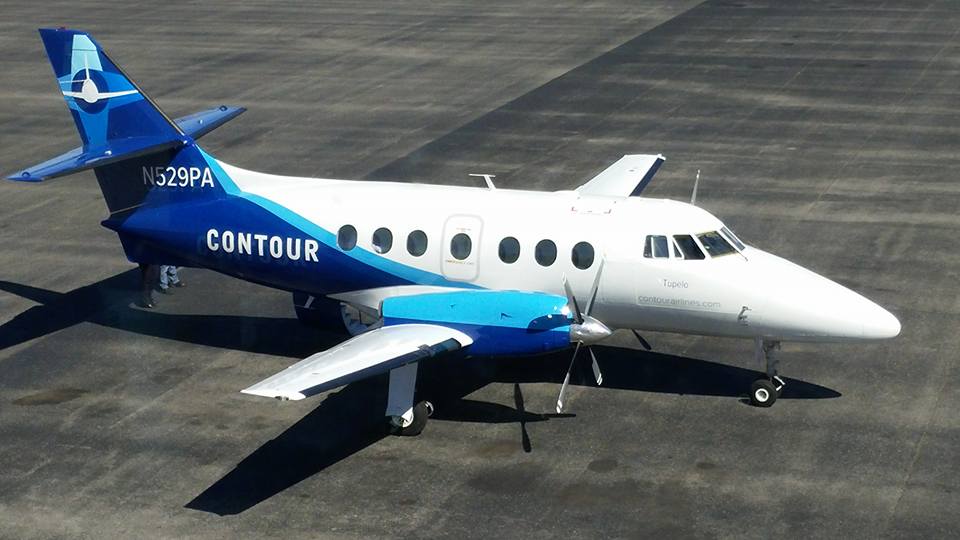
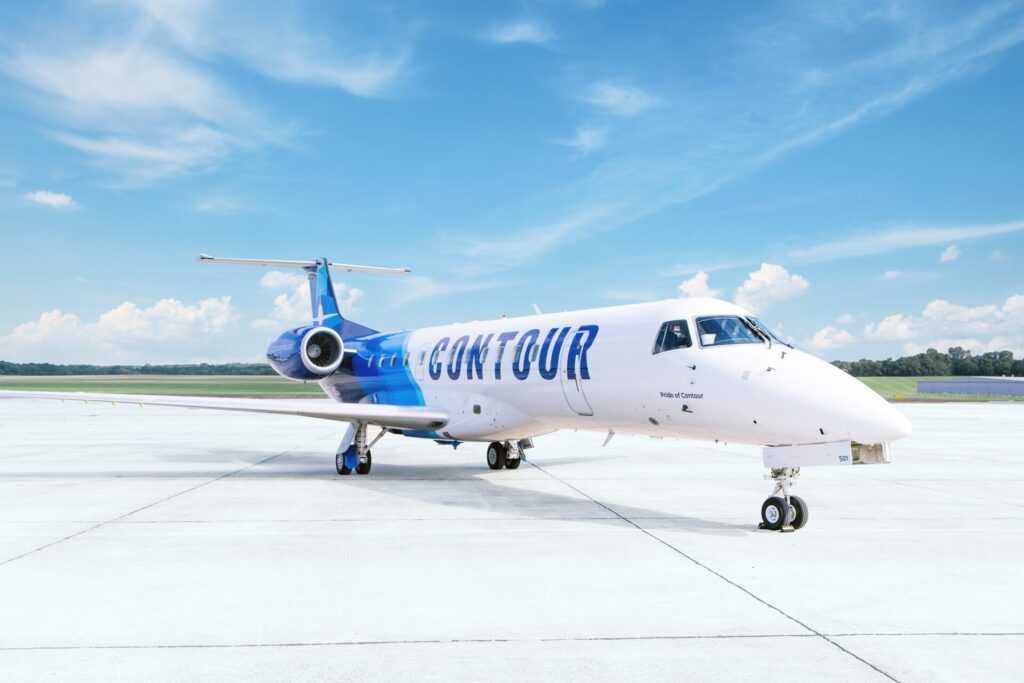
From November 14, 2025, Contour Airlines will operate a new direct service between San Juan (Puerto Rico) and Princess Juliana International Airport (SXM). Three rotations per week are planned: Tuesday, Friday and Sunday.
The company will operate 30-seat regional aircraft, a format suited to short routes and regular traffic flows. This service is strategic: it brings Saint-Martin closer to the rest of the Lesser Antilles, simplifies business travel and offers regional tourists direct access to the island.
With this announcement, Contour confirms the importance of direct flights to Saint Martin in the structuring of an efficient Caribbean air network that complements international routes.
Southwest Airlines: Orlando and Baltimore depart from 2026
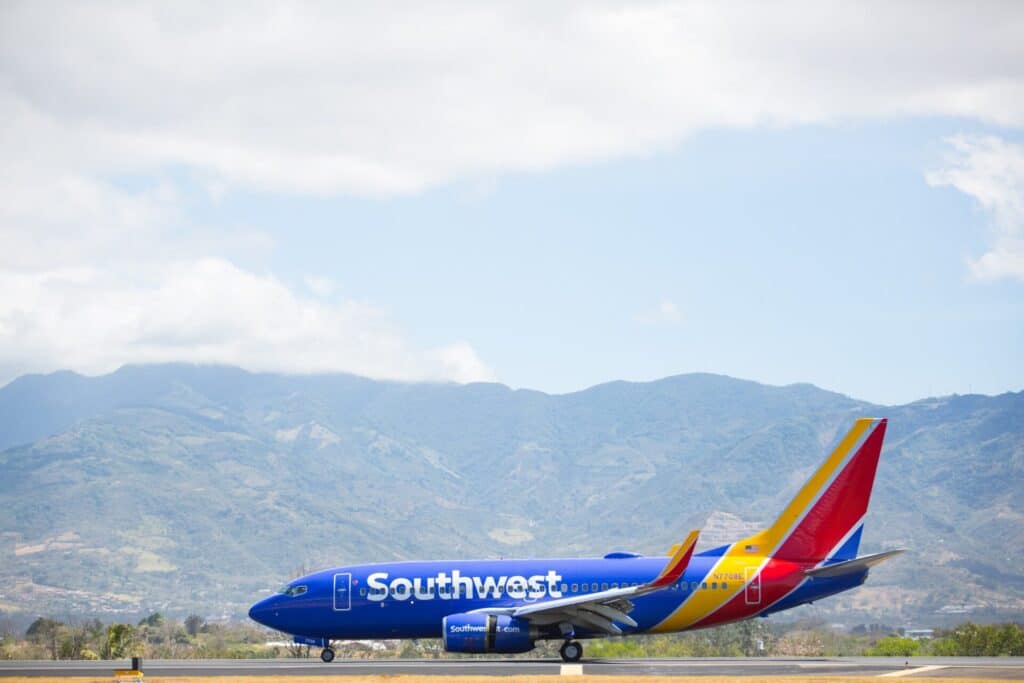
The arrival of Southwest Airlines is a major step forward for Saint-Martin. From April 7, 2026, a daily flight will connect Orlando (MCO) to the island. Two days later, from April 9, 2026, a weekend service will be inaugurated from Baltimore/Washington (BWI).
These openings are strategic. Orlando is a fast-growing tourist metropolis and a major outbound market. Baltimore, on the other hand, provides access to a vast customer base on the East Coast. With these new services, travelers will benefit from more direct flights to Saint Martin, reducing journey times and boosting tourist arrivals.
JetBlue: reinforcement from Boston
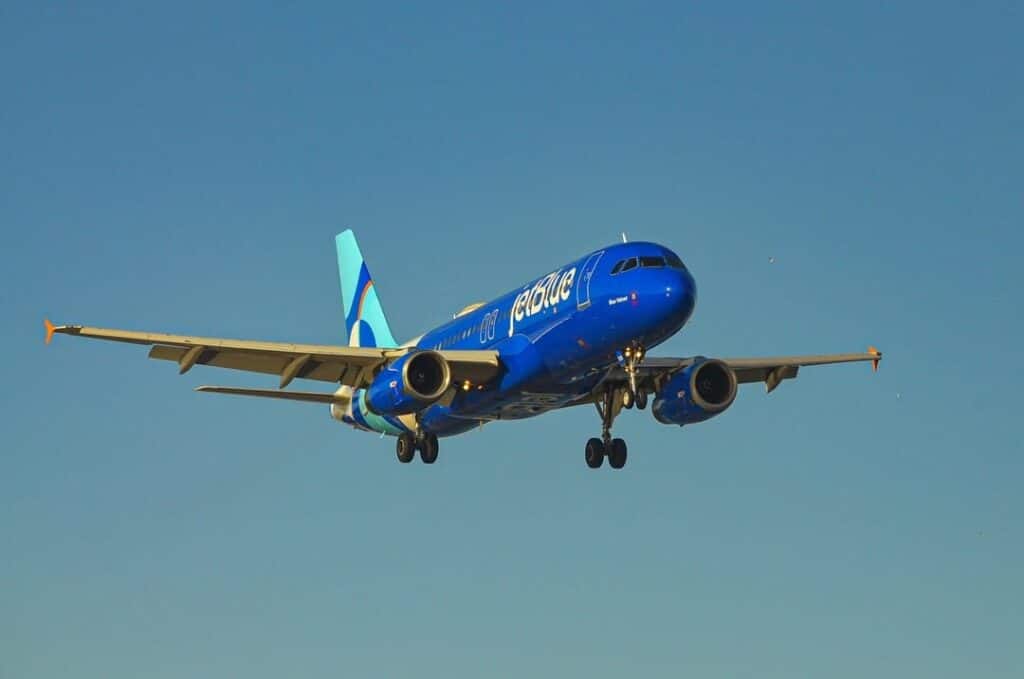
JetBlue, already present on several Caribbean routes, has confirmed an increase in service to Saint-Martin. From December 18, 2025, service between Boston Logan (BOS) and SXM will become a daily frequency, compared with just a few flights a week previously.
This development reflects the steadily growing demand for direct flights to Saint Martin from the northeastern United States. Boston represents a strategic market, particularly for high-end customers attracted by seaside resorts and quality hotel services. At the same time, JetBlue continues to strengthen its position from Fort Lauderdale, consolidating its position as a major player in Caribbean air links.
Frontier Airlines: unprecedented access from Atlanta
Low-cost carrier Frontier Airlines has chosen to enter the Saint-Martin market with a new route linking Atlanta (ATL) to SXM. The service will begin on December 6, 2025, with one weekly flight.
Atlanta is one of the world’s largest air hubs, connecting virtually all major American cities. Thanks to this opening, Saint-Martin benefits from wider access to a huge market. Even if frequency remains limited, this development confirms the general trend: the multiplication of direct flights to Saint Martin is at the heart of the strategies of airlines seeking to expand their presence in the Caribbean.
Expected economic and tourism benefits
The impact of these announcements goes far beyond the airline industry. Tourism is the central pillar of St. Martin’s economy, and each new direct flight contributes to increasing the attractiveness of the destination.
The increase in direct flights to Saint Martin offers several advantages:
- Easy access from strategic U.S. cities such as Orlando, Boston, Baltimore and Atlanta.
- Diversification of issuing markets, reducing dependence on certain geographical areas.
- Competitiveness is enhanced, since the presence of several companies encourages price competition.
- Sustainable growth for the hotel, catering and tourism-related services sectors.
At the same time, the island’s residents and professionals benefit from an expanded network for regional and international travel.
Saint-Martin, the Caribbean air hub
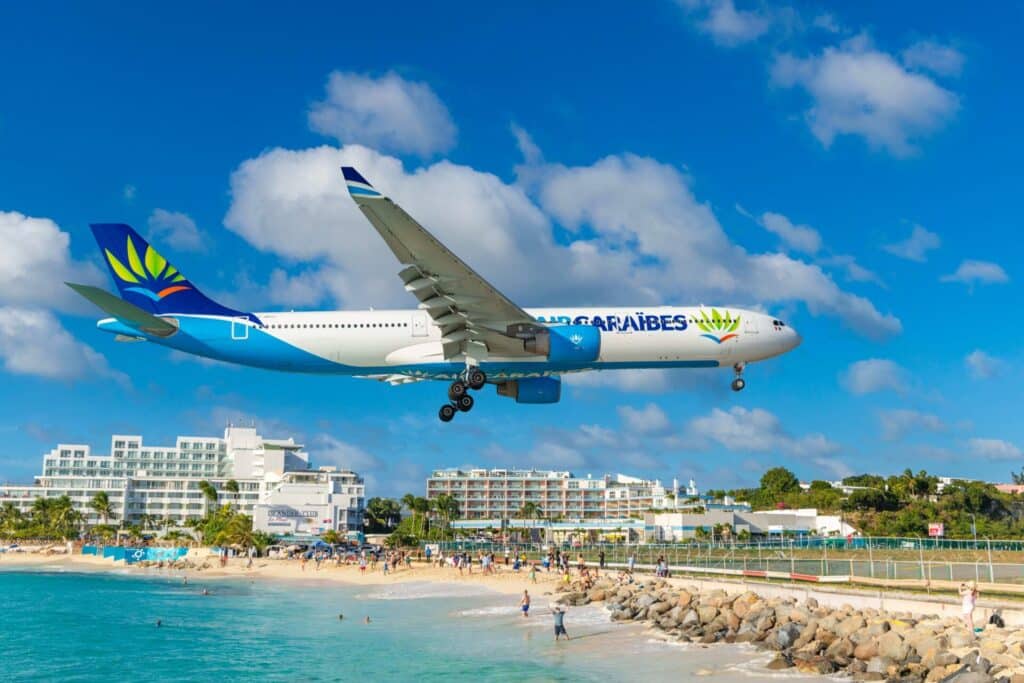
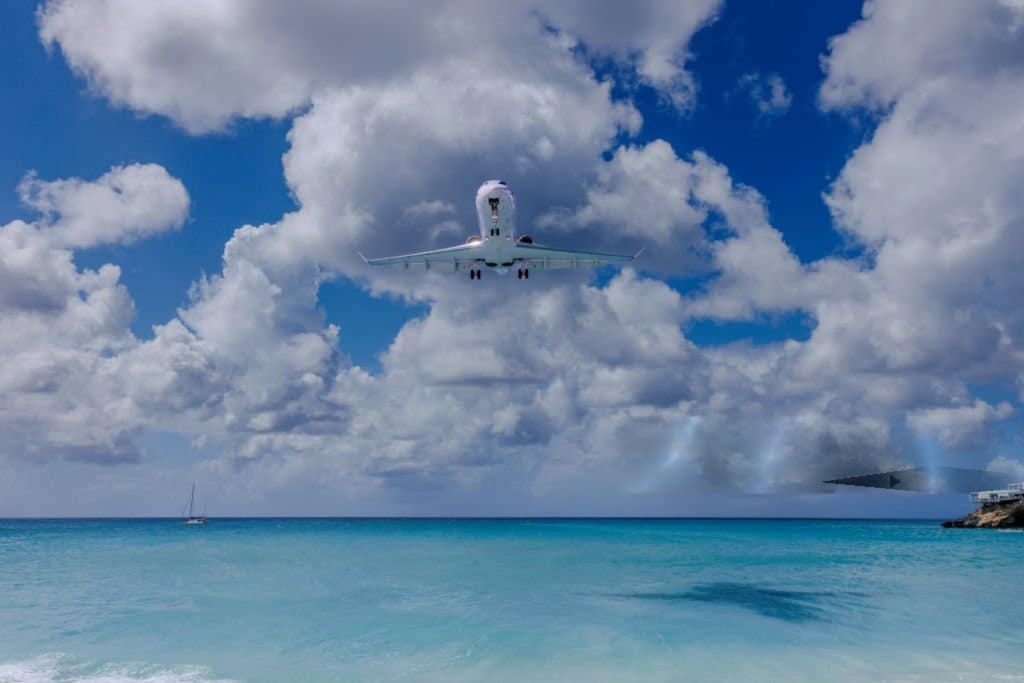
Princess Juliana International Airport, already famous for its single runway along Maho beach, confirms its strategic position. The combined arrival of Contour Airlines, Southwest, JetBlue and Frontier testifies to Saint-Martin’s attractiveness to airlines.
These new routes are part of a dynamic in which demand for direct flights to Saint Martin continues to grow. They reinforce the island’s role as a privileged gateway to the Lesser Antilles and as a tourist hub in the region.
The opening of new routes and increased frequencies by Contour Airlines, Southwest, JetBlue and Frontier are a strong signal for Saint-Martin’s tourism and economic future. Direct flights to Saint Martin are becoming a strategic asset, offering travelers simplified access and consolidating the destination’s appeal.
From late 2025 and early 2026, passengers will have more options than ever to reach the island non-stop, reinforcing its status as a key Caribbean crossroads.
At Grandes Cayes beach rises to the top of the list when you think of the wild, authentic beauty of Saint-Martin. This coastline, protected by the National Nature Reserve, offers a setting where nature reigns supreme, far from the crowds and hustle and bustle. Over the years, Grandes Cayes beach has preserved its identity: once a place where families gathered for Sunday barbecues, today a preserved area where white sand stretches as far as the eye can see, under the peaceful gaze of the island of Tintamarre.
Exceptional ecological wealth
A site classified as a National Nature Reserve
It takes more than just a glance to grasp the biodiversity of Grandes Cayes beach. The majority of the site is fully protected. Every season, sea turtles choose this beach to lay their eggs, preserving a precious natural cycle. The coastal vegetation, dominated by majestic cacti and other xerophilous species, shapes a landscape typical of northern Saint-Martin, at the foot of the Red Rock massif.
Remarkable flora and fauna
The terrain surrounding Grandes Cayes beach is home to red gum trees, mapous, pear trees and the rare guaiac tree, all protected by the reserve’s strict regulations. Careful walkers may also spot rare orchids or striped iguanas, an invasive species that has replaced the Lesser Antillean iguana. The area is also home to endemic lizards, such as anolis, skinks and geckos, veritable guardians of this ecological heritage.
Landscapes shaped by sea and rock
A spectacular waterfront
Atlantic rollers lick the northeast-facing of Grandes Cayes beach, but the coral reef protects the bay and Pinel islet from the most powerful assaults. This reef, enclosing a narrow channel, provides shelter for seagrass beds. At depths of between three and seven meters, rays, turtles and sharks frequently come across it: this sanctuary serves as a nursery for a number of aquatic species, as Julien Chalifour, deputy director of the Nature Reserve, explains.
Two trails to immerse yourself in nature
The site is not just a destination for contemplation; it also invites discovery on foot. To the north, the sentier des Froussards guides walkers to Anse Marcel, winding through lush vegetation. To the south, another trail follows the hill along the coastline, offering breathtaking views of îlet Pinel and the sea below.
An authentic place, far removed from tourist development
Absolute serenity and simplicity
The Grandes Cayes beach offers a rare experience in the Caribbean: no facilities, no services, just peace and space to reconnect with the essential. It’s advisable to bring your own food and water, as nature reclaims its rights. The place exudes peace, and you hardly come across other walkers: ideal for those seeking tranquillity away from conventional beaches.
A heritage to protect
Grandes Cayes beach, with its rich biodiversity, is the subject of a restoration project designed to enhance its protection. The project, which is currently underway, reflects the company’s ongoing commitment to the sustainable management of the site, so that everyone, whether expert naturalist or curious visitor, can find something to marvel at and learn from.
Grandes Cayes, the promise of a return to basics
When you step onto the sands of Grandes Cayes beach, the whole of Saint-Martin is revealed in its rawest, most authentic version. Far from clichés, this unspoilt spot gives the impression of being at the end of the world, where nature reveals itself without artifice. Whether you’re an ecology enthusiast or simply looking for a soothing interlude, all you have to do is let yourself be carried away by the magic of this unique area.
In the north of the Lesser Antilles, the island of Saint-Martin is home to remarkably rich marine ecosystems. Coral reefs, sea grass beds, mangroves, turtles and marine mammals cohabit in an environment that is as fragile as it is essential for the territory.
Exceptional biodiversity under pressure
Saint-Martin’ s marine ecosystems form a natural heritage of rare complexity. The island, divided between France and the Netherlands, concentrates a variety of coastal and underwater habitats: fringing and barrier reefs, seagrass beds and mangroves. The reefs alone cover almost 19.4 km² around the island, mainly around Baie Orientale, Coralita, Le Galion and Grandes Cayes.
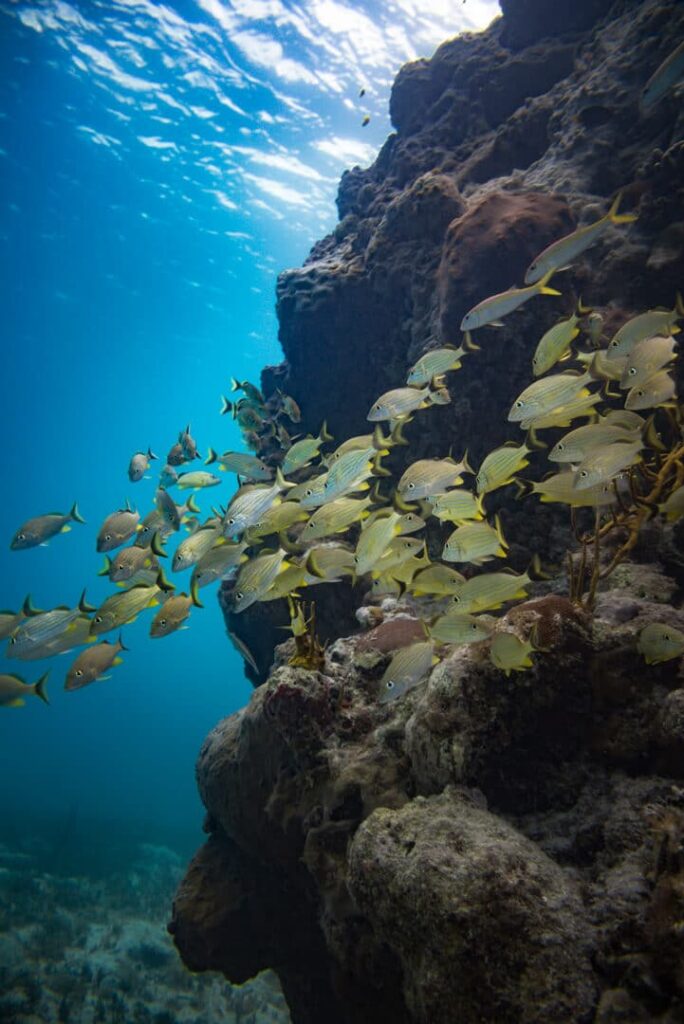
The Nature Reserve boasts over 1,040 marine species, including some 30 corals and over 500 molluscs. There is an impressive diversity of reef fish, sea turtles, starfish, sea urchins, anemones and marine mammals – including dolphins, sperm whales and humpback whales.
These marine ecosystems on Saint-Martin provide refuge, nursery and feeding grounds for emblematic species such as the green turtle, hawksbill turtle and leatherback turtle. From March to November, several of the island’s beaches become crucial egg-laying sites for these protected reptiles.
Reefs, seagrass beds, mangroves: essential ecological roles
Coral reefs protect coastlines from erosion and mitigate the impact of storms. They are home to a biodiversity that guarantees the balance of marine food chains. Seagrass beds, covering more than 60 km² around the island, and mangroves (24.2 hectares) complete these functions by acting as biological filters, sequestering carbon and ensuring ecological continuity between land and sea.
These marine ecosystems on Saint-Martin act as a natural shield against climate change, playing a central role in climate regulation, local food security and the preservation of endangered species.
A major economic lever
Saint-Martin’ s marine ecosystems generate an estimated economic value of 26 million euros per year. Coastal protection alone represents 6 million in potential savings, while nautical and diving activities contribute 20 million to the local economy.
Almost 2,600 jobs and over 400 businesses depend directly or indirectly on these natural environments. Blue” tourism – diving, snorkeling, marine excursions – attracts up to 80% of visitors. With underwater visibility of up to 30 meters, St. Martin’s waters are among the best in the Caribbean for ecological discovery.
Innovative projects such as the “Under SXM” underwater sculpture park in Little Bay create artificial reefs, while diversifying the tourist offer and relieving congestion at the most sensitive natural sites. This type of initiative makes the most of Saint-Martin’s marine ecosystems, while protecting them at the same time.
A worrying deterioration
But this ecological treasure is in peril. According to Ifrecor, only 20% of Saint-Martin’s coral reefs are in “good” condition. None are considered to be in “excellent” condition. The rest are showing signs of advanced degradation, directly linked to urbanization, port developments and pollution from untreated wastewater.
Sediments from urban or agricultural runoff asphyxiate corals. Chemicals favor invasive algae to the detriment of constructive species. The overexploitation of marine resources is putting further pressure on Saint-Martin’s already fragile marine ecosystems.
Coral bleaching in 2023, caused by water temperatures in excess of 30°C, affected the entire nature reserve. Despite this, some corals have shown an encouraging capacity for resilience. However, this positive dynamic remains fragile.
Nature reserves and protection strategies
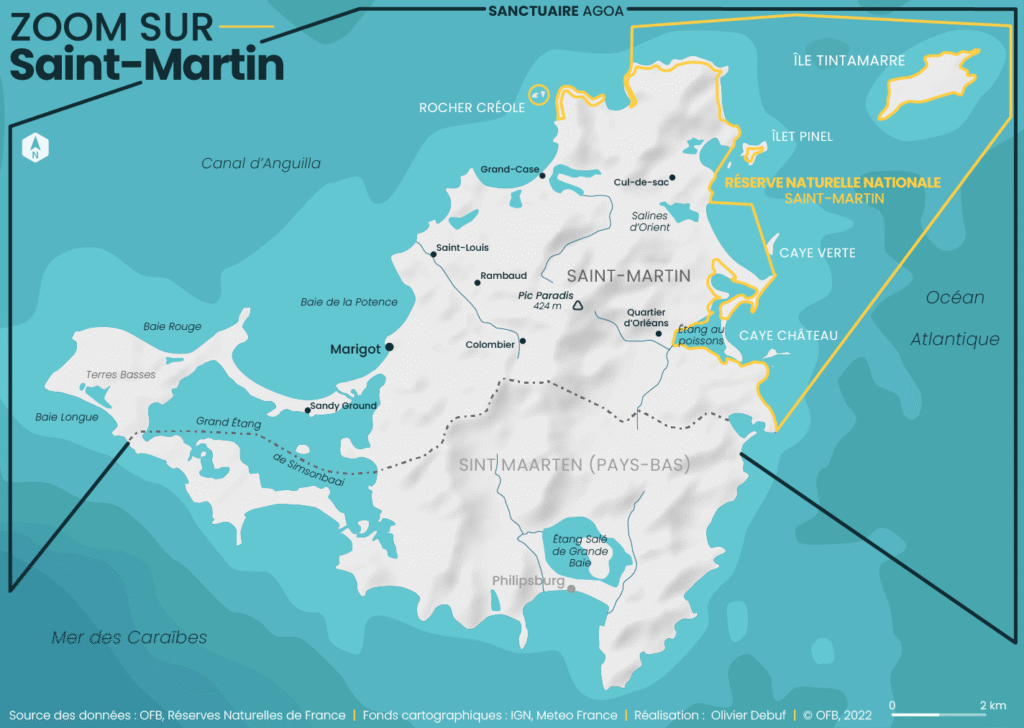
Created in 1998, the Réserve Naturelle Nationale de Saint-Martin covers over 3,000 hectares, of which 2,796 hectares are marine. It is the main conservation tool, protecting reefs, mangroves, seagrass beds, ponds and coastal forests. This protected area alone is home to almost 2,000 species in 44 taxonomic groups.
A five-year management plan provides a framework for actions to preserve the marine ecosystems of Saint-Martin: habitat restoration, control of uses, user awareness, scientific monitoring and regional cooperation.
Marine mammals benefit from the Agoa sanctuary, which covers the entire exclusive economic zone of the French West Indies, while turtles are the subject of coordinated action plans with networks of eco-volunteers monitoring nesting sites.
Sustainable tourism and ecological restoration
The Nature Reserve is developing an eco-friendly mooring strategy, with mooring buoys and digital tools to limit destructive anchoring. Diving centers are also trained in eco-responsible practices, helping to protect Saint-Martin’s marine ecosystems while maintaining a high-quality tourist industry.
Reef restoration programs include the creation of coral nurseries and targeted transplants. Research into the thermal resistance of corals is opening up new prospects for strengthening the resilience of Saint-Martin’s marine ecosystems in the face of climate change.
Towards a sustainable blue economy
Saint-Martin’ s future depends on the balanced development of its blue economy, making the most of ecosystem services such as coastal protection, carbon sequestration and tourist appeal. Payment for environmental services schemes could provide new sources of funding for conservation.
Saint-Martin’s participation in regional networks such as the CAMAC project also enables the pooling of knowledge and best practices, reinforcing the protection of Saint-Martin’s marine ecosystems on a Caribbean scale.
What if an island could tell its story through its aromas, its recipes and its chefs? The Festival de la Gastronomie de Saint-Martin 2025 is the proof. From November 11 to 22, the French part of the island is transformed into an immense laboratory of taste, where tradition rubs shoulders with audacity, and where the fruit of passion becomes the muse of all creations. This annual event doesn’t just tantalize the taste buds: it mobilizes a community of artisans, trainers, creators and the curious, all united around a culinary art deeply rooted in the identity of Saint-Martin.
A structuring and inspiring culinary event
Much more than just a gastronomic festival, the Festival de la Gastronomie de Saint-Martin 2025 is one of the pillars of the island’s cultural and economic development. Through a rich and unifying program, it showcases local talent, welcomes chefs from Africa, Europe, the United States and the entire Caribbean, and trains the next generation of chefs and restaurateurs. This fifth edition promises a sensory immersion in its own right, under the banner of passion fruit.
A dense program accessible to all
The Festival de la Gastronomie de Saint-Martin 2025 kicks off on November 9 with “Taste of Sunrise”, a breakfast by the sea with Caribbean rhythms and passion fruit juice. The official launch will take place on November 10 on the boulevard of Grand Case, a veritable living showcase of the local culinary wealth, punctuated by concerts and entertainment.
Festival highlights include:
- Discovery menus in restaurants from November 11 to 22.
- Wine & Cheese Pairing on November 12, hosted by passionate sommeliers.
- 4-hand dinners, on November 12 and 13, bringing together local chefs and guests for original creations.
- Competitions: private chefs, food trucks, barbecue, desserts, high school students, mixologists and restaurateurs, all hosted by renowned professionals.
Gastronomic competitions: challenges for talent
The Festival de la Gastronomie de Saint-Martin 2025 focuses on culinary creativity in all its forms. Celebrity American chef Jason Santos will preside over the food truck competition on November 15, while international barbecue icon Kevin Bludso will be the star jury for the BBQ competition on November 16. These events are more than just competitions: they are real springboards for the island’s talent, where each dish becomes a manifesto of technique, identity and emotion.
The restaurant competition will take place outdoors at the Marina Fort Louis on November 18 and 19 for the semi-finals, with a grand public final on the 21st. A culinary show open to all, designed to showcase the profession in all its technical glory.
Passion fruit: at the heart of inspiration
The passion fruit is the star ingredient of this year’s Festival de la Gastronomie de Saint-Martin 2025. This little tropical jewel, grown locally, is the object of much attention: used in juice, coulis, mousse or marinade, it allows chefs to express their know-how in daring compositions.
Rich in vitamin C, fiber and antioxidants, it combines gustatory pleasure with nutritional benefits. From cocktails to savoury dishes and the most refined desserts, it can be used in all textures and temperatures.
Training, transmission and youth at the heart of the project
The very essence of the Festival de la Gastronomie de Saint-Martin 2025 is transmission. Every year, guest chefs and local institutions join forces to encourage vocations. School visits will take place on November 13, followed by the high school competition on the 17th. This educational dynamic is reinforced by the charity evening on November 20, with proceeds going to the Lycée Professionnel Daniella Jeffry to support the modernization of equipment and educational projects.
The cooking workshops, scheduled from November 15 to 17, will welcome children and adults alike, with a variety of formats: technical sessions, family workshops, and Sip ‘n Cook, where mixology meets gastronomy.
A culinary village and artists bring Marigot to life
On November 14 and 15, the Marigot waterfront will play host to the Village de la Gastronomie, an open-air showcase of culinary excellence. Restaurants, food trucks and ephemeral stands will be serving up tasty bites from Saint-Martin’s finest tables. International artists will take to the stage to electrify the atmosphere and make these two evenings a true sensory festival.
The art of mixology and sweet treats in the spotlight
On November 21, the mixology competition at the Festival de la Gastronomie de Saint-Martin 2025 will showcase the island’s best bartenders and barmaids, around innovative creations based on local products. Smoked, infused, iced or flambéed cocktails – anything goes, as long as it’s bold enough.
At the same time, the island’s pastry chefs will be vying for the title of Saint-Martin’s most exquisite dessert. It’s a competition dedicated to finesse, technique and showcasing passion fruit in all-new formats.
Closing: a symphony of flavors from around the world
The closing evening of the Festival de la Gastronomie de Saint-Martin 2025, on November 22, will bring together all the participating chefs for a final dinner with an international flavour. Dishes from Africa, the Caribbean, Europe and the United States will be served up in a festive atmosphere featuring Martinique artists. A final celebration worthy of an event that has once again exceeded all expectations.
Participating in the Festival de la Gastronomie de Saint-Martin 2025 means supporting a vision: that of a territory that relies on its know-how, its talents and its youth to shine beyond its borders. Over ten days, dozens of events, experiences and encounters will weave a common fabric: that of a gourmet island, creative and open to the world.