Martinique – The Tourelles cruise terminal becomes a cultural stage to the rhythm of Carnival

Terminal croisière des Tourelles

At the heart of the port of Fort-de-France, the Tourelles Cruise Terminal has taken a new step in its evolution by becoming a genuine cultural space. In the midst of Martinique’s carnival season, this reception area is transformed into a lively stage where international visitors, artists and locals meet.

On Saturday February 14, the inauguration of a 200 m² cultural space within the tourelles cruise terminal marked a turning point: making the port a place open to the city, rooted in Martinique’s identity. As soon as they disembark or before boarding, cruise passengers and travelers are immersed in the excitement of Carnival, enjoying an immediate and authentic cultural experience. This initiative comes at a time when cruise tourism is growing steadily in Martinique, confirming the port’s strategic role in the cultural enhancement of the region.

A new cultural space in the heart of the port

Designed as a multi-purpose venue combining culture, conviviality and mediation, this new space at the Tourelles cruise terminal hosts ephemeral exhibitions, artistic encounters and one-off events. Equipped with screens and a digital connection, it is designed to be accessible to cruise passengers and local residents alike.

The objective is clear: to offer international visitors a first cultural immersion on arrival, while offering Martinique residents a space for artistic expression within the port itself. This positioning reflects the desire of the Grand Port Maritime de la Martinique to assert itself as a cultural player in its own right, at the service of the region.

Terminal croisière des Tourelles

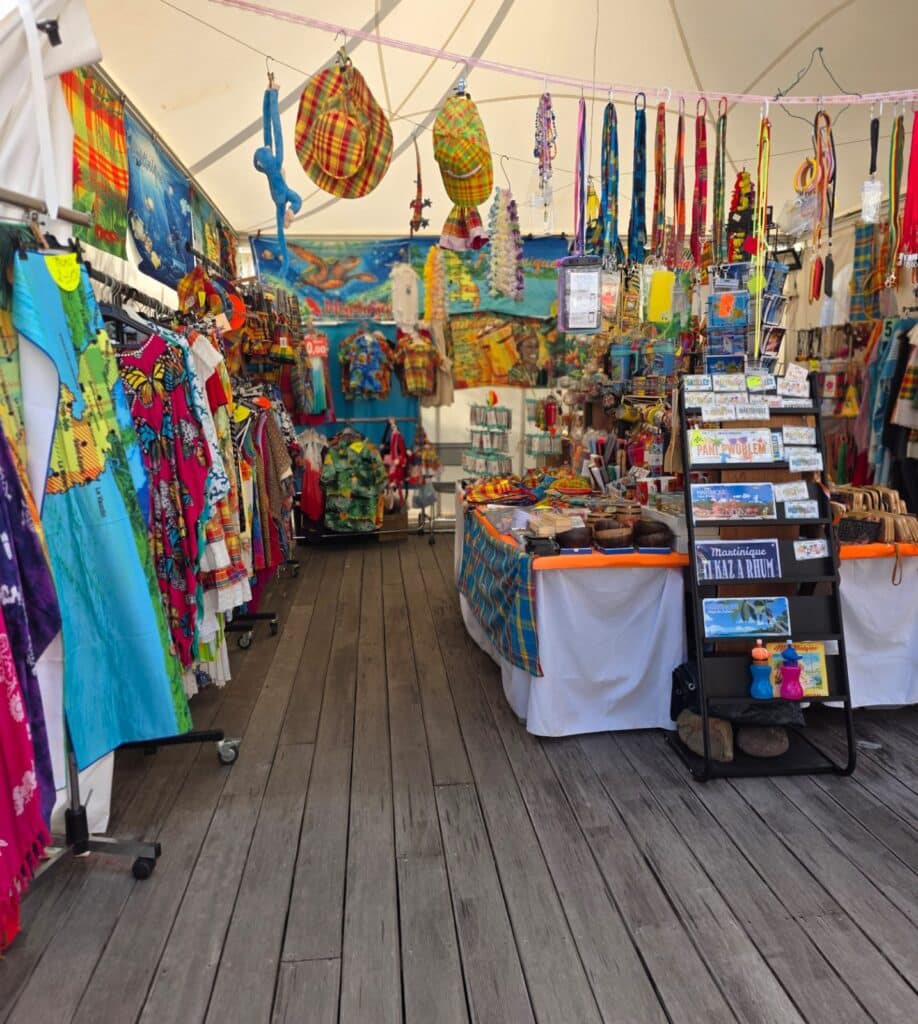
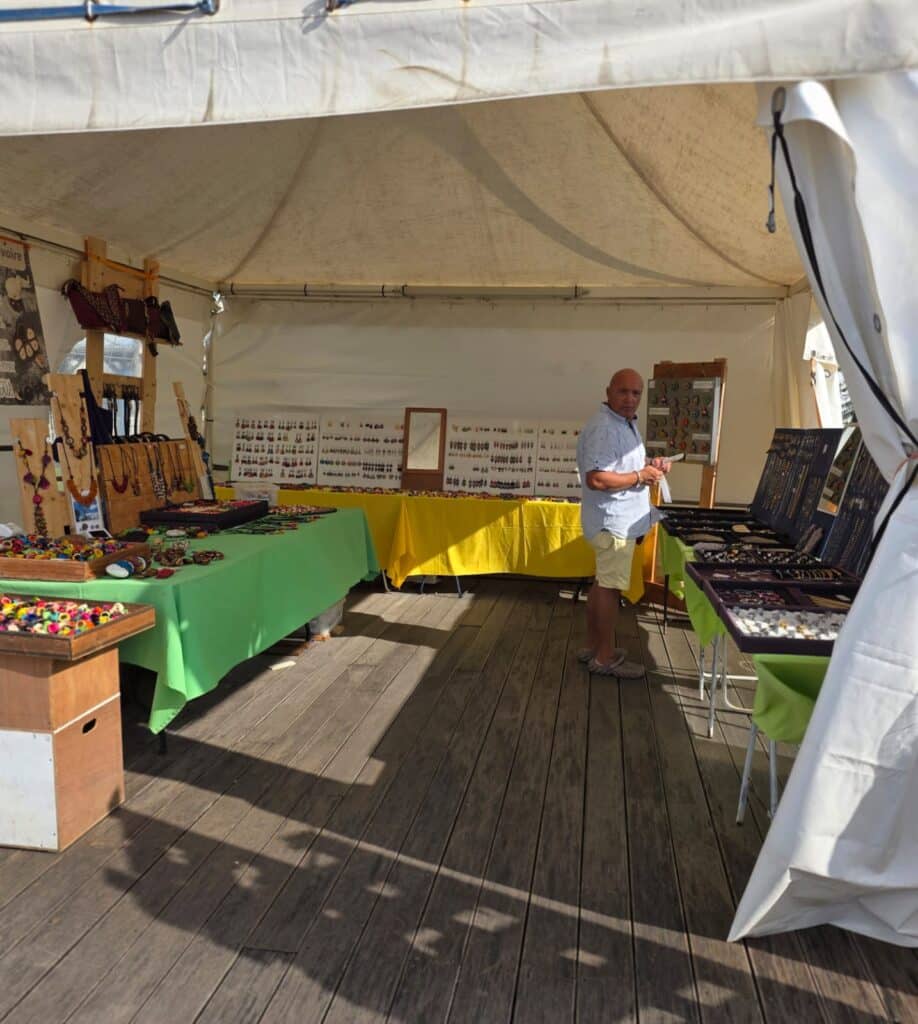
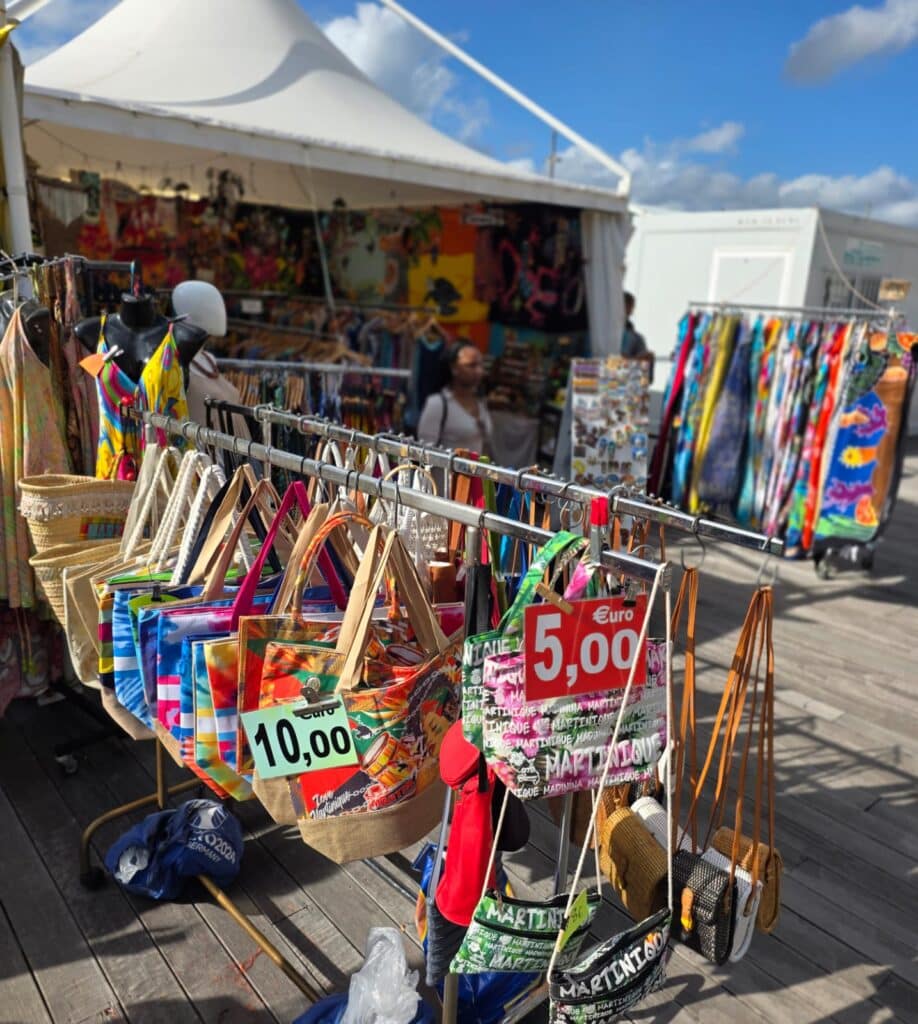
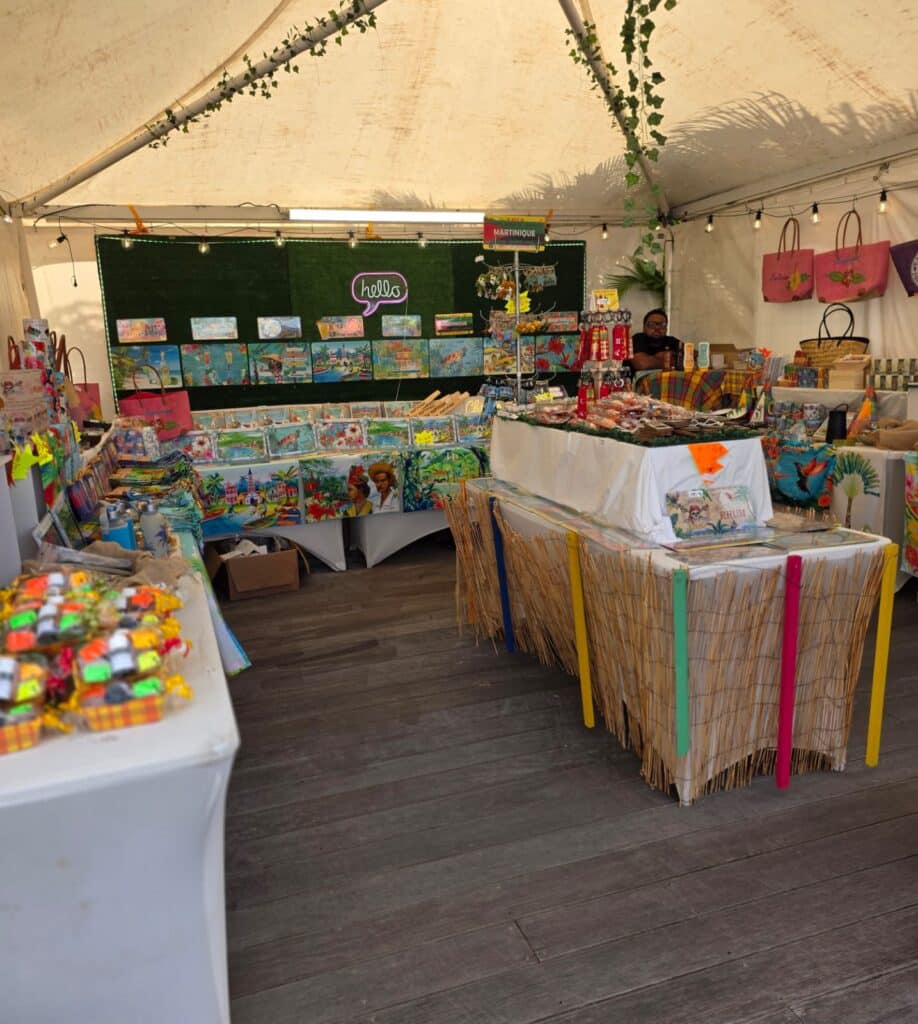
For several years now, Fort-de-France’s cruise terminals have been designed as reception and discovery areas, integrating craft villages and events for passengers in port. However, the opening of this cultural space marks a further step: that of a permanent artistic presence.

Terminal croisière des Tourelles

When Carnival enters the terminal

To inaugurate this new venue, Carnival was a natural choice. At the start of the carnival season, masks and wearers took over the tourelles cruise terminal in a lively performance combining a parade, music and direct interaction with visitors. The masks, which had been on display for two months, left their immobility behind and went into motion. Crossing the terminal right up to the ships in port, they offered cruise passengers an immediate immersion in Martinique’s carnival imagination.

This encounter between international visitors and local identity transforms the transit area into a genuine cultural experience. Tourists, Martinican families and children present during the school vacations were able to photograph, interact and get caught up in the Carnival atmosphere before even reaching the city. In addition to the show, the initiative was a response to a precise strategy: to enable travelers to discover local crafts and culture as soon as they arrived, but also to offer departing passengers the opportunity to take home a tangible souvenir of Martinique.

Terminal croisière des Tourelles

Sylviane Enelada's masks: between sea, ecology and memory

At the heart of this immersive exhibition are the creations of visual artist and actress Sylviane Enelada, artistic director of the LAPERKUT association. His work, developed over several years, draws on the marine world to question the relationship between man and his environment. Inspired by the ocean floor, his masks evoke fish, anemones, corals and hybrid creatures. But behind the carnivalesque aesthetic lies a deeper message: the fragility of marine ecosystems and the impact of plastic on the oceans. The dialogue between recycled materials and organic forms becomes a visual metaphor for the relationship between man, the sea and pollution.

Terminal croisière des Tourelles

Presented at the Tourelles cruise terminal since December, the exhibition has found a natural extension in the carnival movement. Bringing the masks to life, taking them out of the exhibition space and into the public eye, corresponds to a desire to circulate art and create a direct dialogue with spectators. Fourteen exhibitors, wearers and students collaborated on this collective project, combining artistic creation and transmission.

Terminal croisière des Tourelles

Transmission, craftsmanship and the therapeutic dimension

Behind each mask lies precise handwork: papier-mâché, foam, polystyrene, acrylic paint and patient assembly. At the association, mask-making is also seen as a form of self-expression. For some participants, creating a mask is a way of releasing tensions and emotions, transforming the workshop into a space of liberation and sharing. This therapeutic dimension reinforces the social scope of the project, where art becomes a tool for transmission and cohesion.

Sylviane Enelada’s workshops are part of this approach: to pass on a passion, to initiate the younger generations and to remind them that the mask, present in many cultures around the world, remains a universal symbol of expression and identity.

Terminal croisière des Tourelles

Tourism, culture and Martinique's identity: a new vision for the port

The event organized at the Tourelles cruise terminal is much more than a one-off. It illustrates a broader evolution: that of a port that positions itself as a crossroads between tourism, culture and citizenship. On an island where Carnival is a major marker of collective identity, the integration of artistic expression within the port enhances the visitor experience while promoting local talent.

Transforming the Tourelles cruise terminal As a meeting place for cruise passengers and Martinique’s culture, the Grand Port Maritime is laying the foundations for a cultural and digital living space that will evolve over the coming months. A way of asserting that, from now on, the voyage begins at the port, and that it can also be an encounter with the artistic soul of a territory.

The tourelles cruise terminal, thus confirms its role as a bridge between tourism and culture. The tourelles cruise terminal intends to reinforce this artistic immersion at every port of call. For visitors and locals alike, the tourelles cruise terminal becomes a meeting point. With this initiative, the tourelles cruise terminal is part of a sustainable cultural dynamic. In the future, the tourelles cruise terminal could become a key venue in Martinique’s artistic life.

Terminal croisière des Tourelles

On Saturday February 14, a cultural and carnival event marked the launch of a new 200 m² cultural space with an immersive mask exhibition and an artistic parade in the heart of the terminal.

The mask exhibition was organized by the LAPERKUT association under the artistic direction of Martinican artist Sylviane Enelada, with the participation of artists, wearers and students.

The Grand Port Maritime de la Martinique wants to transform the terminal into a living space, accessible to citizens and cruise passengers alike, to showcase Martinique’s arts, crafts and cultural identity from the moment visitors arrive.

Leave a Reply

Your email address will not be published. Required fields are marked *

More articles from RK

Affiche officielle du documentaire Women of Dominica
FILM & VIDEO
Tolotra

Dominique – Women of Dominica: The documentary that brings together ten women ahead of its premiere in Miami

“Women of Dominica” brings together ten women from different generations around a shared narrative: the Creole heritage of Dominica. The documentary, directed by environmental scientist-turned-filmmaker Farrah La Ronde-Hutchison, will have its U.S. premiere on September 5 in Miami, ahead of a wider release scheduled for 2027. Among the voices featured is that of Ophelia Marie, a historic figure in Dominican music. A story of passing down traditions, between a mother and her daughter The Women of Dominica project has its roots in a family story. In 2019, Farrah La Ronde-Hutchison’s mother received the Golden Drum, a Dominican award dedicated to the preservation of traditional Creole attire. She had carried this responsibility for more than thirty-five years, passing down to her daughter the techniques and fabrics of a garment that few in younger generations still know how to tie today. It was this tradition passed down from mother to daughter that

Read More »
Femme jamaïcaine sur une véranda au crépuscule face à un duppy dans la cour
HISTORY & HERITAGE
Tolotra

“Duppy know who fi frighten”—why does this proverb protect the weak?

“Duppy know who fi frighten”: this Jamaican saying resonates from childhood onward, long before we fully understand its meaning. In Jamaica, at dusk, a scene plays out across generations. Children are called back inside before night swallows the garden. There’s no need to argue the point—outside, the duppies lurk, those spirits that didn’t follow the dead to the end of their journey. A man from Old Harbour, now in his eighties, told researchers in 2021 how these stories shaped his childhood evenings—not so much to terrify as to keep the children close to home. From this inherited fear arose a saying that is still heard today throughout the island: “Duppy know who fi frighten”—the duppy knows who to frighten. What does “Duppy know who fi frighten” mean? The Jamaican Patwah online dictionary illustrates the expression with a typical phrase, “Him cyaa try mi, duppy know who fi frighten,” which could

Read More »
gwoka
HISTORY & HERITAGE
Tolotra

Gwoka, the Guadeloupean drum that UNESCO has enshrined in history

In Pointe-à-Pitre, a bronze statue depicts a seated man with a ka drum between his legs. It pays tribute to Vélo, one of the greatest masters of gwoka, the Guadeloupean music that emerged from the resistance to slavery. Since 2014, UNESCO has designated it as a World Heritage Site. A Tambouyé Turned into a Statue Marcel Lollia, known as Vélo, was born on December 7, 1931, and died on June 5, 1984. He trained several generations of ka players—a drum carved from a tree trunk and covered with a stretched skin. He also inspired Akiyo, a cultural movement advocating for identity founded in 1979, which brought gwoka out of the small circles where it was still surviving. On June 5, 2004, twenty years after his death, a statue by sculptor Jacky Poullier was unveiled in Pointe-à-Pitre, modeled after an earlier Guadeloupean portrait dedicated to another of the island’s great figures.

Read More »

conTACT RK

we'd love to have your feedback on your experience so far

Join The List

Join our Richès Karayib community!  Sign up for our newsletter.

Want To Maximize Your Business Presence On Riches Karayib?

Complete the form to start the application