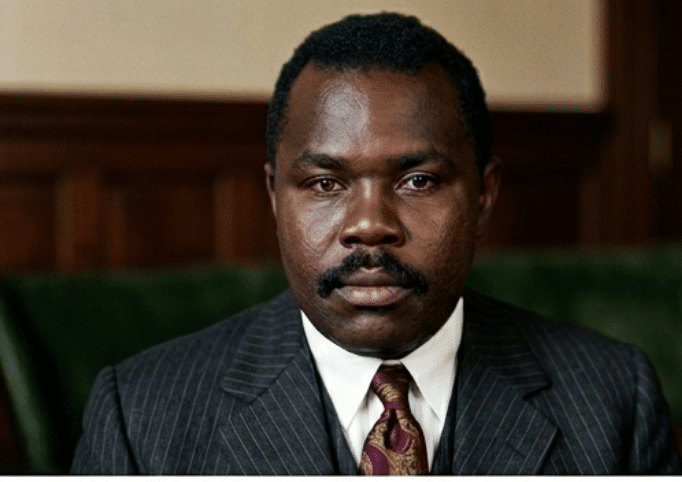
At the heart of Caribbean history, few figures have marked the trajectory of the Atlantic world as profoundly as Toussaint Louverture. Born a slave in the French colony of Saint-Domingue in the XVIIIᵉ century, he became a military strategist, administrator and political leader of a territory in the throes of revolution.
His journey took him through the upheavals of the French Revolution, rivalries between European empires and the aspirations of enslaved populations. At the crossroads of these historical forces, he helped transform a slave insurrection into a structured political project that paved the way for the birth of the first independent black state in the Americas: Haiti. To understand Toussaint Louverture is to understand how the Caribbean has influenced world history.
A birth in the slave system of Saint-Domingue
He was born around 1743 on the habitation Bréda, near Cap-Français, in the colony of Saint-Domingue, now Haiti. At the time, the colony was the richest French possession in the Americas. Its prosperity was based on a plantation economy dominated by sugar and coffee production, fueled by an extremely brutal slave system. Toussaint Louverture enjoyed a special position among the slaves of the Bréda dwelling. He learned to read and write, received training in animal husbandry and acquired an in-depth knowledge of plantation organization.
These skills play an essential role in his future career. They enable him to understand not only the economic mechanisms of the colony, but also the power relationships that structure colonial society. Go to 1776, he was granted his freedom. From that moment on, he became a free man in a society where slavery remained the norm for hundreds of thousands of people.
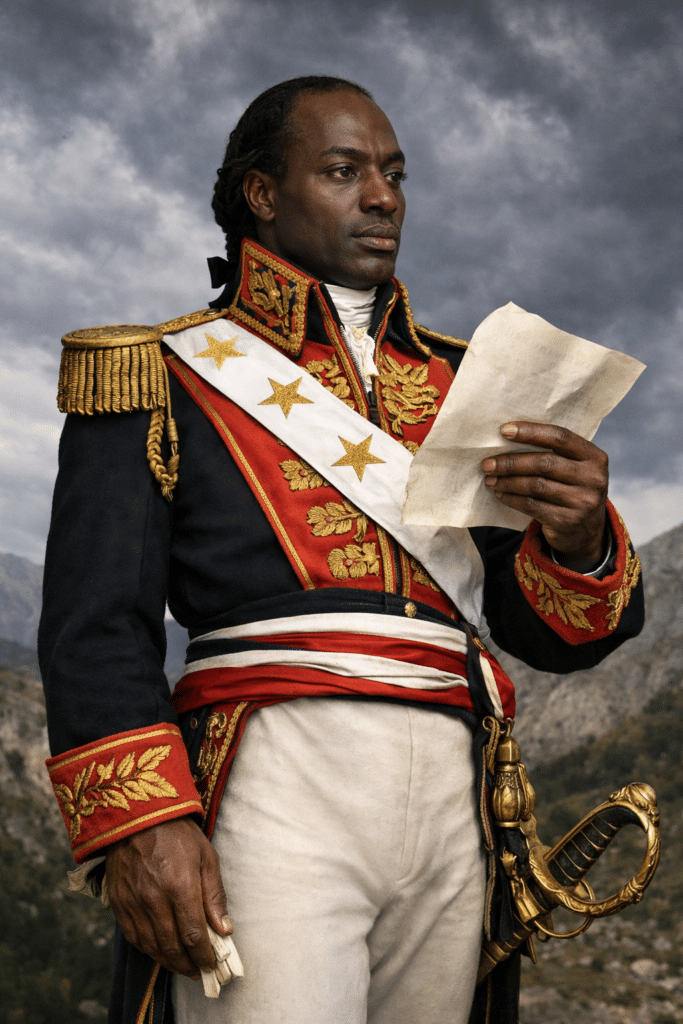
1791: the insurrection that changed Caribbean history
The founding event in Toussaint Louverture’s political career was the great slave uprising of 1791. On the night of August 22 to 23, 1791, thousands of slaves rose up in the north of Saint-Domingue. Plantations burned, colonial structures were shaken and a social war began. The revolt marked the start of the Haitian Revolution, one of the most important events in modern history.
At the start of the uprising, he was not immediately in the limelight. But his military and organizational skills soon became apparent. He joined the insurgent forces and began to distinguish himself as a military leader. By this time, the conflict had grown beyond a simple local revolt. Spain and Great Britain tried to take advantage of the situation to weaken revolutionary France. Saint-Domingue became a strategic theater for rivalries between empires.
A strategist able to navigate between empires
His strength lay in his ability to understand the international balance of power. Initially, he fought on the side of Spain, which controlled the eastern part of the island of Hispaniola. When the French National Convention abolished slavery in the colonies in 1794 he changed sides and joined the French Republic. It was a decisive choice.
By supporting the Republic, Toussaint Louverture obtained the military resources needed to repel British troops and gradually regain control of the colony. Over the years, he became the dominant political and military player in Saint-Domingue. By the end of the 1790s, he was de facto ruler of the colony.
Restoring the economy without restoring slavery
One of the most complex aspects of Toussaint Louverture’s policies concerned the economy. The war had destroyed a large part of the plantations. Yet the colony’s prosperity was still based on agricultural production for international trade. To revive the economy, he imposed a system of supervised work on the plantations. Former slaves remained attached to the farms, working under the supervision of military officers.
This system did not legally re-establish slavery, but it did impose strict work discipline. Today, this policy remains one of the most debated aspects of his legacy. It reveals the complexity of his project: to build a free society while maintaining the economy that enabled the colony to survive.
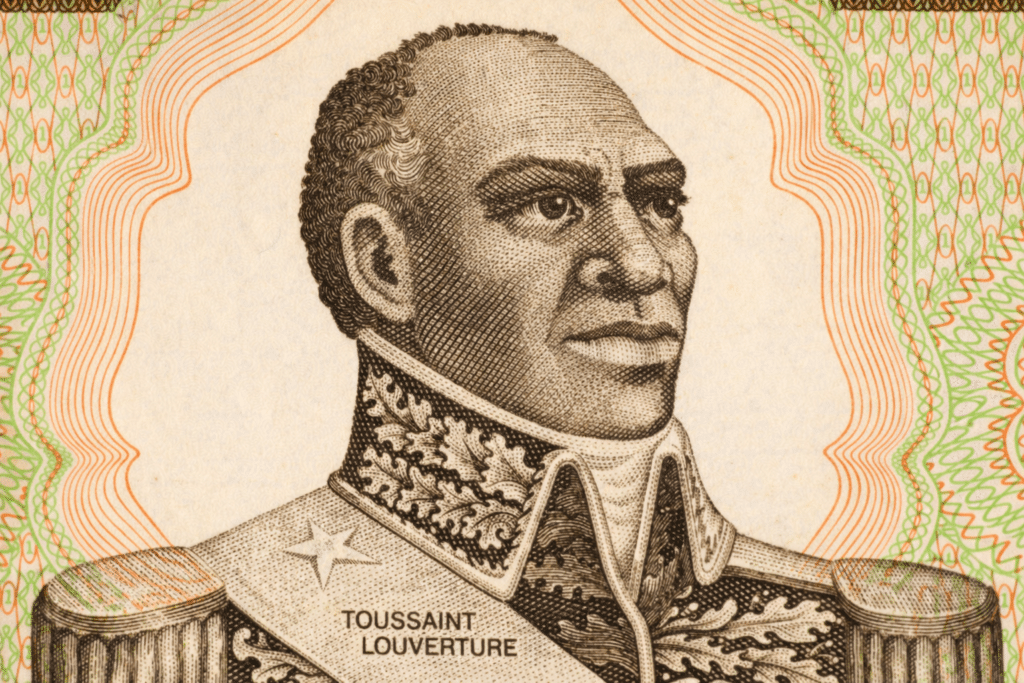
1801: the constitution asserting Saint-Domingue's autonomy
He took a major political step. He promulgated a constitution for Saint-Domingue. This definitively abolished slavery and organized the administration of the territory. The colony remained officially attached to France, but enjoyed considerable political autonomy. The constitution appoints Toussaint Louverture Governor General for life.
This decision marked a fundamental transformation: the former slave became the political leader of a territory that redefined its status within the colonial empire. That same year, he also took control of the Spanish part of the island, Santo Domingo, uniting the whole of Hispaniola under his authority.
Napoleon Bonaparte's reaction
His rise to power worried the French government. When Napoleon Bonaparte became First Consul, he decided to regain direct control of Saint-Domingue. In 1802. A major military expedition led by General Charles Leclerc was sent to the colony. After several months of fighting, he was arrested following a negotiation. He and his family were deported to France.
Death at Fort de Joux
Toussaint Louverture is imprisoned at the Fort de Joux in the French Jura. Prison conditions were extremely harsh. Isolated, deprived of his loved ones and confronted with the harsh climate of the region, he died on April 7, 1803. His death did not put an end to the war. On the contrary, it strengthened the resolve of the former revolutionary generals. Less than a year later, on January 1ᵉʳ 1804, Haiti proclaimed its independence under the leadership of Jean-Jacques Dessalines.
A founding figure in Caribbean history
Today, he is considered one of the most important figures in Caribbean history.
His career embodies several major transformations:
- – questioning the slave system in the Americas
- – the emergence of black political leadership in the atlantic world
- – the birth of a revolution capable of overthrowing a colonial power
Toussaint Louverture’s impact extended far beyond Haiti. His actions influenced abolitionist movements, anti-colonial struggles and reflections on freedom throughout the Atlantic area.
A living memory
More than two centuries after his death, Toussaint Louverture continues to occupy a central place in the historical memory of the Caribbean. His name is associated with places, institutions and commemorations in several countries. In Haiti, he is one of the founding fathers of the nation. In France, his memory is linked to the Fort de Joux, where he died. For many historians, Toussaint Louverture symbolizes the capacity of Caribbean societies to produce political figures capable of transforming the course of world history.
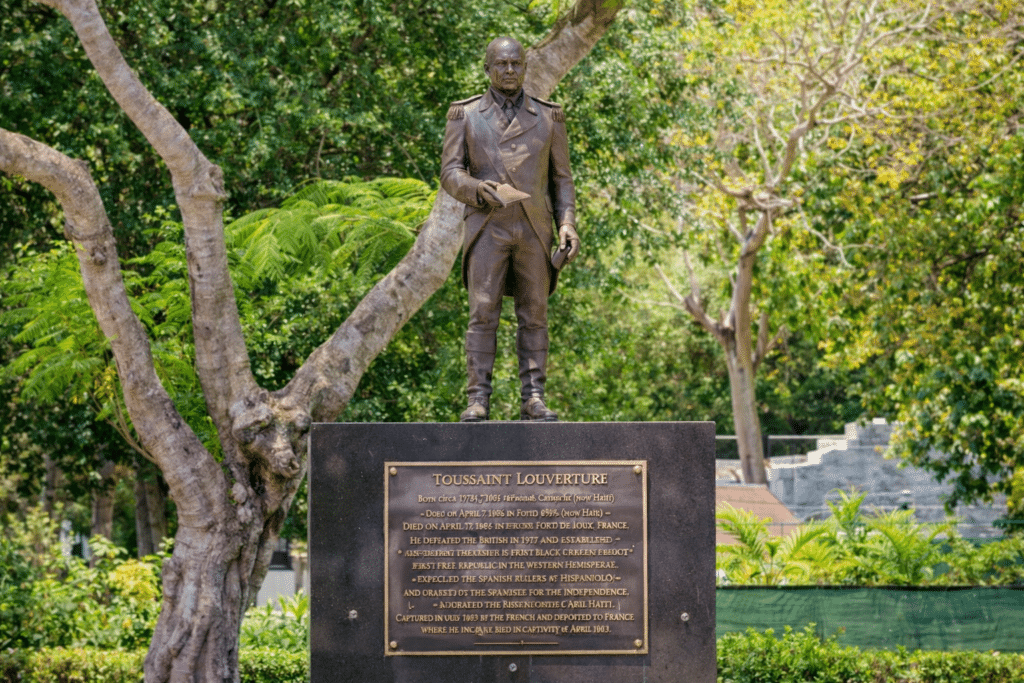
Toussaint Louverture and the contemporary Caribbean
In today’s view of the Caribbean, he represents a major reference point in the region’s political history. He reminds us that the Caribbean was a political laboratory where some of the great questions of the modern era were played out: freedom, citizenship, sovereignty and human rights. Through the Haitian Revolution, he demonstrates that colonial societies are not only spaces dominated by empires. They can also become hotbeds of political transformation capable of redefining the world order. And it is precisely for this reason that his story remains essential to understanding the Caribbean of yesterday, as well as today.
Toussaint Louverture was a military and political leader born into slavery in Saint-Domingue around 1743. He played a central role in the Haitian Revolution, helping to transform a slave insurrection into a political project that led to Haiti’s independence in 1804.
Toussaint Louverture is a major figure in Caribbean history, as he participated in the abolition of slavery in Saint-Domingue and led the colony at the end of the XVIIIᵉ century. His actions influenced abolitionist movements and transformed power relations in the Atlantic world.
Toussaint Louverture was arrested in 1802 by the French authorities following the military expedition sent by Napoleon Bonaparte. Deported to France, he was imprisoned at the Fort de Joux in the Jura region, where he died on April 7, 1803.