Guadeloupe / Dominica – Traditour 2025, the Caribbean in unison on Guadeloupe’s waves

Traditour 2025

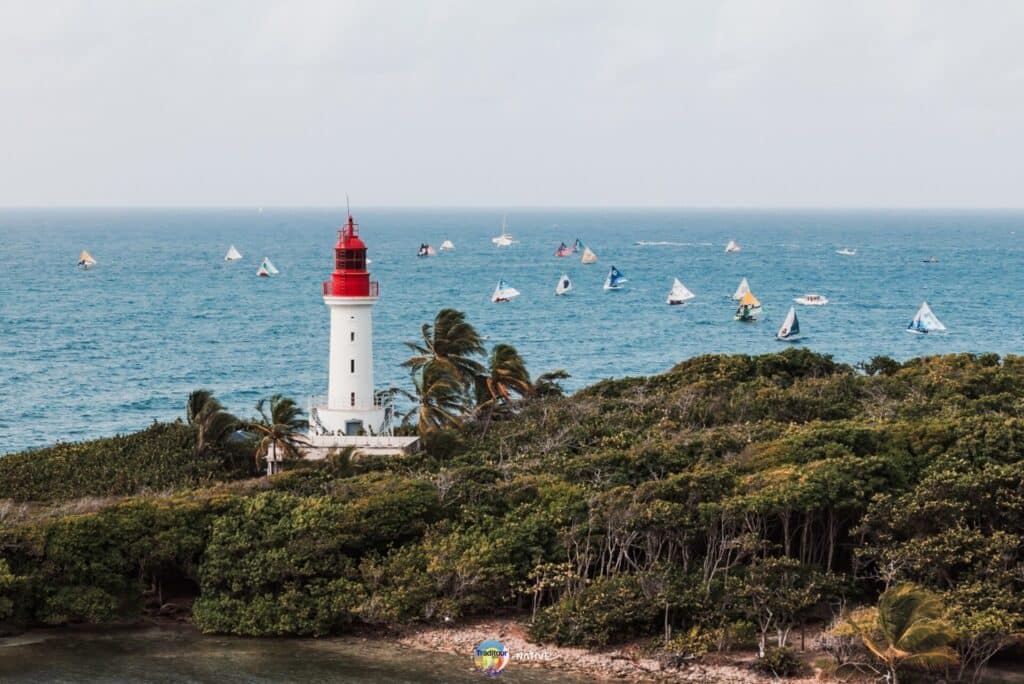
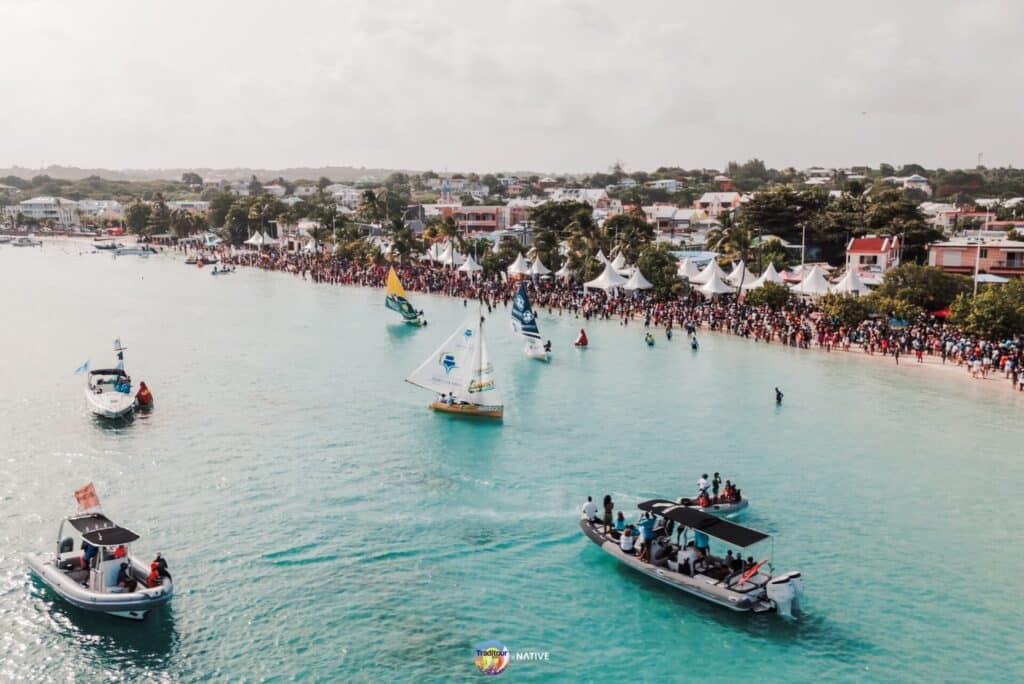
Traditour 2025 in Guadeloupe promises to be a pivotal moment for traditional sailing and Caribbean identity. For the first time, this great maritime adventure will set sail from Portsmouth, Dominica, before skirting the Guadeloupe coast over 14 segments spread over 11 days of racing, from July 3 to 13, 2025.

This edition, co-organized with La Dominique, embodies much more than just a regatta: it symbolizes the union, audacity and transmission of a living heritage, serving the influence of the entire region.

An unprecedented departure from Dominica: symbol of a bridge between the islands

A spirit of openness and regional cooperation

The opening of Traditour 2025 from Dominica marks a historic turning point. This choice, the result of a joint desire on the part of the organizers, reflects a profound desire to bring the peoples of the Caribbean closer together. In the words of ambassador Benoit Bardouille, the aim is to “promote tourism, strengthen cultural exchanges and stimulate economic growth” between the islands.

This departure is more than just a symbolic gesture: it embodies the ability of the territories to transcend borders and turn the sea, once a barrier, into a veritable hyphen. Dominica, long perceived as a distant neighbor, becomes the starting point of a common narrative, woven of solidarity, ambition and shared cultural roots.

Traditour 2025
Traditour 2025
Traditour 2025
Traditour 2025

A springboard for Dominica’s economy and image

Hosting the prologue and start of the Traditour 2025 gives Dominica unprecedented visibility. Hotels, restaurants, craftsmen, tourism service providers and local guides all benefited from the event, generating tangible economic spin-offs. More than 400 participants (crews, organizers, guides and technicians) were mobilized for the event, according to Discover Dominica.

The island’s image is also enhanced: Dominica is positioned as a benchmark maritime destination, capable of hosting an international event while respecting its natural and cultural assets.

Traditour 2025
Traditour 2025
Traditour 2025
Traditour 2025

An exceptional course: 14 segments, 11 days, 39 canoes entered

The major stages, between tradition and innovation

The Traditour 2025 route highlights the diversity of Guadeloupe’s landscapes and heritage. After setting sail from Portsmouth, the Saint canoeists will head for Terre-de-Haut (Les Saintes), before calling at Gourbeyre, Capesterre-Belle-Eau, Petit-Bourg, Pointe-à-Pitre, Baie-Mahault, Sainte-Rose, Port-Louis, Le Moule, La Désirade, Saint-François and Sainte-Anne.

The inclusion of La Désirade, which is often absent from major races, is a first, giving this edition an unprecedented scope. Each stage of the race highlights local characteristics and encourages encounters between locals, visitors and sailors.

Traditour 2025
Traditour 2025

The technical and human challenges of an extraordinary race

Taking part in the Traditour 2025 is a physical, technical and human challenge. Sailing conditions vary from stage to stage: unstable winds, unpredictable currents, reefs around Pointe des Châteaux or La Désirade, all require a thorough knowledge of the elements and absolute mastery of the canoe.

39 crews took part: 22 men, 7 women, 7 mixed and 3 juniors. This diversity is rare in sailing competitions, and illustrates the growing openness of traditional sailing to all generations and genders.

Traditour 2025
Traditour 2025
Traditour 2025

Saint-Sauveur canoes: masterpieces of know-how and innovation

Manufacturing secrets, noble materials and old-fashioned gestures

The canot saintois, at the heart of Traditour 2025, is much more than a boat: it’s a symbol of identity. Handcrafted using traditional methods, it is made from noble woods such as pear, gum, mahogany and mahogany. Every element – hull, sail, mast, ballast and helm – is designed to guarantee performance and safety. The mast and boom are often made of bamboo, and the sails of resistant fabric, adapted to the specific features of each canoe. Careful attention to decoration makes each boat a unique work of art, reflecting the tradition of its home port.

Traditour 2025
Traditour 2025

The transmission of knowledge, a living heritage

Building and sailing a Saint-Sauveur canoe is a real school of life. Old-timers share their knowledge during collective workcamps, evening gatherings, or on board during training outings. The“Traditour A Timoun” program makes the most of this intergenerational transmission: it introduces young people aged 8 to 15 to traditional sailing in an educational setting. This lively process, enriched with each new edition, perpetuates the skills of the past while opening up to innovation (safety, composite materials) in keeping with the charter of the Classe Canot Saintois.

Traditour 2025, a lever for development in Guadeloupe and the Caribbean

Traditour 2025
Traditour 2025

Cultural influence and tangible economic benefits

Each segment of the Traditour 2025 represents an opportunity to showcase local know-how: music, dance, maritime crafts, gastronomy, sea-related professions (carpenters, sailmakers, fishermen, guides). The economic impact is real: accommodation, transport, catering and handicrafts all benefit from the excitement surrounding the race. The media coverage positions Guadeloupe as a leading player in maritime and cultural tourism in the Caribbean, attracting local, regional and international audiences in search of authenticity.

Traditour 2025
Traditour 2025
Traditour 2025
Traditour 2025

A driving force for regional pride, identity and cohesion

Far beyond the numbers, Traditour 2025 plays an essential role in building a shared Caribbean identity. It reactivates memories, promotes local stories, languages and customs. The event brings together institutions (Region, ANASA, communes), private partners, volunteers and artists. The slogan “One ocean. One culture. One celebration” becomes a rallying cry for those who share the idea of a Caribbean connected by the sea and united by its traditions.

Traditour 2025
Traditour 2025

Caribbean spirit blows over traditional sailing

Players’ views, ambitions and future prospects

As the Traditour 2025 approaches, the enthusiasm is palpable. Seasoned sailors like Hugo Thélier meet up with the next generation of sailors from sailing clubs. Marine carpenters are finding recognition and orders. As for the organizers, they see in this race a laboratory for the future of sustainable nautical tourism: job creation, tourist routes around shipyards, promotion of tangible and intangible heritage, development of short circuits around ports of call. Traditour 2025 is part of a sustainable approach, combining memory, innovation and cooperation.

Traditour 2025
Traditour 2025

Traditour 2025 in Guadeloupe is a key event for the entire region. By bringing Dominica and Guadeloupe together in a project to promote their maritime heritage, this edition paves the way for new forms of regional cooperation. More than just a race, Traditour 2025 is an adventure in human identity, a link between generations, islands and cultures. It invites everyone to consider the sea no longer as a frontier, but as a shared, fertile space of both memory and modernity.

Traditour 2025
Traditour 2025
Traditour 2025
Traditour 2025
Traditour 2025
Traditour 2025
Traditour 2025

Leave a Reply

Your email address will not be published. Required fields are marked *

More articles from RK

Journée mondiale du steelpan
EVENT MANAGEMENT
Tolotra

World Steelpan Day: In Trinidad, Young People March Alongside the Pioneers

This Tuesday, August 11, Trinidad and Tobago celebrates World Steelpan Day with a program built around a powerful idea: connecting those who shaped the movement with the generation that must now carry it forward. In Port of Spain, performances by youth orchestras, the Ancestral Walk, and a closing concert come together to create a day where memory does not stand still. It flows, is played out, and is passed on. In Port of Spain, a day designed to symbolize a passing of the torch Pan Trinbago has chosen “Rhythm and Rise: Youth. Discipline. Culture. Community.” as the theme for the 2026 edition. This choice is no coincidence. For this World Steelpan Day, the organization is clearly placing youth at the center of the program, while paying tribute to the movement’s pioneers. The celebration begins at the Massy Trinidad All Stars Steel Orchestra’s panyard, featuring youth ensembles from various regions of

Read More »
Well mudda sick
HISTORY & HERITAGE
Tolotra

“Well mudda sick!”: But what do these three words really mean?

In the Bahamas, three words are enough to express surprise even before you realize what just happened. Good news breaks, a plan falls through, something exceeds expectations: “Well mudda sick!” might pop up in conversation. Taken literally, the meaning is confusing. In Bahamian usage, however, the expression is much simpler than it seems. Three words that don’t really translate word for word “Well mudda sick!” literally translates to “Well, my mother is sick.” But that’s not what a Bahamian means when they use it. Instead, the expression functions more like an exclamation: “Wow!”, “Oh my!”, “Unbelievable!”, or even “My God!”, depending on the situation and tone. It is precisely this discrepancy that makes it interesting. Someone who knows every single English word can understand the sentence on paper and yet completely miss its meaning in conversation. Here, it’s not just the words that matter. Context, speed, and intonation play a

Read More »
Chattel house
HISTORY & HERITAGE
Tolotra

Chattel House: The Hidden Social History Behind Barbados’ Houses

At first glance, they catch the eye with their wooden facades, their colors, and their simple proportions. Yet Barbados’ chattel houses are not merely an architectural signature. Their form reflects a specific social reality: for a long time, some residents could own their homes without owning the land on which they stood. A chattel house therefore had to be movable. Chattel House: A Home Designed for Traveling To understand this unique aspect, we must look back to the post-emancipation period. In Barbados, the emancipation of enslaved people was completed in 1838. However, the island’s land structure remained deeply shaped by the sugar economy. As early as the 17th century, the expansion of sugarcane cultivation had led to the concentration of land in the hands of large plantations. After emancipation, many workers still lived on land belonging to the plantations. They could build a home and own it, without owning the

Read More »

conTACT RK

we'd love to have your feedback on your experience so far

Join The List

Join our Richès Karayib community!  Sign up for our newsletter.

Want To Maximize Your Business Presence On Riches Karayib?

Complete the form to start the application