[SEATRADE 2025] U.S. Virgin Islands, Three islands, an identity shaped by sea and heritage

Iles Vierges Américaines

The U.S. Virgin Islands assert their cultural and tourist uniqueness

At Seatrade Cruise Global 2025 in Miami, the US Virgin Islands (USVI) highlighted what makes them unique in the Caribbean:
a unique cultural heritage, stemming from a Danish history that is still very much alive, combined with an ambitious, sustainable cruise strategy.

Through the voice of Alani Henneman, Deputy Commissioner of the US Virgin Islands Department of Tourism, the archipelago affirms its desire to combine tourism growth with the preservation of its plural identity.

Three islands, three experiences, authentic hospitality

Tourism, the territory’s leading industry, relies heavily on cruises.
With 1.8 million cruise passengers this year and a forecast of 1.9 million next year, the USVI has confirmed its strategic position on Caribbean itineraries.

Cruising is a year-round activity, with a slight low season in summer.
Efforts made during the pandemic to improve port infrastructures are now bearing fruit: better traffic flow, better flow management, and an upscale customer experience.

US Virgin Islands

Comprising St. Thomas, St. John and St. Croix, the US Virgin Islands offer a diversity that is rare in the Caribbean.
Each island boasts its own unique atmosphere:

  • Saint-Thomas, vibrant and dynamic,

  • Saint-John, unspoilt and wild,

  • Saint-Croix, steeped in culture and history.

🎯 Alani Henneman’s stated aim: to make the USVI not just a stopover, but a real gateway to discover the richness of the region.

US Virgin Islands
Saint-Thomas
US Virgin Islands
Saint John
US Virgin Islands
Saint-Croix

Turning a stopover into a cultural immersion

For Alani Henneman, the major challenge now lies in transforming the cruise experience.

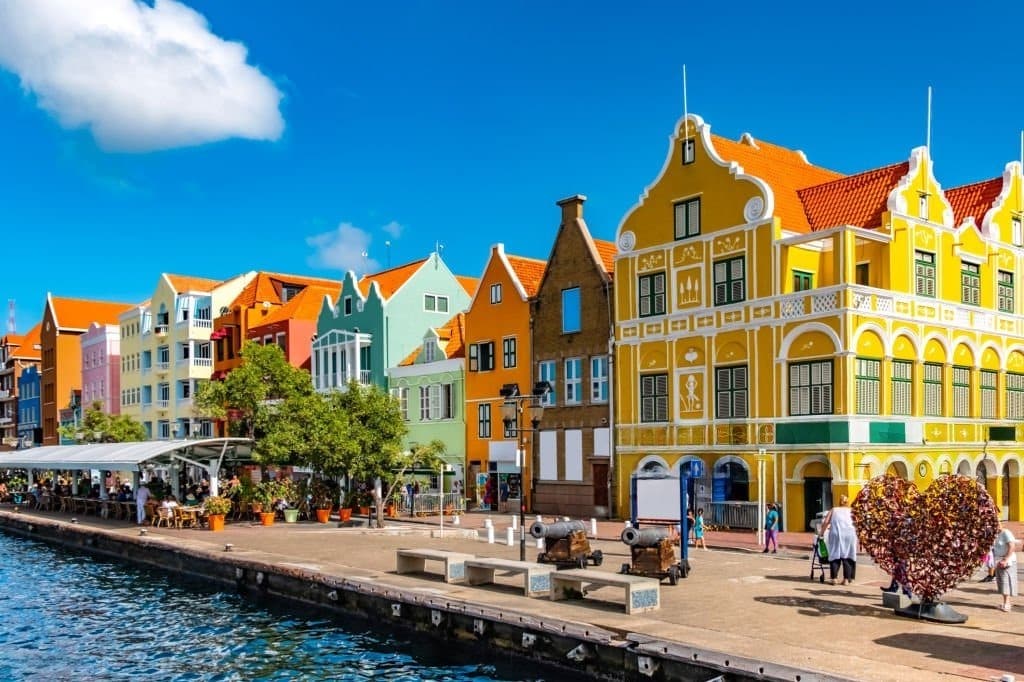
We have a strong cultural identity that we want to share: the quadrille, Danish architecture, our music and traditions. That’s what we want visitors to experience. “she explains.

The development of new themed excursions and the improvement of the hotel offer are at the heart of the strategy.
The ambition is clear: to encourage cruise passengers to extend their stay, by offering them authentic and memorable experiences.

🎯 If she could grant a wish, Alani Henneman would like to see the creation of new hotels, to turn even more passing visitors into long-term tourists.

US Virgin Islands
US Virgin Islands
US Virgin Islands

USVI, between living roots and the future of tourism

At Seatrade Cruise Global 2025, the US Virgin Islands reaffirmed that it is possible to combine historical heritage, modern tourism and a warm welcome.
By capitalizing on the uniqueness of their history and the diversity of their islands, they are charting an ambitious course:
to make every cruise a true voyage to the heart of an authentic, proudly preserved Caribbean identity.

Leave a Reply

Your email address will not be published. Required fields are marked *

More articles from RK

María Elena Llorente recevant un hommage floral, Ballet Nacional de Cuba
DANCE
Tolotra

María Elena Llorente: 50 Years of Ballet in the Service of Cuba

In May 1977, a Cuban dancer took the stage in New York with the Alvin Ailey Dance Theater. In the audience that evening, actor Harry Belafonte watched the performance and would later describe the evening as a significant historical event. This dancer’s name was María Elena Llorente, prima ballerina and ballet mistress of the Ballet Nacional de Cuba. Her career spans fifty years of dance, spent almost entirely with a single company—the one founded by Alicia Alonso in Havana—on an island where, over the decades, classical ballet has become as much a source of national pride as it is an art form. María Elena Llorente, of the Sociedad Pro-Arte at the National Academy It all began at the Sociedad Pro-Arte Musical, a school in Havana where young Cuban women learned the basics of classical ballet even before the official founding of the national ballet company. María Elena Llorente then continued

Read More »
Two men greeting each other with "Asere, qué bolá" in Havana
HISTORY & HERITAGE
Tolotra

“Asere, ¿qué bolá?”, the street greeting Obama dared to use in Cuba

“Asere, ¿qué bolá?”, this Cuban street greeting, was already in common use in Havana’s working-class neighborhoods long before a U.S. president adopted it as well. On Saturday, March 19, 2016, on the eve of the first presidential trip to the island in nearly nine decades, Barack Obama appeared in a Cuban TV sketch alongside Pánfilo, a comedic character well known to viewers on the island, and delivered a “qué bolá” that no one expected to hear from a U.S. head of state. The next day, upon setting foot in Havana, he did it again on Twitter: “¿Que bolá Cuba? Just touched down here.” In just a few hours, two words of Havana slang had bridged the gap between the street and the world of diplomacy. What does “Asere, ¿qué bolá?” mean? Taken literally, “asere” doesn’t really translate, and “qué bolá”—which comes from “bola,” meaning “ball”—doesn’t convey anything more literal than

Read More »
View of Fortaleza Ozama and its Torre del Homenaje tower, in Santo Domingo
HISTORY & HERITAGE
Tolotra

Fortaleza Ozama, the 1502 fortress where a nation was born

In Santo Domingo, on the banks of the Ozama River, the Fortaleza Ozama has weathered more than five centuries of Dominican history without ever falling into the hands of an attacker. It held the father of Dominican independence captive, served as a political prison under the Trujillo dictatorship, and withstood tank fire during the 1965 civil war. Now a UNESCO World Heritage Site, the oldest European-built fortress still standing in the Americas continues to preserve, almost intact, the memory of a nation. An arrival in chains, August 27, 1844 On August 22, 1844, Juan Pablo Duarte was arrested in Puerto Plata. Five days later, on August 27, he entered the Fortaleza Ozama in Santo Domingo. The government led by Pedro Santana had just declared him a traitor to the nation. Duarte, who had planned and led the young Dominican Republic to independence, was imprisoned in the dungeons of the Torre

Read More »

conTACT RK

we'd love to have your feedback on your experience so far

Join The List

Join our Richès Karayib community!  Sign up for our newsletter.

Want To Maximize Your Business Presence On Riches Karayib?

Complete the form to start the application