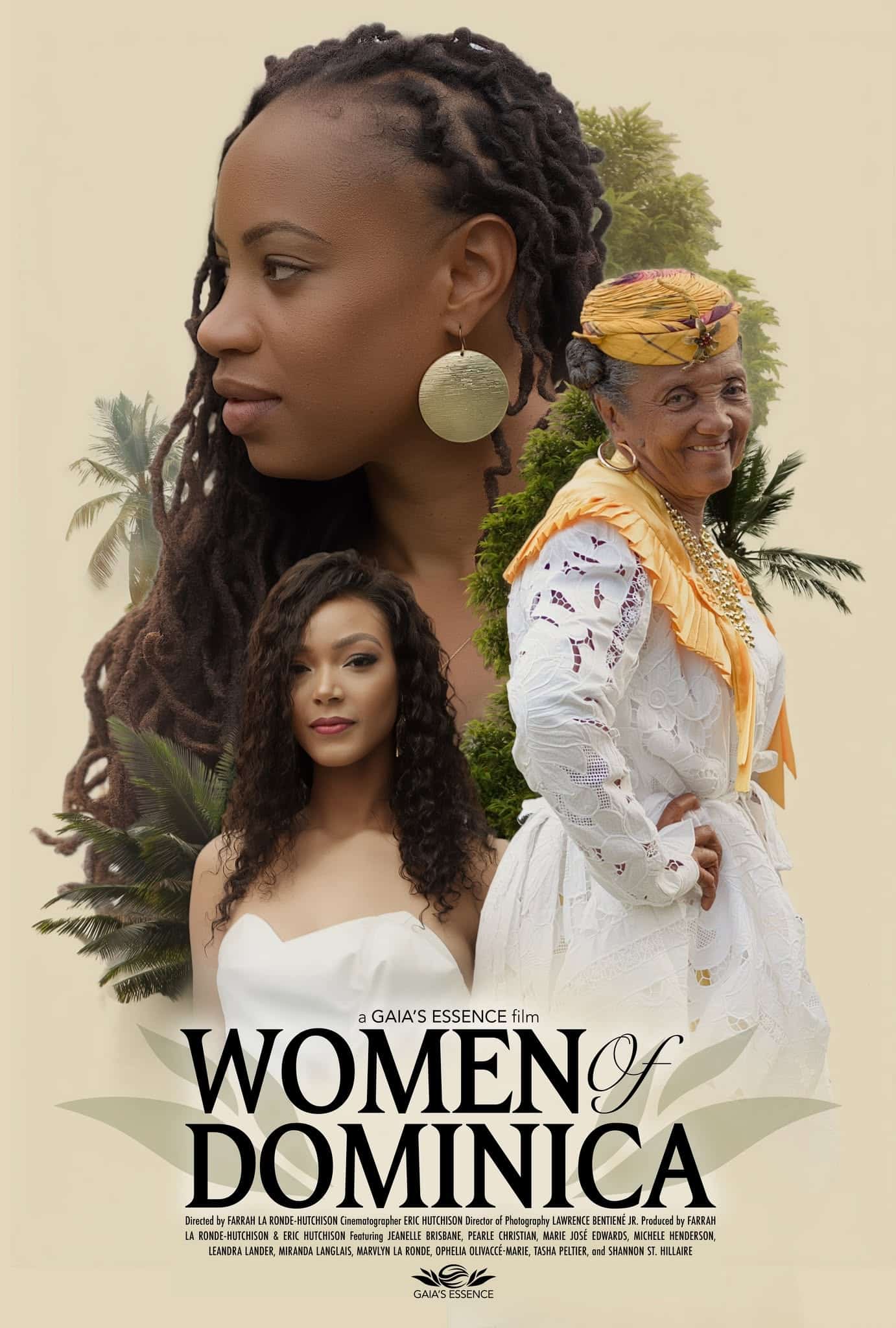
“Women of Dominica” brings together ten women from different generations around a shared narrative: the Creole heritage of Dominica. The documentary, directed by environmental scientist-turned-filmmaker Farrah La Ronde-Hutchison, will have its U.S. premiere on September 5 in Miami, ahead of a wider release scheduled for 2027. Among the voices featured is that of Ophelia Marie, a historic figure in Dominican music.
A story of passing down traditions, between a mother and her daughter
The Women of Dominica project has its roots in a family story. In 2019, Farrah La Ronde-Hutchison’s mother received the Golden Drum, a Dominican award dedicated to the preservation of traditional Creole attire. She had carried this responsibility for more than thirty-five years, passing down to her daughter the techniques and fabrics of a garment that few in younger generations still know how to tie today.
It was this tradition passed down from mother to daughter that gave Farrah La Ronde-Hutchison the idea for a film about the women of her island. She wanted to tell the story—through the experiences of others rather than her own—of what Dominica owes to its keepers of memory: those who teach a dance, a song, or a way of sewing, even though these traditions are never mentioned in any official history book.
Six years of filming for *Women of Dominica*
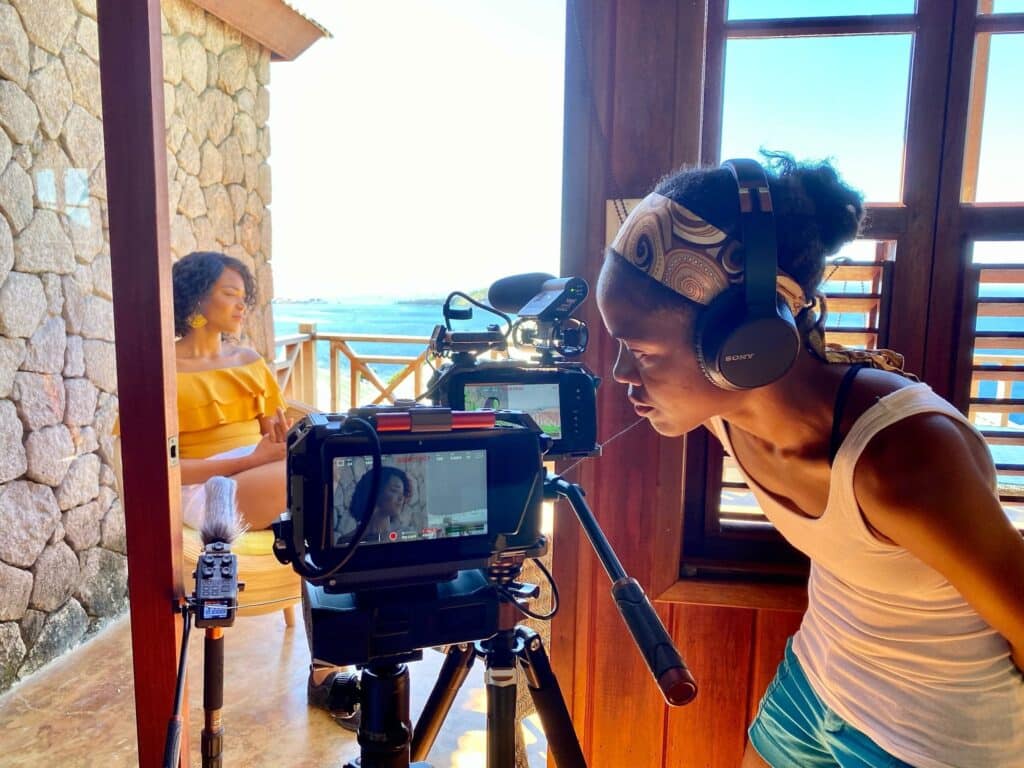
An environmental scientist by training and founder of the NGO Wild Dominica Conservancy, Farrah La Ronde-Hutchison spent six years filming *Women of Dominica*. The documentary brings together ten women from different generations—singers, educators, environmentalists, and cultural ambassadors—who describe Dominica in their own words rather than through the voice of an outside narrator.
The premise of the film is based on a simple idea: letting these women talk about femininity, mentorship, and sisterhood without reducing them to a single role. The project was initially funded through a crowdfunding campaign on Kickstarter, driven by a community that followed the filming for six years before finally getting to see *Women of Dominica* on the big screen.
Ophelia Marie and Nine Other Voices from Dominica
Among the ten women featured in *Women of Dominica* is Ophelia Marie, known as the “godmother of cadence-lypso,” a musical genre that originated in Dominica and which she helped popularize far beyond the French-speaking Caribbean in the 1970s. The film also features conservationist Jeanelle Brisbane, Kalinago cultural ambassador Miranda Langlais, artist and fashion designer Marvlyn La Ronde, and calypso singer Tasha Peltier.
The six other voices from *Women of Dominica* further enrich this portrait: singer-songwriter Michele Henderson, music educator and cultural leader Pearle Christian, educator Leandra Lander, environmental activist Shannon St. Hillaire, and natural resources specialist Marie Jose Edwards. These ten stories are brought together without any apparent hierarchy between national fame and more discreet activism. The common thread running through *Women of Dominica* is less each woman’s individual fame than what they pass on: textile craftsmanship, song, and a way to stand tall in the wake of a hurricane.

Kwéyòl and Resilience at the Heart of the Story
This final theme runs throughout the film. Dominica, like much of the Caribbean, lives with the memory of recurring natural disasters, and *Women of Dominica* chooses to tell the story of community resilience through the lens of women rather than through statistics.
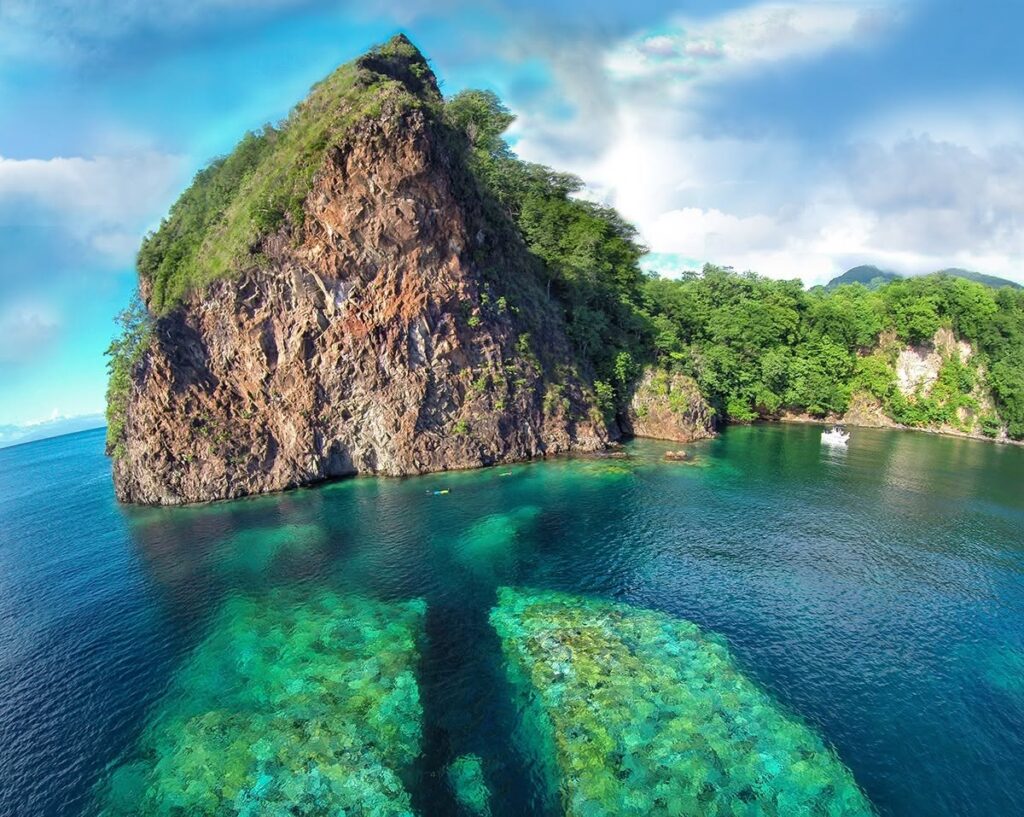
The documentary also focuses on Kwayol, the French-based Creole language still spoken on the island despite its official status as an English-speaking territory, as well as on the cuisine and landscapes featured in the film, including the trail through the Morne Diablotin Nature Reserve. This linguistic aspect serves as a reminder that Dominica, often classified as part of the English-speaking Caribbean, remains a Creole-speaking land—a trait it shares with its French-speaking neighbors, Martinique and Guadeloupe.
Where can you see *Women of Dominica*? The premiere is in Miami on September 5
“Women of Dominica ” is scheduled to screen on Saturday, September 5, in Miami at the Silverspot Cinema as part of the Urban Film Festival. This year, the festival celebrates its 11th edition over Labor Day weekend, with nearly 200 independent films screened throughout the historic Overtown neighborhood and downtown Miami.
This will be the first public screening of *Women of Dominica* in the United States, ahead of its wider release scheduled for 2027. Historic Overtown—a neighborhood long nicknamed the “Harlem of the South” for its central role in Miami’s African American cultural life before being weakened by decades of urban renewal—is not merely a backdrop for the festival. It is in this very neighborhood that the festival’s program kicks off each year, before screenings continue downtown.
An island that has rarely been featured on screen
As we await its release, scheduled for 2027, *Women of Dominica* poses a simple question to anyone who grew up far from their island—or even on it—about what we choose to pass on when we ourselves have received a garment, a song, or a lesson in resistance. Few documentaries to date have given Dominican women themselves a voice to speak about what their island means to them, which makes this film a first step toward, perhaps, other stories of this kind.
“Women of Dominica” is a documentary directed by Farrah La Ronde-Hutchison that brings together ten Dominican women from different generations to explore the themes of cultural transmission, Creole heritage, and resilience in the face of natural disasters. Filming took place over a period of six years.
“Women of Dominica” will be screened on Saturday, September 5, 2026, in Miami at the Silverspot Cinema as part of the Urban Film Festival. This will be its first public screening in the United States, ahead of a wider release scheduled for 2027.
Among the ten women are singer Ophelia Marie, known as the godmother of cadence-lypso; conservationist Jeanelle Brisbane; Kalinago cultural ambassador Miranda Langlais, artist and fashion designer Marvlyn La Ronde, and calypso singer Tasha Peltier.