Zouk: a musical journey from the West Indies to the world

zouk

Zouk is much more than a musical genre: it’s a way of existing, speaking and remembering. Born in the French West Indies in the late 1970s, it united Guadeloupe and Martinique around a common sound, before spreading to all five continents. From Port-Louis to Paris, Luanda to Porto Seguro, Zouk has traced a unique path: that of a music born of crossbreeding, which has become a global cultural symbol.

The roots of word and rhythm

The word Zouk comes from mazouk, a contraction of “creole mazurka”, a European dance adopted and transformed in the Caribbean.
In the 1960s, the word was already used to designate popular balls, often organized in the working-class neighborhoods of Guadeloupe and Martinique. These “zouks” were spaces of freedom where young West Indies expressed their identity through dance and percussion.

Musically, it its roots in local traditions: gwo ka gwo ka and the bèlè two musical forms of African heritage handed down from generation to generation.
These rhythms, carried by drums, tibwa and Creole songs, paved the way for a revolution in sound.

The musical soil before Kassav'

Before the emergence of modern Zouk, the West Indies music scene was in a state of unprecedented effervescence. The cadenza rampa from Haiti, created by Webert Sicot and the compas direct by Nemours Jean-Baptiste circulated widely in the French West Indies. This modern Haitian music, influenced by jazz and biguine, already featured electric guitars, brass and syncopated rhythms.

At the same time, West Indies carnival bands were modernizing their sounds: the “vidés”, popular carnival parades, served as creative laboratories. It wasin this ferment that Zouk wasborn , a bold synthesis of tradition and modernity.

1979: the birth of modern Zouk

1979 marked the beginning of a new era. In Guadeloupe, Pierre-Édouard Décimus, former bassist with Les Vikings de la Guadeloupe, joins forces with Fréddy Marshall to create an innovative project: modernizing West Indies carnival rhythms using contemporary recording techniques.
They were soon joined by Georges Décimus and Jacob Desvarieux a guitarist and arranger trained in Guadeloupe, Martinique and Senegal.

The result was Kassav’ and a debut album, Love and Ka Dance, released in 1979. The group’s name, inspired by the cassave, a traditional manioc pancake, symbolizes the project’s cultural roots. Modern Zouk was born: powerful percussion, electric guitars, energetic bass lines and lyrics in Creole.

zouk
©Kassav'
zouk
©Kassav'

From "zouk béton" to "zouk love

Kassav”s first tracks laid the foundations of zouk béton an energetic, fast-tempo collective music.
In 1984, the song Zouk la sé sèl médikaman nou ni became an anthem. Its message – “Zouk is our only remedy” – illustrates the social power of this music: a way of healing through celebration and dance. In the mid-1980s, the genre evolved towards slower, more romantic rhythms: zouk love. Under the impetus of Patrick Saint-Éloi and Jocelyne Béroard, this new form made couples, tenderness and sensuality its main themes. Zouk becomes a universal language of emotions.

zouk
©KASSAV'
zouk
©KASSAV'

The international influence of Zouk

Africa, a land of echoes and mergers

He finds a natural resonance in Africa. Artists such as Monique Séka in Côte d’Ivoire or Oliver N’Goma in Gabon have taken the style and given it new colors.
In Angola, the encounter between Zouk and semba led to the birth of kizomba, a dance and music now known the world over.
These exchanges have strengthened the ties between Africa and the West Indies, renewing the thread of a shared history through music.

Europe and France: from identity symbol to public recognition

In France, it first became the cri de coeur of exiled West Indies. Then it seduced the entire French public. In 1988, Kassav’ won a Victoire de la Musique, a major accolade for a Caribbean group. Two years later, Zouk Machine propelled the genre into the charts with Maldòn (music in the skin), a song that remained at the top of the charts for several weeks.
In 2009, Kassav’ celebrates 30th anniversary with a historic concert at the Stade de France symbolizing its international reputation.

Brazil: the birth of "Brazilian zouk

In the mid-1990s, Brazilian lambada dancers adopted Zouk tunes for their choreography.
The result was Brazilian zouk a sensual, fluid dance style that perpetuates the musical structure of West Indies zouk while adapting it to Brazilian culture.
Today, this fusion is taught in dance schools on every continent, proof of the vitality of the genre.

Zouk in the digital age

Its evolution follows the technological transformations of music: drum machines, synthesizers, digital recordings.
New sub-genres are emerging, such as ghetto zouk and urban kiz, which incorporate elements of R&B and hip-hop.
Contemporary artists such as Admiral T, Kim or Stony perpetuate this heritage by blending it with urban pop. Even in some modern productions, such as those by Aya Nakamura the influence of zouk-love is still perceptible.

Language, memory and identity

Zouk has also revolutionized the place of Creole in music. By singing in their mother tongue, the members of Kassav’ affirmed the cultural dignity of the Antilles and paved the way for international recognition of Creole as an artistic language in its own right. The worldwide success of Zouk proved that a local language could touch the world without denying itself.

Inheritance and transmission

More than forty years after its creation, Zouk remains a pillar of Caribbean heritage. The death of Jacob Desvarieux on July 30, 2021, sparked a wave of emotion throughout the Caribbean and France. Official tributes hailed a pioneer who, with Kassav’, gave the world a rooted and universal music. Today, a new generation of artists is pursuing this adventure, between fidelity and modernity. Festivals, broadcasts and digital archives help pass on this collective memory to an ever-wider audience.

zouk
©KASSAV'

Born of an African and Creole heritage, nourished by the history of the French West Indies, Zouk has conquered the planet without denying its soul. It’s a music of freedom, sharing and pride. By uniting cultures through rhythm and language, Zouk reminds us that music born on the margins can become a universal symbol.
Forty years after its birth, it continues to inspire, unite and move – proof that the Caribbean heart still beats to the tempo of Zouk.

Leave a Reply

Your email address will not be published. Required fields are marked *

More articles from RK

French
NEWS
Tolotra

396 million people speak French: the 2026 report reveals

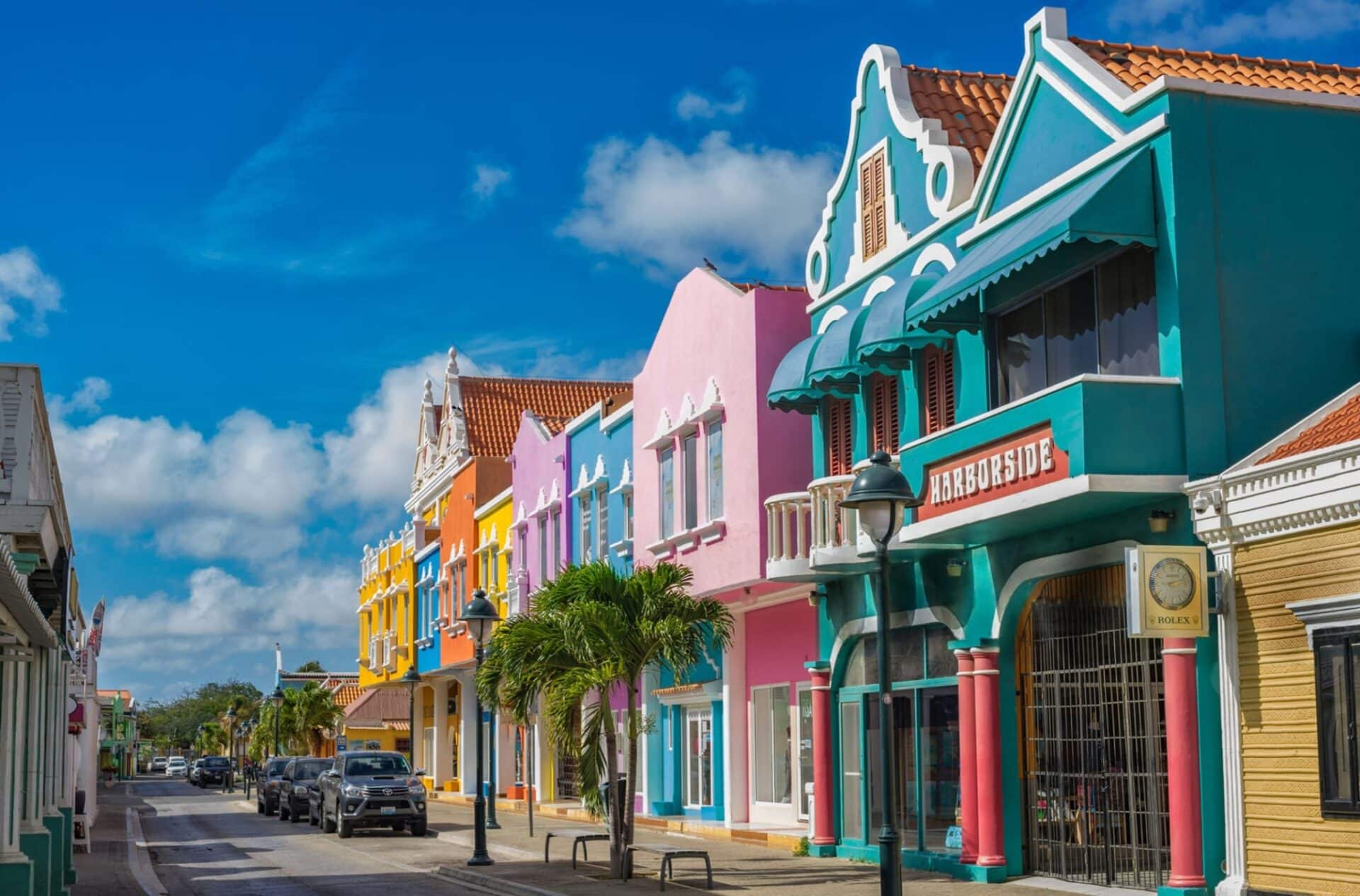
The Organisation internationale de la Francophonie has published a figure that reshuffles the deck in the global language debate: 396 million people now speak French. With this total, the French language in the world rises from 5th to 4th position behind English, Mandarin and Spanish, but ahead of standard Arabic. This is more than just an announcement. It marks a fundamental change in the place of French on the international stage, and confirms that the language continues to make headway in strategic areas such as education, economic exchanges, digital technology and cultural mobility. Global progress changes the narrative around French For years, French has often been portrayed as a language of great influence, but weakened in the face of global competition. The OIF’s 2026 report introduces an important corrective. The French language in the world is not only holding its own: it is gaining ground in terms of the number
Read More »
Bonaire
TOURISM
Tolotra

Bonaire, a Caribbean island built around the sea and conservation

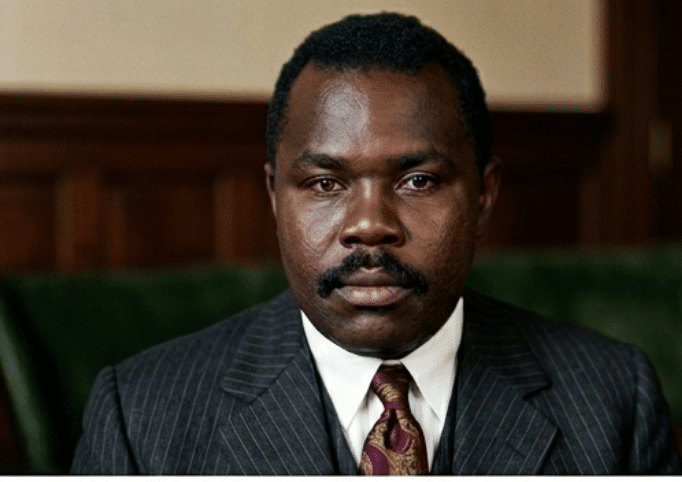
In the southern Caribbean, off the coast of Venezuela, Bonaire is a territory in a class of its own. Less publicized than its neighbors Aruba and Curaçao, the island has built its identity around one central principle: the protection of its environment. Here, the sea structures the economy, landscapes and customs, while tourism development has been gradual and controlled. For travelers, Bonaire offers a clear picture: a compact island, visible natural areas, an accessible coastline and an organization geared towards sustainability. An island structured by its marine park Since 1979, Bonaire’s entire coastline has been protected by the Bonaire National Marine Park which completely surrounds the island. This marine area regulates nautical activities and aims to preserve the coral reefs, considered among the best preserved in the Caribbean. One of the island’s special features is the direct accessibility of its marine sites. Diving and underwater observation can be carried out
Read More »
Marcus Garvey
HISTORY & HERITAGE
Tolotra

Jamaica – Marcus Garvey, Jamaican hero of international renown

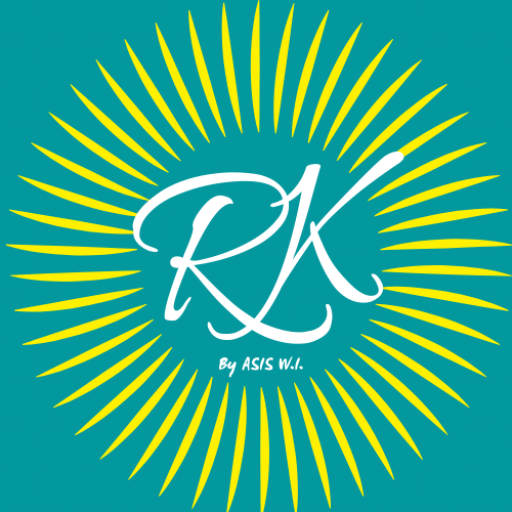
Marcus Garvey remains one of the most influential figures to emerge from the Caribbean. Born in Jamaica at the end of the 19th century, he transformed a local experience into a political and cultural project of international scope. At a time when black populations faced deeply rooted systems of exclusion, Marcus Garvey proposed a structured vision based on dignity, organization and autonomy. Recognized today as a national hero in Jamaica, he is much more than a historical symbol. His story helps us understand how the Caribbean helped shape major intellectual and political movements on a global scale. His name continues to circulate in contemporary debates on identity, memory and the development of societies born out of colonial history. From Jamaican origins to the formation of a committed conscience He was born on August 17, 1887 in St. Ann’s Bay, Jamaica, into a modest family. Very early on, he developed a
Read More »

conTACT RK

we'd love to have your feedback on your experience so far

Join The List

Join our Richès Karayib community!  Sign up for our newsletter.

Want To Maximize Your Business Presence On Riches Karayib?

Complete the form to start the application