Patrick Lamon: Born with yole sailing in his blood, driven by the call of the sea

Patrick Lamon

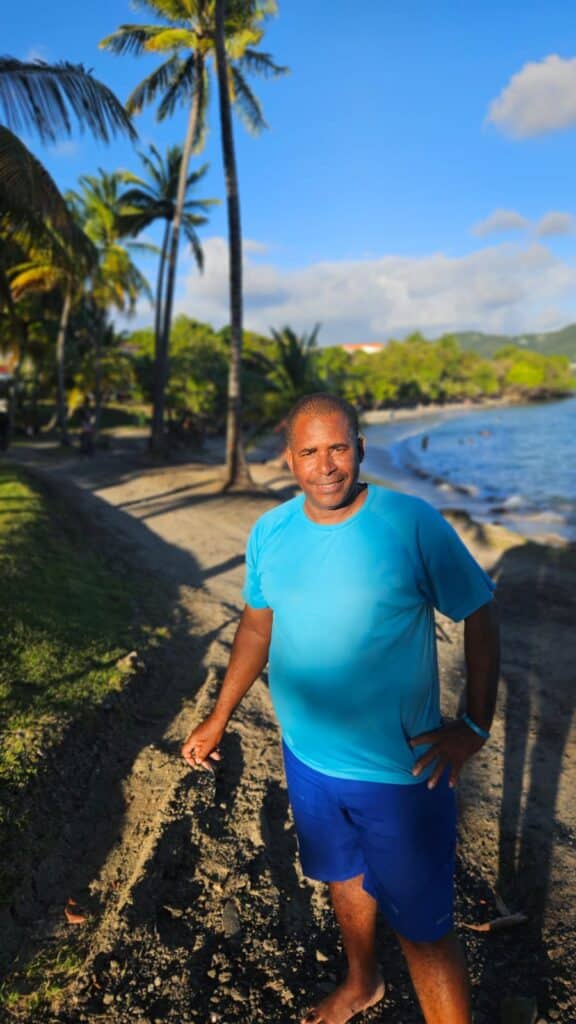
There are voices that cross generations, carried by the wind, the sea and memory. Patrick Lamon, president of the Yole Net 2000 association in Le Marin, is one of them. He didn’t learn the yole, he was born into it. Just as one inherits a name, a language, a collective narrative. His story doesn’t begin on the waves, but in a line of sailors where every gesture, every sail hoisted, tells of a past rooted in wood and salt.

A name from afar, between gum tree and skittle pin

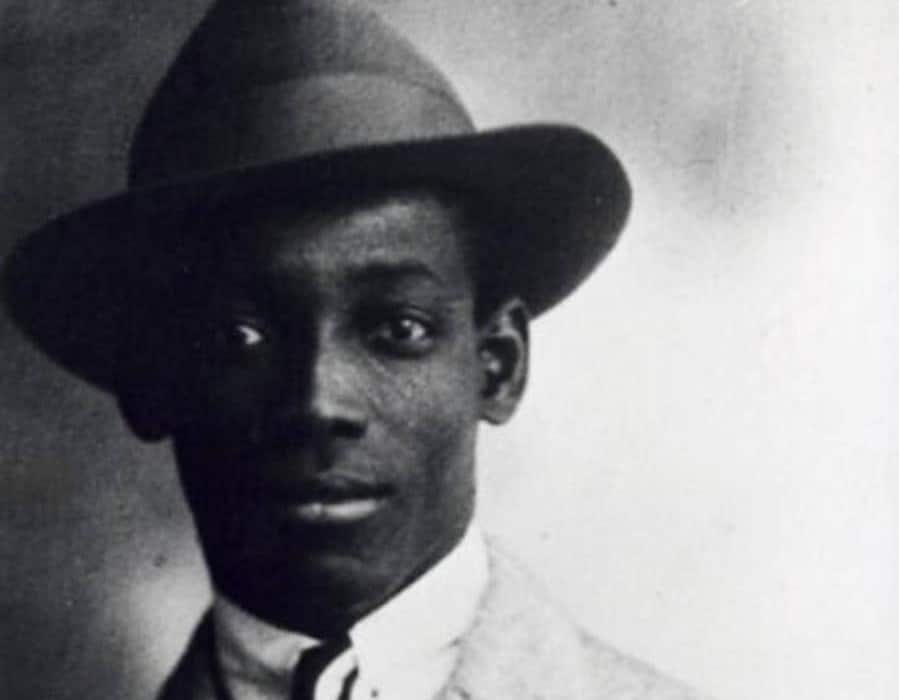
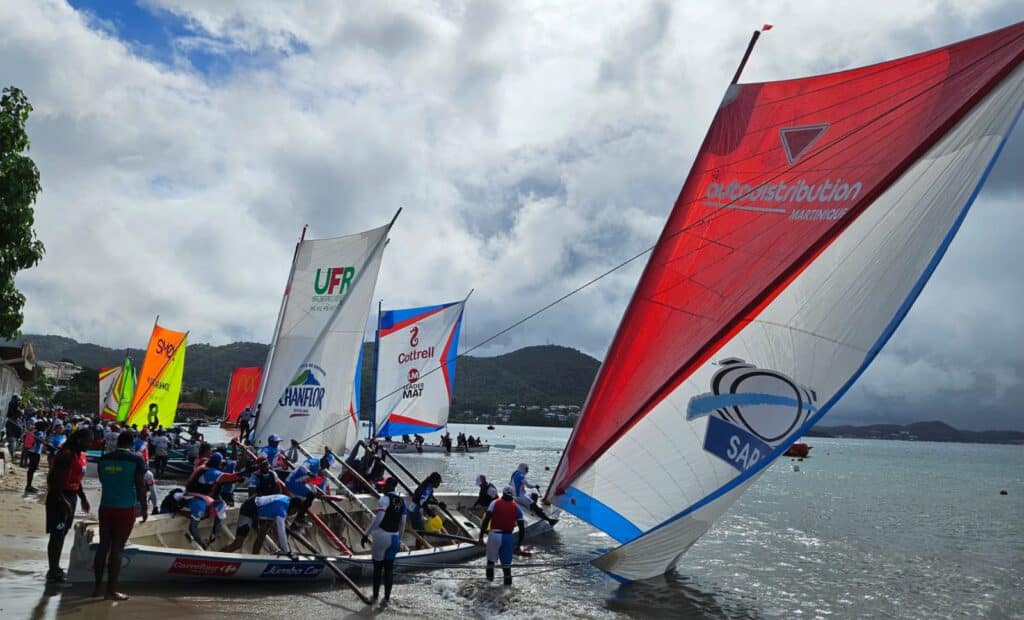
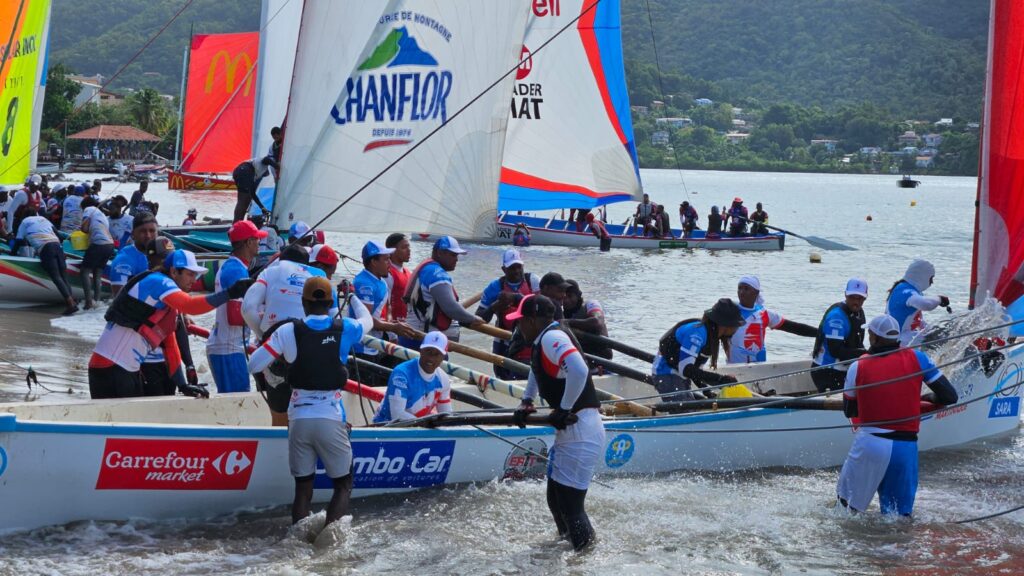
For the Lamon family, the sea is as much a tradition as a way of life. The grandfather used to set sail in a gum tree, carved from a tree trunk. Father Didier Lamon made history by becoming the first winner of the official Tour de la Martinique in 1985. As for Patrick Lamon, he watches silently, like an attentive child, before climbing aboard once the fishing is done.
“We’d take the skiff and set sail. That’s how it was.”

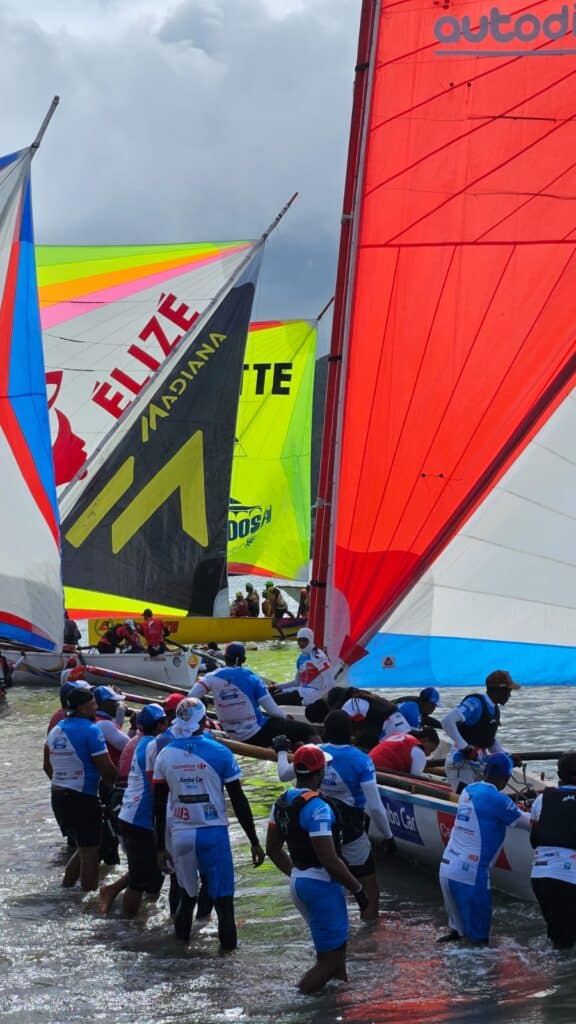
The yole was not born for racing, but for survival. It’s the result of an adaptation: when the gum tree became too unstable, sailors rethought its shape. This transformation gave rise to the yole martiniquaise, a hybrid craft, both rounded and flat, designed to take on the sea with agility and finesse.

Patrick Lamon
Patrick Lamon

Memories are anchored in the hull

Patrick Lamon talks about the evolution of the yole as a link between past and future. He remembers sails made of flour sacks, gumboats equipped with two sails, and the first improvised races.
“There were seven yoles with the békés, even before 1985.”
Then came composite materials, carbon sails and racing techniques. But what he remembers most of all is the resourcefulness of the sailors, their ability to turn this traditional craft into a heritage emblem. In 2022,UNESCO recognized the Yole of Martinique as part of humanity’s intangible cultural heritage.

Patrick Lamon

Presiding, yes. But above all to pass on

Becoming president of Yole Net 2000 was never a personal goal. “It’s not about the title. It’s because I was born into it. I have the knowledge.” What drives him is transmission. To young people, the curious, adults in search of the sea and meaning. Although initiation sometimes begins at the age of 6 in schools, the association prefers to welcome young people from the age of 15 or 16, when maturity allows a better understanding. Reading the sea, understanding the wind, choosing the right sail: these are all part of an applied science.
“Today, we teach them the compass rose. It used to be different.”

Patrick Lamon

A boat as a school of life

For Patrick Lamon, the yole is much more than a sport. It’s a school of rigor, solidarity and responsibility.
“It’s like a company. If just one yachtsman doesn’t play along, we drift.”
Here, the individual disappears in favor of the collective. You have to listen to the sea, follow the helmsman’s orders and be one with the team. Learning is open to all. The only prerequisite: not to be afraid.

A volunteer passion, a future to build

Yachtsmen sail for passion. It’s all about volunteering. Rewards are rare, sometimes symbolic: a trip, a tribute, discreet recognition.
But Patrick Lamon dreams bigger. He wants the practice of the Yole to become a real profession.
Patrick Lamon imagines a future in which certified instructors train new generations, within a structured, recognized and remunerated framework.
“One day, I’d like it to be taught, officially recognized, paid for.”
He’s thinking about bilingual training, welcoming tourists and opening up to international markets. He’s also thinking about entrepreneurs:
“Look at a skiff. Coordination, strategy, quick reaction: it’s a model.”

A Caribbean dream beyond borders

The yole has already plied the waters of Guadeloupe, Trinidad and Saint Kitts.
“In Trinidad, we brought in seven boats. In Guadeloupe, we sailed.”
His dream: to see Yole weave bridges between islands, uniting Caribbean peoples around this craft that speaks a universal language. A way of uniting know-how and memories, to the rhythm of shared winds.

Patrick Lamon
Patrick Lamon
Patrick Lamon

The yole is all this... and more

A sport, of course. But also a school of life, a tool for transmission, a mirror of society. The art of sailing, literally and figuratively. When the clouds gather, the wind picks up and the sea gets rough, Patrick Lamon stays the course. He chooses the right sail, the right team. And he holds on. Just as you hold on to what you love.

Watch the exclusive video interview

Leave a Reply

Your email address will not be published. Required fields are marked *

More articles from RK

Oil Down
CULINARY ART
Tolotra

Grenada — Oil Down, the national dish that tells the island’s story

Oil Down, Grenada’s national dish, fits into a single pot but represents much more than just a meal. Breadfruit, callaloo, coconut milk, dumplings, meats, and spices all simmer together in it. As the liquid evaporates, something else takes shape: a way of cooking, of passing on traditions, and of coming together. A pot that brings people together It all starts with a simple gesture. We fill the pot in layers. The breadfruit takes its place alongside the vegetables, greens, dumplings, and pieces of meat. The seasoned coconut milk envelops the whole mixture before it’s cooked slowly, without stirring. This arrangement is just as important as the ingredients. Preparing this dish isn’t just about combining ingredients. It’s about creating a dish where each element cooks alongside the others and gradually absorbs the flavors around it. The pot then becomes a reflection of the meal itself. Multiple ingredients, multiple journeys, but a

Read More »
Ser’i Neger
HISTORY & HERITAGE
Tolotra

Ser’i Neger, 231 years after the Battle of Tula.

In Curaçao, Ser’i Neger today bears witness to the history of the former Fontein plantation. On August 25, 1795, this landscape became one of the main theaters of the revolt led by Tula against slavery. Two hundred thirty-one years later, the story of this battle has returned to the forefront, along with an urgent heritage issue. How can we preserve a site where a crucial chapter in Curaçao’s struggle for freedom was written? On August 17, 1795, it all began in Kenepa Eight days before the Battle of Ser’i Neger, the revolt began at the Kenepa plantation, now also known as Knip. On August 17, enslaved people, led by Tula, refused to return to work and demanded their freedom. The official website of Curaçao describes this event as the beginning of the most significant resistance to slavery in the island’s history. The movement was not limited to Kenepa. The insurgents

Read More »
¿Qué lo que?
HISTORY & HERITAGE
Tolotra

“¿Qué lo que?” Three words, three letters, one identity

In the Dominican Republic, an encounter can begin with three words that might baffle anyone who translates Spanish literally. A friend arrives, a message pops up, a conversation begins, and out comes this familiar phrase: “¿Qué lo que?” It doesn’t require a complicated explanation. Above all, it establishes a connection. Behind this phrase lies a social convention, a way of speaking, and, now, three very recognizable letters: KLK. What does “¿Qué lo que?” really mean? The closest equivalent would be “what’s new?”, “what’s going on?”, or, in English, “what’s up?”. SpanishDictionary classifies the expression as a regionalism used in Dominican Republic and as a greeting. In other words, a literal translation isn’t very helpful. In conversation, “¿Qué lo que?” primarily serves as a casual opening. The response, therefore, doesn’t need to be a detailed account of one’s day. Like many greetings, the expression can simply establish a sense of closeness

Read More »

conTACT RK

we'd love to have your feedback on your experience so far

Join The List

Join our Richès Karayib community!  Sign up for our newsletter.

Want To Maximize Your Business Presence On Riches Karayib?

Complete the form to start the application