Patrick Lamon: Born with yole sailing in his blood, driven by the call of the sea

Patrick Lamon

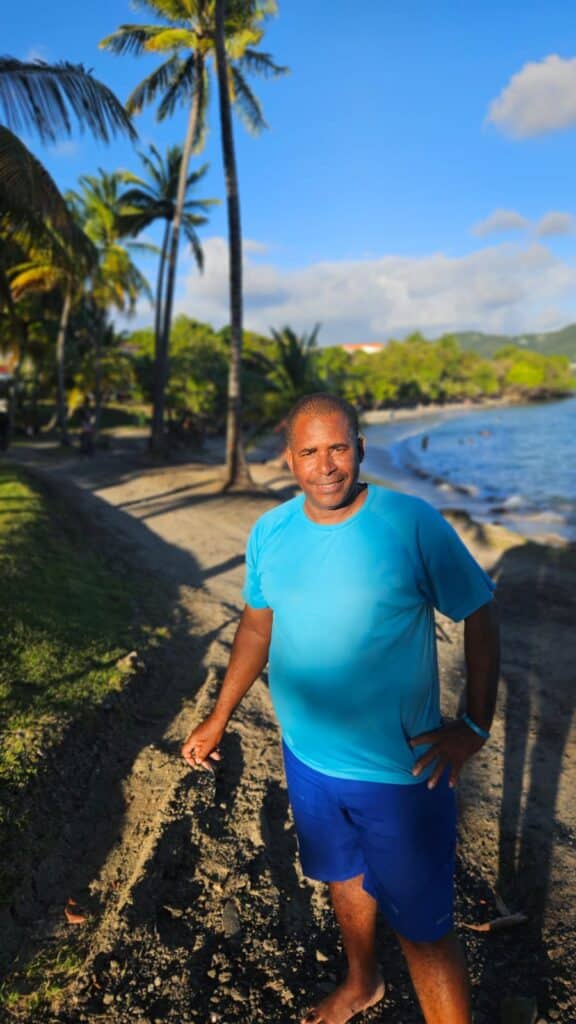
There are voices that cross generations, carried by the wind, the sea and memory. Patrick Lamon, president of the Yole Net 2000 association in Le Marin, is one of them. He didn’t learn the yole, he was born into it. Just as one inherits a name, a language, a collective narrative. His story doesn’t begin on the waves, but in a line of sailors where every gesture, every sail hoisted, tells of a past rooted in wood and salt.

A name from afar, between gum tree and skittle pin

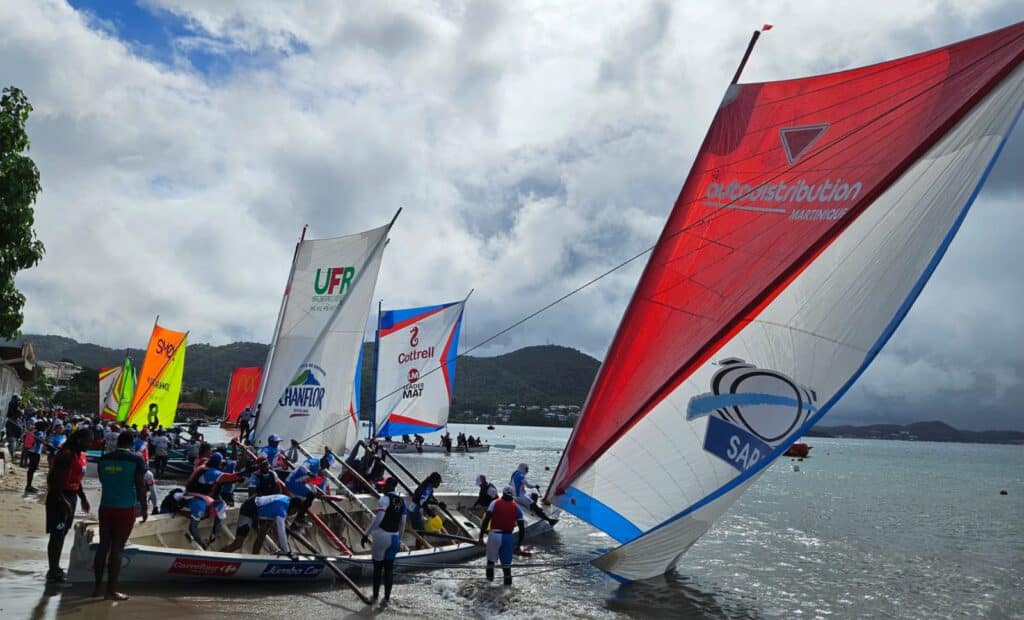
For the Lamon family, the sea is as much a tradition as a way of life. The grandfather used to set sail in a gum tree, carved from a tree trunk. Father Didier Lamon made history by becoming the first winner of the official Tour de la Martinique in 1985. As for Patrick Lamon, he watches silently, like an attentive child, before climbing aboard once the fishing is done.
“We’d take the skiff and set sail. That’s how it was.”

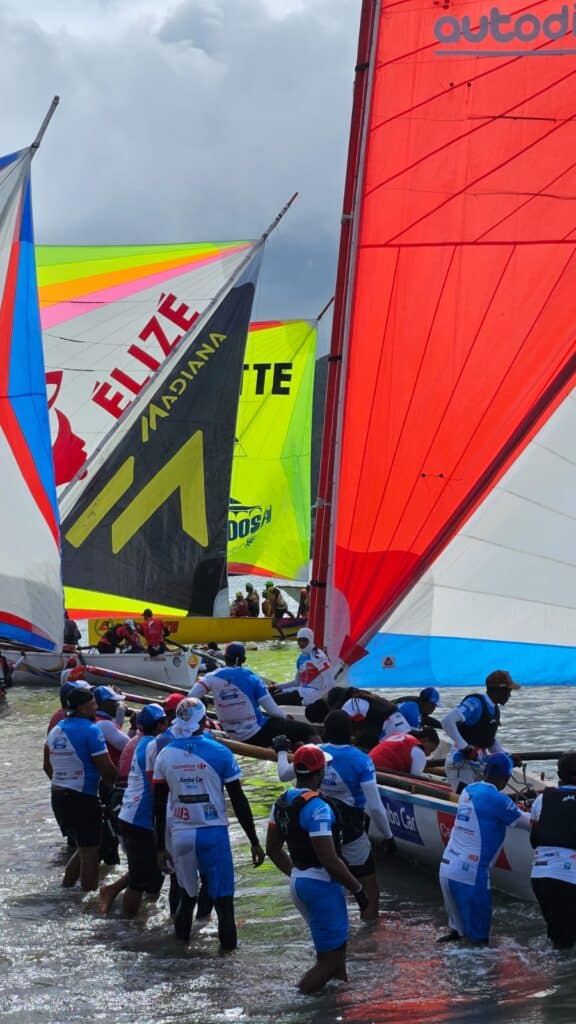
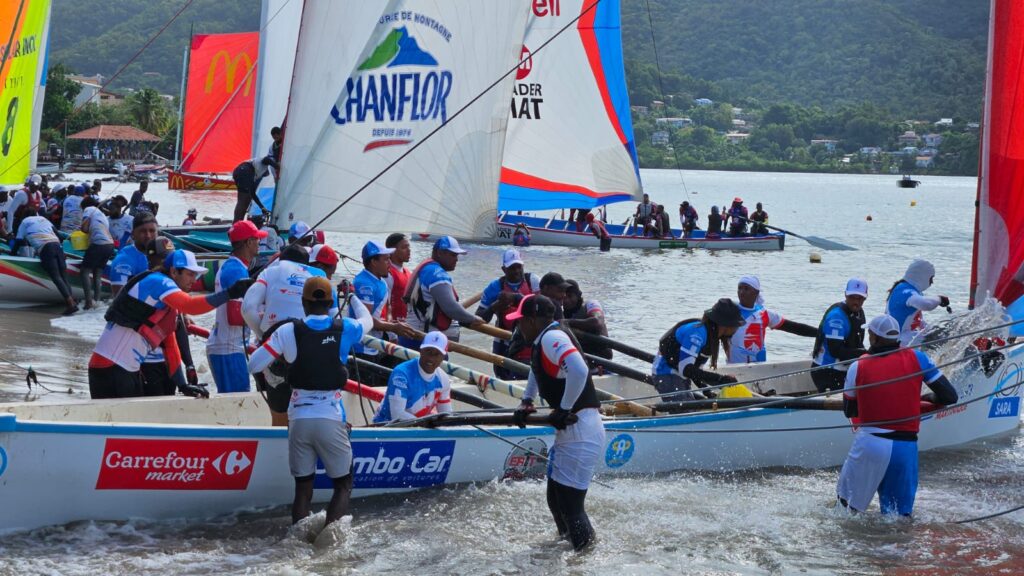
The yole was not born for racing, but for survival. It’s the result of an adaptation: when the gum tree became too unstable, sailors rethought its shape. This transformation gave rise to the yole martiniquaise, a hybrid craft, both rounded and flat, designed to take on the sea with agility and finesse.

Patrick Lamon
Patrick Lamon

Memories are anchored in the hull

Patrick Lamon talks about the evolution of the yole as a link between past and future. He remembers sails made of flour sacks, gumboats equipped with two sails, and the first improvised races.
“There were seven yoles with the békés, even before 1985.”
Then came composite materials, carbon sails and racing techniques. But what he remembers most of all is the resourcefulness of the sailors, their ability to turn this traditional craft into a heritage emblem. In 2022,UNESCO recognized the Yole of Martinique as part of humanity’s intangible cultural heritage.

Patrick Lamon

Presiding, yes. But above all to pass on

Becoming president of Yole Net 2000 was never a personal goal. “It’s not about the title. It’s because I was born into it. I have the knowledge.” What drives him is transmission. To young people, the curious, adults in search of the sea and meaning. Although initiation sometimes begins at the age of 6 in schools, the association prefers to welcome young people from the age of 15 or 16, when maturity allows a better understanding. Reading the sea, understanding the wind, choosing the right sail: these are all part of an applied science.
“Today, we teach them the compass rose. It used to be different.”

Patrick Lamon

A boat as a school of life

For Patrick Lamon, the yole is much more than a sport. It’s a school of rigor, solidarity and responsibility.
“It’s like a company. If just one yachtsman doesn’t play along, we drift.”
Here, the individual disappears in favor of the collective. You have to listen to the sea, follow the helmsman’s orders and be one with the team. Learning is open to all. The only prerequisite: not to be afraid.

A volunteer passion, a future to build

Yachtsmen sail for passion. It’s all about volunteering. Rewards are rare, sometimes symbolic: a trip, a tribute, discreet recognition.
But Patrick Lamon dreams bigger. He wants the practice of the Yole to become a real profession.
Patrick Lamon imagines a future in which certified instructors train new generations, within a structured, recognized and remunerated framework.
“One day, I’d like it to be taught, officially recognized, paid for.”
He’s thinking about bilingual training, welcoming tourists and opening up to international markets. He’s also thinking about entrepreneurs:
“Look at a skiff. Coordination, strategy, quick reaction: it’s a model.”

A Caribbean dream beyond borders

The yole has already plied the waters of Guadeloupe, Trinidad and Saint Kitts.
“In Trinidad, we brought in seven boats. In Guadeloupe, we sailed.”
His dream: to see Yole weave bridges between islands, uniting Caribbean peoples around this craft that speaks a universal language. A way of uniting know-how and memories, to the rhythm of shared winds.

Patrick Lamon
Patrick Lamon
Patrick Lamon

The yole is all this... and more

A sport, of course. But also a school of life, a tool for transmission, a mirror of society. The art of sailing, literally and figuratively. When the clouds gather, the wind picks up and the sea gets rough, Patrick Lamon stays the course. He chooses the right sail, the right team. And he holds on. Just as you hold on to what you love.

Watch the exclusive video interview

Leave a Reply

Your email address will not be published. Required fields are marked *

More articles from RK

Caribbean Cinema
FILM & VIDEO
Tolotra

Stories of Caribbean Cinema, Maroon Culture, Transmission, and the Imagination. Texts by Guillaume Robillard. Ciclic, 2026

The history of Caribbean cinema continues its journey through the 1980s. After three episodes devoted to the early developments of several cinematic movements in the region, this fourth installment brings together two films from Martinique and one from Curaçao. From the “marronnage” in *Le Sang du flamboyant* to the international trajectory of *Rue Cases-Nègres*, and on to the unique worldof *Almacita di Desolato*, these three works explore different relationships to memory, oral tradition, Africa, and Caribbean imaginaries. This article is the fourth installment in a series of ten. The first three are already available on Richès Karayib, and six more will continue this story through the 2020s. 1981: MARTINIQUE — *The Blood of the Flamingo*, by François Migeat This film is unique in Caribbean cinema. Indeed, its director is a “Metropolitan” (that is, a white man from mainland France who had no deep-rooted ties to the French West Indies) who

Read More »
Doubles, plat de rue de Trinité-et-Tobago composé de deux baras frits et de pois chiches au curry
CULINARY ART
Tolotra

Doubles: The Story of Emamool Deen Behind Trinidad’s Street Food Dish

In Princes Town, in southern Trinidad and Tobago, the “doubles” were born in 1936 from a simple gesture: a customer asking for a second piece of bread. At the time, Emamool Deen and his wife Rasulan were selling curry chickpeas on a single piece of fried bread, unaware that they were inventing the country’s most iconic street food. Nearly a century later, doubles still tell the story of Indo-Trinidadian heritage through this chickpea sandwich, which has become a national symbol. A Morning in Princes Town, 1936 At 4:00 a.m., in a courtyard in Princes Town, in the southern part of Trinidad and Tobago, Rasulan Deen lights the fire that will heat the coconut oil. Her husband, Emamool Deen, is boiling the chickpeas that the couple was able to buy by selling a goat, the only possession they had. The year is 1936, and according to oral tradition preserved by several

Read More »
María Elena Llorente recevant un hommage floral, Ballet Nacional de Cuba
DANCE
Tolotra

María Elena Llorente: 50 Years of Ballet in the Service of Cuba

In May 1977, a Cuban dancer took the stage in New York with the Alvin Ailey Dance Theater. In the audience that evening, actor Harry Belafonte watched the performance and would later describe the evening as a significant historical event. This dancer’s name was María Elena Llorente, prima ballerina and ballet mistress of the Ballet Nacional de Cuba. Her career spans fifty years of dance, spent almost entirely with a single company—the one founded by Alicia Alonso in Havana—on an island where, over the decades, classical ballet has become as much a source of national pride as it is an art form. María Elena Llorente, of the Sociedad Pro-Arte at the National Academy It all began at the Sociedad Pro-Arte Musical, a school in Havana where young Cuban women learned the basics of classical ballet even before the official founding of the national ballet company. María Elena Llorente then continued

Read More »

conTACT RK

we'd love to have your feedback on your experience so far

Join The List

Join our Richès Karayib community!  Sign up for our newsletter.

Want To Maximize Your Business Presence On Riches Karayib?

Complete the form to start the application