Bequia, the maritime soul of the Grenadines

Bequia

An island apart in the Caribbean

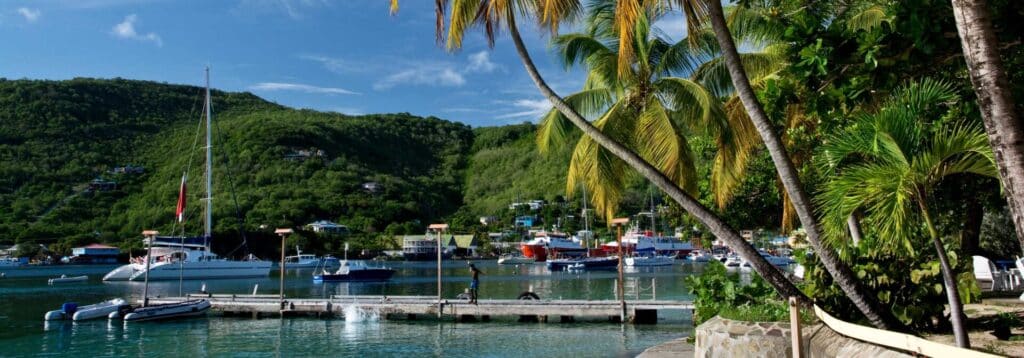
Bequia, the second largest island of Saint Vincent and the Grenadines, covers an area of around 18 km². It may seem modest in size, but its history and identity make it a singular territory. As soon as you approach its shores, a direct link with the sea is revealed: fishing boats lined up on the sand, sailboats at anchor in Admiralty Bay, shipyards where wood crafts are perpetuated. Bequia is a land shaped by the sea, its riches and its trials.

The breath of maritime history

© Photos Wilfred Dederer © BTA 2025

Bequia’s memory is deeply linked to whaling. As early as the end of the XIXᵉ century, locals learned from American whalers how to hunt humpback whales. This practice, now classified by the International Whaling Commission as “aboriginal subsistence hunting”, remains limited to a quota of four catches per year, rarely reached. More than a resource, it is now a heritage that illustrates how an island community has built its survival on the sea.
At the same time, Bequia retains a tradition of wooden boat building. In the villages, carpenters still fashion boats by hand. Each boat is a collective work of art, reflecting skills handed down from generation to generation.

Bequia
© Photos Wilfred Dederer © BTA 2025
Bequia
© Photos Wilfred Dederer © BTA 2025

The power of nature and everyday life

The island’s landscapes are a mix of beaches, hills and viewpoints. Princess Margaret Beach, just a stone’s throw from Port Elizabeth, stretches out its blond sand bordered by almond trees. Further south, Friendship Bay opens its waters to the Atlantic, offering a livelier sea. Trails lead up to Peggy’s Rock, a peak that reveals the beauty of the surrounding Grenadines.
These landscapes are also the rhythms of daily life. Fishermen leave the bay at dawn and return laden with tuna, sea bream and lobster. The market comes to life afterwards, reflecting a way of life still centered on the sea and its resources.

Bequia
© Photos Wilfred Dederer © BTA 2025
Bequia
© Photos Wilfred Dederer © BTA 2025

A preserved island culture

Bequia
© Photos Wilfred Dederer © BTA 2025
Bequia
© Photos Wilfred Dederer © BTA 2025

With around 5,000 inhabitants, Bequia remains a community on a human scale. Musical traditions – steelband, reggae, calypso – accompany gatherings, while crafts express the local identity. Meticulously carved models of wooden boats tell of the island’s maritime past, and are on display even in the small stores of Port Elizabeth.
This attachment to the island’s heritage is also expressed in its gastronomy, which focuses on seafood. Each dish is a reminder of the balance between tradition and adaptation.

Bequia
© Photos Wilfred Dederer © BTA 2025
Bequia
© Photos Wilfred Dederer © BTA 2025

Port Elizabeth, an island crossroads

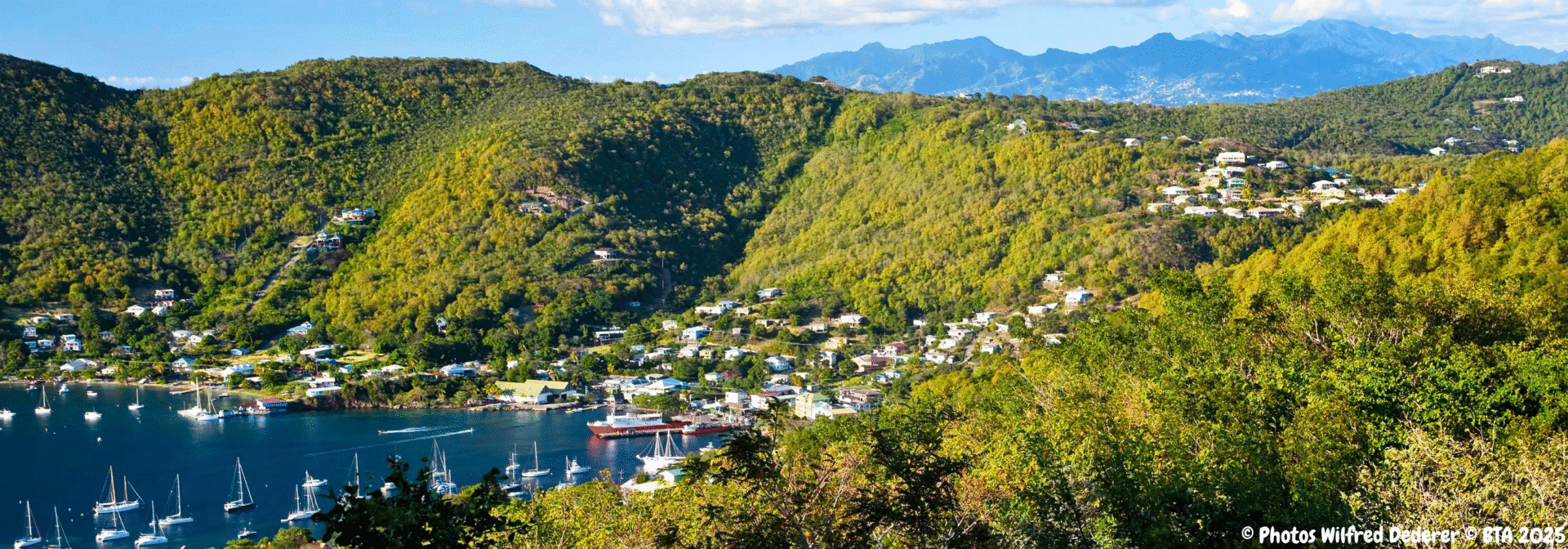
Port Elizabeth, Bequia’s modest capital, nestles at the head of Admiralty Bay. This natural harbor attracts fishermen, sailors and visiting yachts. For decades, it has been a renowned stopover for Caribbean sailing. Here, the liveliness of the anchorage contrasts with the tranquility of the lanes lined with colorful houses and small cafés. The island has not sought to become a mass destination: it favors a measured approach to tourism, based on close contact with the locals.

Bequia
Port Elizabeth. © Photos Wilfred Dederer © BTA 2025

Legacy and future

Bequia illustrates the dilemmas faced by many small Caribbean islands: preserving authenticity while securing an economic base. Controversial whaling is often the focus of debate, but it does not sum up the island. The future also relies on fishing, local agriculture, boating and handicrafts, all sectors that maintain a resilient economy.
This direction reflects a clear choice: to maintain a balance between openness to the world and respect for an identity forged by the sea.

A sensitive and human Caribbean

Bequia is not an island defined by its size or infrastructure, but by its maritime soul. Its landscapes, traditions and people make up a mosaic where every detail carries the weight of history and the hope of the future. On this island of the Grenadines, the sea is more than just a horizon: it is a memory, a resource and a promise.

Bequia
© Photos Wilfred Dederer © BTA 2025
Bequia
Bequia
© Photos Wilfred Dederer © BTA 2025
Bequia
© Photos Wilfred Dederer © BTA 2025
Bequia
© Photos Wilfred Dederer © BTA 2025
Bequia
© Photos Wilfred Dederer © BTA 2025

Leave a Reply

Your email address will not be published. Required fields are marked *

More articles from RK

Philippe Faure-Brac
NEWS
Tolotra

Philippe Faure-Brac at Habitation Clément: Martinique rum as seen by a great sommelier.

Philippe Faure-Brac had never visited Habitation Clément before. World’s Best Sommelier 1992, member of the Meilleurs Ouvriers de France with honorary status since 2015, he came to Martinique to look at rhum agricole from its very place of production: the cane, the cellars, the bottling and the tasting. A first visit to Habitation Clément At Habitation Clément, in Le François, this visit had a special significance. Philippe Faure-Brac was already familiar with Clément rums, their quality positioning and their universe. He had also contributed to the book Rhum Clément, une histoire de famille, bringing his insight into the house’s aromatic precision, balance and tradition of excellence. But he lacked the experience of the place. That of the light, the temperature, the atmosphere of the winery and the exchanges with the teams. “The first time in Martinique? I was going to say finally,” he confided, recalling that he had been hoping

Read More »
Boiling Lake
TOURISM
Tolotra

Boiling Lake: 92 °C, 63 m wide, the 2nd largest bubbling lake in the world

Just 8 kilometers east of Roseau, the capital of Dominica, it’s a three-hour walk from Laudat to Boiling Lake. Three hours of humid forest, desolate valley, soil-heated rocks and sulfurous fumes. At the end of the path, a 63-metre-wide pool. Inside, the water bubbles almost continuously, with temperatures measured up to 91.6°C at the edges. It’s the second largest bubbling lake in the world. A rare phenomenon in a UNESCO park The world’s first is Frying Pan Lake in New Zealand’s Waimangu Valley. But the Dominican Boiling Lake is in a class of its own. Firstly, because it can only be reached on foot, after a demanding hike. Secondly, because it is part of a national park that has been a UNESCO World Heritage Site since 1997: Morne Trois Pitons National Park. This makes it one of the most singular geothermal phenomena protected in a world-renowned natural site. A flooded,

Read More »
Tourisme 3.0
TOURISM
Tolotra

Tourism 3.0: Jamaica wants to keep its tourist wealth

At the Montego Bay Convention Centre, the image speaks for itself. Local entrepreneurs showcase their products, hotel representatives circulate, meetings follow one another. Behind these rapid exchanges, one question weighs heavily: when tourism makes money, how much really stays in Jamaica? This is at the heart of Tourism 3.0, the new direction championed by Jamaica’s Minister of Tourism, Edmund Bartlett. At the Tourism Enhancement Fund’s 11th Speed Networking Event, he set out a clear ambition: to make tourism a more direct driver for Jamaican producers, artisans, manufacturers and suppliers. Tourism that no longer just wants to attract Jamaica knows how to welcome visitors. But the challenge is no longer just to fill hotels or increase arrivals. The real challenge is to retain more value in the territory. Edmund Bartlett has recognized a structural weakness: a large proportion of the goods and services consumed by the tourism industry are still imported.

Read More »

conTACT RK

we'd love to have your feedback on your experience so far

Join The List

Join our Richès Karayib community!  Sign up for our newsletter.

Want To Maximize Your Business Presence On Riches Karayib?

Complete the form to start the application