Holbox: an island suspended between gentle seas, light and silence

Isla de Holbox

Holbox is one of those places that gives the impression of having remained away from the hustle and bustle of the world. A small strip of land in the north of the Yucatán peninsula, it lives to the rhythm of its sandy streets, its extensive mangroves, its shallow sea and the colors that change every hour of the day. This is not an island that seeks to make an impression, but one that asserts itself through its assumed tranquility.

A timeless island, accessible but unspoilt

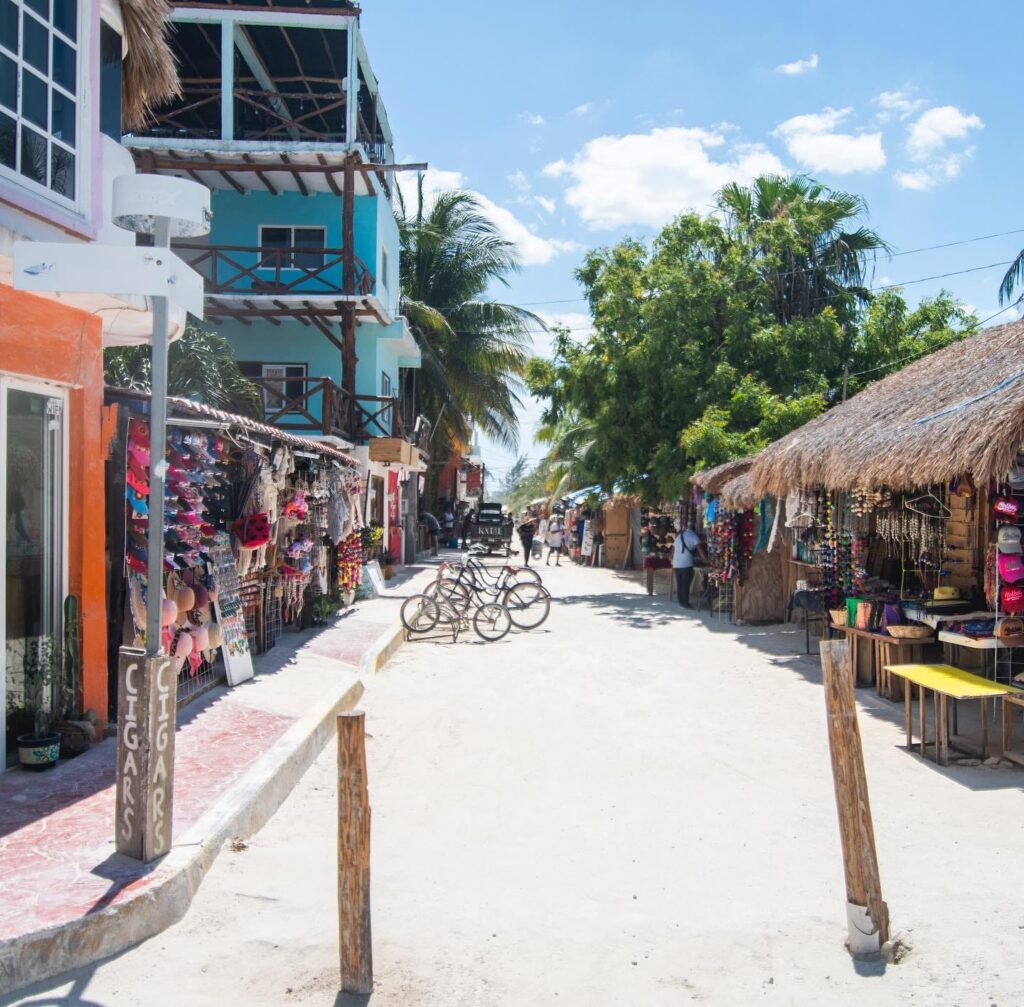
To reach Holbox, you have to reach Chiquilá, then cross a narrow strait by ferry. As soon as you arrive, you’ll notice that there are no cars here. You can get around by golf cart, bicycle or on foot. The soil remains sandy, as if the island had decided not to be tamed. This simplicity creates a special atmosphere: no horns, no traffic, just the sound of the wind, the murmur of the sea and the conversations that rise from the village’s wooden terraces. The island doesn’t offer a break, but a different way of inhabiting a place.

The island of Holbox

Landscapes that rest the gaze

Holbox’s main beach stretches for kilometers without a break, facing a sea that always seems calm. The water, shallow for several dozen meters, offers a turquoise cameo that slips into softer hues as you move further away from the shore.

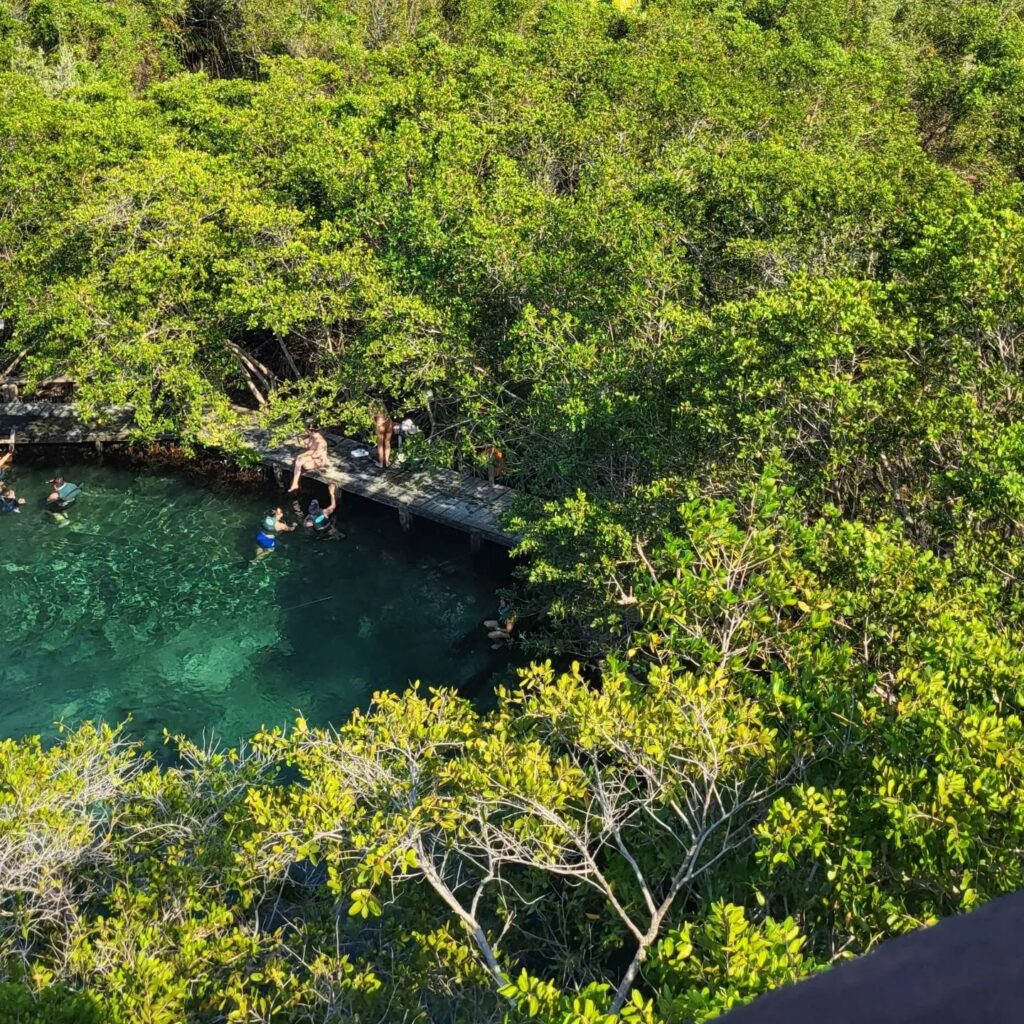
Further afield, the mangroves create a world of their own: intertwined roots, birds poised, reflections almost motionless. Flamingos, sometimes present between April and October, add an unexpected touch to these landscapes. The island also bears the memory of the Yum Balam reserve, a protected area covering more than 150,000 hectares and a reminder that nature is the first inhabitant here.

The island of Holbox

A village that tells the story of an island

The village of Holbox has a real visual unity: colorful facades, murals, small family addresses, fruit stands, wooden terraces, hand-painted signs. Every street reveals a detail: a sleeping cat, a fisherman mending his net, a child crossing with a kite. Street art plays an important role here. Created by local artists or invited to festivals, the frescoes tell of the sea, animals and Mexican mythologies. They are a reminder that the island has chosen gentleness rather than excess, expression rather than performance.

The island of Holbox

The sea, a discreet but essential companion

In Holbox, the sea is omnipresent. It accompanies walkers in the morning, turns pink at sunset, and carries the boats of the fishermen who leave at dawn. The locals still make their living from local fishing, respecting the seasons and protected areas.

The island is also known for its calm waters, ideal for kayaking, paddle-boarding or simply contemplating. At times, the sea seems so shallow that you might think it’s wavering between a body of water and a mirror of light.

The island of Holbox

A territory that moves forward with care

Holbox is no longer a secret, but the island is trying to preserve what makes it unique. Inhabitants and local players encourage respectful practices: gentle travel, respect for mangroves, reduction of plastic, support for small family structures.

The Yum Balam reserve sets clear limits to prevent the island from losing its soul. This slow, careful approach is in keeping with the spirit of the island: welcoming, yes, but without denaturing itself.

L'île de Holbox
L'île de Holbox

Holbox, an island on a human scale

At a time when many Caribbean destinations are growing fast, the island remains a place that prefers measure to excess. Accommodations remain close to the ground, streets have no aggressive angles, and the sky retains all the space it deserves.

Highlighting Holbox means choosing to tell the story of an island that has managed to preserve a rare balance: beauty without excess, simplicity without harshness, authenticity without folklore. An island that invites you to walk softly, to look differently and to let time take its rightful place.

Photo credits

Isla Holbox – Official Facebook

Leave a Reply

Your email address will not be published. Required fields are marked *

More articles from RK

French
NEWS
Tolotra

396 million people speak French: the 2026 report reveals

The Organisation internationale de la Francophonie has published a figure that reshuffles the deck in the global language debate: 396 million people now speak French. With this total, the French language in the world rises from 5th to 4th position behind English, Mandarin and Spanish, but ahead of standard Arabic. This is more than just an announcement. It marks a fundamental change in the place of French on the international stage, and confirms that the language continues to make headway in strategic areas such as education, economic exchanges, digital technology and cultural mobility. Global progress changes the narrative around French For years, French has often been portrayed as a language of great influence, but weakened in the face of global competition. The OIF’s 2026 report introduces an important corrective. The French language in the world is not only holding its own: it is gaining ground in terms of the number

Read More »
Bonaire
TOURISM
Tolotra

Bonaire, a Caribbean island built around the sea and conservation

In the southern Caribbean, off the coast of Venezuela, Bonaire is a territory in a class of its own. Less publicized than its neighbors Aruba and Curaçao, the island has built its identity around one central principle: the protection of its environment. Here, the sea structures the economy, landscapes and customs, while tourism development has been gradual and controlled. For travelers, Bonaire offers a clear picture: a compact island, visible natural areas, an accessible coastline and an organization geared towards sustainability. An island structured by its marine park Since 1979, Bonaire’s entire coastline has been protected by the Bonaire National Marine Park which completely surrounds the island. This marine area regulates nautical activities and aims to preserve the coral reefs, considered among the best preserved in the Caribbean. One of the island’s special features is the direct accessibility of its marine sites. Diving and underwater observation can be carried out

Read More »
Marcus Garvey
HISTORY & HERITAGE
Tolotra

Jamaica – Marcus Garvey, Jamaican hero of international renown

Marcus Garvey remains one of the most influential figures to emerge from the Caribbean. Born in Jamaica at the end of the 19th century, he transformed a local experience into a political and cultural project of international scope. At a time when black populations faced deeply rooted systems of exclusion, Marcus Garvey proposed a structured vision based on dignity, organization and autonomy. Recognized today as a national hero in Jamaica, he is much more than a historical symbol. His story helps us understand how the Caribbean helped shape major intellectual and political movements on a global scale. His name continues to circulate in contemporary debates on identity, memory and the development of societies born out of colonial history. From Jamaican origins to the formation of a committed conscience He was born on August 17, 1887 in St. Ann’s Bay, Jamaica, into a modest family. Very early on, he developed a

Read More »

conTACT RK

we'd love to have your feedback on your experience so far

Join The List

Join our Richès Karayib community!  Sign up for our newsletter.

Want To Maximize Your Business Presence On Riches Karayib?

Complete the form to start the application