The mangrove is a vital ecosystem that plays a crucial role in preserving the islands of the Caribbean. As well as acting as a natural bulwark against climatic hazards, they are home to exceptional biodiversity and provide numerous ecological services. This article aims to explore in depth the importance of mangroves, the challenges they face, and the preservation initiatives underway in the region.
What is a mangrove?
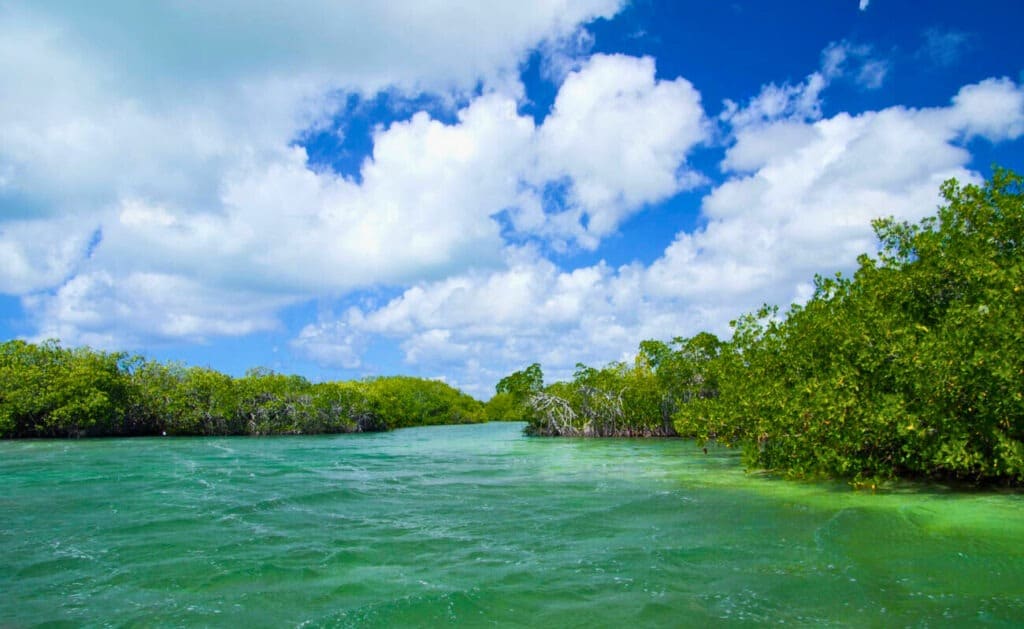
They are defined as tropical coastal forests located between sea and land. They develop in intertidal zones where seawater and freshwater mix. The main trees in this ecosystem, known as mangroves, are adapted to conditions of extreme salinity and water saturation.
Characteristics of mangroves
-
Morphological adaptations
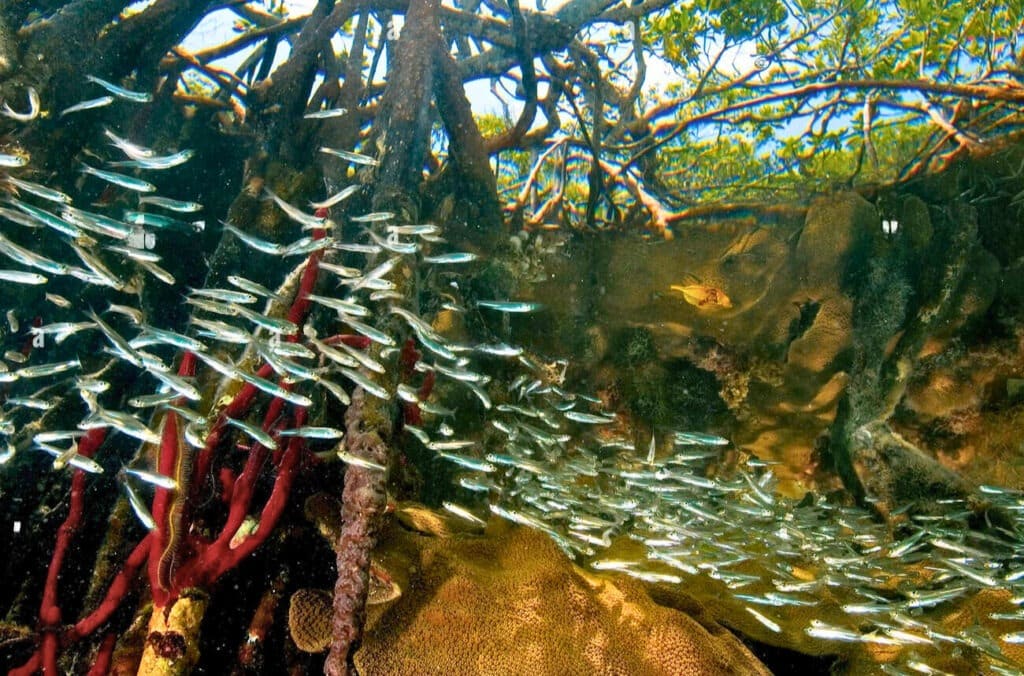
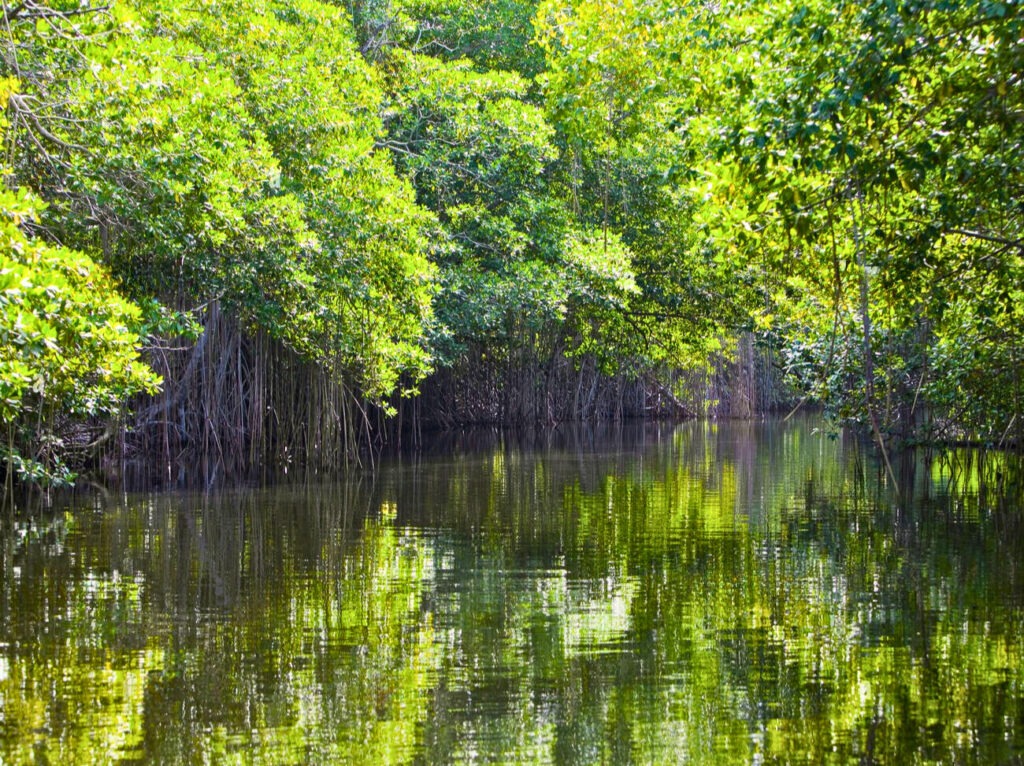
Mangroves have aerial roots that allow them to breathe in soil that is often anoxic. In addition to stabilizing the soil, these roots create habitats for a multitude of species. - Biodiversity Biodiversity: Not only are they habitats for plants and animals, they also play a crucial role in the life cycles of many marine species, serving as nurseries for juvenile fish and other aquatic organisms.
An ecosystem adapted to extreme conditions
Mangrove growth conditions
Mangroves thrive in harsh environments, often characterized by high levels of salinity, temperature fluctuations and periods of flooding. Mangroves have developed specific adaptations to overcome these challenges:
- Respiratory roots These structures enable trees to absorb oxygen even when their roots are submerged.
- Salt filtration Salt filtration: Mangroves filter salt from seawater through their roots and excrete excess salt through their leaves, enabling them to survive in a salty environment.
A natural shield for Caribbean coasts
Mangroves play an essential role in protecting coastlines from extreme climatic events, such as hurricanes and tropical storms.
- Erosion protection
- Mangroves’ complex root systems help stabilize coastal sediments. By preventing erosion, they preserve coastal land and surrounding habitats. Coastal erosion is a growing problem in the region, exacerbated by climate change and urbanization.
- Hurricane impact mitigation
- Mangroves act as a natural shield, absorbing wave energy and reducing wind speed. Their ability to mitigate the impact of storms is essential to the safety of coastal communities. Studies have shown that coastal areas with mangroves suffer less damage during hurricanes, underlining their importance for coastal resilience.
A refuge for Caribbean biodiversity
Unique flora and fauna
The mangroves
are home to an incredible diversity of species. Around 75% of tropical commercial fish species use mangroves as nurseries. Mangrove roots provide a safe habitat for juvenile fish, protecting them from predators.
- Birds Many bird species, such as herons and egrets, depend on mangroves for feeding and breeding.
- Reptiles and mammals Mangroves are also home to reptiles such as iguanas and mammals such as manatees, which play an important role in the ecosystem.
Economic importance
The mangroves are not only ecologically important, but also have significant economic value. They support fishing, eco-tourism and provide resources such as timber and medicinal plants. Their preservation is therefore essential for the sustainable development of coastal communities.
Mangroves on various Caribbean islands
The mangrove is a vital ecosystem that extends over several islands in the Greater Caribbean, including French-, English- and Spanish-speaking territories. Each region has its own ecological characteristics, challenges and conservation initiatives.
English-speaking islands: Jamaica and Bahamas
Jamaica
Jamaica has significant mangroves, particularly in areas such as Portland Bight and the Black River region. However, these ecosystems face significant threats, including rapid urbanization, pollution and resource exploitation. Conservation efforts are underway, with many NGOs working to restore mangroves and raise public awareness of their ecological importance.
Bahamas
The Bahamas is home to extensive mangrove forests, which play a crucial role in protecting the coastline and supporting marine biodiversity. Bahamian mangroves are essential for local fishing and tourism. However, challenges such as real estate development and climate change threaten their integrity. Conservation programs are underway to safeguard this vital ecosystem.
Spanish-speaking islands: Cuba and Dominican Republic
Cuba
Cuba has the largest expanse of mangroves in the Caribbean, covering over 450,000 hectares. These forests play a crucial role in protecting Cuba’s coastline, providing a habitat for rich biodiversity and supplying economic resources. The Cuban government, in collaboration with international organizations, has set up initiatives to protect and restore mangroves, highlighting their importance in combating climate change and reducing the risk of natural disasters.
Dominican Republic
In the Dominican Republic, mangroves are found along the south coast, particularly in the Samaná Bay region. These ecosystems are essential for local biodiversity and fishing. However, as in other regions, urbanization and pollution are threatening mangroves. Conservation initiatives are underway to raise local awareness of the importance of these ecosystems and to restore degraded areas.
French-speaking islands: Guadeloupe and Martinique
Guadeloupe
Guadeloupe is home to over 3,000 hectares of mangroves, mainly concentrated in the Grand Cul-de-Sac Marin. These areas are officially protected by local laws and are the focus of conservation programs that actively involve the local community. Awareness-raising initiatives aim to educate local residents about the importance of mangroves for biodiversity, coastal protection and the fight against climate change. Guadeloupe is also a model of cooperation between authorities, NGOs and communities for the sustainable management of resources.
Martinique
Although mangroves in Martinique are less extensive than those in Guadeloupe, replanting and restoration projects are underway in several areas, notably in the bay of Fort-de-France. These initiatives aim to restore degraded areas while raising awareness of the importance of these ecosystems for marine biodiversity and the regulation of coastal ecosystems.
Threats and challenges for Caribbean mangroves
- Urbanization and coastal development
- The expansion of urban and tourist areas often leads to the destruction of mangroves. Seaside real estate projects are compromising this vital ecosystem, necessitating stricter protection measures.
- Pollution
- Oil spills and plastic pollution seriously affect the health of mangroves. Chemical pollution and plastic waste harm flora and fauna, upsetting the ecological balance.
- Climate change
- Climate change, particularly rising sea levels and intensifying hurricanes, is putting the resilience of mangroves to the test. The loss of these forests could have disastrous consequences for biodiversity and the coastal communities that depend on them.
Conservation initiatives in the Caribbean
In response to these challenges, a number of protection and restoration projects are underway:
- Creation of marine protected areas
- Many islands have established protected areas that include mangroves, such as the Parc National de Guadeloupe. These protected areas are crucial to the conservation of marine and terrestrial biodiversity.
- Replanting programs
- Mangrove replanting initiatives are underway on several islands, often involving local communities. These projects aim to restore degraded habitats and raise awareness of environmental protection.
- Awareness-raising and ecotourism
- The development of ecotourism activities raises public awareness of the importance of mangroves, while generating income for their conservation. This creates a link between local populations and their environment.
The future of Caribbean mangroves
The preservation of mangroves is crucial to the future of the Caribbean islands. These ecosystems offer natural protection against climatic hazards and are a major asset in the fight against global warming.
- A natural carbon sink
- Mangroves are among the most effective ecosystems for sequestering atmospheric carbon, helping to mitigate the effects of climate change. Recognition of their role in carbon capture is essential for environmental protection policies.
- An economic challenge
- Protecting mangroves is also a sound economic investment. By preserving fishery resources and reducing the risks associated with natural disasters, they generate benefits that far outweigh the costs of conserving them.
The mangroves are truly the vital guardians of the Caribbean islands. Their preservation is essential not only for the unique biodiversity they harbor, but also for the resilience of coastal communities in the face of environmental challenges. It is crucial that conservation efforts continue and intensify across the region to ensure a sustainable future for this irreplaceable ecosystem.