TRANSAT CAFÉ L’OR: Martinique Horizon crosses the line in Fort-de-France

TRANSAT CAFÉ L’OR

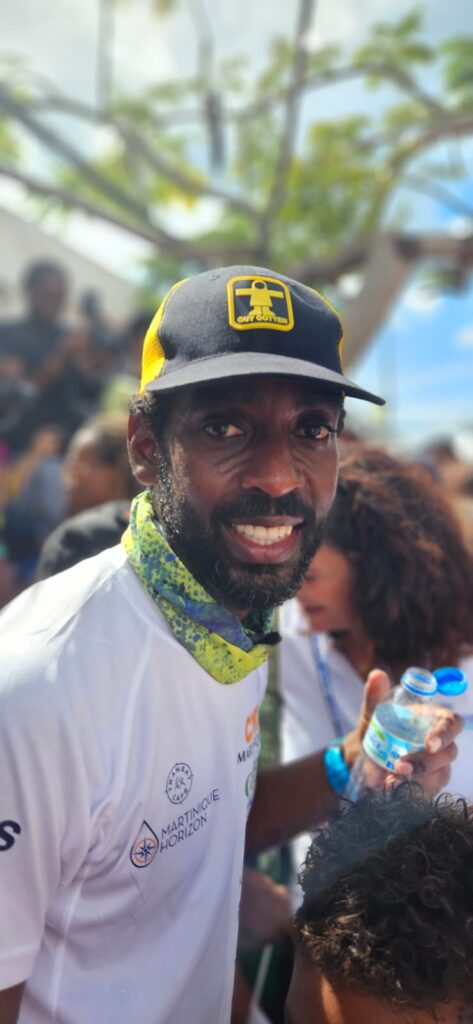
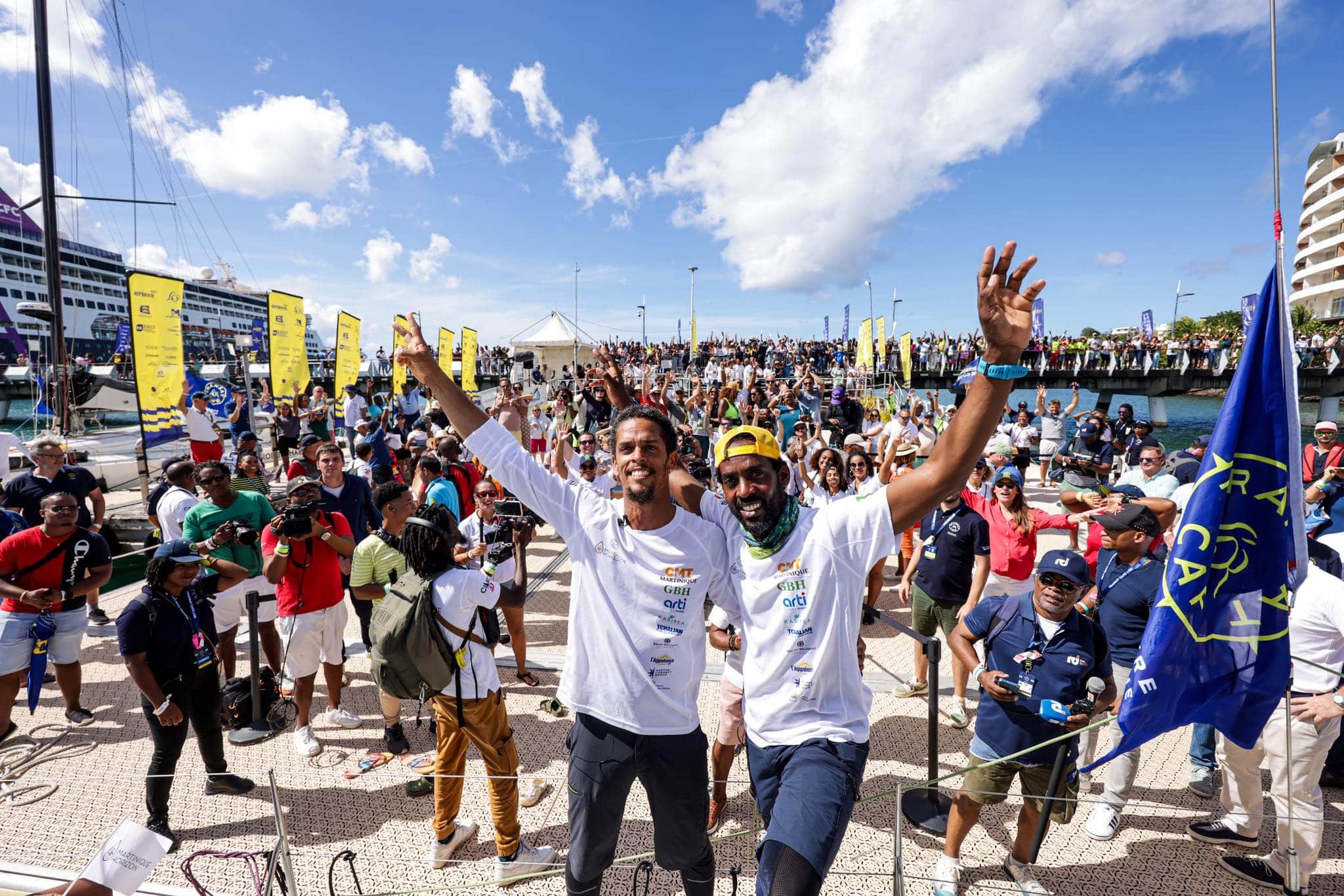
The arrival of Jean-Yves Aglaé and Moane Mangattale in Fort-de-France at 9:41 am on Sunday, November 23, marked one of the most eagerly awaited moments of the TRANSAT CAFÉ L’OR. Aboard their Class40 Martinique Horizon, the two Martinique sailors finished this 17ᵉ edition in 34ᵉ place, at the end of a long and steady crossing. Their objective was clear: to finish the race on time. They achieved this after almost a month of sailing.

A demanding event for the Class40s

The TRANSAT CAFÉ L’OR, contested over two legs, remains a complex race for Class40s. This year, 44 boats started and 37 finished the race, while 7 had to retire.

The course of the TRANSAT CAFÉ L’OR was marked by unstable weather conditions, sometimes favorable, sometimes restrictive, forcing skippers to review their strategies along the way.

Jean-Yves Aglaé and Moane Mangattale completed the entire course in 26 days, 10 hours and 52 seconds.

Their first stage lasted 4 days, 8 hours, 19 minutes and 42 seconds; the second, longer, 22 days, 1 hour, 41 minutes and 10 seconds.

Their progress was marked by periods when route choices didn’t offer the hoped-for results, but the crew maintained stable sailing, without major incident.

The two sailors summed it up simply: they had to keep moving forward, hold the boat and maintain their coherence despite their fatigue. “Some decisions were difficult, but we had to stay focused and keep going,” they explained on arrival.

TRANSAT CAFÉ L’OR
TRANSAT CAFÉ L’OR

A public mobilized from dawn

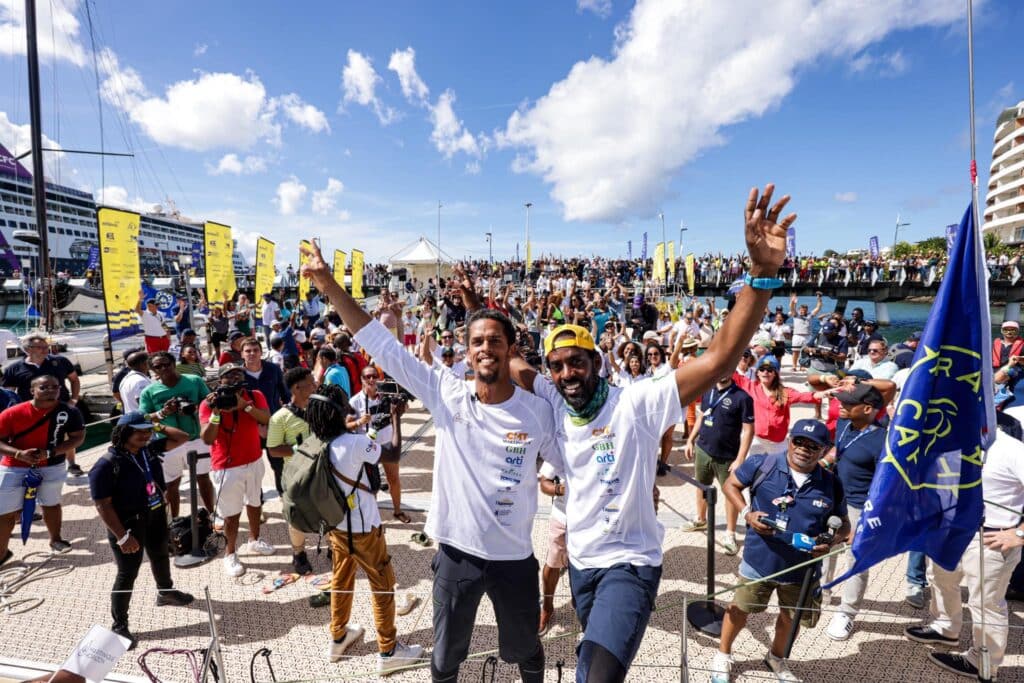
In Fort-de-France, the public began to gather at 7:30 a.m. on the pontoon of honor. Residents, families, sailing enthusiasts and curious onlookers awaited the arrival of Martinique Horizon, creating an attentive and supportive atmosphere. The presence of a Martinique crew in this transatlantic race aroused constant interest throughout the event, and the finish was seen as an important moment for many.

When the Class40 appeared around the bay, the applause began. As they crossed the line, they became continuous. Jean-Yves Aglaé and Moane Mangattale waved to the crowd, visibly tired but focused, before making their way to the pontoon. Both men confided that coming back to Martinique to finish such a race had a special meaning. “Arriving here, in front of our people, is a very special moment”, they declared.

TRANSAT CAFÉ L’OR
TRANSAT CAFÉ L’OR
TRANSAT CAFÉ L’OR

Race conditions that tested their endurance

The TRANSAT CAFÉ L’OR was marked by areas of light winds, rapid weather variations and short nights. Phases without clear progress were among the most difficult moments mentioned by the two navigators. They explained that the most important thing was to maintain constant discipline: watch the equipment, adjust decisions quickly and conserve energy.

The boat arrived in good condition, a sign of careful management and strict respect for equipment. The 34ᵉ place reflects a race run with consistency and a desire to secure each leg rather than take unnecessary risks.

TRANSAT CAFÉ L’OR

A contrasting edition according to trajectory

In this edition of the TRANSAT CAFÉ L’OR, the arrivals were very spread out. Class40 winners Guillaume Pirouelle and Cédric Chateau on Seafrigo – Sogestran crossed the line on November 17. Several boats arrived on the night of the 22nd, including that of Thomas Lurton and Sasha Vandenbrouck, at 2:22 am. A final Class40, Rêve à perte de vue – Qwanza, was still awaited to close the event.

In this context, the arrival of Martinique Horizon is part of a dynamic in which each crew had to deal with its own constraints: tactical choices, experience, state of equipment, accumulated fatigue. The two Martinique sailors sailed a steady race, in line with their project and their means.

TRANSAT CAFÉ L’OR
TRANSAT CAFÉ L’OR

Strong turnout for Martinique's sailing scene

The presence of Jean-Yves Aglaé and Moane Mangattale in the TRANSAT CAFÉ L’OR is a landmark for sailing in Martinique. Their participation in the TRANSAT CAFÉ L’OR reinforces the region’s visibility in a major ocean racing event. It shows that local sailors can take part in a long and technical transatlantic race.

This type of experience could serve as a basis for other local projects, notably around the preparation of young sailors or future crews from Martinique. The two skippers also stressed the importance of the support they received, which played a role throughout the race.

TRANSAT CAFÉ L’OR
TRANSAT CAFÉ L’OR

A race completed with rigor and consistency

Martinique Horizon’s arrival marks the end of a crossing that was conducted with seriousness, without excess or minimization. The boat crossed the line on time, in good overall condition, with a crew that remained focused despite the difficulties and fatigue.

Fort-de-France gave the two sailors a welcome commensurate with their commitment, confirming the interest of the Martinique public in this edition. With this finish, Jean-Yves Aglaé and Moane Mangattale have signed a solid participation, which could encourage other nautical initiatives in the region.

To find out more about TRANSAT CAFÉ L’OR, read our full analysis in the latest issue of our magazine.

FAQ

The TRANSAT CAFÉ L’OR is a double-handed transatlantic race, contested in two legs, which brings together several categories of yachts, including Class40s. It links Europe to Martinique, and is one of the major events on the ocean racing calendar.

The Class40 Martinique Horizon, skippered by Jean-Yves Aglaé and Moane Mangattale, finished the TRANSAT CAFÉ L’OR in 34ᵉ place, with a total time of 26 days, 10 hours and 52 seconds. The two sailors achieved their main goal: finishing the race on time.

The arrival of Martinique Horizon drew large crowds of spectators at dawn. For many, seeing two Martinique sailors complete a transatlantic race of this level represents an important moment for local sailing and a landmark for the region’s nautical projects.

Leave a Reply

Your email address will not be published. Required fields are marked *

More articles from RK

Marcus Garvey
HISTORY & HERITAGE
Tolotra

Jamaica – Marcus Garvey, Jamaican hero of international renown

Marcus Garvey remains one of the most influential figures to emerge from the Caribbean. Born in Jamaica at the end of the 19th century, he transformed a local experience into a political and cultural project of international scope. At a time when black populations faced deeply rooted systems of exclusion, Marcus Garvey proposed a structured vision based on dignity, organization and autonomy. Recognized today as a national hero in Jamaica, he is much more than a historical symbol. His story helps us understand how the Caribbean helped shape major intellectual and political movements on a global scale. His name continues to circulate in contemporary debates on identity, memory and the development of societies born out of colonial history. From Jamaican origins to the formation of a committed conscience He was born on August 17, 1887 in St. Ann’s Bay, Jamaica, into a modest family. Very early on, he developed a

Read More »
BlueSeas Festival
EVENT MANAGEMENT
Tolotra

BlueSeas Festival: in Curaçao, Pietermaai becomes the epicenter of Caribbean blues in 2026

From April 2 to 4, 2026, Curaçao hosts another edition of the BlueSeas Festival a musical event that is gradually establishing itself as one of the most unique cultural events in the Caribbean. Free, open and rooted in the urban space, the festival goes far beyond simple musical programming to become a genuine territorial experience. Right from the opening night, Thursday April 2 at Kura Hulanda Village, the mood is set: the blues settle into a heritage setting, before taking full possession of the Pietermaai district on April 3 and 4. This two-stage format structures an immersive experience in which music, architecture and local life are seamlessly interwoven. A free festival that transforms the city into an open-air stage The BlueSeas Festival is based on the principle of offering free concerts in public spaces. This choice is not insignificant. It widens access to live music, while creating direct interaction between

Read More »
Le vodou : Haïti au cœur d’une candidature patrimoniale majeure avec le Bénin
COOPERATION
Tolotra

Vodou: Haiti at the heart of a major heritage bid with Benin

The vodou is entering a new phase in its international history. The joint candidacy of Haiti and Benin for inscription on the Representative List of the Intangible Cultural Heritage of Humanity places centuries of memory, transmission and creation at the heart of a global heritage debate. The deadline set by UNESCO for applications to be examined in 2027, and submitted before March 31, 2026, places this initiative within a precise and structured institutional calendar, but the stakes go far beyond the administrative procedure. For the Caribbean, and Haiti in particular, this candidacy is no mere cultural formality. It’s about recognizing a living heritage, often misunderstood, sometimes caricatured, but deeply rooted in the country’s social, artistic and spiritual history. Vodou is not a fixed folklore; it is a cultural matrix, a way of organizing the link between generations, communities and the sacred. To place it within an international heritage dynamic is

Read More »

conTACT RK

we'd love to have your feedback on your experience so far

Join The List

Join our Richès Karayib community!  Sign up for our newsletter.

Want To Maximize Your Business Presence On Riches Karayib?

Complete the form to start the application