U.S. Virgin Islands – Saint John, an island structured by nature conservation

Saint John

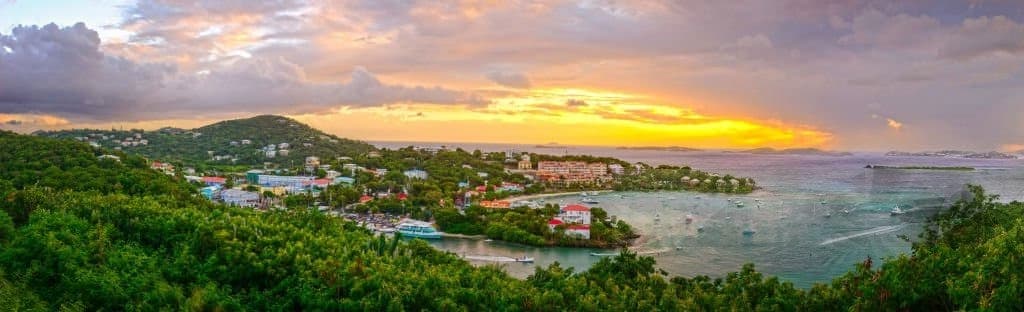
In the U.S. Virgin Islands, Saint John occupies a singular place. More discreet than St. Thomas, less urbanized, it was built around a simple principle: preserve your land. Today, almost 60% of the island is part of the Virgin Islands National Park, directly shaping its landscape, economy and organization.

For travelers, Saint John represents a legible destination: a compact island, accessible beaches, a structuring national park and local life concentrated around a main center, Cruz Bay. This configuration makes it possible to quickly understand the territory, without dispersion or saturation.

Saint John

A large-scale protected island

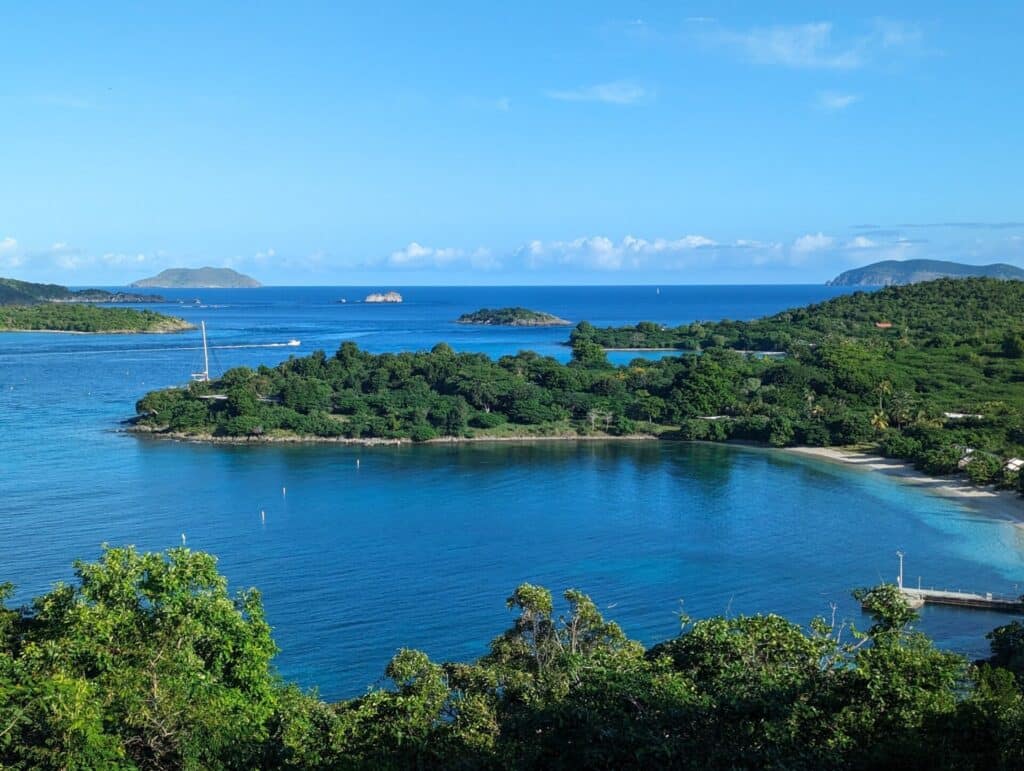
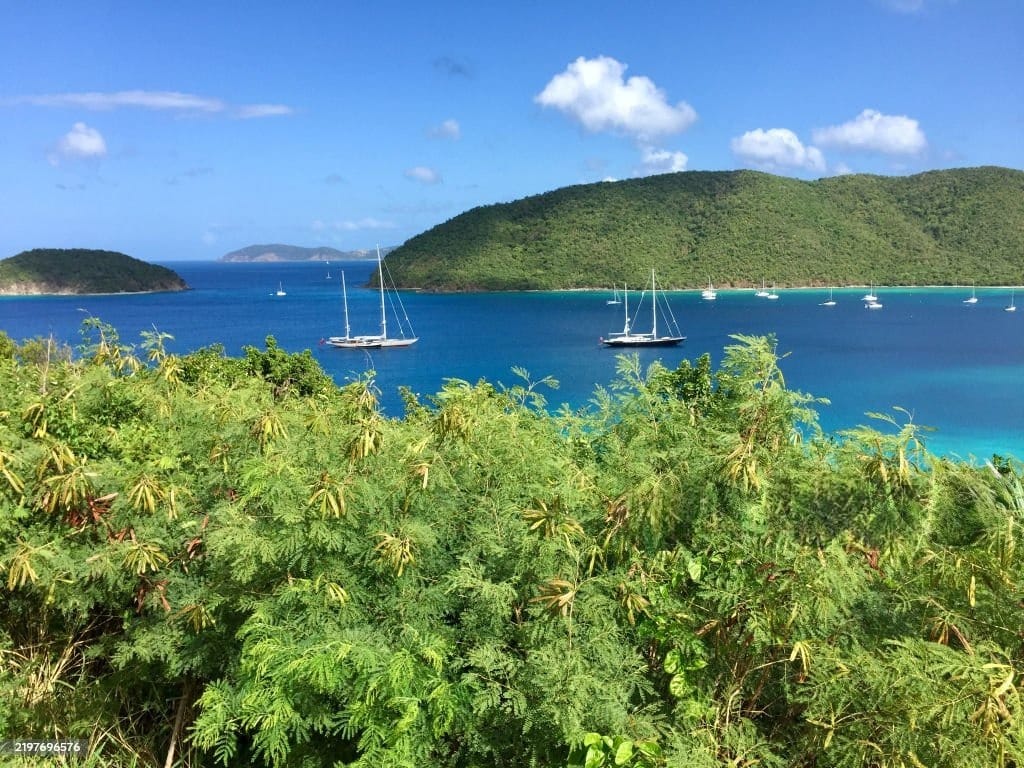
Virgin Islands National Park was created in 1956 thanks to a major land donation. Since then, it has covered most of Saint John’s land territory, as well as protected marine areas. This configuration limits real estate development and maintains large areas of unspoiled nature. Tropical dry forests, hills, mangroves and coral reefs make up most of the landscape. Roads are few and far between, and inhabited areas are concentrated mainly around Cruz Bay and Coral Bay. This territorial organization gives the island an airy character, without excessive urban continuity, which reinforces the feeling of space for visitors.

The national park also offers signposted trails through old plantations, viewpoints and forested areas. For travelers interested in history and nature, these trails offer a complete overview of the territory. The island can be explored both on foot and by sea.

Saint John
©Virgin Islands National Park John
Saint John
©Virgin Islands National Park John
Saint John

Accessible but unspoilt beaches

Saint John is renowned for its clear beaches bordered by reef-protected waters. Trunk Bay, Cinnamon Bay and Maho Bay are among the best-known sites. What they all have in common is that they are part of the national park and benefit from strict environmental protection. Access is provided, but construction remains limited. The aim is to keep visitor numbers under control and preserve marine ecosystems. This approach reinforces the image of an island focused on quality rather than tourist density.

Some of the less-frequented beaches also reveal a different facet of the coastline. They are a reminder that the island retains many open spaces, free from intensive occupation. This availability contributes to the balance between visitors and residents.

Saint John
©Virgin Islands National Park John
Saint John

A history visible in the landscape

Before becoming an American territory in 1917, Saint John was part of the Danish West Indies. The island has preserved traces of this period, notably through the ruins of sugar plantations scattered throughout the national park. These remains are a reminder of the colonial economy based on sugar cane and forced labor. Today, they are historical landmarks accessible to visitors, often linked by footpaths. History isn’t just to be found in museums: it’s inscribed in the landscape, stone walls and ancient farm tracks.

Saint John
Saint John
Saint John
Saint John

A controlled tourism economy

Tourism is Saint John’s main economic driver. Unlike other Caribbean destinations, the island has no international airport. Access is by ferry from St. Thomas, which naturally limits visitor flows and encourages a gradual arrival of visitors. This logistical constraint contributes to the balance of the region. Stays are generally longer, encouraging more attentive discovery. The accommodation offer is based on medium-sized hotels, villas and private rentals, rather than large complexes. This organization maintains a human scale.

Simple organization for travellers

The center of Cruz Bay is home to shops, restaurants and services. Coral Bay, further east, is more residential and less busy. Travel is mainly by car, as the roads are hilly and narrow. This configuration encourages you to take it easy and explore the island gradually. To reach Saint John, you must first land in Saint-Thomas, then take a twenty-minute ferry ride. This maritime transition marks your entry into a different territory, where the sea remains omnipresent.

Saint John
Saint John
©Virgin Islands National Park John
Saint John
©Virgin Islands National Park John
Saint John
©Virgin Islands National Park John

A coherent Caribbean destination

Highlighting Saint John means presenting an island where land protection structures all development. The predominant presence of the national park limits urbanization, controls access to beaches and preserves landforms. For travelers, the island offers a clear combination of protected nature, accessible beaches, visible historical heritage and sufficient infrastructure. Saint John doesn’t seek to multiply its attractions; it offers a stable, organized and sustainable territory turned towards the sea. This coherence gives the island a special value in the contemporary Caribbean, where land management is becoming a central issue for the future of island tourism.

Saint John is part of the U.S. Virgin Islands in the eastern Caribbean, east of Puerto Rico and close to St. Thomas.

The island is famous for the Virgin Islands National Park, which protects around 60% of its territory, as well as for its beaches and coral reefs.

You’ll need to fly into St. Thomas, then take the ferry to Saint John in about twenty minutes.

Leave a Reply

Your email address will not be published. Required fields are marked *

More articles from RK

Philippe Faure-Brac
NEWS
Tolotra

Philippe Faure-Brac at Habitation Clément: Martinique rum as seen by a great sommelier.

Philippe Faure-Brac had never visited Habitation Clément before. World’s Best Sommelier 1992, member of the Meilleurs Ouvriers de France with honorary status since 2015, he came to Martinique to look at rhum agricole from its very place of production: the cane, the cellars, the bottling and the tasting. A first visit to Habitation Clément AtHabitation Clément, in Le François, this visit had a special significance. Philippe Faure-Brac was already familiar with Clément rums, their quality positioning and their universe. He had also contributed to the book Rhum Clément, une histoire de famille, bringing his insight into the house’s aromatic precision, balance and tradition of excellence. But he lacked the experience of the place. That of the light, the temperature, the atmosphere of the winery and the exchanges with the teams. “The first time in Martinique? I was going to say finally,” he confided, recalling that he had been hoping for

Read More »
Boiling Lake
TOURISM
Tolotra

Boiling Lake: 92 °C, 63 m wide, the 2nd largest bubbling lake in the world

Just 8 kilometers east of Roseau, the capital of Dominica, it’s a three-hour walk from Laudat to Boiling Lake. Three hours of humid forest, desolate valley, soil-heated rocks and sulfurous fumes. At the end of the path, a 63-metre-wide pool. Inside, the water bubbles almost continuously, with temperatures measured up to 91.6°C at the edges. It’s the second largest bubbling lake in the world. A rare phenomenon in a UNESCO park The world’s first is Frying Pan Lake in New Zealand’s Waimangu Valley. But the Dominican Boiling Lake is in a class of its own. Firstly, because it can only be reached on foot, after a demanding hike. Secondly, because it is part of a national park that has been a UNESCO World Heritage Site since 1997: Morne Trois Pitons National Park. This makes it one of the most singular geothermal phenomena protected in a world-renowned natural site. A flooded,

Read More »
Tourisme 3.0
TOURISM
Tolotra

Tourism 3.0: Jamaica wants to keep its tourist wealth

At the Montego Bay Convention Centre, the image speaks for itself. Local entrepreneurs showcase their products, hotel representatives circulate, meetings follow one another. Behind these rapid exchanges, one question weighs heavily: when tourism makes money, how much really stays in Jamaica? This is at the heart of Tourism 3.0, the new direction championed by Jamaica’s Minister of Tourism, Edmund Bartlett. At the Tourism Enhancement Fund’s 11th Speed Networking Event, he set out a clear ambition: to make tourism a more direct driver for Jamaican producers, artisans, manufacturers and suppliers. Tourism that no longer just wants to attract Jamaica knows how to welcome visitors. But the challenge is no longer just to fill hotels or increase arrivals. The real challenge is to retain more value in the territory. Edmund Bartlett has recognized a structural weakness: a large proportion of the goods and services consumed by the tourism industry are still imported.

Read More »

conTACT RK

we'd love to have your feedback on your experience so far

Join The List

Join our Richès Karayib community!  Sign up for our newsletter.

Want To Maximize Your Business Presence On Riches Karayib?

Complete the form to start the application