Bonaire: 3,700 hectares of salt marshes conceal a history of slavery

Bonaire salt marshes: pink ponds and white salt mountains in the south of the island

At the southern tip of Bonaire, a Dutch-speaking island in the Caribbean, the salt marshes stretch out in pink and white basins across nearly 3,700 hectares—thirteen percent of the island’s total area. This postcard view, photographed every year by thousands of visitors from the coastal road, hides a history dating back more than five centuries, the story of salt that shaped Bonaire’s economy and, for two hundred years, the lives of hundreds of enslaved people.

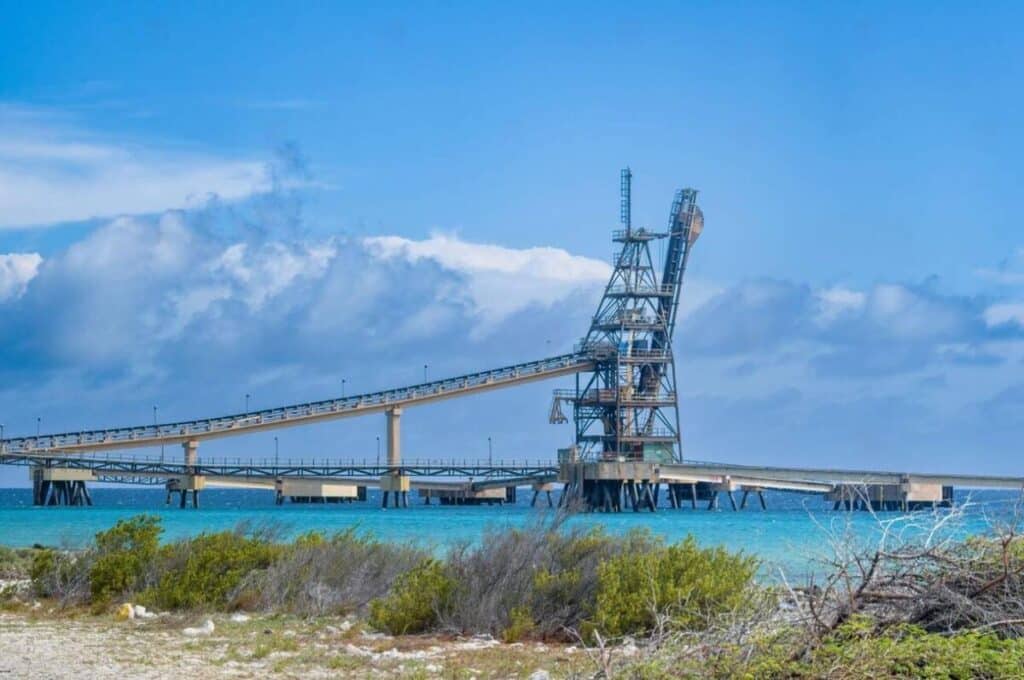
Along EEG Boulevard, which runs along the southern coast of Bonaire, mountains of white salt come into view kilometers before you reach them. Each contains about 10,000 metric tons of salt that is 99.6% pure, piled nearly 15 meters high, with up to 200,000 metric tons stored at any given time. Their whiteness, so intense that you need to keep sunglasses handy, stands in stark contrast to the pink of the neighboring pools.

The salt marshes of Bonaire: Thirteen percent of the island is covered in salt

Of these 3,700 hectares, approximately 2,700 are artificial wetlands, primarily solar evaporation ponds. The Pekelmeer, the salt lake that gives the site its name, alone covers nearly 400 hectares. Seawater flows through a series of basins to as many as sixteen crystallization basins, where workers intentionally leave a 15- to 20-centimeter layer of salt at the bottom to prepare for the next harvest.

salt marshes

Four colorful obelisks: red, white, blue, and orange, the colors of the Dutch flag still line the coast of Bonaire. They guided ships to the correct dock to load salt, depending on the desired quality. Their colors correspond almost exactly to the names of the island’s four historic salt pans: the Rode Pan, the Witte Pan, the Blauwe Pan, and the Oranje Pan.

salt marshes

Since 1499, a salt that has shaped southern Bonaire

Bonaire’s natural salt deposits attracted the first Spanish sailors as early as 1499. The island came under Dutch control in 1636, prior to the construction of Fort Oranje in 1639. Salt became one of the colony’s main exports, mined by Indigenous peoples, convicts, and enslaved people. This number rose sharply in the 1710s, when a famine on Curaçao prompted Dutch authorities to transfer enslaved laborers to Bonaire. Around 1825, approximately 300 enslaved people worked on the colonial government’s plantations and salt marshes.

Before 1850, these workers lived in the village of Rincon, north of Bonaire, far from the salt marshes in the south. Around 1850, small stone huts were built on the edge of these marshes to house them on site during the harvest week. Their dimensions, approximately 1.5 meters by 2 meters, with a height of less than 1.5 meters, prevented an adult from standing upright inside them. The Dutch colonies abolished slavery on July 1, 1863. On Bonaire, 758 enslaved people were then freed, 607 of whom were directly owned by the colonial government. Many continued to work on the same marshes afterward, this time as wage laborers.

salt marshes

An industrial landscape designated as a wetland of international importance

Modern operations began in the 1960s, when the Antilles International Salt Company designed the current system of evaporation ponds. The first commercial shipments were made in the early 1970s, and the American company Cargill acquired the operation from Akzo Nobel in 1997. Today, it takes two to three months from the time seawater is pumped in until the crystals are harvested. One-third of Bonaire’s salt is then shipped to the Caribbean, one-third to North America, and the remainder to Europe and Africa.

Despite this ongoing industrial activity, the Pekelmeer is protected under the Ramsar Convention on Wetlands of International Importance and has been designated since April 2018 as an area of regional importance for shorebirds, with more than 20,000 birds of 17 species visiting each year, including pink flamingos attracted by the water’s salinity.

salt marshes
salt marshes

A protected monument on the edge of the salt marshes

The stone huts in southern Bonaire, notably those at Witte Pan and Oranje Pan, are now protected as historic monuments, a status they were granted in 2012, and remain freely accessible year-round. Over time, as visitors have come to see them, they have become the main visible reminder of the forced labor that fueled Bonaire’s salt industry for more than two centuries.

Five centuries after the arrival of the first Spanish sailors, drawn by that same salt, the salt marshes in southern Bonaire continue to supply three continents. It remains to be seen how many visitors, photographing the pink pools and mountains of salt from the EEG Boulevard, also pause in front of the huts that serve as a reminder of the price at which this landscape has long been maintained.

The Bonaire salt marshes are located at the southern tip of the island, along EEG Boulevard, in the Dutch Caribbean.

The salt flats of Bonaire cover approximately 3,700 hectares, or nearly 13 percent of the island’s total land area.

The salt marshes of Bonaire have been operated since 1997 by Cargill Salt Bonaire B.V., a subsidiary of the U.S.-based Cargill Group, which acquired the site from Akzo Nobel.

Leave a Reply

Your email address will not be published. Required fields are marked *

More articles from RK

Bonaire salt marshes: pink ponds and white salt mountains in the south of the island
HISTORY & HERITAGE
Tolotra

Bonaire: 3,700 hectares of salt marshes conceal a history of slavery

At the southern tip of Bonaire, a Dutch-speaking island in the Caribbean, the salt marshes stretch out in pink and white basins across nearly 3,700 hectares—thirteen percent of the island’s total area. This postcard view, photographed every year by thousands of visitors from the coastal road, hides a history dating back more than five centuries, the story of salt that shaped Bonaire’s economy and, for two hundred years, the lives of hundreds of enslaved people. Along EEG Boulevard, which runs along the southern coast of Bonaire, mountains of white salt come into view kilometers before you reach them. Each contains about 10,000 metric tons of salt that is 99.6% pure, piled nearly 15 meters high, with up to 200,000 metric tons stored at any given time. Their whiteness, so intense that you need to keep sunglasses handy, stands in stark contrast to the pink of the neighboring pools. The salt
Read More »
Journées européennes du patrimoine 2026
EVENT MANAGEMENT
Tolotra

European Heritage Days 2026: Martinique Opens Its Archives.

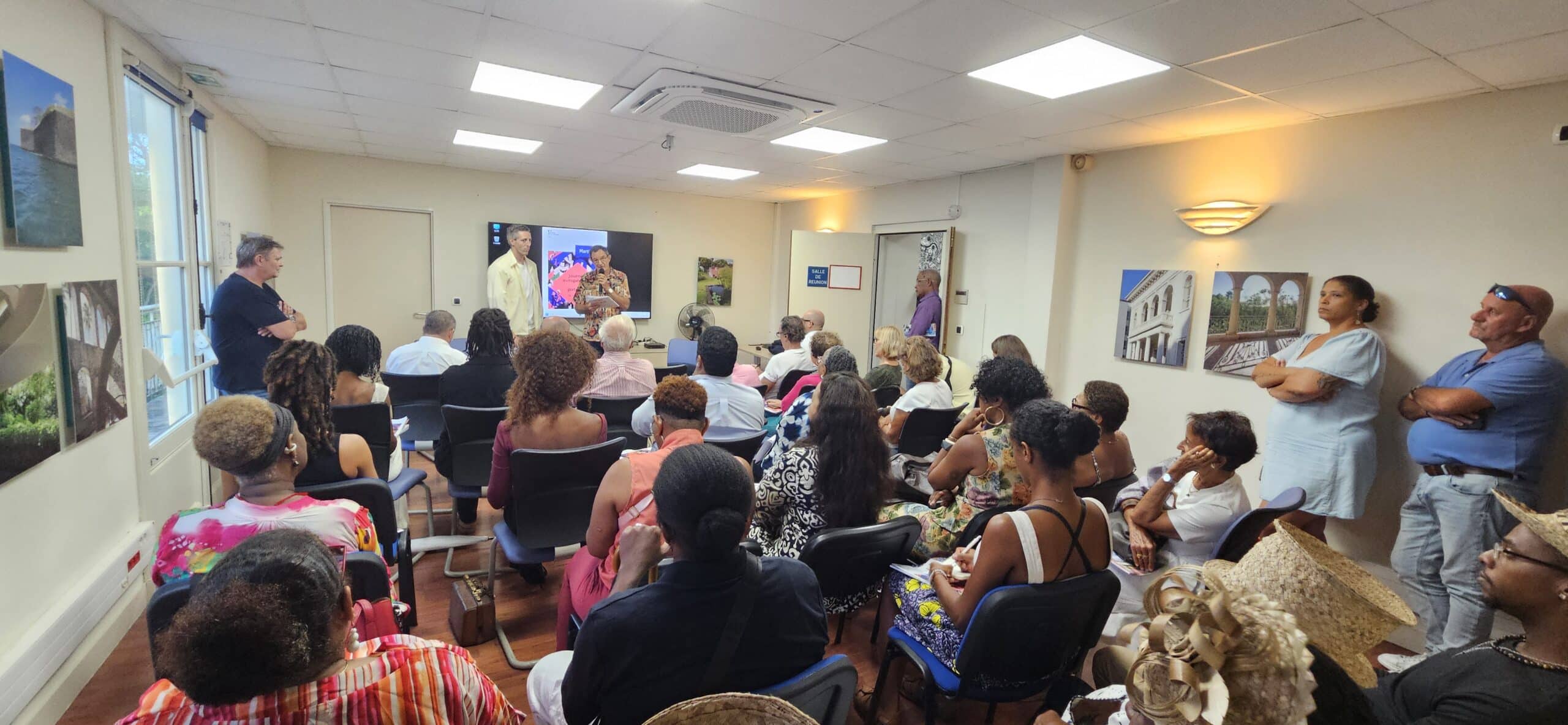
On September 15, at 5 p.m., the conference room of Martinique’s Cultural Affairs Department is already packed. Journalists, cultural leaders, organizations, artists, and heritage professionals have gathered to find out what the 43rd edition has in store. With just four days to go before the 2026 European Heritage Days , scheduled for September 19 and 20, this press conference already feels like a journey across Martinique—from its Creole huts to its lighthouses, from Saint-Pierre to the monuments we sometimes pass by without really noticing them. European Heritage Days 2026: A Lively Conference Johan-Hilel Hamel, Martinique’s director of cultural affairs, opened the meeting without putting on airs. He even warned that the evening would not be a long monologue. The conversation quickly began to flow. A representative from Les Trois-Îlets speaks, followed by Xavier Nicolas from the Directorate of the Sea, Philippe Villard from the Heritage Foundation, Florence Le Gal from
Read More »
caribbean cinema
FILM & VIDEO
Tolotra

S3/10 – Stories of Caribbean Cinema: Two Perspectives on the Year 1980. Texts by Guillaume Robillard. Ciclic, 2026.

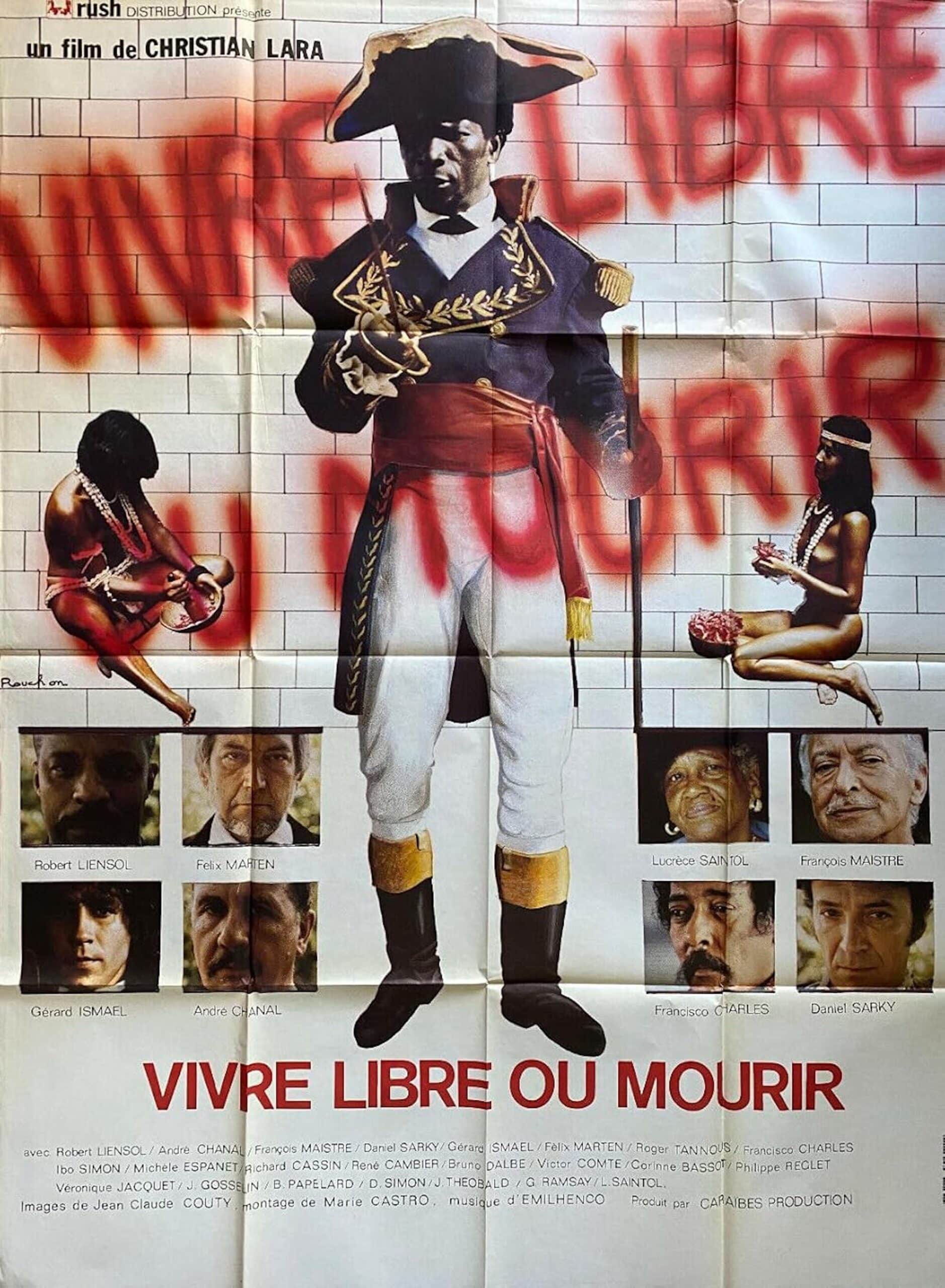
With this third episode, *Stories of Caribbean Cinema* moves into the 1980s. The first two installments covered Cuba, Jamaica, Trinidad and Tobago, and Guadeloupe, from the 1960s through the emergence of Caribbean cinema. This time, two films made in the same year take radically different directions. In Jamaica, *Children of Babylon* explores romantic, sexual, and racial relationships with unusual freedom. In Guadeloupe, *Live Free or Die* draws on several centuries of history centered on the legacy of Commander Ignace. This article is the third installment in a series of ten. Two installments have already been published, and seven more will follow in this chronology of Caribbean cinema. 1980: JAMAICA – “CHILDREN OF BABYLON”, BY LENNIE LITTLE-WHITE This film is unique in Jamaican cinema and, more broadly, in Caribbean cinema as a whole. Far from the social deprivation of Kingston’s ghettos, in a villa in the countryside (complete with a swimming

Read More »

conTACT RK

we'd love to have your feedback on your experience so far

Join The List

Join our Richès Karayib community!  Sign up for our newsletter.

Want To Maximize Your Business Presence On Riches Karayib?

Complete the form to start the application