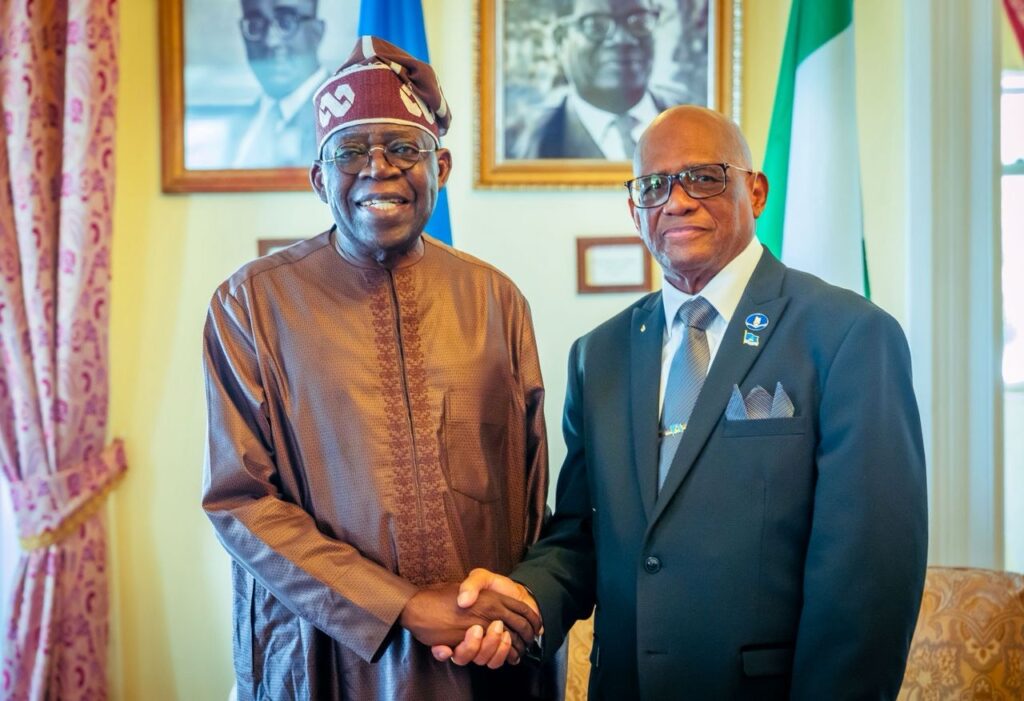
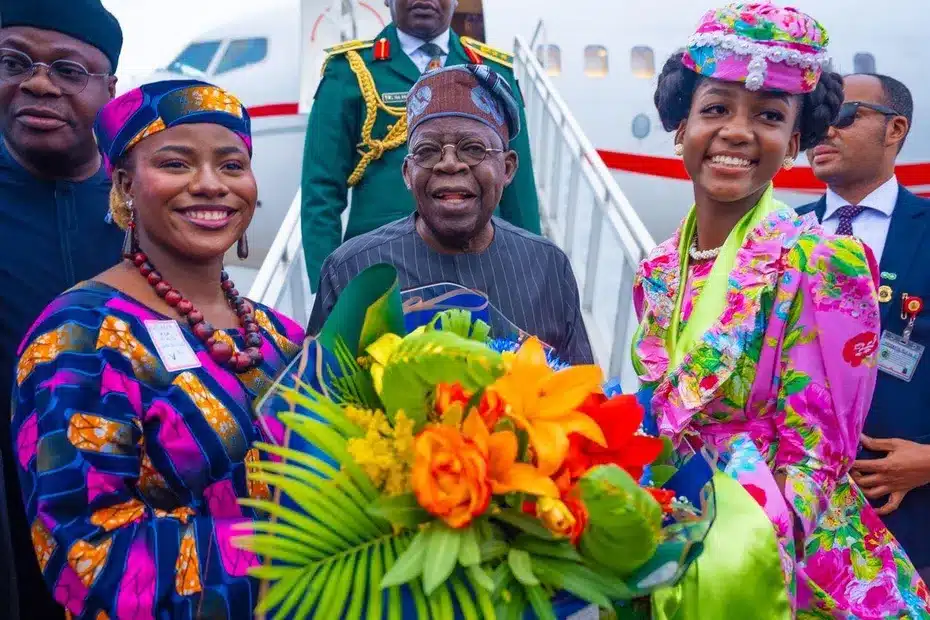

Africa-Caribbean cooperation enters a new era. Nigeria’s President Bola Ahmed Tinubu’s official visit to Saint Lucia is more than just a symbolic diplomatic rapprochement: it embodies a strategic ambition to unite West Africa and the Caribbean on a lasting basis around shared interests, a common heritage and a concerted future.
In an uncertain global context, where geo-economic blocs clash through intercontinental alliances, the emergence of a structured Afro-Caribbean axis represents much more than a political signal. It could redefine the contours of South-South diplomacy.
From a painful past to a proactive fraternity
History often weaves the invisible threads of geopolitical rapprochements. In Saint Lucia, as in many other Caribbean islands, colonial archives from 1815 reveal that nearly a third of the African slaves deported came from the Gulf of Benin, a region now shared by Nigeria and its neighbors.
These common roots, planted in the fertile soil of a painful collective memory, are now germinating in the form of educational, artistic, culinary and diplomatic collaborations. African-Caribbean cooperation is thus rooted in the recognition of a shared destiny, made up of deportation, survival and now reconstruction.
This recognition was reinforced by a historic decision: in 2003, the African Union officially recognized the global diaspora as the continent’s “Sixth Region”. A major political step forward, which for a long time remained theoretical, but which President Tinubu’s visit is now helping to reactivate and institutionalize.
A presidential visit with founding overtones
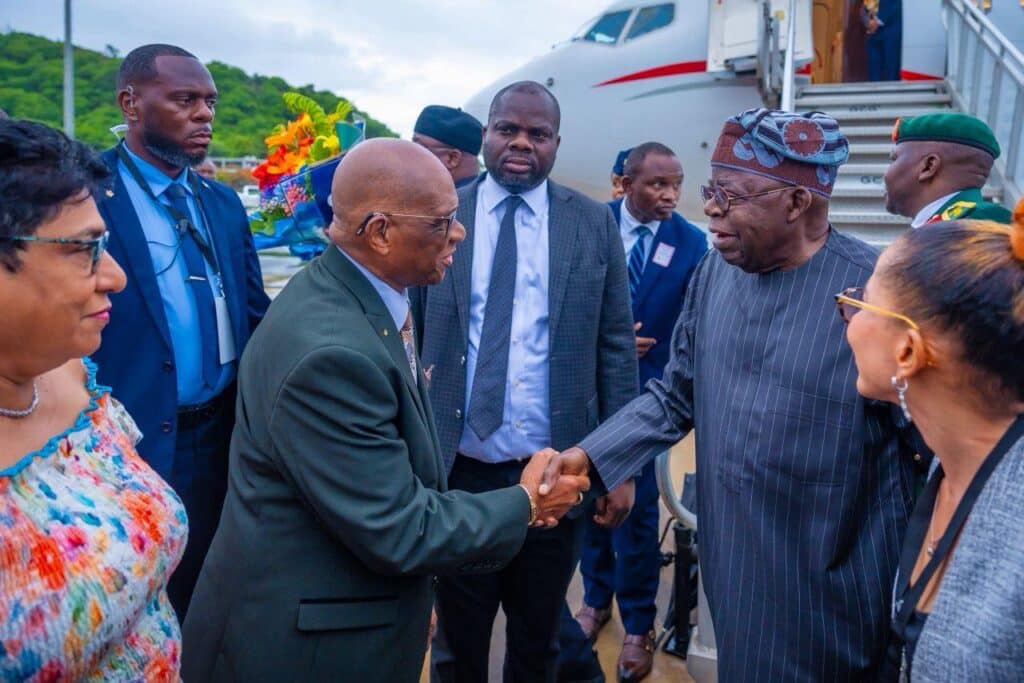
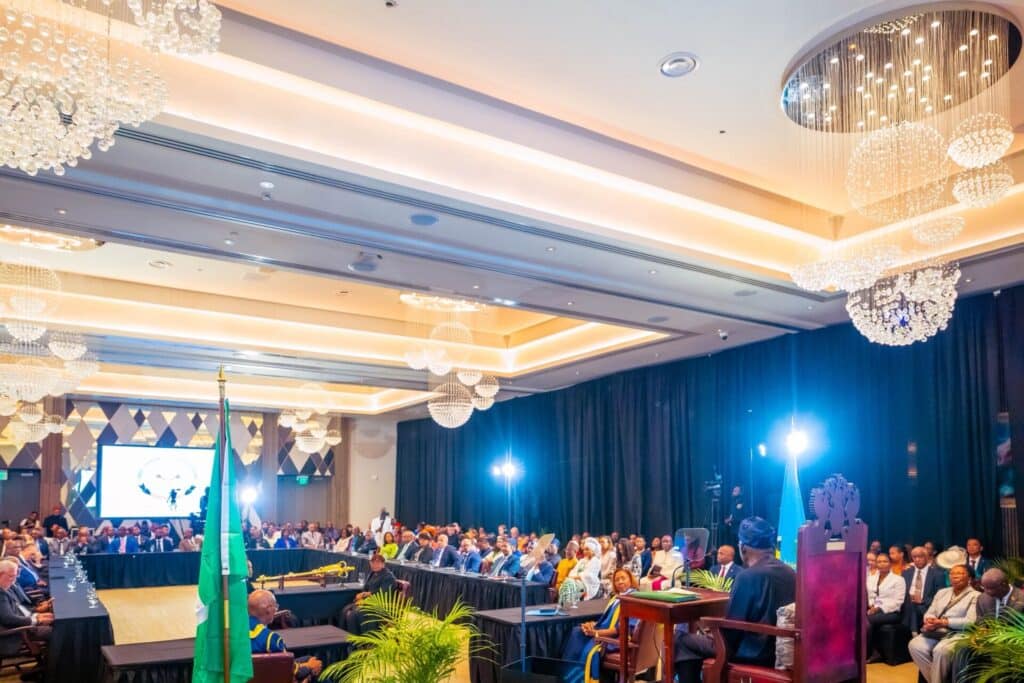
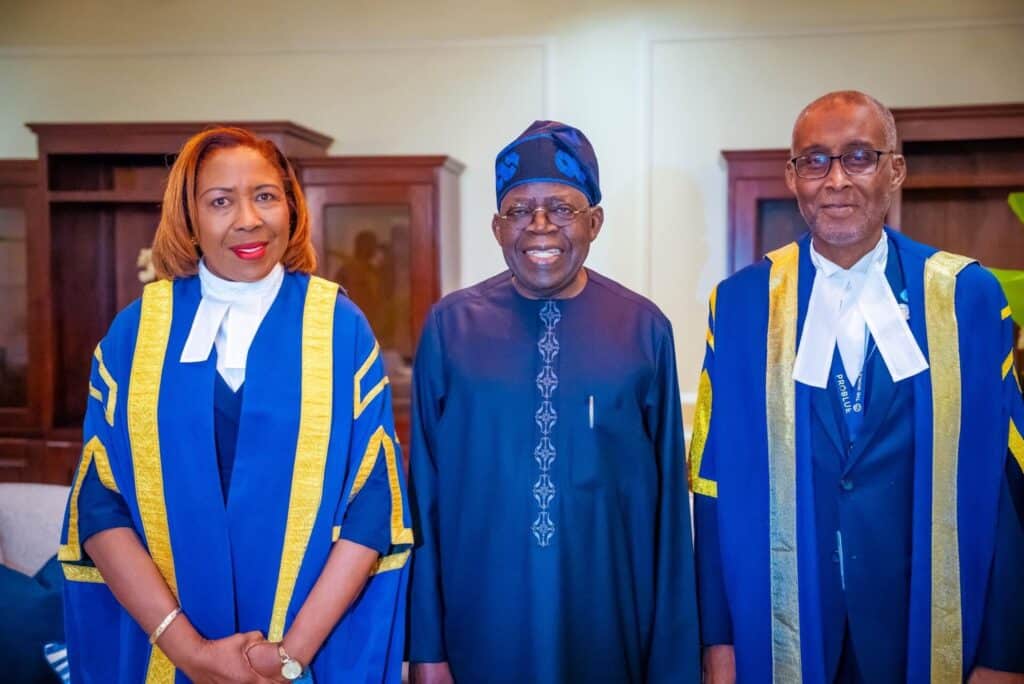
Welcomed to Castries with military honors and accompanied by a large delegation, the Nigerian president delivered a speech to the Parliament of Saint Lucia, hailing the unity of Afro-descendant peoples and announcing several concrete measures. Three announcements in particular stood out: the creation of cross embassies between Nigeria and Saint Lucia, the granting of university scholarships for students from the OECS (Organization of Eastern Caribbean States), and the reciprocal exemption of diplomatic visas.
On six occasions, President Tinubu mentioned “Saint Lucia” in his address as the starting point for an “Atlantic bridge”, reviving the pan-African ideals expressed as early as 1998 by Nelson Mandela during his own visit to the island.
But President Tinubu goes further than a simple memorial tribute. Like an architect of Afro-Caribbean diplomacy, he is redrawing the blueprints for an Africa-Caribbean cooperation based on the circulation of knowledge, the integration of markets and the strengthening of physical and digital connections between the two shores.
Education, human capital and blue innovation
The heart of Africa-Caribbean cooperation lies in the training of the younger generation. The memorandum of understanding signed between the University of Ibadan, one of Nigeria’s most prestigious universities, and Sir Arthur Lewis Community College in Saint Lucia aims to double student exchanges over the next five years, with joint programs in climate science, sustainable resource management and the blue economy.
Through this initiative, African-Caribbean cooperation is materializing in shared classrooms, co-authored scientific publications, and talents trained on both sides of the Atlantic.
The educational challenge goes beyond the university framework. It is part of a broader logic of skills transfer, with the aim of strengthening local institutional capacities, supporting young Caribbean and African entrepreneurs, and building resilient innovation ecosystems. One of the objectives of Africa-Caribbean cooperation is to develop “integrated training zones” on both continents, supported by mixed public-private financing.
Trade, investment and economic corridors
Trade between Africa and the Caribbean, estimated at less than 500 million USD in 2023, could exceed 1.8 billion by 2028, according to the International Trade Centre, provided that logistical and regulatory obstacles are removed. Nigeria, the leading economic power on the African continent with over 234 million inhabitants, sees CARICOM (combined GDP of 130 billion USD) as a natural market to conquer through joint ventures in agribusiness, renewable energies and digital services.
Africa-Caribbean cooperation takes the form of a transatlantic economic corridor, supported by ACTIF (Africa-Caribbean Trade and Investment Forum), where investors, governments and SMEs can co-construct high value-added projects.
Saint Lucia, for its part, aims to become a transshipment hub for logistics flows between Latin America, the English-speaking Caribbean and Africa. Investments in port and digital infrastructures are planned to support this strategy.
Air connectivity and transport diplomacy
But Africa-Caribbean cooperation would remain incomplete without resolving one of the major bottlenecks: the lack of direct flights. Today, a trip between Lagos and Castries can take up to 30 hours, with several intercontinental stopovers. Africa-Caribbean cooperation must break down this logistical barrier.
Discussions are underway between Air Peace (Nigeria) and Caribbean Airlines to set up a weekly Lagos-Barbados-Castries route, supported by tax incentives and a triangular codeshare mechanism, including Recife in Brazil as a South-South connection point.
If it were to become a reality, this link would be more than just another flight: it would embody the transition from diplomatic symbolism to economic fluidity, enabling students, entrepreneurs, artists and investors to cross the Atlantic with speed and regularity.
Structural challenges and geopolitical balance
Any project of this scale faces obstacles. The demographic and economic disproportion between Nigeria and Saint Lucia – 234 million versus 180,000 inhabitants – raises fears of a structural imbalance. To avoid an asymmetrical relationship, Africa-Caribbean cooperation must be based on multilateral institutions such as CARICOM and ECOWAS, which can pool resources, align trade standards and protect small island economies.
Investment in logistics infrastructure, the legal certainty of contracts and the governance of joint projects will also be decisive in building trust between partners and attracting international donors.
Multilateral in scope: from the islands to the BRICS+.
Beyond the bilateral framework, President Tinubu’s presence at the BRICS+ summit in Rio de Janeiro on July 6 and 7 is testimony to the fact that Africa-Caribbean cooperation is part of a global agenda. Nigeria intends to defend a common voice for the countries of the South, notably on the issues of climate debt relief for small island states, reform of the global financial architecture, and the regulation of trade in local currencies.
By positioning itself as a diplomatic bridge between Africa, Latin America and the Caribbean, Saint Lucia is at the center of a broader geo-economic chessboard.