On the southwest coast of Saint Lucia, near the town of Soufrière, Anse Chastanet is one of the most remarkable sites on the Caribbean coast. This bay, bordered by tropical hills and facing the Caribbean Sea, combines a preserved natural environment, a discreet historical heritage and one of the island’s most accessible reefs. Today, Anse Chastanet is an ideal vantage point for travellers with a keen eye for the landscape and marine life of the Caribbean islands.
A natural bay in the heart of Saint Lucia's volcanic coastline
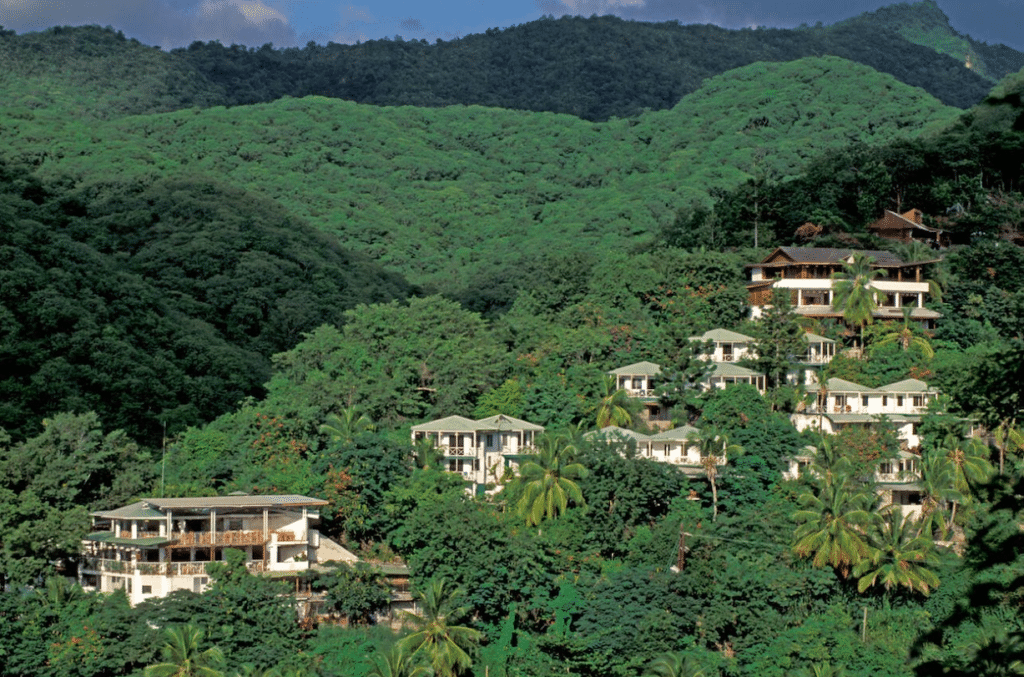
Anse Chastanet lies a few kilometers north of Soufrière, on a stretch of coast dominated by volcanic relief and tropical forests. The landscape is characteristic of this part of Saint Lucia: steep hills covered in vegetation, a deep sea close to shore and, offshore, the silhouette of the Pitons, two volcanic mountains listed as a UNESCO World Heritage Site.
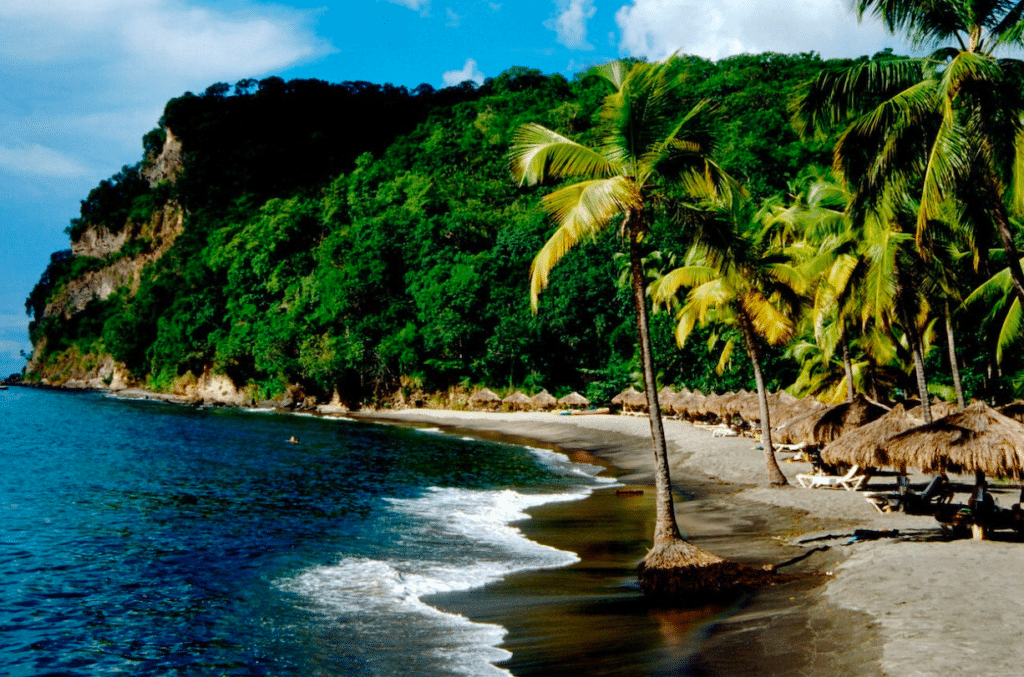
The bay itself is relatively protected, which explains the clarity of the waters and the richness of the marine ecosystem. The sand here is of volcanic origin and often has a dark hue, typical of many beaches in the south of the island. This geological configuration is a reminder that Saint Lucia is first and foremost a volcanic island, where sea and mountain coexist within a very short distance.
A reef accessible directly from the beach
One of the things that sets Anse Chastanet apart in the Caribbean is its close proximity to the coral reef. Just a few meters from the shore, visitors can observe a marine zone rich in tropical fish and coral formations. The reef starts around ten meters from the water’s edge and then develops into a plateau before gradually descending to greater depths. This configuration allows snorkeling directly from the beach. Over 150 species of fish have been recorded in this area, making it one of Saint Lucia’s best-known coastal diving sites.
To protect this fragile environment, certain areas of the reef are marked to prevent boat access. This organization helps to preserve the marine fauna while ensuring safe viewing for visitors.
A beach open to the public
Although the bay is associated with a hotel establishment, Anse Chastanet beach remains open to the public. Visitors can spend the day here, swimming or snorkeling, even if they are not staying in nearby accommodation. This accessibility contributes to the site’s popularity, particularly with travelers exploring the Soufrière coast. On-site services include restaurants, a diving center and water sports facilities.
A coastal path also leads to the nearby beach of Anse Mamin, just a few minutes’ walk away. This second, more discreet bay is surrounded by the remains of an old colonial plantation.


A site marked by the history of plantations
Behind Anse Chastanet beach lie the ruins of a plantation dating back to the XVIIIᵉ century. These remains bear witness to Saint Lucia’s agricultural history, when sugar production dominated the island’s economy. Today, these traces of the past are integrated into the landscape. Trails allow visitors to explore the ancient stone structures and observe how tropical vegetation has gradually reclaimed the site.
This historical presence adds an extra dimension to the visit: Anse Chastanet is not just a beach, but also a place where colonial history, nature and tourism meet.
A bay integrated into a protected environment
The Anse Chastanet area lies at the heart of Saint Lucia’s marine reserves. These protected areas were set up to preserve the coral reefs and marine ecosystems surrounding the island. This environmental management is essential to maintain the balance between tourism and conservation of the natural environment. Nautical activities are therefore restricted, and certain areas are reserved exclusively for underwater observation.

A destination representative of the natural Caribbean
Anse Chastanet encapsulates several major characteristics of the Caribbean landscape: a sea rich in biodiversity, a dense tropical forest and a coastline shaped by volcanic activity. This combination explains why the bay attracts divers, photographers and travelers in search of an unspoilt environment. Located in one of Saint Lucia’s most spectacular regions, in the immediate vicinity of the Pitons and the mountainous relief of the island’s south, Anse Chastanet offers a clear reading of the local geography. It is a reminder that the Caribbean is not just about beaches, but also about landscapes, history and marine ecosystems.
For visitors wishing to explore Saint Lucia beyond the classic seaside resorts, Anse Chastanet is today a benchmark site, where nature, sea and heritage meet in a relatively unspoilt area.
Anse Chastanet is located on the southwest coast of Saint Lucia, near the town of Soufrière, in the Caribbean Sea.
The bay is renowned for its coral reef, accessible directly from the beach, which is home to over 150 species of fish and is one of the island’s best-known dive sites.
Yes, the beach at Anse Chastanet is open to the public, and visitors can enjoy swimming, snorkeling or any of the services available on site.