Ariane 6: French Guiana, the Caribbean pillar of European spaceflight

Ariane 6

On November 4, 2025, the Ariane 6 rocket successfully completed its mission, placing the Sentinel-1D satellite into orbit. Lift-off from the Guiana Space Center in Kourou took place at 6:03 pm under perfectly clear skies. Thirty-four minutes later, the satellite reached orbit, confirming the reliability of the European launcher and the skill of the teams mobilized on site. This success reinforces French Guiana’s place in European space history, and illustrates the decisive role played by this Caribbean territory in global scientific innovation.

A perfectly executed mission

Designed in its twin-engine version, Ariane 6 ensured a flight without the slightest incident. All systems operated stably, from ignition to satellite release. The European Space Agency (ESA) confirmed receipt of the first signal from Sentinel-1D thirty-nine minutes after liftoff, validating the launch as a complete success. This flight marks a new stage in the ramp-up of the Ariane program.

Objective: to guarantee Europe total autonomy of access to space. For French Guiana, this launch consolidates its role as a strategic space base, a symbol of technical and human know-how recognized the world over.

Ariane 6
©CSG Centre spatial guyanais
Ariane 6
©CSG Centre spatial guyanais

The Guiana Space Centre, a driving force for success

For over half a century, Kourou has been home to the French Guiana Space Center, Europe’s spaceport. Its geographical position, close to the equator, allows it to benefit from the Earth’s rotation, saving fuel while increasing payload capacity.
EachAriane 6 launch mobilizes hundreds of specialists: engineers, technicians, operators and safety experts. This activity sustains thousands of direct and indirect jobs in French Guiana, and reinforces the region’s image as a major scientific player. Beyond the local economy, the entire Caribbean region is involved in a project of global scope, uniting innovation, technology and international cooperation.

Ariane 6

Sentinel-1D: a satellite at the service of the Earth

The Sentinel-1D satellite, launched by Ariane 6 is part of the European Copernicus program, designed to observe the planet with unrivalled precision. This satellite replaces Sentinel-1A, launched eleven years ago, and will operate alongside Sentinel-1C. It carries a synthetic aperture radar capable of capturing images of the Earth’s surface, day and night, even under cloud cover.
The data it gathers is essential for maritime surveillance, natural disaster prevention, soil studies and mapping vulnerable areas. Thanks to this information, scientists can monitor land movements, floods and the effects of climate change on coastlines.

Ariane 6

The Caribbean and environmental challenges

From Kourou, satellites powered by Ariane 6 contribute to understanding the climatic phenomena affecting the Caribbean. The region’s islands are among the most exposed to sea-level rise, deforestation and cyclones. Copernicus data enable us to observe these trends and adapt risk management policies.
These radar images are used to map mangroves, monitor coral reef degradation and assess coastal erosion. Through these missions, French Guiana and the Caribbean are actively participating in the global scientific effort to better protect tropical territories. Each launch of This makes Ariane 6 a concrete step towards sustainability and environmental awareness.

Exemplary scientific cooperation

The Sentinel-1D mission is the result of a close partnership between ESA, the European Commission, Thales Alenia Space and Airbus Defence and Space. This cooperation demonstrates the excellence of the European industrial model.
Simonetta Cheli, ESA’s Director of Earth Observation Programs, commented: “This launch aboardAriane 6 completes the Sentinel-1 mission. It ensures the continuity of service that is essential for understanding our environment and for climate research.”

Ramon Torres, Sentinel-1 project manager, praised the collective work of the European and Guyanese teams, underlining the importance of this achievement for the global scientific community. Thanks to these joint efforts, Europe is consolidating its leadership in Earth observation.

Modern, responsible technology

Measuring 60 meters long and weighing nearly 900 tons, Ariane 6 has been designed for flexibility and performance. Its Vulcain 2.1 main engine and reignitable Vinci upper stage enable multiple satellites to be launched on a single mission, while reducing costs and emissions.
The launcher complies with the strictest environmental standards. European engineers have integrated technologies that limit the production of space debris and optimize energy consumption. This concern for efficiency illustrates the desire to reconcile scientific progress with ecological responsibility. By placing Sentinel-1D in orbit, Ariane 6 demonstrates that innovation and sustainability can go hand in hand.

Ariane 6
Ariane 6

French Guiana, between Europe and the Caribbean

The Guiana Space Center embodies the link between Europe and the Caribbean. This tropical territory, both Amazonian and maritime, symbolizes cooperation between continents. In an environment dominated by nature, the presence of the spaceport bears witness to a rare alliance between high technology and preservation of the natural environment.
Each mission is a reminder that French Guiana is not on the bangs of Europe, but at the heart of a global project focused on science and the future. The rockets Ariane 6 rises from this Caribbean territory to serve global research, unite peoples and inspire a new generation of engineers and researchers.

Ariane 6: a shared vision

The successful launch on November 4, 2025 confirms the strength of the European space program. With Ariane 6, Europe has a competitive, safe and sustainable launcher. This success illustrates the ability of European teams to innovate from a Caribbean base.
French Guiana continues to be the pillar of this adventure, linking Earth to space, science to society. Each mission bears witness to the cooperation between nations, and to our confidence in the future. Under the skies of Kourou, the Caribbean proves that it is not only a place of nature, but also a place of progress and excellence.

Leave a Reply

Your email address will not be published. Required fields are marked *

More articles from RK

Marcus Garvey
HISTORY & HERITAGE
Tolotra

Jamaica – Marcus Garvey, Jamaican hero of international renown

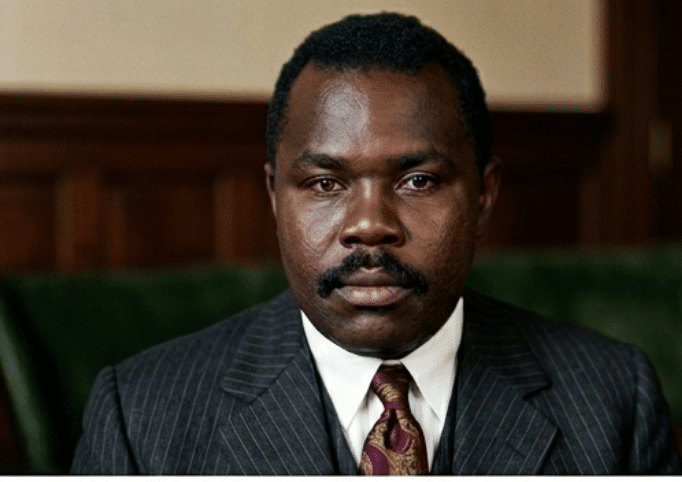
Marcus Garvey remains one of the most influential figures to emerge from the Caribbean. Born in Jamaica at the end of the 19th century, he transformed a local experience into a political and cultural project of international scope. At a time when black populations faced deeply rooted systems of exclusion, Marcus Garvey proposed a structured vision based on dignity, organization and autonomy. Recognized today as a national hero in Jamaica, he is much more than a historical symbol. His story helps us understand how the Caribbean helped shape major intellectual and political movements on a global scale. His name continues to circulate in contemporary debates on identity, memory and the development of societies born out of colonial history. From Jamaican origins to the formation of a committed conscience He was born on August 17, 1887 in St. Ann’s Bay, Jamaica, into a modest family. Very early on, he developed a
Read More »
BlueSeas Festival
EVENT MANAGEMENT
Tolotra

BlueSeas Festival: in Curaçao, Pietermaai becomes the epicenter of Caribbean blues in 2026

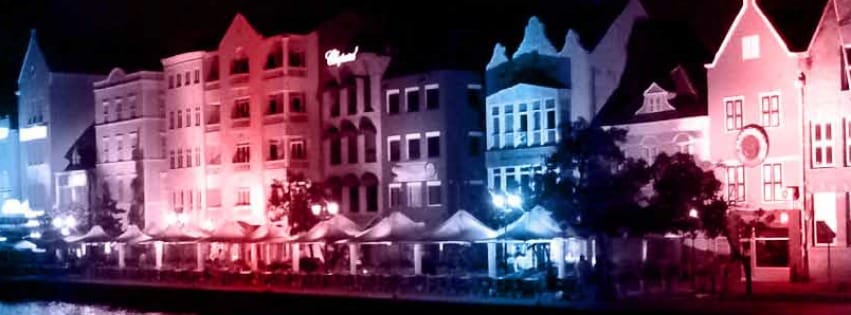
From April 2 to 4, 2026, Curaçao hosts another edition of the BlueSeas Festival a musical event that is gradually establishing itself as one of the most unique cultural events in the Caribbean. Free, open and rooted in the urban space, the festival goes far beyond simple musical programming to become a genuine territorial experience. Right from the opening night, Thursday April 2 at Kura Hulanda Village, the mood is set: the blues settle into a heritage setting, before taking full possession of the Pietermaai district on April 3 and 4. This two-stage format structures an immersive experience in which music, architecture and local life are seamlessly interwoven. A free festival that transforms the city into an open-air stage The BlueSeas Festival is based on the principle of offering free concerts in public spaces. This choice is not insignificant. It widens access to live music, while creating direct interaction between
Read More »
Le vodou : Haïti au cœur d’une candidature patrimoniale majeure avec le Bénin
COOPERATION
Tolotra

Vodou: Haiti at the heart of a major heritage bid with Benin

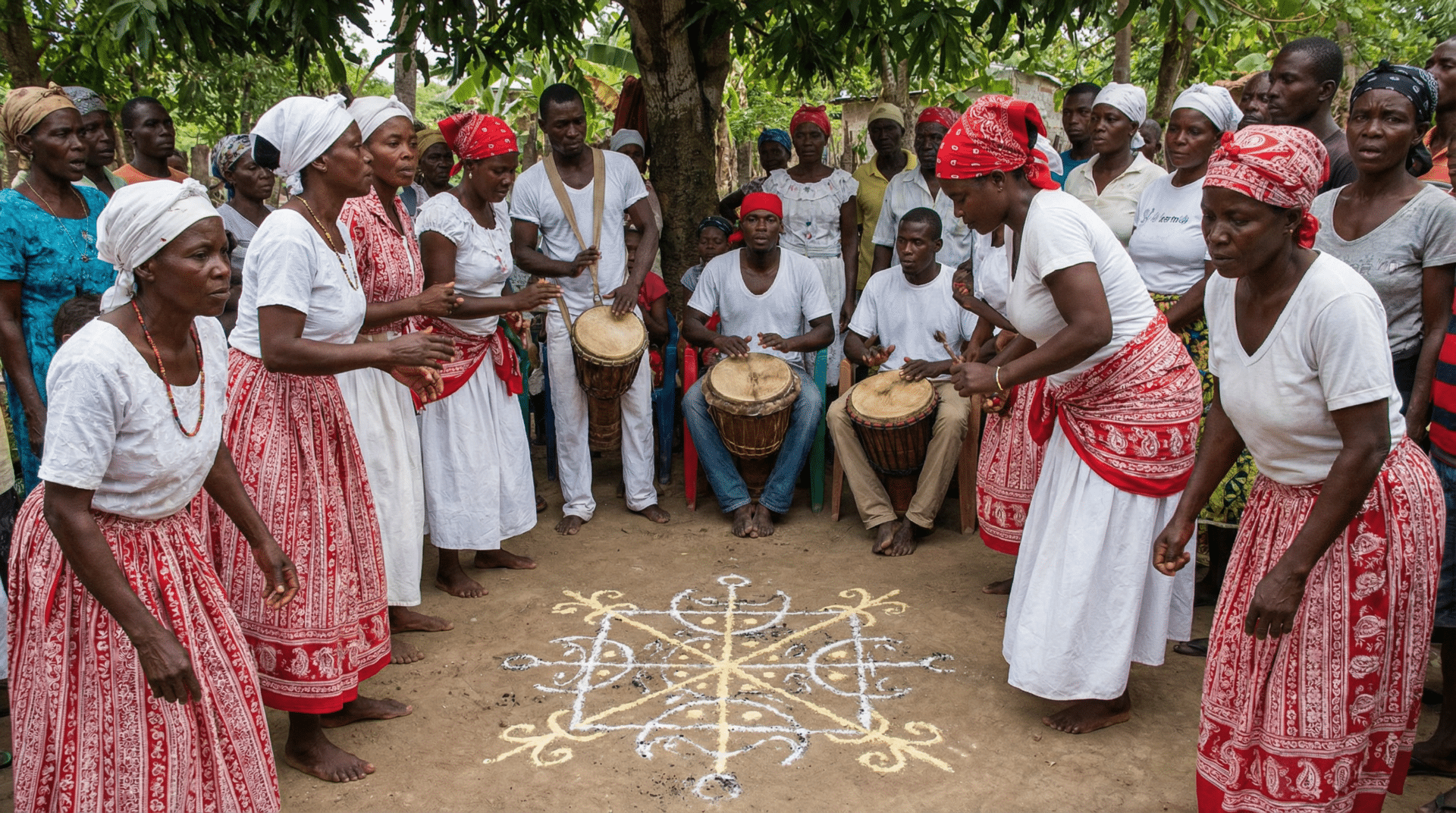
The vodou is entering a new phase in its international history. The joint candidacy of Haiti and Benin for inscription on the Representative List of the Intangible Cultural Heritage of Humanity places centuries of memory, transmission and creation at the heart of a global heritage debate. The deadline set by UNESCO for applications to be examined in 2027, and submitted before March 31, 2026, places this initiative within a precise and structured institutional calendar, but the stakes go far beyond the administrative procedure. For the Caribbean, and Haiti in particular, this candidacy is no mere cultural formality. It’s about recognizing a living heritage, often misunderstood, sometimes caricatured, but deeply rooted in the country’s social, artistic and spiritual history. Vodou is not a fixed folklore; it is a cultural matrix, a way of organizing the link between generations, communities and the sacred. To place it within an international heritage dynamic is
Read More »

conTACT RK

we'd love to have your feedback on your experience so far

Join The List

Join our Richès Karayib community!  Sign up for our newsletter.

Want To Maximize Your Business Presence On Riches Karayib?

Complete the form to start the application