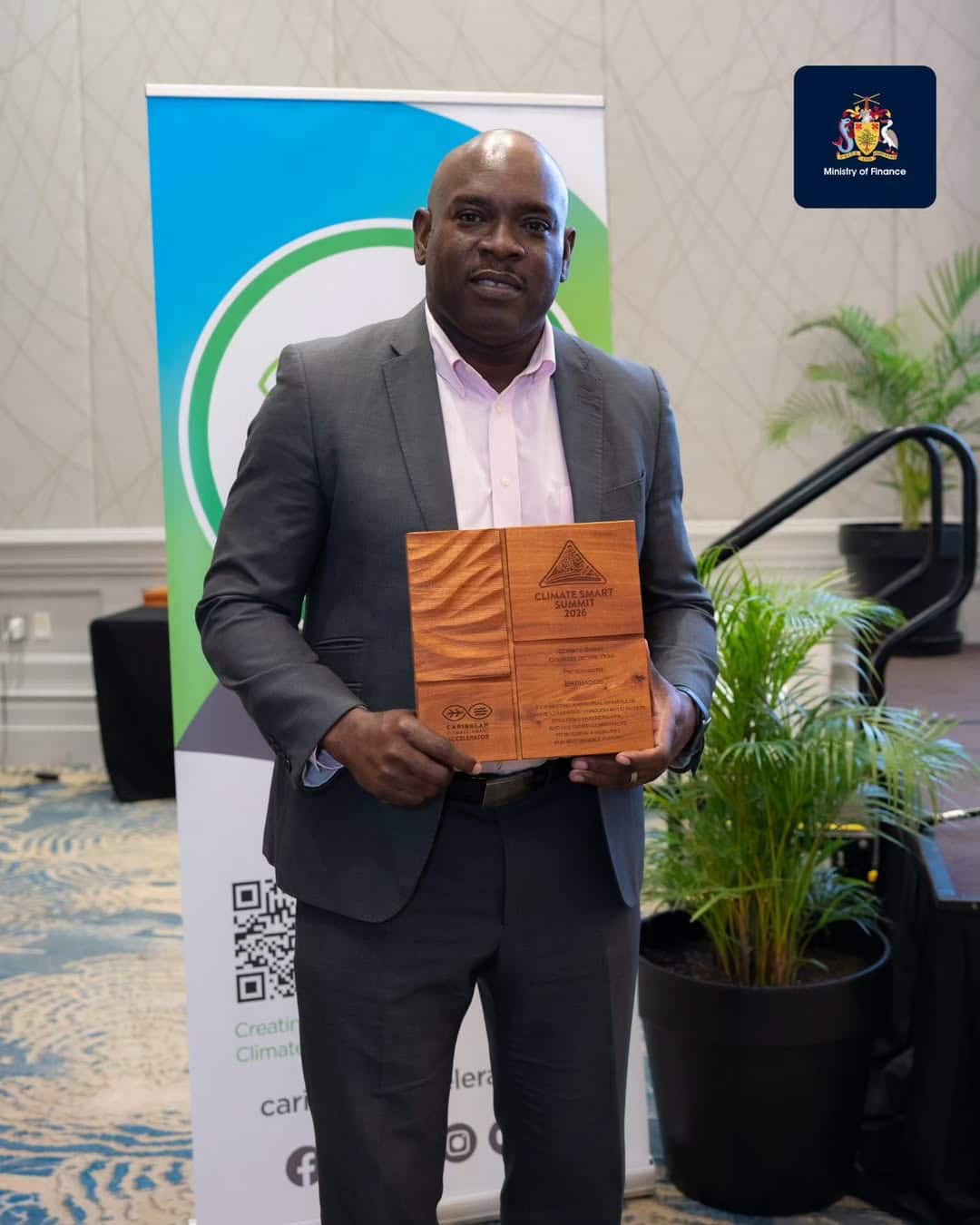
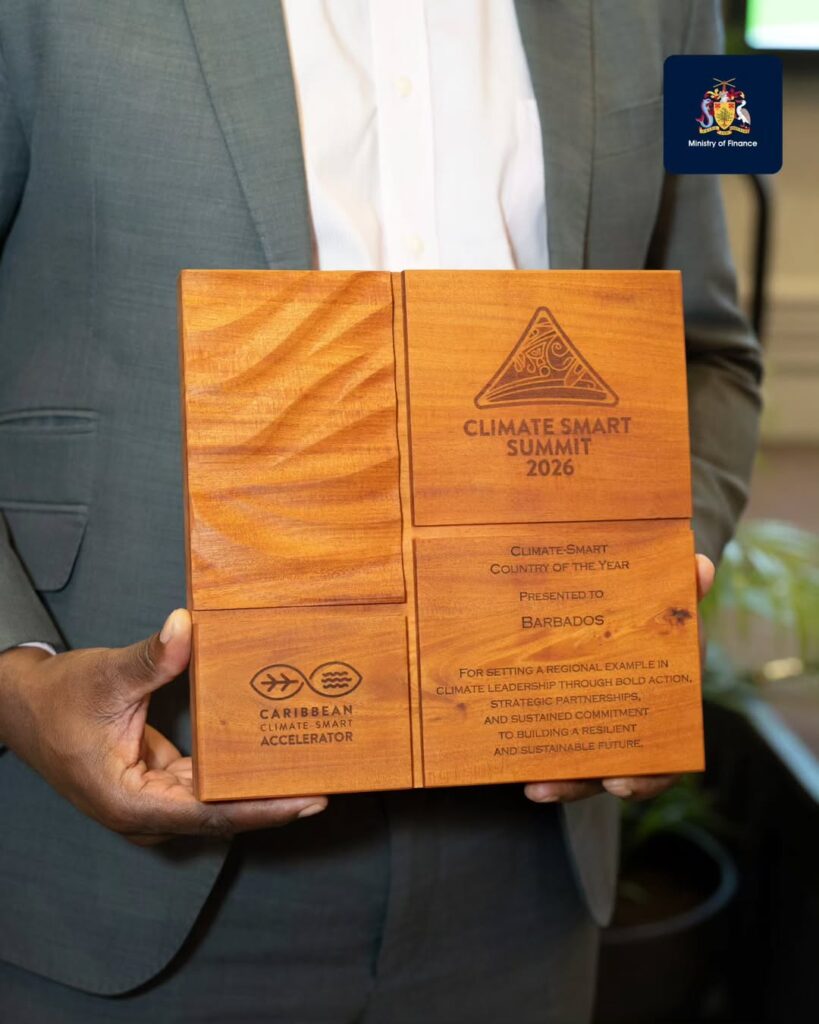
In Bridgetown, an award ceremony capped off years of effort. Barbados was named “Climate-Smart Country of the Year” at the first Climate Smart Awards, presented at the Caribbean Climate-Smart Accelerator summit in Bridgetown. Behind this distinction lies a journey rooted in energy, financing, and resilience.
An award based on five criteria
The jury did not limit its assessment to stated commitments. Racquel Moses, Executive Director of the Caribbean Climate-Smart Accelerator, explained that the evaluation was based on five areas: the ambition of the Nationally Determined Contributions (NDCs) under the Paris Agreement, the growth of renewable energy, the scope of clean energy goals, the climate finance mobilized, and the country’s performance on the ND-GAIN index. This tool measures a country’s climate vulnerability and its capacity to prepare its response.
Barbados has distinguished itself in each of these areas. According to the organization, the country’s renewable energy production has increased since the Paris Agreement. The island submitted its climate commitments on time and secured funding on a scale that is notable in the region. The award recognizes the policies implemented, rather than a single announcement.
Solar Energy: A Transformation That Has Become Visible
For Ryan Straughn, Minister of Finance and Economic Affairs, this success is also thanks to the residents. Families have installed solar panels on their roofs. Entrepreneurs have invested in clean technology. Young people have chosen careers related to the green and blue economies.
This effort was supported by several government policies. Tariff concessions reduced the cost of equipment. The Renewable Energy Rider allowed households and businesses to sell electricity back to the grid. Other programs encouraged larger-scale commercial installations. The transition did not happen on its own; it relied on mechanisms capable of transforming a national ambition into accessible options.
When Finance Becomes a Tool for Resilience
The award highlights Barbados’ role in financial innovation. In December 2024, the country carried out a transaction described as the first debt-for-climate-resilience swap. It replaced more expensive debt with cheaper financing, generating approximately 125 million U.S. dollars in budget savings.
These resources are intended to support water management, food security, and infrastructure capable of withstanding the effects of climate change. The mechanism’s value lies in one key aspect: creating room for investment without increasing the overall burden of public debt. For a small island nation vulnerable to droughts, storms, and rising sea levels, financial engineering thus becomes a concrete protective measure.

Mia Mottley and a Voice Heard Around the World
This recognition is also part of the diplomatic efforts led by Prime Minister Mia Amor Mottley. Through the Bridgetown Initiative, launched in 2022, her government has called for reform of international financing so that vulnerable countries can more easily access long-term, affordable, and disaster-resilient resources.
Barbados did not single-handedly invent all of today’s tools, but it helped shift the conversation. It has argued that the countries least responsible for global warming cannot finance their adaptation efforts through traditional loans, which are costly and ill-suited to climate emergencies.
Rihanna: Another Face of Barbadian Activism
The ceremony also honored the Clara Lionel Foundation, founded by Rihanna. The foundation received the People’s Choice Award as well as recognition for its philanthropic work in particularly vulnerable communities. This dual appearance on stage brought together public policy, civic engagement, and cultural influence.
For Barbados, this partnership holds symbolic significance. A national institution and a foundation led by a global figure have been honored for the same cause. In this way, the country is projecting its identity beyond its beaches and tourism industry.

A prize, then the test of results
The title of “Climate-Smart Country of the Year” does not mean that all challenges have been resolved. Rather, it presents Barbados with a new challenge: to demonstrate that its goals can sustainably improve daily life, protect resources, and make energy more accessible.
The next step will be closely watched throughout the Caribbean. Barbados’ solutions cannot be copied wholesale, as each territory faces its own constraints. They can, however, raise a crucial question: How can small islands transform their climate vulnerability into the capacity to take action, without waiting for the rest of the world to decide for them?
Barbados received this award for its achievements in five areas: its commitments under the Paris Agreement, the expansion of renewable energy, its clean energy goals, the climate finance it has mobilized, and its ability to respond to environmental risks. The award thus recognizes a policy implemented over several years that combines energy transition, resilience, and financial innovation.
Barbados has facilitated the purchase of clean energy equipment through customs incentives and encouraged solar power generation among both households and businesses. Certain programs also allow users to sell the electricity they generate back to the grid. At the same time, the country has secured funding for water management, food security, and the protection of infrastructure vulnerable to the effects of climate change.
Barbados speaks on behalf of small island states in international discussions on climate and development financing. Under the leadership of Mia Amor Mottley, the country advocates for greater access to the resources needed for adaptation. Its experience can inspire other Caribbean territories, even though each island must adapt its energy and financial mechanisms to its own realities.