She introduces herself without emphasis: author, mom, journalist, presenter. And she loves to create. That’s all she says. But as we move through her books, her musical stories and her travels from island to island, one thing becomes clear: Barbara Jean-Elie doesn’t just create: she also creates. transmits it, preserves it, gives voice to an intimate Caribbean, often unknown – sometimes even to those who live there.
It all begins with a story read aloud
It all began there, in the intimacy of a mother-child bond. Barbara Jean-Elie reads stories to her daughter, watches her grow up, then feels the urge to write for these children as they move forward, wonder, awaken.
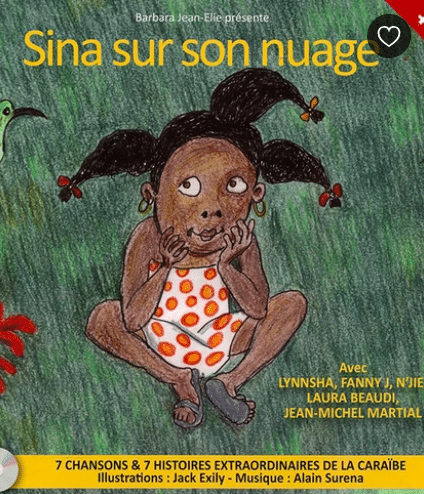
In 2013, Sina sur son Nuage was born: seven extraordinary stories from the Caribbean, carried by seven songs. Jean-Michel Martial tells the story, Alain Suréna composes, and the Caribbean voices of Lynnsha, Fanny J, N’Jie and Laura Beaudi embody the universe. A book that sings even before we open it. Now out of print, the book nonetheless opens the way for a collection, a universe and a little Caribbean adventurer destined to roam the islands for years to come.
Through the islands, rediscover the Caribbean
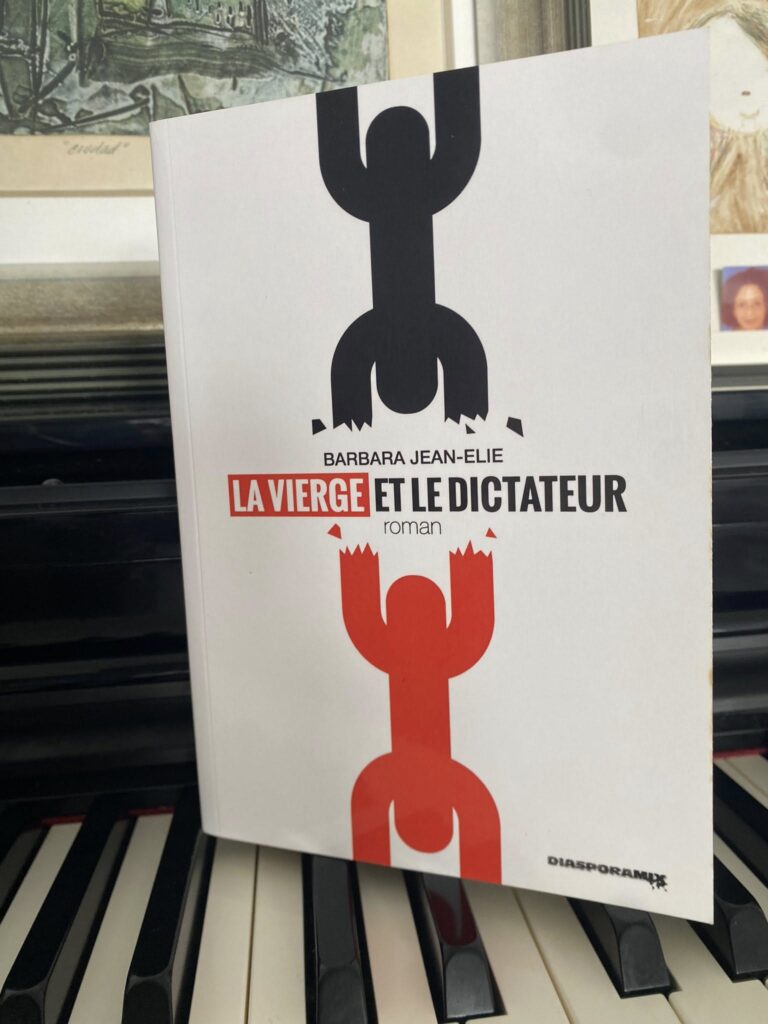
Barbara Jean-Elie’s documentaries on Caribbean music take her from island to island, encountering sounds, rhythms and faces. This 2003 trip inspired several of her works: “Sina et le cyclone” from the book Sina sur son nuage (2013), La Vierge et le Dictateur, and Sina et le Secret de la Caraïbe in 2017.”
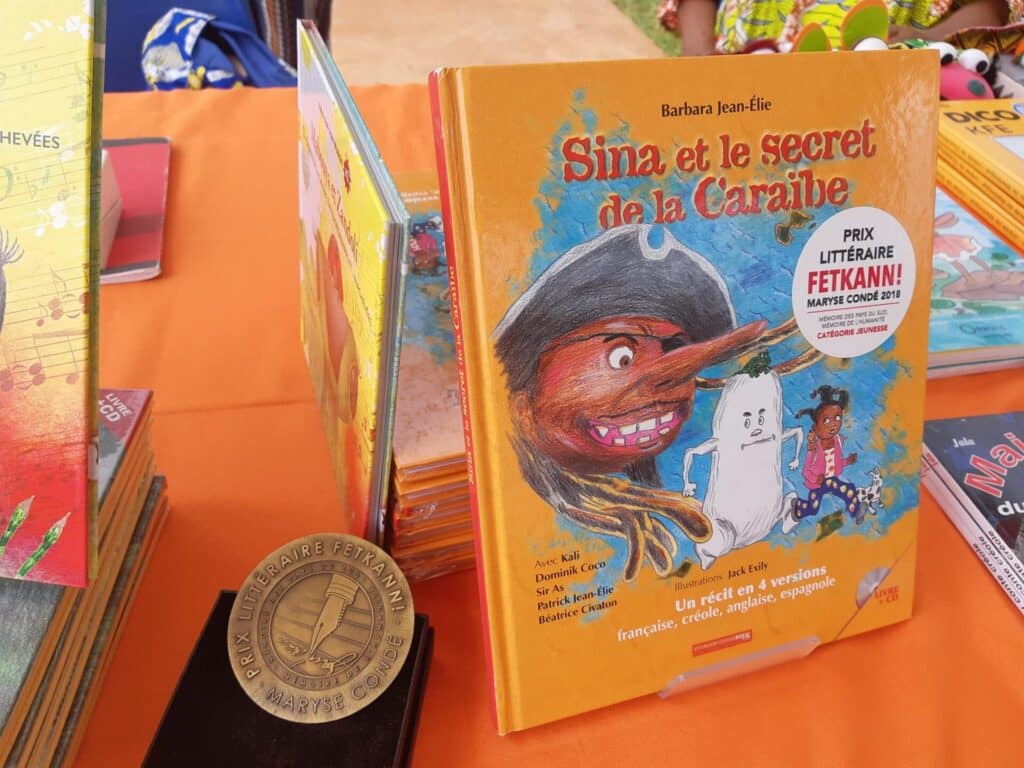
Sina and Momo, the mountain monster, explore the archipelago island by island. The author herself lends her voice to all the characters: a meticulous sound work that transforms listening into immersion. Compositions by Kali, Dominik Coco, Patrick Jean-Élie and Alain Suréna weave a musical journey in the colors of calypso, reggae, salsa, konpa and ka. The book is published in four languages – French, English, Spanish and Guadeloupean Creole – because the Caribbean speaks in plural, and all its voices deserve to be heard.
In 2018, the book received the “Prix littéraire Fetkann Maryse Condé” literary prize in the children’s category: recognition for a work that goes far beyond the realm of children’s books.
In 2019, the stories leave the page: Barbara Jean-Elie directs a musical musical show adapted of his first two books, with actress and singer Anne-Alix Psyché and musician Jean-Louis Nguyen. Transmission becomes alive and incarnate.
Invite the children to write the following
2020 sees the publication of Sina sur son Nuage #2 – Mabouya et Zandoli. This time, the author opts for boldness: stories deliberately unfinished.
Seven extraordinary stories from the Caribbean… to complete. Cycle 3 and sixth-grade students are invited to imagine the sequel, to write in their turn. A request that came from the teachers we met on previous tours. Barbara Jean-Elie composes the melodies, Christian Julien lends his voice, accompanied on piano by Georges Van Wien. A book that breathes and leaves room for the imagination.

Understanding Martinique
After spending eighteen years elsewhere, Barbara Jean-Elie returns to Martinique with a necessity: to understand her island. Really understand it. She reads, informs herself, analyzes the economy, society and population. It’s a personal and well-documented freeze-frame.
In 2022, when she stood for election to the French parliament, she chose to write first. Martinique Libre was published the same year: a structured essay, supported by notes, which tackles education, safety, parenthood and questions a central issue: what is Martinique today?

Between unspoken words and silences
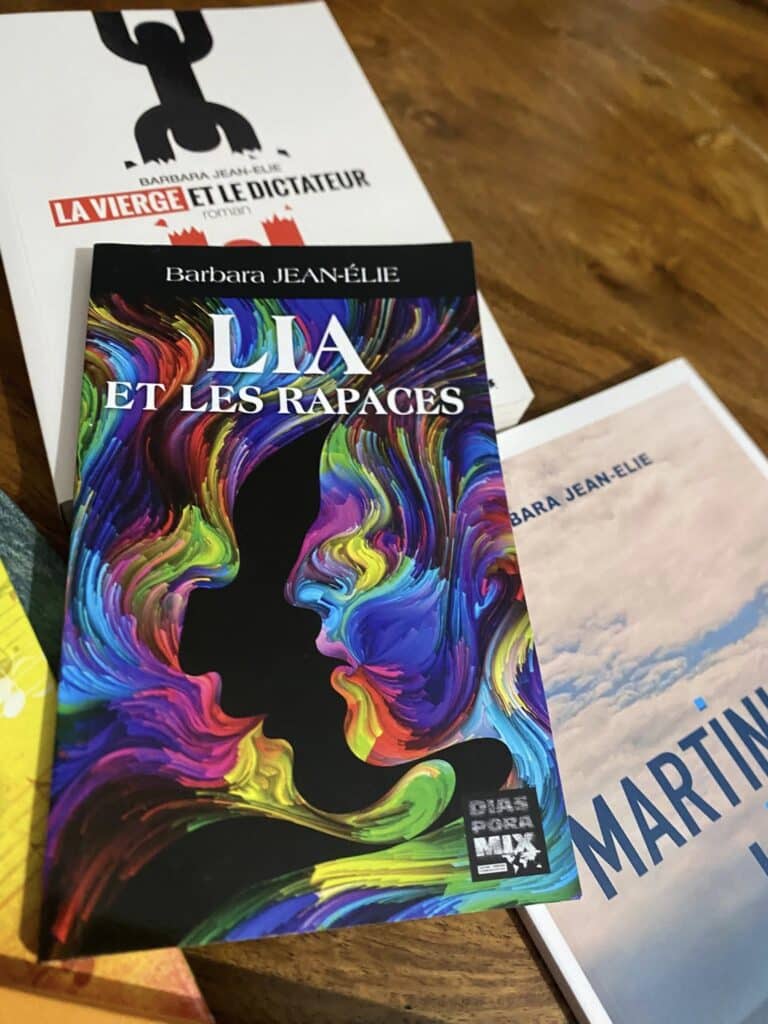
With Lia et les Rapaces, her fifth children’s book and first first novel for teenagers Barbara Jean-Elie gets very close to the intimate. Léa is fifteen. She tells the story of her high school and what happened to her best friend Lia. The novel deals with bullying at school, but above all – and this is the key point – the family what is said, what is not said, the silences, the awkwardnesses, the invisible fractures.
Rooted in the Martinique context, the story nevertheless touches on the universal. Adolescence, the parent-child relationship, symbolic violence: these realities cut across all societies. The book is often bought by adults, sometimes alongside their children. “Read it, then make others read it. Here, fiction creates the space for dialogue.

Reading as an act of freedom
Barbara Jean-Elie writes out of desire, perhaps also out of necessity… she writes. For her, writing is not a moment, but a movement. Her next book will be a poetry collection a new territory that she explores with the same exacting standards. Researching, creating, passing on: the thread never breaks. And when asked for a final word, she has no doubts: you need to read. For her, reading is freedom: an act of resistance.
Barbara Jean-Elie's books
Children’s literature
- – Sina sur son Nuage (2013) – 7 stories & 7 songs from the Caribbean (sold out)
- – Sina et le Secret de la Caraïbe (2017) – Prix Fetkann Maryse Condé 2018 – 4 languages
- – Sina sur son Nuage #2 – Mabouya et Zandoli (2020) – Stories to complete, teaching aids
- – Lia et les Rapaces (2024) – Teen novels
Fiction & essays
- – The Virgin and the Dictator (2010, reissued 2020)
- – Martinique Libre (2022)
Coming soon
- – Poetry collection

📸 ©Barbara Jean-Elie
Barbara Jean-Elie is a Caribbean author, journalist and presenter from Martinique. She is known for her committed literary work, combining children’s literature, novels, essays and musical creations based on Caribbean cultural transmission.
His major works include Sina sur son Nuage, Sina et le Secret de la Caraïbe (Prix Fetkann Maryse Condé 2018), Martinique Libre and Lia et les Rapaces. Her books deal with youth, Caribbean identity, the family and contemporary social realities.
Barbara Jean-Elie’s work highlights the cultures, languages and social realities of the Caribbean. Through her books and shows, she contributes to transmitting a Caribbean cultural memory to younger generations, while tackling universal subjects such as education, the family and the freedom to read.