Barbuda: More than 5,000 frigatebirds in an extraordinary lagoon.

Barbuda

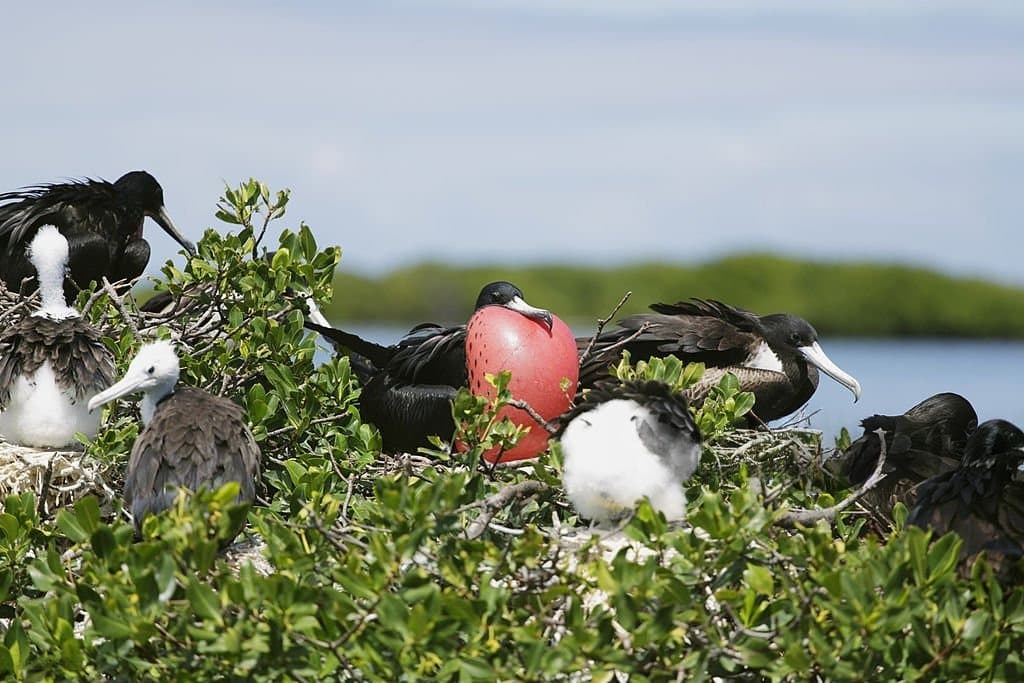
In Barbuda, the show begins even before you spot the birds. There is no road leading to the Codrington Lagoon sanctuary. You have to board a boat, travel across the water through the mangroves, and then watch as the black silhouettes of the magnificent frigatebirds (Fregata magnificens) come into view—their colony is one of the largest in the Caribbean.

This fact alone is enough to reveal another side of Barbuda. Beyond its pink beaches, the island is home to a lagoon where more than 5,000 of these birds have been recorded, in a colony where a scientific survey counted 1,743 nests. Here, you discover the destination by looking up and understanding the role this lagoon plays in the balance of the entire island.

Barbuda
Barbuda

A Ramsar-designated lagoon, nestled between mangroves and reefs

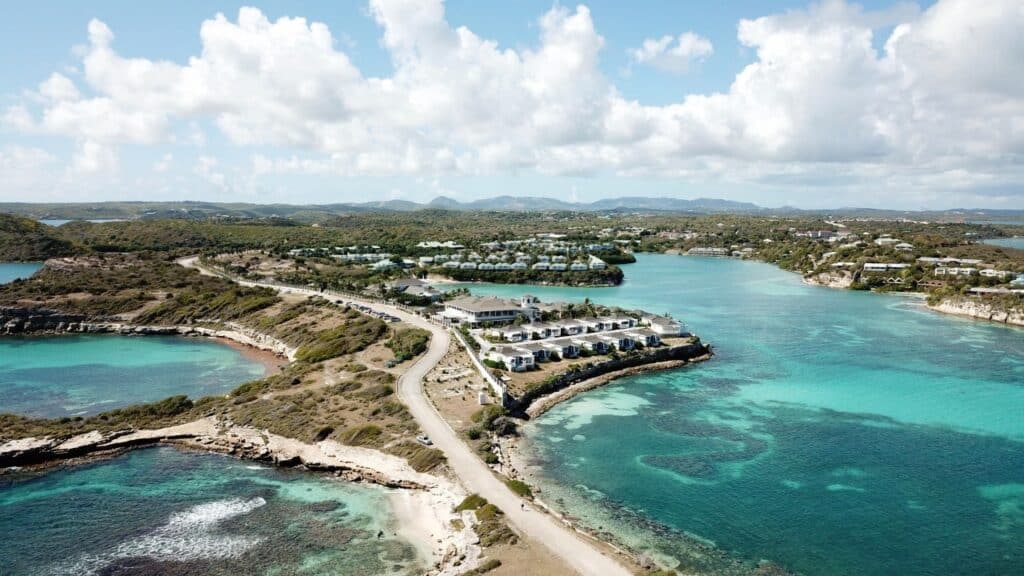
The Codrington Lagoon covers 3,600 hectares and has been recognized as a wetland of international importance under the Ramsar Convention since 2005. It borders Codrington, the only village on Barbuda, from which it takes its name and whose residents are among the sanctuary’s closest neighbors. Mangroves, seagrass beds, sandbars, and reefs form an ecosystem where hawksbill and leatherback sea turtles also nest. Around the lagoon, spiny lobster fishing and nature-based tourism provide a livelihood for some of Barbuda’s families, in a balance that local guides are committed to preserving.

The magnificent frigate, symbol of Barbuda

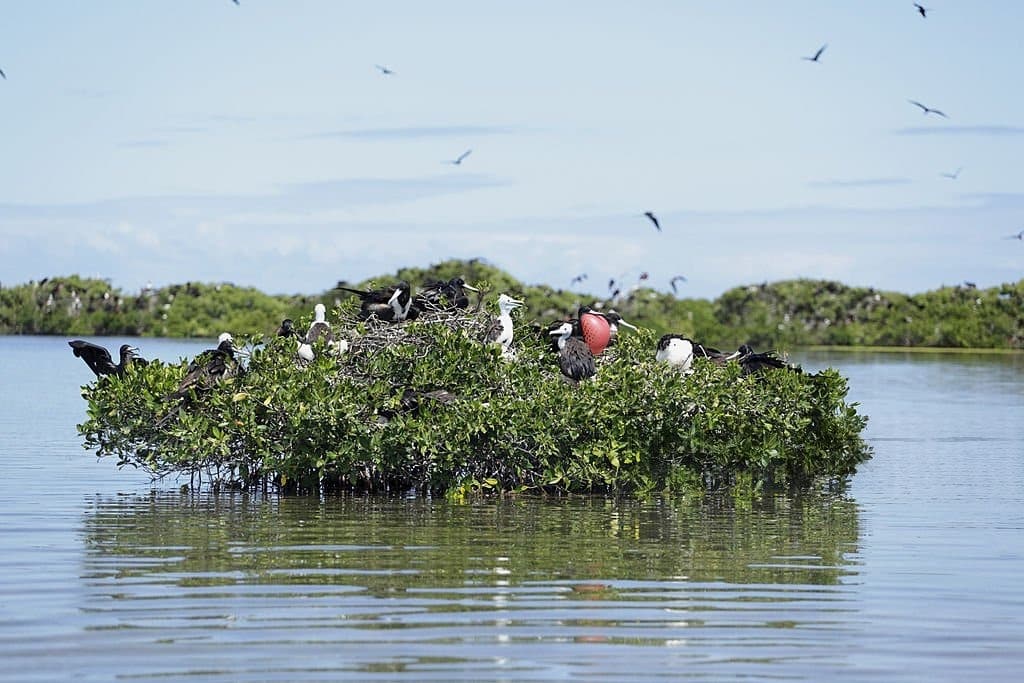
In Barbuda, the bird is more than just a curiosity. It has become one of the territory’s most recognizable symbols. The male attracts everyone’s attention during courtship, when he inflates a scarlet red pouch under his beak to attract passing females. The species’ wingspan can exceed two meters. Despite its webbed feet, it almost never lands on the water, as its feathers are not waterproof. It therefore spends most of its life gliding, carried by air currents over the sea, and sometimes supplements its diet by chasing other seabirds until they let go—a well-documented behavior in this species.

Barbuda

When Irma Hit the Colony

The importance of the sanctuary became even clearer in September 2017. Hurricane Irma struck Barbuda, forcing the evacuation of the entire island to Antigua. A scientific study published in 2023 showed that the sandbar protecting the lagoon—which had remained intact for 250 years—broke in two places under the force of the storm, a breach that remained open four years later. The lagoon also lost some of its mangroves, prompting a local organization, the MEPA Trust, to begin replanting them with the help of volunteers.

Twenty-eight days after the storm, Barbadian ecologist Shanna Challenger took part in the sanctuary’s first census since the disaster. She found only 300 frigatebirds. “There was a significant drop compared to the usual numbers,” she told the Antigua Observer at the time. No one knows yet whether the birds—like the residents—will return.

The return did not make up for the losses, but it demonstrated the colony’s ability to resume its life cycle in a disrupted environment. Today, the sanctuary is once again home to more than 5,000 frigatebirds. In 2025, a specialized media outlet described it as one of the most thriving colonies in the world, managed by a community council rather than a distant agency, with guides who pass this knowledge down from generation to generation.

Barbuda

More than just a postcard-perfect setting

What makes this sanctuary unique is not just the size of the colony. It is the proximity between a major natural phenomenon and a small island whose entire identity is tied to this landscape. The next time Barbuda appears as nothing more than a postcard of pink sand, just look toward Codrington Lagoon. Behind the beach lies another story—that of an island that has become one of the great refuges for the magnificent frigatebird in this part of the world. What if Barbuda’s true wealth were best seen in what it chooses to preserve for the future?

Barbuda
Barbuda

More than 5,000 magnificent frigatebirds live in the Codrington Lagoon sanctuary, a colony where a scientific census counted 1,743 nests—one of the largest in the Caribbean.

In Codrington Lagoon, on the west coast of Barbuda. The site has been designated a Wetland of International Importance under the Ramsar Convention since 2005.

Yes, but the population has been greatly reduced. A census conducted 28 days after Irma in 2017 found only 300 frigatebirds, compared with more than 5,000 today.

Leave a Reply

Your email address will not be published. Required fields are marked *

More articles from RK

cinémas caribéens
FILM & VIDEO
Tolotra

Stories of Caribbean Cinema – Texts by Guillaume Robillard. Ciclic, 2026.

Thus, the history of Caribbean cinema did not begin until the 1960s, even though films had been shot in the Caribbean since the early 20th century—notably two short films by the Lumière brothers in Martinique in 1902. In fact, it is common to make a clear distinction between films shot in the Caribbean and films made by filmmakers from the various islands of this archipelago. Clearly, this overview begins with Cuban cinema, whose professionalism, richness, and diversity—which have already inspired an extensive body of literature—set it apart within this geographic region.As for productions from Jamaica, Trinidad and Tobago, and the Dominican Republic, they display a certain consistency punctuated by pleasant surprises, while in Haiti, a semi-professional film industry was long prolific and enjoyed a large audience. On the other hand, across the region, a few small countries produce films on a limited scale (Saint Lucia, Grenada) or infrequently (Barbados, Puerto

Read More »
Barbuda
TOURISM
Tolotra

Barbuda: More than 5,000 frigatebirds in an extraordinary lagoon.

In Barbuda, the show begins even before you spot the birds. There is no road leading to the Codrington Lagoon sanctuary. You have to board a boat, travel across the water through the mangroves, and then watch as the black silhouettes of the magnificent frigatebirds (Fregata magnificens) come into view—their colony is one of the largest in the Caribbean. This fact alone is enough to reveal another side of Barbuda. Beyond its pink beaches, the island is home to a lagoon where more than 5,000 of these birds have been recorded, in a colony where a scientific survey counted 1,743 nests. Here, you discover the destination by looking up and understanding the role this lagoon plays in the balance of the entire island. A Ramsar-designated lagoon, nestled between mangroves and reefs The Codrington Lagoon covers 3,600 hectares and has been recognized as a wetland of international importance under the Ramsar

Read More »
Man Mélé
VISUAL ARTS
Tolotra

Martinique – Cécile Vernant: Behind the Scenes of “Man Mélé!” at the Senate’s Orangerie.

At the Senate Orangery, Man Mélé! took on a dimension that Cécile Vernant could not have fully anticipated before the doors opened. As the days went by, the exhibition became a space for encounters, conversations, and exchanges between artists and visitors. Surrounding the artworks, discussions revolved around Martinique and nature, but also memories, cultures, and sensibilities from far beyond the island. The calm before the crowd arrives Every morning, Cécile Vernant arrived before the park opened at 11 a.m. The garden was quiet. She would pass joggers, watch the tai chi groups among the chestnut trees, and enjoy the scent of the flowers. She loved this “calm before the storm.” A few hours later, the atmosphere would change. Cécile Vernant estimates that the Orangerie, which is about 600 m², could accommodate up to 400 visitors at its peak over the course of three to four hours. The busiest day reportedly

Read More »

conTACT RK

we'd love to have your feedback on your experience so far

Join The List

Join our Richès Karayib community!  Sign up for our newsletter.

Want To Maximize Your Business Presence On Riches Karayib?

Complete the form to start the application