
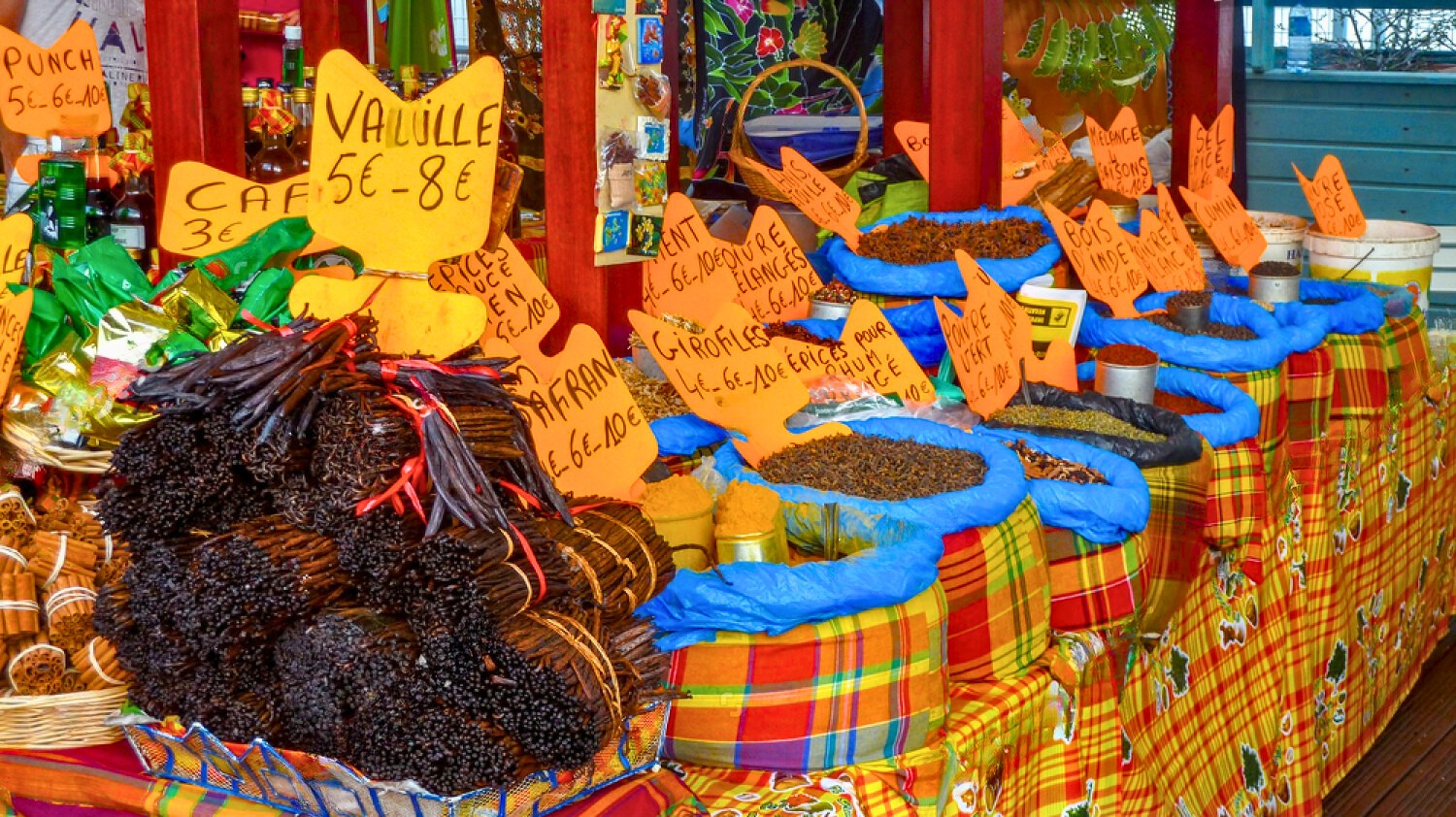
Caribbean spices
are the reflection of a rich culinary heritage, shaped by centuries of diverse influences. These spices, a blend of indigenous, African, European and Asian traditions, enrich the islands’ typical dishes. From cinnamon to chili, nutmeg to specific blends, the Caribbean islands boast a rich culinary heritage.
A historic heritage of Caribbean spices
Maritime routes
As early as the colonial period, the Caribbean was a major transit point for spices. While some came directly from Asia (such as cinnamon or cloves), others were introduced through migration (chillies from South America, coriander and cumin from India, etc.). This mix of origins laid the foundations for the use of Caribbean spices in local cuisine.
Amerindians
The first inhabitants of the region were already using local herbs (leaves, bark, wild chillies) to season their dishes and preserve food. This use of Caribbean spices dates back to this period, testifying to a deeply-rooted culinary tradition.
African influence
The deported African populations brought their own culinary traditions with them, integrating okra, chillies and aromatic herbs into their daily routines. The Caribbean spices have become an essential element in the cuisine of these communities.
The Indian influence
In some islands, such as Trinidad and Tobago or Martinique and Guadeloupe (with their heritage of indentured laborers from India), Caribbean spice blends such as curry and colombo are revisited and adapted to local products.
Emblematic Caribbean spices
Emblematic Caribbean spices
Chilli pepper
- Scotch Bonnet (or West Indian pepper) Used extensively in Jamaica, Haiti, Martinique and Guadeloupe. Its flavor is intense and fruity, giving dishes the spiciness characteristic of the region.
- Habanero: Cousin of the Scotch Bonnet, it is also found in many Creole dishes.
- Usage Marinades, sauces such as “sauce chien” (French West Indies), condiments and simmered dishes.
Nutmeg
- Often associated with Grenada, the “Spice Island”, which is a major producer.
- The nutmeg aril (known as mace) is also a precious and aromatic ingredient.
- Use: Grated into pastries, beverages (e.g. milk punch, hot chocolate), vegetable or meat dishes.
Cinnamon
- Introduced by Europeans from Asia, but quickly adopted in Caribbean pastries and infusions.
- Use: Desserts, blended rums, tea, and sometimes savoury sauces.
Cloves
- Arriving via the trade routes, it is now an essential ingredient in marinades and broths (such as fish “court-bouillon”).
- Use : Flavors simmered dishes, punches, syrups and sauces.
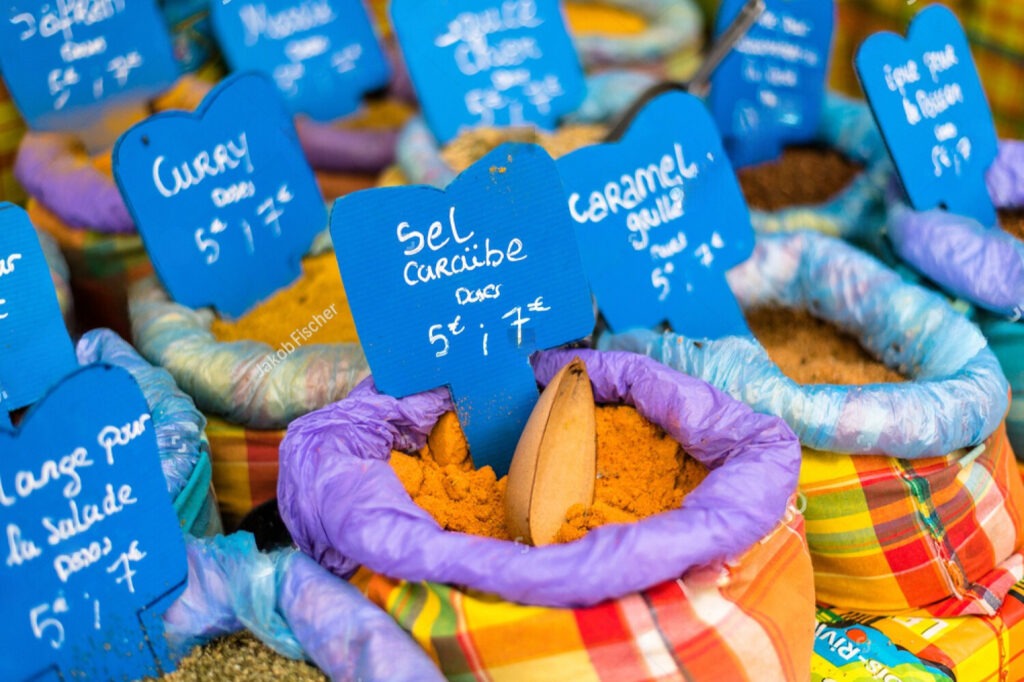
The curry
- A blend ofCaribbean spices (turmeric, coriander, cumin, fenugreek, mustard, ginger, chili, etc.) from India, adopted by several Caribbean islands.
- Use: widespread in Trinidad & Tobago (Indo-Creole cuisine), its spiciness and composition vary according to region and family tradition.
Colombo
- A blend ofCaribbean spices typical of the French West Indies (Martinique, Guadeloupe), similar to Indian curries.
- Use: Eponymous “colombo de poulet” or “colombo de cabri” dish, but also for flavoring fish and vegetables.
Roucou (achiote)
- From the seed of the rocouyer tree, used to give a reddish-orange color to dishes.
- Use: Natural coloring agent in simmered dishes and sauces.
Ginger
- Very present in the English-speaking Caribbean (Jamaica, Barbados, Trinidad), it is used in both savoury dishes and drinks.
- Uses : Seasoning for meat, fish, infusions (ginger tea), arranged rums or ginger beer.
Aromatic herbs
Cives (or cive pays)
- Related to chives, it is more fragrant and slightly tougher.
- Usage Marinades, sauces, stews.
- Special features A must in most Creole dishes.
Parsley
- Fresh and herbaceous, it delicately spices up dishes.
- Usage Dog sauce, garnishes.
Thyme
- Woody fragrance, often used for simmered dishes.
- Usage Broths, stews.
Coriander (leaves)
- Unique, slightly lemony flavor.
- Usage Mixed into curries and chutneys.
Basil (local variety or lemon)
- Stronger fragrance than common basil.
- Usage Flavors sauces.
Chadron beni (shado beni, culantro, recao)
- A very fragrant herb, much used in Caribbean cuisine.
- Usage Used in green seasonings.
Indian wood leaves (Pimenta racemosa)
- Reminiscent of bay leaves, they are perfect for flavouring colombo.
Specific features by region
- Jamaica: Famous for its “jerk seasoning”, a blend ofCaribbean spices that give it a unique taste.
- Trinidad & Tobago: Known for its curries and “green seasonings” based onCaribbean spices.
- Martinique and Guadeloupe The use of colombo, bondamanjak pepper and “Creole spices”.
- Grenada Grenada: Known as the “island of spices”, with its renowned nutmeg and mace production.
- Haiti: “epis”, a crushed blend of garlic, chili pepper and parsley, which also uses Caribbean spices.
The culinary and cultural importance of Caribbean spices
Caribbean spices are not just a matter of taste, they also reflect history and identity. They mark everyday life and major events. Each island has its own personal touch on common dishes, demonstrating how the adaptation of Caribbean spices has created a unique culinary mosaic.
Tasting tips and using Caribbean spices
- Dare to mix: Combine chillies, cinnamon, nutmeg and cloves to capture the essence of Caribbean spices.
- Make marinades: Meat, fish and seafood are particularly tasty after a few hours in a blend ofCaribbean herbs andspices.
- Seek balance Tasty Caribbean dishes play on the spicy-sweet-salty-tart balance.
Talking about Caribbean spicesis much more than a list of ingredients: it’s the story of peoples, journeys and traditions blended over the centuries. Each spice, each blend, each culinary preparation invites you on a sensory and cultural journey, highlighting the richness and uniqueness of a region deeply rooted in diversity. It is therefore essential to preserve these traditions while continuing to develop them. Visit Caribbean spices are at the heart of the culinary soul of the region’s territories and contribute to the worldwide appeal of Caribbean gastronomy.





2 Responses