On Colombia‘s Caribbean coast, Cartagena de Indias has established itself as one of the region’s most structuring areas. A port city founded in the XVIᵉ century, it has long been a strategic point for Spanish maritime trade. Today, it remains a major destination for travelers attracted by history, architecture and the Caribbean coastline.
Cartagena de Indias is more than just a seaside resort. It’s an active, inhabited city whose identity is built around its port, fortifications and historic districts. For visitors, it offers a direct view of the continental Caribbean and its heritage.
A port city at the heart of Caribbean history
Founded in 1533, Cartagena de Indias quickly became one of the Spanish Empire’s most important ports in the Americas. It served as an export point for the continent’s gold, silver and other resources, as well as a military center to protect the sea routes. The fortified city, a UNESCO World Heritage Site since 1984, bears witness to this strategic importance. Ramparts, bastions and forts still encircle the historic center. These defensive structures, built to repel attacks by pirates and rival powers, give Cartagena its distinctive silhouette.
A stroll through the historic center reveals how the town was organized around the sea. Squares, churches, administrative buildings and colonial houses follow an urban plan that has remained largely intact.
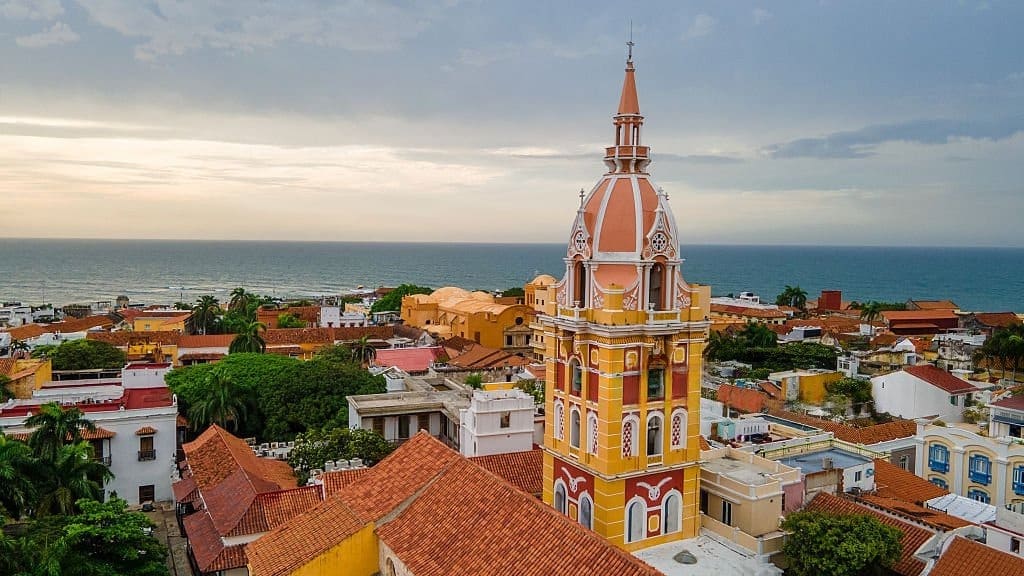
Preserved, inhabited architecture
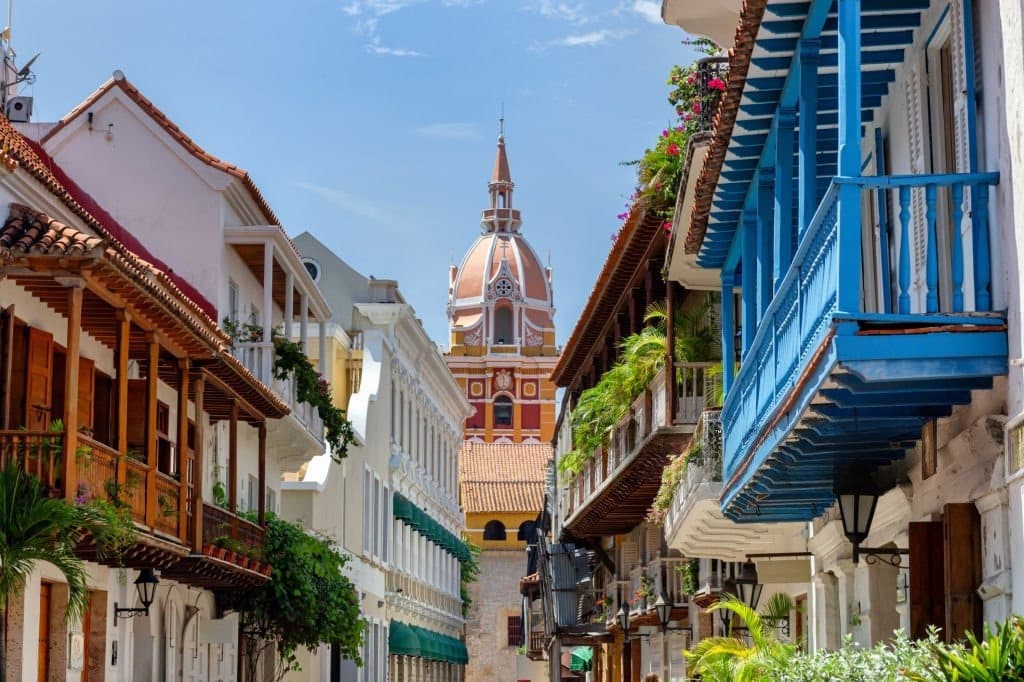
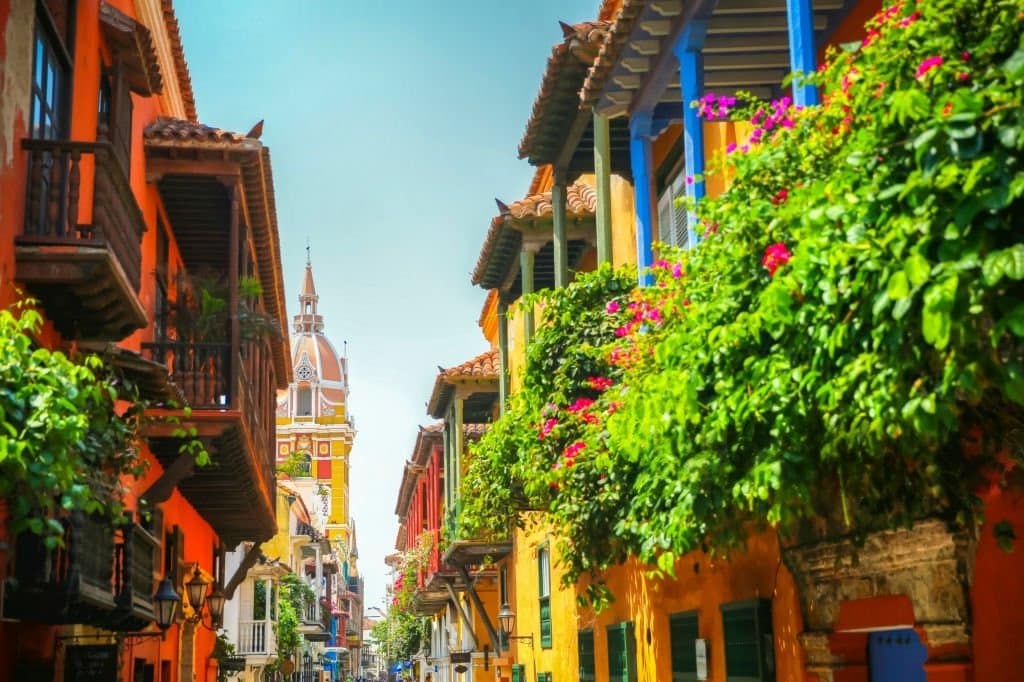
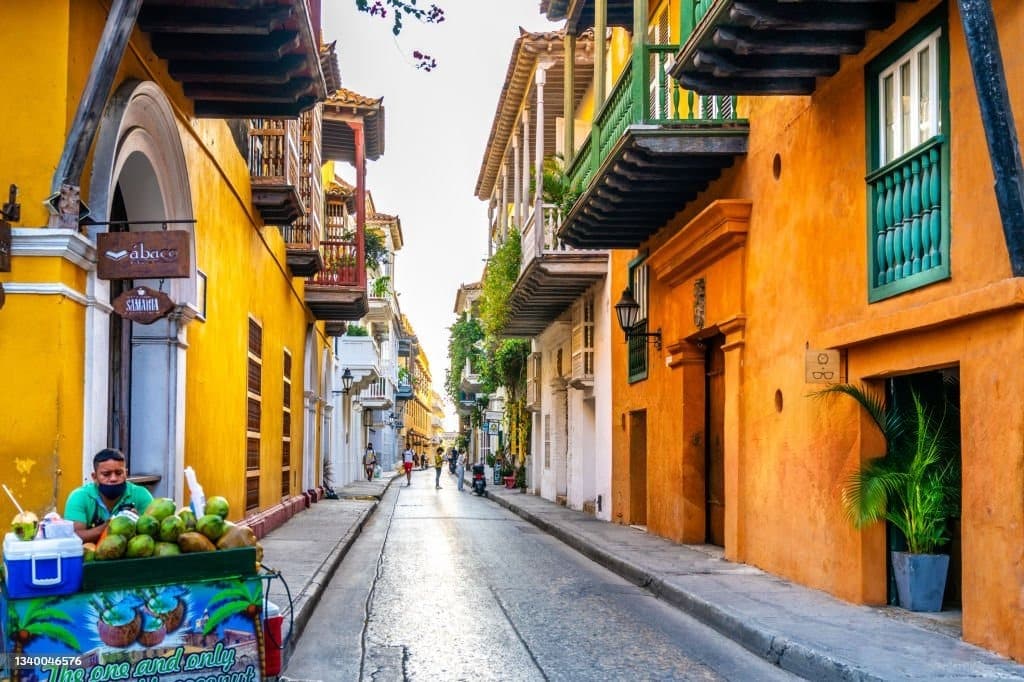
The historic heart of Cartagena de Indias is made up of several distinct districts: the fortified center, Getsemaní and the old port areas. Colorful facades, wooden balconies and cobbled streets form a coherent whole, where tourist activity blends with everyday life. Getsemaní, once a working-class port district, has undergone a cultural revival in recent years. Artists’ studios, cafés, lively squares and murals are all to be found here. This transformation has not erased the presence of local residents, maintaining a balance between tourist traffic and local life.
A constant relationship with the sea
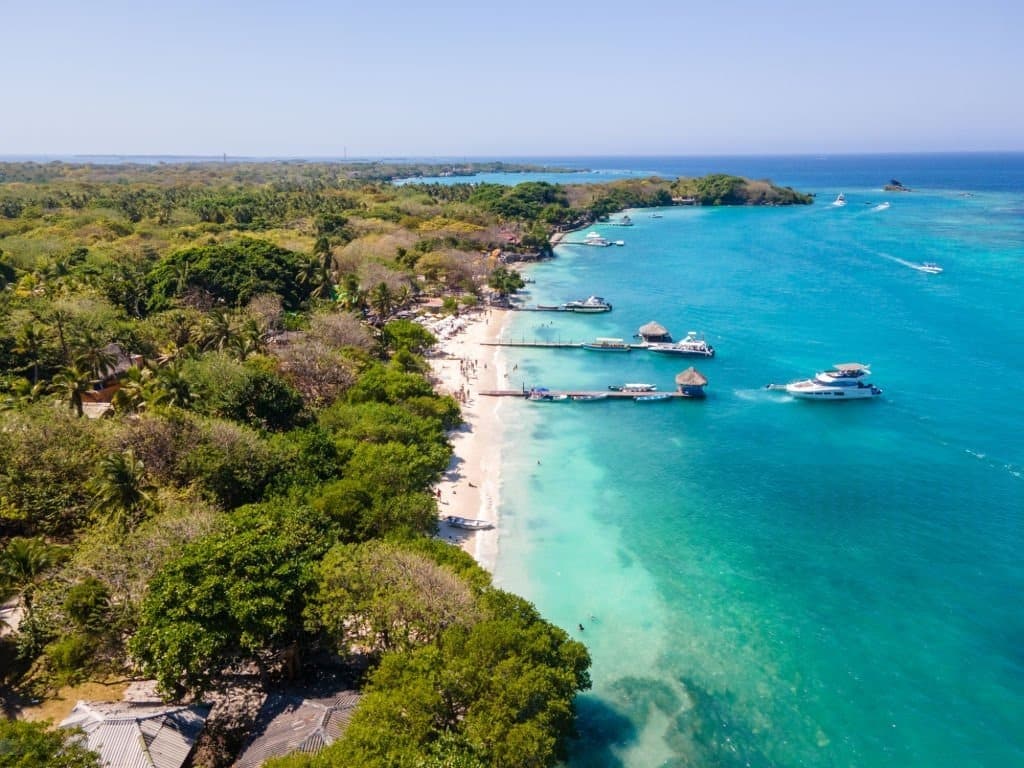
The sea remains a structuring element for Cartagena de Indias. The modern port is home to cargo ships, cruise liners and fishing boats. The quays and coastal promenades offer a glimpse of the continuity between economic activity and the maritime landscape. A few dozen kilometers offshore, the archipelago of the Rosary Islands (Islas del Rosario) complete this relationship with the sea. These islets, part of a national nature park, are renowned for their clear waters and coral reefs. They are one of the main excursions for visitors wishing to get away from the city for a day.
A city on the move
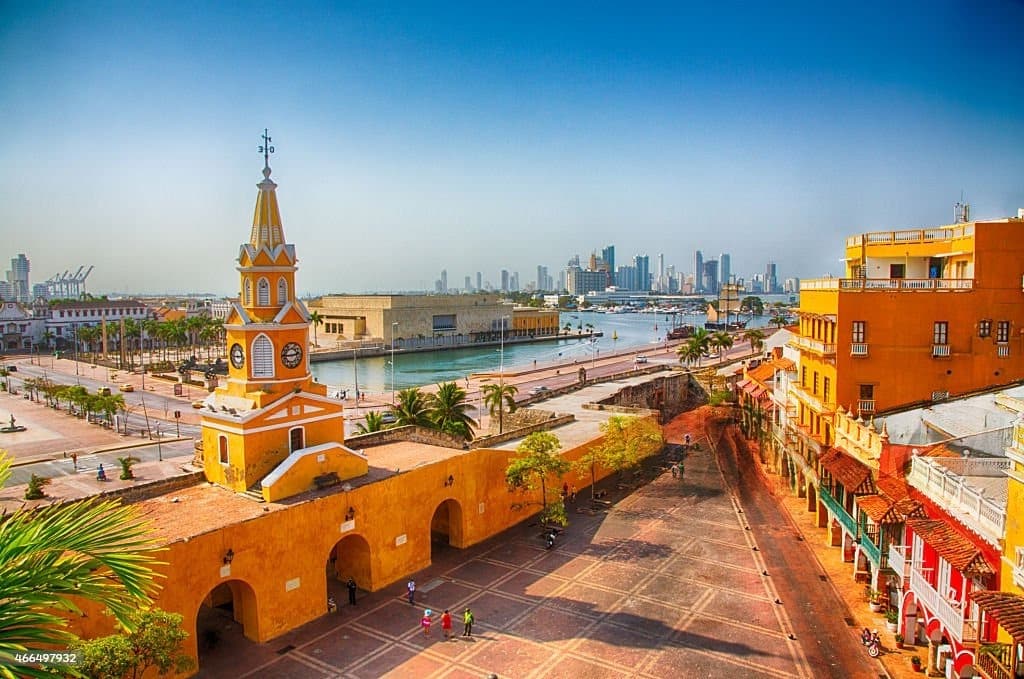
With more than a million inhabitants in its urban area, Cartagena de Indias is also a bustling contemporary city. Modern districts, port areas and hotel infrastructures coexist with historic sectors. This overlapping of eras is part of its identity. Visitors can easily move from a colonial street to a modern avenue, from a local market to a marina. This diversity reinforces the impression of a living city, not stuck in the past.
Access and organization
Cartagena de Indias has an international airport well connected to the major cities of Latin America, the USA and Europe. From Rafael Núñez airport, the historic center can be reached in less than twenty minutes. The city is ideal for both short and longer stays. Discoveries can be organized around the historic center, contemporary neighborhoods, the coastline and sea excursions to nearby islands.
A key Caribbean destination
Highlighting Cartagena de Indias is to present a territory that encapsulates several essential dimensions of the Caribbean:
- – a central colonial history;
- – a major architectural heritage ;
- – a busy port city ;
- – direct access to the sea and islands.
For travelers, Cartagena is a solid point of entry to the continental Caribbean. It provides an insight into maritime traffic, historical exchanges and the evolution of the region’s port cities. Cartagena de Indias is not just a tourist destination. It’s a territory that tells the story of the Caribbean in its continuity, between memory and the present.
Cartagena de Indias is located on Colombia’s Caribbean coast, in the north of the country, facing the Caribbean Sea.
Its fortified historic center, ramparts and colonial architecture bear witness to its strategic role in the maritime history of the Caribbean.
The busiest period is from December to April, when the climate is drier. Despite the high humidity, the city can be visited all year round.