
COP30 in Brazil: the Caribbean faces up to the global climate emergency

COP30

COP30 is being held in Belém, in the Brazilian state of Pará, from November 10 to 21, 2025. This 30ᵉ United Nations Climate Change Conference is taking place for the first time in the heart of the Amazon, symbol of an ecosystem vital to the planet. Through this COP30, the world’s leaders are embarking on a decisive negotiation, that of the real implementation of the commitments made since the Paris Agreement. For the countries of the Caribbean, which are directly exposed to the effects of global warming, this edition offers concrete hope: to obtain fairer recognition of their needs and sustainable funding for climate adaptation.

An opening focused on Amazonia and climate justice

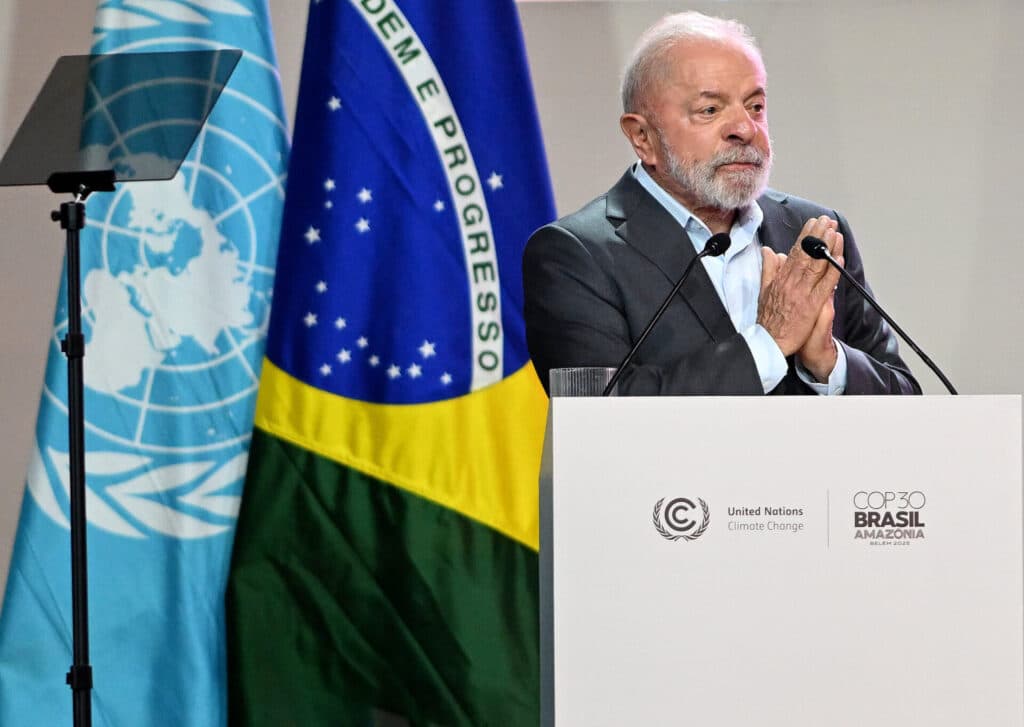
President Luiz Inácio Lula da Silva opened COP30 by stressing the shared responsibility of nations and the need for immediate action. “We’re moving in the right direction, but at the wrong speed”, he told the delegations gathered in Brazil. This message resounds like a global warning.

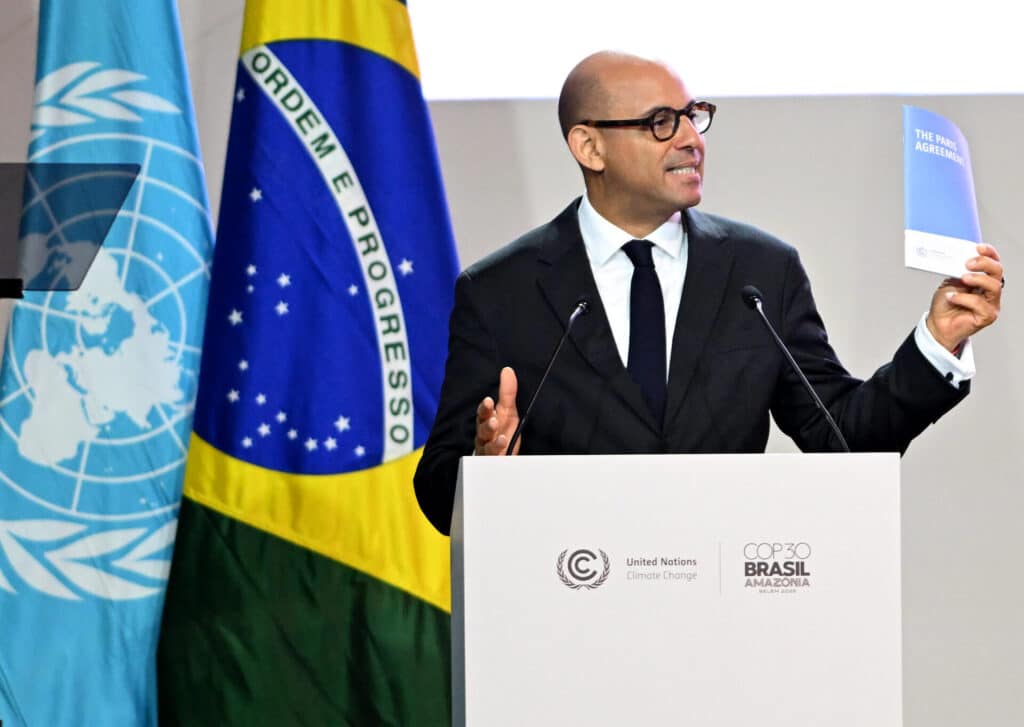
Simon Stiell, Executive Secretary of the Climate Convention, reminded us that every delay has a cost, in human lives and economic losses. Holding the conference in Brazil, in the heart of a territory that is home to 60% of the Amazon rainforest, underlines the symbolic and ecological dimension of this edition. COP30 aims to put biodiversity, indigenous peoples and South-South cooperation back at the heart of international decision-making.

The first sessions demonstrated a new dynamic: the rapid adoption of the agenda and the determination to translate promises into concrete action, particularly in the fields of energy, transparency and financing.

COP30
@ALEXFERROFOTOGAFO
COP30
@ALEXFERROFOTOGAFO

An ambitious program of transition and governance

COP30 is organized around four priorities: emissions reduction, adaptation, financing and climate governance. By hosting the conference in Belém, Brazil aims to embody the transition to an economic model based on the preservation of nature.
The “Capacity-Building Hub”, one of the highlights of the conference, focuses on strengthening local skills. Sessions cover sustainable financing, energy transition, nature-based solutions and the role of cultural heritage in building resilience.

The United Nations reiterates that limiting the temperature rise to 1.5°C remains an imperative, not a theoretical objective. COP30 must therefore validate concrete monitoring and transparency mechanisms capable of ensuring the credibility of national commitments.

The Caribbean, a united voice for survival

For the Caribbean, COP30 is a vital forum. Island states are calling for immediate responses to rising sea levels and intensifying hurricanes. The Caribbean Development Bank pointed out that “the region has never been so exposed or so determined to defend its climatic survival”.

The Caribbean delegations are calling for direct access to international funds, without debt conditions. They call for the pledges of $1,300 billion annually by 2035 to be honored and distributed equitably.
In the parallel areas of Belém, several adaptation projects are presented: coastal restoration in Dominica, sustainable water management in Saint Lucia, community reforestation in Haiti. These initiatives demonstrate that the region is already taking action, but lacks financial support commensurate with the challenges.

COP30
©Raimundo Pacco/COP30
COP30
COP30
COP30
©Raimundo Pacco/COP30
COP30
©Raimundo Pacco/COP30
COP30
©Raimundo Pacco/COP30

Persistent differences between North and South

COP30 discussions reveal structural tensions between industrialized countries and vulnerable states. The debate on climate finance crystallizes the disagreements. Northern nations recognize the need to increase their contribution, but without specifying transfer modalities or access criteria.

The “Together4Transparency” initiative seeks to establish a universal framework for monitoring commitments, guaranteeing public and comparable data. For small island states, this transparency will highlight their efforts, which are often invisible in global balance sheets.
Delegations from tropical territories insist on a simple equation: without fair financing, adaptation is impossible. Negotiators must therefore decide between rhetoric and responsibility, between financial commitments and real climate justice.

Belém, symbol of renewed climate governance

The city of Belém embodies the contradictions of today’s world: ecological vulnerability, collective hopes and logistical constraints. Despite the organizational challenges, this COP30 is seeing record mobilization from civil society and local communities.
Brazil, as host country, asserts its role as mediator between major emitters and vulnerable nations. The Amazon thus becomes a global mirror: preserving its forests means protecting threatened islands, deltas and coastlines.
The indigenous peoples of the Amazon and representatives from the Caribbean share a common demand: to be heard, to participate in decision-making and to benefit from the resources needed to protect their territories.

COP30
@ALEXFERROFOTOGAFO
COP30
@ALEXFERROFOTOGAFO
COP30
@ALEXFERROFOTOGAFO
COP30
@ALEXFERROFOTOGAFO

A decisive COP30 for the Caribbean and the world

As negotiations continue, COP30 is shaping up to be a moment of truth. The Caribbean hopes to see its priorities enshrined in the final text: equitable financing, institutional inclusion and recognition of the role of tropical territories in climate regulation.
The Belém edition could mark the beginning of a profound change, where small island nations cease to be spectators and become partners in balanced global governance.
COP30, more than a summit, acts as a compass for the decades to come. If the decisions taken in Belém are translated into concrete action, they could transform the future of the Caribbean and the entire tropical world, united by the same urgency: survival in a rapidly changing climate.

Leave a Reply

Your email address will not be published. Required fields are marked *

More articles from RK

St Maarten Carnival 2026
EVENT MANAGEMENT
Tolotra

St Maarten Carnival 2026: 55 years on an island split in two

In Philipsburg, carnival is about much more than costumes and concerts. It shows an island divided between two histories, two administrations and the same popular energy. For its 55th anniversary, St Maarten Carnival 2026 gives Sint Maarten the opportunity to show what the Caribbean does best: transforming a local festival into a marker of identity. A carnival that’s more than just a party St Maarten Carnival 2026 began on April 10 and continues until May 5, with Philipsburg as the focal point. In the streets, locals aren’t just watching a parade go by. They recognize families, neighborhoods, groups, sounds, food stands, faces that have returned for the occasion. Carnival is not just a decoration. It’s part of the way Sint Maarten tells its story. This year’s event carries a special weight. St. Maarten Carnival 2026 marks the 55th edition of the biggest cultural event on the Dutch part of the

Read More »
Viengsay Valdés
DANCE
Tolotra

Cuba – Viengsay Valdés: Alicia Alonso’s heiress

When Alicia Alonso passed away in October 2019, the Ballet National de Cuba, which Alicia Alonso had founded in 1948 and directed for seven decades, was orphaned. Only one person has been entrusted with the responsibility of following in her footsteps: Viengsay Valdés. Now 49, she leads one of the world’s most respected ballet companies. She does so from Havana, a city in crisis, with resources that no comparable institution in Europe or the United States would accept. The challenge is from another time. But Viengsay Valdés holds her ground. Demanding Cuban training Born in Havana in 1976, she began dancing at the age of 9 at the Alejo Carpentier elementary ballet school, before continuing her training at the Cuban National Ballet School, one of the most prestigious in the world, free and open to all Cuban children by audition. It was here that she encountered the world of Alicia

Read More »
Eric Williams
MUSIC
Tolotra

Shenseea and Daddy Yankee bring the Caribbean to FIFA World Cup 2026

Shenseea and Daddy Yankee at FIFA 2026: the announcement goes beyond a simple musical release. With “Echo”, Jamaica and Puerto Rico enter the sound universe of the next World Cup together. Behind this track, a part of the urban Caribbean finds a new place in one of the planet’s most popular events. One FIFA title, two Caribbean voices On April 28, 2026, FIFA announced the release of “Echo”, the third single from the official FIFA World Cup 2026 album. The track brings together Shenseea, a Jamaican artist associated with contemporary dancehall, and Daddy Yankee, a major Puerto Rican reggaeton figure. FIFA points out that the track is one of a series of musical releases designed to accompany the build-up to the tournament. This announcement goes beyond the framework of a collaboration between two well-known artists. It brings two Caribbean territories, Jamaica and Puerto Rico, face to face, united in a

Read More »

conTACT RK

we'd love to have your feedback on your experience so far

Join The List

Join our Richès Karayib community!  Sign up for our newsletter.

Want To Maximize Your Business Presence On Riches Karayib?

Complete the form to start the application