Dr. Yvette Bonny: Caribbean medical pioneer and Quebec historical figure

Yvette Bonny

A life of healing

Dr. Yvette Bonny embodies the meeting of scientific excellence and Caribbean heritage. Originally from Haiti, this pediatric hematologist has had a profound impact on the medical history of Quebec and Canada. By performing the first pediatric bone marrow transplant in Eastern Canada on April 2, 1980, she paved the way for more humane and inclusive medicine. She symbolizes a Caribbean that heals, innovates and inspires, far beyond its borders.

From Haitian roots to a universal vocation

Born in Port-au-Prince in 1938, Dr. Yvette Bonny grew up in a Haiti faced with a high infant mortality rate. Very early on, she expressed her desire to become a doctor, inspired by the figure of her grandfather, himself a respected physician. After studying at the State University of Haiti, she obtained her medical degree in the late 1950s, driven by a single conviction: to care for her country’s underprivileged children. Her commitment to public health in Haiti could have kept her in the country, but the political upheavals of the 1960s led her to seek the conditions for a stable scientific career elsewhere.

Yvette Bonny
©scienceetbiencommun.pressbooks

The arrival in Canada and the exceptional journey of a pioneer

In 1962, Dr. Yvette Bonny moved to Montreal to specialize in pediatrics at Hôpital Sainte-Justine. She became the institution’s first Afro-descendant resident, symbolizing an extraordinary career path in an environment not yet very open to diversity. Following her specialization, she went on to work in hematology in Paris, then at the Royal Victoria Hospital and Hôpital Maisonneuve-Rosemont, where she completed her residency in 1968. This dual expertise – pediatrics and hematology – would later enable her to perform a historic act: a bone marrow transplant on a child suffering from a serious illness.

Yvette Bonny
©uOttawa

April 2, 1980: a date engraved in medical history

On April 2, 1980, Dr. Yvette Bonny performed the first pediatric bone marrow transplant in Quebec and Eastern Canada at Hôpital Maisonneuve-Rosemont. The operation was a success: the young patient, Sonia Sasseville, aged 13, regained her health and later became a nurse at the same hospital. This achievement marked a turning point for Canadian medicine: families no longer had to travel abroad for this type of treatment. For almost twenty years, Dr. Yvette Bonny headed the provincial pediatric bone marrow transplant unit, performing some 200 transplants and training a generation of specialists.

Yvette Bonny
Hôpital Maisonneuve-Rosemont

A human approach, between science and compassion

Nicknamed Quebec’s “Patch Adams”, Dr. Yvette Bonny has always put people at the heart of medicine. Her young patients, often suffering from leukemia or sickle-cell anemia, found in her a blend of gentleness and rigor. She deeply believed in the power of smiles and kindness in the healing process. This human dimension earned her the respect of her peers and lasting recognition in hospital circles. She never saw her patients as mere medical cases, but as life stories to be preserved.

Teaching, transmitting and inspiring

In 1972, Dr. Yvette Bonny became a professor in the Faculty of Medicine at the Université de Montréal. In 1980, she was appointed Associate Professor. Through her courses and internships, she trained several generations of doctors, insisting on scientific rigor but also on the human dimension of care. Her students remember her as a demanding and passionate teacher, and a woman deeply committed to the success of young people from diverse backgrounds. She was also involved in research into blood diseases, helping to make Quebec a center of excellence in pediatric hematology.

Yvette Bonny
©Sickle Cell Association of Ontario

A committed voice for the Haitian community

Beyond the hospital, Dr. Yvette Bonny has been involved in community life. In Montreal, she has supported numerous programs for young people from Haitian immigrant backgrounds, fighting poverty and dropping out of school. She has also supported families affected by serious illness through organizations such as Leucan. Her commitment goes beyond medicine: it’s a real fight for dignity, equal opportunity and the transmission of knowledge. For many young people, meeting Dr. Yvette Bonny was living proof that success knows no color or boundaries.

Awards and recognition

The honours received by Dr Yvette Bonny testify to the scope of her work. In 2007, she was made a knight of the Ordre national du Québec, and in 2008 a member of the Order of Canada, the country’s highest civilian honour. In 2024, the University of Ottawa awarded her an honorary doctorate for her exceptional contribution to medicine and society. Finally, in 2025, she was named Commander of the Order of Montreal, joining the great figures who have shaped the city. These recognitions underline not only her exemplary career, but also her lasting influence on the scientific and Caribbean community.

Yvette Bonny
©Pofhad Haiti

Caribbean heritage and memory

At 87, Dr Yvette Bonny remains a living legend. Her legacy goes beyond science: it touches on the question of the Caribbean’s role in global progress. By combining competence, courage and humanity, she showed that excellence is not a question of origin, but of determination. To this day, she inspires young women, medical students and Afro-descendant communities to pursue their ambitions without denying their roots. Her career illustrates the power of a Caribbean that is educated, daring and open to the world.

Dr Yvette Bonny’s life and career remind us that medicine is above all a matter of hope and transmission. From Port-au-Prince to Montreal, she forged an exemplary path between two worlds, linking the Caribbean and Canada on the same mission: to save lives. Her name now belongs not only to the history of medicine, but also to that of a diaspora which, through its children, continues to enrich the world. Dr. Yvette Bonny remains a symbol of excellence, resilience and humanism: an eternal Caribbean pride.

Leave a Reply

Your email address will not be published. Required fields are marked *

More articles from RK

Marcus Garvey
HISTORY & HERITAGE
Tolotra

Jamaica – Marcus Garvey, Jamaican hero of international renown

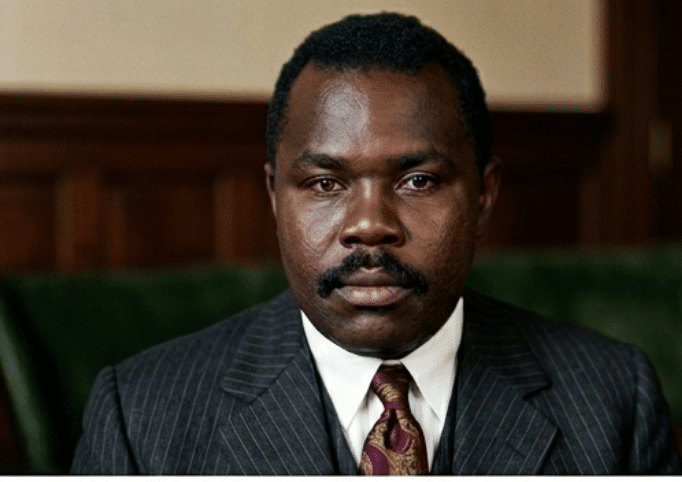
Marcus Garvey remains one of the most influential figures to emerge from the Caribbean. Born in Jamaica at the end of the 19th century, he transformed a local experience into a political and cultural project of international scope. At a time when black populations faced deeply rooted systems of exclusion, Marcus Garvey proposed a structured vision based on dignity, organization and autonomy. Recognized today as a national hero in Jamaica, he is much more than a historical symbol. His story helps us understand how the Caribbean helped shape major intellectual and political movements on a global scale. His name continues to circulate in contemporary debates on identity, memory and the development of societies born out of colonial history. From Jamaican origins to the formation of a committed conscience He was born on August 17, 1887 in St. Ann’s Bay, Jamaica, into a modest family. Very early on, he developed a
Read More »
BlueSeas Festival
EVENT MANAGEMENT
Tolotra

BlueSeas Festival: in Curaçao, Pietermaai becomes the epicenter of Caribbean blues in 2026

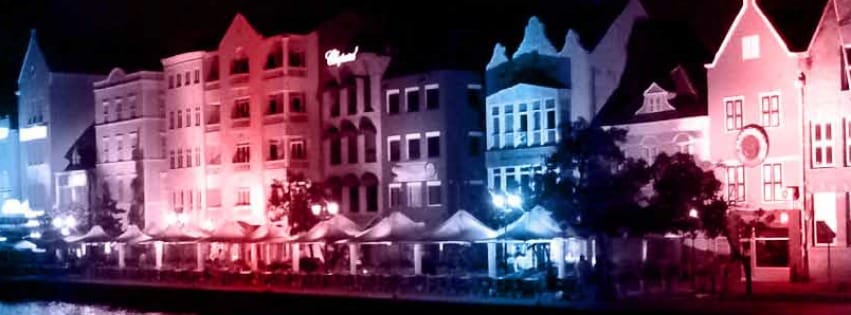
From April 2 to 4, 2026, Curaçao hosts another edition of the BlueSeas Festival a musical event that is gradually establishing itself as one of the most unique cultural events in the Caribbean. Free, open and rooted in the urban space, the festival goes far beyond simple musical programming to become a genuine territorial experience. Right from the opening night, Thursday April 2 at Kura Hulanda Village, the mood is set: the blues settle into a heritage setting, before taking full possession of the Pietermaai district on April 3 and 4. This two-stage format structures an immersive experience in which music, architecture and local life are seamlessly interwoven. A free festival that transforms the city into an open-air stage The BlueSeas Festival is based on the principle of offering free concerts in public spaces. This choice is not insignificant. It widens access to live music, while creating direct interaction between
Read More »
Le vodou : Haïti au cœur d’une candidature patrimoniale majeure avec le Bénin
COOPERATION
Tolotra

Vodou: Haiti at the heart of a major heritage bid with Benin

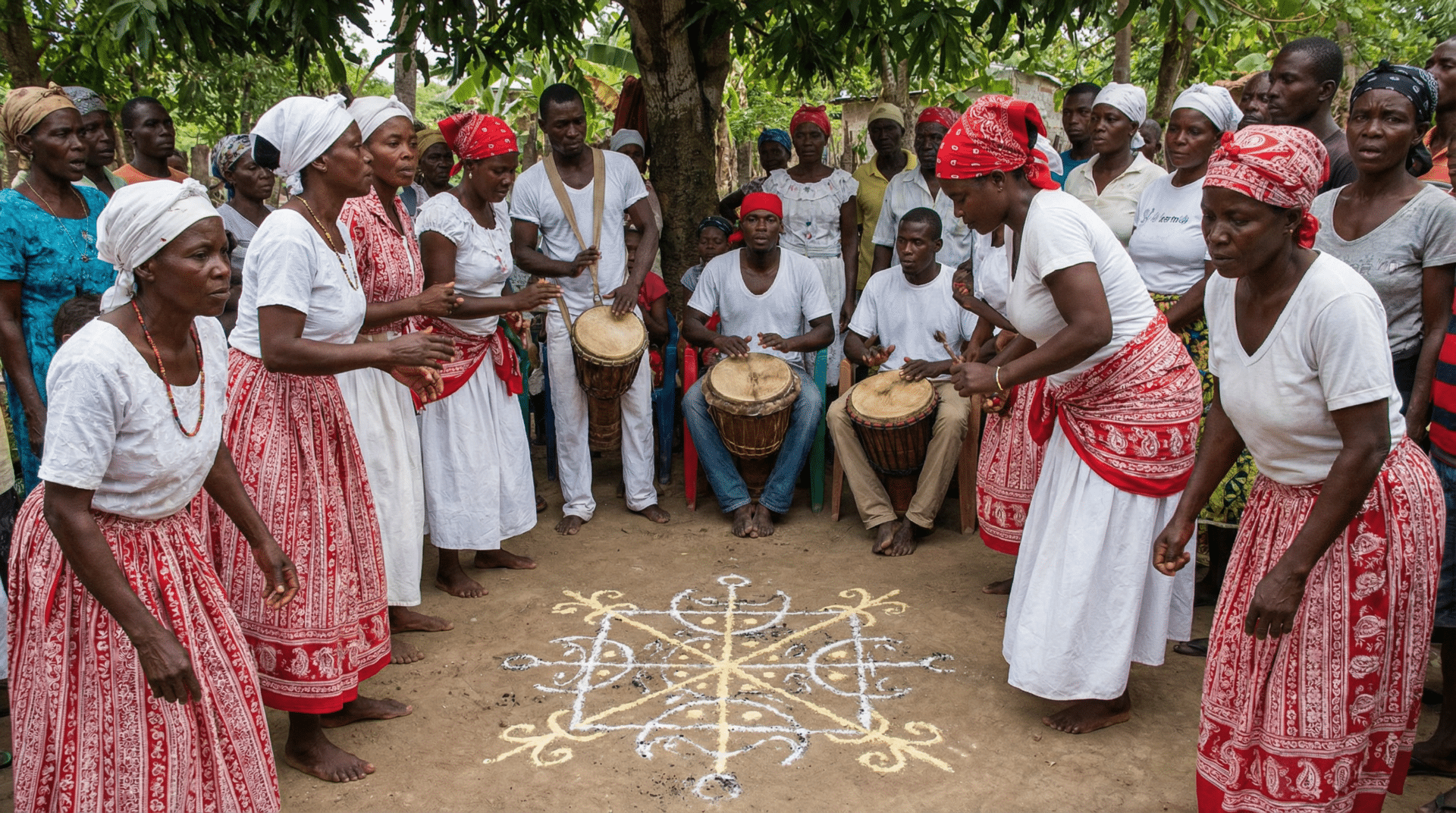
The vodou is entering a new phase in its international history. The joint candidacy of Haiti and Benin for inscription on the Representative List of the Intangible Cultural Heritage of Humanity places centuries of memory, transmission and creation at the heart of a global heritage debate. The deadline set by UNESCO for applications to be examined in 2027, and submitted before March 31, 2026, places this initiative within a precise and structured institutional calendar, but the stakes go far beyond the administrative procedure. For the Caribbean, and Haiti in particular, this candidacy is no mere cultural formality. It’s about recognizing a living heritage, often misunderstood, sometimes caricatured, but deeply rooted in the country’s social, artistic and spiritual history. Vodou is not a fixed folklore; it is a cultural matrix, a way of organizing the link between generations, communities and the sacred. To place it within an international heritage dynamic is

Read More »

conTACT RK

we'd love to have your feedback on your experience so far

Join The List

Join our Richès Karayib community!  Sign up for our newsletter.

Want To Maximize Your Business Presence On Riches Karayib?

Complete the form to start the application